Car finance compensation delayed to 2027: what it means for EV owners
The £7.5bn redress scheme is partly suspended while a tribunal hears legal challenges, so payouts look unlikely before 2027. Here is who qualifies, why 0% APR deals miss out and how to avoid scams.
Quick answers
- The FCA's motor finance redress scheme is partly suspended, so lenders do not have to calculate or pay compensation until legal challenges are resolved, pushing payouts to 2027 at the earliest.
- The full Upper Tribunal hearing is listed for 14 to 18 December 2026 or 16 to 26 February 2027; this week's two-day hearing deals with disclosure and expert evidence, not lawfulness.
- The scheme covers about 12.1 million car finance agreements taken out between 6 April 2007 and 1 November 2024, with an average payout of around £830.
- Agreements at 0% APR are excluded whatever commission was paid, so EV drivers who took a manufacturer 0% deal will not receive redress through the scheme.
- Lenders are not contacting customers about payout amounts while the scheme is paused, so calls, texts or emails saying you are owed money should be treated with suspicion.
If you bought an electric car on finance between April 2007 and November 2024, you face a longer wait for any compensation. The Financial Conduct Authority’s redress scheme, worth an estimated £7.5bn across about 12.1 million agreements, is partly suspended while the Upper Tribunal hears legal challenges, and AM Online reports that payouts have been pushed back to 2027. A two-day case management hearing that began on Monday and ends today will help set the timetable.
When the FCA published its final rules (PS26/3) on 30 March 2026, its press release was headlined “Millions of car finance customers to get payouts this year”. That changed on 1 July, when the tribunal partly suspended the scheme: until the challenges are resolved, lenders do not have to calculate or pay compensation, or contact eligible customers about it. If you financed an early Nissan Leaf, Renault Zoe or Tesla Model 3, the rules are the same as for a petrol car: what counts is the finance agreement, not the fuel.
Why has car finance compensation been pushed back to 2027?
Four parties have challenged the scheme: Volkswagen Financial Services UK, Mercedes-Benz Financial Services UK, CA Auto Finance UK and the claimant group Consumer Voice. According to CMS, the challenges cover the scope of the scheme, causation of loss, the redress methodology and compensatory interest. They pull in opposite directions: the lenders dispute aspects of the rules and their lawfulness, while Consumer Voice argues the scheme is too favourable to lenders.
This week’s hearing does not decide whether the scheme is lawful. AM Online reports that it deals with disclosure, expert evidence and other procedural issues. The FCA says the full hearing will run from 14 to 18 December 2026 or from 16 to 26 February 2027, depending on whether applications for further expert evidence or disclosure are made and succeed.
| Date | What happens |
|---|---|
| 30 March 2026 | FCA publishes final rules (PS26/3) |
| 1 July 2026 | Upper Tribunal partly suspends the scheme |
| 5 to 6 October 2026 | Case management hearing on disclosure and expert evidence |
| 14 to 18 December 2026, or 16 to 26 February 2027 | Full hearing of the four challenges |
| 2027 at the earliest | First compensation payments |
Does your EV finance deal qualify?
Your agreement must have been taken out between 6 April 2007 and 1 November 2024, and the lender must have paid commission to the broker, which is usually the dealer that sold you the car. The FCA says you will then be considered if you were not told about at least one of three arrangements:
- Discretionary commission arrangement: the broker could adjust your interest rate to earn more commission.
- High commission: at least 39% of the total cost of credit and at least 10% of the loan.
- Contractual tie: the lender had exclusivity or a right of first refusal with the broker, unless it can show the links between the manufacturer, dealer and lender were visible to you.
That exception may matter for brand-badged finance from a franchised dealer, where the carmaker link was obvious, though the other two tests still apply.
Why 0% APR EV deals miss out
The final rules treat anyone who received 0% APR as having no relevant arrangement, whatever commission was paid, as Regulation Tomorrow sets out. Agreements with minimal commission are also excluded, according to thinkmoney. If you took a manufacturer’s 0% PCP offer on your EV, you paid no interest for a commission to have inflated, so you should not expect anything from this scheme.
What high commission looks like in practice
Both tests must be met. As an illustration, on a £20,000 loan with £5,000 of interest, the commission would need to be at least £2,000 (10% of the loan) and at least £1,950 (39% of the cost of credit) to count as high.
How has the scheme changed since the consultation?
The final rules are narrower and cheaper for lenders than the FCA first proposed.
| Measure | Consultation | Final rules (PS26/3) |
|---|---|---|
| Eligible agreements | 14.2 million | 12.1 million |
| High commission test (share of cost of credit) | 35% | 39% |
| Admin costs to firms | £2.8bn | £1.6bn |
| Total cost to firms | £11bn | £9.1bn |
Sources: Regulation Tomorrow, Insurance Business.
The FCA expects an average payout of around £830 per agreement. Its £7.5bn redress figure assumes 75% of eligible consumers take part.
Are lenders still preparing to pay?
Yes. AM Online reports that Close Brothers set aside a further £164.7m in the year to 31 July 2026, taking its total provision to about £320m. Stellantis Financial Services UK raised its provision from £37.1m to £221.3m during 2025, contributing to a £69.3m pre-tax loss. Its accounts warn that “significant uncertainty remains regarding the ultimate cost”.
Together that is £541.3m from just two lenders. Our reading: the industry expects to pay, and the open questions are how much and when. With Consumer Voice pushing for more and three lenders pushing back, the final bill could move either way.
Is the call about your payout a scam?
Treat it as one until you can prove otherwise. Lenders are not contacting customers about amounts while the scheme is partly suspended. The FCA has received reports of scammers asking for names, addresses, dates of birth and bank details while falsely claiming people are owed compensation. Check any firm against the FCA’s list of car finance lenders before you share anything, and apply the same caution you would to fake QR codes on public chargers.
What this means for you
You do not need to do anything urgent, and you should not pay anyone to do it for you.
- If you have already complained, the FCA says you will get a redress decision without needing to opt in once the scheme restarts.
- If you have not, lenders must contact customers they believe are likely to be owed money within six months of the end of the implementation period and offer them the chance to opt in. You can also complain directly and for free using MoneySavingExpert’s reclaim tool.
- Find your paperwork now: the agreement date, the lender and the APR. If it was 0% APR, or signed outside 6 April 2007 to 1 November 2024, the scheme will not cover it.
Financing an EV today? Ask the dealer what commission it earns, and compare the options in our guide to leasing vs PCP vs buying an EV. Our ZEV mandate analysis explains why EV discounts could deepen before December, and our guide to buying and owning an electric car covers the rest.
Our take: the money is likely to come, but not this year. Ignore cold calls, keep your documents together, and expect clarity only after the tribunal rules.
How we test and where our numbers come from
Range figures are official WLTP combined values taken from manufacturer UK specification pages, with real-world estimates drawn from independent comparative testing. Prices are UK list prices at the time of the latest update. Tax, grant and charging-scheme figures come from GOV.UK and HMRC publications. We re-check every guide when pricing, specification or policy changes. Last checked 6 October 2026. How we work out our own figures.
Frequently asked questions
When will I get car finance compensation?
Not before 2027 at the earliest. The Upper Tribunal has partly suspended the FCA scheme, and its full hearing of the legal challenges is listed for either 14 to 18 December 2026 or 16 to 26 February 2027, with a judgment to follow.
Does my electric car finance deal qualify?
The scheme looks at the finance agreement, not the fuel type. It covers agreements from 6 April 2007 to 1 November 2024 where the lender paid the broker commission and you were not told about a discretionary commission arrangement, a high commission or a contractual tie. Agreements at 0% APR are excluded.
What counts as high commission under the FCA scheme?
Commission counts as high if it was at least 39% of the total cost of credit and at least 10% of the loan. Both tests must be met, and the threshold was raised from 35% of the cost of credit in the consultation.
Do I need a claims company to get car finance compensation?
No. Customers who have already complained will get a redress decision without needing to opt in, and lenders must contact other customers they think are likely to be owed money. You can also complain directly to your lender for free, for example using MoneySavingExpert's reclaim tool.
Someone has called to say I am owed car finance compensation. Is it genuine?
Treat it with suspicion. Lenders are not contacting customers about amounts while the scheme is partly suspended, and the FCA has received reports of scammers asking for names, dates of birth and bank details. Check the firm against the FCA's list of car finance lenders before sharing anything.
Sources and further reading
- fca.org.ukFinancial Conduct AuthorityPrimary source referenced in this article.
- fca.org.ukFCA confirms motor finance redress schemeSets out the three qualifying arrangements, the opt-in process and the reduced cost estimates.
- am-online.comMotor finance provisions surge as redress hearing beginsCovers this week's case management hearing and the Close Brothers and Stellantis Financial Services UK provisions.
- am-online.comMotor finance payouts pushed back to 2027, stalled by legal challengesReports that the legal challenges have pushed payouts back to 2027.
- regulationtomorrow.comFCA PS26/3: Motor Finance Consumer Redress SchemeDetails the 0% APR exclusion, the 39% high commission test and the drop from 14.2 million eligible agreements.
- cms.lawMotor Finance Claims: FCA Scheme, Legal Challenges and MoreExplains who is challenging the scheme, on what grounds, and the two possible hearing windows.
- insurancebusinessmag.comFCA signs off £9.1 billion motor finance redress schemeConfirms the total cost to firms fell from £11bn to £9.1bn and admin costs from £2.8bn to £1.6bn.
- moneysavingexpert.comCar finance FREE reclaim tool and guideFree route for consumers to complain directly to their lender.

EV Compared
The EV Compared editorial team tracks the UK electric vehicle market full time: new model launches, list prices, WLTP and real-world range, public charging tariffs and the tax rules that decide what an EV actually costs to run. Every guide is checked against manufacturer specifications and official GOV.UK figures, and updated whenever the numbers move.
Related reading
View all
Tesla finance and PCP explained: deals, APR and what you pay
Tesla is offering 0% APR on the Rear-Wheel Drive Model 3 and Model Y until the end of 2026. Here is how its PCP works, what you pay at three deposit levels and where the costs hide.

Leasing vs Buying an EV: True Cost Compared in the UK
Should you lease or buy your electric car? We compare PCH, PCP and outright purchase on total cost, flexibility and the specific risks of each approach.
Fake QR codes on EV chargers: how the quishing scam works
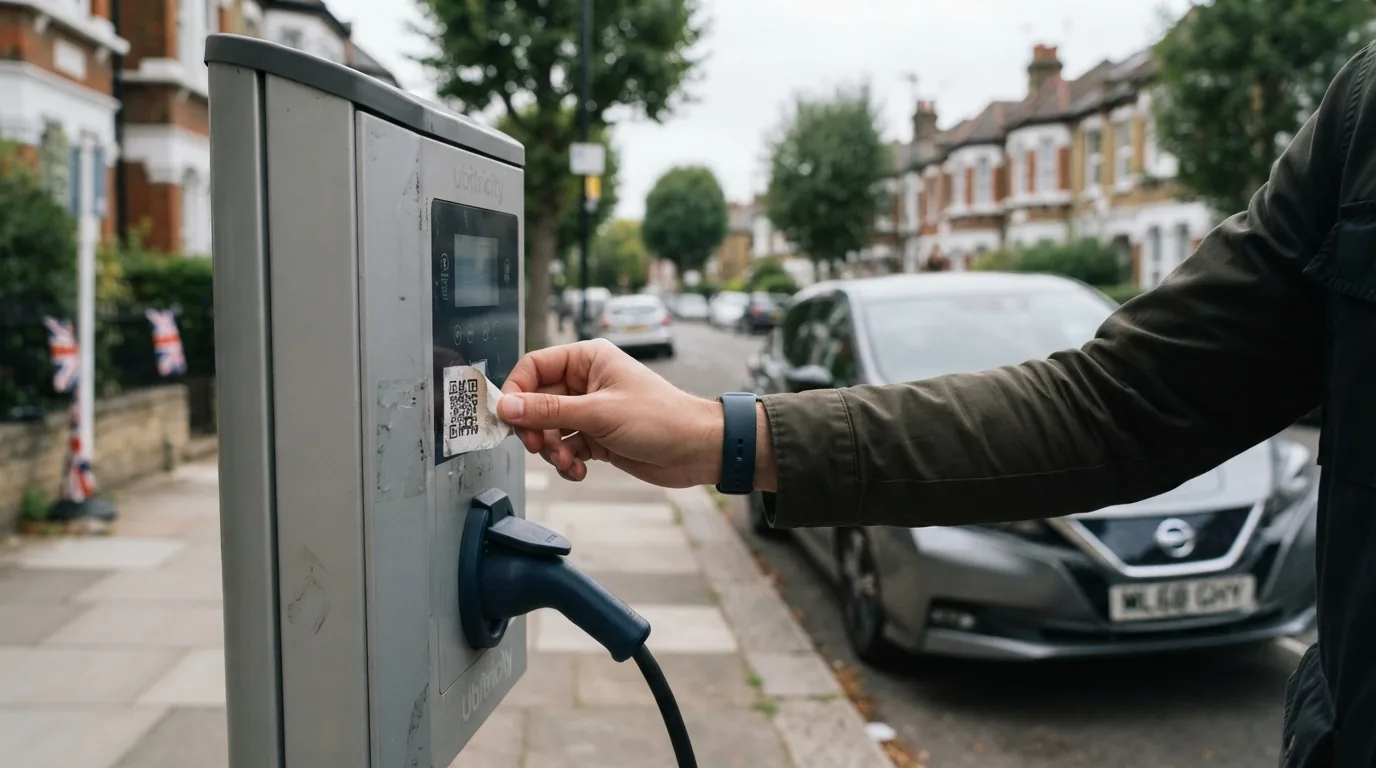
Fraudsters stick counterfeit QR codes over genuine ones on public chargers to steal card details. Cases have been reported in London and across Europe. Here is how to spot a tampered charger and pay safely.
ZEV mandate: carmakers need 265,000 more EV sales by year end
Even after a record September, electric cars make up only 26.2% of 2026 sales so far against a 33% target. Here is what that gap means for EV discounts and when to order.
Buying and Owning an Electric Car in the UK: The Complete 2026 Guide
Everything you need to know about costs, charging, depreciation and day-to-day life with an EV
Leasing a Tesla in the UK: Model 3 and Model Y lease costs
Current personal lease prices for every Model 3 and Model Y, what the upfront payment really adds, and our three-year comparison of leasing against PCP.