Electric van sales rise 58% in October, but share is still less than half the 24% target
Battery electric vans took 12.9% of the UK market in October, a record for the month. SMMT now forecasts a 10.4% share for 2026 against a 24% target, with the gap doubling by 2028. Here is how far short vans are, and what new buyers can get.
Quick answers
- Battery electric van registrations rose 58.0% to 3,369 in October 2026, the best October on record, according to SMMT.
- Electric vans took 12.9% of the October market, up from 9.2% in October 2025.
- For electric vans up to 3.5 tonnes, the measure the ZEV mandate uses, the year-to-date share is 9.7%, against a 2026 target of 24%.
- SMMT forecasts a 10.4% share for 2026, 13.6 points short, rising to 14.9% in 2027 (target 34%) and 18.8% in 2028 (target 46%).
- On those forecasts the gap doubles from 13.6 points in 2026 to 27.2 points in 2028, by our calculation.
- The whole van, pickup and 4x4 market grew 11.4% to 25,510 in October, the seventh month of growth in a row.
- Large electric vans can get a government grant of up to £5,000, and the new Renault Trafic E-Tech is priced from £38,000 plus VAT before the grant.
New electric van registrations rose 58.0% to 3,369 in October 2026, the best October on record, according to SMMT. They took 12.9% of the market, up from 9.2% a year earlier. But for vans up to 3.5 tonnes, the group the ZEV mandate covers, the share for the year so far is 9.7%, well under half the 24% target for 2026. For van buyers, that gap is why manufacturers are discounting electric vans, and why the Government’s coming decision on the mandate matters.
SMMT has also published its outlook. It expects electric vans to finish 2026 at 10.4%, and says the gap to the target will keep widening to 2028. Below we set the figures side by side, explain why October looks smaller than September, and look at what a buyer can get now, including the new Renault Trafic E-Tech, which went on pre-order on the same day.
What did the October van figures show?
The whole market grew. New van, pickup and 4x4 registrations rose 11.4% to 25,510, the seventh month of growth in a row, and are up 4.8% to 276,885 for the year to date, SMMT says.
| Measure | October 2026 | October 2025 |
|---|---|---|
| All new vans, pickups and 4x4s | 25,510 (up 11.4%) | 22,894 |
| Battery electric vans, all weights | 3,369 (up 58.0%) | About 2,132 (our calculation) |
| Battery electric share, all weights | 12.9% | 9.2% |
| Battery electric vans up to 3.5 tonnes | 2,781 (up 42.6%) | Not stated |
| Battery electric rigids, 3.5 to 4.25 tonnes | 588 (up 223.1%) | Not stated |
| Electric share up to 3.5 tonnes, January to October | 9.7% | 8.4% (same period) |
Source: SMMT.
Two different year-to-date shares are going around. SMMT’s headline 11.0% covers every battery electric light commercial vehicle, including the heavier rigids up to 4.25 tonnes. The 9.7% figure covers vans up to 3.5 tonnes only, and that is the one to set against the 24% target. Year to date, 27,207 electric vans up to 3.5 tonnes have been registered, up 21.9%.
The heavier electric vans are growing fastest. Registrations of battery electric rigids between 3.5 and 4.25 tonnes more than tripled in October. Many of those can be driven on a car licence, as our guide to 4.25-tonne electric vans and the licence rules explains.
Why is October lower than September?
In our September van sales report, electric vans hit a record 4,832. October’s 3,369 is lower, but that is not a fall in demand. September is a number plate change month, and it is always one of the biggest of the year: the whole van market was 49,704 in September against 25,510 in October.
The fairer comparison is with the same month a year earlier. On that basis, electric vans rose 58.0% while the market grew 11.4%, which is why the share rose from 9.2% to 12.9%. September’s share was 9.6%, so October’s mix was more electric even though volumes were smaller.
How far short of the target are electric vans?
This is where SMMT’s outlook matters. It gives a forecast for each of the next three years, alongside the mandate targets for vans up to 3.5 tonnes. We have added the gap in percentage points and the forecast as a share of the target.
| Year | ZEV mandate target | SMMT forecast share | Gap (points) | Forecast as share of target |
|---|---|---|---|---|
| 2026, year to date to October | 24% | 9.7% (actual) | 14.3 | 40% |
| 2026, full year | 24% | 10.4% | 13.6 | 43% |
| 2027 | 34% | 14.9% | 19.1 | 44% |
| 2028 | 46% | 18.8% | 27.2 | 41% |
Inputs: targets and forecasts from SMMT. The gap is the target minus the forecast. The last column is the forecast divided by the target, rounded. These are our calculations from SMMT’s figures, not SMMT’s own.
Two things stand out. First, on SMMT’s numbers electric vans are stuck at roughly 40% to 45% of what the mandate asks for, every year. Sales are rising, but the target rises just as fast. Second, because the targets climb by 10 to 12 points a year, the gap in points doubles, from 13.6 in 2026 to 27.2 in 2028. That is the basis for EV Fleet World’s headline that the gap will double by 2028.
To put the 2026 gap in vans: SMMT expects about 329,000 new light commercial vehicles this year. If 24% of a market that size were electric, that would be about 79,000 vans; at 10.4% it is about 34,000. That is a rough illustration only, because SMMT’s total includes pickups, 4x4s and heavier rigids, while the target figures refer to vans up to 3.5 tonnes.
Why does SMMT say demand is behind?
SMMT credits more than 40 zero-emission models on sale, the Plug-in Van Grant and the Depot Charging Scheme for the growth. But it says manufacturers “have been forced to provide heavy discounts to avoid even more punitive ZEV Mandate compliance costs”.
Mike Hawes, SMMT’s chief executive, said: “While electric van uptake is accelerating rapidly”, demand “remains far behind the optimistic and unrealistic expectations of the mandate.” He said the Government’s review “must provide clear and meaningful trajectory change before the year ends”, adding that this meant “not marginal tinkering”.
SMMT’s wider asks are a more realistic trajectory, a long-term commitment to purchase incentives, faster roll-out of public charging suited to vans, and priority for depot grid connections. Sue Robinson, chief executive of the dealer body NFDA, told EV Fleet World that “seven consecutive months of growth is encouraging”, and called for “realistic targets” alongside more charging investment.
Which vans sold best in October?
Diesel still dominates the top ten, but most of these models are also sold as electric versions, which is how a maker can push its electric share without losing a buyer.
| Position | Model | October registrations |
|---|---|---|
| 1 | Ford Transit Custom | 2,963 |
| 2 | Mercedes-Benz Sprinter | 2,020 |
| 3 | Ford Transit | 1,863 |
| 4 | Volkswagen Transporter | 1,449 |
| 5 | Volkswagen Crafter | 1,144 |
| 6 | Peugeot Partner | 1,134 |
| 7 | Renault Trafic | 1,034 |
| 8 | Vauxhall Vivaro | 995 |
| 9 | Ford Ranger | 794 |
| 10 | Renault Master | 727 |
Source: SMMT. Figures cover all fuel types.
By size, large vans between 2.5 and 3.5 tonnes rose 12.9% to 18,560, nearly three quarters of the market. Medium vans rose 14.3% to 3,825 and small vans fell 11.7% to 462. Pickups fell 17.7% to 1,764, and are down 52.9% for the year after tax changes that treat double-cab pickups as cars for benefit in kind and capital allowances.
What grant can I get on an electric van?
The grant is still open. According to GOV.UK, the maximum discount is £2,500 for some small vans under 2,500kg gross vehicle weight and £5,000 for some large vans between 2,500kg and 4,250kg. To qualify, a van must have zero tailpipe emissions and be able to cover at least 60 miles without emissions. Some vans can be sold at a 35% discount, the dealer takes the grant off the price, and GOV.UK warns that “there are a limited number of grants”.
Our list of vans eligible for the Plug-in Van Grant shows which models qualify. If you buy through a business, add the tax benefits of an electric van to see the full saving against a diesel.
How much is the new Renault Trafic E-Tech?
The new Trafic E-Tech, International Van of the Year 2027, opened for UK pre-orders on 5 November. EV Fleet World and Auto Express both report a starting price of £38,000 plus VAT before the grant, with the £5,000 grant on every version. First deliveries are due in the second quarter of 2027.
| Version | Battery | Basic price | On-the-road price including grant |
|---|---|---|---|
| L1H1 Advance panel van | 60kWh | £38,000 | £41,715 |
| L1H1 Advance panel van | 81kWh | £43,000 | £47,715 |
| L2H1 Advance panel van | 81kWh | £44,000 | £48,915 |
| L1H1 Extra panel van | 81kWh | £44,500 | £49,515 |
| L2H1 Extra panel van | 81kWh | £45,500 | £50,715 |
| L2H1 Advance crew van | 81kWh | £46,500 | £51,915 |
| L2H1 Extra crew van | 81kWh | £48,000 | Not listed |
Source: EV Fleet World.
A simple check on the entry van: £38,000 plus 20% VAT is £45,600, and £5,000 off that is £40,600. The published on-the-road figure of £41,715 is £1,115 higher, and the reports do not say what that covers, so ask the dealer for an itemised quote. A VAT-registered business can usually reclaim the VAT, which makes the price before VAT the more useful figure for most trade buyers.
EV Fleet World says the 81kWh battery gives up to 292 miles on the WLTP combined cycle, with 800-volt charging at up to 240kW, reaching 80% in under 20 minutes. Auto Express puts the 60kWh urban version at around 220 miles. Payload is up to 1.3 tonnes and towing up to 2 tonnes. Rivals in this size include the Ford E-Transit Custom, which we compare with Kia’s newcomer in our Kia PV5 Cargo vs Ford E-Transit Custom report.
What happens next with the van target?
The Government consulted on lowering the 2030 van target from 70%, with options of 60%, 50% and 40%, which we set out in our van target consultation report. EV Fleet World reports that the Government’s response is due by the end of the year. Who makes that call is covered in our report on the ZEV mandate decision.
Until then, the 2026 to 2028 targets in the table above stand, and manufacturers will keep looking for ways to close the gap, which for buyers mostly means discounts.
Our view
A 58% rise in a month is real progress, and the fastest growth is in the heavier electric vans between 3.5 and 4.25 tonnes. But SMMT’s own forecasts show sales stuck at around 40% to 45% of each year’s target, so the policy argument will not go away.
For a buyer, the practical points are simple. If you can charge at home or at a depot, the grant of up to £5,000 is available now, and makers under mandate pressure have a reason to deal, so ask for the grant and any extra discount on a written quote. If you are waiting for the new Trafic E-Tech, deliveries start in the second quarter of 2027, so check that the grant still applies when you order, as GOV.UK says the number of grants is limited.
How we test and where our numbers come from
Range figures are official WLTP combined values taken from manufacturer UK specification pages, with real-world estimates drawn from independent comparative testing. Prices are UK list prices at the time of the latest update. Tax, grant and charging-scheme figures come from GOV.UK and HMRC publications. We re-check every guide when pricing, specification or policy changes. Last checked 6 November 2026. How we work out our own figures.
Frequently asked questions
How many electric vans were registered in the UK in October 2026?
3,369 battery electric vans, up 58.0% on October 2025 and the best October on record, according to SMMT. That was a 12.9% share of all new van, pickup and 4x4 registrations.
What is the electric van target for 2026?
The ZEV mandate requires 24% of new vans up to 3.5 tonnes to be zero emission in 2026. SMMT's figures show a year-to-date share of 9.7% for that group, and it forecasts 10.4% for the full year.
Why did electric van sales fall from September to October?
They did not fall in any meaningful sense. September is a number plate change month, so it is always one of the biggest months of the year. The whole van market was 49,704 in September and 25,510 in October. Compared with October 2025, electric van registrations rose 58.0%.
How much is the government grant for an electric van?
GOV.UK says the maximum discount is £2,500 for some small vans under 2,500kg gross vehicle weight and £5,000 for some large vans between 2,500kg and 4,250kg. Vans must have zero tailpipe emissions and at least 60 miles of zero-emission range. The dealer takes the discount off the price, and GOV.UK says grant numbers are limited.
How much is the new Renault Trafic E-Tech?
EV Fleet World and Auto Express report a starting price of £38,000 plus VAT before the £5,000 grant, for the L1H1 Advance panel van with a 60kWh battery. EV Fleet World lists an on-the-road price of £41,715 including the grant. Pre-orders are open and first deliveries are due in the second quarter of 2027.
Sources and further reading
- smmt.co.ukSMMTPrimary source referenced in this article.
- evfleetworld.co.ukVan market grows 11.4% but SMMT warns electric target gap will double by 2028Confirmation of the October figures and forecasts, the NFDA's response and the timing of the Government's mandate decision.
- evfleetworld.co.ukNew Renault Trafic E-Tech lands in UK from £38k + VAT with van grant eligibilityTrafic E-Tech UK prices, grant, on-the-road prices, batteries, range, payload, charging and delivery timing.
- autoexpress.co.ukNew Renault Trafic E-Tech EV van goes on sale from £38,000Second source for the £38,000 entry price, the £41,715 figure and the 60kWh battery's range of about 220 miles.
- gov.ukZero emission vehicle grants: vansGrant amounts for small and large vans, weight limits, range and emissions conditions, and how dealers apply the discount.

EV Compared
The EV Compared editorial team tracks the UK electric vehicle market full time: new model launches, list prices, WLTP and real-world range, public charging tariffs and the tax rules that decide what an EV actually costs to run. Every guide is checked against manufacturer specifications and official GOV.UK figures, and updated whenever the numbers move.
Related reading
View all
Electric van target could fall from 70% to 40% by 2030
The Government is consulting on four 2030 options for vans, from keeping 70% to cutting it to 60%, 50% or 40%. Responses close on 23 October. Here is what each option means for van buyers.
ZEV mandate: Burnham reportedly steps aside, leaving Louise Haigh to decide the 2030 EV target
The Prime Minister has reportedly stepped back from the decision on the 2030 electric car target because his wife recently held a senior role at a charging company. Whitehall is reported to be split three ways, and the government says no decisions have been taken. Here is what each option would mean for car buyers.
New Renault Trafic E-Tech: 2027 Van of the Year with up to 292 miles and 800V charging
Renault's all-new electric mid-size van moves to a dedicated skateboard platform, charges far faster than the old model and tows twice as much. It goes head to head with the Kia PV7.
Kia PV5 Cargo vs Ford E-Transit Custom: Range, Price and Charging
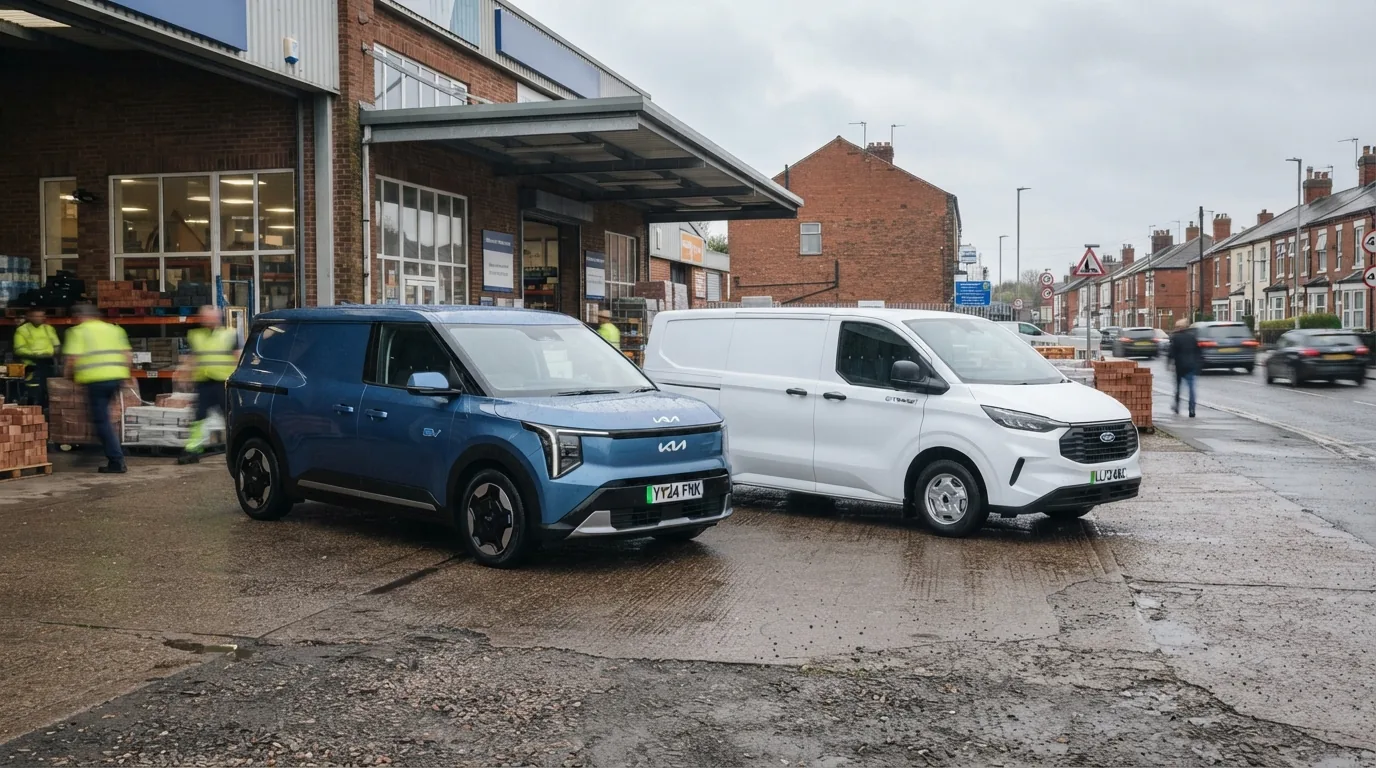
Kia's PV5 Cargo costs about £15,000 less than Ford's updated 71kWh E-Transit Custom before the grant, yet goes further on a charge. The catch is a smaller load bay and a lower payload.
Best Electric Vans Eligible for the UK Plug in Van Grant
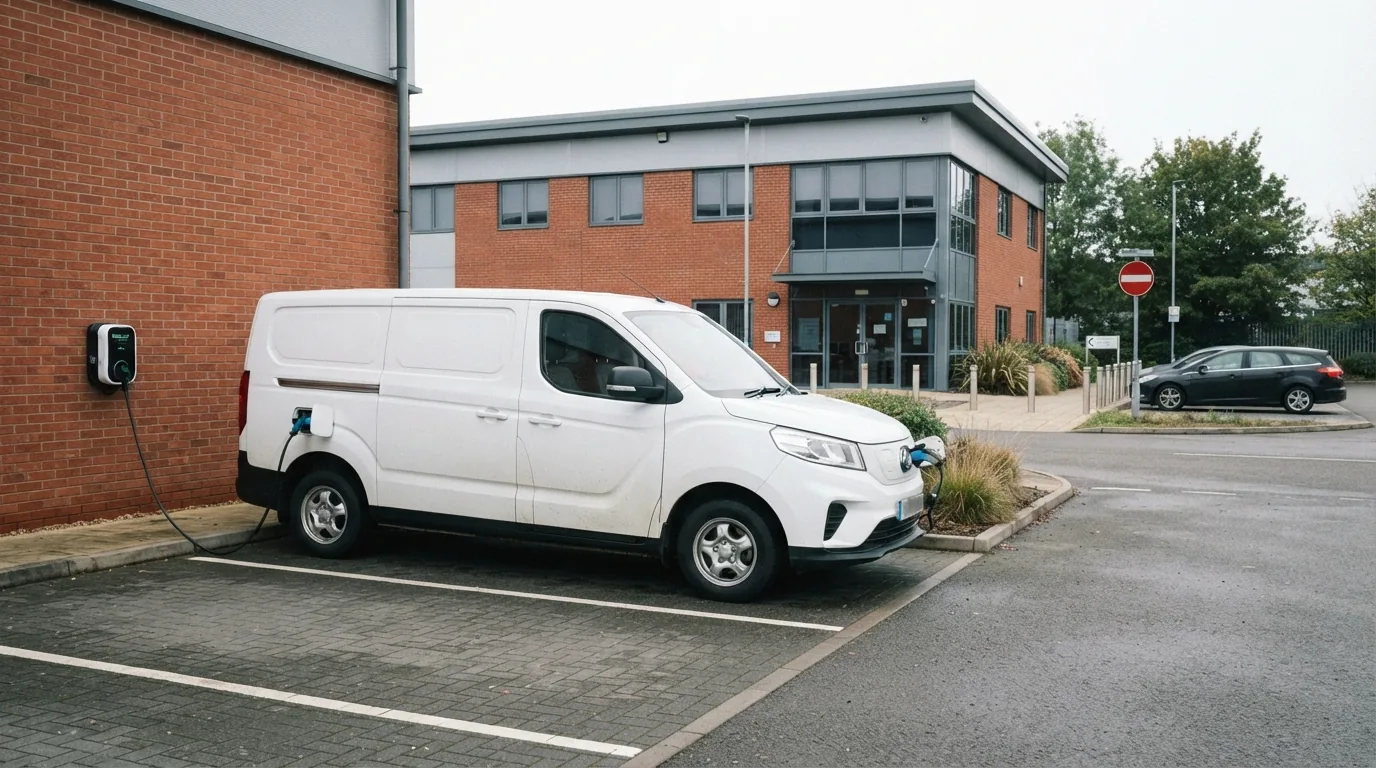
The Plug-in Van Grant offers up to £5,000 off a new electric van. These are the models that earn it and deserve it.
Electric cars take 32% of UK sales in October, the highest share of 2026
Battery electric registrations rose 32.7% to 48,858 as carmakers pushed towards the 33% ZEV mandate target. The year to date is 26.6%, and by our sums November and December would need about seven in ten new cars to be electric to close the gap.