InstaVolt rewards can now be swapped for Virgin Points, one Volt for one point
Since 2 November, Volts earned in the InstaVolt app can be moved to Virgin Red at a rate of one to one. At 1p each as charging credit, they work out at 1% to 15% back on what you spend. Here is what that means on a real charge, and when keeping the credit makes more sense.
Quick answers
- From 2 November 2026, drivers can convert Volts earned through InstaVolt Miles into Virgin Points at one Volt to one Virgin Point, InstaVolt says.
- Volts are earned at 1 to 15 per £1 spent through the InstaVolt app, depending on tier, and each Volt is worth 1p if used as InstaVolt charging credit instead.
- That makes the rewards worth 1% to 15% of what you spend: 30p to £4.50 back on a £30 charge.
- At InstaVolt's 55p per kWh off-peak app rate, the rewards are worth 0.55p to 8.25p per kWh; at the 92p peak rate, 0.92p to 13.8p per kWh.
- Only charges started in the InstaVolt app earn Volts; contactless payments, at 92p per kWh at all times, do not.
- Head for Points says most Virgin Red rewards return about 0.5p per Virgin Point, so for many drivers a Volt is worth more as charging credit than as a Virgin Point.
- InstaVolt Miles is free, with automatic enrolment for app users, and transferring to Virgin Points needs a free Virgin Red account.
InstaVolt drivers can now turn their charging rewards into Virgin Points. From 2 November 2026, Volts earned through the InstaVolt Miles programme in the InstaVolt app convert at one Volt to one Virgin Point, the company announced. Drivers earn 1 to 15 Volts per £1 spent, and each Volt is worth 1p if used as charging credit instead.
For a UK driver who uses InstaVolt, that means the rewards are worth between 1% and 15% of what you spend, depending on your tier. On a £30 rapid charge, that is 30p to £4.50. It is a useful discount at the top tier and a small one at the bottom, and whether Virgin Points are a better use than charging credit depends on what you would spend them on.
What has InstaVolt announced?
InstaVolt says Volts can be exchanged for Virgin Points at a rate of one to one, starting on 2 November. Virgin Points are the currency of Virgin Red, the Virgin Group’s rewards club. According to InstaVolt, they can be spent on Virgin Atlantic reward seats and upgrades, Virgin Voyages sailings, Virgin Hotels stays, Virgin Experience Days, cinema tickets and meals.
The rewards programme itself, InstaVolt Miles, launched in October, as the company had trailed in September. It is free, and InstaVolt says app users are enrolled automatically with no subscription or extra sign-up. Volts from InstaVolt’s earlier rewards scheme have moved across.
“We’re always looking for ways to give our customers more,” said Delvin Lane, InstaVolt’s chief executive, adding that with InstaVolt Miles “every charge earns them something back”. InstaVolt says its network has more than 4,000 chargers at 1,200 sites.
How do you earn Volts?
You earn Volts on charging paid for through the InstaVolt app. The InstaVolt Miles page lists four tiers:
| Tier | Volts per £1 | Value as charging credit | Back on a £30 charge |
|---|---|---|---|
| Starter | 1 | 1% | 30p |
| Bronze | 5 | 5% | £1.50 |
| Silver | 10 | 10% | £3.00 |
| Gold | 15 | 15% | £4.50 |
Your tier is set by what you spent in the previous calendar month, and each tier lasts two months. Tiers are reviewed at the end of every month and can go up or down. InstaVolt has not published the spend needed for each tier. Its only example is that £30 of spending in October on the Starter tier moves a driver to Bronze for November and December. What it takes to reach Silver or Gold is not stated, so we cannot say how many drivers will earn the top rate.
Two limits matter. Charges made outside the app do not earn Volts or count towards your tier, so paying by contactless earns nothing. And Volts carried over from the old scheme can be spent or transferred but do not count as spending for tier progress.
What are the rewards worth per kWh?
This is where the headline rate becomes a real price. InstaVolt’s pricing terms, checked on 3 November 2026, give these standard rates:
- App and RFID users, peak (7am to 8pm): 92p per kWh
- App and RFID users, off-peak (8pm to 7am): 55p per kWh, for sessions started in those hours
- Contactless, roaming and fleet accounts: 92p per kWh at all times
InstaVolt says Volts are earned at the same rate per £1 off-peak as at other times. Taking each Volt at its 1p charging credit value, the effective price per kWh looks like this:
| Tier | Reward per kWh at 55p | Effective off-peak price | Reward per kWh at 92p | Effective peak price |
|---|---|---|---|---|
| Starter (1%) | 0.55p | 54.45p | 0.92p | 91.08p |
| Bronze (5%) | 2.75p | 52.25p | 4.6p | 87.4p |
| Silver (10%) | 5.5p | 49.5p | 9.2p | 82.8p |
| Gold (15%) | 8.25p | 46.75p | 13.8p | 78.2p |
These are our calculations from InstaVolt’s published rates and assume the Volts are used as charging credit at 1p each. They are not prices InstaVolt charges: you pay the full rate at the charger and get the reward back later as credit or points.
The biggest saving here is not the rewards. Charging off-peak in the app at 55p rather than at the 92p peak or contactless rate saves 37p per kWh, more than four times the 8.25p Gold tier reward on an off-peak charge. If you can time your stops for after 8pm, do that first.
How does InstaVolt compare with the UK average?
Zapmap’s Charging Price Index puts the average pay as you go price for rapid and ultra-rapid charging at 79p per kWh in September 2026. Against that:
- InstaVolt off-peak at 55p is 24p per kWh below the average before any rewards.
- InstaVolt peak at 92p is 13p above the average. Only at the Gold tier, at an effective 78.2p, does it come in just under it.
So for daytime charging, the rewards narrow InstaVolt’s gap to the average rather than make it cheap. Our guide to UK public charging costs and our ranking of UK charging networks show how other networks price their sessions, and our head to head comparisons of Tesla Supercharger and InstaVolt and Gridserve and InstaVolt go into more detail. Prices change often, so check each network’s app before you set off.
What does it mean on a real charge?
Take a 40kWh top-up, which is roughly a 10% to 80% charge on a car with a battery of about 57kWh usable.
- Off-peak at 55p: the charge costs £22. Starter earns about 22 Volts (22p); Gold earns about 330 Volts (£3.30).
- Peak at 92p: the charge costs £36.80. Starter earns about 37 Volts (37p); Gold earns about 552 Volts (£5.52).
InstaVolt does not say how part pounds are rounded, so treat these as approximate.
Over a year, the totals depend heavily on your tier. As an illustration, a driver who covers 4,000 miles a year on InstaVolt off-peak, in a car averaging 3.5 miles per kWh, would use about 1,143kWh and spend about £629. At Starter, that earns about £6.29 of rewards; at Gold, about £94. The cost per mile drops from about 15.7p to about 13.4p at Gold. Since the tier depends on the previous month’s spend and the thresholds are not published, a low or irregular user should expect the lower end.
For comparison, home charging on the October price cap costs 26.32p per kWh, as we covered in our Ofgem price cap report, and an off-peak EV tariff is cheaper still. No public rewards scheme closes that gap.
Are Virgin Points worth more than charging credit?
Not always. Converting is one to one, so turning a Volt into a Virgin Point means giving up 1p of charging credit for one point. Whether that is a good swap depends on what a Virgin Point gets you.
The points site Head for Points says that “the vast majority” of Virgin Red rewards, such as gift cards and train tickets, return about 0.5p per Virgin Point, according to its guide to non-flying uses. In its report on the InstaVolt deal, it notes that converting means effectively paying 1p per point, and says it generally values airline miles at 1p or more when used for premium cabin flights.
In practice:
- If you would spend points on gift cards or everyday rewards, 450 Volts are worth £4.50 as charging credit but about £2.25 as Virgin Points at 0.5p each. Keep the credit.
- If you are saving for Virgin Atlantic flights or upgrades, especially in premium cabins, the points can be worth as much as the credit or more, and InstaVolt adds a new way to build a balance.
- If you already collect Virgin Points, topping up a balance you will use for a flight can make sense. Starting from scratch on InstaVolt alone will take a long time at the lower tiers.
How do you transfer Volts to Virgin Points?
InstaVolt says you need a free Virgin Red account. You can join through the Virgin Red app on the Apple App Store or Google Play, or on the Virgin Red website, then follow the on-screen instructions in the InstaVolt app to make the transfer. If you cannot use the app, InstaVolt says you can contact its support team, which is listed as available 24 hours a day on 0808 281 4444.
Your InstaVolt app dashboard shows your current tier, your monthly spend, progress to the next tier and your rewards history. Volts can also be turned into charging credit there and used against your next charge. InstaVolt’s programme page does not give an expiry date for Volts, and the use of Virgin Points is subject to Virgin Red’s own terms.
Who should use the InstaVolt app?
If you charge at InstaVolt more than occasionally, paying through the app is the clear choice. It unlocks the 55p off-peak rate and earns Volts, while contactless costs 92p at all hours and earns nothing. Drivers of older cars should also note InstaVolt’s commitment to keep CHAdeMO at every site. For a fuller guide to the network itself, see the InstaVolt network guide on Best Chargers, and for paid memberships at other networks, our guide to EV charging subscriptions.
Our view
InstaVolt Miles is a free discount of 1% to 15% for app users, and the Virgin Points option adds choice rather than value for most people. At 1p a Volt as credit and about 0.5p a point on most Virgin Red rewards, charging credit is usually the better use unless you are saving for flights. The real saving at InstaVolt is still timing: an app session started after 8pm costs 55p per kWh, against 92p during the day. Until InstaVolt publishes what it takes to reach each tier, plan on the lower rates and treat anything more as a bonus.
How we test and where our numbers come from
Range figures are official WLTP combined values taken from manufacturer UK specification pages, with real-world estimates drawn from independent comparative testing. Prices are UK list prices at the time of the latest update. Tax, grant and charging-scheme figures come from GOV.UK and HMRC publications. We re-check every guide when pricing, specification or policy changes. Last checked 6 November 2026. How we work out our own figures.
Frequently asked questions
How do I convert InstaVolt Volts into Virgin Points?
You need a free Virgin Red account, which you can set up through the Virgin Red app or website. InstaVolt says you then follow the on-screen instructions in the InstaVolt app to transfer Volts, at one Volt to one Virgin Point. InstaVolt support is on 0808 281 4444 if you get stuck.
How many Volts do I earn per £1 at InstaVolt?
Between 1 and 15 per £1 spent through the app. InstaVolt lists four tiers: Starter at 1 Volt per £1, Bronze at 5, Silver at 10 and Gold at 15. Your tier depends on what you spent in the previous calendar month, but InstaVolt has not published the spend needed for each tier.
What is an InstaVolt Volt worth?
1p each if you use it as InstaVolt charging credit. Converted to Virgin Points, its value depends on what you spend the points on; Head for Points says most Virgin Red rewards return about 0.5p per point, with better value possible on some flights.
Do I earn Volts if I pay by contactless at InstaVolt?
No. InstaVolt says charges made outside the app do not earn Volts or count towards your tier. Contactless also costs 92p per kWh at all times, while app users pay 55p per kWh for sessions started between 8pm and 7am.
Do I have to sign up for InstaVolt Miles?
No. InstaVolt says every app user is enrolled automatically, with no subscription or membership fee. Volts from InstaVolt's earlier rewards scheme have moved across, though they do not count towards tier progress.
Sources and further reading
- instavolt.co.ukInstaVoltPrimary source referenced in this article.
- instavolt.co.ukInstaVolt MilesTier names and earning rates, how tiers are set, app-only earning, Virgin Red sign-up, legacy Volts and the support number.
- instavolt.co.ukInstaVolt Pricing Terms and ConditionsStandard prices checked on 3 November 2026: 92p per kWh peak and 55p off-peak for app users, 92p for contactless.
- instavolt.co.ukA more rewarding way to charge is nearly hereBackground: InstaVolt's announcement that the new rewards programme would launch in October.
- zapmap.comCharging Price IndexUK average pay as you go prices for September 2026: 79p per kWh for rapid and ultra-rapid, 54p for slow and fast.
- headforpoints.comBits: triple points on train tickets, InstaVolt to Virgin Points dealIndependent view of the deal and of the value of Virgin Points versus charging credit.
- headforpoints.comWhat's the best non-flying use of Virgin Points?Typical redemption values of about 0.5p per Virgin Point for most non-flying rewards.

EV Compared
The EV Compared editorial team tracks the UK electric vehicle market full time: new model launches, list prices, WLTP and real-world range, public charging tariffs and the tax rules that decide what an EV actually costs to run. Every guide is checked against manufacturer specifications and official GOV.UK figures, and updated whenever the numbers move.
Related reading
View all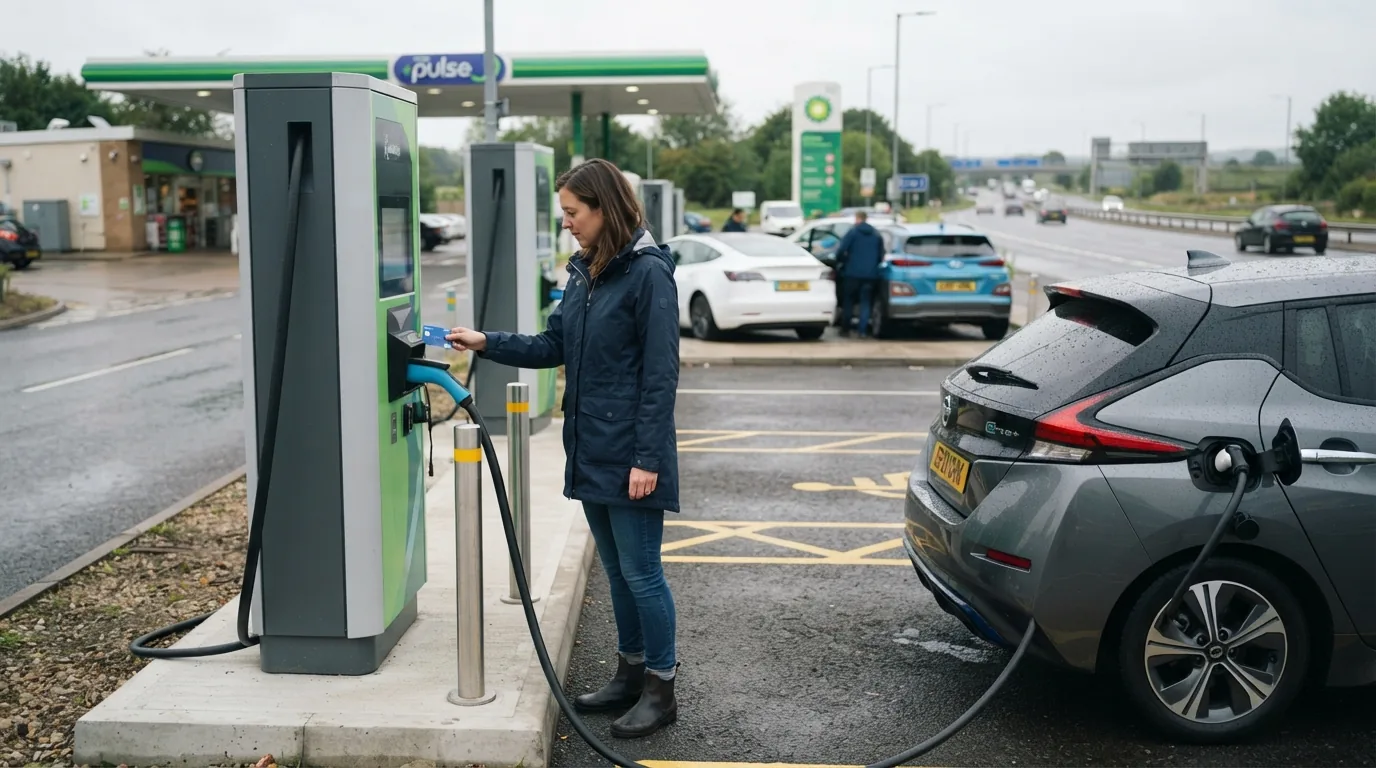
How Much Does Public EV Charging Cost in the UK in 2026?
Current prices by charger speed, network and payment method, with the real cost per mile
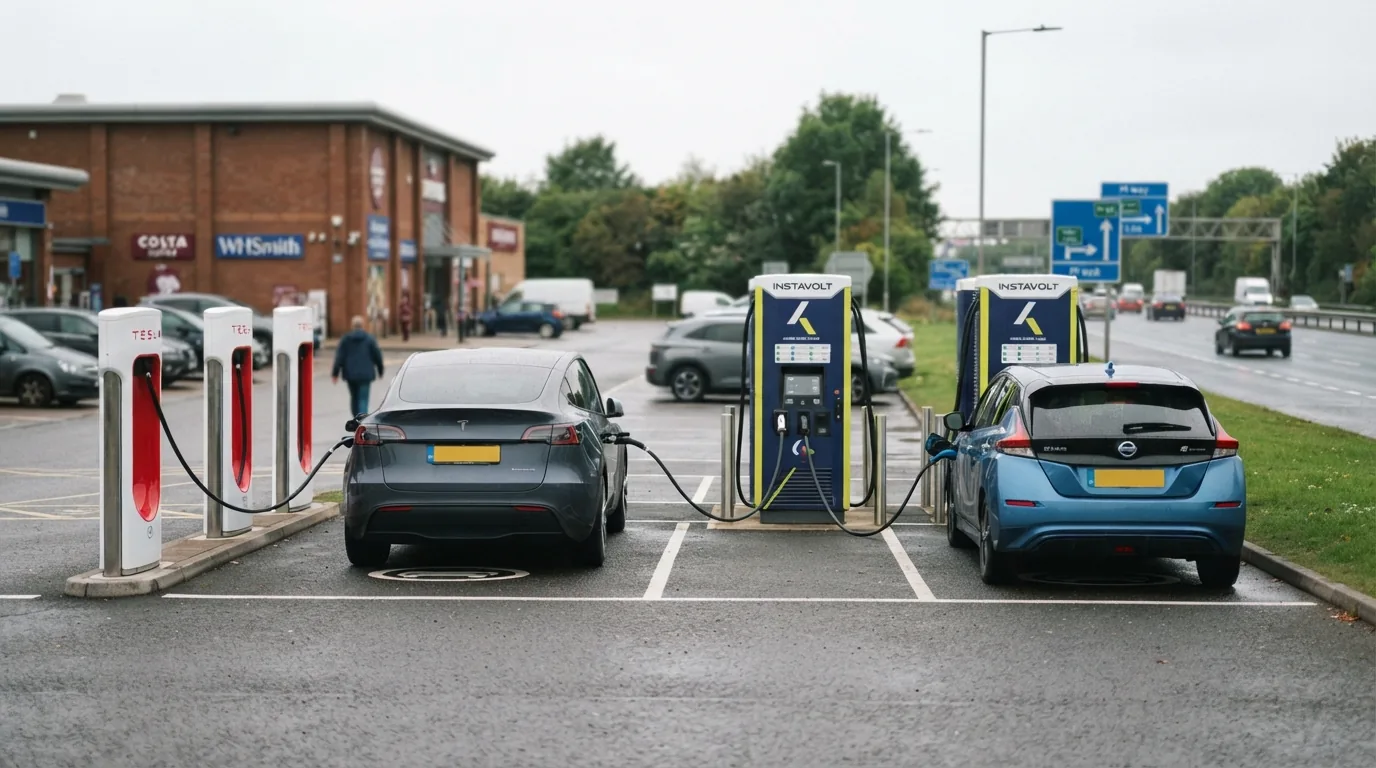
Tesla Supercharger vs InstaVolt: Cost, Speed and Coverage Compared (2026)
Tesla Superchargers are cheaper overall, especially for Tesla owners, while InstaVolt offers wider geographic coverage and tap-and-go contactless simplicity. Here is how to choose.
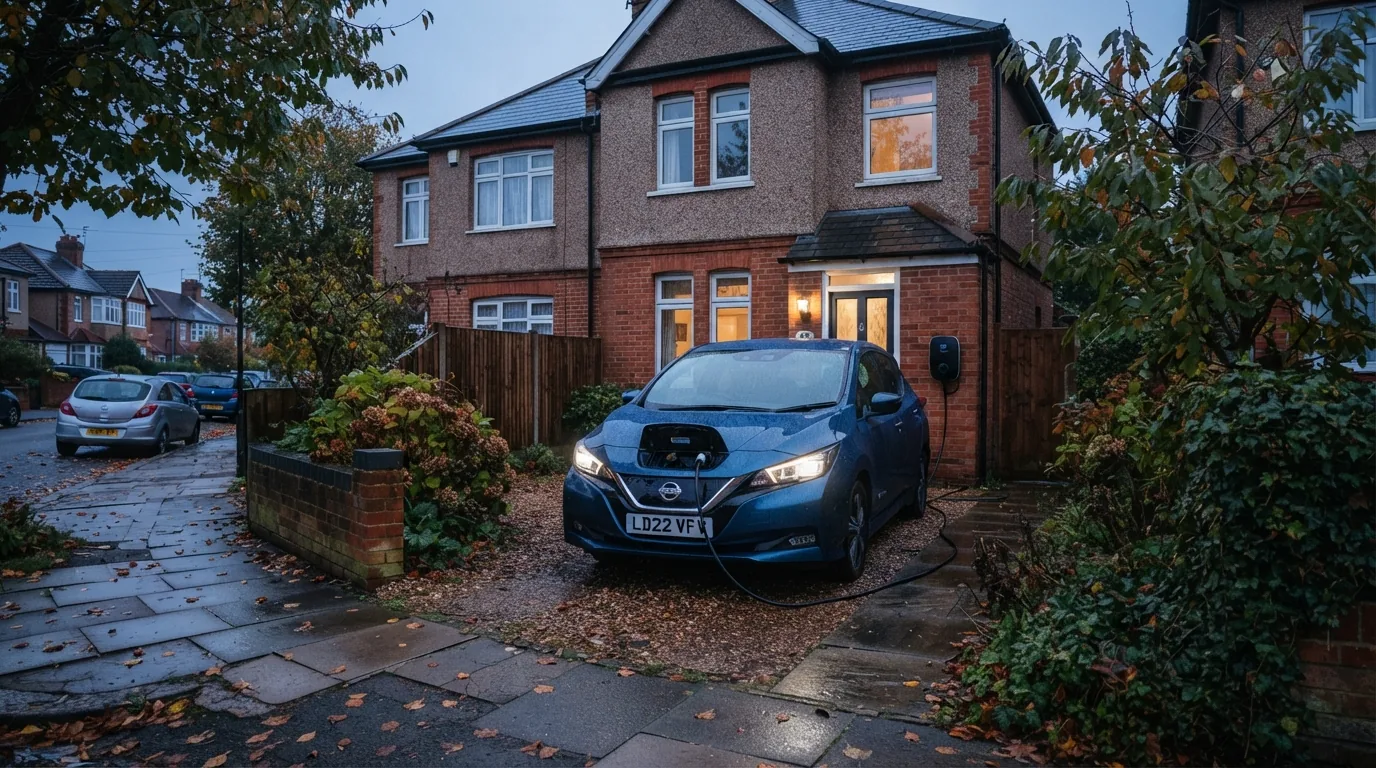
Ofgem price cap: home EV charging now costs 26.32p per kWh
October's price cap barely moves the cost of charging at home, but a forecast points to 15% more in January. Here is what a charge and a mile now cost, and what an EV tariff saves.
Best EV Charging Subscriptions UK 2026: Which Plans Save Money
Which monthly plans actually save money, and who should not bother with one
Gridserve vs InstaVolt: Best UK Rapid Charging Network?
Two of the most trusted rapid networks compared on price, reliability, coverage and speed
UK EV Charging Networks Ranked 2026: Prices, Reliability and Coverage
Ranked by use case: which network wins for motorway driving, reliability, price and urban coverage