Ofgem price cap: home EV charging now costs 26.32p per kWh
October's price cap barely moves the cost of charging at home, but a forecast points to 15% more in January. Here is what a charge and a mile now cost, and what an EV tariff saves.
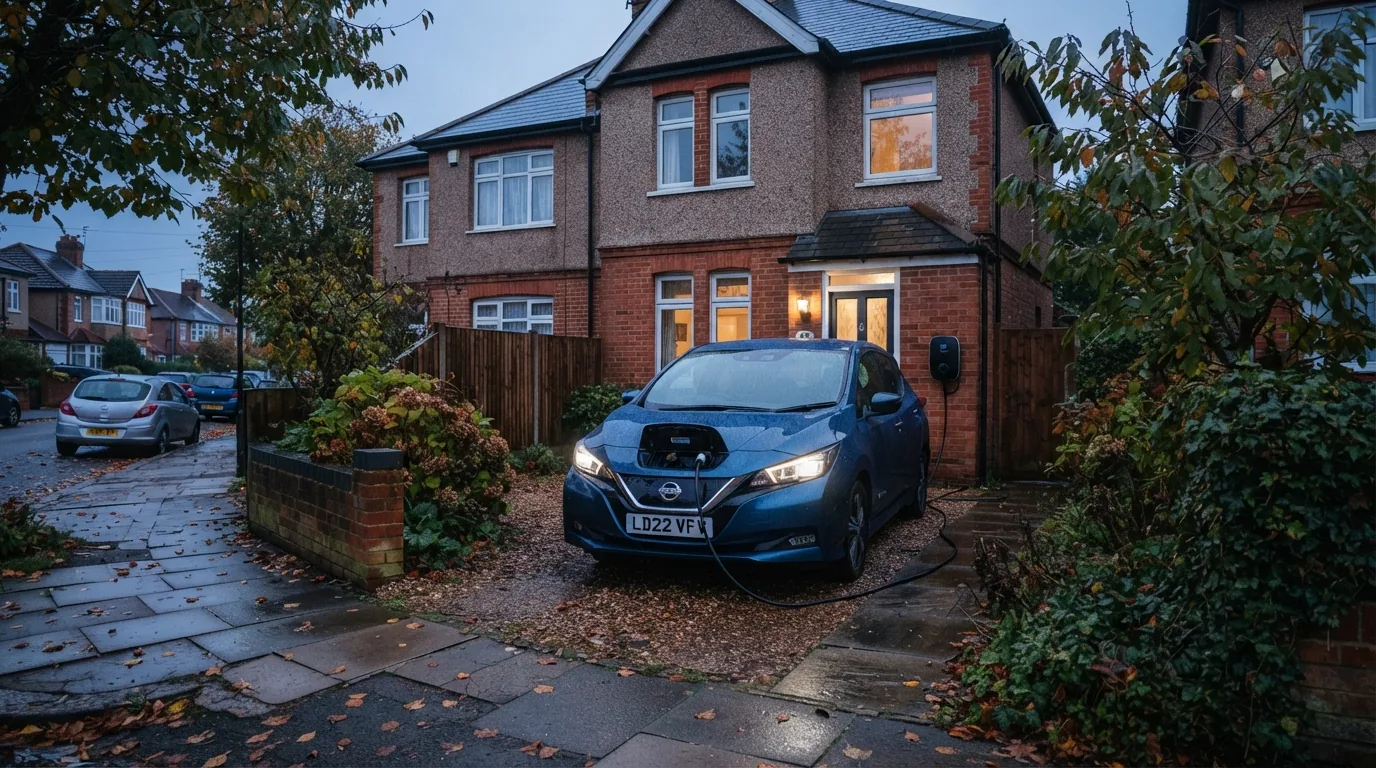
Quick answers
- Ofgem's cap set the standard electricity unit rate at 26.32p per kWh from 1 October to 31 December 2026, up from 26.11p, while the standing charge fell from 57.19p to 54.83p a day.
- At 26.32p, a 10 to 80% charge of a 60kWh battery costs about £11.05, and driving costs about 7.5p a mile in a car that does 3.5 miles per kWh.
- Intelligent Octopus Go's 7.6p off-peak rate is 71% below the capped rate, worth about £535 a year over 10,000 miles of home charging.
- Households without gas see a rise of under 1%, helped by 0% VAT on electricity until 31 March 2027, while typical gas bills rise around 8%.
- Cornwall Insight forecasts electricity at 30.28p per kWh from January, about 15% more than now. Ofgem confirms the January cap on 25 November 2026.
Since 1 October, anyone charging an electric car at home on a standard variable tariff has paid an average of 26.32p per kWh under Ofgem’s new price cap. That is only 0.21p more than over the summer, so a 10 to 80% top-up of a 60kWh battery (42kWh) costs about £11.05, or roughly 7.5p a mile in a car that manages 3.5 miles per kWh. The bigger numbers sit either side: an off-peak EV tariff costs less than a third of the capped rate, and January looks set to bring a sharp rise.
Ofgem announced the October to December cap on 26 August 2026. For a typical dual-fuel household paying by direct debit it is £1,723 a year, up 4% (about £60) on the £1,663 July to September cap. Wholesale gas, which Ofgem links to the conflict in the Middle East, drives the rise. Electricity barely moved.
What changed for electricity on 1 October?
The unit rate edged up and the standing charge fell, according to Ofgem’s rate tables and Electrifying. These are direct debit averages, so regional rates differ a little.
| Price cap figure | July to September 2026 | October to December 2026 | Change |
|---|---|---|---|
| Electricity unit rate | 26.11p per kWh | 26.32p per kWh | up 0.21p (0.8%) |
| Electricity standing charge | 57.19p a day | 54.83p a day | down 2.36p |
| Typical dual-fuel bill | £1,663 a year | £1,723 a year | up £60 (4%) |
By our sums, the standing charge cut is worth £8.61 a year (£208.74 down to £200.13), while the unit rate rise adds about £6 to the 2,857kWh needed for 10,000 miles at 3.5 miles per kWh. So a standard variable household using under about 4,100kWh a year, car included, pays slightly less than over the summer; heavier users pay a few pounds more.
The cap only limits default standard variable tariffs. Fixed deals, which Ofgem estimates cover about 11 million households (around 35%), and EV tariffs are priced separately.
Why are all-electric homes shielded this time?
Gas is doing the damage. Ofgem says typical gas bills rise around 8%, while households that do not use gas see a rise of under 1%, helped by VAT on household electricity being cut from 5% to 0% from 1 October until 31 March 2027 (UKEM). Gas stays at 5%. Our electricity VAT cut explainer sets out the savings.
That makes an EV and heat pump home with no gas one of the best placed this winter. Public charging still carries 20% VAT, as our public charging VAT piece explains.
What does a home charge cost under the October cap?
The table shows a 10 to 80% charge (70% of the quoted battery) for three popular UK models, before charging losses, using published battery sizes for the Renault 5 E-Tech, Skoda Elroq 85 and Kia EV3.
| Model (battery) | Energy added | October cap, 26.32p | January forecast, 30.28p | Intelligent Octopus Go, 7.6p | Public rapid average, 77p |
|---|---|---|---|---|---|
| Renault 5 E-Tech (52kWh) | 36.4kWh | £9.58 | £11.02 | £2.77 | £28.03 |
| Skoda Elroq 85 (77kWh usable) | 53.9kWh | £14.19 | £16.32 | £4.10 | £41.50 |
| Kia EV3 Long Range (81.4kWh) | 57kWh | £15.00 | £17.25 | £4.33 | £43.87 |
Electrifying puts a full charge of a 72kWh battery at £18.95 on the cap, up from £18.80. The rapid column uses Zapmap’s weighted average pay-as-you-go price for rapid and ultra-rapid chargers in August 2026. For the same energy, a rapid top-up costs nearly three times the capped home price and about ten times an off-peak tariff (see our public charging price report).
How far does an off-peak EV tariff undercut the cap?
Octopus listed Intelligent Octopus Go at 7.6p per kWh at the start of October, with an off-peak window from 11.30pm to 5.30am (Tesla Charger). That is 71% below the capped rate.
| Rate | Pence a mile at 3 miles/kWh | At 3.5 miles/kWh | At 4 miles/kWh | 10,000 miles a year at 3.5 miles/kWh |
|---|---|---|---|---|
| October cap, 26.32p | 8.8p | 7.5p | 6.6p | £752 |
| January forecast, 30.28p | 10.1p | 8.7p | 7.6p | £865 |
| Intelligent Octopus Go, 7.6p | 2.5p | 2.2p | 1.9p | £217 |
| Public rapid average, 77p | 25.7p | 22.0p | 19.3p | £2,200 |
Moving 10,000 miles of charging from the cap to the off-peak rate saves about £535 a year. The catch is that EV tariffs charge more outside the cheap window, so the saving depends on charging overnight. Our best EV tariffs guide compares the options, and our home charging cost guide covers the basics.
What could January bring?
Cornwall Insight forecast on 30 September that the January to March 2027 cap will rise 16% to £1,999 for a typical dual-fuel home: £276 more and the largest rise since January 2023. It puts electricity at 30.28p per kWh with a standing charge of about 55p a day, and blames Middle East conflict disrupting gas supplies.
On those figures, capped home charging would cost about 15% more per kWh. The 60kWh top-up would rise from £11.05 to £12.72, and 10,000 miles from £752 to about £865. The forecast can still move; Ofgem announces the real cap on 25 November 2026.
Should you fix, switch or sit tight?
A fix can protect against a January rise, but Money to the Masses warns that long fixes could look poor value if wholesale prices fall and that exit fees matter.
Our view for EV drivers:
- If you can charge off street with a smart charger or compatible car, an EV tariff is the bigger win. Its £535 a year saving over 10,000 miles is nearly five times the £113 that January’s forecast rise would add to the same mileage on the cap.
- If you cannot get an EV tariff, a fix priced at or below today’s cap, with low exit fees, is worth a look before Ofgem’s 25 November announcement.
- If you rely on public chargers, the cap changes nothing for you. Network choice matters far more than Ofgem’s numbers.
October itself is a non-event for most EV households. January is the one to plan for, and the time to act is before the new cap is confirmed.
How we test and where our numbers come from
Range figures are official WLTP combined values taken from manufacturer UK specification pages, with real-world estimates drawn from independent comparative testing. Prices are UK list prices at the time of the latest update. Tax, grant and charging-scheme figures come from GOV.UK and HMRC publications. We re-check every guide when pricing, specification or policy changes. Last checked 6 October 2026.
Frequently asked questions
How much does it cost to charge an electric car at home under the October 2026 price cap?
On a standard variable tariff you pay an average of 26.32p per kWh from 1 October to 31 December 2026. A 10 to 80% charge of a 60kWh battery uses 42kWh and costs about £11.05, or around 7.5p a mile in a car that does 3.5 miles per kWh.
Does the price cap apply to EV tariffs like Intelligent Octopus Go?
No. The cap limits default standard variable tariffs, while fixed deals and EV tariffs are priced separately. Intelligent Octopus Go was listed at 7.6p per kWh off-peak at the start of October, 71% below the capped rate.
Will home EV charging get more expensive in January 2027?
It is likely. Cornwall Insight forecasts the capped electricity rate at 30.28p per kWh from January, about 15% above today's 26.32p, which would lift a 42kWh top-up from £11.05 to £12.72. Ofgem confirms the real figure on 25 November 2026.
Should EV drivers fix their energy tariff before January?
If you can charge off street with a smart charger, an off-peak EV tariff usually saves far more than a standard fix: about £535 a year on 10,000 miles at 7.6p against the cap. If you cannot use an EV tariff, a fix priced at or below the current cap with low exit fees is worth considering before 25 November.
Sources and further reading
- ofgem.gov.ukOfgemPrimary source referenced in this article.
- ofgem.gov.ukOfgem: Energy price cap unit rates and standing chargesConfirms the 26.32p per kWh unit rate and 54.83p daily standing charge for October to December 2026.
- electrifying.comElectrifying: Ofgem announces price rises that will make home EV charging more expensiveConfirms the previous 26.11p unit rate and 57.19p standing charge, and the £18.80 to £18.95 cost of charging a 72kWh battery.
- cornwall-insight.comCornwall Insight: 16% Price Cap Rise Forecast in JanuaryForecasts a £1,999 January cap and a 30.28p per kWh electricity unit rate, and gives the 25 November announcement date.
- zapmap.comZapmap: UK EV Charging Price IndexGives the August 2026 weighted average public prices of 77p per kWh on rapid chargers and 54p on standard chargers.
- teslacharger.co.ukTesla Charger: Octopus Intelligent Go review (2026)Lists the Intelligent Octopus Go off-peak rate at 7.6p per kWh and the 11.30pm to 5.30am window.
- ukem.co.ukUKEM: 0% VAT on Electricity Oct 2026 to Mar 2027Confirms 0% VAT on household electricity from 1 October 2026 to 31 March 2027, with gas staying at 5%.
- moneytothemasses.comMoney to the Masses: Should I fix my energy prices?Sets out the risks of long fixes and exit fees.

EV Compared
The EV Compared editorial team tracks the UK electric vehicle market full time: new model launches, list prices, WLTP and real-world range, public charging tariffs and the tax rules that decide what an EV actually costs to run. Every guide is checked against manufacturer specifications and official GOV.UK figures, and updated whenever the numbers move.
Related reading
View all
Electricity VAT cut to 0%: what EV drivers save until March
VAT on home electricity fell to zero on 1 October, yet drivers on cheap EV tariffs gain least and public charging stays at 20%. Here is what the six-month cut is really worth to you.
How Much Does It Cost to Charge an EV at Home in the UK?
A full 60kWh charge costs around £14.80 on the standard rate or about £4.80 on an overnight EV tariff. Here is the maths, plus how to get the cheapest possible home charging cost.
EV Tariffs October 2026: Octopus, EDF and British Gas Off-Peak Rates
Intelligent Octopus Go has dropped to 7.6p per kWh, EDF GoElectric holds at 6.66p and British Gas EV Power sits at 9.5p. Here is what each costs, when you can charge and how to choose before winter.
Diesel tops 200p a litre: how much cheaper an EV is per mile
Diesel passed £2 a litre for the first time on 2 October, putting a 50mpg diesel at about 18p a mile. Home charging costs 2.3p to 7.5p a mile, but rapid chargers now cost more.

Best EV Tariffs UK 2026: Off-Peak Rates Compared (p/kWh)
Every major UK EV electricity tariff compared by rate, window, compatibility, and annual saving
Zapmap: rapid charging averages 77p/kWh as MFG keeps 59p app price
Rapid public charging averaged 77p/kWh in August, and MFG has kept its 59p summer price for drivers who use its app. Here is what the big networks charge, and the off-peak and subscription deals that cut the bill.