Electricity VAT cut to 0%: what EV drivers save until March
VAT on home electricity fell to zero on 1 October, yet drivers on cheap EV tariffs gain least and public charging stays at 20%. Here is what the six-month cut is really worth to you.
Quick answers
- VAT on household electricity in England, Scotland and Wales fell from 5% to 0% on 1 October 2026 and stays at zero until 31 March 2027. Northern Ireland stays at 5%.
- New AutoMotive estimates the cut is worth £27 a year to a driver with a home charger on a standard tariff, but only £13 a year to one on a cheap EV tariff.
- At Ofgem's 26.32p per kWh cap rate, the cut removes about 1.32p per kWh, or roughly 95p on a 72kWh charge. On a 7.7p smart tariff it is under 0.4p per kWh.
- Suppliers apply the zero rate automatically, including on fixed tariffs you have already locked in, so there is nothing to claim.
- Public charging still carries 20% VAT, and ChargeUK says the VAT gap between drivers who can and cannot charge at home has grown to £200 a year.
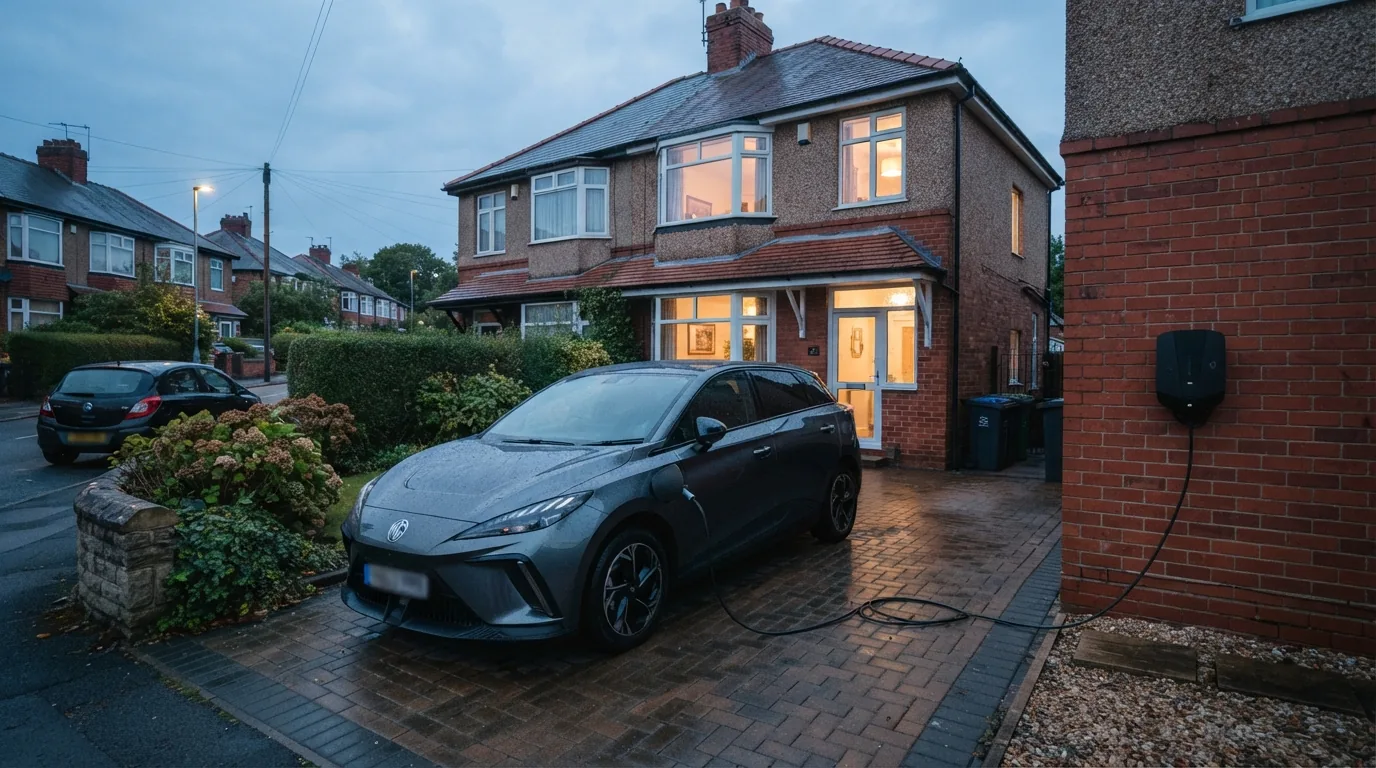
VAT on household electricity in England, Scotland and Wales fell from 5% to zero on 1 October 2026 and will stay there until 31 March 2027. For an EV driver with a home charger, analysis by New AutoMotive puts the cut at about £27 a year on a standard tariff, but just £13 on a cheap EV tariff. Drivers who rely on public chargers get nothing, because they still pay 20% VAT.
The cut was announced by Prime Minister Andy Burnham in July, and GOV.UK says it saves the average household £45 a year. It arrived alongside a 4% rise in Ofgem’s price cap for a typical dual-fuel home, so what you actually gain depends on your tariff and on where you charge.
What has changed, and who gets it?
The rate on domestic electricity is now 0% for six months. HMRC’s guidance confirms it covers Great Britain only: the 5% reduced rate still applies in Northern Ireland. VAT on gas is unchanged at 5%, so a dual-fuel bill still carries some VAT (OVO Energy has a plain-English explainer).
You do not need to apply. GOV.UK says suppliers are expected to stop charging VAT on electricity from 1 October, including on fixed tariffs where you have already locked in your rate. Octopus EV says Octopus Energy is passing the cut on from day one, fixed tariffs included. Electricity used to charge your car at home is covered like any other.
How much is the cut worth per kWh?
Removing 5% VAT takes 4.76% off any VAT-inclusive price, so the saving shrinks with the rate you pay. That is why the driver on a cheap overnight rate gains least. The table uses the Ofgem cap rate and current Octopus smart rates, with our calculation of each rate with 5% VAT added back. The 72kWh charge is the mid-size battery example used by Electrifying.
| Rate | Price now (0% VAT) | Same rate with 5% VAT | VAT saved per kWh | Saving on a 72kWh charge |
|---|---|---|---|---|
| Ofgem price cap, standard variable (October to December) | 26.32p | 27.64p | 1.32p | 95p |
| Intelligent Octopus Go smart charging | 7.7p | 8.09p | 0.39p | 28p |
| Intelligent Octopus Go EV Saver (Octopus EV drivers) | 6.6p | 6.93p | 0.33p | 24p |
| Public charger | Unchanged | 20% VAT still applies | 0p | 0p |
The bigger saving at home still comes from the tariff, not the tax. Moving from the 26.32p cap rate to a 7.7p smart tariff saves 18.62p per kWh, about 14 times what the VAT cut is worth on the standard rate. Our guide to what it costs to charge an EV at home runs through those numbers in more detail.
Did the price cap swallow the saving?
For drivers on a standard variable tariff, largely yes. The cap unit rate was 26.11p per kWh, including 5% VAT, from July to September. From 1 October it is 26.32p with no VAT at all, so the underlying price rose. Electrifying calculates that a 72kWh charge on the cap rate went up from £18.80 to £18.95.
Without the VAT cut, the same rate would have been 27.64p, a rise of almost 6%. The cut turned that into a rise of under 1%. The daily standing charge fell from 57.19p to 54.83p. We break down the new cap in our piece on the October price cap and home charging costs.
The outlook is less kind. Cornwall Insight forecasts that the cap will rise 16% in January to £1,999 a year for a typical dual-fuel household, with electricity at 30.28p per kWh. That is a forecast, not a confirmed figure, but it suggests standard-rate home charging will get dearer this winter even with no VAT on the bill.
Who misses out?
New AutoMotive’s analysis shows how unevenly the benefit falls.
| How you charge | Yearly saving from home VAT cut | Yearly VAT still paid on public charging |
|---|---|---|
| Home charger on a cheap EV tariff | £13 | £42 |
| Home charger on a standard tariff | £27 | £62 |
| Extension lead or kerbside cable channel | £21 | £113 |
| No home charging | £0 | £216 |
In every group, the VAT paid on public charging is bigger than the saving at home, and the 9% of EV drivers with no home charging save nothing. At a public charger, one pound in every six you pay is VAT. The savings are also yearly figures: the zero rate lasts six months, so the cash you keep by 31 March will be smaller unless the cut is extended.
Trade body ChargeUK says the VAT gap between a driver who can charge at home and one who relies on public chargers has grown to £200 a year. It has coordinated a letter to the Prime Minister, signed by groups including the AA, Autotrader and the FairCharge campaign, on behalf of the estimated 10 million households that cannot charge at home. ChargeUK, which led the letter, puts the cost to the Treasury of aligning the rates at around £180 million a year.
A First-tier Tribunal ruled in February 2026, in a case brought by operator Charge My Street, that public charging should carry 5% VAT. HMRC is appealing that decision, and 20% remains the rate in the meantime. Our report on the public charging VAT gap covers the campaign in depth.
What this means for you
If you charge at home, you are already getting the cut, so check that your bills show 0% VAT on electricity from 1 October. On a standard variable tariff it is worth having, but the January forecast suggests it will soften price rises rather than make charging cheaper. If you are still on the cap rate, switching to a smart EV tariff is worth far more than the VAT change: compare the options in our EV tariffs guide and our Octopus Go versus Intelligent Octopus Go comparison.
If you are already on a cheap overnight tariff, the cut is small change, and nothing about it should alter how you charge. If you rely on public chargers, nothing has changed: 20% VAT still applies until the government acts or HMRC loses its appeal. Drivers without a driveway in England should also watch the cross-pavement charging planning changes, which could make charging at home possible on more streets.
Our view: the cut is welcome but modest for EV drivers, and it is temporary. Unless it is extended, VAT on household electricity returns to 5% on 1 April 2027. The tariff you charge on matters far more than the tax on it.
How we test and where our numbers come from
Range figures are official WLTP combined values taken from manufacturer UK specification pages, with real-world estimates drawn from independent comparative testing. Prices are UK list prices at the time of the latest update. Tax, grant and charging-scheme figures come from GOV.UK and HMRC publications. We re-check every guide when pricing, specification or policy changes. Last checked 6 October 2026.
Frequently asked questions
Do I need to do anything to get the electricity VAT cut?
No. GOV.UK says suppliers apply the zero rate automatically from 1 October 2026, including on fixed tariffs where you have already locked in your rate. There is nothing to claim.
How much will I save on charging my EV at home?
New AutoMotive puts the saving at about £27 a year if you charge with a home charger on a standard tariff and £13 a year on a dedicated EV tariff. Those are yearly figures, and the zero rate lasts six months, so the amount you keep by 31 March 2027 will be smaller unless the cut is extended.
Does the VAT cut apply to public EV chargers?
No. Electricity bought at public chargers is still charged at 20% VAT. A tax tribunal ruled in February 2026 that the 5% domestic rate should apply, but HMRC is appealing and its 20% position stands for now.
When does VAT on household electricity go back up?
The temporary zero rate runs from 1 October 2026 to 31 March 2027. After that, domestic electricity returns to the 5% reduced rate unless the government extends the cut.
Does the electricity VAT cut apply in Northern Ireland?
No. HMRC says the temporary zero rate covers Great Britain only. The 5% reduced rate continues to apply to domestic electricity in Northern Ireland.
Sources and further reading
- gov.ukGOV.UKPrimary source referenced in this article.
- gov.ukHMRC Revenue and Customs Brief 10 (2026): temporary zero rate of VAT for domestic electricity in Great BritainConfirms the zero rate covers England, Scotland and Wales, with Northern Ireland staying at 5%.
- ofgem.gov.ukOfgem: Changes to energy price cap between 1 October and 31 December 2026Confirms the 26.32p per kWh electricity unit rate and 54.83p daily standing charge at 0% VAT, and the 4% overall rise.
- evfleetworld.co.ukEV Fleet World: EV drivers without off-street parking hit by £172m VAT penaltyReports New AutoMotive's estimates of £27 and £13 yearly savings and the VAT each driver group still pays on public charging.
- octopusev.comOctopus EV: Electricity VAT cut, cheaper home EV chargingConfirms Intelligent Octopus Go at 7.7p per kWh and the EV Saver version at 6.6p, with the cut passed on to fixed tariffs from day one.
- electrifying.comElectrifying: Ofgem announces price rises that will make home EV charging more expensiveConfirms the move from 26.11p to 26.32p per kWh and the cost of a 72kWh charge rising from £18.80 to £18.95.
- fleetworld.co.ukFleet World: EV 'driveway divide' increases to £200 as home electricity VAT drops to zeroReports ChargeUK's £200 a year VAT gap and the 10 million households who cannot charge at home.
- transportandenergy.comTransport and Energy: Charging sector responds to HMRC decision to appeal VAT rulingReports HMRC's decision to appeal the First-tier Tribunal ruling in the Charge My Street case.

EV Compared
The EV Compared editorial team tracks the UK electric vehicle market full time: new model launches, list prices, WLTP and real-world range, public charging tariffs and the tax rules that decide what an EV actually costs to run. Every guide is checked against manufacturer specifications and official GOV.UK figures, and updated whenever the numbers move.
Related reading
View all
Ofgem price cap: home EV charging now costs 26.32p per kWh
October's price cap barely moves the cost of charging at home, but a forecast points to 15% more in January. Here is what a charge and a mile now cost, and what an EV tariff saves.
Public EV charging keeps 20% VAT as home electricity goes to 0%
Drivers without a driveway now pay 20% VAT at the plug while home charging pays none. Here is what a Budget cut to 5% or 10% would save, and why the Treasury has so far said no.
Autumn Budget 2026 and electric cars: what to watch
The Budget is on 28 October. Nothing in it is known yet. This preview sets out the rules already in place for electric car drivers and the open questions on VAT, fuel duty and company cars.
EV Tariffs October 2026: Octopus, EDF and British Gas Off-Peak Rates
Intelligent Octopus Go has dropped to 7.6p per kWh, EDF GoElectric holds at 6.66p and British Gas EV Power sits at 9.5p. Here is what each costs, when you can charge and how to choose before winter.
How Much Does It Cost to Charge an EV at Home in the UK?
A full 60kWh charge costs around £14.80 on the standard rate or about £4.80 on an overnight EV tariff. Here is the maths, plus how to get the cheapest possible home charging cost.
Best EV Tariffs UK 2026: Off-Peak Rates Compared (p/kWh)
Every major UK EV electricity tariff compared by rate, window, compatibility, and annual saving