Cross-pavement EV charging in England: planning rules ease 21 October
Drivers without a driveway will soon skip a separate planning application for a pavement cable channel. But the council still controls the footway, and nobody gets a reserved bay.
Quick answers
- From 21 October 2026, a new Class F permitted development right removes the usual need for a separate planning application for qualifying cross-pavement charging channels in England.
- You still need your council's permission, you cannot cut into the pavement yourself and the parking space outside your home is not reserved for you.
- The on-street parking chargepoint grant pays up to £500 or 75% of the cost, up from £350 on 1 April 2026, and the scheme runs until 31 March 2027.
- Kirklees Council is considering a 12-month Kerbo Charge trial offering households up to £1,200 towards installation, backed by a £1.5m Department for Transport award to West Yorkshire.
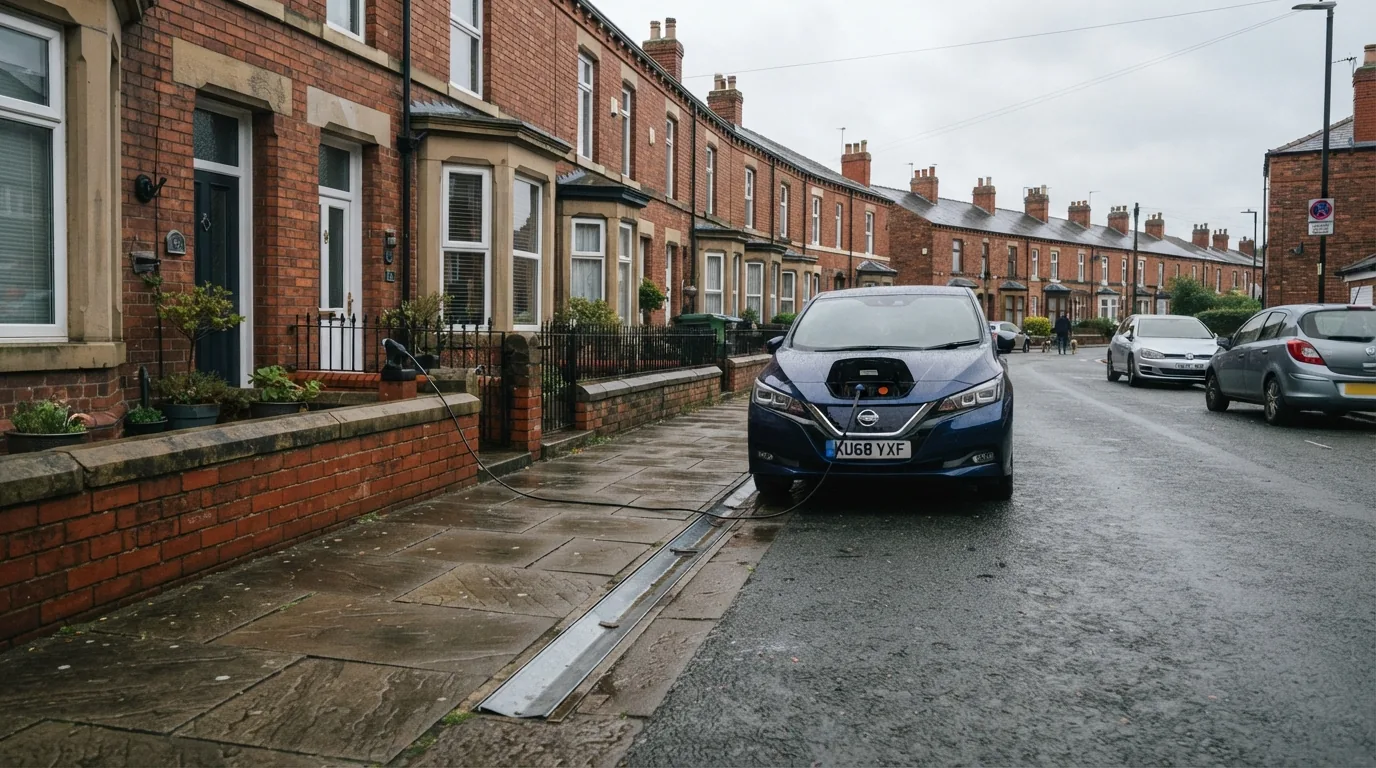
Drivers in England who park on the street outside their home will no longer need a separate planning application for a qualifying cross-pavement charging channel, or the home chargepoint that goes with it, from 21 October 2026. A new Class F permitted development right removes one layer of paperwork for households shut out of cheap overnight charging. It is not a free pass, though: the council still controls the pavement, the bay outside is not reserved for you and the £500 government grant still comes with conditions. Wales has its own policy support, covered in our report on Welsh business rates relief for EV charging.
The change is made by the Town and Country Planning (General Permitted Development) (England) (Amendment) (No. 2) Order 2026, which was made on 25 September, laid before Parliament on 30 September and comes into force on 21 October, according to Planning Geek. It follows the government’s confirmation of the change in September (GreenFleet) and a package first announced by Energy Secretary Ed Miliband on 21 April to tackle a “two-tier system” in which drivers without a driveway pay more to charge than those with one (EV Infrastructure News). That gap is widest at the public charger, as our explainer on the VAT gap between home and public charging sets out.
What does the new Class F right allow?
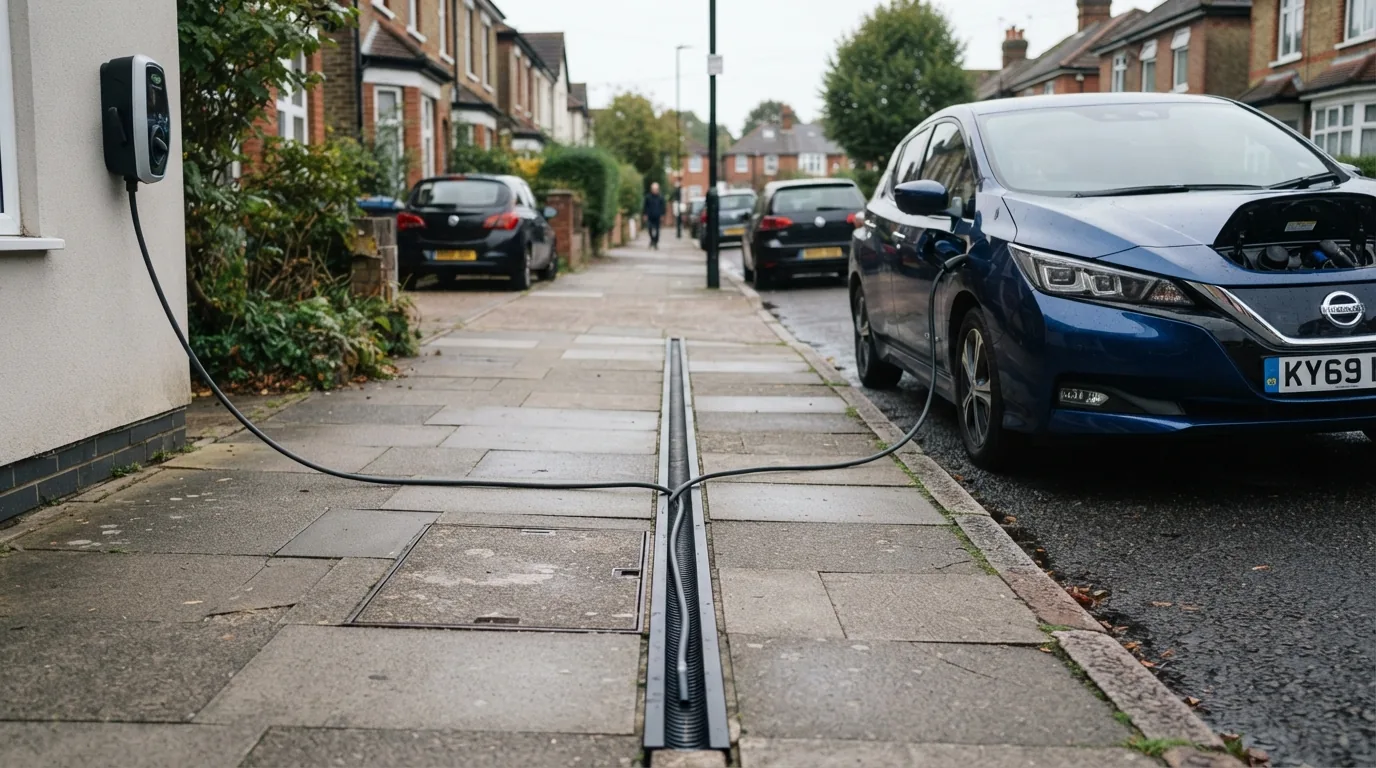
The order defines a “cross-pavement solution” as a pavement-embedded cable channel that lets a charging cable cross a footway safely from a home to a parked car. New Class F covers such a channel where the authority responsible for the road has authorised it, and on most residential streets that is the local council (Smart Motoring).
The order removes the usual need for a separate planning application for both the channel and the associated domestic chargepoint, which means one fewer process for councils already running schemes and a clearer national position for those that have held back.
The order amends England’s planning rules only. Drivers in Scotland, Wales and Northern Ireland see no change from it.
What does the change not do?
The new right is narrower than some headlines suggest:
- It is not a DIY permission. You cannot cut into the pavement yourself. Your council’s permission is still needed to lay a cable across the pavement, and street works rules still apply.
- It does not reserve a parking space. The bay outside your home stays public. If a neighbour parks there, your channel is no use that night.
- It does not cover every installation. Only channels that meet the order’s legal conditions qualify, so ask your council whether yours would.
- It does not force councils to say yes. Councils continue to oversee individual installations through their existing permissions and safety checks.
| Before 21 October 2026 | From 21 October 2026 | |
|---|---|---|
| Separate planning application for a qualifying channel | Usually needed | Not needed (Class F) |
| Council permission to lay a cable across the pavement | Required | Still required |
| Can you dig the pavement yourself? | No | Still no |
| Reserved parking bay | No | No |
| On-street parking chargepoint grant | Up to £500 since 1 April 2026 | Unchanged, ends 31 March 2027 |
How much does a cross-pavement channel cost?
It depends on where you live. A freedom of information survey by Vauxhall, reported by the RAC, found some councils install for free while others charge more than £1,000.
The Electric Vehicle Chargepoint Grant for Households with On-Street Parking pays up to £500 or 75% of the cost, up from £350 for applications made on or after 1 April 2026. A permanent cross-pavement solution must be fitted alongside the chargepoint, so cable covers or mats laid on the pavement do not count, and you need your council’s permission for the channel first. The scheme runs until 31 March 2027.
One detail to pin down before you sign: the government listing frames the grant as support for buying and installing the chargepoint where a cross-pavement solution is also fitted, while some installers describe it as covering both. Ask your installer exactly how the £500 is applied to your quote. Our guide to the EV chargepoint grant explains who else can claim it.
| Cost or support | Figure |
|---|---|
| Council charges found by Vauxhall’s FOI survey | Free to more than £1,000 |
| Proposed Kirklees trial support per household | Up to £1,200 |
| Government on-street parking chargepoint grant | Up to £500 or 75% of cost |
| Same grant before 1 April 2026 | £350 |
Which councils already offer cross-pavement charging?
Not many yet. Of the 134 councils that answered Vauxhall’s FOI request, seven had live cross-pavement charging, 21 were trialling it and 28 planned to roll it out in 2026, according to the RAC. That is 56 councils across England, Scotland and Wales, or 42% of those that responded, expecting to offer it by the end of the year. The survey ran from November 2025 to January 2026, before the planning change was confirmed. Many councils also still lack basic on-street charging, as our report on councils with no on-street EV charging shows.
Kirklees: up to £1,200 per household in a 12-month trial
The West Yorkshire Combined Authority secured £1.5m from the Department for Transport for pavement channels across the county, and Kirklees Council expects up to £330,000 of it to subsidise installations and cut what residents pay (Kirklees Together).
The council’s cabinet is due to discuss a 12-month trial today (6 October). Kerbo Charge, which already operates in Leeds and Bradford, would design, install and manage the channels on the council’s behalf. Households would receive up to £1,200 towards installation during the trial, according to Huddersfield Hub, and the findings will shape a standard approach and any longer-term rollout across Kirklees.
What this means for you
If you park on the street outside your home in England, the new rule simplifies the process but does not change who decides. Your council remains the gatekeeper, and with only seven of 134 responding councils running live schemes at the time of the FOI survey, availability is the main barrier, not planning law.
Before you spend anything:
- Ask your council whether it runs a cross-pavement scheme or has an approved supplier, and if not, when it plans to.
- Check what permission you need. Ask your council whether your installation would qualify under Class F and what other permission it needs.
- Be realistic about parking. If you cannot reliably park outside your own front door, a channel may not deliver nightly charging.
- Watch the deadline. The £500 grant scheme closes on 31 March 2027, and council approvals take time, so start early if you want the money.
Our view: this is a sensible piece of tidying up rather than a breakthrough. It removes duplicated paperwork, but the cost of a channel and the patchy spread of council schemes matter more to most drivers. For the full picture on your options, read our guide to installing an EV charger without a driveway and our explainer on the permissions you need for a home charger.
How we test and where our numbers come from
Range figures are official WLTP combined values taken from manufacturer UK specification pages, with real-world estimates drawn from independent comparative testing. Prices are UK list prices at the time of the latest update. Tax, grant and charging-scheme figures come from GOV.UK and HMRC publications. We re-check every guide when pricing, specification or policy changes. Last checked 6 October 2026.
Frequently asked questions
Do I still need council permission for a cross-pavement charging channel after 21 October?
Yes. The new rule only removes the separate planning application. You still need your council's permission to lay a cable across the pavement, and street works rules still apply.
Does the planning change apply in Scotland and Wales?
No. The change is made by an order amending England's General Permitted Development Order, so it covers England only.
Will I get a reserved parking space outside my house?
No. A cross-pavement channel does not reserve the bay outside your home, so if another car is parked there you cannot charge from your channel.
How much does a cross-pavement charging channel cost?
It depends on your council. A Vauxhall freedom of information survey found some councils install for free while others charge more than £1,000. In Kirklees, a proposed 12-month trial would give households up to £1,200 towards installation.
Is there a grant for cross-pavement charging?
Yes. The government's chargepoint grant for households with on-street parking pays up to £500 or 75% of the cost, as long as a permanent cross-pavement solution is fitted alongside the chargepoint. The scheme runs until 31 March 2027.
Sources and further reading
- planninggeek.co.ukPlanning GeekPrimary source referenced in this article.
- smart-motoring.comSmart Motoring: EV Charging Without a Driveway: What Changes on 21 Octoberthe definition of a cross-pavement solution, the need for council authorisation and what the £500 grant covers
- greenfleet.netGreenFleet: Rule change confirmed for cross pavement EV chargingthe government's confirmation of the new permitted development right
- find-government-grants.service.gov.ukFind a grant: Electric Vehicle Chargepoint Grant for Households with On-Street Parkingwhat the on-street parking chargepoint grant supports and its conditions
- rac.co.ukRAC: Almost half of councils to offer cross-pavement charging by end of 2026the Vauxhall FOI figures on councils offering, trialling and planning cross-pavement charging
- kirkleestogether.co.ukKirklees Together: Cabinet to discuss EV charging for residents without off street parkingthe Kirklees trial, the £1.5m West Yorkshire funding, the £330,000 allocation and the Kerbo Charge role
- huddersfieldhub.co.ukHuddersfield Hub: Kirklees Council announces 12-month trial to fund pavement channels for EV owners without a drivewaythe proposed support of up to £1,200 per household during the Kirklees trial
- evinfrastructurenews.comEV Infrastructure News: UK announces EV charging reforms to address two-tier systemEd Miliband's 21 April announcement of the reforms

EV Compared
The EV Compared editorial team tracks the UK electric vehicle market full time: new model launches, list prices, WLTP and real-world range, public charging tariffs and the tax rules that decide what an EV actually costs to run. Every guide is checked against manufacturer specifications and official GOV.UK figures, and updated whenever the numbers move.
Related reading
View all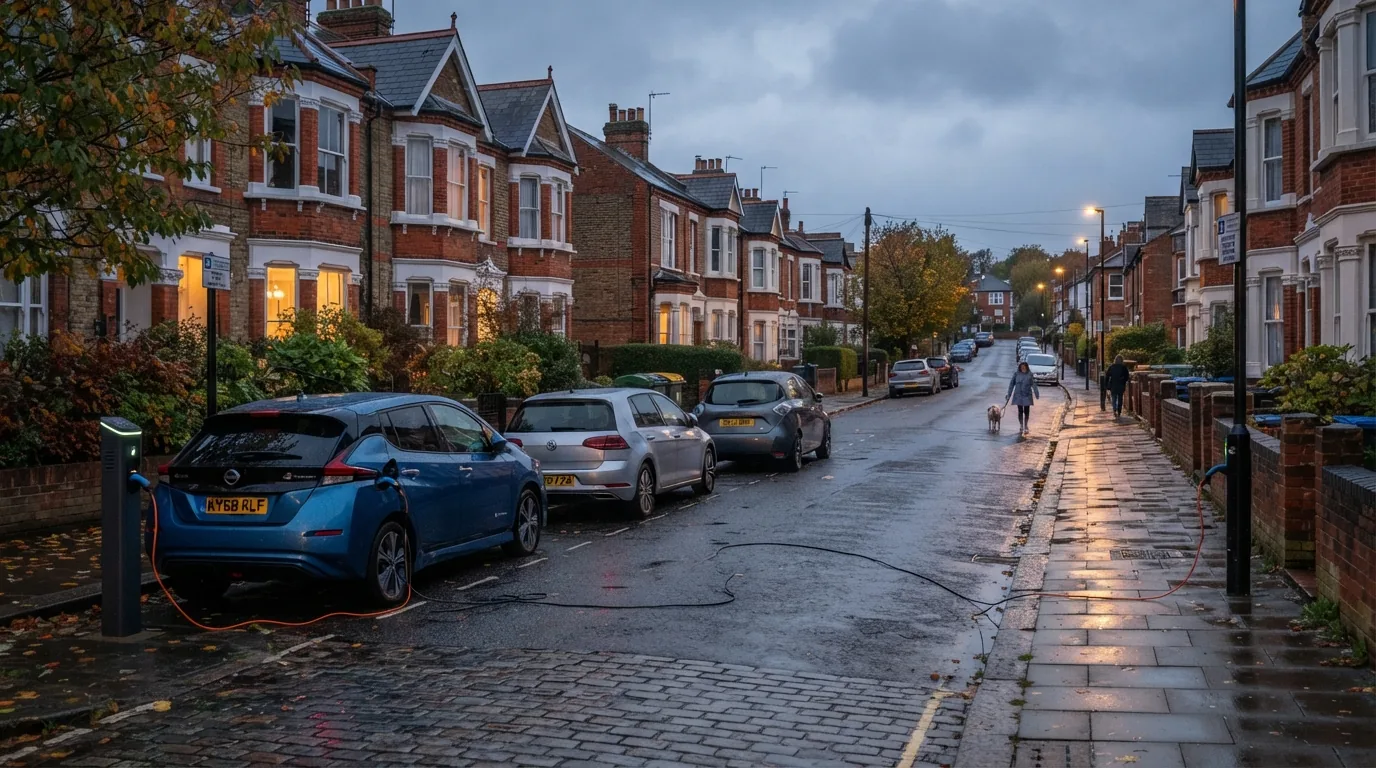
Half of UK councils still offer no on-street EV charging, FOI finds
More than 90% of councils now have public chargers, yet half offer nothing on-street. New LEVI deals in Hampshire, Peterborough and West Sussex show where help is arriving first.
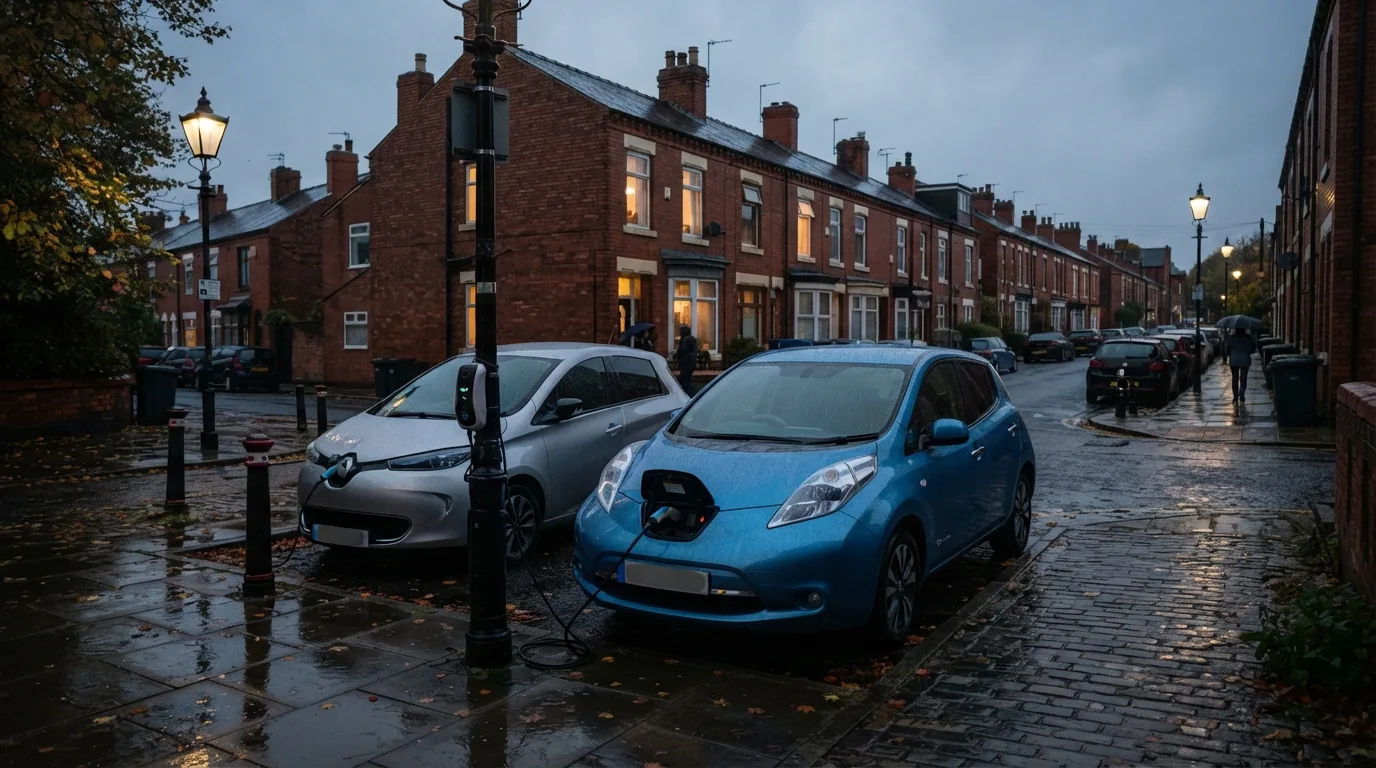
Public EV charging keeps 20% VAT as home electricity goes to 0%
Drivers without a driveway now pay 20% VAT at the plug while home charging pays none. Here is what a Budget cut to 5% or 10% would save, and why the Treasury has so far said no.
Electricity VAT cut to 0%: what EV drivers save until March
VAT on home electricity fell to zero on 1 October, yet drivers on cheap EV tariffs gain least and public charging stays at 20%. Here is what the six-month cut is really worth to you.
Can You Install an EV Charger Without a Driveway in the UK?
Cross-pavement channels, the updated £500 grant, and on-street options for UK drivers with no off-street parking in 2026
Do You Need Permission to Install a Home EV Charger in the UK?
The four permission layers explained: planning, building regulations, landlord consent and DNO notification
Wales EV charging sites get 100% business rates relief to 2036
The Welsh Government will waive non-domestic rates on EV charging bays and forecourts for a decade. It is a cost cut for operators rather than a discount at the charger, aimed at parts of Wales with few public points.