ZEV mandate review: carmakers could earn credits for V2G-ready electric cars
Ministers are weighing an extra ZEV mandate credit for electric cars that can send power back to the grid or a home. Campaigners say it would let more petrol cars through. Here is what a credit could be worth, and what V2G actually looks like for UK drivers today.
Quick answers
- Ministers are considering giving carmakers an extra ZEV mandate credit for each car sold with vehicle-to-grid (V2G) capability, the Guardian reported on 26 October 2026.
- The idea is part of the ZEV mandate review, whose consultation ran from 14 August to 23 October 2026 and is now closed, with GOV.UK saying feedback is being analysed.
- Ben Nelmes of New AutoMotive estimates one or two extra credits per car, worth about £4,000 each, for hardware he says costs a few hundred pounds to fit.
- Carmakers that fall short of the mandate face a payment of £12,000 per car, so each extra credit could be worth up to that amount in avoided fines.
- Reported draft criteria include export enabled on the UK model, a minimum export capability, a compatible UK charger, interoperable communications and a battery warranty that allows V2G or V2H.
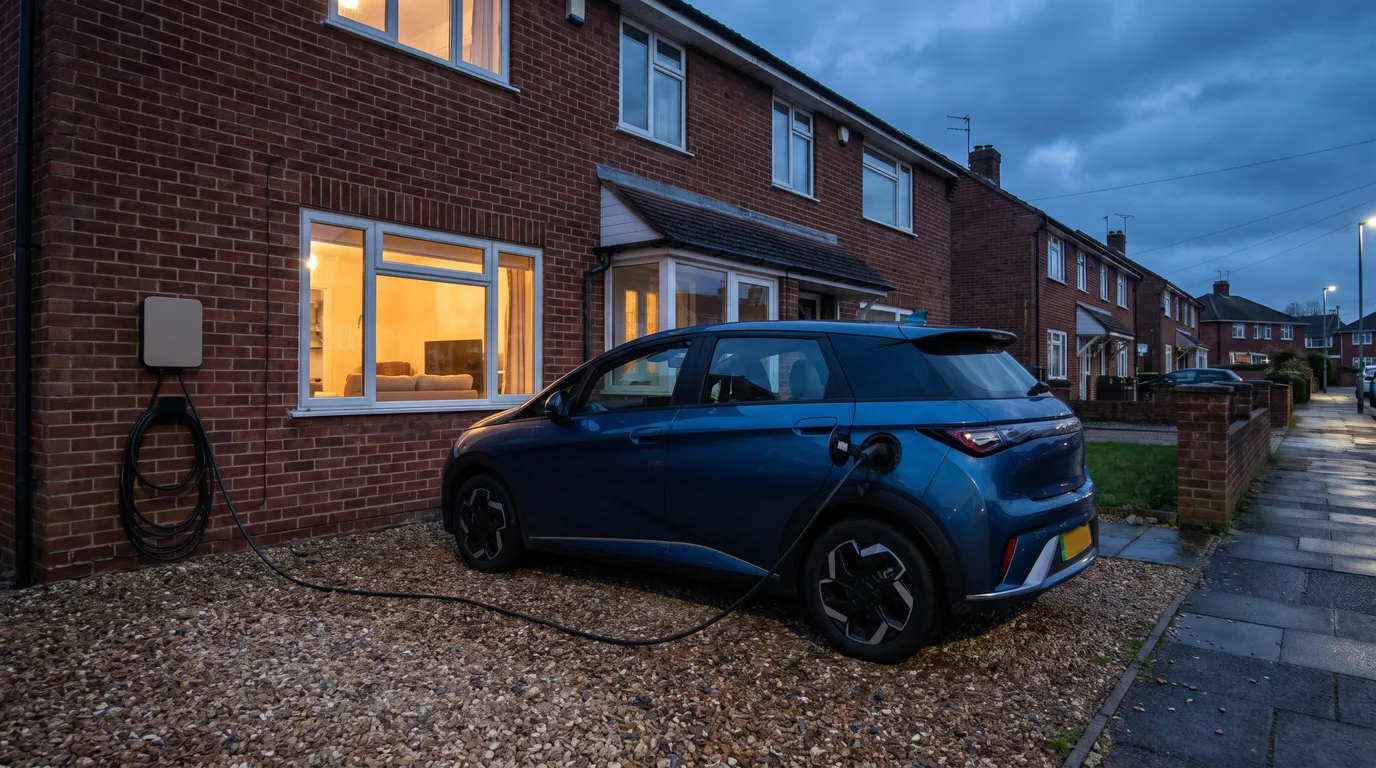
- Today, Octopus Energy's Power Pack supports only one combination at home: a V2G-enabled BYD Dolphin with a V2G-enabled Zaptec Pro charger.
- Octopus claims a typical Power Pack driver could save £620 a year against a standard variable tariff, or £161 against Intelligent Octopus Go, based on 7,500 miles a year.
Carmakers could earn extra credits under the ZEV mandate for selling electric cars that can send power back to the grid or a home, under ideas being considered in the government’s review of the rules, the Guardian reported on 26 October. Each credit could let a carmaker sell another petrol car without risking a fine. For UK drivers, it could mean more new cars arrive with vehicle-to-grid (V2G) hardware fitted. It could also mean a weaker push towards electric sales, which is why campaigners are unhappy.
Nothing has been decided. The consultation on GOV.UK ran from 14 August to 23 October 2026 and is now closed, with the government saying “we are analysing your feedback”. No official value for a V2G credit has been published.
What has the government proposed on V2G?
The ZEV mandate review is mainly about how fast the electric car target should rise. As we reported when it opened, ministers are weighing cutting the 2030 target from 80% to 70%, 60% or 50% (our report on the review). Alongside the targets, the review looks at the flexibilities carmakers can use to comply, and that is where V2G comes in.
According to the Guardian, the consultation floats an extra credit for carmakers that sell V2G-equipped cars. EconoTimes reports that the credit could cover both cars and vans and lists the draft conditions a car would have to meet:
- Power export enabled on the UK model, not just possible in the hardware.
- A minimum export capability.
- A compatible charger available in the UK.
- Interoperable communications.
- A battery warranty that permits V2G or vehicle-to-home (V2H) use.
EconoTimes also reports that the governments asked whether drivers should be able to get the car, charger and tariff as a single package, and that vehicle-to-load (V2L), which powers appliances from a socket on the car, would not qualify. We have not been able to check these details against the consultation document itself, so treat them as reported rather than confirmed.
How does a ZEV mandate credit work?
The mandate requires each carmaker to sell a rising share of zero emission cars: 33% this year, 38% in 2027 and 80% in 2030 under current law. Each zero emission car sold earns an allowance. A carmaker that ends the year short, after banking, borrowing, buying credits from rivals and other flexibilities, pays the government for every allowance it is missing. Our guide to ZEV mandate targets and fines explains the full system.
That payment is £12,000 per car and £15,000 per van, cut from £15,000 and £18,000 in April 2025, according to the Zemo Partnership. An extra credit for a V2G car works like a bonus allowance. It does not change the headline target, but it lowers the number of real electric sales a carmaker needs to reach it.
What could a V2G credit be worth?
Ben Nelmes, chief executive of the research group New AutoMotive, estimated that the proposal could mean one or two extra credits per car, worth about £4,000 each, the Guardian reported. He told the paper that would hand manufacturers thousands of pounds per car for kit that costs a few hundred pounds, according to Primary Ignition’s summary of the report. The £4,000 figure is his estimate, not an official value.
Here is what that means per car, using two prices: Nelmes’s £4,000 estimate, and the £12,000 fine as the most a credit could ever be worth to a carmaker facing a shortfall.
| Extra credits per V2G car | Value at £4,000 a credit | Fines avoided at £12,000 a credit |
|---|---|---|
| One | £4,000 | £12,000 |
| Two | £8,000 | £24,000 |
EV Compared calculations. Inputs: Nelmes’s estimate of one or two credits worth about £4,000 each, and the £12,000 per car payment.
Scale it up and the numbers grow quickly. A carmaker selling 20,000 qualifying cars in a year would gain 20,000 extra credits at one per car, or 40,000 at two. At £4,000 each, that is £80m or £160m of compliance value. Put another way, those credits would cover 20,000 or 40,000 cars the carmaker would otherwise need to sell as electric, or pay for. The 20,000 figure is our illustration, not a forecast for any brand.
Why do campaigners say it weakens the target?
The concern is simple: every extra credit for a V2G car is one fewer electric car a carmaker has to sell. “Carmakers should only be rewarded if it’s actually used, not just for fitting it,” Nelmes said, according to the Guardian. He also noted that few drivers own the charger needed to use V2G.
Vicky Edmonds, chief executive of the driver group EVA England, said it was “far too early” to give manufacturers such a credit for technology not yet tested at scale by drivers.
The timing adds to the worry. Environmental groups told the Guardian they expect changes to the mandate that could mean an extra 147m tonnes of carbon emissions by 2050. V2G credits would sit alongside any cut to the 2030 target, not instead of it. Carmakers such as Toyota have been pressing for the rules to be eased, as we covered in our report on Toyota’s warning.
There is a case on the other side. The Guardian reports that the National Energy System Operator (NESO) expects V2G cars to supply 1.2GW of power by 2030, rising to as much as 41GW by 2050, which would meet more than a quarter of peak demand. Getting the hardware into cars now is how that future fleet gets built. The argument is about whether the reward should come for fitting it or for using it.
Which cars and chargers can do V2G at home today?
This is where the policy meets reality. V2G needs three things to line up: a car that allows export, a bidirectional home charger that works with it, and an energy tariff that pays for the power. Plenty of new cars are described as bidirectional, but very few combinations work at home in the UK today.
According to Octopus Energy, its Power Pack V2G tariff currently supports one combination: a V2G-enabled BYD Dolphin with a V2G-enabled Zaptec Pro charger. Octopus says it is working on more integrations, and owners of other V2G-ready cars or chargers can register interest. Octopus also says it does not yet install bidirectional chargers itself.
| What you need | Octopus Power Pack requirement |
|---|---|
| Car and charger | V2G-enabled BYD Dolphin with V2G-enabled Zaptec Pro |
| Meter | Smart electricity meter |
| Export permission | G99 certificate, which Octopus says takes 10 to 45 working days |
| Plug-in time | 12 hours a day, 20 days a month |
| Charging limit | Under 210kWh a month |
| Battery setting | Minimum state of charge below 30% |
| Other tariffs | Not on Tracker, Agile or any Intelligent Octopus tariff |
Source: Octopus Energy Power Pack page.
The Guardian notes Renault and BMW offer V2G services in France and Germany, not yet in the UK. For a broader look at which models claim the capability, Best Chargers has a guide to V2G-capable EVs in the UK, and its G99 approval guide covers the network operator paperwork. Our own explainer on V2G and V2H charging covers the basics.
How much could a V2G driver save?
Octopus claims “a typical V2G driver could save £620 per year” compared with a standard variable tariff, or £161 a year compared with Intelligent Octopus Go. Those are Octopus’s figures, not ours, and they rest on its own inputs: 7,500 miles a year at an average 0.306kWh per mile. One part of the page names Flexible Octopus as the comparison, and the FAQ says a standard variable tariff.
From those inputs, we can work out what the claim means per mile:
- Energy used: 7,500 miles × 0.306kWh = about 2,295kWh a year.
- Saving against a standard variable tariff: £620 ÷ 7,500 miles = about 8.3p a mile.
- Saving against Intelligent Octopus Go: £161 ÷ 7,500 miles = about 2.1p a mile.
So most of the headline saving is what any driver gets from moving to a cheap smart EV tariff. The extra for V2G over a smart charging tariff is closer to £161 a year on Octopus’s numbers, and it comes with conditions: the car plugged in for at least 240 hours a month, and a battery you let the system draw below 30%.
When will the government decide?
The government has said it intends to complete the review by early 2027. Tomorrow’s Budget on 28 October is not expected to settle the ZEV mandate, though our Budget preview sets out what the industry is asking for. Any V2G credit would need to be confirmed in the government’s response and then written into the regulations, so it would not affect this year’s targets or the year-end deals we track in our report on the ZEV mandate gap.
What should drivers do now?
- Buying a new EV: if two-way charging matters to you, ask the dealer in writing whether export is enabled on the UK model, which home chargers it works with, and whether the battery warranty covers V2G or V2H. Those are the same tests the reported criteria use.
- Want V2G now: the only live home route we know of is the BYD Dolphin and Zaptec Pro on Octopus Power Pack. Check Octopus’s page for current eligibility before you buy anything.
- On a smart tariff already: on Octopus’s own figures, the gain from V2G over Intelligent Octopus Go is about £161 a year, so weigh that against the cost of a bidirectional charger and the plug-in commitment.
Our view
Getting V2G hardware into new cars is sensible, and the reported criteria, such as export enabled on the UK model and a warranty that allows it, would stop carmakers claiming credit for features drivers cannot use. But a credit worth thousands of pounds for kit costing a few hundred, paid whether or not the car ever exports a single kilowatt hour, would reduce the number of electric cars the mandate delivers. Rewarding real use, or at least a working car, charger and tariff package, would be the fairer test. For drivers, V2G at home is still a one-car, one-charger option today.
How we test and where our numbers come from
Range figures are official WLTP combined values taken from manufacturer UK specification pages, with real-world estimates drawn from independent comparative testing. Prices are UK list prices at the time of the latest update. Tax, grant and charging-scheme figures come from GOV.UK and HMRC publications. We re-check every guide when pricing, specification or policy changes. Last checked 13 November 2026. How we work out our own figures.
Frequently asked questions
What is the proposed V2G credit in the ZEV mandate?
Under ideas in the ZEV mandate review, carmakers could earn an extra credit for selling an electric car that can export power to the grid or a home. The Guardian reports each credit could let a carmaker sell another petrol car without risking a fine. Nothing has been decided.
How much would a V2G credit be worth?
No official value has been published. Ben Nelmes of New AutoMotive estimates one or two credits per car, worth about £4,000 each. As a ceiling, a credit avoids a ZEV mandate payment of £12,000 per car.
Why do campaigners object to V2G credits?
New AutoMotive says carmakers should only be rewarded if V2G is actually used, not just fitted, and that few drivers own the charger needed. EVA England says it is far too early to reward technology not yet tested at scale by drivers.
Can I use vehicle-to-grid at home in the UK today?
Only in a very limited way. Octopus Energy's Power Pack tariff currently supports one combination: a V2G-enabled BYD Dolphin with a V2G-enabled Zaptec Pro charger. You also need a smart meter and G99 export approval from your network operator.
When will the government decide on the ZEV mandate review?
The consultation closed on 23 October 2026 and GOV.UK says the government is analysing feedback. The government has said it intends to complete the review by early 2027, so any V2G credit would not apply before then.
Sources and further reading
- aol.co.ukThe GuardianPrimary source referenced in this article.
- gov.ukGOV.UK: Zero emission vehicle mandate reviewConsultation dates (14 August to 23 October 2026), closed status and the 'we are analysing your feedback' notice.
- econotimes.comEconoTimes: UK Weighs Credits for EVs That Can Supply Power to the Grid or HomesReported draft eligibility criteria, the exclusion of vehicle-to-load, the single package question and the £12,000 and £15,000 payments.
- primaryignition.comPrimary Ignition: Guardian reports DfT ZEV mandate consultation could give carmakers a V2G creditNelmes's point that the kit costs a few hundred pounds and few drivers own the charger needed.
- octopus.energyOctopus Energy: Power PackSupported car and charger, the £620 and £161 saving claims and their inputs, plug-in rules, G99 timing and the 210kWh monthly limit.
- zemo.org.ukZemo Partnership: Government announces changes to ZEV MandateThe April 2025 cut in payments from £15,000 to £12,000 per car and £18,000 to £15,000 per van.

EV Compared
The EV Compared editorial team tracks the UK electric vehicle market full time: new model launches, list prices, WLTP and real-world range, public charging tariffs and the tax rules that decide what an EV actually costs to run. Every guide is checked against manufacturer specifications and official GOV.UK figures, and updated whenever the numbers move.
Related reading
View all
Toyota warns it could cut UK sales unless the ZEV mandate is eased
Toyota Motor Europe says the zero-emission vehicle mandate is not sustainable, wants the 2030 target cut to 50% and will not guarantee its Derbyshire plant. Here is what the row means if you are buying a car.
ZEV mandate: carmakers need 265,000 more EV sales by year end
Even after a record September, electric cars make up only 26.2% of 2026 sales so far against a 33% target. Here is what that gap means for EV discounts and when to order.
ZEV mandate review: 2030 EV target could fall from 80% to 50%
Ministers are weighing a 2030 electric car target of 70%, 60% or 50% instead of 80%, with responses due on 23 October. Here is who wants what, and what a softer target means for buyers.

Autumn Budget 2026: what EV drivers want from John Healey on 28 October
The new Chancellor's first Budget lands as fuel prices bite, the ZEV mandate is under review and public charging still carries 20% VAT. Here is what the motor industry, charging firms and drivers are asking for, and what is already fixed.
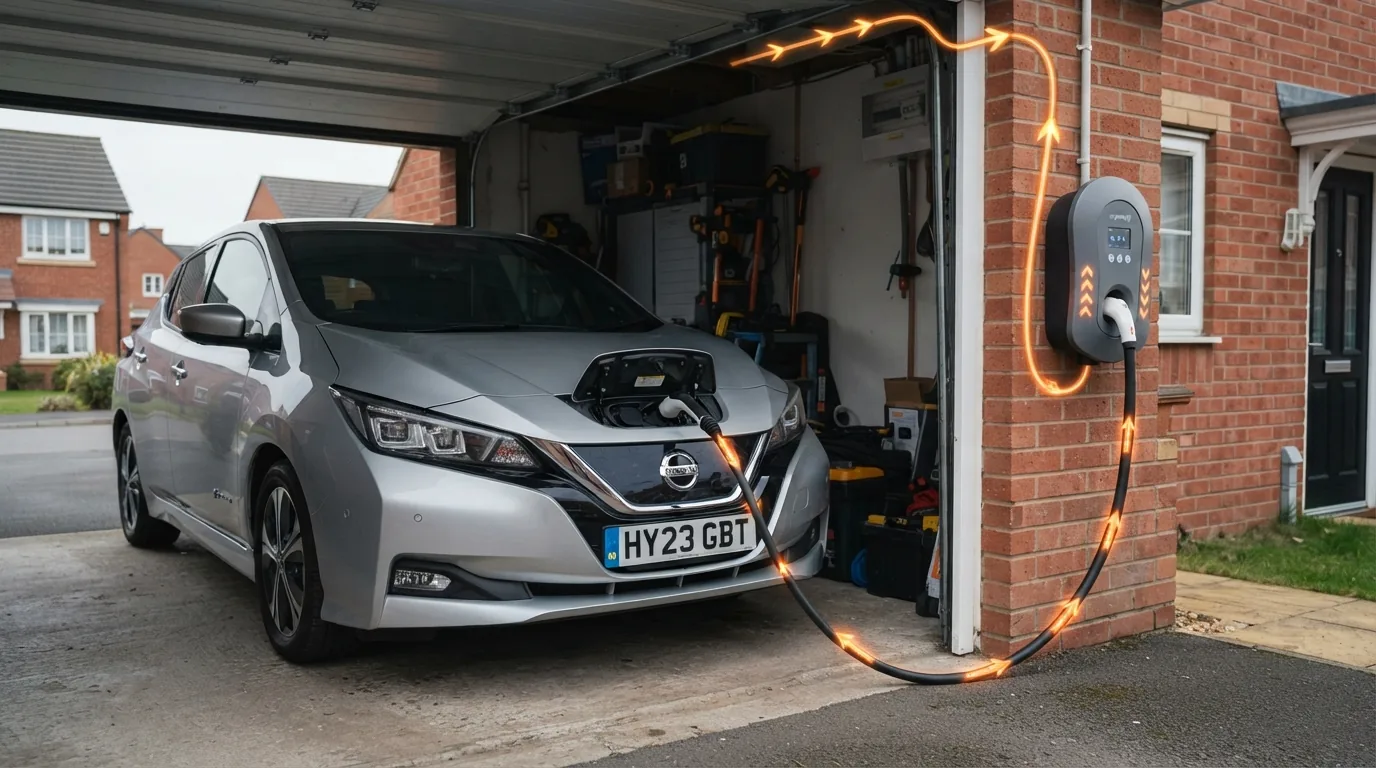
What Is Bidirectional Charging and Can It Power Your Home?
Bidirectional charging lets your electric car act as a home battery or feed the national grid. Here is how it works, what it costs and which UK cars support it in 2026
UK EV sales: monthly SMMT figures, best sellers and market share
Electric car sales are still rising in the UK, with October 2026 the strongest month for share this year, but the year to date of 26.6% is well short of the 33% ZEV mandate target.