Kia PV5 Passenger seven-seater gets £1,500 grant, now from £35,495
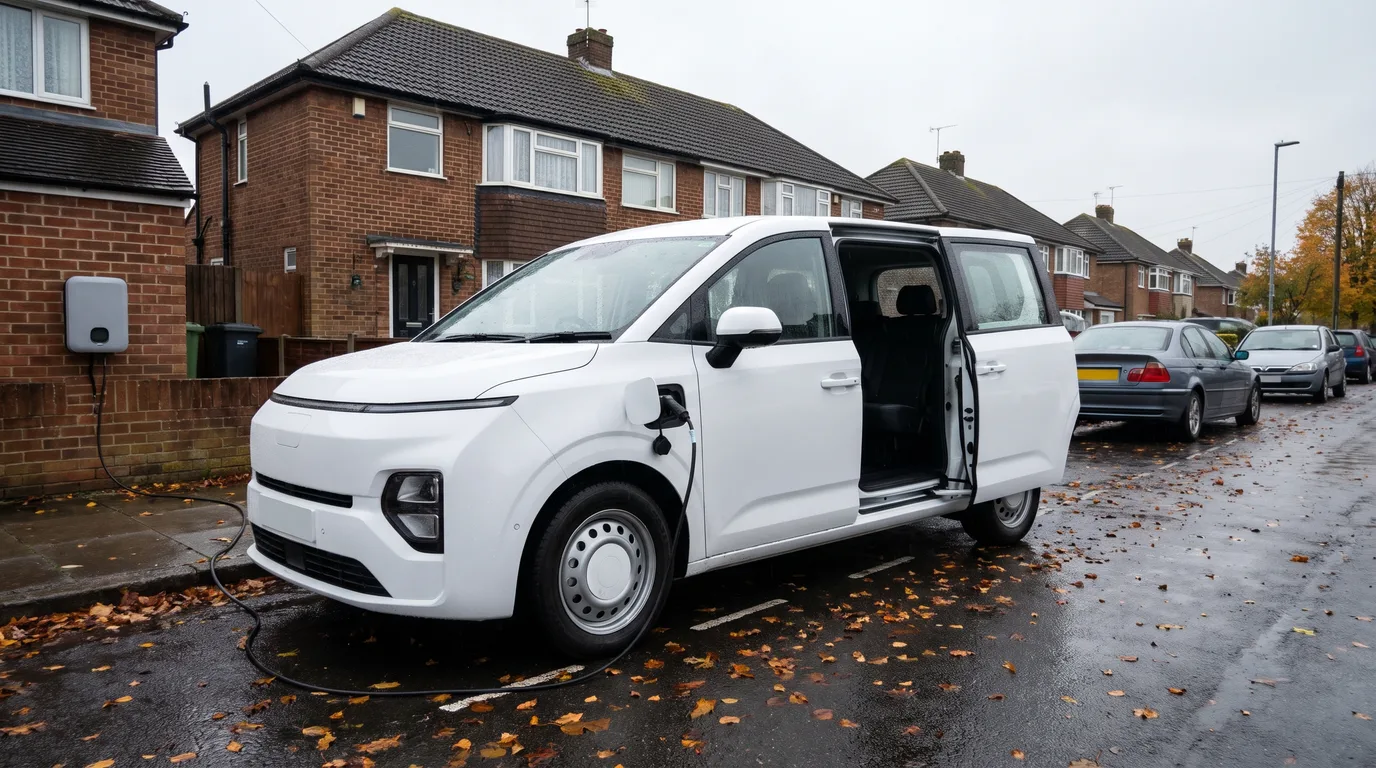
Kia has confirmed that all three grades of the seven-seat PV5 Passenger qualify for the Band 2 Electric Car Grant. We set out the new prices, what 246 miles means in daily use, the running costs and how it stacks up against other seven-seat EVs on sale in the UK.
Quick answers
- Kia confirmed on 8 October 2026 that the seven-seat PV5 Passenger qualifies for the £1,500 Band 2 Electric Car Grant in all three grades.
- After the grant, the seven-seater costs £35,495 in Essential trim, £38,775 in Plus and £40,475 in Elite, down from £36,995, £40,275 and £41,975.
- The seven-seater uses a 71.2kWh battery; Kia quotes up to 246 miles on the WLTP cycle, while Auto Express reports Kia's figure as more than 241 miles.
- It has a 2-2-3 seating layout, sliding doors on both sides, 350 litres of luggage space with all seven seats up and 3,430 litres with the rear two rows folded, according to Motor Trader.
- At £35,495 it works out at about £5,071 per seat, against about £7,426 for the Skoda Peaq, £9,285 for the Hyundai Ioniq 9 and £9,521 for the Kia EV9.
- Using Kia's WLTP figures, 10,000 miles a year would cost about £193 on EDF's 6.66p GoElectric off-peak rate or about £762 at the 26.32p price cap rate, before real-world losses.
- Kia's grant page says the offer applies to retail orders placed between 1 October and 15 December 2026, and that the government can change or withdraw the grant at any time.
The seven-seat Kia PV5 Passenger now qualifies for the £1,500 Electric Car Grant, which brings the cheapest version down to £35,495. Kia confirmed on 8 October 2026 that all three grades get the Band 2 discount, as Motor Trader reported. For UK families who need seven seats and want to go electric, it makes the PV5 one of the cheapest ways to do it, at a little over half the price of a Kia EV9.
When the seven-seater went on sale, its grant status was still unconfirmed, as we noted in our launch report on the PV5 Passenger. That question is now settled. Below are the new prices, what the range means in practice, what it costs to run and how it compares with the other seven-seat EVs you can buy.
What has Kia announced?
Kia says the seven-seat PV5 Passenger is now eligible for the government’s £1,500 Electric Car Grant on every grade: Essential, Plus and Elite. The five-seat PV5 Passenger already qualified. GOV.UK’s list of eligible cars now includes the Kia PV5 Passenger in Band 2, the band with a maximum discount of £1,500.
You do not apply for the grant yourself. According to GOV.UK and Kia’s own grant page, the dealer takes the discount off the price at the point of sale. Kia’s page adds two conditions worth knowing: its offer terms cover retail orders placed between 1 October and 15 December 2026, and the grant is run by the government and “may be updated or withdrawn at any time”.
All PV5 models are sold through Kia’s dedicated PBV Centres rather than every Kia dealer, so check where your nearest one is before you plan a test drive.
How much does the PV5 seven-seater cost after the grant?
These are on-the-road prices from Van Reviewer, which match the after-grant figures reported by Motor Trader.
| Version | Battery | Before grant | After £1,500 grant |
|---|---|---|---|
| 7-seat Essential | 71.2kWh | £36,995 | £35,495 |
| 7-seat Plus | 71.2kWh | £40,275 | £38,775 |
| 7-seat Elite | 71.2kWh | £41,975 | £40,475 |
| 5-seat Essential | 51.5kWh | £33,195 | £31,695 |
| 5-seat Essential | 71.2kWh | £36,195 | £34,695 |
| 5-seat Plus | 71.2kWh | £39,475 | £37,975 |
| 5-seat Elite | 71.2kWh | £41,175 | £39,675 |
So the third row costs £800 over the equivalent long-range five-seater, at every grade.
How can the Elite qualify when it costs more than £37,000?
The headline rule for the Electric Car Grant is a £37,000 price limit, which Kia’s page repeats. But GOV.UK also allows more expensive versions from the same family of a qualifying car to get the grant, up to a ceiling. Its guidance says that from 29 August 2025, these “interpolation family variants will have a price cap of £42,000”, and that any vehicle with a purchase price above £42,000 is not eligible (GOV.UK).
The seven-seat Elite, at £41,975 before the grant, sits £25 under that ceiling. That margin matters: adding optional extras that push the price over £42,000 could, under that rule, take a car out of the scheme. If you are speccing an Elite, ask the PBV Centre to confirm in writing that the grant still applies to your exact order. Our guide to who qualifies for the Electric Car Grant explains the bands and rules in more detail.
What range and charging speed does it have?
Every UK seven-seater uses the 71.2kWh long-range battery. Motor Trader and Van Reviewer quote Kia’s figure of up to 246 miles on the WLTP combined cycle. Auto Express reports Kia’s figure as “more than 241 miles”, so check the official figure for your grade with the dealer.
DC rapid charging peaks at 150kW, with a 10 to 80% charge in under 30 minutes, according to Motor Trader. Auto Express adds that a heat pump is standard, that power comes from a single 161bhp motor driving the front wheels, and that vehicle-to-load, which lets you run appliances from the car’s battery, is fitted to all PV5 Passenger models.
Official figures are best-case. As our own rough guide, not a Kia figure, we assume around 80% of WLTP in mixed year-round driving and around 70% on a cold motorway run:
| Scenario | Our assumption | Estimated range |
|---|---|---|
| Official WLTP | Kia figure | 246 miles |
| Mixed year-round driving | 80% of WLTP | About 197 miles |
| Cold-weather motorway | 70% of WLTP | About 172 miles |
A fully loaded seven-seater on the motorway in winter is the hardest case, so plan holiday trips around a stop every 150 miles or so.
How much space is there inside?
The PV5 Passenger seven-seater has a 2-2-3 layout across three rows, with sliding doors on both sides and a 399mm step-in height, according to Motor Trader. Legroom is quoted at up to 1,041mm in the front, 977mm in the second row and 970mm in the third, with more than a metre of headroom in every row.
Luggage space is 350 litres with all seven seats in use, rising to 3,430 litres with the second and third rows folded. Kia aims the seven-seater at families as well as shuttle, airport transfer and ride-hailing operators.
What does it cost to run?
Here is our estimate, using Kia’s WLTP figures as the starting point. Inputs: a 71.2kWh battery and 246 miles of range give about 0.29kWh per mile. We use three electricity prices checked today: Ofgem’s price cap average of 26.32p per kWh for October to December 2026, EDF’s GoElectric off-peak rate of 6.66p per kWh from 11pm to 6am, and Zapmap’s September 2026 average of 79p per kWh at rapid chargers.
| Where you charge | Price per kWh | Cost per mile (WLTP) | 10,000 miles a year (WLTP) | 10,000 miles a year (80% of WLTP) |
|---|---|---|---|---|
| Home, EV off-peak tariff | 6.66p | About 1.9p | About £193 | About £241 |
| Home, price cap rate | 26.32p | About 7.6p | About £762 | About £952 |
| Public rapid charger | 79p | About 22.9p | About £2,286 | About £2,858 |
These figures leave out charging losses and standing charges, and the 80% column is our assumption, not a Kia figure. The point is the spread: charging overnight at home on an EV tariff costs a fraction of relying on public rapid chargers.
How does it compare with other seven-seat EVs?
The table below uses manufacturers’ current UK starting prices where we could confirm them today. Price per seat is our own calculation, the starting price divided by seven.
| Model | Starting price | Grant? | WLTP range | Price per seat |
|---|---|---|---|---|
| Kia PV5 Passenger 7-seat Essential | £35,495 (after grant) | Yes, £1,500 | Up to 246 miles | About £5,071 |
| Skoda Peaq SE L | £51,980 | No | Up to 390 miles | About £7,426 |
| Volkswagen ID. Buzz Life LWB | £59,545 (2024 launch price) | No | Not confirmed | About £8,506 |
| Hyundai Ioniq 9 | £64,995 | No | Up to 385 miles | About £9,285 |
| Kia EV9 Air | £66,645 | No | Up to 349 miles | About £9,521 |
Sources: Kia UK for the EV9, Hyundai UK for the Ioniq 9, WhichEV for the Peaq and EV Powered for the ID. Buzz, whose figure dates from June 2024 and may have changed.
The PV5 is £16,485 cheaper than the Skoda Peaq and £31,150 cheaper than the EV9 Air. What you give up is range: the Peaq, Ioniq 9 and EV9 all quote around 350 to 390 miles, roughly 100 to 145 miles more. You also get a van-derived MPV rather than an SUV, which suits some families better, thanks to the sliding doors and low floor, and others less.
The other cheap route to seven electric seats is the Stellantis family of van-based MPVs: the Peugeot E-Rifter, Citroën ë-Berlingo, Vauxhall Combo Life Electric and Toyota Proace City Verso, all listed in Band 2 on GOV.UK. We could not confirm current seven-seat prices or whether the seven-seat versions themselves qualify, so check with dealers. Reports on their 2024 update put WLTP range at around 200 miles from a battery of around 50kWh, still well below the PV5’s 246 miles.
Further up the price scale, the nine-seat Hyundai Staria Electric is due, and our seven-seat electric cars round-up covers the wider field.
Should you buy now?
If the PV5 fits your needs, the grant makes a clear £1,500 difference, and Kia’s offer terms run to 15 December 2026. Beyond that date, nothing is promised: the grant’s funding is fixed and the government can change it, as we explain in our report on how long the Electric Car Grant funding will last.
Before you order:
- Confirm the grant in writing for your exact car, especially an Elite with options.
- Check delivery timing, as the grant applies at the point of sale under the scheme rules in force then.
- Test the third row with the people who will actually sit in it, and check boot space with all seats up.
- Think about home charging. The running cost gap between a home tariff and public rapid chargers is the biggest single factor in what this car will cost you.
Our view
The grant does not change what the PV5 Passenger is, but it does sharpen its case. At £35,495, it is one of the cheapest ways into a seven-seat electric car in the UK, with more range than the older van-based rivals and a price far below the large electric SUVs. The trade-off is range: if you regularly drive long motorway trips fully loaded, a Peaq or EV9 will need fewer stops, at £16,000 or more extra. For families doing school runs, local trips and the odd holiday, with a driveway for overnight charging, the PV5 now looks like solid value. Confirm the grant on your order, and remember that Kia’s offer terms end on 15 December.
How we test and where our numbers come from
Range figures are official WLTP combined values taken from manufacturer UK specification pages, with real-world estimates drawn from independent comparative testing. Prices are UK list prices at the time of the latest update. Tax, grant and charging-scheme figures come from GOV.UK and HMRC publications. We re-check every guide when pricing, specification or policy changes. Last checked 13 November 2026. How we work out our own figures.
Frequently asked questions
Does the seven-seat Kia PV5 Passenger get the Electric Car Grant?
Yes. Kia confirmed on 8 October 2026 that all three grades of the seven-seater qualify for the £1,500 Band 2 grant, and GOV.UK lists the Kia PV5 Passenger in Band 2. The dealer takes the discount off the price, so you do not need to apply.
How much is the Kia PV5 seven-seater after the grant?
£35,495 for Essential, £38,775 for Plus and £40,475 for Elite, according to Motor Trader and Van Reviewer. Before the grant the prices were £36,995, £40,275 and £41,975.
How can the Elite qualify when it costs more than £37,000?
Under GOV.UK's rules, more expensive versions in the same family as a qualifying car can also get the grant, up to a ceiling of £42,000. The Elite, at £41,975 before the grant, sits £25 under that ceiling.
What is the range of the Kia PV5 Passenger seven-seater?
Kia quotes up to 246 miles on the WLTP combined cycle from the 71.2kWh battery, though Auto Express reports the figure as more than 241 miles. Expect less on motorways and in cold weather; we estimate around 170 to 200 miles in mixed real-world use.
What are the cheapest seven-seat electric cars in the UK?
Van-based MPVs such as the Kia PV5 Passenger and the Stellantis family of the Peugeot E-Rifter, Citroën ë-Berlingo, Vauxhall Combo Life Electric and Toyota Proace City Verso are the cheapest routes to seven electric seats. Purpose-built seven-seat SUVs such as the Skoda Peaq start at £51,980 and do not qualify for the grant.
Sources and further reading
- motortrader.comMotor TraderPrimary source referenced in this article.
- vanreviewer.co.ukKia PV5 seven-seater gets £1,500 Electric Car Grant discountFull price table before and after the grant for seven-seat and five-seat versions.
- autoexpress.co.ukLong-awaited Kia PV5 7-seater gets EV grant, starts under £36kBand 2 status, the 'more than 241 miles' range figure, heat pump, 161bhp motor and vehicle-to-load.
- kia.comElectric Car Grant (Kia PBV)Kia's statement that all PV5 Passenger derivatives get the £1,500 grant, automatic discount, 1 October to 15 December 2026 offer window and retail-only terms.
- gov.ukZero emission vehicles eligible for a grant: carsKia PV5 Passenger, Peugeot E-Rifter, Citroën ë-Berlingo, Vauxhall Combo Life Electric and Toyota Proace City Verso in Band 2; Band 2 maximum of £1,500; dealer applies the discount.
- gov.ukHow to apply for vehicle eligibility for the Electric Car GrantThe £42,000 price cap for interpolation family variants from 29 August 2025.
- kia.comKia EV9EV9 Air from £66,645 and up to 349 miles WLTP, checked 30 October 2026.
- hyundai.comHyundai IONIQ 9Ioniq 9 from £64,995 and up to 385 miles WLTP, checked 30 October 2026.
- whichev.netŠkoda prices new seven-seat electric Peaq from £51,980 with up to 390 miles of rangeSkoda Peaq SE L price of £51,980 and up to 390 miles WLTP.
- evpowered.co.ukVolkswagen ID. Buzz LWB price and specification confirmedID. Buzz Life LWB launch price of £59,545 and 86kWh battery (June 2024).
- ofgem.gov.ukEnergy price cap unit rates and standing chargesAverage electricity unit rate of 26.32p per kWh for 1 October to 31 December 2026.
- edfenergy.comEV tariffsGoElectric off-peak rate of 6.66p per kWh from 11pm to 6am, checked 30 October 2026.
- zapmap.comZapmap Price IndexSeptember 2026 average pay-as-you-go prices: 79p per kWh rapid and ultra-rapid, 54p per kWh slow and fast.

EV Compared
The EV Compared editorial team tracks the UK electric vehicle market full time: new model launches, list prices, WLTP and real-world range, public charging tariffs and the tax rules that decide what an EV actually costs to run. Every guide is checked against manufacturer specifications and official GOV.UK figures, and updated whenever the numbers move.
Related reading
View all
Skoda Peaq UK prices from £51,980 for seven seats, 390 miles
Skoda's largest electric SUV starts £13,015 below the Hyundai Ioniq 9 and £14,665 below the Kia EV9. We compare price per seat, range and charging, and set out what the three trims cost.
Electric Car Grant after record EV sales: will £1.95bn last to 2030?
The grant helped power September's record 99,199 EV registrations. Our sums show whether its £1.95bn reaches March 2030 depends on how many buyers get the full £3,750.
Hyundai Staria Electric: nine-seat EV MPV, UK price from £50,000 expected
Hyundai has opened European orders for its electric Staria, with up to 430km (about 267 miles) of range and nine seats. UK prices are not confirmed, so here is what Germany's prices and the Buzz tell us.
What Is the Electric Car Grant and Who Qualifies in 2026?
A plain-English guide to the UK's two-band EV purchase grant, which cars make the list and how the discount works
Hyundai Ioniq 3 vs Kia EV2: £2,250 cheaper, 33 more miles
The Ioniq 3 and Kia EV2 share batteries and charging speeds, but the full £3,750 grant on every Ioniq 3 makes the Hyundai cheaper at both battery sizes. Here is how they compare on price, range and space.
KGM Torres EVX now £35,495 after £1,500 Electric Car Grant
KGM's large electric SUV now qualifies for the Band 2 Electric Car Grant, with a BYD-supplied battery and up to 287 miles of range. Here is what it costs and how it compares.