Electric Car Grant after record EV sales: will £1.95bn last to 2030?
The grant helped power September's record 99,199 EV registrations. Our sums show whether its £1.95bn reaches March 2030 depends on how many buyers get the full £3,750.
Quick answers
- The Electric Car Grant has about £1.95bn in total: £650m at launch in July 2025 plus £1.3bn from the November 2025 Budget, which moved its end date to 31 March 2030.
- The DfT says the grant supported more than 140,000 sales in its first year. On our sums that cost between £210m and £525m, depending on the split of £1,500 and £3,750 grants.
- A record 99,199 battery electric cars were registered in September 2026, up 36.3%, and the SMMT named the grant as one reason alongside discounts and wider choice.
- If every buyer got the full £3,750 and grants ran at 200,000 a year, our sums show the money running out around mid-2028, almost two years early.
- With an even split of bands at the first year's pace, the pot lasts beyond March 2030. The 28 October Budget is the next chance for ministers to change it.
The UK registered a record 99,199 new battery electric cars in September, and the industry body SMMT named the government’s Electric Car Grant as one of the reasons. So will the £1.95bn scheme, worth up to £3,750 a car, last until its official end date of 31 March 2030? On our rough sums, that depends less on how many people buy than on how many get the full £3,750 rather than £1,500.
The grant launched on 16 July 2025 with £650m and was originally due to run until 31 March 2029 unless the money ran out first (Pod Energy). We could find no published Department for Transport (DfT) figure for spending to date, so this analysis works from the DfT’s count of grant-backed sales.
How much money is in the Electric Car Grant?
About £1.95bn in total, often rounded to £2bn. In her November 2025 Budget, Rachel Reeves said the government was “providing £1.3 billion additional funding for the electric car grant, extending it to 2030” (Motor Trade News). The scheme now runs until 31 March 2030, the end of the 2029/30 financial year, or until the funding is used up (Auto Express).
| Date | What happened | Money |
|---|---|---|
| 16 July 2025 | Grant launched at £3,750 (Band 1) or £1,500 (Band 2) | £650m |
| November 2025 | Budget extends the end date from March 2029 to March 2030 | +£1.3bn |
| Late April 2026 | DfT says 100,000 drivers have used the grant | |
| July 2026 | DfT says more than 140,000 sales were supported in year one | about £1.95bn in total |
| 28 October 2026 | Autumn Budget | next chance to change funding or rules |
The basic rules are simple. A car must cost £37,000 or less, although higher-spec versions up to £42,000 still qualify if a version with the same battery and motor costs £37,000 or less, and the band depends on how green the government judges each model’s production to be (Auto Express). Our guide to who qualifies for the Electric Car Grant covers the criteria in full.
How fast is the money being spent?
The grant had passed 100,000 drivers by late April 2026, the DfT said (Renewable Energy Magazine) and more than 140,000 sales by the scheme’s first birthday in July, with 58 models now eligible (Fleet News).
The pace picked up. The first 100,000 took about nine and a half months, an average of roughly 10,600 a month. The next 40,000 came in around 11 weeks, which is closer to 190,000 a year if sustained.
What that cost depends on the split between bands, for which we found no published figure:
- If every one of the 140,000 got £1,500, year one cost £210m, or 11% of the pot.
- If every one got £3,750, it cost £525m, or 27% of the pot.
That leaves somewhere between £1.43bn and £1.74bn to cover the three years and eight months from July 2026 to the end of March 2030.
Did September’s record drain the pot?
Not as much as the headline suggests. The SMMT said battery electric registrations rose 36.3% to 99,199, a 28.3% market share, with 454,945 registered in the first nine months of 2026. It credited wider choice in smaller cars, strong discounts and the grant. Our September EV sales report has the full breakdown.
A large slice of those cars got no grant at all. The scheme’s scoring of carbon from vehicle assembly and battery production rules out China-built cars (Electric Car Scheme), so none of BYD’s record 20,129 September registrations (BYD UK) drew on the pot. Several of those brands offer their own DIY grants instead.
For scale, 140,000 grants in 12 months set against 454,945 EV registrations in nine months shows that grant-backed sales are still a minority of the market. Carmakers’ own discounting, as they chase their targets under the ZEV mandate, also played a big part in September, and that is carmakers’ money, not the Treasury’s.
Will the grant run out before March 2030?
Our rough sums assume the full £1.95bn goes to grants and can be drawn at any pace (we found no published year-by-year split), starting from July 2026. We test two speeds: the first year’s 140,000 a year, and 200,000 a year, slightly faster than the spring pace.
| Average grant per car | Spent in year one | Left from July 2026 | At 140,000 grants a year | At 200,000 grants a year |
|---|---|---|---|---|
| £1,500 (all Band 2) | £210m | £1.74bn | Lasts beyond March 2030 | Lasts beyond March 2030 |
| £2,625 (half in each band) | £368m | £1.58bn | Lasts beyond March 2030 | Runs out around mid-2029 |
| £3,750 (all Band 1) | £525m | £1.43bn | Runs out around spring 2029 | Runs out around mid-2028 |
At the first year’s pace with a half-and-half mix, the money lasts, but with only about seven months to spare. If demand keeps accelerating, the same mix runs dry about eight months early. The worst case, with everyone on £3,750 at 200,000 grants a year, ends the scheme almost two years ahead of schedule.
The band mix is the swing factor, and it is partly in the government’s hands, because it decides which models sit in which band. Every model that moves into Band 1 makes each sale two and a half times as expensive for the Treasury.
Which cars get the full £3,750?
Band 1 includes selected versions of the Renault 5, the Renault 4 with the 52kWh battery, the Renault Scenic E-Tech, Alpine A290, MINI Countryman Electric (65.2kWh), Nissan Leaf and selected Ford Puma Gen-E versions (Motoring Research). Hyundai’s Kona Electric qualifies too, and so does every version of the Hyundai Ioniq 3, which opened for UK orders this week (Hyundai UK).
Closely related cars can sit in different bands, as the Ioniq 3 and Kia EV2 show.
| Model | Battery | Price before grant | Grant | Price after grant |
|---|---|---|---|---|
| Hyundai Ioniq 3 Advance | 42kWh | £22,245 | £3,750 | £18,495 |
| Hyundai Ioniq 3 Advance | 61kWh | £25,745 | £3,750 | £21,995 |
| Kia EV2 Air | 61kWh | £27,995 | £3,750 | £24,245 |
| Kia EV2 First Edition | 42kWh | £28,495 | £1,500 | £26,995 |
The cheaper Ioniq 3 offers up to 213 miles of WLTP range and the 61kWh version up to 308 miles. Read our full story on the Ioniq 3’s UK prices. The Kia EV2 long range models joined the full-grant list in July (electrive).
What this means for you
There is no sign the grant is about to close. No early closure has been announced, and even our worst case keeps the money flowing into 2028, so there is no need to rush into a car you do not want.
Equally, there is no reason to hold off in the hope of something better. No increase in the grant has been announced ahead of the Autumn Budget on 28 October, and with demand at record levels, a Budget can tighten the rules or the bands as easily as loosen them.
Our take: if a Band 1 car suits you, the grant makes this autumn a good time to buy, with the discount taken off at the dealer. If your choice is a Band 2 model, compare its net price with Band 1 rivals and with carmakers’ own discounts, because the gap between bands is £2,250. If you can use an employer scheme, check whether salary sacrifice beats the grant. We will update this analysis if the DfT publishes spending figures or the Budget changes the scheme.
How we test and where our numbers come from
Range figures are official WLTP combined values taken from manufacturer UK specification pages, with real-world estimates drawn from independent comparative testing. Prices are UK list prices at the time of the latest update. Tax, grant and charging-scheme figures come from GOV.UK and HMRC publications. We re-check every guide when pricing, specification or policy changes. Last checked 6 October 2026.
Frequently asked questions
When does the Electric Car Grant end?
The grant is due to run until 31 March 2030, after the November 2025 Budget extended it from March 2029. It can close earlier if the money runs out.
How much funding does the Electric Car Grant have?
It launched with £650m in July 2025 and the November 2025 Budget added £1.3bn, a total of about £1.95bn. It is often rounded to a £2bn scheme.
How many people have used the Electric Car Grant?
The Department for Transport says the grant supported more than 140,000 new car sales in its first year, which ended in July 2026. It had passed 100,000 drivers by late April 2026.
Will the Electric Car Grant run out early?
No early closure has been announced. Our rough sums show the money lasting to March 2030 at the first year's pace with a mix of £1,500 and £3,750 grants, but heavy demand for the full £3,750 could use it up in 2028 or 2029.
Should I wait for the Budget before buying a grant-eligible electric car?
Waiting gains little. No increase in the grant has been announced ahead of the 28 October Budget, and a Budget can tighten the rules as easily as loosen them.
Sources and further reading
- smmt.co.ukSMMTPrimary source referenced in this article.
- fleetnews.co.ukFleet News: Electric Car Grant one-year sales statistics revealedDfT figure of more than 140,000 grant-backed sales in year one, the £2bn funding total and 58 eligible models.
- motortradenews.comMotor Trade News: Autumn Budget 2025: Government extends Electric Car Grant, injects £1.3bn additional fundingThe extra £1.3bn and the extension of the scheme to 2029/30.
- podenergy.comPod Energy: The Electric Car Grant, a complete guideThe £650m launch budget, the 16 July 2025 launch date and the original March 2029 end date unless funding runs out.
- autoexpress.co.ukAuto Express: Electric Car Grant explainedThe 31 March 2030 end date, the £37,000 price cap and the £42,000 ceiling for higher trims of a qualifying battery and motor combination.
- renewableenergymagazine.comRenewable Energy Magazine: UK Government announces 2 million EVs registered and 100,000 drivers using ECGThe 100,000 grant milestone announced in late April 2026.
- motoringresearch.comMotoring Research: Electric Car Grant, every EV the government will pay you to buyModels in Band 1 of the grant.
- hyundai.newsHyundai UK: Ioniq 3 opens for UK ordersIoniq 3 prices after the £3,750 grant and Band 1 eligibility for every version.

EV Compared
The EV Compared editorial team tracks the UK electric vehicle market full time: new model launches, list prices, WLTP and real-world range, public charging tariffs and the tax rules that decide what an EV actually costs to run. Every guide is checked against manufacturer specifications and official GOV.UK figures, and updated whenever the numbers move.
Related reading
View all
ZEV mandate: carmakers need 265,000 more EV sales by year end
Even after a record September, electric cars make up only 26.2% of 2026 sales so far against a 33% target. Here is what that gap means for EV discounts and when to order.
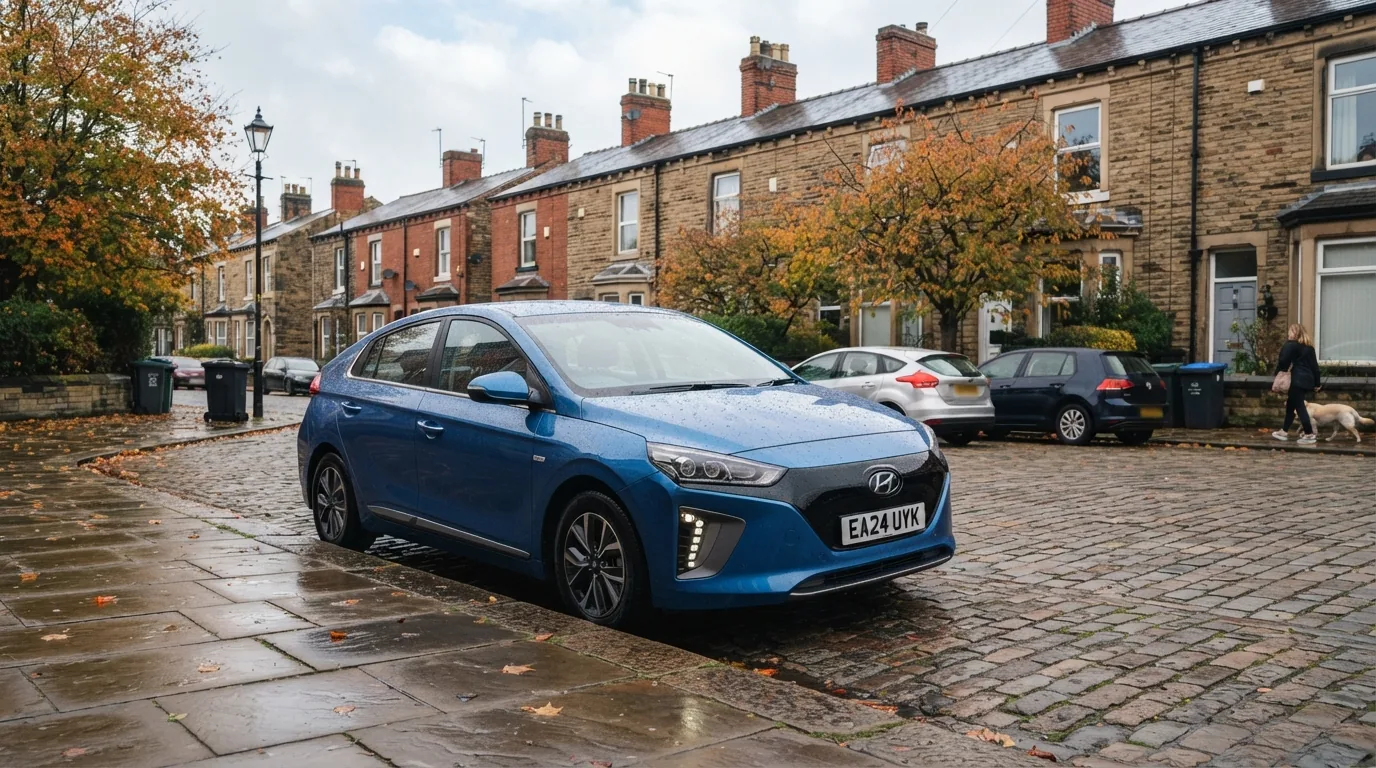
Hyundai Ioniq 3 opens UK orders at £18,495 with full £3,750 grant
Hyundai's small electric hatch gets the full £3,750 grant on every trim. That buys up to 308 miles of claimed range for £21,995, less than a longer-range Renault 5 or Kia EV2.
UK electric car sales hit record 99,199 in September
Battery electric cars took 28.3% of the plate-change month, the best ever for UK EV registrations. The year to date is still 26.2%, well short of this year's 33% ZEV mandate target.
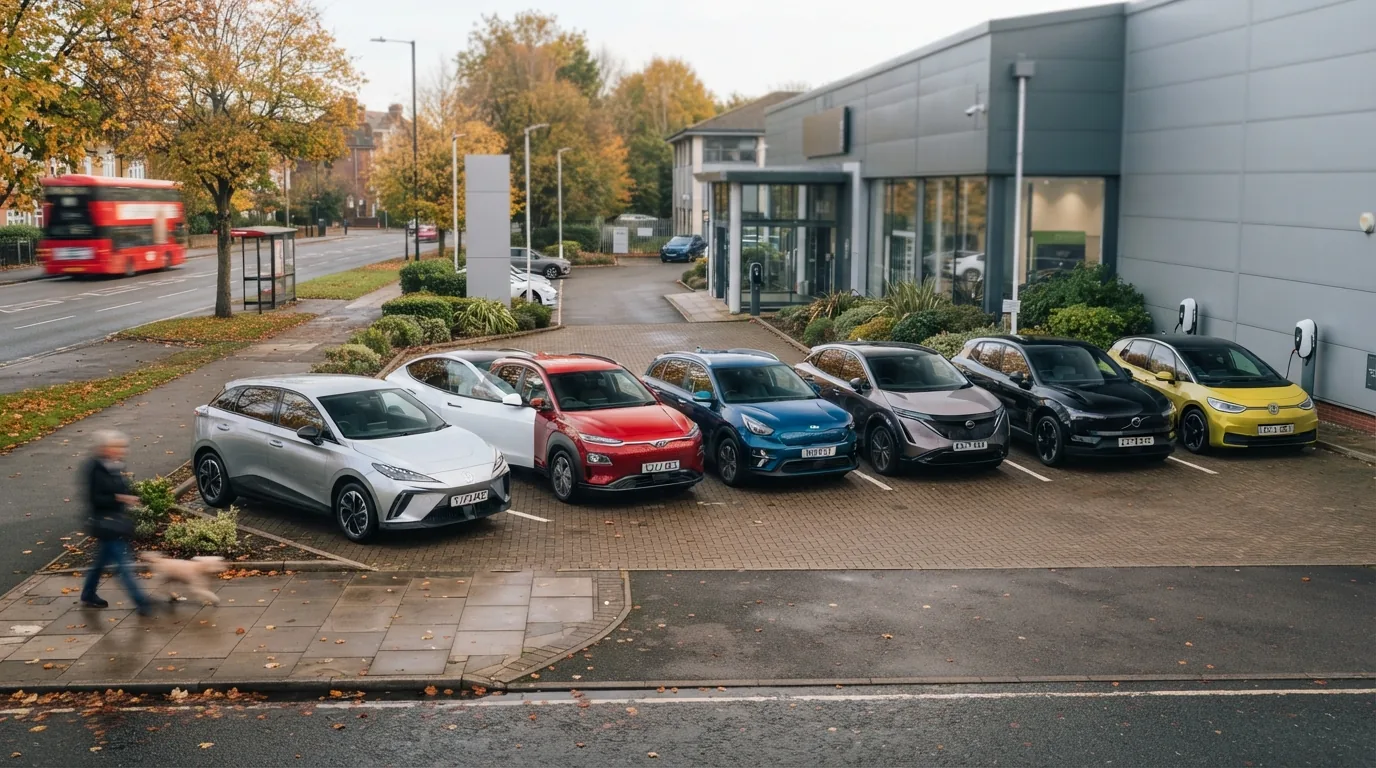
UK EV news: record September sales, Chinese share, charging prices
The week's UK electric car news in one place: record September registrations, Chinese brands at 23.3%, charging prices, new cars, vans, the ZEV mandate review and the stories behind them.

Citroen 2CV returns as an EV targeting under £15,000 in the UK
The electric 2CV is shaped by EU small-car rules Britain has not adopted, and the production car is planned for 2028. Citroen's boss says the UK target is under £15,000 before any grant, but no price is confirmed.
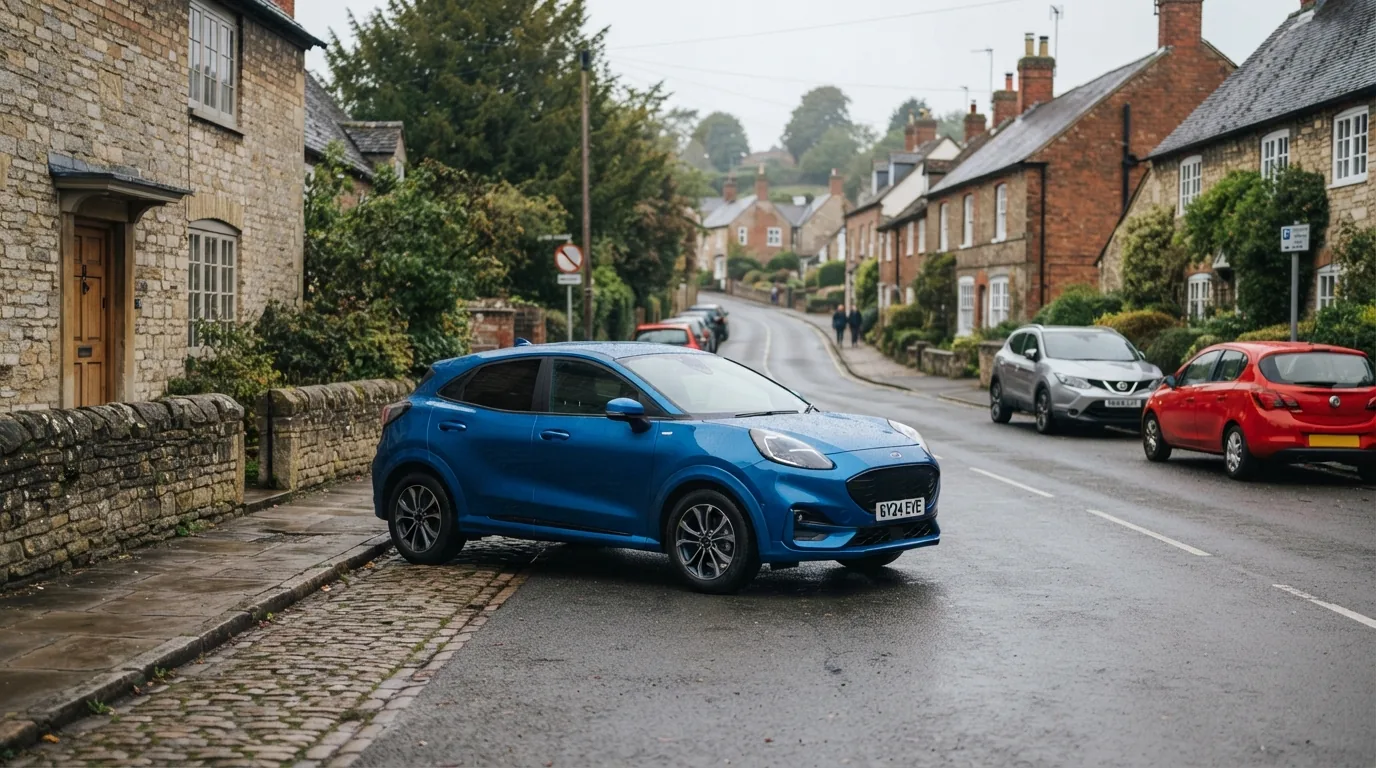
Ford Puma Gen-E from £26,245 with the full £3,750 grant
Ford's electric Puma was one of the first two cars to qualify for the top Electric Car Grant band. Here is what it costs before and after the grant, and how it stacks up against the Vauxhall Frontera Electric and Peugeot e-2008.