Pavement charging gullies: planning rule scrapped, but 20 councils still say no
Drivers in England without a driveway no longer need planning permission for a pavement cable channel, saving £300 to £500. But costs range from free to £1,200 depending on your council, and some councils still refuse them outright.
Quick answers
- From 21 October 2026, drivers in England without off-street parking no longer need planning permission to install a cross-pavement charging gully, except in conservation areas.
- Removing the planning step saves drivers between £300 and £500, according to the Guardian, and approvals had taken up to 15 months in some areas.
- More than 20 councils still do not allow gullies, including Kent, Leicester, Worcestershire, Ealing, Waltham Forest and Hackney, citing safety, maintenance and liability.
- Kerbo Charge says the average installation costs about £1,200 including VAT without a grant; Surrey charges £499 and South Gloucestershire £250.
- Some councils add annual fees: Redbridge charges a £185 licence fee a year and Enfield £107.
- Charging at home through a gully can cut charging costs by up to 90% compared with public chargers; ChargeUK and YouGov put public charging at about 22p a mile against just over 2p on an off-peak home tariff.
- About 9.3 million households have no off-street parking, and the government has given councils £25m to fund pavement gullies.
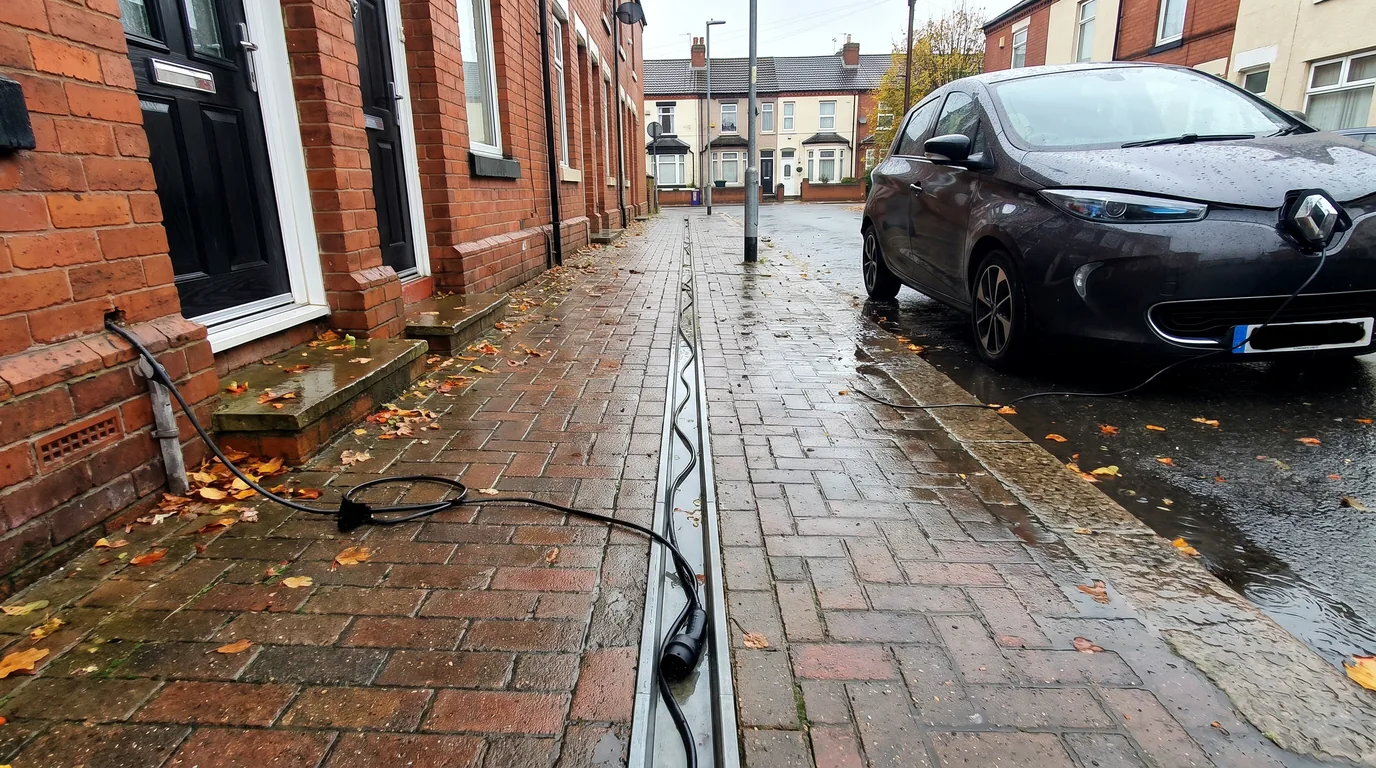
Drivers in England without a driveway no longer need planning permission to install a cross-pavement charging gully, a change that took effect on 21 October 2026. A gully is a narrow steel channel set into the pavement so a cable can run from your house to your car without creating a trip hazard. According to the Guardian, scrapping the planning step saves between £300 and £500, and charging at home this way can cut costs by up to 90% compared with public chargers.
The catch is that your council still decides whether you can have one at all, and more than 20 councils still say no. Costs also vary hugely, from free in some areas to about £1,200 in others, plus annual fees in a few. Our earlier piece on the cross-pavement planning change covers the rule itself; this one is about what it means where you live.
What has changed?
From 21 October, householders in England no longer need planning permission for a cross-pavement charging gully. The exception is conservation areas, where you still need to apply.
Previously, getting approval could take a long time. Caroline Pidgeon, the Liberal Democrat peer who campaigned for the change, told the Guardian that approval had taken up to 15 months in some areas. “Simpler rules will make it easier for people to switch to an electric car,” she said. She points out that one in three households in England does not have a driveway. Across the country, about 9.3 million households have no off-street parking.
What has not changed is that the pavement belongs to the council as highway authority. You still need its permission, and its approved installer, to dig into it.
Which councils still do not allow gullies?
More than 20 local authorities appeared to be holding out in May 2026, according to the Guardian. They include:
- Kent, Leicester and Worcestershire.
- Several London boroughs, including Ealing, Waltham Forest and Hackney. Most of the holdouts are in London.
Their reasons are mostly about safety, maintenance and liability. Waltham Forest says gullies “raise significant concerns including safety and accessibility of footways, parking pressures, maintenance responsibilities and liability, electrical safety and earthing standards”. Leicestershire County Council calls it “a new and very challenging area for local highway authorities”. Ealing decided not to go ahead with a trial.
For drivers in those areas, the planning change makes no difference. Alison Williams, who drives a Volkswagen ID.3 from an end-of-terrace house in Ealing, told the Guardian: “You either have to have enough money to have a house with a driveway, or you have to be able to afford the additional cost of charging at a public charger.”
Councils have their own reasons to be cautious. We cover the liability question in our report on cable gullies and trip claims.
How much does a gully cost?
It depends entirely on your council. The government has given councils £25m to fund pavement gullies, but each council is spending it differently.
| Council or provider | What you pay |
|---|---|
| Average without a grant (Kerbo Charge) | About £1,200 including VAT |
| Surrey | £499 for the channel and installation |
| South Gloucestershire | £250 |
| Redbridge, London | Grant covers up to £1,200 of installation, but you pay £815 in fees and a bond, plus a £185 annual licence fee |
| Enfield, London | £107 annual fee |
| Some councils | Free or half-price while funds last |
“Some [councils] are using it [the funding] to provide half-price channels to early adopters, others are making it totally free while funds last, but, after that, residents will have to pay full price,” said Ben Whitaker of Kerbo Charge. “Sadly, there is quite a variety of approaches and prices.”
Installation itself is quick. Shayne Rees of Gul-e, which has installed 400 gullies, says it takes one to two hours. “It’s a really heavy-duty steel channel that can take a truck driving over it, and once we put it in the ground, that will be there for decades and decades without any maintenance,” he said.
On top of the gully, you will also need a home charger, unless you plan to use a three-pin cable. Our guide to EV chargepoint grants for homeowners explains what support exists.
How much could you save?
A lot, if you currently rely on public chargers. Research by ChargeUK and YouGov, reported by Auto Express, put the cost of public charging at around 22p a mile, about 6p a mile more than fuelling an equivalent petrol or diesel car. Charging at home on an off-peak tariff costs just over 2p a mile.
That gap is made bigger by tax. Home electricity is VAT-free between October 2026 and April 2027 under the government’s energy bill cut, while public charging carries 20% VAT. Our piece on the public charging VAT gap explains it.
Here is a rough guide to annual savings, using those per-mile figures:
| Annual mileage | Public charging at 22p a mile | Home off-peak at about 2p a mile | Approximate saving |
|---|---|---|---|
| 5,000 | £1,100 | £100 | £1,000 |
| 8,000 | £1,760 | £160 | £1,600 |
| 10,000 | £2,200 | £200 | £2,000 |
Your figures will depend on your car’s efficiency, your tariff and which public chargers you use. Slower lamp-post chargers are usually cheaper than rapid chargers. But on almost any assumptions, a gully pays for itself quickly. Our home EV charging cost calculator can work out your own numbers.
How do you get a gully?
The process varies by council, but generally:
- Check your council allows them. Search your council’s website for “cross-pavement charging” or “EV cable channel”. Installers including Kerbo Charge run postcode checkers and can alert you if your council changes its policy.
- Check you qualify. Most schemes require you to be able to park directly outside your home reliably, and some exclude certain pavement types or narrow footways.
- Apply through the council’s scheme. You will usually need to use an approved installer and may need to pay a bond or licence fee.
- Fit a home charger. You will need a charger on the front of your house, or a suitable cable, and a smart tariff to get the cheapest rates. Our guide to smart EV chargers for Octopus tariffs helps.
If you live in a conservation area, you will still need planning permission as well.
What if your council says no?
You have a few options:
- Ask the council to reconsider. The planning change, the £25m fund and growing use elsewhere all strengthen the case. Councillors respond to residents.
- Use the cheapest public options. Lamp-post and slow on-street chargers are usually cheaper than rapid hubs, and some networks offer subscriptions.
- Charge at work or at a supermarket. Some workplaces and retailers offer cheap or free charging.
- Pick an efficient car. The fewer kWh per mile, the less public charging costs you.
Why do councils take different approaches?
Each council in England is its own highway authority, responsible for the pavements in its area, so each decides whether to allow gullies and on what terms. The £25m of government funding is distributed through councils too, and each has chosen how to use it: some subsidise installation, some make it free while money lasts, some charge annual licence fees and some refuse altogether.
Councils’ circumstances differ. Inner London boroughs have very narrow pavements, heavy footfall and intense parking pressure, which make some wary. Rural and suburban councils may have wider pavements and more reliable on-street parking outside homes. Liability for trips and long-term maintenance is the common worry, as we explain in our gully liability guide.
What other charging options are there without a driveway?
If a gully is not possible, alternatives include:
- Residential on-street chargers, installed by councils with operators. Surrey, for example, has installed 500 on-street chargers alongside its gully scheme.
- Lamp-post chargers, built into existing street lights.
- Workplace charging, often cheaper than public rapid chargers and sometimes free.
- Supermarket and leisure car parks, useful for topping up during errands.
- Rapid hubs, best for quick top-ups but usually the most expensive per kWh.
Councils are also signing long-term deals with operators to roll out many more residential chargers, as in Ayrshire, which we cover in our Ayrshire report.
If your council does allow gullies, apply early: some schemes are first come, first served while funding lasts.
Our view
Scrapping the planning step was the right move, and for drivers in councils that support gullies it removes months of waiting and hundreds of pounds of cost. But the real barrier was never just planning. Until every council either allows gullies or offers a genuine on-street alternative, whether you can charge cheaply at home will depend on your postcode. With public charging still costing roughly ten times more per mile than off-peak home charging, that is a big unfairness for the third of households without a driveway.
How we test and where our numbers come from
Range figures are official WLTP combined values taken from manufacturer UK specification pages, with real-world estimates drawn from independent comparative testing. Prices are UK list prices at the time of the latest update. Tax, grant and charging-scheme figures come from GOV.UK and HMRC publications. We re-check every guide when pricing, specification or policy changes. Last checked 23 October 2026. How we work out our own figures.
Frequently asked questions
Do I still need planning permission for a cross-pavement EV charging gully?
Not in England, from 21 October 2026, unless you live in a conservation area. You still need your council's permission to work on the pavement, because the highway belongs to the council, and some councils do not allow gullies at all.
How much does a cross-pavement charging gully cost?
Kerbo Charge says the average is about £1,200 including VAT without a grant. Council schemes vary widely: Surrey charges £499, South Gloucestershire £250, and some councils offer free installations while funds last. Some also charge an annual licence fee.
Which councils do not allow cross-pavement charging gullies?
More than 20 councils were reported in May 2026 to be holding out, including Kent, Leicester, Worcestershire and several London boroughs such as Ealing, Waltham Forest and Hackney. Check your own council's website, or use an installer's postcode checker.
How much can I save by charging at home through a gully?
Up to 90% compared with public charging, according to the Guardian. ChargeUK and YouGov estimate public charging at about 22p a mile, while charging at home on an off-peak tariff costs just over 2p a mile.
Can I run a charging cable across the pavement without a gully?
No. Trailing a cable across the pavement is not allowed, because it creates a trip hazard. A gully is a steel channel set flush in the pavement so the cable can reach your car safely.
Sources and further reading
- theguardian.comThe GuardianPrimary source referenced in this article.
- autoexpress.co.ukCheaper EV charging is key to persuading more drivers to go electricChargeUK and YouGov research: public charging at about 22p a mile, off-peak home charging just over 2p, and demand effects.

EV Compared
The EV Compared editorial team tracks the UK electric vehicle market full time: new model launches, list prices, WLTP and real-world range, public charging tariffs and the tax rules that decide what an EV actually costs to run. Every guide is checked against manufacturer specifications and official GOV.UK figures, and updated whenever the numbers move.
Related reading
View all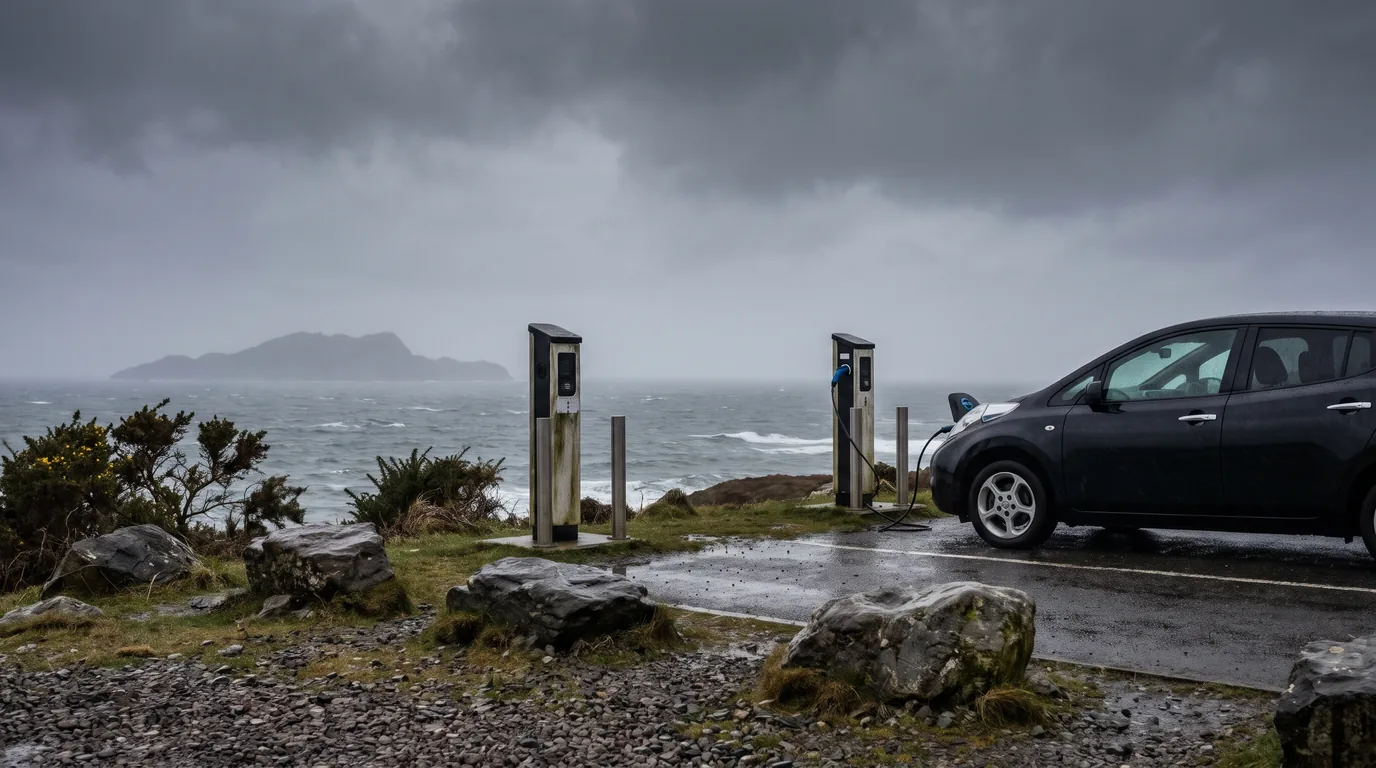
Ayrshire to get 600 new EV chargers in a 15-year deal with Believ
Three councils have signed a 15-year deal backed by £2.8m of Scottish Government funding and more than £15m from Believ. It covers towns, rural areas and the Isle of Arran, and Believ will also take over existing ChargePlace Scotland chargers.

Connected Kerb opens Aberdeen factory to build 25,000 on-street chargers by 2030
The on-street charging firm is moving manufacturing to Scotland after buying Trojan Energy and its flush kerbside chargers. For drivers without a driveway, it signals more residential chargers on the way.
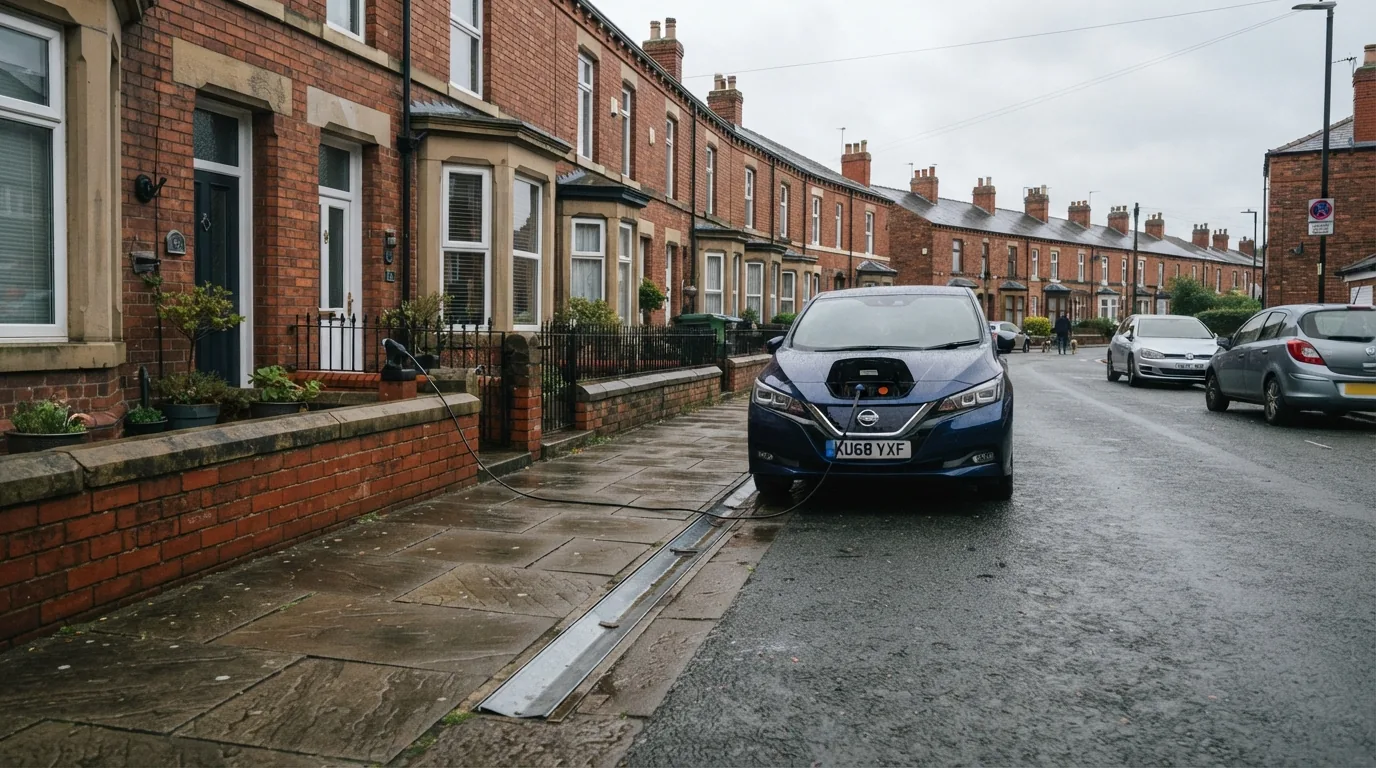
Cross-pavement EV charging in England: planning rules ease 21 October
Drivers without a driveway will soon skip a separate planning application for a pavement cable channel. But the council still controls the footway, and nobody gets a reserved bay.
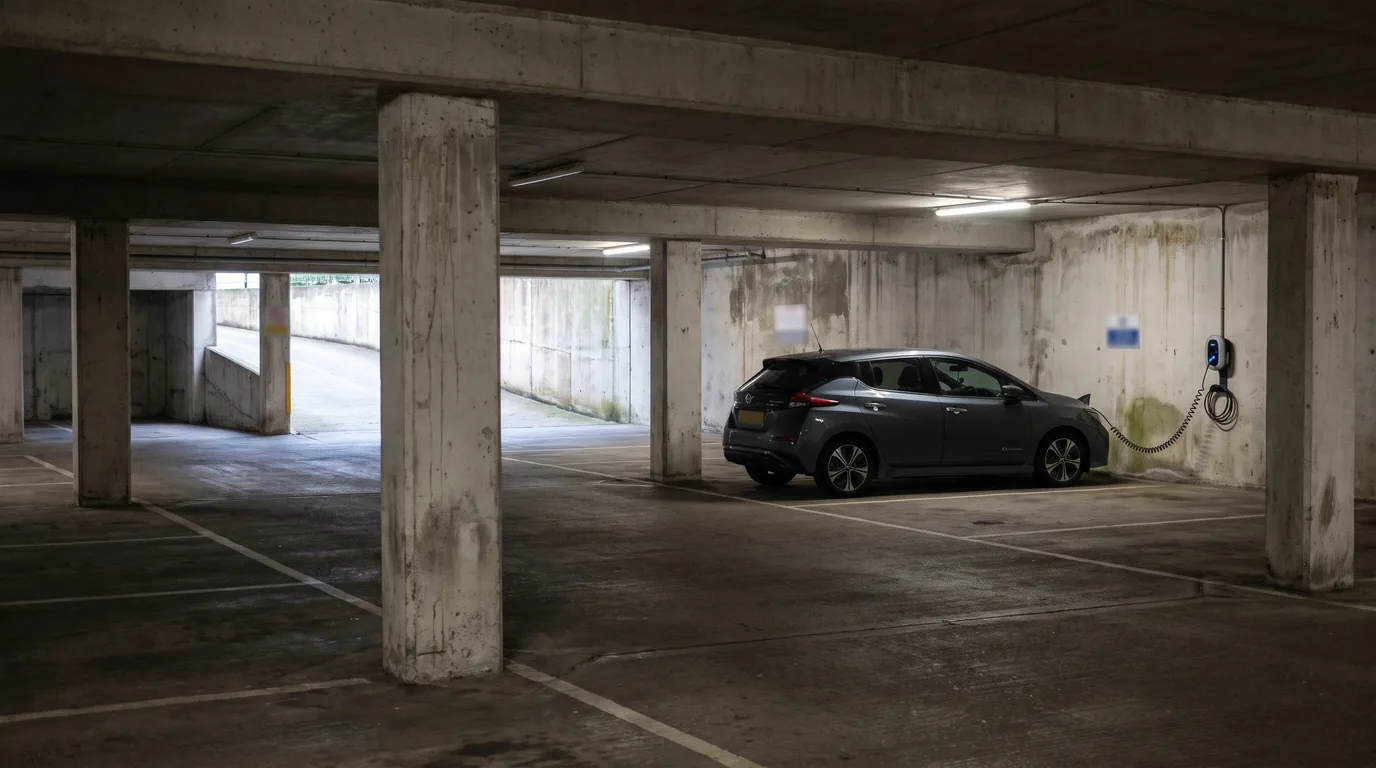
Renters and leaseholders could get a right to EV chargers under new consultations
Alongside scrapping planning permission for pavement charging, the Department for Transport is consulting on clearer rules for tenants and leaseholders and on chargers in new and refurbished covered car parks. Here is what is proposed and how to respond.
Electric cars saved oil importers $20bn during the Hormuz crisis, Ember finds
Energy think tank Ember says electric cars in 56 countries cut oil demand by 200 million barrels in the six months after the war with Iran began. Here is what the numbers show, and what they mean for drivers in Britain.
Public EV charging keeps 20% VAT as home electricity goes to 0%
Drivers without a driveway now pay 20% VAT at the plug while home charging pays none. Here is what a Budget cut to 5% or 10% would save, and why the Treasury has so far said no.