Ayrshire to get 600 new EV chargers in a 15-year deal with Believ
Three councils have signed a 15-year deal backed by £2.8m of Scottish Government funding and more than £15m from Believ. It covers towns, rural areas and the Isle of Arran, and Believ will also take over existing ChargePlace Scotland chargers.
Quick answers
- East, North and South Ayrshire councils have signed a 15-year deal with charge point operator Believ to install more than 600 EV chargers at about 300 locations, announced on 22 October 2026.
- The project combines more than £2.8m from the Scottish Government's EV Infrastructure Fund with more than £15m of capital investment from Believ.
- South Ayrshire gets about 220 chargers, North Ayrshire about 210 and East Ayrshire about 180, with urban, rural and island communities including the Isle of Arran.
- Chargers range from standard to rapid, covering overnight and long-stay charging for people without driveways as well as faster top-ups.
- Passive provision will allow more than 450 further chargers to be added later without disruption.
- Believ will take over management of existing council chargers, which have been part of the ChargePlace Scotland network; drivers will be told about the migration through council websites and social media.
- At least five accessible charging locations will be included in each council area.
Ayrshire is getting more than 600 new electric car chargers at about 300 locations, under a 15-year deal between East, North and South Ayrshire councils and the charge point operator Believ. Announced on 22 October 2026 and reported by the Daily Record, the project combines more than £2.8m from the Scottish Government’s EV Infrastructure Fund with more than £15m of investment from Believ. Towns, rural areas and the Isle of Arran are all covered.
For drivers in Ayrshire, especially those without a driveway, it should mean more chargers close to home and more places to top up on the road. There is also a change for existing users: Believ will take over the councils’ current chargers, which have been part of the ChargePlace Scotland network.
What has been announced?
The three Ayrshire councils have jointly signed a 15-year agreement with Believ, delivered with Transport Scotland and the Scottish Futures Trust. Believ will install, operate and maintain the chargers.
| Council area | New chargers (approximate) |
|---|---|
| South Ayrshire | 220 |
| North Ayrshire | 210 |
| East Ayrshire | 180 |
| Total | More than 600, at about 300 locations |
Alongside the new chargers, the project includes “passive provision”, groundwork and cabling that will allow more than 450 further chargers to be added later without digging up sites again. At least five accessible charging locations will be included in each council area, for drivers with a range of mobility needs.
“I’m delighted that £2.8 million from the Scottish Government will support 600 new EV chargers in Ayrshire,” said Stephen Flynn, Scotland’s economy, tourism and transport secretary. “Our Electric Vehicle Infrastructure Fund is enabling local authorities to partner with each other and with the private sector to attract private investment.”
What kind of chargers will they be?
There will be a mix of speeds, from standard chargers up to rapid ones. That matters, because different drivers need different things:
- Slower standard chargers suit long stays and overnight charging. For people who live in flats or terraced streets without a driveway, a charger near home they can leave the car on overnight is the closest thing to home charging.
- Rapid chargers suit drivers passing through or who need a quick top-up.
The roll-out covers urban, rural and island communities, including the Isle of Arran, where reliable charging matters for both residents and visitors arriving by ferry.
Who is Believ?
Believ is a UK charge point operator that works with councils to build and run public charging networks. This is its first Scottish public sector partnership. “We’re proud to be supporting the region in expanding access to reliable and accessible EV charging,” said chief executive Guy Bartlett. “Believ’s investment and experience across all charging speeds will help ensure the right infrastructure is delivered in the right locations for residents and visitors.”
The model is similar to other long-term council concessions, such as EZO’s contracts in northern Scotland and the Midlands, which we cover in our EZO report. Councils get chargers without paying the full cost upfront, and the operator gets a long contract to recover its investment.
What happens to the existing ChargePlace Scotland chargers?
Believ will take over management of the councils’ existing chargers. ChargePlace Scotland is the national network built with Scottish Government support, and many council chargers across Scotland have been run through it. As councils sign long-term deals with private operators, those chargers are moving to new management.
The councils say drivers will be told about the migration through social media and council websites. If you use Ayrshire council chargers now, expect:
- A different app or account to start and pay for charging.
- Possible tariff changes, set under the new contract.
- New signage at sites over time.
Keep an eye on your council’s website and any emails from ChargePlace Scotland.
Why does this matter for Ayrshire drivers?
Because charging in the region has been patchy. When Fastned applied to build Ayrshire’s first dedicated EV charging station in Kilmarnock earlier this year, its planning statement noted that the fastest nearby chargers were rated at only 51kW, with most others at up to 22kW, as Yahoo News reported. That 12-charger, ultra-rapid hub near the A71 has since been approved.
The Believ deal is a different kind of investment: many more chargers, spread widely, focused on everyday local charging rather than long-distance travel. Together, they should make owning an EV in Ayrshire much more practical.
North Ayrshire Council leader Tony Gurney said the aim was “to give everyone equal access to technology so that we can encourage as many people as possible to go electric”. East Ayrshire Council leader Douglas Reid said the councils were “taking in a bid to be net-zero by 2030” and that collaborating had secured “substantial investment”.
How does it fit Scotland’s wider charging picture?
Scotland passed 6,000 public chargers in late 2024, two years ahead of its 2026 target, according to the Daily Record. Since then, the Scottish Government has shifted towards using its £30m EV Infrastructure Fund to attract private investment through council partnerships, rather than building and running chargers directly.
Ayrshire and Glasgow City Region were awarded £6.3m from the fund in 2024, aimed at about 3,550 new public chargers across the area. The Believ deal is one of the results.
New UK-built hardware could help too. Connected Kerb has opened a charger factory in Aberdeen, which we cover in our Connected Kerb report. Our Scotland EV charging grants guide covers support for home and business chargers north of the border.
When will the chargers arrive?
The councils have not published a site-by-site timetable. A roll-out of 600 chargers across 300 locations will take time, and grid connections are often the slowest part. Watch your council’s website for planned locations.
In the meantime, if you are thinking about an EV and do not have a driveway, check whether your council has a request scheme for on-street chargers, and compare public charging prices before you commit. Our report on cross-pavement charging rules explains the options for drivers in England; in Scotland, council policies vary, so ask yours directly.
What is passive provision?
Passive provision means installing the groundwork, ducting and cabling for future chargers now, without fitting the chargers themselves. When demand grows, charge points can be added quickly and cheaply, without digging up car parks or pavements again.
The Ayrshire project includes passive provision for more than 450 further chargers, on top of the 600 being installed. That is a sensible way to plan, because EV numbers are expected to keep rising, and installing chargers before there are enough cars to use them can leave operators losing money on idle equipment.
Why does accessible charging matter?
Many public chargers are hard to use for disabled drivers: bays may be too narrow, kerbs too high, screens too high to reach or cables too heavy to handle. The Ayrshire deal includes at least five accessible charging locations in each council area.
There is a British standard for accessible charging, which covers things like bay size, ground surfaces, the height of controls and the weight of cables. Including accessible sites from the start is far cheaper than adapting chargers later, and it means EV ownership is realistic for more people.
How will the chargers be paid for?
The project is a mix of public and private money:
- More than £2.8m from the Scottish Government’s EV Infrastructure Fund.
- More than £15m of committed capital investment from Believ.
Believ will manage operation and maintenance for 15 years. The Scottish Futures Trust and Transport Scotland helped put the deal together. This approach reflects the Scottish Government’s shift from building and running chargers itself, through ChargePlace Scotland, to using public funding to attract private operators.
What should existing ChargePlace Scotland users expect?
If you use council chargers in Ayrshire through ChargePlace Scotland, the changeover to Believ is the main thing to watch. Practical tips:
- Watch for official notices on council websites and social media, which the councils say will explain the migration.
- Download the operator’s app before you need it, and set up payment.
- Check prices. Tariffs may change under the new operator.
- Keep a backup. During any handover, have an alternative charger in mind in case a site is temporarily unavailable.
How does Ayrshire fit Scotland’s wider plans?
Scotland passed 6,000 public chargers in late 2024, two years ahead of its 2026 target. Its £30m EV Infrastructure Fund supports councils working with private operators, and Ayrshire’s £2.8m share has been matched many times over by Believ. Similar deals elsewhere include EZO’s 20-year concession across four counties in northern Scotland. Together, they aim to spread reliable charging beyond the cities into towns, villages and islands.
Our view
This is the kind of unglamorous, long-term deal that makes EV ownership possible for people without driveways, in towns and villages as well as cities. The inclusion of Arran, accessible bays and room for 450 more chargers is a sensible way to plan. The test for Believ will be reliability and fair pricing over 15 years, and a smooth handover for drivers already using the existing chargers.
How we test and where our numbers come from
Range figures are official WLTP combined values taken from manufacturer UK specification pages, with real-world estimates drawn from independent comparative testing. Prices are UK list prices at the time of the latest update. Tax, grant and charging-scheme figures come from GOV.UK and HMRC publications. We re-check every guide when pricing, specification or policy changes. Last checked 24 October 2026. How we work out our own figures.
Frequently asked questions
How many EV chargers is Ayrshire getting?
More than 600 new chargers at about 300 locations across East, North and South Ayrshire, under a 15-year partnership with Believ. South Ayrshire gets about 220, North Ayrshire about 210 and East Ayrshire about 180.
Who is Believ?
Believ is a UK EV charge point operator that installs and runs public chargers in partnership with councils. The Ayrshire deal is its first Scottish public sector partnership, and it is investing more than £15m in it.
What happens to existing ChargePlace Scotland chargers in Ayrshire?
Believ will take over management of the councils' existing chargers. The councils say drivers will be told about the migration process through social media and council websites, so watch for changes to apps, accounts and payment methods.
Will the Isle of Arran get new EV chargers?
Yes. The roll-out covers urban, rural and island communities, and the Isle of Arran is specifically included.
Are the new Ayrshire chargers rapid chargers?
There is a mix. Speeds range from standard chargers for long-stay and overnight charging, useful for people without a driveway, up to rapid chargers for quicker top-ups.
Sources and further reading
- dailyrecord.co.ukDaily RecordPrimary source referenced in this article.
- dailyrecord.co.ukMore public EV chargers coming to Ayrshire as First Minister announces £6.3 million investmentBackground: the 2024 EV Infrastructure Fund award for Ayrshire and Glasgow, and Scotland passing 6,000 public chargers.
- uk.news.yahoo.comAyrshire's first all-electric fueling station with kiosk and lounge to openFastned's approved 12-charger hub in Kilmarnock and existing charger speeds in the area.

EV Compared
The EV Compared editorial team tracks the UK electric vehicle market full time: new model launches, list prices, WLTP and real-world range, public charging tariffs and the tax rules that decide what an EV actually costs to run. Every guide is checked against manufacturer specifications and official GOV.UK figures, and updated whenever the numbers move.
Related reading
View all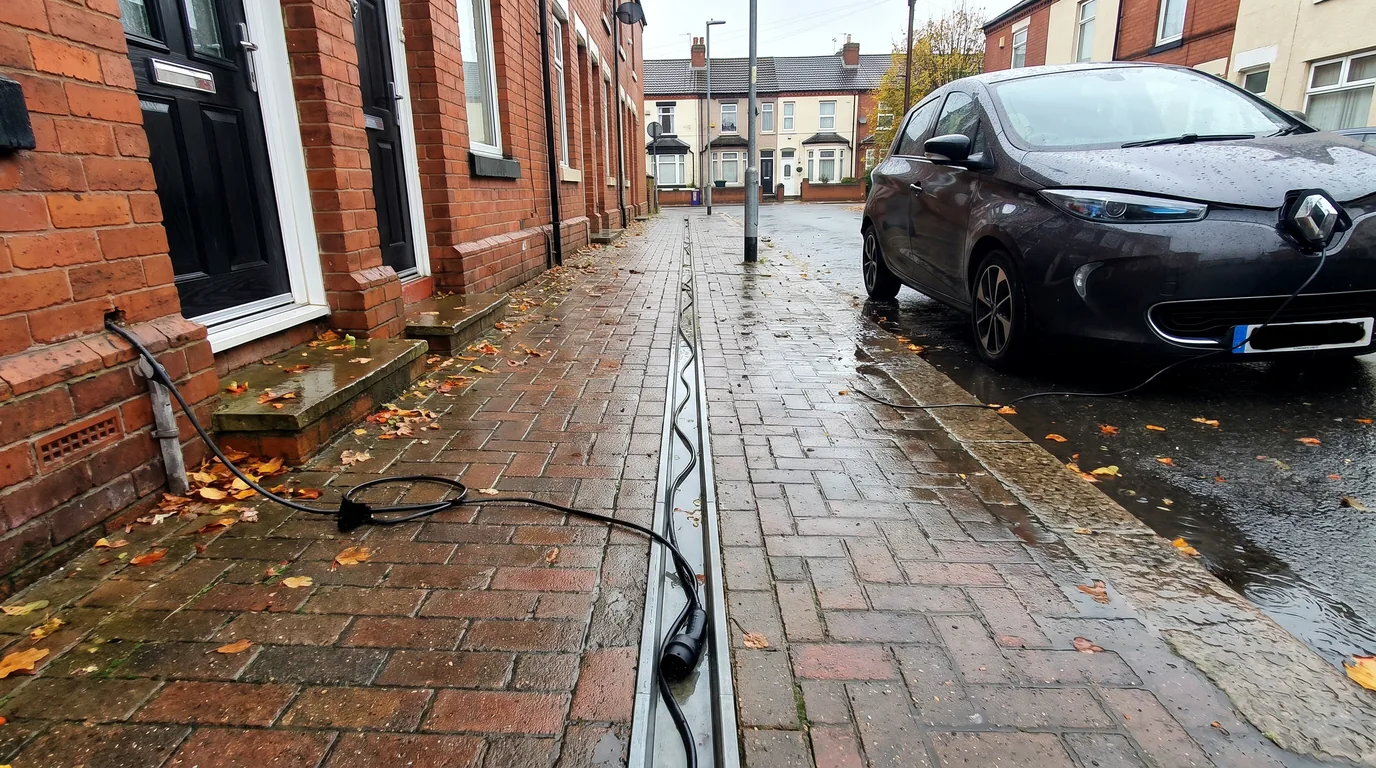
Pavement charging gullies: planning rule scrapped, but 20 councils still say no
Drivers in England without a driveway no longer need planning permission for a pavement cable channel, saving £300 to £500. But costs range from free to £1,200 depending on your council, and some councils still refuse them outright.
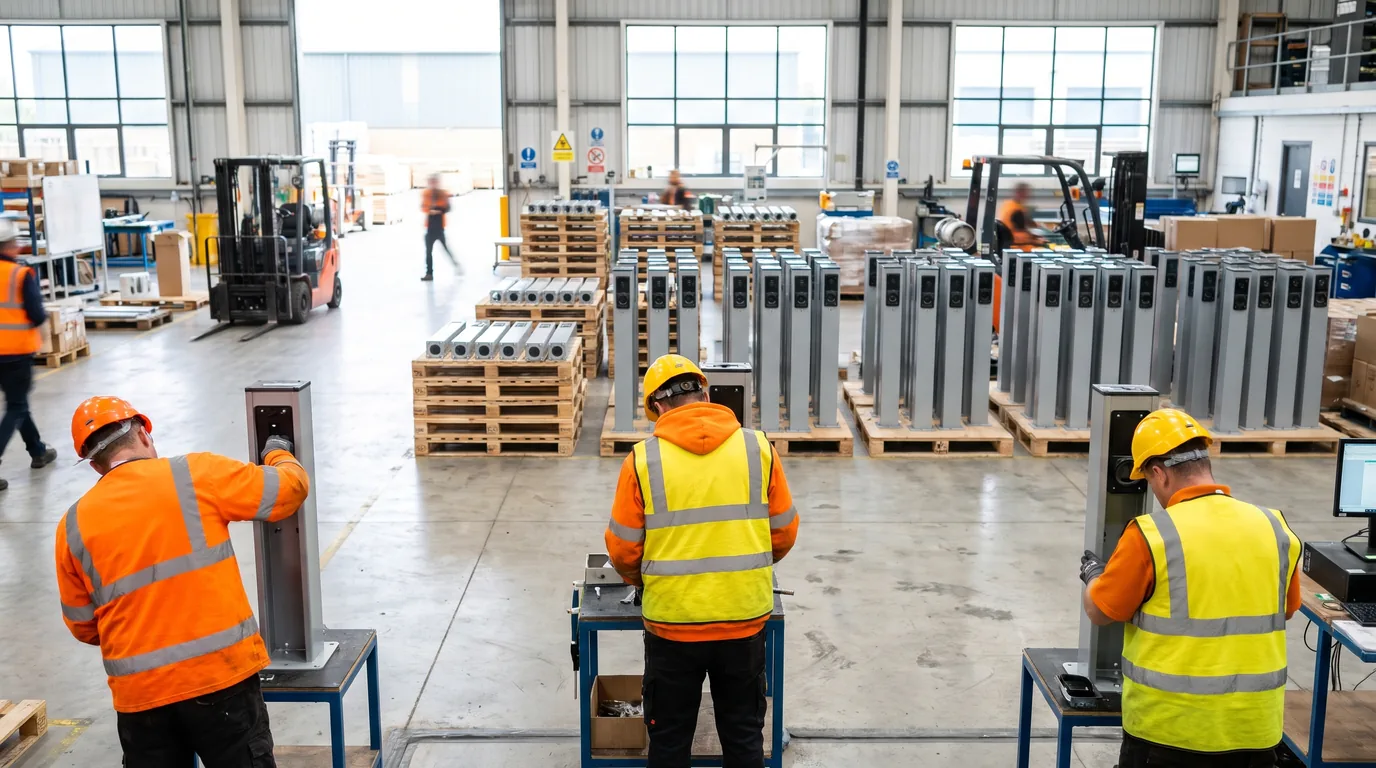
Connected Kerb opens Aberdeen factory to build 25,000 on-street chargers by 2030
The on-street charging firm is moving manufacturing to Scotland after buying Trojan Energy and its flush kerbside chargers. For drivers without a driveway, it signals more residential chargers on the way.
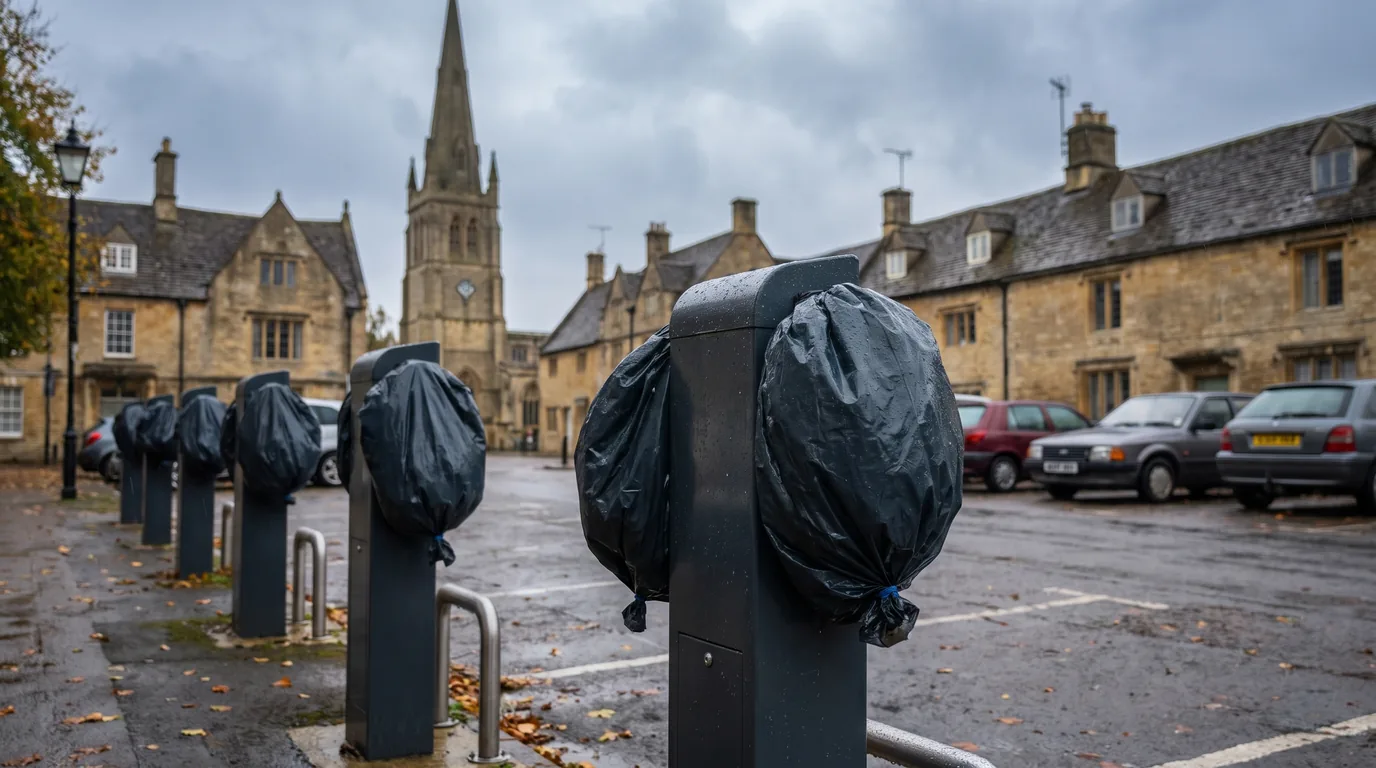
North Yorkshire replaces broken EV chargers after operator collapse, as £8m roll-out stalls
Thirty-two chargers in Bedale, Northallerton, Stokesley and Thirsk are being replaced after the firm that installed them went bust. Meanwhile the county's main £8m scheme is being re-tendered, and rural 'charging deserts' remain.
Scotland EV charging grants 2026-27: £17.8m, what you can claim
Scotland funds its own EV charging grants on top of UK schemes: rural and island chargers, cross-pavement home charging, flats and microbusinesses. Here is who qualifies and how much each pays.
ChargePlace Scotland shuts in 2027: chargers must move by year end
Owners have under three months to move their chargers off ChargePlace Scotland. Here is who runs them next, which apps you will need and what Scottish councils charge per kWh.
Half of UK councils still offer no on-street EV charging, FOI finds
More than 90% of councils now have public chargers, yet half offer nothing on-street. New LEVI deals in Hampshire, Peterborough and West Sussex show where help is arriving first.