Scotland EV charging grants 2026-27: £17.8m, what you can claim
Scotland funds its own EV charging grants on top of UK schemes: rural and island chargers, cross-pavement home charging, flats and microbusinesses. Here is who qualifies and how much each pays.
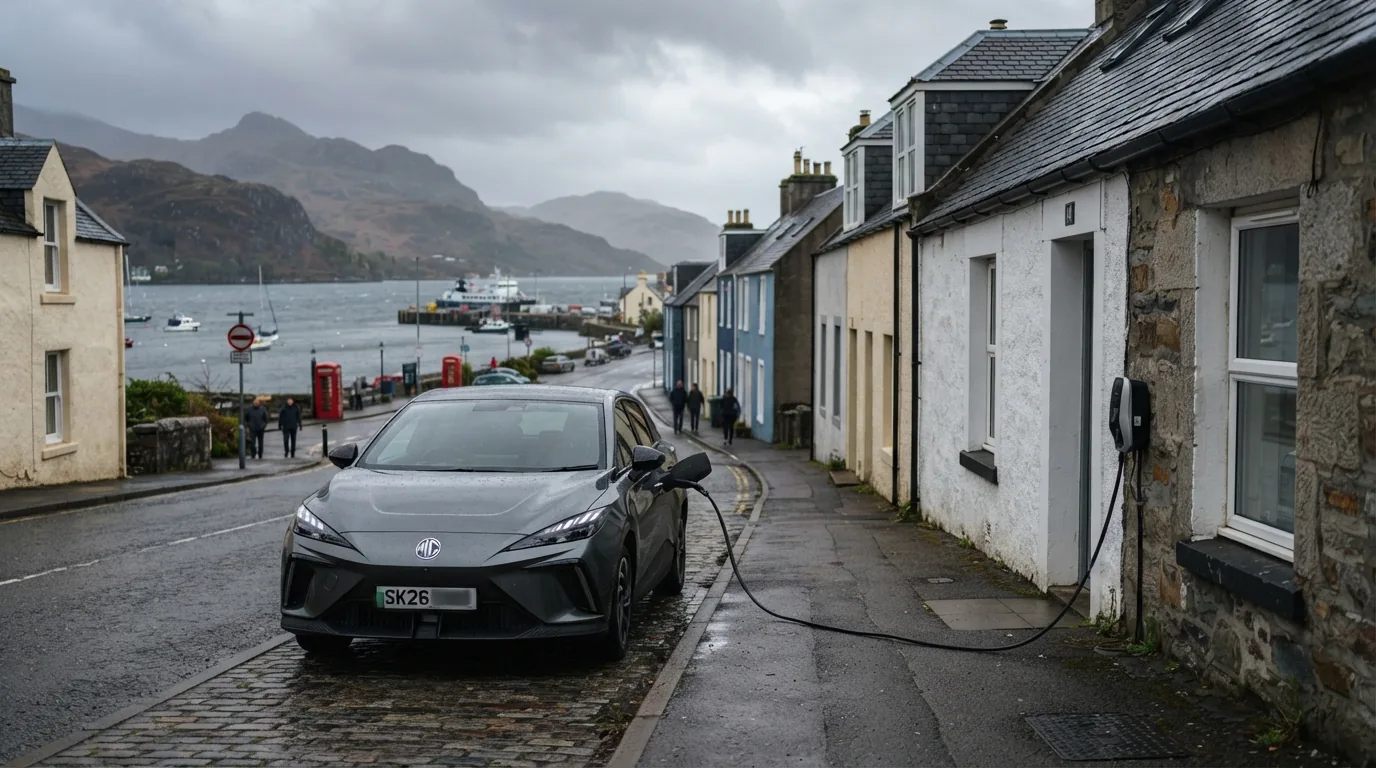
Quick answers
- The Scottish Government confirmed £17.8m for EV charging and uptake schemes in 2026-27, all delivered by Energy Saving Trust and running alongside UK Government incentives.
- The Rural and Island Infrastructure Fund supports up to 1,000 public charge points, with up to £60,000 for a high-power DC unit.
- Lower-income rural and island households can get up to £400 towards a home charger, and the cross-pavement grant pays up to £3,500.
- Factored developments such as flats can claim up to 100% of costs, to a maximum of £20,000 per project.
- Microbusinesses and third sector groups in rural and island areas can claim up to £5,000 for private workplace chargers.
Scotland has £17.8m of its own EV charging and uptake schemes for 2026-27, delivered by Energy Saving Trust and running alongside UK Government incentives, electrive reported. If you live in Scotland, the UK grants are only part of the picture: there is money for rural and island chargers, for homes with no driveway, for flats and for small businesses. The awards run from £400 for a home charger to £60,000 for a high-power public unit.
What is in the £17.8m package?
The Scottish Government says the schemes focus on public, workplace and home charging, with targeted support for rural and island communities, lower-income households, homes without off-street parking, microbusinesses and the third sector. Five schemes make up the package.
| Scheme | Who it is for | Headline amount |
|---|---|---|
| Rural and Island Infrastructure Fund | Landowning businesses and charge point operators | Up to £60,000 per high-power DC unit |
| Domestic Rural and Island grant | Lower-income rural and island households | Up to £400 |
| Cross-pavement charging grant | Homes without off-street parking | Up to £3,500 |
| Factored Development Charge Point Fund | Property managers and factors for flats | Up to £20,000 per project |
| Rural and Island Workplace Charging | Microbusinesses and third sector groups | Up to £5,000 |
The fifth item in the package is the ChargePlace Scotland Transition Fund, which helps owners move chargers to a new operator. We cover it in our ChargePlace Scotland closing guide. The amounts above come from the Energy Saving Trust pages linked in each section, and its scheme pages are the ones to check before you apply.
Public chargers: the Rural and Island Infrastructure Fund
The fund supports up to 1,000 public charge points in rural and island areas. Funding covers only publicly accessible chargers that appear on a public network map, and applicants must be a landowning business or a charge point operator, according to Energy Saving Trust.
The support level depends on how remote the site is, and the £60,000 headline applies only to the most remote sites and islands:
| Site type | Share of cost covered | AC charge point | High-power DC |
|---|---|---|---|
| Urban-rural classification 5 to 6 | 75% | Up to £11,250 | Up to £45,000 |
| Classification 7 to 8 and islands | 100% | Up to £15,000 | Up to £60,000 |
For drivers, the fund matters most where commercial networks have not gone. It is also relevant as the public network is reorganised: our guide to charging networks in Scotland shows who runs what today.
Home charging: £400 and the cross-pavement grant
Energy Saving Trust lists up to £400 towards a home charger if you live in a rural or remote area of Scotland, including islands, have or will soon have an EV, and have an annual household income of £50,000 or less (Energy Saving Trust).
If you have no driveway, the cross-pavement charging grant pays up to £3,500 towards a solution that carries the cable across the pavement. You need:
- Permission from your council or pavement maintainer.
- An EV, or evidence you will soon have one.
- A charge point unit, or evidence you will soon have one.
The permission step is the sticking point. Energy Saving Trust says only East Lothian, Perth and Kinross, and Renfrewshire had confirmed they were open to accepting cross-pavement permit applications. Check with your own council before buying anything.
Outside Scotland’s own schemes, UK-wide help for home chargers is covered in our guide to home charger grants.
Flats and workplaces
The Factored Development Charge Point Fund is for residential properties with private communal parking. Applications come from property managers or factors, and the grant can cover up to 100% of purchase and installation costs, to a maximum of £20,000 per project (Energy Saving Trust). If you own a flat, the practical step is to ask your factor to apply.
Rural and island microbusinesses and third sector organisations can claim up to 100% of costs, to a maximum of £5,000, for chargers used by staff or fleet vehicles. The grant is for private chargers only, not public charging (Energy Saving Trust).
How do the Scottish grants compare with UK ones?
The Scottish schemes are designed to fill gaps rather than replace UK support. The package is aimed at places and households where the market is thin: islands, remote villages, tenement streets and flats. Our overview of EV grants available covers the UK-wide side, including the car grant.
What this means for you
- Rural or island household with an EV: if your household income is £50,000 or less, check the £400 home charger grant first.
- No driveway: ask your council whether it accepts cross-pavement permits before applying for the £3,500.
- Flat owner: ask your factor to apply for up to £20,000 for the whole development.
- Small rural business or charity: up to £5,000 can cover staff or fleet chargers.
- Landowner: a public charger on your land could attract up to £60,000 for a high-power DC unit.
Apply through Energy Saving Trust, and do not buy or install equipment before checking its rules. For fitting a charger without a grant, see our home charger guide.
How we test and where our numbers come from
Range figures are official WLTP combined values taken from manufacturer UK specification pages, with real-world estimates drawn from independent comparative testing. Prices are UK list prices at the time of the latest update. Tax, grant and charging-scheme figures come from GOV.UK and HMRC publications. We re-check every guide when pricing, specification or policy changes. Last checked 6 October 2026.
Frequently asked questions
How much money has Scotland set aside for EV charging in 2026-27?
The Scottish Government confirmed £17.8m for a package of EV incentive schemes in 2026-27. All of them are delivered by Energy Saving Trust and run alongside UK Government EV incentives.
Can I get a grant for a home charger in Scotland?
Possibly. Energy Saving Trust lists up to £400 for households in rural or remote areas, including islands, who have or will soon have an EV and an annual household income of £50,000 or less. A separate cross-pavement grant pays up to £3,500.
Where can I use a cross-pavement charging grant?
You need permission from your council or pavement maintainer first. Energy Saving Trust says only East Lothian, Perth and Kinross, and Renfrewshire had confirmed they were open to cross-pavement permit applications.
Is there help for flats and shared parking?
Yes. The Factored Development Charge Point Fund covers up to 100% of purchase and installation costs, up to £20,000 per project. Property managers or factors apply, not individual residents.
Can a small business get a grant for workplace chargers in Scotland?
Microbusinesses and third sector organisations in rural and island communities can claim up to 100% of costs, to a maximum of £5,000. The chargers must be private, for staff or fleet vehicles.
Sources and further reading
- energysavingtrust.org.ukEnergy Saving TrustPrimary source referenced in this article.
- electrive.com£17.8 million in funding for EV charging in ScotlandThe £17.8m package, its five schemes and Energy Saving Trust delivery.
- energysavingtrust.org.ukRural and island infrastructure fundFunding levels for public AC and DC chargers and who can apply.
- energysavingtrust.org.ukCross pavement charging grantUp to £3,500 and the councils open to permit applications.
- energysavingtrust.org.ukFactored development chargepoint fundingUp to £20,000 per project for factored developments.
- energysavingtrust.org.ukBusiness charge point funding (Scotland)Workplace grant listings for Scottish businesses.
- fleetworld.co.ukScotland pledges £17.8m to charge up EV support for 2026/27Trade coverage of the 2026-27 package.

EV Compared
The EV Compared editorial team tracks the UK electric vehicle market full time: new model launches, list prices, WLTP and real-world range, public charging tariffs and the tax rules that decide what an EV actually costs to run. Every guide is checked against manufacturer specifications and official GOV.UK figures, and updated whenever the numbers move.
Related reading
View all
ChargePlace Scotland shuts in 2027: chargers must move by year end
Owners have under three months to move their chargers off ChargePlace Scotland. Here is who runs them next, which apps you will need and what Scottish councils charge per kWh.
Workplace Charging Scheme: final year at £500 a socket
The government's workplace chargepoint grant has been extended for one last year to 31 March 2027, with the grant per socket raised from £350 to £500 and the cap per business lifted to £20,000.
What Is the EV Chargepoint Grant for Homeowners?
Who can still claim the £500 home chargepoint grant in 2026, and who is no longer eligible
Best EV Charging Networks in Scotland for 2026
From Edinburgh and Glasgow to the NC500 and Western Isles, which networks to rely on
Do You Need a Home Charger for an Electric Car in the UK?
The honest answer: technically no, practically yes, and here is why the wallbox pays for itself quickly
What EV Grants Are Available in the UK in 2026?
A complete rundown of every active grant, who qualifies and exactly how much you can save