Connected Kerb opens Aberdeen factory to build 25,000 on-street chargers by 2030
The on-street charging firm is moving manufacturing to Scotland after buying Trojan Energy and its flush kerbside chargers. For drivers without a driveway, it signals more residential chargers on the way.
Quick answers
- Connected Kerb has opened a manufacturing hub at W-Zero-1 in Aberdeen's Energy Transition Zone to build its full range of EV charging products.
- The company expects to produce more than 3,000 public chargers at the site in 2027, with a further 25,000 planned by the end of 2030.
- The move follows Connected Kerb's purchase of Aberdeen-based Trojan Energy and its Flat & Flush on-street charging technology, designed for historic and heritage streets.
- Connected Kerb has more than 10,000 public chargers installed across the UK, including in Scotland through the ChargePlace Scotland network and its own network.
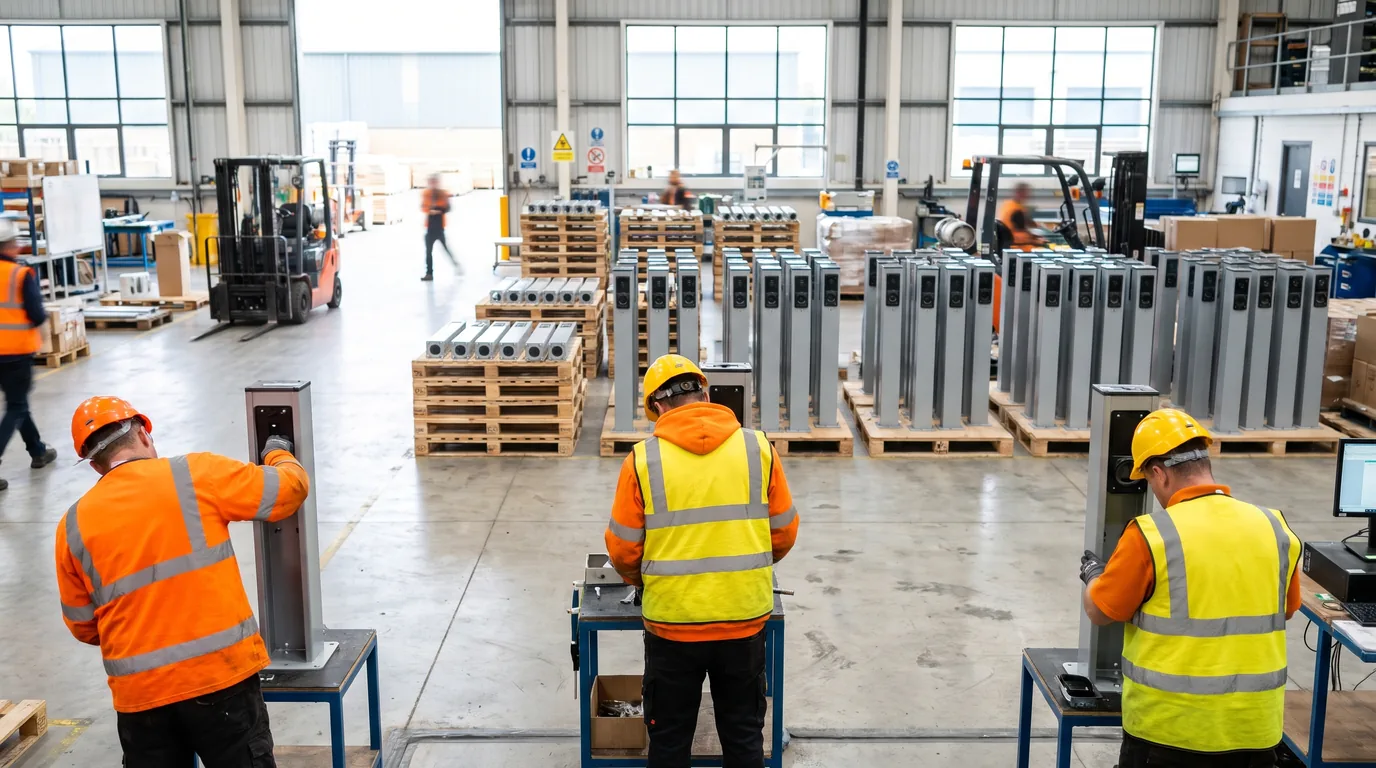
- The site will combine product development, prototyping, environmental testing, 3D printing and volume manufacturing.
- About 9.3 million UK households have no off-street parking, which makes residential on-street chargers the main alternative to a home charger.
Connected Kerb, one of the UK’s biggest on-street charging companies, has opened a factory in Aberdeen and plans to build more than 3,000 public chargers there in 2027, with a further 25,000 by the end of 2030. The site, at W-Zero-1 in the city’s Energy Transition Zone, will make the company’s full range of charging products, as reported by Yahoo News and The Herald.
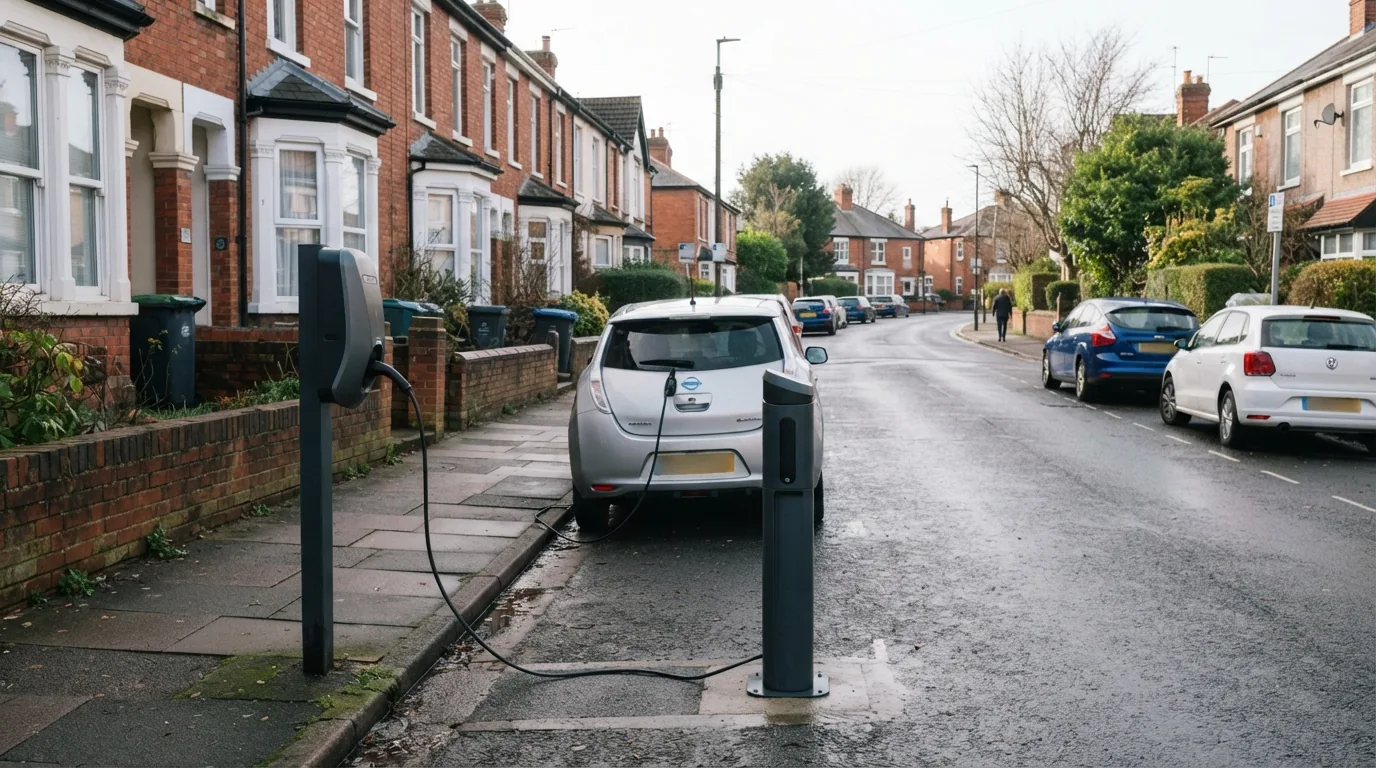
For drivers, the significance is in the type of charger. Connected Kerb specialises in residential, on-street charging, the kind of chargers that people without driveways rely on. About 9.3 million UK households have no off-street parking, so more on-street chargers matter as much as new motorway hubs. Our Pod Point and Connected Kerb comparison explains how its network works.
What is Connected Kerb building in Aberdeen?
The Aberdeen hub brings design and manufacturing under one roof. It will handle product development, prototyping, environmental testing, 3D printing and volume manufacturing, and support Connected Kerb’s UK network of more than 10,000 installed public chargers.
Its targets are:
| Period | Planned production |
|---|---|
| 2027 | More than 3,000 public chargers |
| By the end of 2030 | A further 25,000 chargers |
“Opening our Aberdeen facility is an important milestone for Connected Kerb,” said chief executive Chris Pateman-Jones. “It gives us the manufacturing base we need to support our growth across Scotland and the wider UK.”
Why Aberdeen?
Because of an acquisition. Connected Kerb bought Aberdeen-based Trojan Energy, along with its Flat & Flush on-street charging technology. Rather than move that know-how south, it is building on it in the city.
“The city has a fantastic engineering and manufacturing skills base and we saw a real opportunity to build on the expertise that already existed within Trojan Energy,” said Pateman-Jones. “We have invested in the facility and are now bringing production of our wider Connected Kerb range to Aberdeen.”
Aberdeen’s long history in oil and gas engineering means it has a deep pool of electrical and mechanical skills. Scotland’s economy secretary, Stephen Flynn, called the investment “a strong vote of confidence in Scotland’s skilled workforce and manufacturing expertise”. Neil Young of ETZ Ltd, which runs the Energy Transition Zone, said it “retains valuable skills and manufacturing capability in the city”.
What is Flat & Flush charging?
Flat & Flush is Trojan Energy’s design for on-street chargers that sit flush with the pavement. Instead of a post, there is a small point set into the footway, and drivers plug in with a separate lance that connects the car to the socket.
The advantage is that there is almost no street clutter. That makes it attractive for historic and heritage streets, where councils and residents often object to rows of charging posts, and for narrow pavements where a post would block wheelchairs and pushchairs.
Why on-street charging matters
The cheapest way to charge an EV is at home overnight on an off-peak tariff, which costs just a few pence a mile. Public charging averages around 22p a mile, according to ChargeUK and YouGov research. For the third of households without a driveway, that gap is the biggest obstacle to going electric.
There are three main ways to close it:
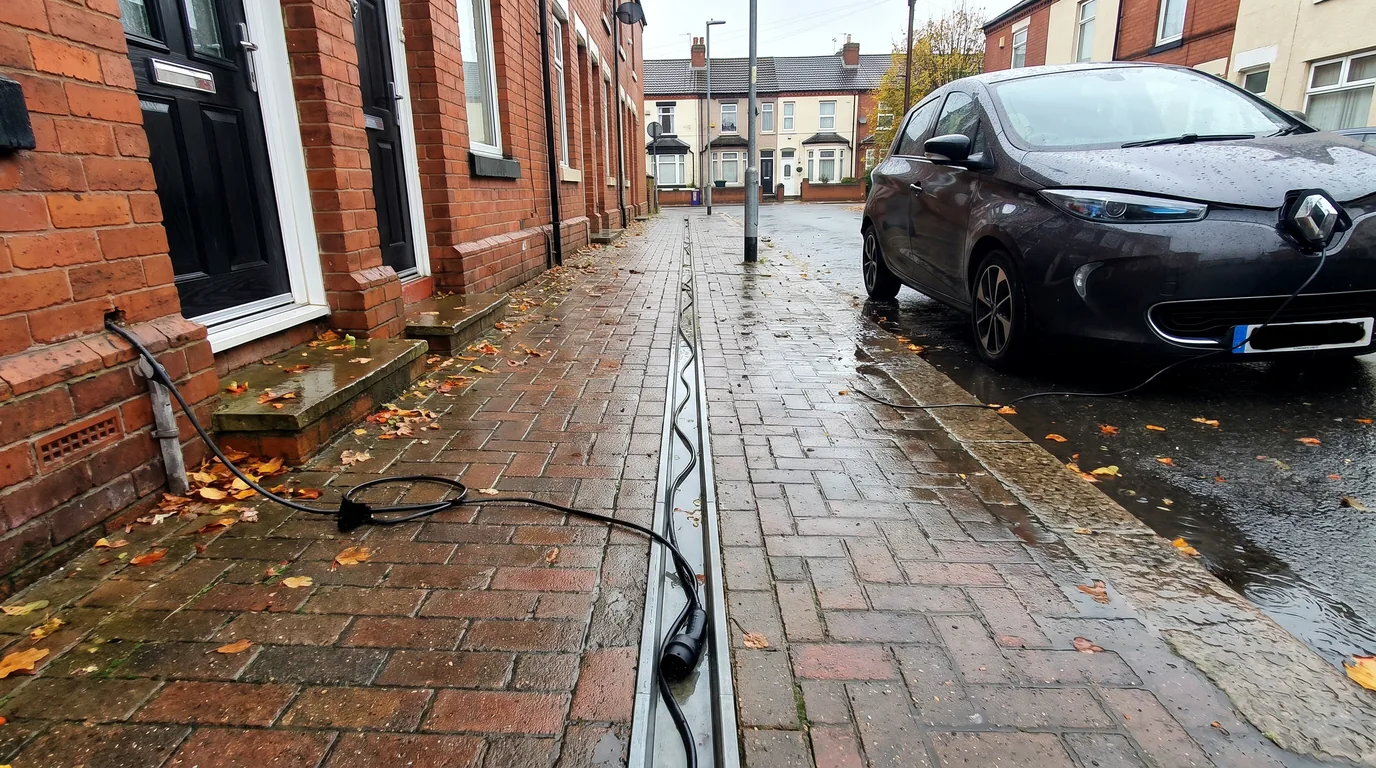
- Cross-pavement gullies, which let you run a cable from your house. Planning permission is no longer needed in England, but more than 20 councils still refuse them, as we cover in our gully postcode lottery report.
- Residential on-street chargers, like Connected Kerb’s, installed near homes and usually slower and cheaper than rapid chargers.
- Lamp-post chargers, built into existing street lights.
Residential chargers are the option councils control most directly, and the one most often funded through government programmes for local charging.
Where is Connected Kerb’s network?
Connected Kerb works mainly with councils. In Scotland it has supplied chargers through the ChargePlace Scotland network and through its own independent network. Its approach is usually long-term contracts with councils to install and run residential chargers across a whole area.
More factory capacity should help it win and deliver more of those contracts. It also means less reliance on imported hardware, which matters for supply chains and, potentially, for future rules on where charging equipment is made.
Is UK charger manufacturing growing?
It is starting to. Connected Kerb’s factory follows a wider push to build more charging hardware in the UK rather than import it. Investment in charging depends heavily on how many EVs are expected on the road, which is why charging firms have been so vocal about the government’s review of the ZEV mandate. A ChargeUK survey found weakening the mandate could cut operators’ investment by about half, as we report in our ZEV mandate cost analysis.
Financing is changing too. Ireland-based EZO has raised €150m to fund more than 3,000 chargers across the UK and Ireland under long-term council contracts, which we cover in our EZO report.
What does it mean for drivers?
In the short term, nothing changes at your kerb. Chargers made in Aberdeen in 2027 will be installed through council contracts over the following years. But over time, more factory capacity should mean:
- More residential chargers, especially in Scotland and in areas where Connected Kerb holds council contracts.
- More discreet designs, such as Flat & Flush, in streets where posts have been resisted.
- Faster replacement and repair, with design and production close to the network.
If you want a charger near your home, the best route is still your council. Many councils let residents request a charger location, and those requests help decide where new ones go. In the meantime, our guide to home EV charging costs shows how much you could save if you get access to cheaper charging.
What is Aberdeen’s Energy Transition Zone?
The Energy Transition Zone (ETZ) is a business and industrial area in Aberdeen set up to help the city shift from its traditional base in oil and gas towards low-carbon energy industries. It is run by ETZ Ltd, and W-Zero-1, where Connected Kerb’s hub is based, is one of its buildings for companies working on clean energy technology.
Aberdeen has spent decades as the centre of the UK’s North Sea oil and gas industry, which has given it a large pool of engineers and technicians with skills in electrical systems, manufacturing and harsh-environment equipment. As oil and gas declines, the city is trying to move those skills into industries such as offshore wind, hydrogen and, now, EV charging. Neil Young of ETZ Ltd described the Connected Kerb hub as positive for the city’s reputation as “a European Capital of Energy Excellence”.
How does residential charging compare with other options?
| Charging option | Typical speed | Typical cost | Best for |
|---|---|---|---|
| Home charger on off-peak tariff | 7kW | Lowest, a few pence a mile | Drivers with a driveway or approved gully |
| Residential on-street charger | Usually 7kW to 22kW | Lower than rapid, higher than home | Overnight charging for people without driveways |
| Lamp-post charger | Usually up to about 5kW to 7kW | Similar to residential on-street | Overnight charging in streets with suitable lamp posts |
| Rapid and ultra-rapid hubs | 50kW to 350kW+ | Highest | Quick top-ups and long journeys |
Residential chargers are slower than rapid hubs, but that does not matter if the car is parked overnight. What matters most is that the charger is close to home and reliably available. Our report on council rules for cross-pavement charging covers the alternative of running a cable from your own home.
Why does making chargers in the UK matter?
There are several reasons:
- Supply chains. Making hardware locally reduces reliance on imports and shipping delays.
- Jobs and skills. Manufacturing keeps skilled jobs in the UK, in this case in an area moving away from oil and gas.
- Faster iteration. Having design, testing and production in one place lets a company improve products quickly.
- Future rules. Governments in Europe are increasingly favouring locally made products in public contracts, as the EU’s Made in Europe plans show. We cover that debate in our Made in Europe report.
For councils buying chargers, UK-made hardware with local support can also make maintenance and repairs easier over a long contract.
What is the risk?
The plan depends on demand. Connected Kerb’s 25,000-charger target assumes councils keep signing contracts and EV numbers keep rising. Charging companies have warned that weakening the ZEV mandate could cut their investment by about half, because fewer EVs would mean fewer customers. If the government’s review of the mandate softens the 2030 target, some of that planned growth could slow.
Our view
A new UK charger factory focused on residential, on-street charging is good news, because that is where the charging gap is widest. The headline number, 25,000 chargers by 2030, is ambitious, and it depends on councils signing contracts and on EV demand holding up. But making the hardware in Britain, with designs that suit narrow and historic streets, is the right kind of investment for drivers without driveways.
How we test and where our numbers come from
Range figures are official WLTP combined values taken from manufacturer UK specification pages, with real-world estimates drawn from independent comparative testing. Prices are UK list prices at the time of the latest update. Tax, grant and charging-scheme figures come from GOV.UK and HMRC publications. We re-check every guide when pricing, specification or policy changes. Last checked 24 October 2026. How we work out our own figures.
Frequently asked questions
What is Connected Kerb?
Connected Kerb is a UK charge point operator that specialises in on-street and residential charging, often installed with councils. It has more than 10,000 public chargers installed across the UK and now builds its own hardware in Aberdeen.
How many chargers will Connected Kerb build in Aberdeen?
Connected Kerb expects to produce more than 3,000 public chargers at the Aberdeen site in 2027, with a further 25,000 planned by the end of 2030.
What is Flat & Flush charging?
Flat & Flush is on-street charging technology developed by Trojan Energy, which Connected Kerb acquired. The charge point sits flush with the pavement, and drivers plug in using a separate lance, so there is little street clutter, which suits historic and heritage areas.
Are on-street chargers cheaper than rapid chargers?
Usually, yes. Slower on-street and lamp-post chargers are generally cheaper per kWh than rapid and ultra-rapid hubs, though public charging still carries 20% VAT and costs more than charging at home on an off-peak tariff.
How do I get an on-street charger near my home?
Contact your local council, which usually decides where residential chargers go and often runs schemes with operators such as Connected Kerb. Many councils let residents request a charger near their home through an online form.
Sources and further reading
- uk.news.yahoo.comYahoo News UKPrimary source referenced in this article.
- heraldscotland.comEV charging firm opens new Aberdeen manufacturing hubThe Herald's report of the opening and ministerial comments.
- theguardian.com'I can charge my car for £6': could new rules cut costs for EV drivers?The 9.3 million households without off-street parking.

EV Compared
The EV Compared editorial team tracks the UK electric vehicle market full time: new model launches, list prices, WLTP and real-world range, public charging tariffs and the tax rules that decide what an EV actually costs to run. Every guide is checked against manufacturer specifications and official GOV.UK figures, and updated whenever the numbers move.
Related reading
View all
A weaker ZEV mandate could cost the Treasury up to £16.7bn, industry warns
As ministers lean towards a 60% target for 2030, charging firms, energy groups and campaigners have put numbers on what a softer mandate would cost in lost tax, slower charger roll-out and air pollution.
Ayrshire to get 600 new EV chargers in a 15-year deal with Believ
Three councils have signed a 15-year deal backed by £2.8m of Scottish Government funding and more than £15m from Believ. It covers towns, rural areas and the Isle of Arran, and Believ will also take over existing ChargePlace Scotland chargers.
Trailing EV cables and pavement gullies: who is liable if someone trips?
As cross-pavement charging becomes easier, liability is the main reason some councils still say no. Here is what the law and Highway Code say, what insurers warn, and how gullies change the picture.
Pod Point vs Connected Kerb: Which Is Best for On-Street EV Charging?
Connected Kerb is built for residential streets; Pod Point covers supermarkets and retail car parks. Here is how to pick the right network for your situation.
Renters and leaseholders could get a right to EV chargers under new consultations
Alongside scrapping planning permission for pavement charging, the Department for Transport is consulting on clearer rules for tenants and leaseholders and on chargers in new and refurbished covered car parks. Here is what is proposed and how to respond.
Pavement charging gullies: planning rule scrapped, but 20 councils still say no
Drivers in England without a driveway no longer need planning permission for a pavement cable channel, saving £300 to £500. But costs range from free to £1,200 depending on your council, and some councils still refuse them outright.