How far can a BMW iX3 really go? 465 miles at 56mph, and 626 miles hypermiling
The iX3 has broken range records in independent and factory tests. Here is what each result really shows, what UK testers found on British roads and how to get the most from any EV's battery.
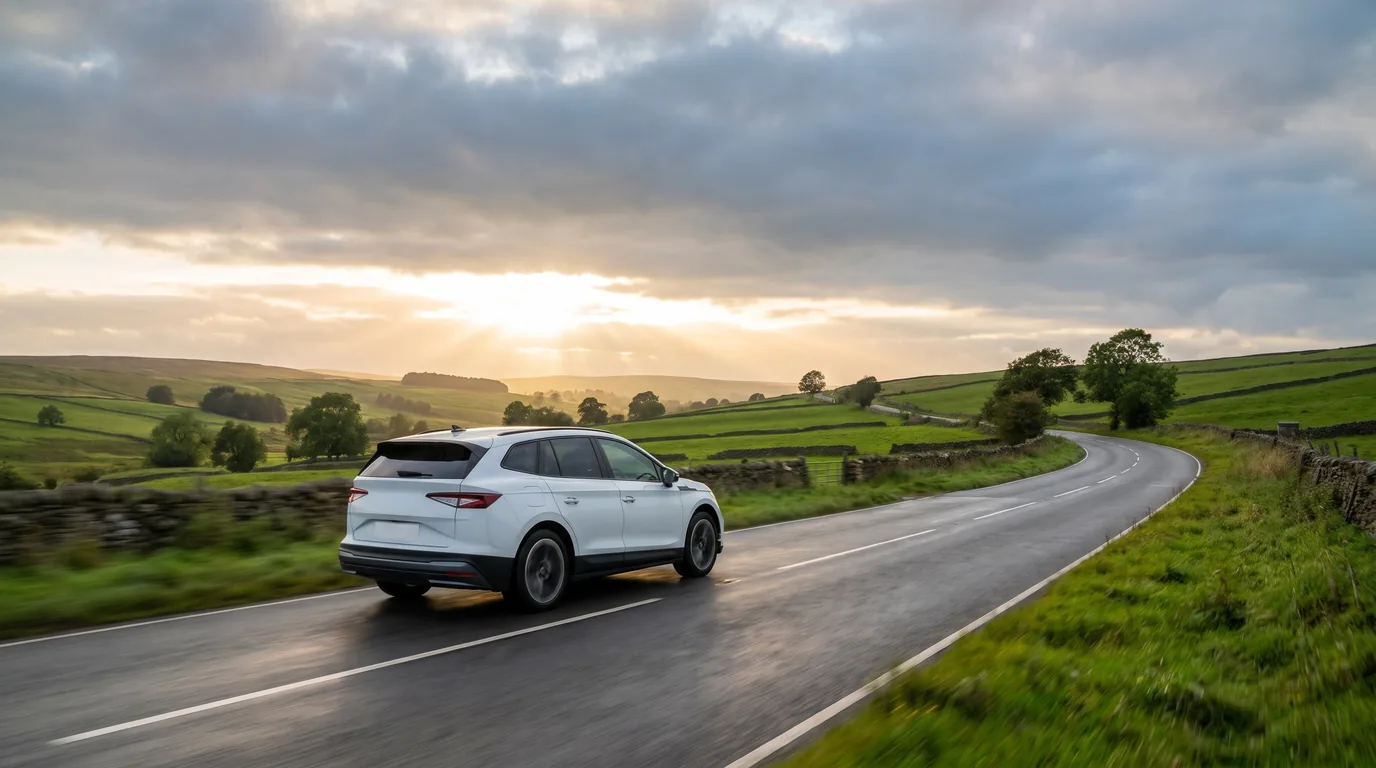
Quick answers
- A BMW iX3 50 xDrive covered 749km (465 miles) at a steady 90km/h (56mph) in Bjorn Nyland's independent test, using 12.9kWh per 100km, the best result in his database.
- The gain over its earlier 724km came entirely from switching to 20-inch wheels with low-rolling-resistance tyres instead of 21-inch performance tyres.
- At 120km/h (75mph) the iX3 managed 543km (337 miles), second only to the Lucid Air Dream Edition's 580km.
- BMW drove an iX3 626 miles from its Debrecen factory to Munich on one charge, using hypermiling techniques and finishing with 2% left.
- The iX3 50 xDrive has a 108.7kWh usable battery, a WLTP range of 421 to 500 miles depending on spec, and charges at up to 400kW.
- In the US, the EPA rates the iX3 at up to 434 miles on 20-inch summer tyres and 383 miles on standard all-season tyres.
- The UK iX3 range starts at £53,250 for the iX3 40.
The BMW iX3 has become the electric car that keeps breaking range records. In Norwegian YouTuber Bjorn Nyland’s widely followed independent test, an iX3 50 xDrive covered 749km, or 465 miles, at a steady 90km/h (56mph) on a single charge, the best result in his database of several hundred cars, as BMWBLOG reported. BMW itself has driven an iX3 626 miles on one charge.
Headlines like these are impressive, but they are not all the same kind of test. For UK drivers trying to judge real-world range, it helps to understand what each figure means and why speed, tyres and driving style make such a difference.
What did the independent test show?
Nyland’s test drives cars at steady speeds on public roads until the battery is empty. The iX3 50 xDrive’s results:
| Test speed | Distance | Consumption |
|---|---|---|
| 90km/h (56mph) | 749km (465 miles) | 12.9kWh per 100km |
| 120km/h (75mph) | 543km (337 miles) | 17.8kWh per 100km |
At 75mph, only the Lucid Air Dream Edition, a long, low saloon designed around range, has done better in his tests, with 580km. The iX3 is a family SUV with a normal boot. In Nyland’s 1,000km challenge, which includes charging stops, the iX3 finished in 8 hours 49 minutes.
Why did the record improve?
Tyres. In April, the same model managed 724km on 21-inch wheels with Goodyear Eagle F1 performance tyres. Switching to 20-inch wheels with Hankook Ion Evo SUV low-rolling-resistance tyres added 25km. Nothing else changed. Nyland also found the smaller wheels rode better and were quieter.
That matches BMW’s own figures: the iX3 50 xDrive’s WLTP range spans 678km to 805km (421 to 500 miles) depending on specification, with wheel size accounting for most of the gap.
What about the 626-mile drive?
That was BMW’s own demonstration, from its new factory in Debrecen, Hungary, to its Munich headquarters, about 1,000km. It was deliberately a hypermiling run, as Yahoo reported:
- The team avoided motorways to keep speeds and air resistance down.
- It planned a route with few traffic lights and little braking.
- It turned off the climate control and even the music.
- It finished with 2% charge, despite a 400-metre climb along the route.
It is proof of the car’s efficiency, not a guide to what you will get. As the report put it, “range estimates are exactly that, estimates. A great deal comes down to the driver.”
What did UK testers find?
Real-world UK tests are more modest but still strong. One UK reviewer lived with an iX3 for ten days and more than 1,000 miles, testing whether it could manage a 405-mile round trip from Buckinghamshire to Liverpool without charging, as reported by Yahoo. Top Gear tried to drive an iX3 425 miles from Lowestoft Ness to Land’s End on one charge, driving sensibly but without hypermiling, against a Tesla Model Y Long Range.
The common thread is that the iX3 can cover distances that make most long UK journeys possible without a stop, but motorway speeds, cold weather and heavy use of heating all cut range.
What are the official figures?
| BMW iX3 50 xDrive | Figure |
|---|---|
| Usable battery | 108.7kWh |
| WLTP range | 421 to 500 miles, depending on spec |
| US EPA range | 434 miles on 20-inch summer tyres; 383 miles on all-season tyres |
| Peak charging | 400kW |
| 10% to 80% | About 21 minutes |
The US EPA test is usually tougher than the WLTP test used in the UK, so it gives a useful real-world benchmark. The fact that tyres alone swing the EPA figure by 51 miles, according to GCN, shows how much they matter.
How can you get more range from any EV?
The iX3 records hold lessons for every EV driver:
- Slow down a little. Going from 75mph to 56mph cut the iX3’s energy use by about 28% in Nyland’s test. Even 65mph instead of 75mph makes a noticeable difference.
- Choose wheels and tyres carefully. Smaller wheels and low-rolling-resistance tyres can add miles, and often improve ride comfort.
- Pre-heat while plugged in. Warming the car before you leave uses mains power rather than battery.
- Use regenerative braking. Smooth driving and anticipating stops recovers energy.
- Keep tyres properly inflated.
Our guide to electric cars for high-mileage business drivers covers more on long-distance EV use.
How much is the iX3 in the UK?
The UK range starts at £53,250 for the single-motor iX3 40, according to Autocar, with the iX3 50 xDrive above it and the new 603hp iX3 M60 at the top. We cover the M60 in our iX3 M60 report, and its rivals in our iX3, GLC and EX60 comparison.
BMW’s next Neue Klasse model, the new i3 saloon, has an even higher WLTP figure of up to 900km, so these records may not last long.
What is the Neue Klasse?
Neue Klasse, German for “new class”, is BMW’s new generation of electric cars, and the iX3 is the first production model. It brings together several new technologies:
- Sixth-generation eDrive motors, which are more efficient than BMW’s previous electric motors.
- New cylindrical battery cells, which BMW says are more energy-dense, in a pack that forms part of the car’s structure.
- An 800-volt electrical system, allowing charging at up to 400kW.
- A new central computer system, which BMW calls its “Heart of Joy” for driving dynamics, plus a new operating system and the Panoramic iDrive display across the base of the windscreen.
Efficiency is the headline. Nyland’s consumption of 12.9kWh per 100km at 56mph is remarkable for a family SUV weighing more than two tonnes. That efficiency is why the iX3 can go so far without needing a battery much bigger than rivals’.
The next Neue Klasse car, the new BMW i3 saloon, has an even higher WLTP rating of up to 900km in some markets because it is lower and more aerodynamic than an SUV.
Why is WLTP range different from real-world range?
The WLTP test used in the UK and Europe is a standardised laboratory test lasting about 30 minutes and covering just over 14 miles, with low, medium, high and extra-high speed phases. It is designed to compare cars fairly, not to predict exactly what you will get.
Real-world range is usually lower because:
- Motorway speeds use much more energy than the test’s average. Air resistance rises sharply with speed.
- Cold weather reduces battery efficiency and adds heating load.
- Wheels and tyres can vary range by tens of miles, as the iX3 shows.
- Driving style, from hard acceleration to braking late, costs energy.
The US EPA test includes more demanding conditions, which is why its iX3 figure of up to 434 miles is lower than the WLTP maximum of 500 miles. A good rule of thumb in the UK is to expect around 70% to 85% of the WLTP figure in mixed driving, less in winter on the motorway.
How fast does the iX3 charge on UK networks?
BMW quotes 10% to 80% in about 21 minutes on a suitable 800-volt charger, and the ability to add a large amount of range in 10 minutes. On the UK’s growing number of 350kW chargers, the iX3 can get close to those figures. On 150kW chargers, which are more common, it will take longer, but a large battery that holds a high charging rate still makes stops short.
In Nyland’s 1,000km challenge, which includes charging stops, the iX3 finished in 8 hours 49 minutes, showing that efficiency and charging speed together matter more than either alone.
What does it cost to charge?
With a 108.7kWh usable battery, a full charge from empty at home costs:
| Home tariff | Cost of a full charge (approx.) |
|---|---|
| 7p per kWh off-peak | About £7.60 |
| 10p per kWh off-peak | About £10.90 |
| 25p per kWh standard rate | About £27.20 |
These are illustrative figures; check your own tariff. Using public rapid chargers costs much more per kWh. Our guide to EV tariffs for October 2026 has the latest off-peak rates.
Is the iX3 the longest-range SUV you can buy?
On Nyland’s 75mph test, it was second only to the Lucid Air saloon among hundreds of cars, which makes it one of the longest-range SUVs tested. Rivals are catching up, though: Mercedes’ C-Class Electric and new Chinese models such as the Li Auto i6 also quote ranges approaching 400 miles or more, as we cover in our C-Class Electric review roundup.
Our view
The iX3’s results show how far EV efficiency has come: a family SUV that can cover more than 330 miles at motorway speeds and more than 460 at a gentle pace. For UK buyers, the useful lesson is not the 626-mile headline but the 75mph figure, and how much tyres and speed matter. Choose your spec with range in mind, and the iX3 removes range anxiety for almost any journey in Britain.
How we test and where our numbers come from
Range figures are official WLTP combined values taken from manufacturer UK specification pages, with real-world estimates drawn from independent comparative testing. Prices are UK list prices at the time of the latest update. Tax, grant and charging-scheme figures come from GOV.UK and HMRC publications. We re-check every guide when pricing, specification or policy changes. Last checked 24 October 2026. How we work out our own figures.
Frequently asked questions
What is the BMW iX3's real-world range?
It depends heavily on speed and tyres. In Bjorn Nyland's test, an iX3 50 xDrive managed 465 miles at a steady 56mph and 337 miles at 75mph. In normal mixed UK driving, expect somewhere between those figures, less in cold weather.
Did a BMW iX3 really drive over 600 miles on one charge?
Yes, but with hypermiling. BMW drove an iX3 626 miles from its Debrecen factory to Munich, avoiding motorways, minimising braking and turning off the climate control and music. It finished with 2% charge. Normal drivers will not see that.
How much do wheels and tyres affect EV range?
A lot. The iX3's range at 56mph rose from 724km to 749km just by switching from 21-inch wheels with performance tyres to 20-inch wheels with low-rolling-resistance tyres. In the US, tyre choice changes the official iX3 range from 383 to 434 miles.
How fast does the BMW iX3 charge?
The iX3 uses an 800-volt system and charges at up to 400kW. BMW says 10% to 80% takes about 21 minutes on a suitable charger, and that it can add up to 231 miles of range in 10 minutes.
How much is the BMW iX3 in the UK?
The UK iX3 range starts at £53,250 for the single-motor iX3 40, according to Autocar. The iX3 50 xDrive and the new 603hp iX3 M60 sit above it.
Sources and further reading
- bmwblog.comBMWBLOGPrimary source referenced in this article.
- uk.style.yahoo.comBMW iX3 Drives 626 Miles From Its Factory To Munich On A Single ChargeBMW's hypermiling drive, techniques used and the 2% finish.
- gcn.comBMW iX3 goes on sale September 25 with 434-mile range and 800-volt architectureEPA ranges by tyre, 108.7kWh battery, 400kW charging and 21-minute 10-80% time.
- uk.news.yahoo.comI tested the BMW iX3 to see if it could really do 500 miles on a single chargeA UK owner-style test over 1,000 miles and the claim of 231 miles in 10 minutes of charging.
- topgear.comTesla Model Y vs BMW iX3: from Lowestoft to Land's End on one charge?Top Gear's 425-mile single-charge challenge across England.

EV Compared
The EV Compared editorial team tracks the UK electric vehicle market full time: new model launches, list prices, WLTP and real-world range, public charging tariffs and the tax rules that decide what an EV actually costs to run. Every guide is checked against manufacturer specifications and official GOV.UK figures, and updated whenever the numbers move.
Related reading
View all
Mercedes C-Class Electric UK reviews: 452 miles, 489bhp and a £58,000 start
The first UK drives are in. Reviewers praise its calm, quiet ride, range and charging, but are less sure about the looks, rear foot space and some cabin materials. Cheaper rear-drive versions will follow.
Li Auto confirms UK launch in autumn 2027 with family EVs and range-extenders
The Chinese premium brand starts in Norway and the Netherlands in spring 2027 with the i6 electric SUV, priced against the BMW iX3. A different model will lead its UK launch.
BMW iX3 vs Mercedes GLC vs Volvo EX60: UK prices and range
The entry BMW iX3 40, Mercedes GLC 250 and Volvo EX60 P6 sit within £3,610 of each other, from £53,250 to £56,860. Here is how prices, range, charging and four-wheel-drive versions compare.
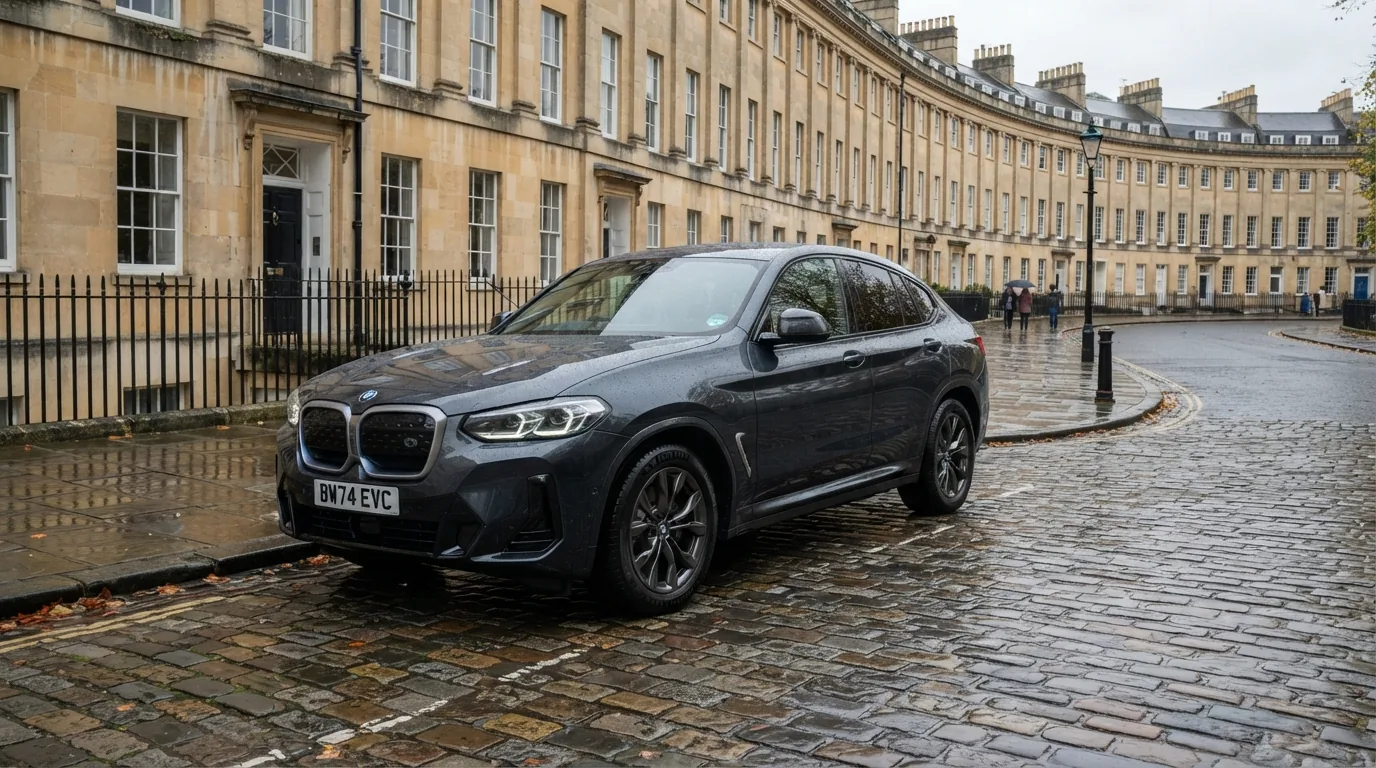
BMW iX4 confirmed: coupe-style Neue Klasse SUV on sale in 2026
BMW has confirmed the electric iX4 will go on sale before the end of 2026, with 40 xDrive and 50 xDrive versions. UK prices are not out, so here is what to expect against the £53,250 iX3.
EV Tariffs October 2026: Octopus, EDF and British Gas Off-Peak Rates
Intelligent Octopus Go is 8p per kWh, EDF GoElectric holds at 6.66p and British Gas EV Power sits at 9.5p. Here is what each costs, when you can charge and how to choose before winter.
BMW i3 UK prices from £47,925, just £2,950 above the petrol 320
The electric 3 Series now starts at £47,925, just £2,950 above the petrol BMW 320, with up to 566 miles of range on the top model. Here are the prices, the Tesla Model 3 and Mercedes rivals, company car tax and delivery dates.