A weaker ZEV mandate could cost the Treasury up to £16.7bn, industry warns
As ministers lean towards a 60% target for 2030, charging firms, energy groups and campaigners have put numbers on what a softer mandate would cost in lost tax, slower charger roll-out and air pollution.
Quick answers
- Energy infrastructure trade body BEAMA estimates a weaker ZEV mandate would cost the Treasury at least £2.9bn in lost VAT to 2034, even if every missing EV sale became a hybrid sale.
- If the missing EV sales are not replaced car for car, BEAMA says the VAT shortfall could reach £16.7bn between 2030 and 2034.
- A ChargeUK survey found weakening the mandate would cut charge point operators' investment by around 50% over the next five years; the LCP Delta study it commissioned values the charging sector at £15.5bn of direct economic value from 2025 to 2035.
- The government's consultation, launched in August 2026, offered 50%, 60% and 70% options for 2030 against today's 80%; reports in October said ministers were leaning towards 60%.
- The mandate requires 33% of new cars and 24% of new vans sold in 2026 to be zero-emission, rising to 80% of both in 2030 and 100% in 2035.
- More than 30 transport, health and climate groups said in an open letter on 22 October that weakening the mandate would be 'a totally unnecessary act of economic self-harm'.
- Unite and Toyota want the targets cut, arguing that the gap between the mandate and real demand puts UK car jobs and plants at risk.
Cutting the UK’s 2030 electric car target could cost the Treasury between £2.9bn and £16.7bn in lost VAT and halve investment in new chargers, according to analysis from the energy and charging industries. The figures, from the trade body BEAMA and a ChargeUK study by consultancy LCP Delta, are being pushed hard this week as ministers are reported to be leaning towards a 60% target for 2030, down from the current 80%.
The zero-emission vehicle (ZEV) mandate sets the share of each car maker’s sales that must be electric. Car makers including Toyota say the targets are too steep. Charging firms, energy companies and a broad coalition of health and climate groups say weakening them would cost far more than it saves. This piece sets out the numbers on both sides, and what they mean if you drive, or are thinking about buying, an electric car. For the wider review, see our ZEV mandate review explainer.
What does the ZEV mandate require now?
The ZEV mandate requires a rising share of each manufacturer’s new car and van sales to be zero-emission every year. According to Fleet News, the steps so far have been:
| Year | Cars | Vans |
|---|---|---|
| 2024 | 22% | 10% |
| 2025 | 28% | 16% |
| 2026 | 33% | 24% |
| 2030 | 80% | 80% |
| 2035 | 100% | 100% |
Hybrids, including plug-in hybrids, can be sold until 2035. Car makers also get credits for cutting CO2 from the petrol and hybrid cars they still sell, which lowers the effective target. In 2024, the Department for Transport’s own compliance report showed the headline 22% target worked out at an effective floor of just 17.3% once those rewards were counted.
What is the government considering?
The government’s consultation, launched in August 2026, set out several options for 2030, as reported by edie:
- Cut the 2030 target to 50%, 60% or 70%.
- Keep 80% but with “extended flexibilities”, such as borrowing, banking and keeping the CO2 conversion credits until 2034.
- Change how plug-in hybrids count, including whether they keep their low official CO2 figures under the outgoing Euro 6 test.
The government had originally planned a mid-point review by 2027 at the latest. It brought that forward after heavy industry lobbying. In October, reports said ministers were leaning towards 60%, with the 2035 target kept at 100%.
What would a weaker mandate cost the Treasury?
BEAMA estimates that even in the best case, a weaker mandate would cost at least £2.9bn in lost VAT up to 2034. Its analysis assumed the government cuts the 2030 target to 50% and that every electric car not sold is replaced, one for one, by a hybrid. Hybrids are generally cheaper than the equivalent EVs, so each sale raises less VAT.
If the missing EV sales are not replaced car for car, because some buyers delay or buy used instead, the shortfall rises to as much as £16.7bn between 2030 and 2034.
“You don’t attract investment by moving the goalposts,” said Matt Adams, head of electrical transport systems at BEAMA. “Businesses have invested in the UK because the Government set a clear direction of travel towards electrification.”
BEAMA also linked the mandate to the planned Electric Vehicle Excise Duty (eVED), the pay-per-mile charge for EVs due from April 2028. It estimates eVED could cost the economy between £890m and £4.8bn by putting buyers off EVs. Its argument is that the two policies together send mixed signals. Our guide to pay-per-mile road tax for EVs explains how eVED is meant to work.
These are industry estimates, produced by a body whose members sell chargers and electrical equipment, so treat them as one side’s case. But they make a point that is easy to miss: EVs are not only a cost to the Treasury. They are also a source of VAT on a high-value purchase.
What would it mean for public chargers?
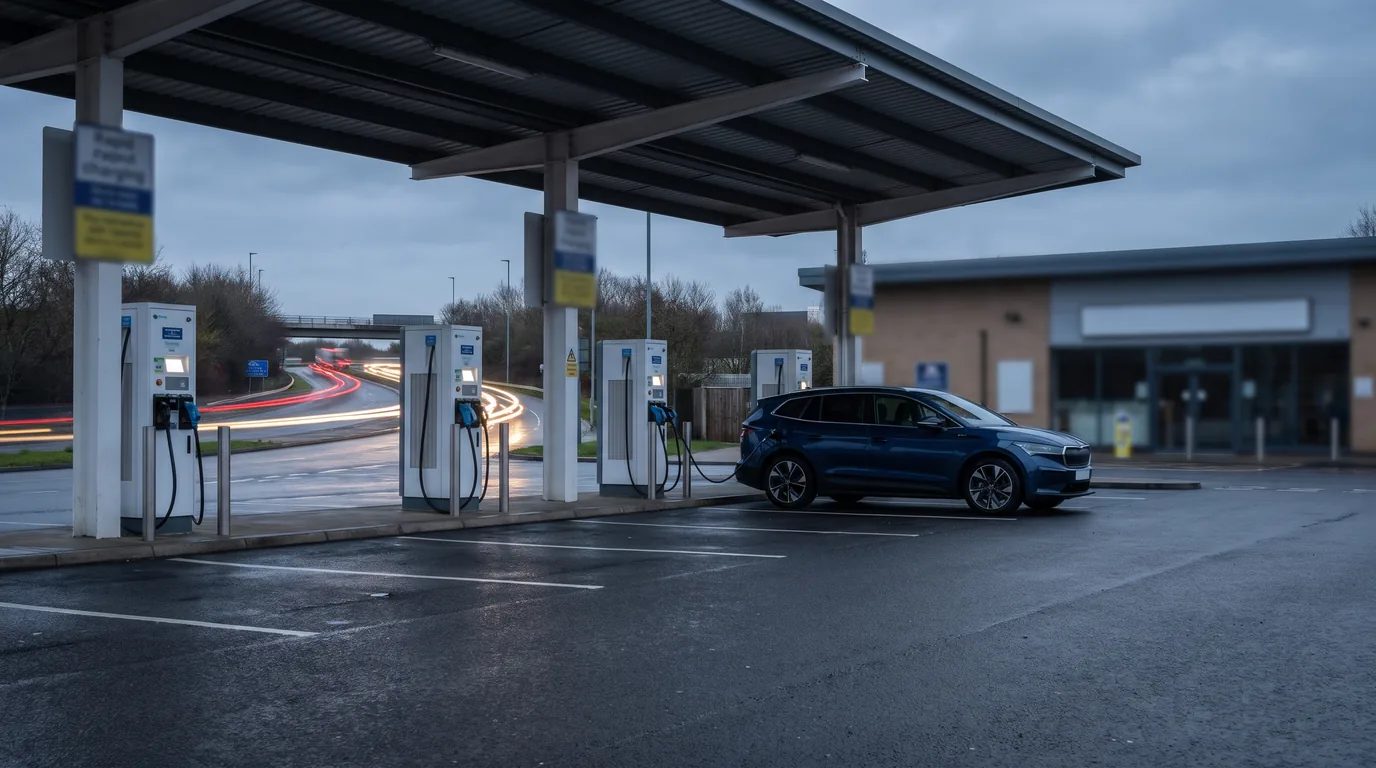
The charging industry says a weaker mandate would cut its investment roughly in half. In a survey of ChargeUK’s members, operators said they would reduce investment by around 50% over the next five years if the sales targets were weakened. Many charging businesses are still not profitable and are building ahead of demand, so they depend on EV numbers rising as the law currently requires.
The LCP Delta study ChargeUK commissioned estimates that the charging industry will generate £15.5bn of direct economic value between 2025 and 2035, and support:
- 71,500 direct and indirect jobs by 2035.
- £30bn of external investment.
- 9.75 million charge points across homes, workplaces and public sites.
ChargeUK says the mandate has already underpinned the roll-out of about 120,000 public chargers. “Any weakening threatens billions in charging investment and thus the wider opportunity from electrification,” said its chair, Iain Coucher. “The most extreme options in this consultation threaten to entirely upend the UK’s reindustrialisation plans.”
For drivers, slower investment would most likely show up as fewer new rapid hubs and less competition on price, rather than existing chargers closing. Our report on Connected Kerb’s new Aberdeen factory and EZO’s €150m funding for 3,000 chargers show the kind of projects that depend on demand forecasts.
What do charging firms want instead?
ChargeUK wants ministers to cut the cost of public charging rather than cut the targets. Its study says policies to lower public charging prices could unlock an extra £5.7bn of investment over five years. The measures it highlights are:
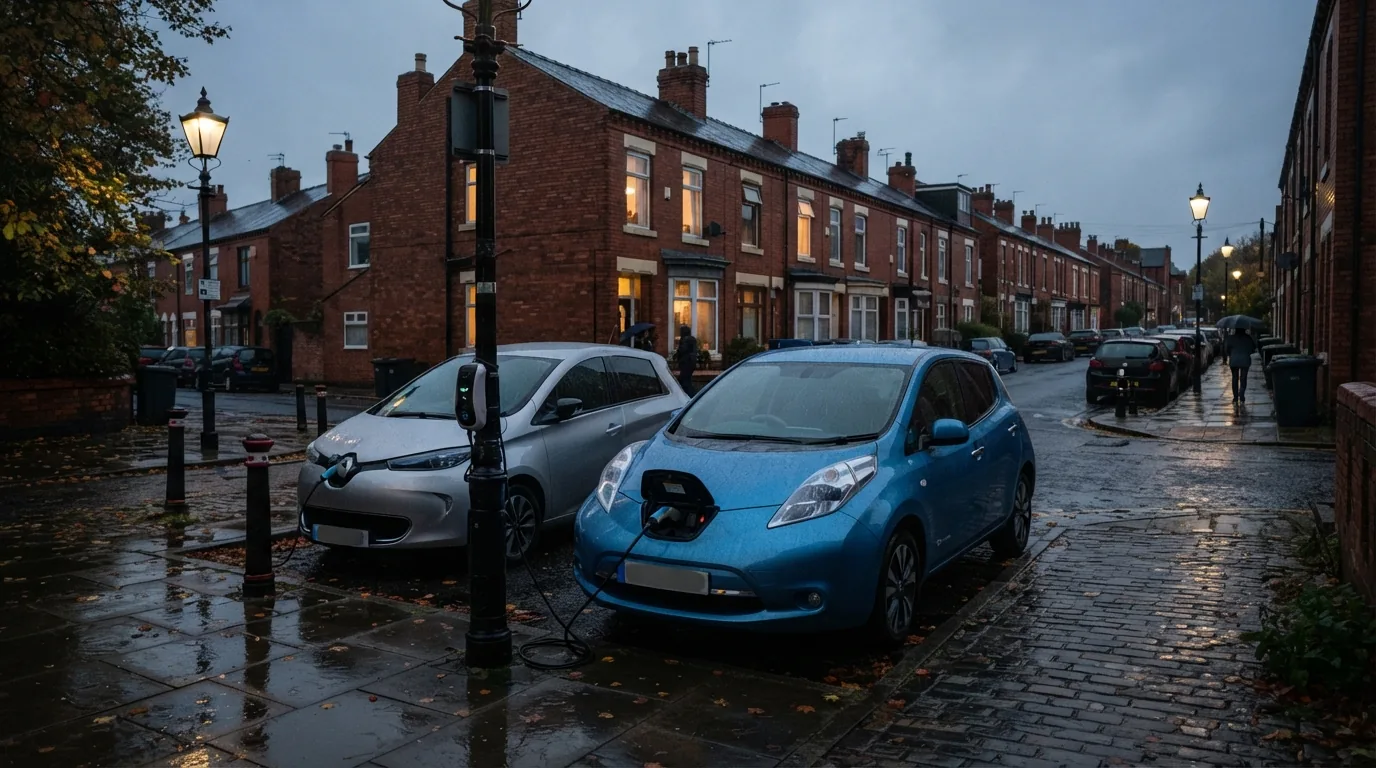
- Equal VAT on public and home charging. Home electricity has been zero-rated since the government’s energy bill VAT cut, while public charging still carries 20%. Our piece on the public charging VAT gap explains the difference.
- Relief from energy policy levies on electricity used for charging.
- Lower fixed energy costs for charging operators, such as standing charges on grid connections.
EVA England, which represents EV drivers, makes a similar case. “The Government should look honestly at why EV demand has not grown as quickly as expected,” said its chief executive, Vicky Edmonds. “But the answer is not to lower the ambition of the ZEV mandate. It has to be to fix the things that are stopping drivers from making the switch.” She pointed to the “unfair premium paid by people who rely on public charging” and unreliable chargers.
These asks are now part of the lobbying for the Autumn Budget on 28 October, which we cover in our Autumn Budget 2026 EV preview.
Who wants the targets cut, and why?
Car makers and the union Unite want the targets reduced. Their case is that demand for EVs is not keeping pace with the law, so car makers either sell EVs at a loss, buy credits from rivals or sell fewer cars overall.
Unite called the system “fundamentally flawed” in June and warned that the gap between the mandate and real sales could cost UK producers around £11,000 in fines per car. “The current ZEV mandate is significantly contributing to the loss of automotive jobs in Britain,” said general secretary Sharon Graham. “The targets must be radically reduced.”
Toyota went further in October, warning it may sell fewer cars in the UK and declining to guarantee its Burnaston plant unless the 2030 target is cut to 50%. We cover that in our report on Toyota’s warning. Renault’s chief executive has called the 2030 petrol ban “stupid”, as covered in our Renault report.
Who wants the targets kept?
A broad coalition wants the mandate left at 80%. On 22 October, more than 30 organisations signed an open letter, reported by Fleet News, including New AutoMotive, the Campaign for Better Transport, Greenpeace UK, Friends of the Earth, WWF-UK, Mums for Lungs, Cycling UK and the National Pensioners Convention.
“By bowing to automotive lobbying rather than doubling down on the clean transport transition, the Government is neglecting its duty to safeguard respiratory health, reduce healthcare costs for our overburdened NHS, reduce our reliance on volatile foreign energy and protect our climate,” they wrote. “Additionally, watering down the mandate would be a totally unnecessary act of economic self-harm.”
Energy UK, which represents energy suppliers, says the switch to EVs is the single biggest driver of emissions cuts in the UK’s net zero pathway, worth more than seven million tonnes of CO2 a year.
What does it mean for you?
If the 2030 target is cut, the most direct effect on drivers is likely to be on discounts. Car makers currently cut EV prices to hit their quotas, which is a big reason electric cars have been so cheap to lease this year. A lower target means less pressure to discount. Our analysis of year-end ZEV discounts explains the mechanics.
The second effect is slower: fewer new chargers than planned, especially in areas where demand is thin. That matters most to drivers without a driveway, who rely on public charging.
The third is what happens to tax. If EVs raise less VAT than expected and eVED arrives in 2028, the Treasury will look for revenue elsewhere. That is one reason the Budget on 28 October is being watched so closely.
Whatever ministers decide, two things stay fixed for now: the end of new petrol and diesel-only car sales in 2030, and the 100% target for 2035. The review is about the pace, and the money, in between.
How we test and where our numbers come from
Range figures are official WLTP combined values taken from manufacturer UK specification pages, with real-world estimates drawn from independent comparative testing. Prices are UK list prices at the time of the latest update. Tax, grant and charging-scheme figures come from GOV.UK and HMRC publications. We re-check every guide when pricing, specification or policy changes. Last checked 23 October 2026. How we work out our own figures.
Frequently asked questions
How much could weakening the ZEV mandate cost the taxpayer?
BEAMA estimates at least £2.9bn in lost VAT to 2034 if hybrids replace the missing EV sales one for one, because hybrids raise less VAT per sale. If those sales are not replaced at all, it puts the shortfall at up to £16.7bn between 2030 and 2034.
What is the ZEV mandate target for 2026?
In 2026, 33% of each manufacturer's new car sales and 24% of its new van sales must be zero-emission. The targets rise each year to 80% for cars and vans in 2030 and 100% in 2035, with hybrids allowed until 2035.
What options is the government considering for 2030?
The consultation launched in August 2026 asked about 50%, 60% and 70% targets for 2030, or keeping 80% with extended flexibilities such as borrowing and banking credits. Reports in October 2026 said ministers were leaning towards 60%.
Why do charging companies oppose a weaker mandate?
Charging firms build ahead of demand and many are not yet profitable. A ChargeUK member survey found a weaker mandate would cut their investment by about half over five years, because fewer EVs would mean fewer customers for the chargers they plan to build.
Would a weaker ZEV mandate affect my charging costs?
Not directly, but slower charger investment could mean fewer new rapid chargers and less competition between networks. ChargeUK argues that cutting VAT on public charging would add investment instead, and it is asking for that in the Autumn Budget on 28 October 2026.
Sources and further reading
- edie.netediePrimary source referenced in this article.
- fleetnews.co.ukWeakening ZEV mandate could halve UK charging investmentChargeUK and LCP Delta report: 50% cut in operator investment, £15.5bn direct value, £5.7bn more investment from cheaper public charging, 9.75 million charge points by 2035.
- edie.netGovernment launches consultation on ZEV mandate targets and flexibilitiesThe 50%, 60% and 70% options, the 80% target with extended flexibilities, PHEV questions and ChargeUK's 120,000 public chargers figure.
- fleetnews.co.ukUnion warns 'flawed' EV targets threaten UK automotive jobsYear-by-year targets (22%, 28%, 33% for cars), the 17.3% effective 2024 floor and Unite's case for cutting the targets.
- fleetnews.co.ukTransport and eco organisations call for unchanged ZEV mandateThe 22 October open letter and reports that ministers were leaning towards 60% for 2030.

EV Compared
The EV Compared editorial team tracks the UK electric vehicle market full time: new model launches, list prices, WLTP and real-world range, public charging tariffs and the tax rules that decide what an EV actually costs to run. Every guide is checked against manufacturer specifications and official GOV.UK figures, and updated whenever the numbers move.
Related reading
View all
Connected Kerb opens Aberdeen factory to build 25,000 on-street chargers by 2030
The on-street charging firm is moving manufacturing to Scotland after buying Trojan Energy and its flush kerbside chargers. For drivers without a driveway, it signals more residential chargers on the way.
Toyota warns it could cut UK sales unless the ZEV mandate is eased
Toyota Motor Europe says the zero-emission vehicle mandate is not sustainable, wants the 2030 target cut to 50% and will not guarantee its Derbyshire plant. Here is what the row means if you are buying a car.
Public EV charging keeps 20% VAT as home electricity goes to 0%
Drivers without a driveway now pay 20% VAT at the plug while home charging pays none. Here is what a Budget cut to 5% or 10% would save, and why the Treasury has so far said no.
ZEV mandate review: 2030 EV target could fall from 80% to 50%
Ministers are weighing a 2030 electric car target of 70%, 60% or 50% instead of 80%, with responses due on 23 October. Here is who wants what, and what a softer target means for buyers.
Uber starts robotaxi testing in Manchester with Pony.ai and Verne
Pony.ai's seventh-generation robotaxis are mapping Manchester's roads with safety drivers on board and no passengers. No application to run a passenger service has been made yet.
Autumn Budget 2026: what EV drivers want from John Healey on 28 October
The new Chancellor's first Budget lands as fuel prices bite, the ZEV mandate is under review and public charging still carries 20% VAT. Here is what the motor industry, charging firms and drivers are asking for, and what is already fixed.