Uber starts robotaxi testing in Manchester with Pony.ai and Verne
Pony.ai's seventh-generation robotaxis are mapping Manchester's roads with safety drivers on board and no passengers. No application to run a passenger service has been made yet.
Quick answers
- Uber began testing autonomous vehicles in Manchester on 14 October 2026 with partners Pony.ai and Verne, its first UK robotaxi testing outside London.
- Pony.ai's seventh-generation vehicles are mapping the city's streets with a safety driver behind the wheel and no passengers.
- Transport for Greater Manchester says no applications have been made to run driverless taxis in the city region and that safety is its top priority.
- Uber, Pony.ai and Verne already run Europe's first autonomous taxi service in Zagreb, Croatia.
- In London, Uber began supervised autonomous passenger journeys with Wayve on 3 September, with a licensed driver on board.
- A national pilot application process for self-driving taxi and bus services opened in May 2026 under the Automated Vehicles Act 2024.
- The GMB and ADCU unions warn that thousands of driving jobs could be lost.
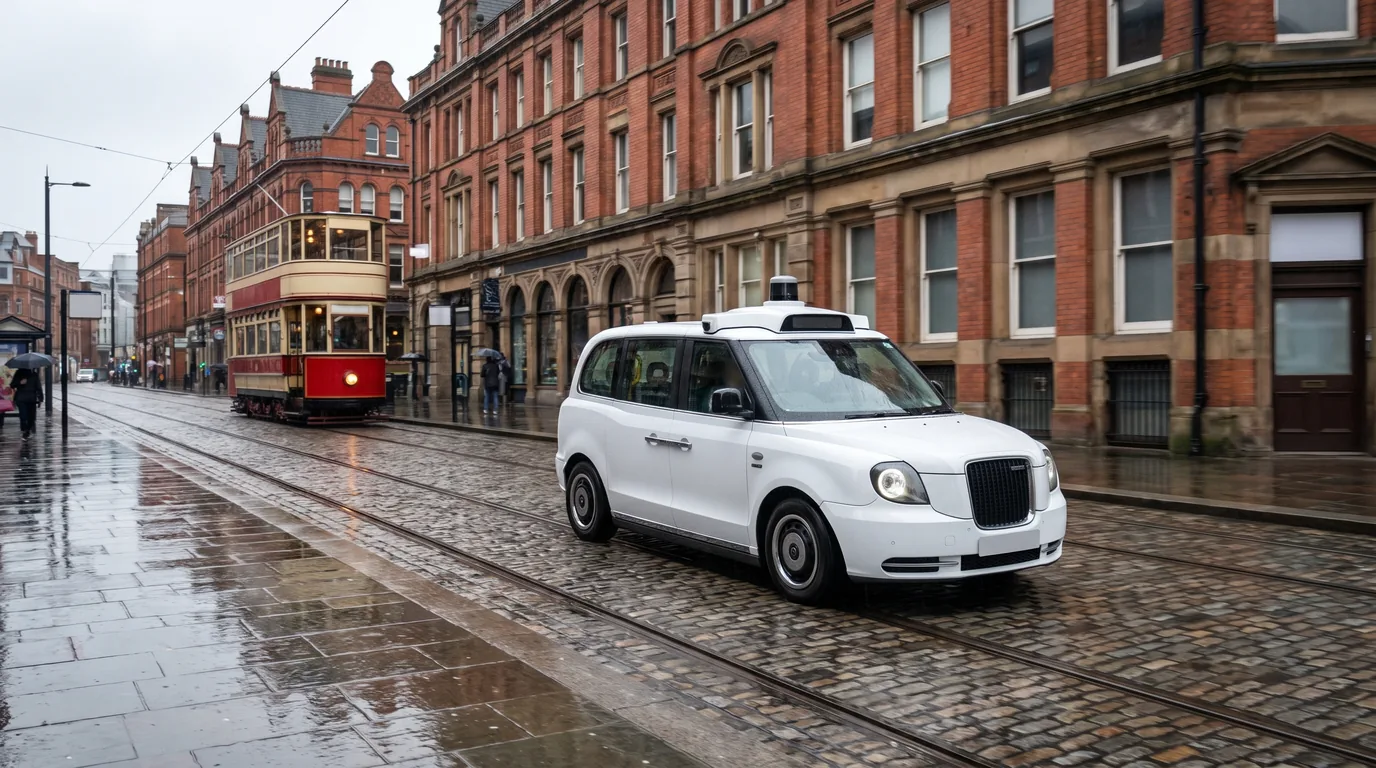
Self-driving cars are being tested on Manchester’s streets. Uber began a trial on 14 October 2026 with its partners Pony.ai and Verne, its first UK robotaxi testing outside London, according to The Guardian. Pony.ai’s seventh-generation vehicles are mapping the city with a safety driver behind the wheel and no passengers on board.
The three companies already run Europe’s first autonomous taxi service in Zagreb, Croatia. But a robotaxi you can book in Manchester is not imminent. Transport for Greater Manchester (TfGM) says no application has been made, and it wants “strong assurances” on safety first. Here is what is happening and what comes next.
What is being tested in Manchester?
At this stage, the cars are building detailed maps of Manchester’s streets and gathering the data self-driving systems need. A safety driver sits behind the wheel and no passengers are carried. The testing operates under a government licence through the Driver and Vehicle Standards Agency and the Department for Transport, according to Secret Manchester.
The partnership splits the work three ways, as TaxiPoint explains:
| Company | Role |
|---|---|
| Pony.ai | Chinese autonomous driving company; supplies the self-driving system and seventh-generation vehicles |
| Uber | Passenger booking platform |
| Verne | Croatian operator; experience running autonomous passenger services in Europe |
Verne said it had “started our autonomous vehicle testing in Manchester”, while Pony.ai said there were “plans to bring robotaxis to the city”. Uber said it was “excited to take this first step toward making this technology accessible to people across the UK”. The number of vehicles involved has not been disclosed.
When could passengers ride?
There is no date. Uber and its partners have not announced fares, a launch date or a service area. TfGM confirmed that “no applications have been made to operate driverless taxis in Greater Manchester”.
“New technologies play an increasingly important role in the growth of our city region,” a TfGM spokesperson said. “But they need to be introduced responsibly, safely and with real thought about what it means for our residents. Safety will always be our top priority, and we will need strong assurances that no vehicles will operate on our roads that pose any risk to residents.”
Where are robotaxis in the UK already?
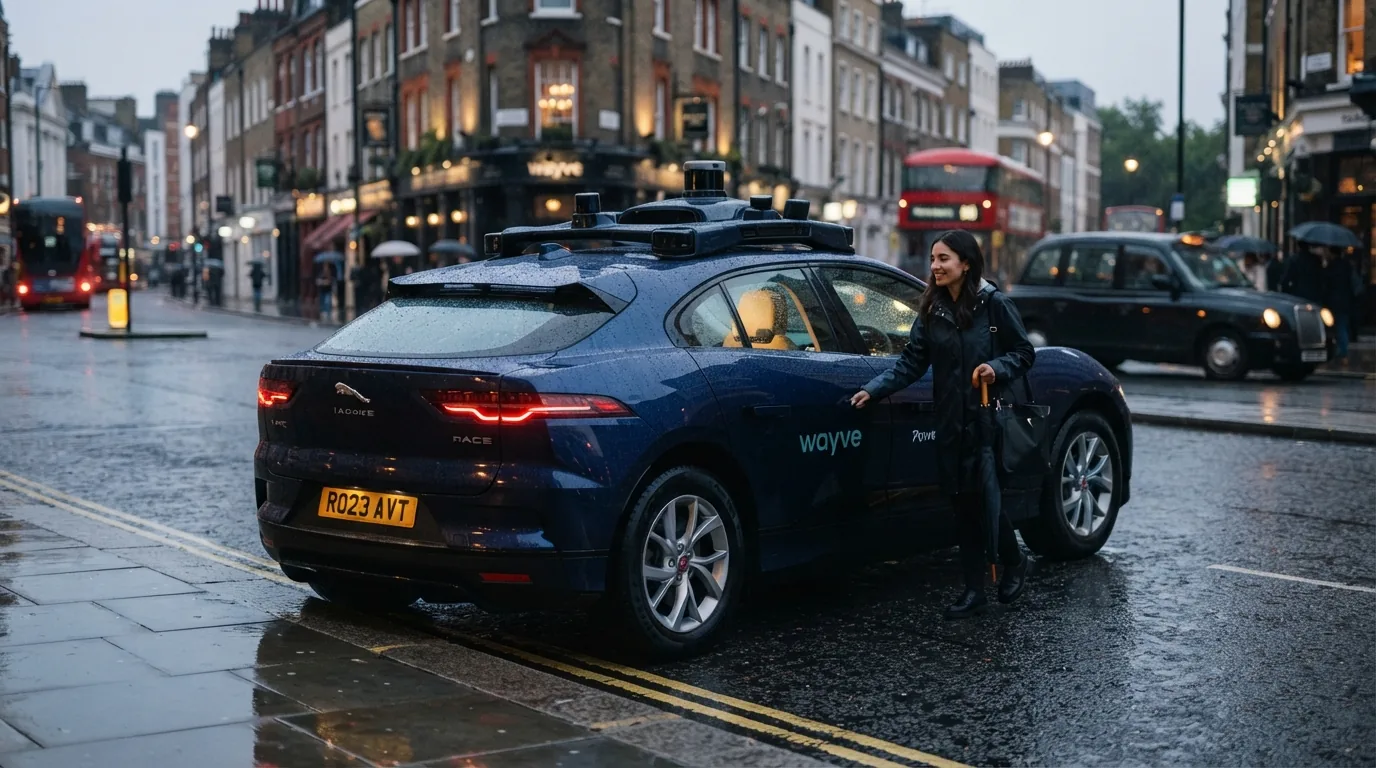
London is further ahead. Uber launched supervised autonomous passenger journeys in the capital with British company Wayve on 3 September 2026. Customers booking selected Uber products can be matched with an autonomous car, but a licensed private hire driver stays on board to supervise, under Transport for London’s licensing rules. Uber and Pony.ai also announced road tests in London in October. Our report on London robotaxis from Wayve, Uber and Waymo covers the capital.
The legal framework is still being built. The Automated Vehicles Act 2024 sets out how self-driving vehicles will be approved and who is responsible when they drive. A national pilot application process for taxi-style and bus-style self-driving services opened in May 2026, ahead of the full regime, and the Department for Transport has said fully driverless commercial pilots could begin before the full rules are in place.
What are Uber’s wider plans?
Uber aims to offer robotaxi trips in up to 15 cities worldwide by the end of 2026, most of them in the US and the Middle East. In August, it agreed with Pony.ai to deploy more than 2,000 robotaxis across Europe. Uber’s chief executive has described existing autonomous services as currently unprofitable, so expansion will be gradual.
Uber’s approach is a mix of human drivers and autonomous vehicles. Robotaxi fleets will be small compared with its millions of human drivers for some time.
Why is it controversial?
Jobs and accountability, mainly. The GMB and ADCU unions say thousands of driving jobs could be lost and want support for affected drivers. A London Assembly transport committee report this month called for the government to devolve authority over autonomous taxi services, citing “considerable uncertainty about many of the claimed benefits” and concerns about congestion, public transport, safeguarding and accessibility for disabled passengers.
There is also a debate about using Chinese self-driving technology on UK roads. Connected cars collect large amounts of data, and Dutch intelligence chiefs have warned that car technology can be used for surveillance. Expect data security to feature in any approval process.
What does it mean for EV drivers?
Indirectly, quite a lot. Robotaxi fleets are almost always electric, so large-scale services would add demand for rapid charging hubs in cities. The technology developed for robotaxis also feeds into driver assistance systems in cars you can buy, from lane-keeping to hands-free motorway driving. Tesla’s own self-driving software still awaits approval in Europe, as we cover in our FSD report.
What happened in Zagreb?
Zagreb in Croatia is where Uber, Pony.ai and Verne launched what they describe as Europe’s first autonomous taxi service. Passengers there can book autonomous rides through Uber or Verne’s own app, and the service was added to the Uber app in August 2026.
Verne’s role is operational. It has built up experience running a robotaxi service day to day in a European city: managing vehicles, safety procedures, maintenance and customer support. That experience is what it brings to Manchester. Zagreb is a smaller city than Manchester, but it gives the partners a working model to adapt.
How do robotaxis learn a city?
Before a robotaxi can carry passengers, it needs a detailed picture of the area it will serve. The Manchester mapping stage typically involves:
- High-definition mapping. Cars equipped with cameras, radar and lidar drive the streets repeatedly, building a detailed 3D map of lanes, junctions, signs and kerbs.
- Data gathering. The vehicles record how traffic, pedestrians and cyclists behave in real conditions, including Manchester’s weather.
- Supervised testing. With a safety driver ready to take over, the system practises driving routes and handling unusual situations.
Only after extensive testing would a company apply to carry passengers, first with a safety driver and later, if approved, without one. That is why there is no date for a passenger service in Manchester.
What does the Automated Vehicles Act do?
The Automated Vehicles Act 2024 is the UK law that sets out how self-driving vehicles will be approved and who is responsible when they drive. Its key ideas include:
- Authorisation. Vehicles must be authorised as self-driving before they can operate in self-driving mode.
- Responsibility. When a vehicle is driving itself under an approved system, the company behind it, not the person in the car, is responsible for how it drives.
- Passenger services. Taxi-style and bus-style services need permits, which is why the national pilot application process opened in May 2026.
Local transport authorities such as TfGM have a voice in how services operate in their areas, though the London Assembly has called for more power to be devolved to cities.
Will robotaxis be electric?
Almost certainly. Robotaxi fleets worldwide are overwhelmingly electric, because EVs are simpler to control by computer, cheaper to run over high mileages and need less maintenance. A large robotaxi service in Manchester would need dedicated rapid charging depots, adding to demand for high-powered chargers in the city.
That ties into a wider question for UK charging: whether there is enough grid capacity in cities for fleets of EVs that need to charge quickly between shifts. Charging firms have warned that grid connections are one of their biggest obstacles, as we cover in our report on the cost of weakening the ZEV mandate.
What would robotaxis mean for Manchester?
Supporters say robotaxis could offer cheaper, always-available trips, especially at night, and could improve road safety if they drive more carefully than people. Critics say they could add to congestion, draw passengers away from buses and trams, and cost thousands of driving jobs. Disability groups want to be sure vehicles and booking systems are fully accessible.
Those trade-offs will shape how TfGM responds to any future application. For now, Manchester residents may notice test vehicles with roof-mounted sensors and a person in the driver’s seat, gathering the data that any future service will depend on.
Who else is testing self-driving cars in the UK?
Uber is not alone. British company Wayve supplies the cars for Uber’s supervised London service, and other technology firms have announced UK trials. The government wants the UK to be an early adopter of self-driving technology, which is why it opened the pilot permit process ahead of the full rules. Manchester is likely to be one of several cities where companies test and map, before any decide where to seek a passenger service first.
Our view
Manchester is an obvious next step for robotaxi testing after London: a big, busy city with a complicated road network. But mapping with safety drivers is the very first stage. Passenger services will depend on approval under the new national framework and on convincing TfGM, drivers’ unions and residents that the cars are safe and the benefits real. Expect years, not months, before driverless cabs are a normal sight on Deansgate.
How we test and where our numbers come from
Range figures are official WLTP combined values taken from manufacturer UK specification pages, with real-world estimates drawn from independent comparative testing. Prices are UK list prices at the time of the latest update. Tax, grant and charging-scheme figures come from GOV.UK and HMRC publications. We re-check every guide when pricing, specification or policy changes. Last checked 24 October 2026. How we work out our own figures.
Frequently asked questions
Are there robotaxis in Manchester?
Testing has started, but not passenger services. Since 14 October 2026, Pony.ai vehicles have been mapping Manchester's streets for Uber with a safety driver on board and no passengers. No application has been made to run a passenger service.
Who is Pony.ai?
Pony.ai is a Chinese autonomous driving technology company that supplies the self-driving system. Uber provides the booking platform and Croatian firm Verne contributes operational experience from running Europe's first robotaxi service in Zagreb.
When could I ride in a robotaxi in Manchester?
No date has been announced. The current phase is mapping and testing, and Transport for Greater Manchester says no application to operate driverless taxis has been submitted. Uber has not published fares, a launch date or a service area.
Are self-driving taxis legal in the UK?
Testing with safety drivers is allowed under government licences. The Automated Vehicles Act 2024 sets up a framework for self-driving services, and a national pilot scheme for taxi and bus-style services opened for applications in May 2026.
Are there robotaxis in London?
Uber began supervised autonomous passenger journeys in London with Wayve on 3 September 2026, with a licensed private hire driver on board. Uber and Pony.ai also announced road tests in London in October.
Sources and further reading
- theguardian.comThe GuardianPrimary source referenced in this article.
- taxi-point.co.ukUber launches Manchester robo-cab testing with Pony.ai and VernePony.ai Gen-7 vehicles, each partner's role, the 3 September London launch, the May 2026 pilot scheme and the 2,000-robotaxi European deal.
- secretmanchester.comUber is testing self-driving cars in ManchesterDVSA and DfT licensing for testing and Uber's target of up to 15 cities worldwide by the end of 2026.

EV Compared
The EV Compared editorial team tracks the UK electric vehicle market full time: new model launches, list prices, WLTP and real-world range, public charging tariffs and the tax rules that decide what an EV actually costs to run. Every guide is checked against manufacturer specifications and official GOV.UK figures, and updated whenever the numbers move.
Related reading
View all
A weaker ZEV mandate could cost the Treasury up to £16.7bn, industry warns
As ministers lean towards a 60% target for 2030, charging firms, energy groups and campaigners have put numbers on what a softer mandate would cost in lost tax, slower charger roll-out and air pollution.
Wayve and Uber robotaxis in London: how to get a ride
Uber and Wayve began supervised autonomous rides in London on 3 September 2026, using 15 electric Ford Mustang Mach-Es. Here is how to be matched with one, what it costs and where Waymo and Tesla stand.
Automated Vehicles Act: draft safety principles explained for UK drivers
The consultation on the ten principles that self-driving cars and robotaxis must meet closed on 9 September 2026. Here is what the draft says, what has not been decided and what it means for you.
China starts producing all-solid-state EV battery cells: what it means for UK buyers
Greater Bay Technology's cells rolled off the line in Guangzhou on 13 October, weeks after Beijing set a 2030 target for large-scale use. But battery makers still say true mass production in cars is years away.
Denza Z9GT to get BYD's 'God's Eye' city driving assistant in Europe in 2027
The Porsche Taycan-rivalling shooting brake already brings BYD's five-minute Flash Charging to Europe. Now it will be the first BYD-group car in Europe to offer supervised address-to-address driving in towns.
Honda will test charging EVs while they drive on a Japanese motorway in 2027
Coils buried in the road would top up electric trucks, and eventually cars, at motorway speeds. It is a promising idea, already being tried in France and Germany, but the hard part is cost.