Denza Z9GT to get BYD's 'God's Eye' city driving assistant in Europe in 2027
The Porsche Taycan-rivalling shooting brake already brings BYD's five-minute Flash Charging to Europe. Now it will be the first BYD-group car in Europe to offer supervised address-to-address driving in towns.

Quick answers
- BYD's premium brand Denza confirmed at the Paris motor show that the Z9GT will get God's Eye City Navigation Driving Assistant (CNOA) in Europe in 2027.
- The system is designed to drive from address to address in towns under the driver's supervision; it is a Level 2 system, so the driver must monitor it at all times.
- Denza plans to add the feature by over-the-air software update, using sensors already fitted to European Z9GTs.
- Xpeng plans to bring its own Navigation Guided Pilot to Europe in the first quarter of 2027, and Zeekr is targeting urban navigation assistance on a similar timescale.
- The Z9GT was already the first BYD-group car in Europe with Flash Charging, claiming 10% to 70% in five minutes and 10% to 97% in nine minutes on BYD's own chargers.
- The electric Z9GT has a 100kWh battery, a quoted 391 miles of range and 0-62mph in 3.4 seconds; it is 5,180mm long with four-wheel steering.
Denza, BYD’s premium brand, will add a city driving assistant to its Z9GT in Europe in 2027. Announced at the Paris motor show, the system, branded “God’s Eye” City Navigation Driving Assistant (CNOA), is designed to drive the car from one address to another through towns, under the driver’s supervision, as CarNewsChina reported. The Z9GT will be the first BYD-group car in Europe to offer it.
It is part of a race among Chinese brands to bring their advanced driver assistance to Europe. Xpeng plans to launch its own system in early 2027 and Zeekr is on a similar timescale. For UK drivers, the question is less about what the technology can do in China and more about what regulators here will allow.
What is God’s Eye CNOA?
God’s Eye is BYD’s family of driver assistance systems. The city navigation version can steer, accelerate, brake and navigate junctions, traffic and roundabouts on a planned route through towns. In China, the Z9GT uses God’s Eye 5.0.
It is important to be clear about what it is not. It is a Level 2 system, so it is not self-driving. The driver must monitor it constantly and be ready to take over at any moment. “This technology will help make city riding less stressful, from traffic jams to busy intersections and roundabouts,” said Stella Li, BYD’s executive vice-president.
Denza plans to deliver the feature by over-the-air software update in 2027, using sensors already fitted to European Z9GTs, according to analysis by Mobility Intelligence Lab.
Who else is bringing city driving assistance to Europe?
Several Chinese brands are aiming for 2027:
| Brand | System | Planned European timing |
|---|---|---|
| Denza (BYD) | God’s Eye City Navigation (CNOA) | 2027, on the Z9GT first |
| Xpeng | Navigation Guided Pilot (NGP) | First quarter of 2027, on models with its Turing chip |
| Zeekr | Highway and City Navigation on Assist | Around 2027 |
Tesla’s Full Self-Driving (Supervised) is also waiting for approval in Europe, as we cover in our Tesla FSD report. Whoever gets approval first in each market will gain an advantage with tech-focused buyers.
Will it work in the UK?
That depends on regulators. City navigation systems need approval under updated international rules for driver assistance, known as UN R171, which are being extended to cover system-led manoeuvres beyond motorways. In the UK, hands-off driving is currently allowed only on approved roads, mostly motorways. Denza has not confirmed when, or whether, the feature will be enabled in the UK.
There are also questions about data. Advanced driver assistance relies on cameras, lidar and connectivity, and governments are paying closer attention to where car data goes, especially for Chinese-made vehicles.
What is the Denza Z9GT?
The Z9GT is a large, sleek electric estate in the shooting brake style, aimed squarely at cars such as the Porsche Taycan Sport Turismo. It was designed under former Audi design chief Wolfgang Egger, according to Yahoo News.
| Denza Z9GT EV | Figure |
|---|---|
| Battery | 100kWh |
| Quoted range | 391 miles |
| 0-62mph | 3.4 seconds |
| Length | 5,180mm |
| Steering | Four-wheel steering with a sideways “crab walk” mode |
| Platform | BYD e3 with Blade Battery and cell-to-body construction |
There is also a plug-in hybrid version, with a 38.5kWh battery and a 2.0-litre turbo petrol engine, which reaches 62mph in 3.6 seconds.
How fast does it charge?
The Z9GT was the first BYD-group car to bring Flash Charging to Europe. Denza claims “Ready in 5, Full in 9, Cold Add 3”: 10% to 70% in five minutes, 10% to 97% in nine minutes, and 20% to 97% in 12 minutes at -30°C, using BYD’s second-generation LFP Blade Battery, according to a Denza press release. Those times need BYD’s own high-power chargers. Our guide to BYD Flash Charging in the UK explains the network plans, and the new BYD Atto 8 uses the same technology.
Where does Denza fit in BYD’s plans?
Denza sits above BYD and is meant to compete with BMW, Mercedes and Porsche. It was originally a 50:50 joint venture between BYD and Mercedes, and is now fully owned by BYD. Denza sales were just over 3% of BYD’s total when it launched in Europe, and it is meant to be the group’s “technological forerunner”, introducing features that later reach BYD-badged cars.
Its range in Europe includes the Z9GT and the D9 seven-seat MPV, with off-road models possible later. Denza is also showing its first two UK models to dealers at Automotive Management Live in November and building a dedicated dealer network.
Like other China-built cars, Denza models do not qualify for the UK Electric Car Grant, and their prices are well above its cap anyway.
What is Level 2 driver assistance?
Driver assistance is graded from Level 0 to Level 5 under an international scale. Level 2 means the car can steer, accelerate and brake at the same time, but the driver must supervise constantly and stay responsible for driving. Most advanced systems on sale today, including Tesla’s Full Self-Driving (Supervised), BYD’s God’s Eye and Xpeng’s NGP, are Level 2.
Level 3 is different: in specific conditions, the car drives itself and the driver can take their eyes off the road until asked to take over. Very few systems are approved for Level 3 anywhere. The UK’s Automated Vehicles Act 2024 sets up a framework for self-driving cars, under which the company behind an approved self-driving system would be responsible while it drives, but city navigation systems like God’s Eye CNOA remain driver assistance, not self-driving.
Why are city systems harder than motorway systems?
Motorways are relatively predictable: traffic moves in one direction, there are no pedestrians, junctions are clearly marked and speeds are steady. Towns are much harder. A city system must deal with:
- Pedestrians and cyclists, including people stepping out unexpectedly.
- Roundabouts and complex junctions, which are common in the UK.
- Parked cars, buses and delivery vans blocking lanes.
- Traffic lights, temporary signs and roadworks.
That is why regulators are cautious, and why international rules are being updated to cover system-led manoeuvres beyond motorways. A system that works well in Chinese cities may need different tuning for British roads, where roundabouts, narrow streets and different road markings are common.
What sensors does the Z9GT use?
BYD’s advanced God’s Eye systems use a combination of cameras, radar and, on higher versions, lidar, a laser-based sensor that builds a precise 3D picture of the surroundings. In China, the Z9GT uses God’s Eye 5.0 running on a powerful dedicated chip. Denza has said European Z9GTs already carry the sensors needed, so the CNOA function can be added later by software update.
That is an important point for buyers. A car bought now could gain new features later through over-the-air updates, as Tesla owners are used to. But features can also be limited or delayed by regulators, so buy a car for what it does today, not for what it might do after an update.
What should UK buyers know about Denza?
Denza is still a new name in the UK. Before considering one:
- Check dealers and servicing. Denza is building a dedicated dealer network, but coverage will take time.
- Understand charging. Flash Charging times need BYD’s own high-power chargers, so check where they will be. On normal rapid chargers, it will charge more slowly.
- Consider residual values. New premium brands can lose value faster, so leasing or a PCP with a guaranteed future value can reduce risk.
- Compare with established rivals. The Z9GT targets the Porsche Taycan Sport Turismo and Audi’s electric estates, and our Polestar 5 review roundup covers another alternative.
How does BYD use Denza to test new technology?
BYD’s special adviser for Europe, Alfredo Altavilla, has described Denza as the group’s “technological forerunner”, introducing features that later reach BYD-badged cars. That pattern is already visible: the Z9GT was the first BYD-group car in Europe with Flash Charging, and the much cheaper BYD Atto 8 is now getting the same technology. If God’s Eye city navigation follows the same path, it could reach mainstream BYD models in Europe within a few years, subject to approval. That would put advanced driver assistance in front of many more UK drivers than a luxury shooting brake ever could.
Where can you see a Denza in the UK?
Denza is showing its first two UK models to car dealers at Automotive Management Live at the NEC in Birmingham on 11 November 2026, and is recruiting a dedicated dealer network. Public showrooms will follow as that network is appointed.
Our view
God’s Eye in Europe is a sign of where competition is heading: not just range and charging, but software and driver assistance. Chinese brands have moved fast at home, and they are now trying to bring that to Europe. For UK buyers, though, what matters is what is approved and enabled here, not what the car can do in Shenzhen. Treat 2027 as a European target, and expect UK availability to depend on regulators.
How we test and where our numbers come from
Range figures are official WLTP combined values taken from manufacturer UK specification pages, with real-world estimates drawn from independent comparative testing. Prices are UK list prices at the time of the latest update. Tax, grant and charging-scheme figures come from GOV.UK and HMRC publications. We re-check every guide when pricing, specification or policy changes. Last checked 24 October 2026. How we work out our own figures.
Frequently asked questions
What is BYD's God's Eye?
God's Eye is BYD's driver assistance system. The city navigation version (CNOA) can steer, accelerate and brake through towns from one address to another, but it is a Level 2 system, so the driver must supervise it and be ready to take over at any time.
When will God's Eye be available in Europe?
Denza says the Z9GT will get God's Eye city navigation in Europe in 2027, delivered by over-the-air software update. It will be the first BYD-group car in Europe with the feature.
Will God's Eye work in the UK?
That depends on UK approval rules. Hands-off systems are allowed only on approved roads, and city navigation systems need type approval under updated international rules. Denza has not confirmed UK timing for the feature.
What is the Denza Z9GT?
The Z9GT is a large electric shooting brake from Denza, BYD's premium brand, aimed at cars such as the Porsche Taycan Sport Turismo. The electric version has a 100kWh battery, a quoted 391-mile range and 0-62mph in 3.4 seconds.
How fast does the Denza Z9GT charge?
With BYD's Flash Charging, Denza claims 10% to 70% in five minutes and 10% to 97% in nine minutes. Those times need BYD's own Flash Charging stations; on normal rapid chargers it charges more slowly.
Sources and further reading
- carnewschina.comCarNewsChinaPrimary source referenced in this article.
- uk.finance.yahoo.comDENZA Z9GT to start Europe's FLASH Charging revolution in AprilDenza's Flash Charging claims and the second-generation LFP Blade Battery.
- au.news.yahoo.comBYD launches Porsche-rivalling Denza brand in EuropeZ9GT specifications, length, four-wheel steering, the plug-in hybrid version and its positioning against Porsche.
- note.comChinese LiDAR Autonomous Driving Heads to EuropeDenza's plan to deliver CNOA by over-the-air update in 2027, Zeekr's similar timing and the UN R171 rules.

EV Compared
The EV Compared editorial team tracks the UK electric vehicle market full time: new model launches, list prices, WLTP and real-world range, public charging tariffs and the tax rules that decide what an EV actually costs to run. Every guide is checked against manufacturer specifications and official GOV.UK figures, and updated whenever the numbers move.
Related reading
View all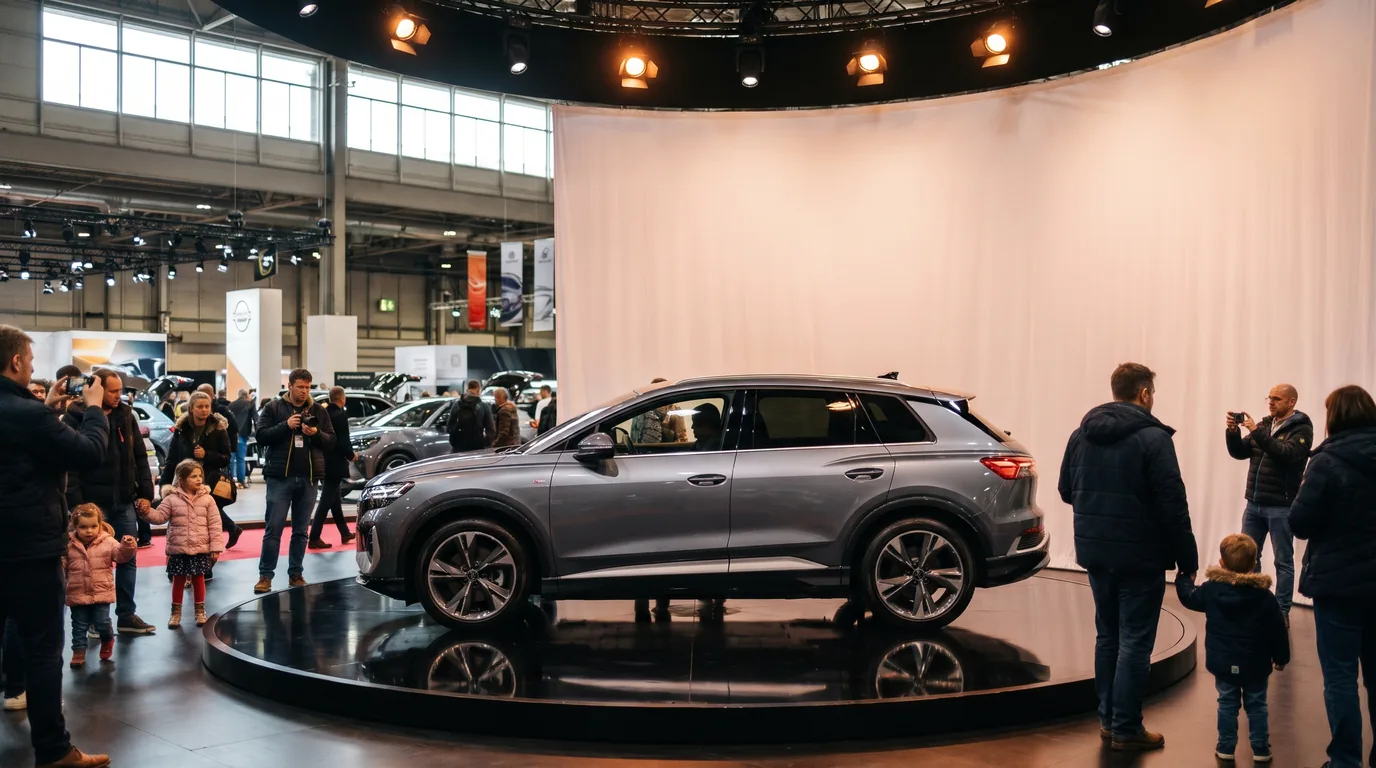
Xpeng wants to sell 500,000 cars a year in Europe by 2030, more than Ford
Speaking at the Paris motor show, He Xiaopeng set a target that would make the Chinese brand one of Europe's biggest. It has sold about 60,000 cars in Europe so far, so it plans to build far more locally.
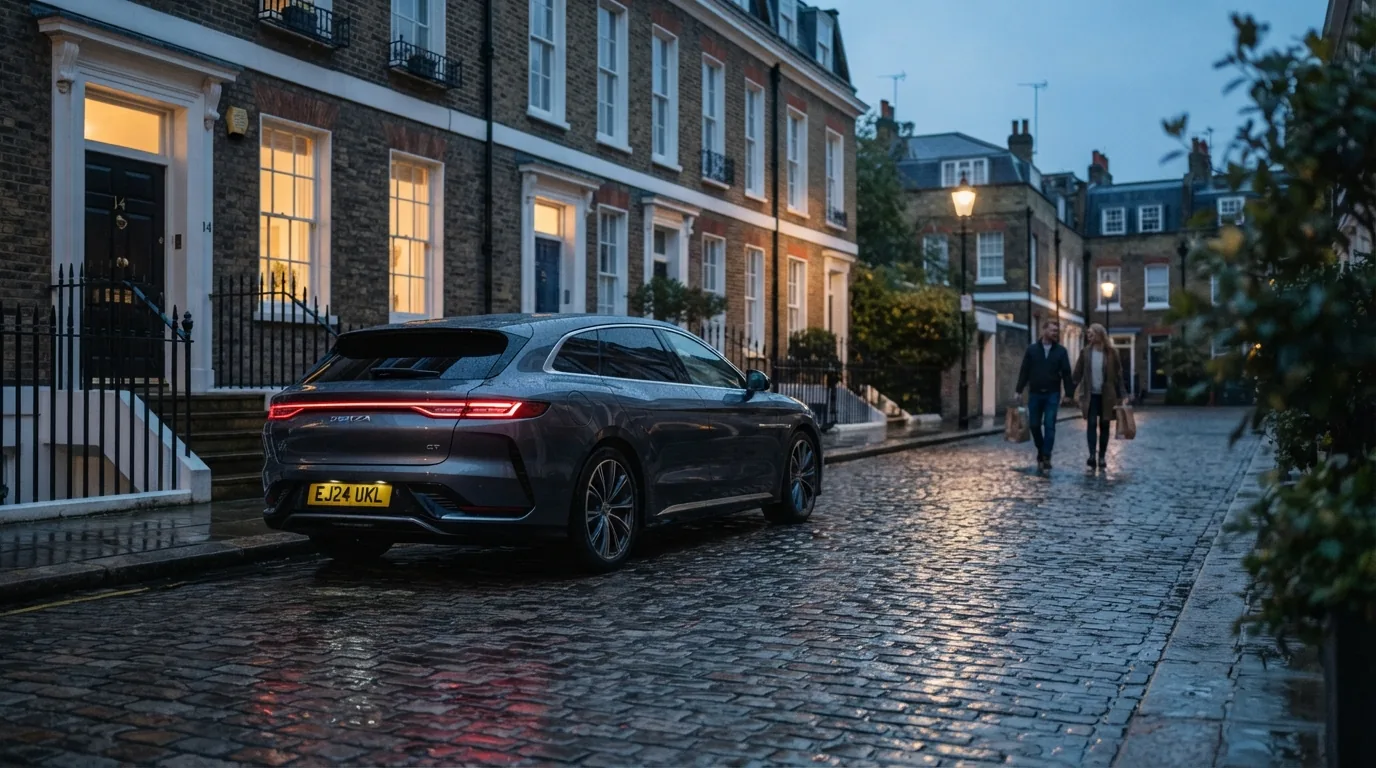
Denza Z9 GT UK prices: £95,000 plug-in hybrid, £105,000 EV
BYD's luxury brand has opened UK order books for the Z9 GT shooting brake, with first EV deliveries due this quarter, the plug-in hybrid to follow later, and Flash Charging of up to 1,500kW on both versions.
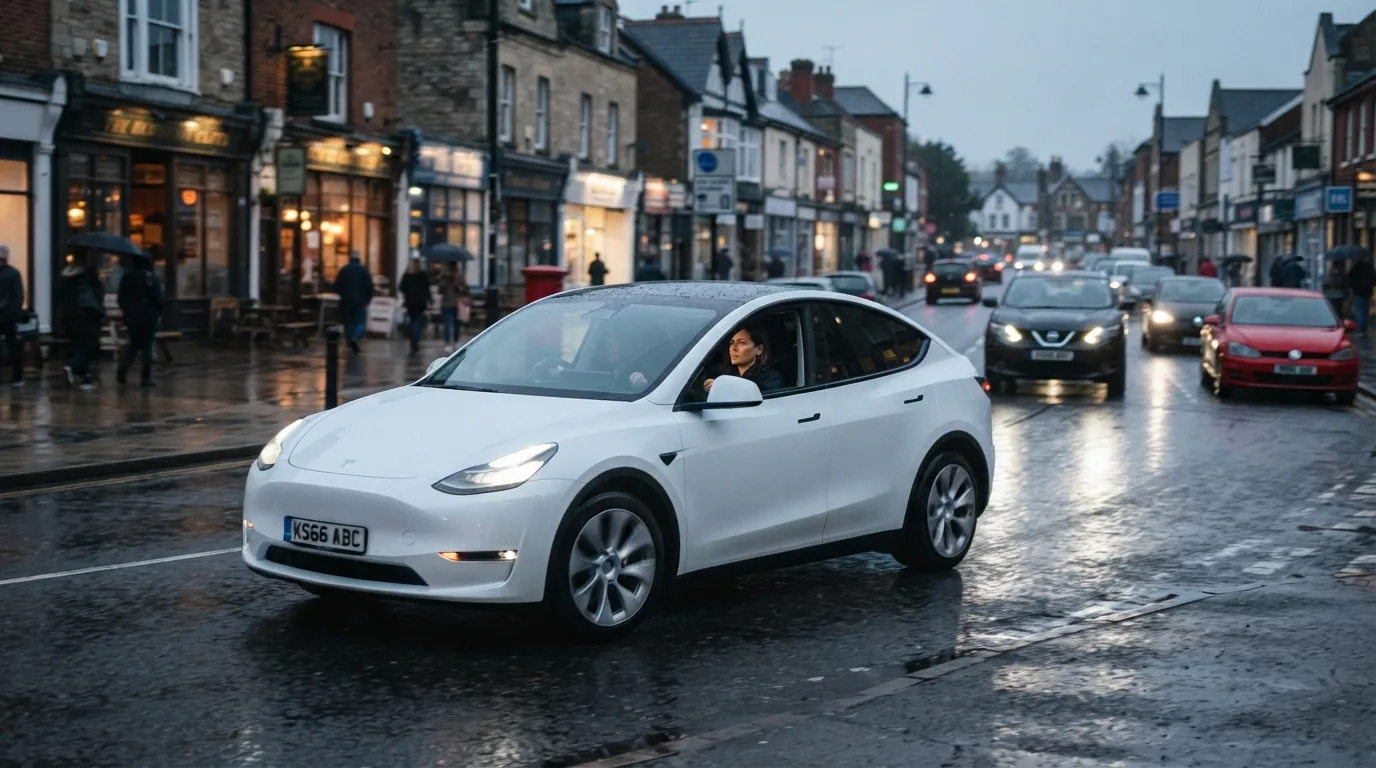
Tesla FSD EU vote slips to December: what it means for the UK
The EU-wide decision on Tesla's FSD (Supervised) will not come on 6 October after all, and even when it does, Britain runs its own approval. Here is where each route stands.
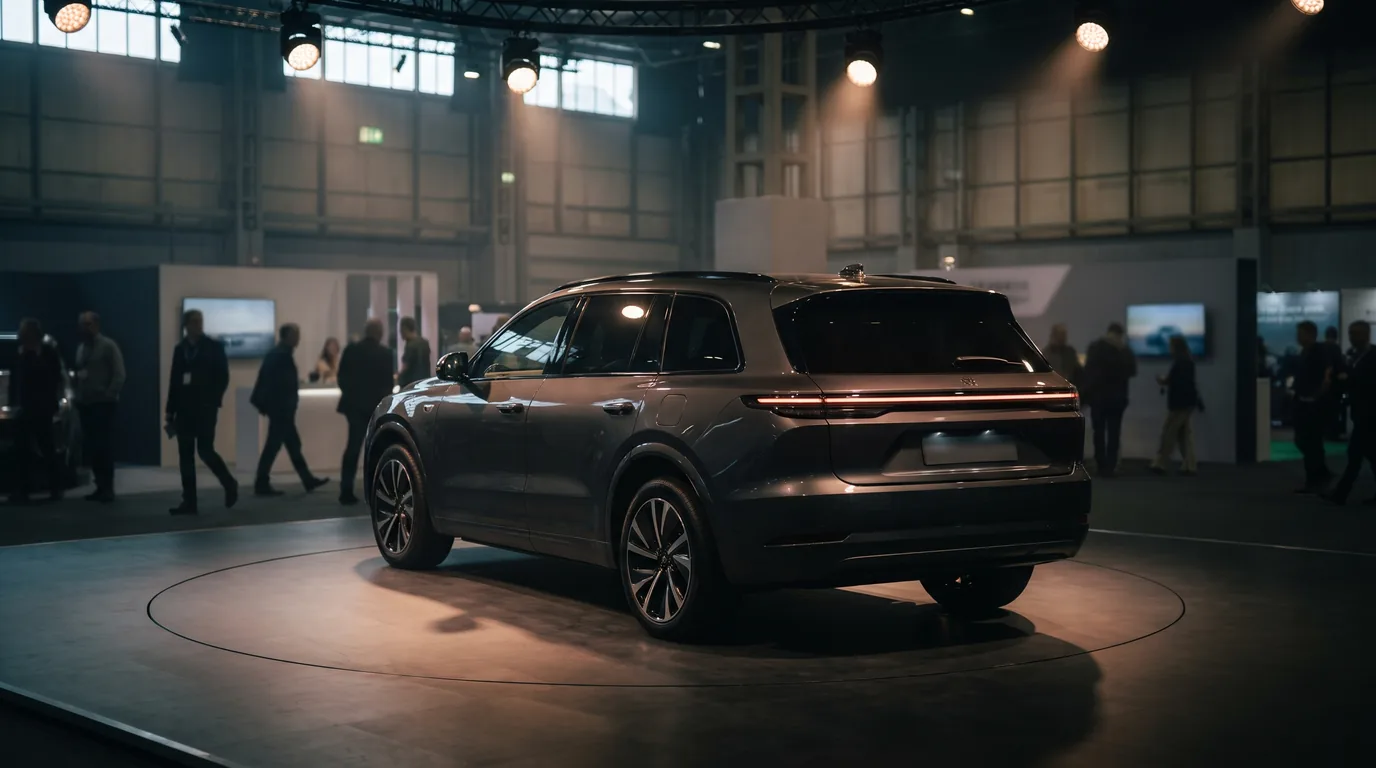
BYD Atto 8: seven-seat electric SUV charges 10-97% in nine minutes
BYD's new European flagship takes on the Kia EV9, Hyundai Ioniq 9 and Volvo EX90 with a huge battery, a 764hp top model and the fastest charging claim of any seven-seater. The catch is the chargers it needs.
Polestar 5 UK review roundup: £89,500 electric GT takes on the Porsche Taycan
Polestar's flagship four-door grand tourer has launched in the UK with two Launch Edition versions. Early UK reviews praise its ride, pace and build, with caveats on rear foot space, boot size and touchscreen controls.
BYD Flash Charging UK: 300 chargers at 1,500kW, open to other EVs
BYD has promised 300 megawatt chargers for Britain, yet the first car able to use the full 1,500kW is only due to reach buyers this quarter. Here is where they go, what they should cost and who gains.