Xpeng wants to sell 500,000 cars a year in Europe by 2030, more than Ford
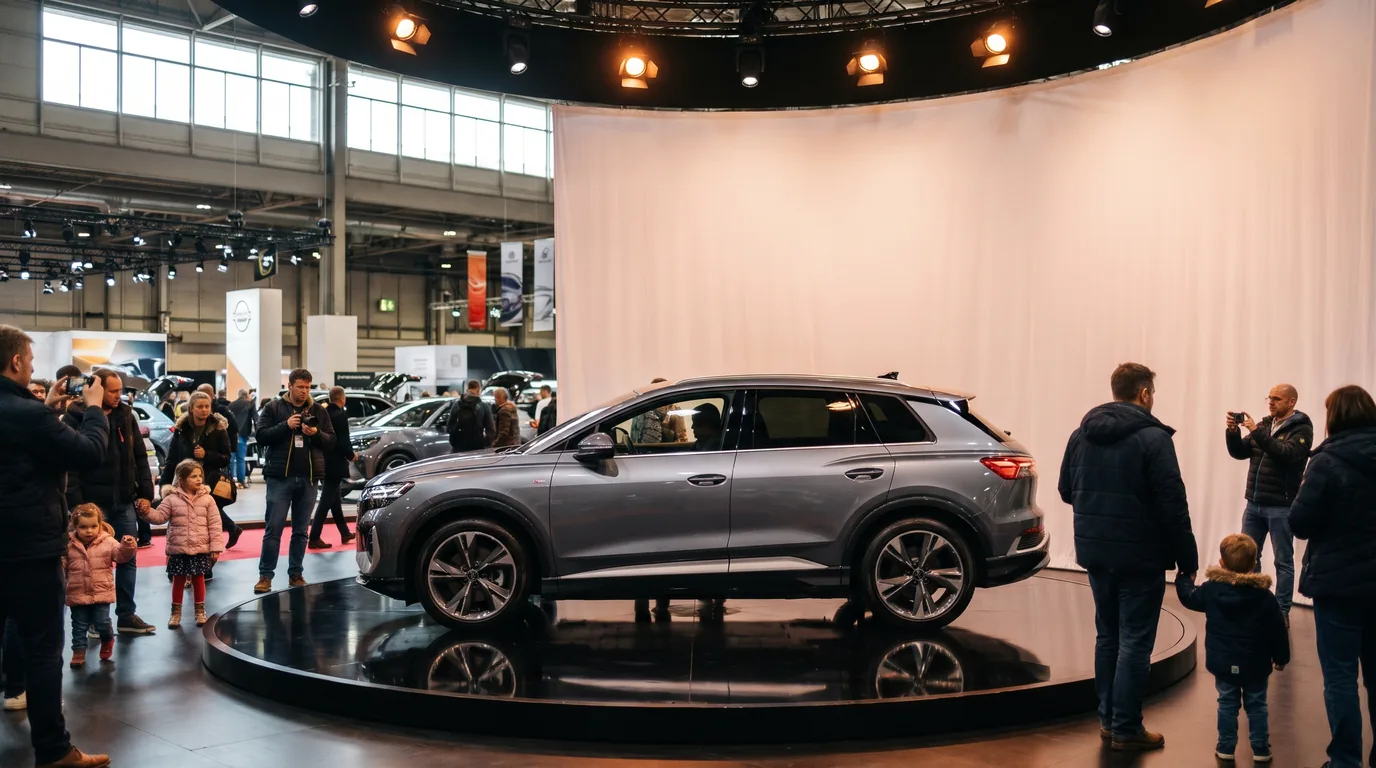
Speaking at the Paris motor show, He Xiaopeng set a target that would make the Chinese brand one of Europe's biggest. It has sold about 60,000 cars in Europe so far, so it plans to build far more locally.
Quick answers
- Xpeng chairman He Xiaopeng said at the Paris motor show that he wants 1 million global sales a year by 2030, with 500,000 in Europe.
- That would beat Ford's 426,459 European sales in 2025 and Opel/Vauxhall's 399,783, and roughly match Kia's 507,304.
- Xpeng has delivered only about 60,000 cars in Europe since arriving in Norway in 2020, and 429,445 cars worldwide in 2025.
- Magna Steyr builds the Xpeng G6, G9 and P7+ in Graz, Austria, and will build the new G9L, but Xpeng says that capacity 'is not even sufficient'.
- Xpeng plans a second European production site with a local partner, focused on mid-level cars, to meet 'Made in Europe' rules; a decision is expected within months.
- The G9L flagship SUV starts at €74,600 in Germany, with range-extender and fully electric versions.
Chinese electric car maker Xpeng wants to sell 500,000 cars a year in Europe by 2030, which would put it ahead of Ford. Speaking at the Paris motor show, chairman He Xiaopeng said he wants Xpeng to reach 1 million annual sales worldwide by the end of the decade, with half coming from Europe, as CarScoops reported.
It is a bold target. Xpeng has delivered only about 60,000 cars in Europe since it arrived in Norway in 2020. To get there, it plans to build many more cars in Europe, including at a second factory with a local partner. For UK buyers, where Xpeng launched in 2025, it signals a brand planning to stay and grow, and potentially one whose cars avoid future tariffs on China-built EVs.
How ambitious is the target?
Very. If Xpeng sold 500,000 cars in Europe, it would be one of the region’s biggest brands:
| Brand | European sales in 2025 |
|---|---|
| Kia | 507,304 |
| Xpeng target for 2030 | 500,000 |
| Ford | 426,459 |
| Opel/Vauxhall | 399,783 |
| Tesla | 238,656 |
| Xpeng, cumulative since 2020 | About 60,000 |
Globally, Xpeng delivered 429,445 cars in 2025, according to Digital Today, so it would need to more than double its total sales by 2030.
How does Xpeng plan to get there?
By making far more cars in Europe rather than shipping them from China. Contract manufacturer Magna Steyr already builds the Xpeng G6, G9 and P7+ saloon in Graz, Austria, and will build the new G9L flagship SUV, which recently passed a production trial there.
But Xpeng vice-president Yeqing Zheng told Reuters that output at Graz “is not even sufficient” for expected European demand, according to Yahoo Finance. Xpeng is therefore planning a second European production operation with a local manufacturer, either a new factory or an existing one, focused on “mid-level” cars. A decision is expected within months, and the new site needs lower costs than Graz.
This would not just be final assembly of kits from China. CarScoops says Xpeng will operate more like a traditional European brand, although it will still source many parts from China.
Why does local production matter?
Rules and tariffs. The EU’s proposed “Made in Europe” legislation, the Industrial Accelerator Act, would require a minimum share of local content for cars to qualify for EV grants and public procurement. China-built EVs also face EU anti-subsidy tariffs, including range-extenders, with total duties of up to 45%.
Building in Europe helps Xpeng on both counts. The challenge is batteries: Zheng acknowledged that finding European suppliers who can meet Xpeng’s charging speed and energy density requirements could be difficult.
The same debate affects the UK. Britain is considering aligning with EU tariffs on China-built EVs to join Made in Europe, as we cover in our Made in Europe report. A European-built Xpeng would be better placed if that happens.
What is the Xpeng G9L?
The G9L is Xpeng’s new flagship SUV and will be built at Graz. It starts at €74,600 in Germany. It comes as a range-extender, with a turbocharged 1.5-litre engine, an electric motor and a 63kWh battery producing a combined 577hp, and as a fully electric car with a 91.9kWh or 110kWh battery. The top electric version has two motors and also produces 577hp. UK details have not been confirmed.
Is Xpeng sold in the UK?
Yes. Xpeng launched in the UK in February 2025, and its G6 SUV has been one of its main models. Earlier this year, Xpeng said it would add range-extender versions to its range. Its L03 SUV coupé is being shown to UK dealers at Automotive Management Live in November 2026.
Xpeng is one of many Chinese brands chasing UK buyers. Chinese brands together took 23.3% of UK new car sales in September, led by BYD, MG and Chery’s brands, as we covered in our September sales analysis. Our guide to the Chinese EV brands on sale in the UK explains who is who.
Is 500,000 realistic?
It would require extraordinary growth. Xpeng’s European sales have grown fast, but from a small base, and it is competing with other Chinese brands, Tesla, Kia, Volkswagen and Stellantis, many of which are also cutting prices. It also needs the new factory, a battery supply chain in Europe and a much bigger dealer network.
That said, Chinese brands have repeatedly beaten expectations in Europe. A few years ago, few would have predicted BYD becoming the UK’s second-biggest car brand in a single month, as it did in September 2026.
Who is Xpeng?
Xpeng is a Chinese electric car maker founded in 2014 and listed on the stock market, known for software, driver assistance and fast charging. It has a technology partnership with the Volkswagen Group in China, under which Volkswagen is developing models on Xpeng’s electric platform. It sells a range of SUVs, saloons and an MPV, and has been one of the more technology-focused Chinese brands to arrive in Europe.
Its European approach has been different from some rivals. Its board vice-chairman, Brian Gu, said in 2024 that Xpeng was not coming to Europe to provide a cheap alternative but to bring technology. That is reflected in its pricing, which tends to sit closer to established European brands than to the cheapest Chinese imports.
Which Xpeng models matter for the UK?
The models most relevant to UK buyers are:
- Xpeng G6. A mid-size electric SUV and the brand’s best seller in Europe so far, built for Europe by Magna Steyr in Graz.
- Xpeng G9. A larger, more luxurious electric SUV, also built in Graz.
- Xpeng P7+. A saloon, again built at Magna’s Austrian plant.
- Xpeng G9L. The new flagship, with range-extender and fully electric versions.
- Xpeng L03. An SUV coupé that Xpeng is showing to UK dealers this November.
Xpeng has also said its range-extender technology, which it calls Super Electric, can deliver a combined range of up to 1,400km, of which 430km can be electric-only, and that it would be available across its existing range. Whether and when those versions come to the UK has not been confirmed.
What about Xpeng’s driver assistance?
Xpeng is known for its Navigation Guided Pilot (NGP), which it plans to bring to Europe in the first quarter of 2027, starting with models that use its Turing AI chip, such as the P7+, X9, L03 and G9L. Like other systems of its kind, it is a supervised Level 2 system: the driver must stay in control. UK availability will depend on approval under international driver assistance rules, as we explain in our Denza God’s Eye report.
What does local production mean for prices?
Building cars in Europe does not automatically make them cheaper. Graz is a high-cost contract plant, which is why Xpeng wants its second European site to have lower costs. What local production does do is reduce exposure to tariffs on China-built EVs and help meet “Made in Europe” content rules.
For UK buyers, that matters because the UK is considering aligning with EU tariffs. A car built in Austria or another European country would not face a tariff aimed at Chinese-built cars, which could make Xpeng’s prices more stable than those of brands that rely on imports from China. It could also, in future, help with eligibility for incentives that depend on where a car is made.
What should you check if you are considering an Xpeng?
As with any newer brand, look beyond the list price:
- Where your model is built. It may affect future pricing and resale values.
- Dealer and service coverage. Check the distance to your nearest service centre and how parts and repairs are handled.
- Warranty and battery cover. Compare terms with rivals.
- Software updates. Xpeng’s appeal is partly its technology, so ask how updates are delivered in the UK.
- Residual values. Leasing, or a PCP with a guaranteed future value, reduces the risk of uncertain resale prices.
Our leasing versus buying guide explains the options.
How have other Chinese brands grown in Europe?
Xpeng’s target looks less outlandish next to what other Chinese brands have achieved. BYD registered a record 20,140 cars in the UK alone in September 2026, making it the country’s second-biggest brand that month, and Chery’s group of brands, led by the Jaecoo 7, has grown from nothing to one of the UK’s largest sellers in about two years. Geely has registered more than 15,000 cars in its first UK year, as we report in our Geely story.
Our view
Xpeng’s target is a statement of intent more than a forecast. What matters for buyers is the strategy behind it: building more cars in Europe, with European content, which should make Xpeng’s prices more stable if tariffs on China-built EVs rise. If you are considering an Xpeng, look at where your specific model is built and what the dealer and service network looks like near you. The brand’s ambitions are clear; its European track record is still short.
How we test and where our numbers come from
Range figures are official WLTP combined values taken from manufacturer UK specification pages, with real-world estimates drawn from independent comparative testing. Prices are UK list prices at the time of the latest update. Tax, grant and charging-scheme figures come from GOV.UK and HMRC publications. We re-check every guide when pricing, specification or policy changes. Last checked 24 October 2026. How we work out our own figures.
Frequently asked questions
How many cars does Xpeng want to sell in Europe?
Xpeng chairman He Xiaopeng wants to sell 500,000 cars a year in Europe by 2030, half of a 1 million global target. That would put it ahead of Ford's 426,459 European sales in 2025.
How many cars has Xpeng sold in Europe?
About 60,000 in total since it arrived in Norway in 2020. Worldwide, Xpeng delivered 429,445 cars in 2025, so it would need to more than double global sales to hit its 2030 target.
Where are Xpeng cars built for Europe?
Contract manufacturer Magna Steyr builds the Xpeng G6, G9 and P7+ in Graz, Austria, and will build the new G9L there. Xpeng says that capacity is not enough and plans a second European site with a local partner.
Is Xpeng sold in the UK?
Yes. Xpeng launched in the UK in 2025 and sells models including the G6 SUV. It is showing its L03 SUV coupé to UK dealers at Automotive Management Live in November 2026.
Why is Xpeng building cars in Europe?
To meet proposed EU 'Made in Europe' rules that would require a minimum share of local content in EVs, and to avoid relying on imports from China, which face EU anti-subsidy tariffs.
Sources and further reading
- carscoops.comCarScoopsPrimary source referenced in this article.
- finance.yahoo.comChinese Carmaker Xpeng Thinks It Can Outsell Ford In Europe By 2030About 60,000 European deliveries since 2020, Yeqing Zheng's comments on capacity and a second factory, and battery supply challenges.
- digitaltoday.co.krXpeng targets 500,000 EV sales in Europe by 2030Xpeng's 429,445 global deliveries in 2025.
- uk.news.yahoo.comXpeng weighs adding extended-range EVs to European lineupXpeng's UK launch in February 2025 and EU tariffs on China-built range-extenders.

EV Compared
The EV Compared editorial team tracks the UK electric vehicle market full time: new model launches, list prices, WLTP and real-world range, public charging tariffs and the tax rules that decide what an EV actually costs to run. Every guide is checked against manufacturer specifications and official GOV.UK figures, and updated whenever the numbers move.
Related reading
View all
UK offered a place in 'Made in Europe', but the price is China tariffs
A Franco-German deal opens the EU's new local-content rules to British car factories, and softens the EU's 2035 target to 90%. The catch is that Britain would have to follow Brussels on trade defence against China.

Denza Z9GT to get BYD's 'God's Eye' city driving assistant in Europe in 2027
The Porsche Taycan-rivalling shooting brake already brings BYD's five-minute Flash Charging to Europe. Now it will be the first BYD-group car in Europe to offer supervised address-to-address driving in towns.
Geely's first UK year: 15,000 cars, 100 dealers and a 45,000 target for 2027
The Chinese brand behind Volvo and Polestar's parent group launched its own cars in the UK a year ago. It now has a Coventry headquarters, a 100th dealer signed and plans to more than double sales next year.
Chinese brands take 23.3% of UK car sales as Jaecoo 7 tops September
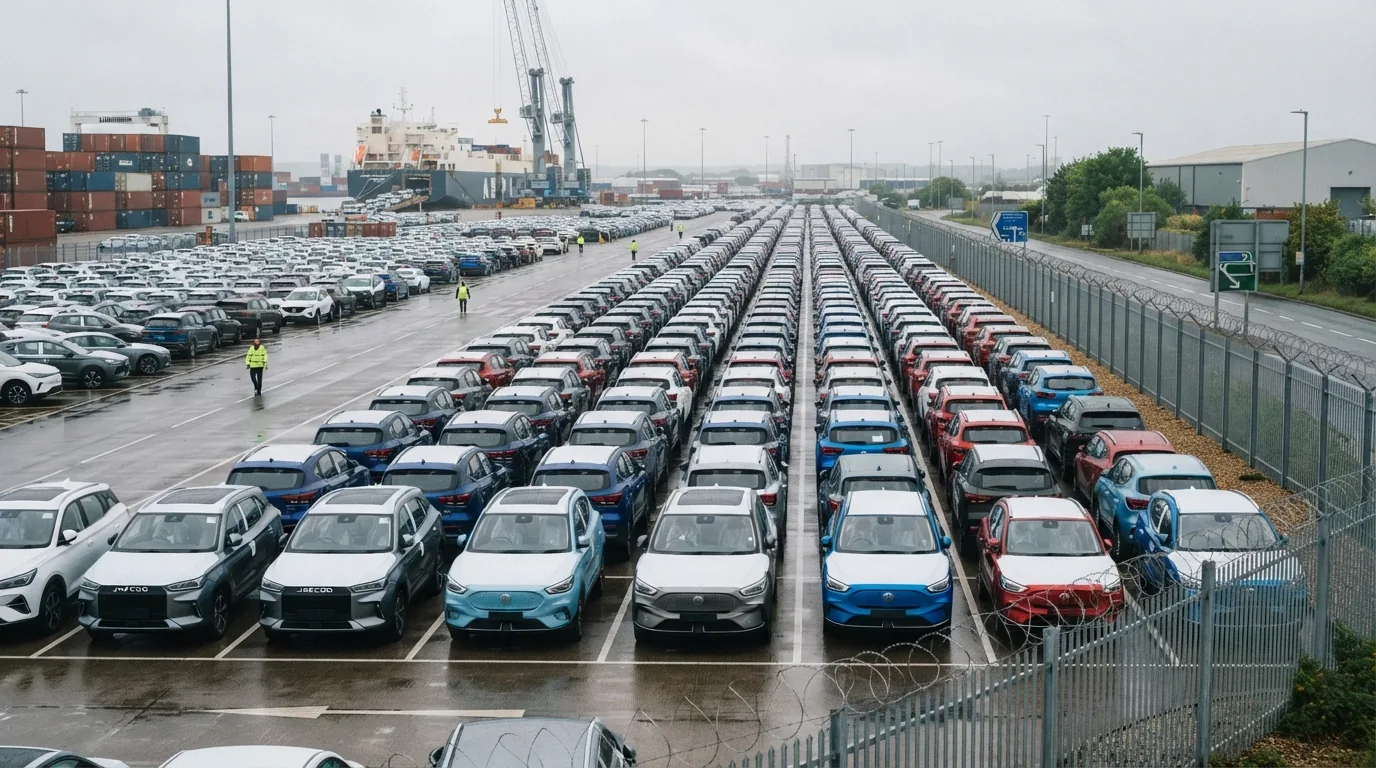
Nearly one in four new cars sold in September came from a Chinese brand, even though cars built in China get no Electric Car Grant. Here is what it means for prices, discounts and resale.
Chinese EV Brands in the UK: Who Is Here and Are They Any Good?
BYD, MG, Xpeng, NIO, Leapmotor and Jaecoo are all selling in Britain -- here is an honest assessment of what each offers

Leasing vs Buying an EV: True Cost Compared in the UK
Should you lease or buy your electric car? We compare PCH, PCP and outright purchase on total cost, flexibility and the specific risks of each approach.