Public EV charging keeps 20% VAT as home electricity goes to 0%
Drivers without a driveway now pay 20% VAT at the plug while home charging pays none. Here is what a Budget cut to 5% or 10% would save, and why the Treasury has so far said no.
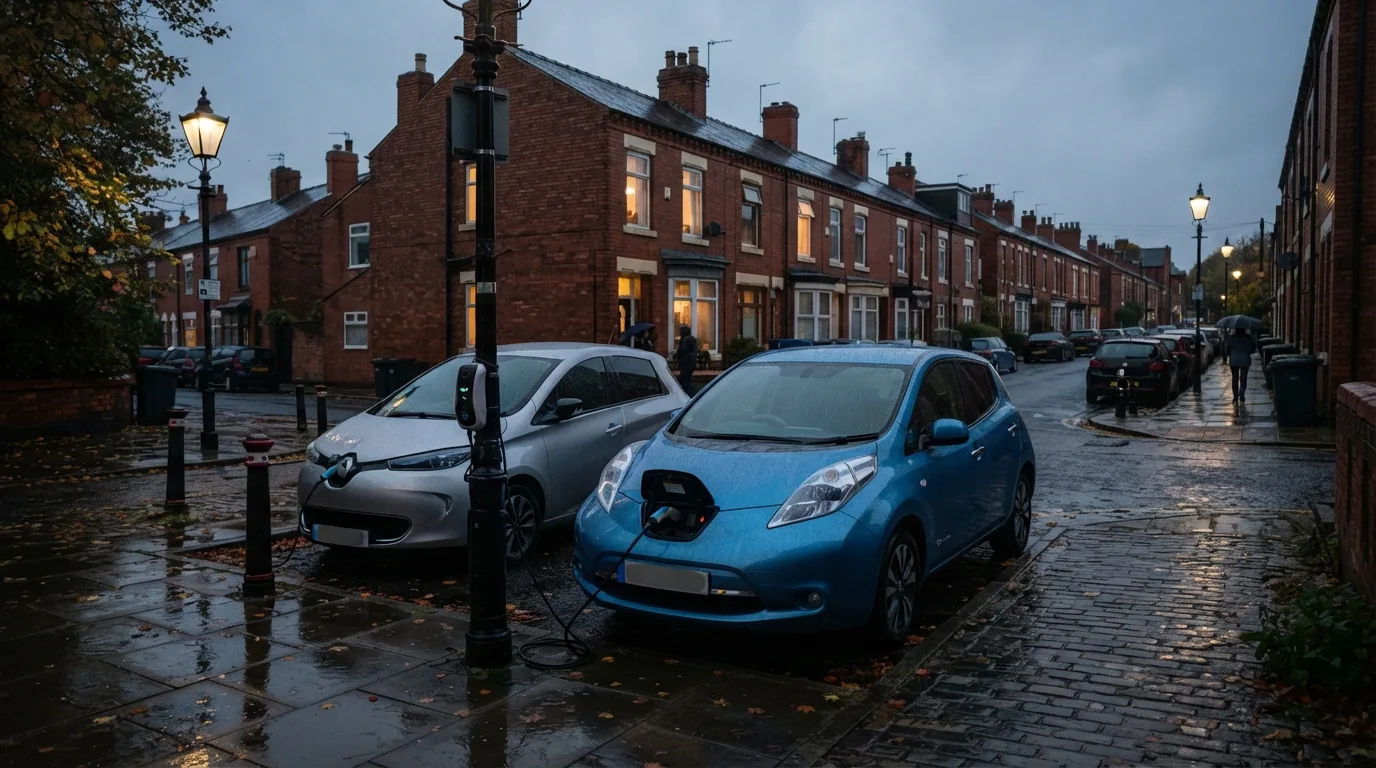
Quick answers
- Since 1 October 2026, household electricity in England, Scotland and Wales carries 0% VAT until 31 March 2027, while public EV charging still carries 20%.
- ChargeUK says the yearly VAT gap between a driver who charges mostly at home and one who relies on public chargers has grown to £200.
- At Zapmap's 77p per kWh rapid average, about 12.8p of every kWh is VAT. A cut to 5% would save about 9.6p per kWh and a cut to 10% about 6.4p (our calculations).
- A tax tribunal ruled in February 2026 that public charging can qualify for 5% VAT, but HMRC is appealing and the 20% rate still applies.
- ChargeUK puts the cost of aligning the rates at about £180m a year, against £1.1bn the OBR expects eVED to raise in 2028/29. The Budget is on 28 October.
Drivers who charge at home have paid no VAT on their electricity since 1 October, but anyone using a public charger still pays 20%. Trade body ChargeUK says that leaves a driver without a driveway paying £200 a year more in VAT than one who does most of their charging at home. At Zapmap’s 77p per kWh average for rapid charging, about 12.8p of every kWh you buy is now tax, and the pressure on the Treasury to act at the 28 October Budget is building.
The zero rate on household electricity in England, Scotland and Wales is temporary and runs until 31 March 2027, according to Fleet World. Before October the split was 5% at home against 20% in public; now it is nothing against 20%. ChargeUK has coordinated a letter to the Prime Minister, signed by EVA England, EVA Cymru, the AA, Autotrader and the FairCharge campaign, on behalf of the estimated 10 million households that cannot charge at home (Fleet News).
How wide is the VAT gap now?
The VAT amounts in the last column are our calculations from Zapmap’s August averages.
| Where you charge | VAT to 30 September | VAT from 1 October | VAT inside a typical price |
|---|---|---|---|
| Home (England, Scotland, Wales) | 5% | 0% | None |
| Public standard and standard plus chargers (54p average) | 20% | 20% | 9p per kWh |
| Public rapid and ultra-rapid chargers (77p average) | 20% | 20% | 12.8p per kWh |
At 20%, one pound in every six you pay at a public charger goes to the Treasury. On the dearest rapid network in Zapmap’s September table, 92p per kWh, that is about 15.3p; even at the cheapest, 59p, it is about 9.8p. Our report on what public charging costs this month breaks down the network prices.
ChargeUK’s £200 figure compares a driver who does 80% of their charging at home and 20% on rapid chargers with one who relies entirely on public chargers. Across all running costs, it says the home charger is more than £1,000 a year better off, with VAT now making up £200 of that difference. Our separate piece on the electricity VAT cut covers what the change is worth to home chargers.
What would a VAT cut save at the plug?
The table shows what Zapmap’s August average prices would become at each VAT rate, assuming operators pass the full cut on. All figures are EV Compared calculations: 77p including 20% VAT is 64.2p before tax.
| VAT on public charging | Rapid price per kWh | Saving per kWh | Cost to add 40kWh at a rapid | Standard charger price per kWh |
|---|---|---|---|---|
| 20% (today) | 77p | None | £30.80 | 54p |
| 10% (reported Budget option) | 70.6p | 6.4p | £28.23 | 49.5p |
| 5% (tribunal ruling) | 67.4p | 9.6p | £26.95 | 47.3p |
| 0% (current home rate) | 64.2p | 12.8p | £25.67 | 45p |
A cut to 5% would take about £3.85 off a 40kWh rapid top-up, and a 10% compromise about £2.57, two-thirds as much. Useful, but even at 0% a rapid kWh would still cost 64.2p, and any saving depends on operators passing a cut on.
Why did a tribunal say 5% when drivers still pay 20%?
In February 2026 the First-tier Tribunal ruled in favour of community charge point operator Charge My Street, which had brought the case on advice from Deloitte (Fleet News). The judgment found that where a public charge point supplies a customer with no more than 1,000kWh a month at a location, the electricity can be treated as domestic consumption under the de minimis rules in the VAT Act 1994, and so carry the 5% reduced rate.
HMRC has confirmed it is appealing. A spokesperson said the government’s position is that “standard rate VAT applies to electricity supplied through public EV charging infrastructure”, and the Upper Tribunal is expected to hear the case in due course. The charging sector called the decision “disappointing” (Transport & Energy).
The stakes for HMRC are rising. Figures from Zapmap suggest the VAT difference is worth £85m a year to the Treasury, projected to grow to £315m by 2030. Losing could also leave HMRC facing back repayments, according to EV Powered.
Why has the Treasury not cut it already?
It has looked at the idea and so far said no. AM Online reported earlier this year that the Treasury was considering a cut to soften the impact of electric vehicle excise duty (eVED), the pay-per-mile charge on EVs. In May, Electrifying reported that the Treasury had rejected a proposal to cut the rate from 20% to 5%, over concerns about the lost income and the precedent it would set.
ChargeUK’s answer is that the sums are small next to what EV drivers will pay. It puts the cost of aligning public and home charging VAT at around £180m a year, against the £1.1bn a year expected from eVED (Fleet News). The OBR expects eVED to raise £1.1bn in 2028/29, rising to £1.9bn by 2030/31. Our explainer on pay-per-mile road tax for EVs covers how eVED will work.
What could happen at the Budget on 28 October?
The Budget is the next chance for a change. AM Online reports that accountancy firm BDO sees a cut, possibly to around 10%, as an option for the Chancellor. Carwow reports that a cut, potentially to 10%, is being considered. The Treasury has confirmed neither.
The government’s own review will not settle it. The independent review of public charging costs, chaired by Philip New with support from OZEV, is due to report this autumn and covers on-street, destination and motorway charging. VAT is outside its terms of reference, as Transport & Energy reported in June.
| Date | What happened or is due |
|---|---|
| February 2026 | First-tier Tribunal rules 5% can apply in the Charge My Street case |
| April 2026 | HMRC confirms its appeal; 20% stays in place |
| May 2026 | Treasury reported to have rejected a cut to 5% |
| June 2026 | VAT confirmed as outside the public charging cost review |
| 1 October 2026 | Household electricity VAT falls from 5% to 0% in Great Britain |
| 28 October 2026 | Autumn Budget |
| Autumn 2026 | Public charging cost review due to report |
| 31 March 2027 | Temporary 0% rate on household electricity due to end |
What this means for you
If you rely on public chargers, nothing has changed yet: you pay 20% VAT today and will keep paying it unless the Budget acts or HMRC loses its appeal. Even then, a cut would only reach you if operators pass it on. The bigger saving available now is in where and when you charge. Slower public chargers averaged 54p per kWh in August against 77p for rapids, so use them when you are parked for hours anyway, and look at off-peak rates and subscriptions in our guide to cheap public charging options.
If you have no driveway, check your options for charging nearer home. Our guide to the best electric cars for drivers without a driveway picks the models that suit public and on-street charging, and England’s cross-pavement charging planning changes could bring home charging to more terraced streets.
Our view: the case for a cut is stronger than it has ever been, because the home rate is now zero and the government is preparing to charge EV drivers by the mile through eVED. A move to 10% would take about 6.4p off an average rapid kWh, a meaningful but modest saving. With the Treasury on record as resisting and the tribunal route likely to take time, plan your charging around today’s prices and treat any Budget cut as a bonus.
How we test and where our numbers come from
Range figures are official WLTP combined values taken from manufacturer UK specification pages, with real-world estimates drawn from independent comparative testing. Prices are UK list prices at the time of the latest update. Tax, grant and charging-scheme figures come from GOV.UK and HMRC publications. We re-check every guide when pricing, specification or policy changes. Last checked 6 October 2026.
Frequently asked questions
Why is public EV charging taxed at 20% VAT?
HMRC's position is that standard rate VAT applies to electricity supplied through public charge points, while household electricity gets the domestic rate. That domestic rate has been 0% in England, Scotland and Wales since 1 October 2026 and runs until 31 March 2027.
How much would a VAT cut save at a rapid charger?
At Zapmap's August average of 77p per kWh, a cut to 5% would bring the price to about 67.4p, saving 9.6p per kWh or £3.85 on a 40kWh top-up. A cut to 10% would save about 6.4p per kWh. These are our calculations and assume operators pass the full cut on.
Will the Budget on 28 October cut VAT on public charging?
Nothing is confirmed. Carwow reports that a cut, potentially to 10%, is being considered, and BDO has suggested a cut to around 10% is an option. In May the Treasury was reported to have rejected a cut to 5%.
What happened in the Charge My Street VAT case?
In February 2026 the First-tier Tribunal ruled that public charging can qualify for the 5% reduced rate where a customer takes no more than 1,000kWh a month at a location. HMRC is appealing to the Upper Tribunal, so 20% still applies until the case is decided.
Does the government's review of public charging costs cover VAT?
No. The independent review chaired by Philip New, due to report in autumn 2026, covers energy prices and other cost drivers across on-street, destination and motorway charging, but VAT is outside its terms of reference.
Sources and further reading
- fleetworld.co.ukFleet WorldPrimary source referenced in this article.
- fleetnews.co.ukChargeUK leads letter calling for public EV charging VAT cutThe letter's signatories and ChargeUK's £180m cost estimate against £1.1bn a year from eVED.
- fleetnews.co.ukHMRC appealing court ruling on 5% public charging VAT rate for EVsHMRC's appeal, its statement on standard rate VAT and the £85m a year at stake, rising to £315m by 2030.
- iclr.co.ukCharge My Street Limited v The Commissioners for HMRC [2026] UKFTT 318 (TC)The First-tier Tribunal judgment applying the 1,000kWh a month de minimis test to public charging.
- electrifying.comTreasury has said no to cheaper public EV chargingMay 2026 reports that the Treasury rejected a cut from 20% to 5% over cost and precedent concerns.
- carwow.co.ukWill the Autumn Budget 2026 make driving more expensive?The 28 October Budget date and reports that a cut, potentially to 10%, is being considered.
- transportandenergy.comVAT issue not included in OZEV public charging price reviewConfirms VAT is outside the scope of the government's review of public charging costs.
- zapmap.comUK EV Charging Price Index 2026: cost per kWhAugust 2026 average pay-as-you-go prices of 77p per kWh on rapid and ultra-rapid chargers and 54p on slower chargers.

EV Compared
The EV Compared editorial team tracks the UK electric vehicle market full time: new model launches, list prices, WLTP and real-world range, public charging tariffs and the tax rules that decide what an EV actually costs to run. Every guide is checked against manufacturer specifications and official GOV.UK figures, and updated whenever the numbers move.
Related reading
View all
Electricity VAT cut to 0%: what EV drivers save until March
VAT on home electricity fell to zero on 1 October, yet drivers on cheap EV tariffs gain least and public charging stays at 20%. Here is what the six-month cut is really worth to you.
Autumn Budget 2026 and electric cars: what to watch
The Budget is on 28 October. Nothing in it is known yet. This preview sets out the rules already in place for electric car drivers and the open questions on VAT, fuel duty and company cars.
Cross-pavement EV charging in England: planning rules ease 21 October
Drivers without a driveway will soon skip a separate planning application for a pavement cable channel. But the council still controls the footway, and nobody gets a reserved bay.
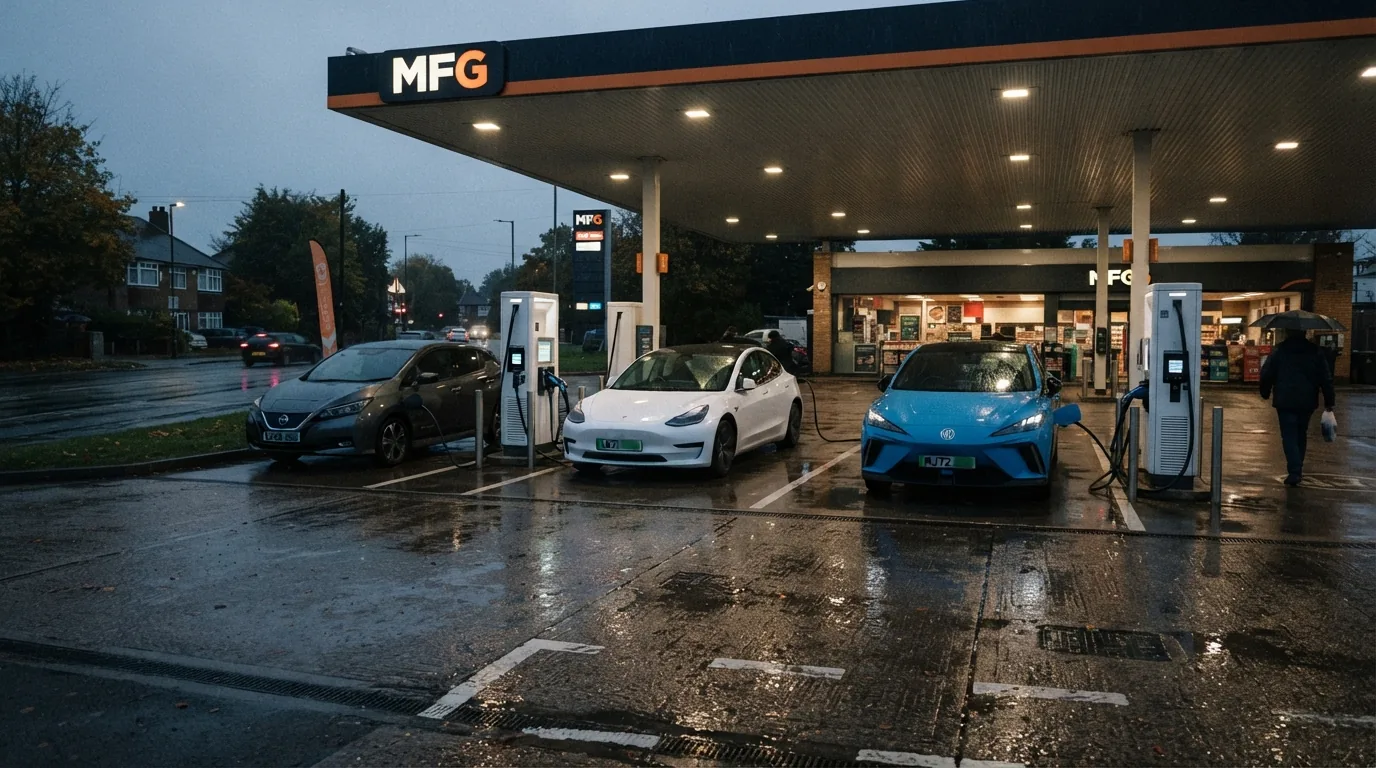
Zapmap: rapid charging averages 77p/kWh as MFG keeps 59p app price
Rapid public charging averaged 77p/kWh in August, and MFG has kept its 59p summer price for drivers who use its app. Here is what the big networks charge, and the off-peak and subscription deals that cut the bill.
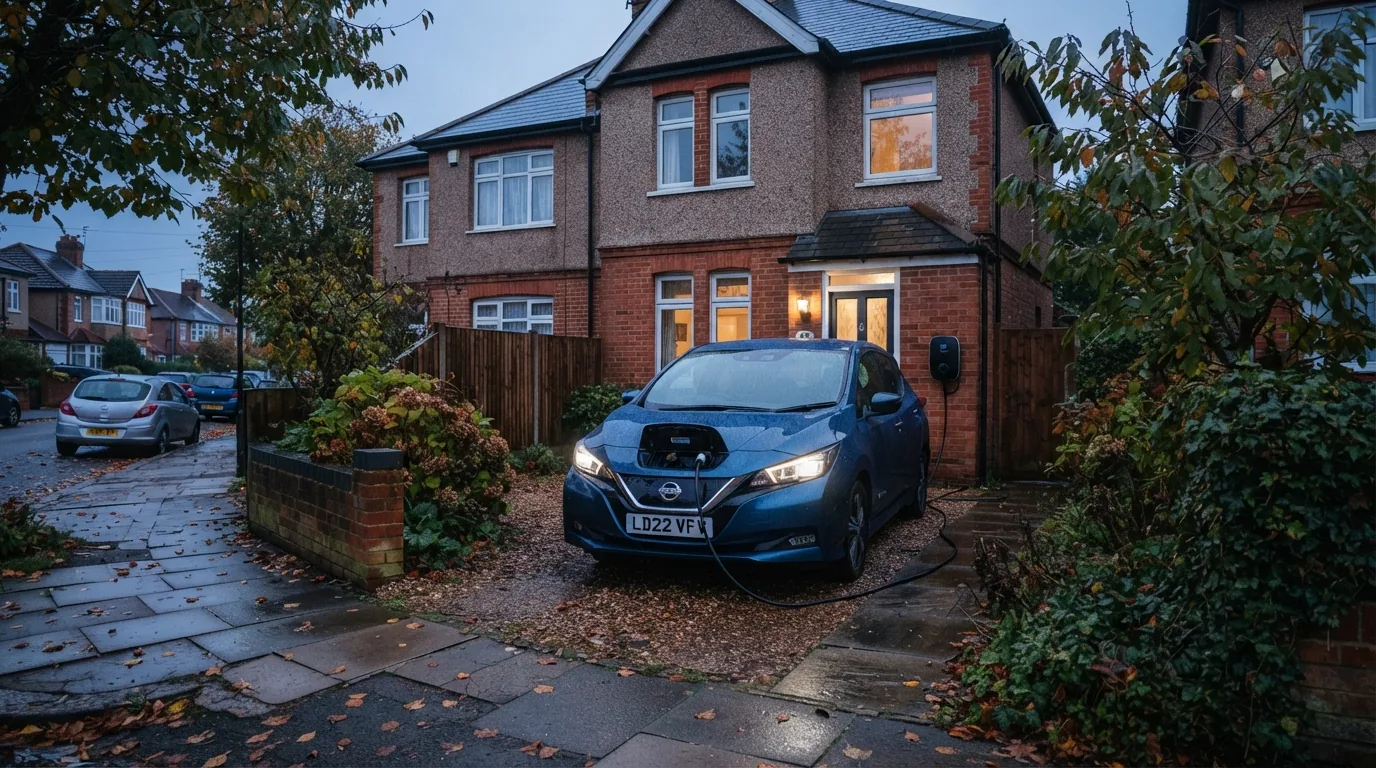
Ofgem price cap: home EV charging now costs 26.32p per kWh
October's price cap barely moves the cost of charging at home, but a forecast points to 15% more in January. Here is what a charge and a mile now cost, and what an EV tariff saves.
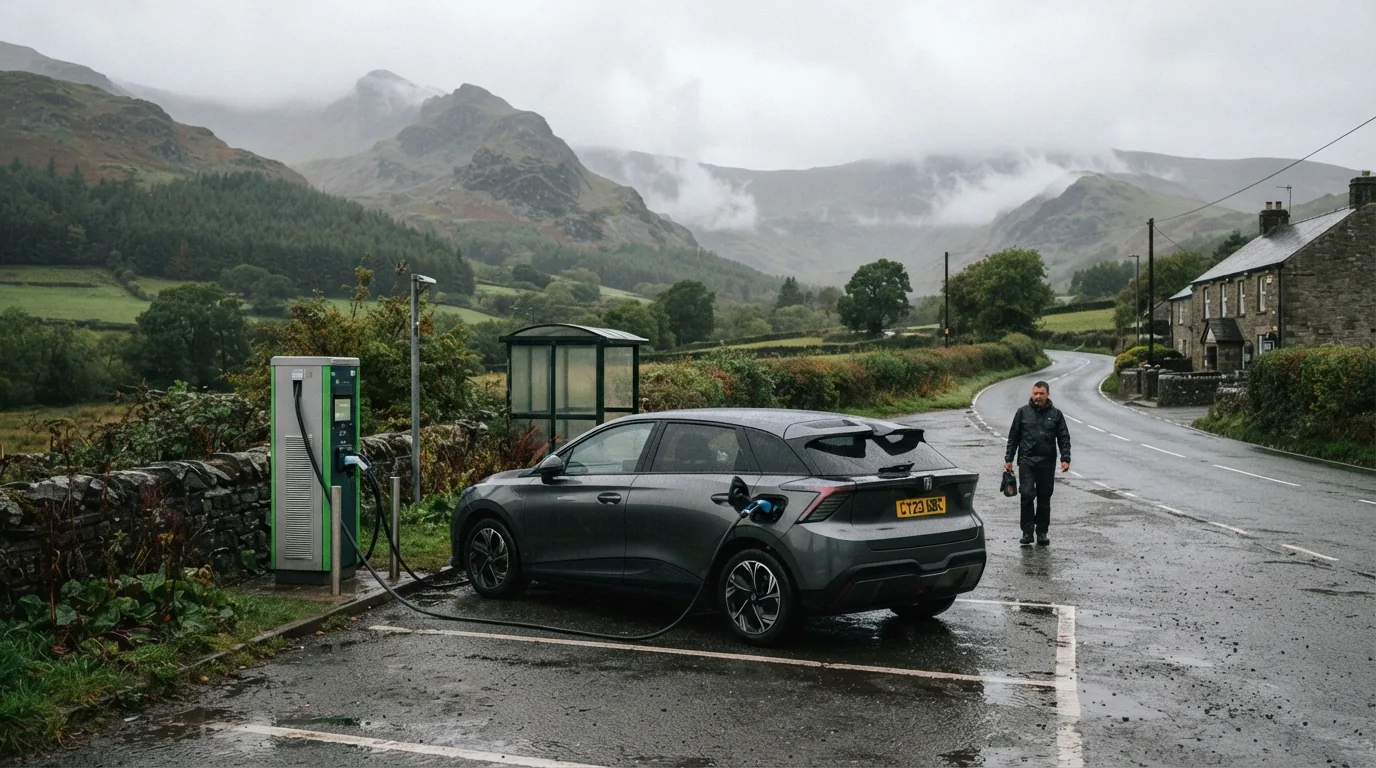
Wales EV charging sites get 100% business rates relief to 2036
The Welsh Government will waive non-domestic rates on EV charging bays and forecourts for a decade. It is a cost cut for operators rather than a discount at the charger, aimed at parts of Wales with few public points.