Zapmap: rapid charging averages 77p/kWh as MFG keeps 59p app price
Rapid public charging averaged 77p/kWh in August, and MFG has kept its 59p summer price for drivers who use its app. Here is what the big networks charge, and the off-peak and subscription deals that cut the bill.
Quick answers
- Zapmap's Price Index put the average pay-as-you-go price of rapid and ultra-rapid public charging at 77p/kWh in August 2026, against 54p/kWh on slower public chargers.
- In September 2026 the top 10 rapid networks charged between 59p and 92p/kWh, with InstaVolt the dearest at 92p.
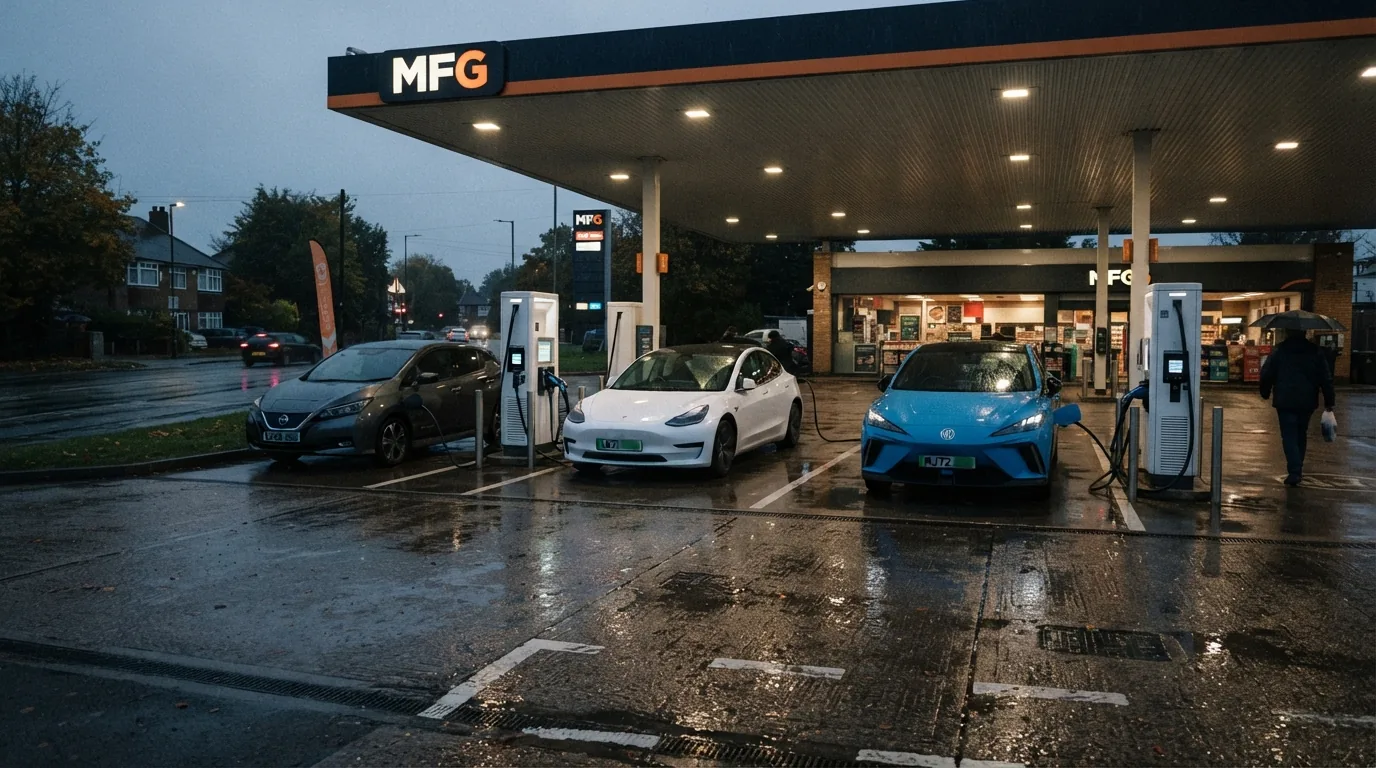
- MFG EV Power's 59p/kWh summer price ran from 1 July to 30 September 2026. From 1 October MFG kept 59p for drivers who pay through its free MFG Connect app; contactless and card payments cost the standard 79p.
- Off-peak rates undercut the average: InstaVolt charges 55p/kWh from 8pm to 7am in its app or with an RFID card, and Shell's summer savers cut its price to 42p for £9.99-a-month subscribers.
- Home charging at the October price cap of 26.32p/kWh costs about a third of the rapid average, and home electricity carries 0% VAT until 31 March 2027.
Public rapid charging in the UK averaged 77p per kWh in August 2026, according to Zapmap’s Price Index, against 54p on slower public chargers. In September the top 10 rapid networks charged anywhere from 59p to 92p. MFG EV Power’s 59p summer price ended on 30 September, but the company has kept 59p for drivers who pay through its app. For a driver adding 40kWh, the gap between the top and bottom of Zapmap’s range is £13.20 a session. For the rest of the week’s stories, see our weekly UK EV news round-up.
Zapmap’s index is a weighted average of pay-as-you-go prices, calculated from usage data covering around 75% of UK public chargers. It lands as home charging gets a tax break: VAT on household electricity in England, Scotland and Wales fell from 5% to 0% on 1 October and stays there until 31 March 2027, while public charging still carries 20%.
What does public charging cost right now?
The 40kWh column is an EV Compared calculation, roughly a 10 to 80% charge on a 57kWh battery.
| Where you charge | Price per kWh | Cost to add 40kWh |
|---|---|---|
| Public rapid and ultra-rapid (50kW and above), Zapmap August average | 77p | £30.80 |
| Public Standard and Standard Plus (3kW to 49kW), Zapmap August average | 54p | £21.60 |
| Home, Ofgem price cap (1 October to 31 December 2026) | 26.32p | £10.53 |
| Home, smart EV tariff overnight | around 7p to 8p | £2.80 to £3.20 |
The 23p gap between slower and rapid public chargers means a rapid kWh costs about 43% more. Against the Ofgem cap rate the rapid average is nearly three times dearer, and against an overnight smart tariff it is roughly ten times. Our guide to public charging costs explains how each speed is priced.
Which rapid networks are cheapest and dearest?
Zapmap’s rapid price table covers the top 10 rapid networks, which account for around 64% of UK rapid and ultra-rapid chargers. In September, InstaVolt had the highest network-wide price at 92p/kWh. Zapmap named Tesla as the cheapest of the ten, with most of its open sites charging 69p/kWh in daytime hours.
Headline prices hide big discounts for app users and off-peak charging:
| Network | Standard price | Cheaper option |
|---|---|---|
| InstaVolt | 92p peak | 55p in the app or with an RFID card, 8pm to 7am |
| MFG EV Power | 79p by contactless or card | 59p in the free MFG Connect app, at any time |
Sources: InstaVolt, Forecourt Trader.
InstaVolt’s cheaper window runs for 11 hours a day, from 8pm to 7am. Shell Recharge’s Summer Midday Saver and Night Saver rates were 60p/kWh, or 42p for subscribers paying £9.99 a month (Forecourt Trader). They were launched as summer offers, so confirm in the Shell Recharge app that they still apply before you plan around them.
What happened to MFG’s 59p deal?
MFG cut its ultra-rapid price by 25%, from 79p to 59p/kWh, from 1 July to 30 September 2026, across nearly 600 locations including nearly 300 Morrisons supermarkets (Zapmap, electrive).
The summer offer has ended, but the 59p price has not. From 1 October MFG made 59p/kWh permanent at all bays on its network for drivers who pay through the free MFG Connect app, with no subscription or membership fee (Forecourt Trader). Drivers who pay by contactless or card at the charger pay the standard 79p/kWh. MFG says the 20p/kWh difference saves up to £6 on a typical 30kWh charge. On a 40kWh top-up, the app price comes to £23.60 against £31.60 by contactless, and the contactless price is 2p above Zapmap’s August rapid average.
Why does home charging matter more this winter?
Tax is now doing more of the work. With household electricity at 0% VAT and public charging at 20%, about 12.8p of a 77p public price is VAT (EV Compared calculation). ChargeUK says the annual VAT difference between a driver who charges 80% at home and 20% on rapids, and one who relies only on public charging, is now £200 (Fleet World). Our report on the public charging VAT gap covers the campaign to close it.
Home prices may rise in the new year. Cornwall Insight forecasts the cap rising 16% in January to £1,999 a year for a typical dual-fuel household. Cornwall Insight’s forecast January electricity unit rate of 30.28p/kWh would still be well under half the rapid average.
Are charging subscriptions worth it?
They can be, if you charge publicly every month. Our EV charging subscriptions guide compares the main plans; the key numbers are:
- Shell Recharge: £9.99 a month cut the summer saver rate from 60p to 42p. On that 18p saving, the fee is covered after about 56kWh of saver-rate charging a month.
- Be.EV: the Flexi Pass costs £13.99 a month for 39p/kWh at any time, and the new Go Pass gives 120kWh for £49 a month, about 40.8p/kWh if you use it all (Transport + Energy).
- Ionity: the annual Power 365 and Motion 365 plans bring its rate down to as little as 43p/kWh (Ionity).
- InstaVolt: the 55p overnight rate needs only the app or an RFID card, with no monthly fee.
- MFG EV Power: the 59p price needs only the free MFG Connect app, with no monthly fee.
What this means for you
If you charge at home, public prices mainly matter on long trips, so plan rapid stops for off-peak windows where you can. The bigger saving is on your driveway: a smart EV tariff at around 7p to 8p/kWh costs a fraction of the 26.32p cap rate.
If you rely on public charging, treat 77p as the number to beat. Anything under 60p is a good public price; anything over 85p is worth avoiding when there is an alternative nearby. Slower destination chargers averaged 54p in August, so use them when you are parked for hours anyway. If you use one network regularly, a subscription can pay: Shell’s covered its fee after about 56kWh of saver-rate charging a month while its summer rates ran. Our round-up of cheap public charging options lists where to start.
If you use MFG forecourts or Morrisons car parks, download the MFG Connect app before your next visit: paying by contactless or card at the charger costs 79p/kWh, 20p more than the app price. In our view, keeping 59p for app users leaves MFG with one of the simplest cheap options on the public network, a sub-60p price at any hour with no subscription, as long as you pay through the app rather than with a bank card.
How we test and where our numbers come from
Range figures are official WLTP combined values taken from manufacturer UK specification pages, with real-world estimates drawn from independent comparative testing. Prices are UK list prices at the time of the latest update. Tax, grant and charging-scheme figures come from GOV.UK and HMRC publications. We re-check every guide when pricing, specification or policy changes. Last checked 6 October 2026.
Frequently asked questions
How much does rapid EV charging cost in the UK?
Zapmap's weighted average pay-as-you-go price for rapid and ultra-rapid chargers (50kW and above) was 77p/kWh in August 2026. Slower Standard and Standard Plus chargers averaged 54p/kWh. At 77p, adding 40kWh costs £30.80.
Is MFG EV Power's 59p per kWh price still available?
Yes, if you pay through the app. MFG's network-wide summer offer ended on 30 September 2026, but from 1 October MFG made 59p/kWh permanent at all its bays for drivers using the free MFG Connect app, with no subscription. Paying by contactless or card at the charger costs the standard 79p/kWh.
Which rapid charging network is the most expensive?
Zapmap's September 2026 table of the top 10 rapid networks shows InstaVolt as the dearest at 92p/kWh. InstaVolt app and RFID card users pay 55p/kWh between 8pm and 7am.
Is a public charging subscription worth paying for?
It depends on how much you charge. Shell's £9.99 monthly subscription cut its summer saver rate from 60p to 42p/kWh, which covers the fee after about 56kWh a month. Be.EV's Flexi Pass costs £13.99 a month for 39p/kWh at any time.
Sources and further reading
- zapmap.comZapmapPrimary source referenced in this article.
- zapmap.comUK Rapid EV Charging Prices 2026: Top 10 NetworksSeptember 2026 range of 59p to 92p/kWh across the top 10 rapid networks, with InstaVolt the highest and Tesla the cheapest.
- zapmap.comMFG EV Power drops Ultra-rapid charging prices at all sites by 25% for summerMFG's 59p/kWh price from 1 July to 30 September 2026 and its network size.
- forecourttrader.co.ukMFG makes discounted EV charging offer permanent59p/kWh at all bays from 1 October 2026 for MFG Connect app users, the 79p standard rate and the up to £6 saving on a 30kWh charge.
- forecourttrader.co.ukFirst MFG, then Ionity, now Shell lowers EV charging pricesShell Recharge's 60p and 42p Summer Midday Saver and Night Saver rates.
- instavolt.co.ukSmarter charging, lower prices for EV driversInstaVolt's 55p/kWh off-peak rate from 8pm to 7am.
- ofgem.gov.ukEnergy price cap unit rates and standing chargesElectricity unit rate of 26.32p/kWh under the cap from 1 October 2026.
- fleetworld.co.ukEV 'driveway divide' increases to £200 as home electricity VAT drops to zeroHome electricity VAT at 0% from 1 October 2026 while public charging stays at 20%, and ChargeUK's £200 a year VAT gap.

EV Compared
The EV Compared editorial team tracks the UK electric vehicle market full time: new model launches, list prices, WLTP and real-world range, public charging tariffs and the tax rules that decide what an EV actually costs to run. Every guide is checked against manufacturer specifications and official GOV.UK figures, and updated whenever the numbers move.
Related reading
View all
Be.EV Charging Pass: £49 a month for 120kWh, or £89 for 250kWh
Be.EV has launched two monthly charging passes with a kWh allowance included. We work out the real cost per kWh, compare them with its 39p Flexi Pass and show who comes out ahead.
UK EV news: record September sales, Chinese share, charging prices
The week's UK electric car news in one place: record September registrations, Chinese brands at 23.3%, charging prices, new cars, vans, the ZEV mandate review and the stories behind them.
Public EV charging keeps 20% VAT as home electricity goes to 0%
Drivers without a driveway now pay 20% VAT at the plug while home charging pays none. Here is what a Budget cut to 5% or 10% would save, and why the Treasury has so far said no.
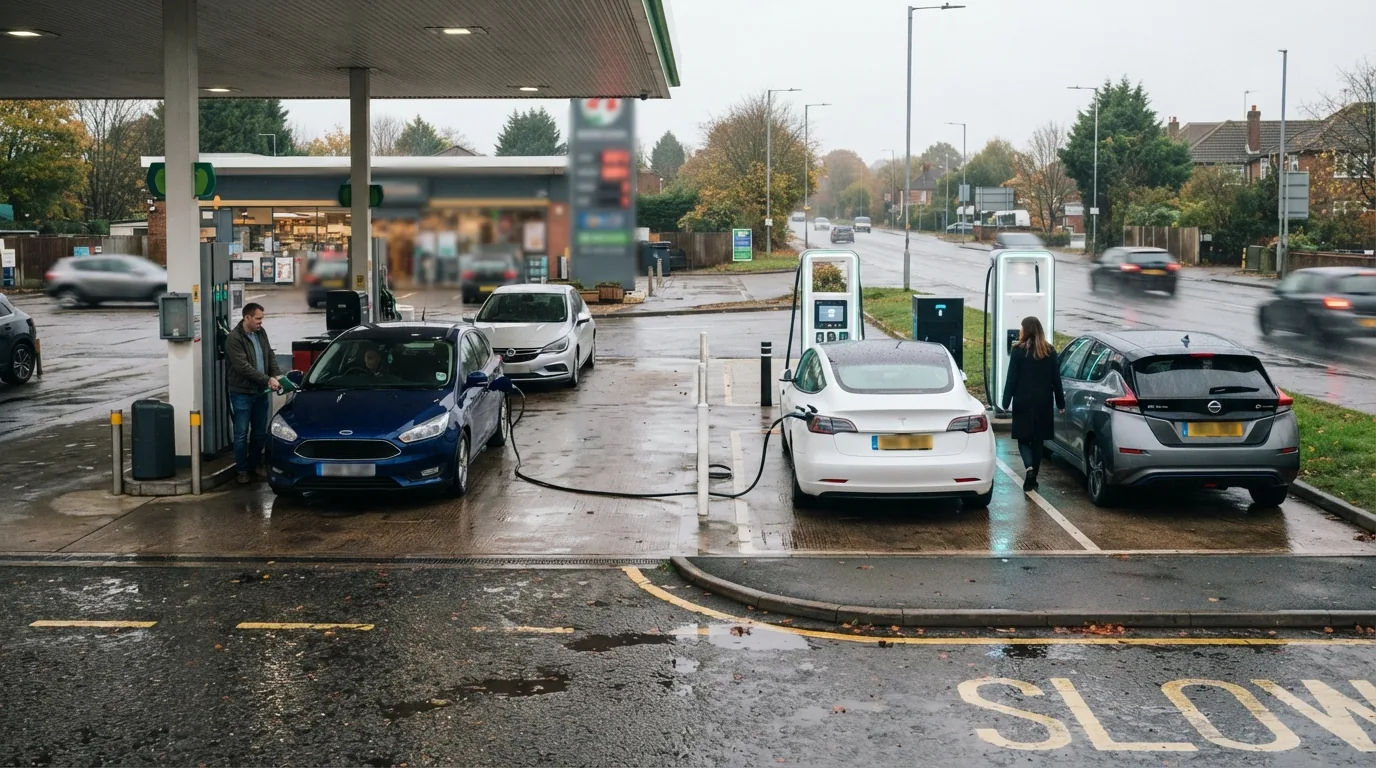
Diesel tops 200p a litre: how much cheaper an EV is per mile
Diesel passed £2 a litre for the first time on 2 October, putting a 50mpg diesel at about 18p a mile. Home charging costs 2.3p to 7.5p a mile, but rapid chargers now cost more.
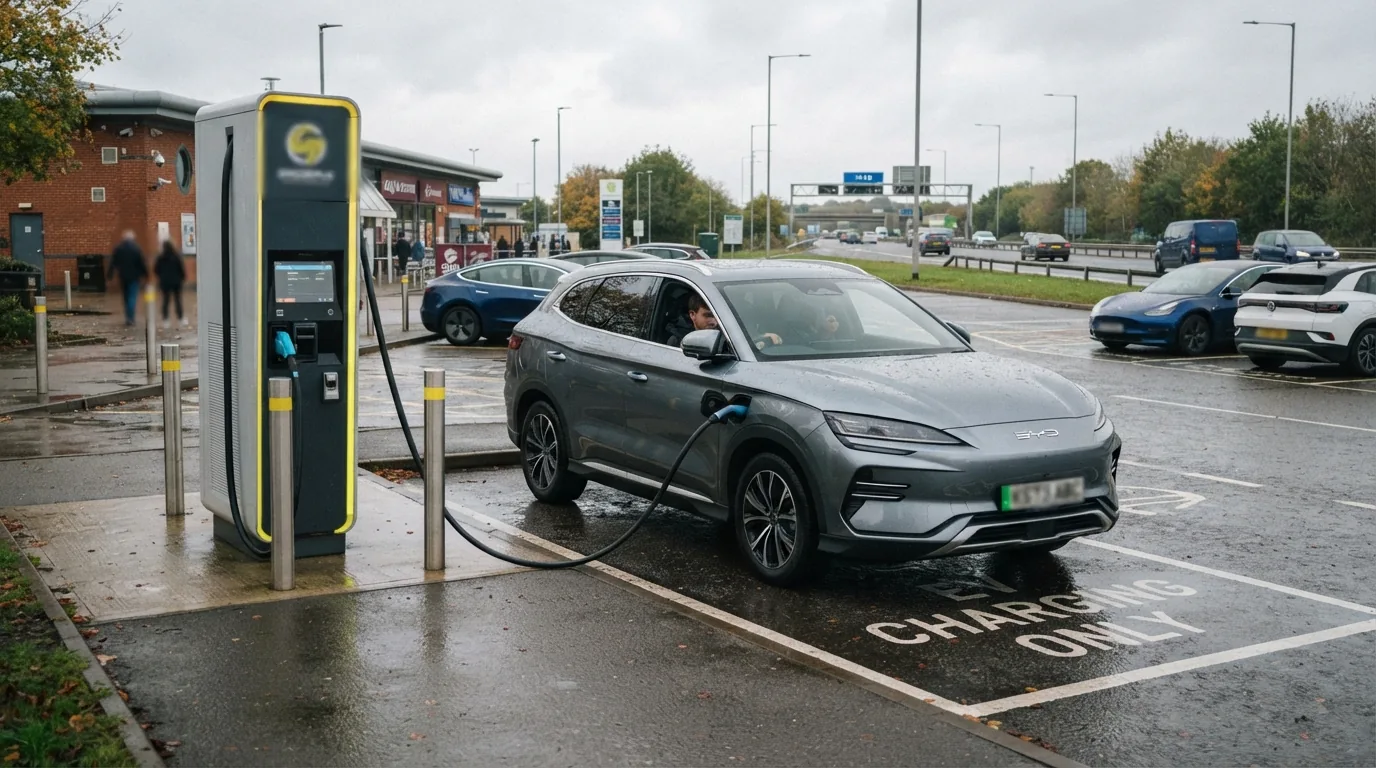
BYD Flash Charging UK: 300 chargers at 1,500kW, open to other EVs
BYD has promised 300 megawatt chargers for Britain, yet the first car able to use the full 1,500kW is only due to reach buyers this quarter. Here is where they go, what they should cost and who gains.
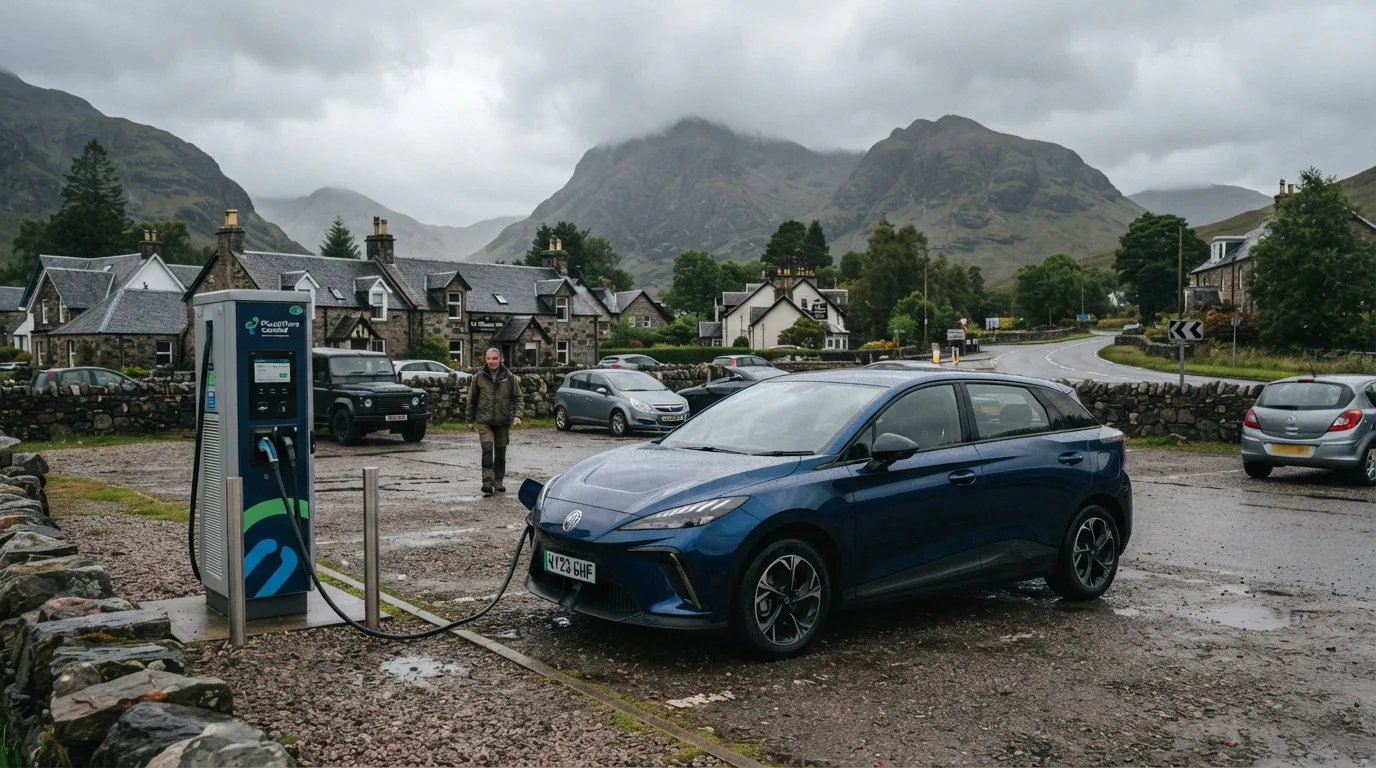
ChargePlace Scotland shuts in 2027: chargers must move by year end
Owners have under three months to move their chargers off ChargePlace Scotland. Here is who runs them next, which apps you will need and what Scottish councils charge per kWh.