Renters and leaseholders could get a right to EV chargers under new consultations
Alongside scrapping planning permission for pavement charging, the Department for Transport is consulting on clearer rules for tenants and leaseholders and on chargers in new and refurbished covered car parks. Here is what is proposed and how to respond.
Quick answers
- The Department for Transport launched two consultations on 20 to 21 October 2026, alongside scrapping planning permission for cross-pavement charging in England.
- One proposes clear guidance for landlords on handling tenants' and leaseholders' requests to install a charge point, and considers mandatory requirements that would make it harder to refuse.
- The other proposes updating building regulations so charge points are installed in new and refurbished covered car parks.
- Both consultations are open until 16 December 2026.
- Changes to permitted development rights also make it quicker and cheaper for operators to build larger, higher-powered public charging hubs.
- EVA England's research found 60% of petrol and diesel drivers without off-street parking would never consider an EV.
- Transport minister Simon Lightwood said EV sales are up 36% on last year.
Renters and leaseholders could find it much easier to get an electric car charger installed, under one of two consultations the government launched this week. The Department for Transport is proposing clear guidance for landlords and is considering “mandatory requirements for landlords and freeholders to make it harder to refuse renters’ applications”, according to Fleet News. A second consultation proposes updating building regulations so charge points are installed in new and refurbished covered car parks.
Both consultations are open until 16 December 2026. They were announced alongside the scrapping of planning permission for cross-pavement charging in England, which we cover in our council gully report. Together, they target the people who find it hardest to charge at home: renters, flat owners and anyone who parks in a shared or underground car park.
What are the two consultations?
| Consultation | What it proposes | Who it helps |
|---|---|---|
| Charging for tenants and leaseholders | Clear guidance for landlords on handling requests to install a charge point; possible mandatory requirements to make refusals harder | Renters and leaseholders, especially in flats and managed developments |
| Charge points in covered car parks | Update building regulations so charge points are installed in new and refurbished covered car parks | Residents and workers who park in underground or multi-storey car parks |
The government says tenants and leaseholders “could get a clearer, quicker, and more consistent route to installing a charge point”. Both consultations close on 16 December 2026.
Why do renters and leaseholders struggle to get chargers?
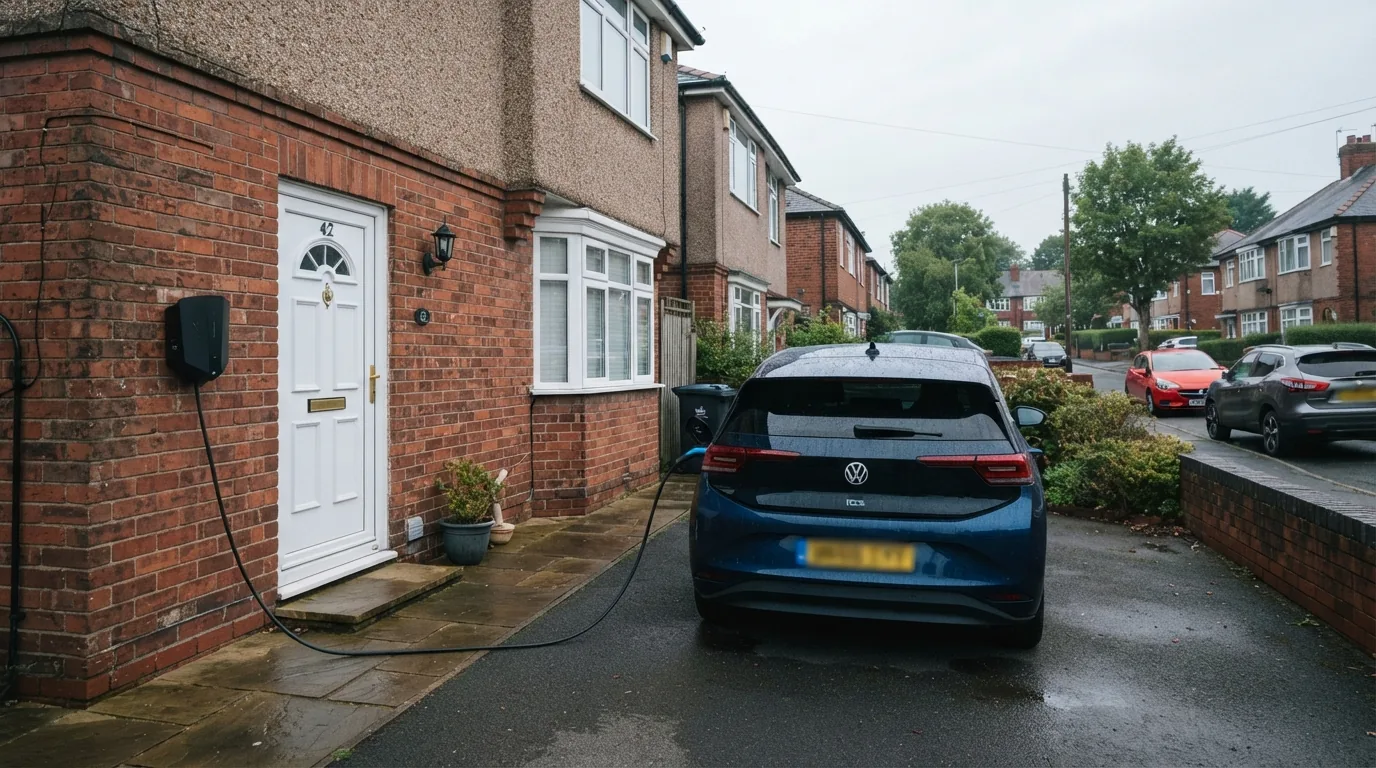
Because they do not control the building or the parking space. A tenant needs a landlord’s permission, and a leaseholder in a block of flats usually needs the freeholder’s consent, sometimes through a managing agent. Requests can be slow, inconsistent or refused outright, with landlords citing cost, liability, fire safety, grid capacity or simply a lack of process.
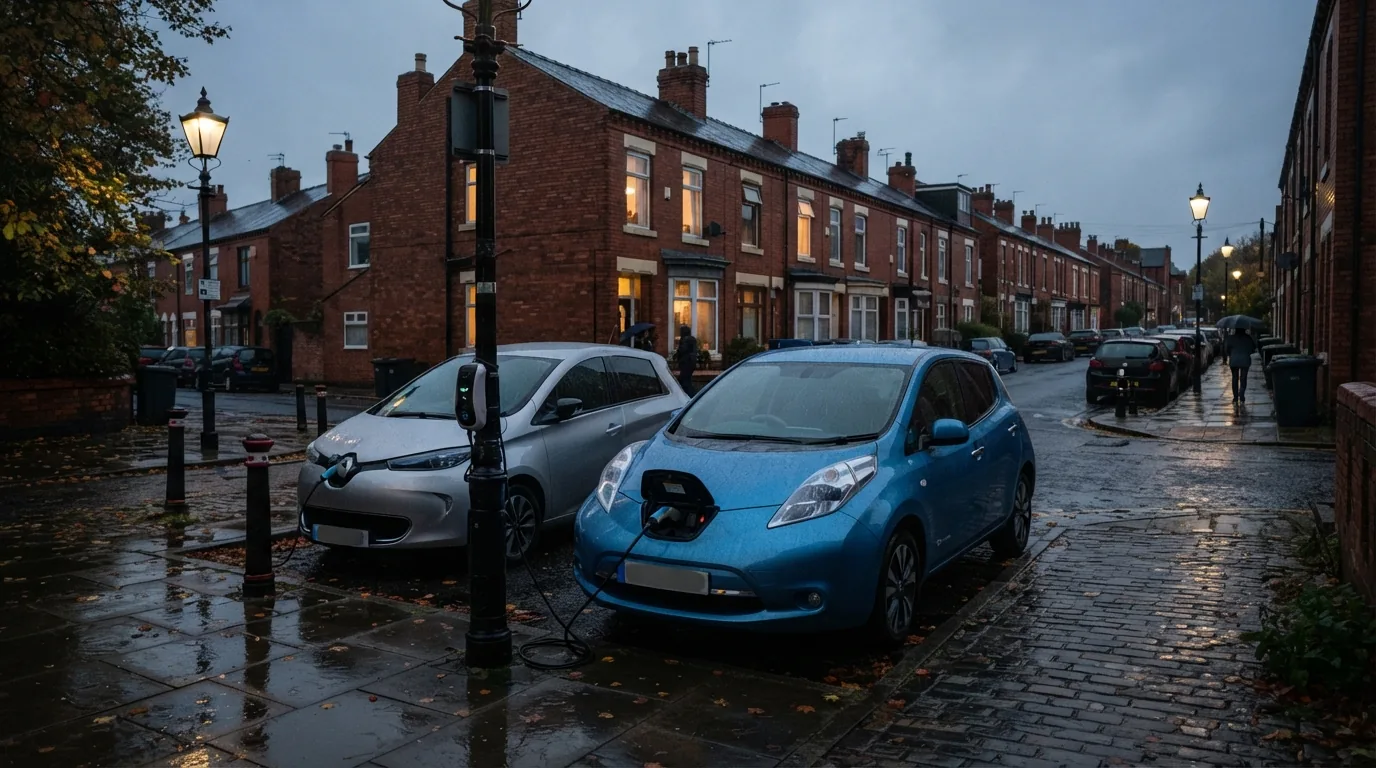
The result is that millions of people who could charge cheaply at home end up relying on public chargers, which cost far more per mile and carry 20% VAT. ChargeUK and YouGov research puts public charging at around 22p a mile against just over 2p for off-peak home charging.
“Our research found that 60% of petrol and diesel drivers without off-street parking would never consider an EV,” said Vicky Edmonds, chief executive of EVA England. “It’s now up to local authorities and landlords to make these solutions easier to access in practice.”
What would mandatory requirements mean?
The consultation is considering rules that would make it harder for landlords and freeholders to refuse a reasonable request. The exact design is for the consultation to settle, but a “right to charge” approach, similar to those used in some other countries, would typically:
- Set out what counts as a reasonable request, such as a charger at the tenant’s own expense in an allocated space.
- Limit the grounds for refusal to genuine issues, such as safety or structural concerns.
- Set time limits for landlords to respond.
Treat that as a description of how such rules usually work, not as the government’s final proposal. If you are a renter, leaseholder or landlord, the consultation is your chance to say what would work in practice.
What would the covered car park rules mean?
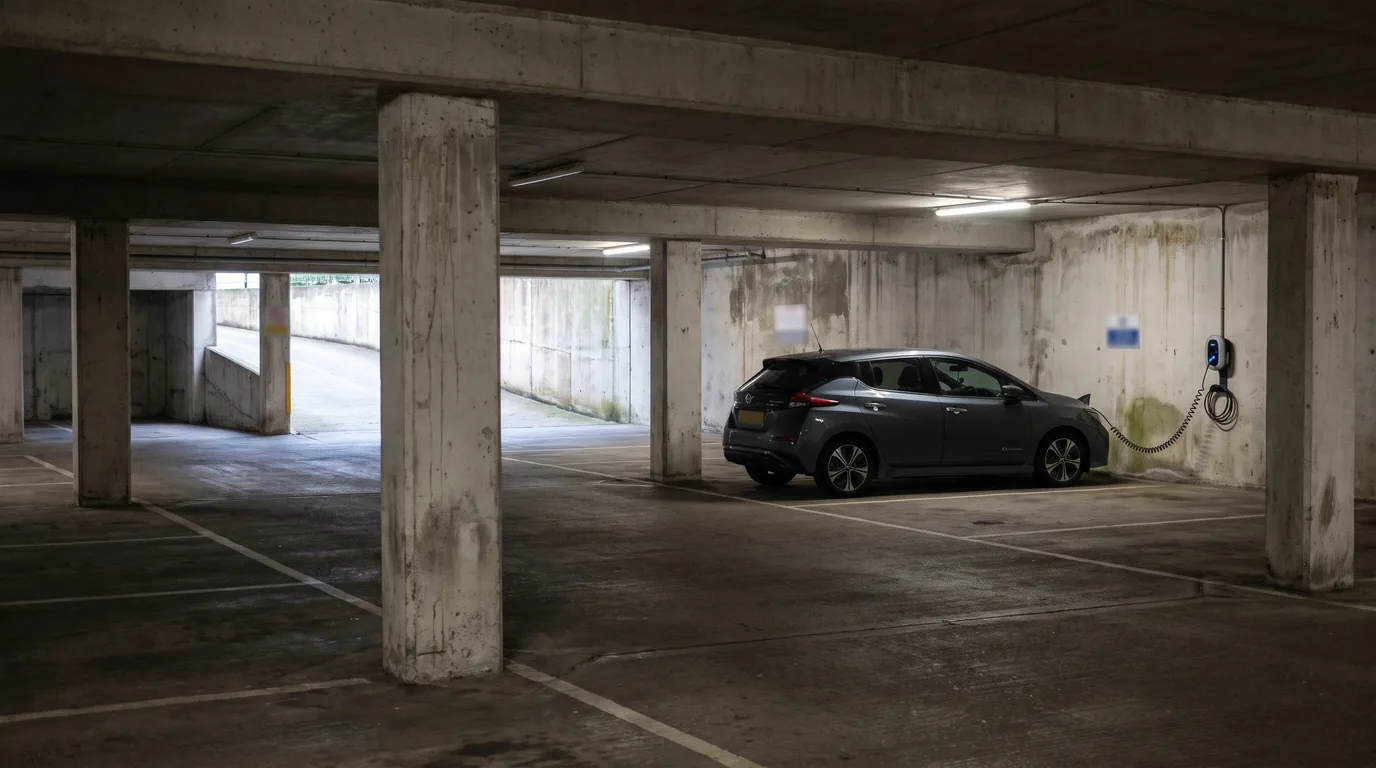
Building regulations in England already require charge points or cabling in many new homes and non-residential buildings. The new consultation looks at covered car parks specifically, proposing that charge points are installed in new and refurbished ones.
Covered car parks are a big gap. Underground parking beneath flats and multi-storey car parks at offices and shopping centres often have no chargers, and retrofitting them can be complicated because of ventilation, fire safety and electrical capacity. Building them in at construction or refurbishment is far cheaper than adding them later.
There is a safety dimension too. Some building managers worry about EV fires in enclosed car parks. Any building regulation update is likely to address fire safety alongside installation, which would give landlords clearer rules to follow rather than a reason to say no.
What else changed this week?
The consultations were part of a wider package announced on 20 and 21 October:
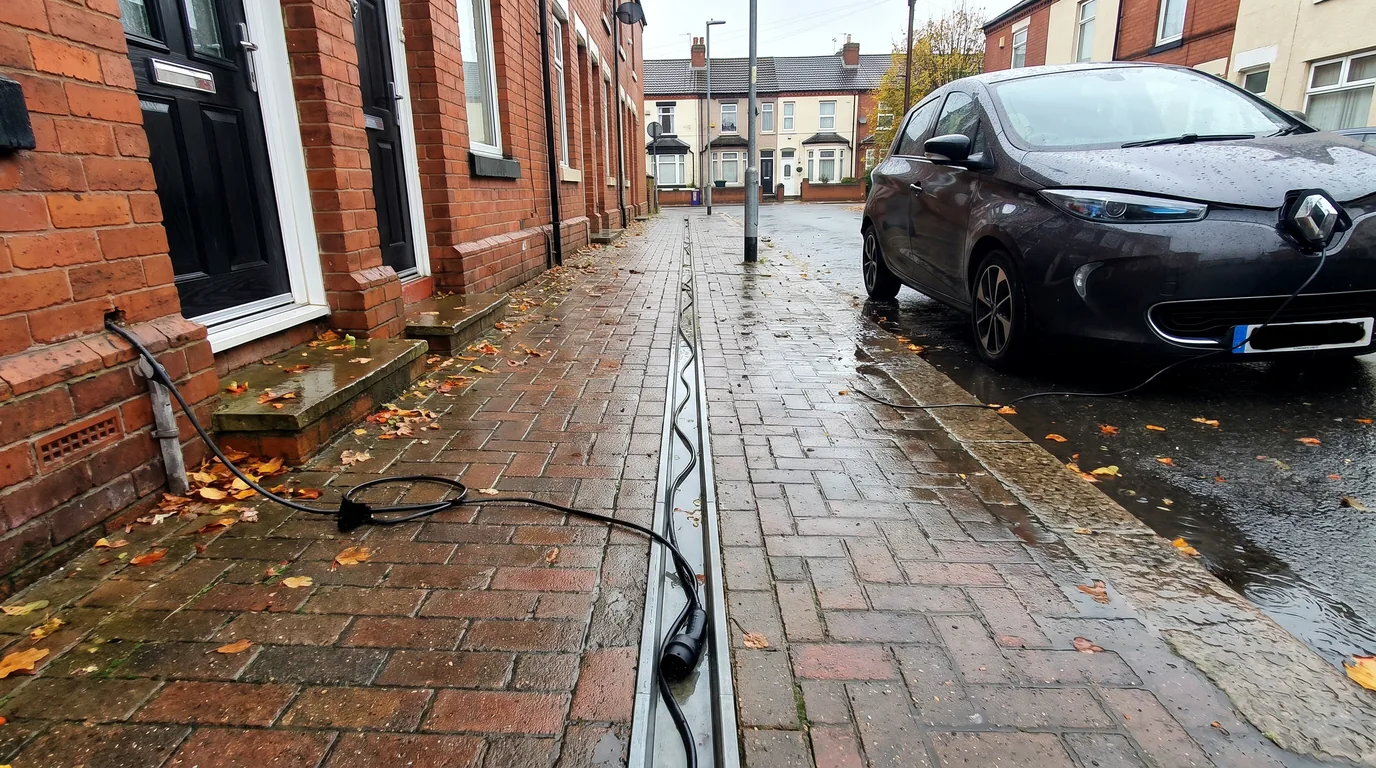
- Cross-pavement charging. Planning permission is no longer needed in England for gullies outside conservation areas, saving drivers up to £300. Councils must still authorise them.
- Public charging hubs. Changes to permitted development rights make it quicker and cheaper for operators to build larger, higher-powered hubs.
“The EV transition is in full swing,” said Simon Lightwood, minister for buses and local transport. “Sales are up 36% on last year and over 190,000 have saved thousands making the switch in the last year alone.”
The RAC’s head of policy, Simon Williams, welcomed the changes but noted that public charging still carries 20% VAT while home charging is currently VAT-free. Our report on the public charging VAT gap explains why that matters.
How can you respond?
Both consultations are open to anyone until 16 December 2026. If you are affected, it is worth responding:
- Find the consultations on GOV.UK by searching for the Department for Transport’s EV charging consultations for tenants and leaseholders, and for covered car parks.
- Describe your experience. Real examples, such as how long a landlord took to reply or why a request was refused, carry weight.
- Be specific. Suggest what a reasonable time limit or set of refusal grounds would be.
- Landlords and managing agents should respond too, explaining practical concerns such as grid capacity, fire safety and cost-sharing in shared car parks.
What can renters and leaseholders do now?
While the rules are being decided:
- Ask in writing. Put your request to your landlord or freeholder formally, with details of the charger, installer and who pays.
- Check grants. Our guide to EV chargepoint grants explains support for renters and flat owners.
- Look for nearby options. Workplace, supermarket and on-street residential chargers are usually cheaper than rapid hubs. Our report on Connected Kerb’s new factory covers the growth of residential on-street charging.
What are the current rules for chargers in new buildings?
England already has building regulations, introduced in 2022, that require charge points or the cabling for them in many new homes and non-residential buildings, and in some buildings undergoing major renovation. The new consultation looks specifically at covered car parks, such as underground car parks beneath flats and multi-storey car parks at offices and shops, which have proved a gap in the rules.
Installing chargers during construction or refurbishment is far cheaper than retrofitting later, when walls, ceilings and power supplies must be altered and car parks may need to close for works.
Why are some landlords and building managers reluctant?
Common concerns include:
- Electrical capacity. Older blocks may not have enough spare supply for several chargers without an upgrade.
- Cost-sharing. In shared car parks, it is not always clear who pays for cabling, upgrades and running costs.
- Fire safety. Some managers worry about EV fires in enclosed spaces. Clear building regulations and guidance can address those concerns rather than leaving them as reasons to refuse.
- Leases and permissions. Leasehold agreements may not cover alterations to common parts, and freeholders may be slow to respond.
The government’s proposals aim to give landlords and freeholders clearer rules, and tenants and leaseholders a clearer route, so that requests are handled consistently rather than refused by default.
What can tenants and leaseholders do now?
Some practical steps:
- Check your lease or tenancy agreement for clauses about alterations, parking and electrical work.
- Get a quote and a survey from an accredited installer, so your request is specific.
- Offer to pay for installation and any reinstatement at the end of your tenancy.
- Ask about smart, load-managed chargers, which can share limited capacity between several users in a block.
- Talk to neighbours. A joint request from several residents can make a shared installation more cost-effective.
How much could home charging save a renter?
A lot. Public charging averages around 22p a mile, according to ChargeUK and YouGov research, while charging at home on an off-peak tariff costs just over 2p a mile. Over 8,000 miles a year, that is roughly £1,760 against £160, a saving of about £1,600. Our home EV charging cost calculator can work out your own figures.
Keep copies of everything you send and receive, because a clear paper trail will help if new rules give you a formal right to request a charger.
Our view
The cross-pavement change helps people in terraced streets. These two consultations could help the even larger group in flats and rented homes, who have been almost entirely shut out of cheap home charging. A clear, enforceable route to install a charger, and chargers designed into covered car parks from the start, would do more to close the “driveway divide” than almost any other single policy. If you rent, lease or manage a building, respond before 16 December.
How we test and where our numbers come from
Range figures are official WLTP combined values taken from manufacturer UK specification pages, with real-world estimates drawn from independent comparative testing. Prices are UK list prices at the time of the latest update. Tax, grant and charging-scheme figures come from GOV.UK and HMRC publications. We re-check every guide when pricing, specification or policy changes. Last checked 24 October 2026. How we work out our own figures.
Frequently asked questions
Can my landlord refuse to let me install an EV charger?
At the moment, landlords and freeholders can refuse, and many renters and leaseholders find the process slow and inconsistent. The government is consulting on clear guidance for landlords and on mandatory requirements that would make it harder to refuse reasonable requests.
What is the covered car park EV charging consultation?
It proposes updating building regulations so that charge points must be installed in new and refurbished covered car parks, such as underground and multi-storey car parks under flats and offices. Details of how many chargers would be required are set out in the consultation.
When do the EV charging consultations close?
Both consultations are open until 16 December 2026. Anyone can respond, including drivers, tenants, leaseholders, landlords, managing agents and businesses.
Do these changes apply across the UK?
The consultations are run by the Department for Transport and the planning change applies to England. Building regulations and housing law are partly devolved, so Scotland, Wales and Northern Ireland have their own rules.
What else changed for EV charging on 21 October 2026?
Planning permission is no longer needed in England for cross-pavement charging gullies, outside conservation areas, saving up to £300. Permitted development rights were also changed to make larger public charging hubs quicker and cheaper to build.
Sources and further reading
- fleetnews.co.ukFleet NewsPrimary source referenced in this article.
- inkl.comUK scraps planning permission for cross-pavement EV chargersGovernment wording on the consultations and permitted development for charging hubs.

EV Compared
The EV Compared editorial team tracks the UK electric vehicle market full time: new model launches, list prices, WLTP and real-world range, public charging tariffs and the tax rules that decide what an EV actually costs to run. Every guide is checked against manufacturer specifications and official GOV.UK figures, and updated whenever the numbers move.
Related reading
View all
Connected Kerb opens Aberdeen factory to build 25,000 on-street chargers by 2030
The on-street charging firm is moving manufacturing to Scotland after buying Trojan Energy and its flush kerbside chargers. For drivers without a driveway, it signals more residential chargers on the way.
Pavement charging gullies: planning rule scrapped, but 20 councils still say no
Drivers in England without a driveway no longer need planning permission for a pavement cable channel, saving £300 to £500. But costs range from free to £1,200 depending on your council, and some councils still refuse them outright.
Public EV charging keeps 20% VAT as home electricity goes to 0%
Drivers without a driveway now pay 20% VAT at the plug while home charging pays none. Here is what a Budget cut to 5% or 10% would save, and why the Treasury has so far said no.
What Is the EV Chargepoint Grant for Homeowners?
Who can still claim the £500 home chargepoint grant in 2026, and who is no longer eligible
How to Calculate Home EV Charging Costs on UK Tariffs
See exactly what you will pay to charge at home, and which tariff saves you the most money
Automated Vehicles Act: draft safety principles explained for UK drivers
The consultation on the ten principles that self-driving cars and robotaxis must meet closed on 9 September 2026. Here is what the draft says, what has not been decided and what it means for you.