Half of UK councils still offer no on-street EV charging, FOI finds
More than 90% of councils now have public chargers, yet half offer nothing on-street. New LEVI deals in Hampshire, Peterborough and West Sussex show where help is arriving first.
Quick answers
- Vauxhall's FOI research found 50% of the 265 UK councils that replied offer no on-street EV charging, down from 66% in 2023.
- More than 90% of councils have at least one public charger, but only 32% have published a strategy for on-street residential charging.
- Peterborough's 15-year Believ contract promises 1,058 charge points against a minimum of 185, backed by £1,075,770 of LEVI funding.
- Hampshire's Believ deal for 17,180 public charge points was described in June as the largest LEVI-backed contract to date, pairing £6.6m of public money with up to £90m private.
- West Sussex residents have until 19 October 2026 to comment on 62 proposed on-street sites, each with one dual-socket Connected Kerb charger.
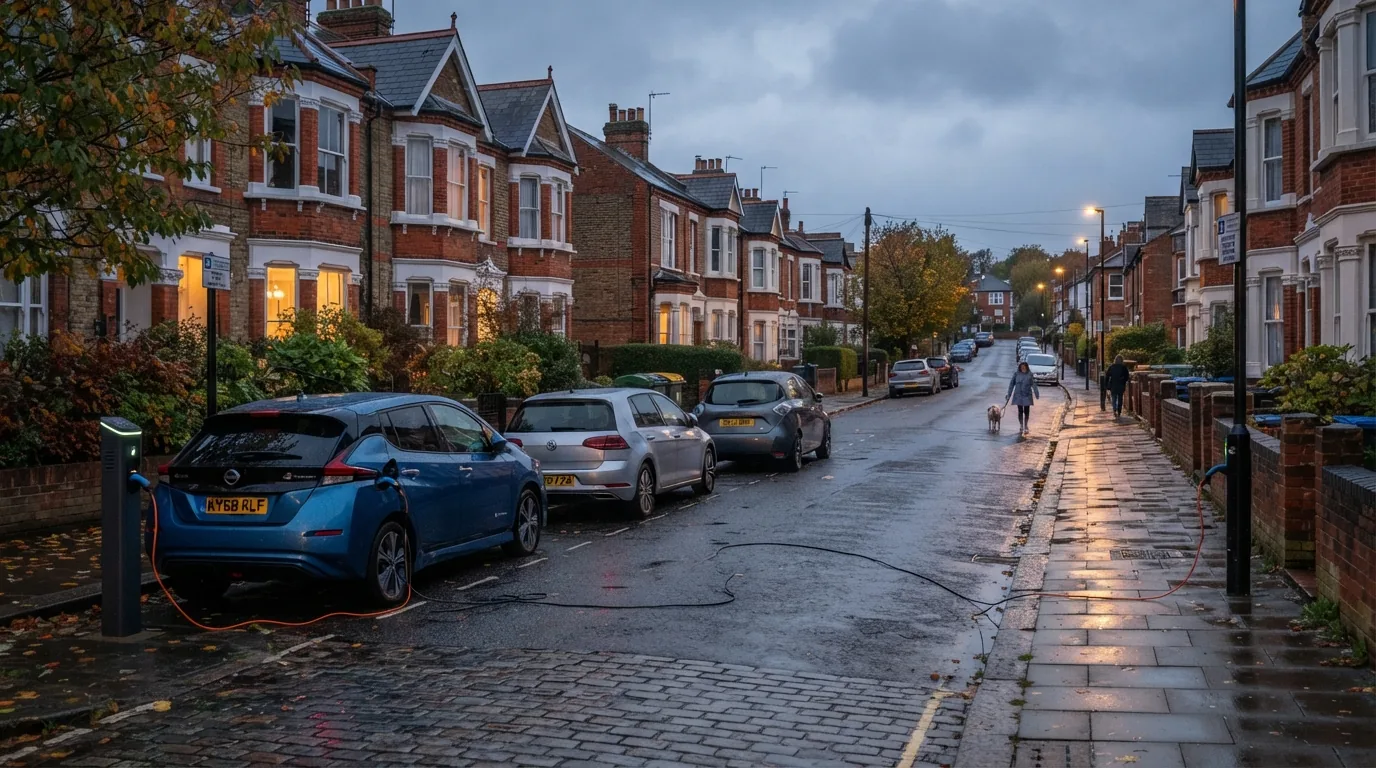
Half of UK councils still offer no on-street charging for electric car drivers, according to Freedom of Information research by Vauxhall, even though more than 90% now have at least one public charger. Of the 265 councils that replied, 50% said they had no on-street chargers at all, down from 66% when Vauxhall first ran the exercise in 2023. If you park on the road outside a terrace or a flat, whether you can plug in near home still depends heavily on which council you live under.
The findings land as councils sign a wave of long contracts funded through the government’s Local Electric Vehicle Infrastructure (LEVI) fund. In recent weeks Peterborough approved a deal that promises nearly six times its minimum number of chargers, and West Sussex opened a consultation on 62 new residential sites. Those deals show where help is arriving first, and how far behind the rest of the country still is.
What did Vauxhall’s FOI research find?
Vauxhall sent Freedom of Information requests to 414 councils between May and July 2026 as part of its Electric Streets of Britain campaign, according to Fleet News. The 265 that replied show steady but uneven progress since 2023, as reported by What Car? and set out in Vauxhall’s press release.
| Measure (share of responding councils) | 2023 | 2026 |
|---|---|---|
| No on-street charging at all | 66% | 50% |
| At least one on-street charger installed | 31% | 39% |
| Dedicated EV charging officer | 31% | 46% |
| Published on-street residential charging strategy | Not reported | 32% |
| At least one public charger of any kind | Not reported | More than 90% |
On-street installations peaked in 2025, when 78 councils put in at least one charger, Renewable Energy Magazine reported. Vauxhall’s campaign has also logged more than 13,000 streets that drivers say need on-street charging.
Two numbers stand out. Staffing has improved faster than hardware: the share of councils with a dedicated EV officer rose 15 points, while the share with an on-street charger rose eight. And with only 32% publishing an on-street strategy, more than two-thirds of the councils that replied have no published plan for residents without driveways. Vauxhall has an obvious interest in more people buying electric cars, but these are councils’ own answers, not marketing claims.
Why is Coventry held up as the model?
Coventry is the example the research points to. A partnership between the city council and Connected Kerb has built a network of 1,856 charging sockets, now used by more than 9,000 registered residents, according to Fleet News.
The lesson is commitment at scale, backed by a single operator. Connected Kerb is also the operator behind the new West Sussex and Dorset schemes, so the Coventry approach is spreading. If you want to know how its kerbside units compare with a rival network, see our Pod Point vs Connected Kerb comparison.
What does LEVI money actually buy?
Peterborough is the clearest recent example. The city council’s cabinet has approved a 15-year contract with Believ, backed by £1,075,770 of LEVI funding, under which 1,058 charge points will be installed across the city against a contractual minimum of 185, according to Peterborough Today. That is almost six times what the council required.
It sits inside a bigger regional programme. The Cambridgeshire and Peterborough Combined Authority has £5.4m of LEVI funding, and Believ has committed to 5,585 charge points across the area, 4,655 of them (83%) funded by private investment. The Peterborough contract also includes protections worth looking for in any council deal:
- a cap on the margin Believ can add to the charging price per kWh
- nearly a fifth of the charge points in the most deprived 30% of areas
- £1,016,500 of social value commitments across Peterborough and the Cambridgeshire districts
Installations are expected to begin from late 2026. Spread across 1,058 chargers, Peterborough’s grant works out at roughly £1,017 of public money per charge point. That is LEVI in practice: a modest public sum underwrites a long contract, and the operator funds most of the hardware.
Which councils have signed the biggest LEVI deals?
These are the largest LEVI deals by number of charge points in the reports we have tracked, plus the smaller West Sussex scheme, and most are in southern and eastern England.
| Area | Charge points promised | Funding | Operator and notes |
|---|---|---|---|
| Hampshire | 17,180 | £6.6m public | Believ, plus up to £90m private investment; mostly 22kW AC for overnight use, 800+ rapid points of 50kW or more |
| Suffolk | About 6,000 | £5.3m LEVI | Believ, plus £16m private investment; first site on Ashley Street, Ipswich |
| Cambridgeshire and Peterborough | 5,585 | £5.4m LEVI | Believ; 4,655 privately funded; Peterborough gets 1,058 |
| Essex | Up to 5,000 by 2031 | £8.3m LEVI | Second largest LEVI allocation to a UK council when announced in March 2026; work due to start summer 2026 |
| Dorset and BCP | More than 3,000 on-street | £16.5m partnership | Connected Kerb |
| Oxfordshire | More than 1,500 sockets by 2028 | Not reported | Connected Kerb and EZ-Charge |
| West Sussex | 62 sites, one dual-socket charger each | LEVI Pilot | Connected Kerb; consultation closes 19 October 2026 |
Sources: electrive (Hampshire), EV Infrastructure News (Suffolk), electrive (Essex), electrive and Transport + Energy (Dorset), electrive (Oxfordshire).
Hampshire’s deal, described as the UK’s largest LEVI-backed contract to date, stands out. Its £6.6m of public money works out at about £384 per promised charge point, against roughly £883 in Suffolk and £1,017 in Peterborough, because Believ is putting in up to £90m of its own. These are simple divisions of headline figures, not official unit costs, but they show how much of the bill operators now carry. Essex, whose allocation was the second largest to a UK council when it was announced in March, planned to start installing in summer 2026.
Is your street on the West Sussex list?
West Sussex County Council is working with Connected Kerb, with support from the district and borough councils, to install chargers at 62 proposed locations in Adur, Arun, Chichester, Crawley, Horsham, Mid Sussex and Worthing, through the government’s LEVI Pilot programme (West Sussex County Council). Each site would get one dual-socket chargepoint, so two cars can charge at once, plus underground infrastructure so more chargers can be added later with less disruptive work.
The council says parking arrangements will not change at this stage: permit parking, disabled bays and pay-and-display rules still apply. The consultation runs from 21 September to 19 October 2026 on the council’s Your Voice site, and the Sussex Express has published the full list of roads.
What this means for you
Our take: the direction is right, but the pace depends on your postcode. If you live in Hampshire, Suffolk, Cambridgeshire, Essex or Dorset, a large funded programme is under way and the main question is when chargers reach your area. If your council is among the half with no on-street chargers and the majority with no published strategy, expect slower progress unless residents push for it.
- Check your council’s plan. Search its website for an on-street or residential charging strategy. Only 32% of councils that replied to Vauxhall have published one, so if yours has not, ask your councillor why.
- Respond to consultations. If you live in West Sussex, you have until 19 October to comment on the 62 proposed sites.
- Register demand. Add your road to Vauxhall’s Electric Streets of Britain campaign, which has logged more than 13,000 streets.
- Ask the right questions. When a deal is signed, ask when installations start, how many chargers your area gets and whether prices are protected by a margin cap like Peterborough’s.
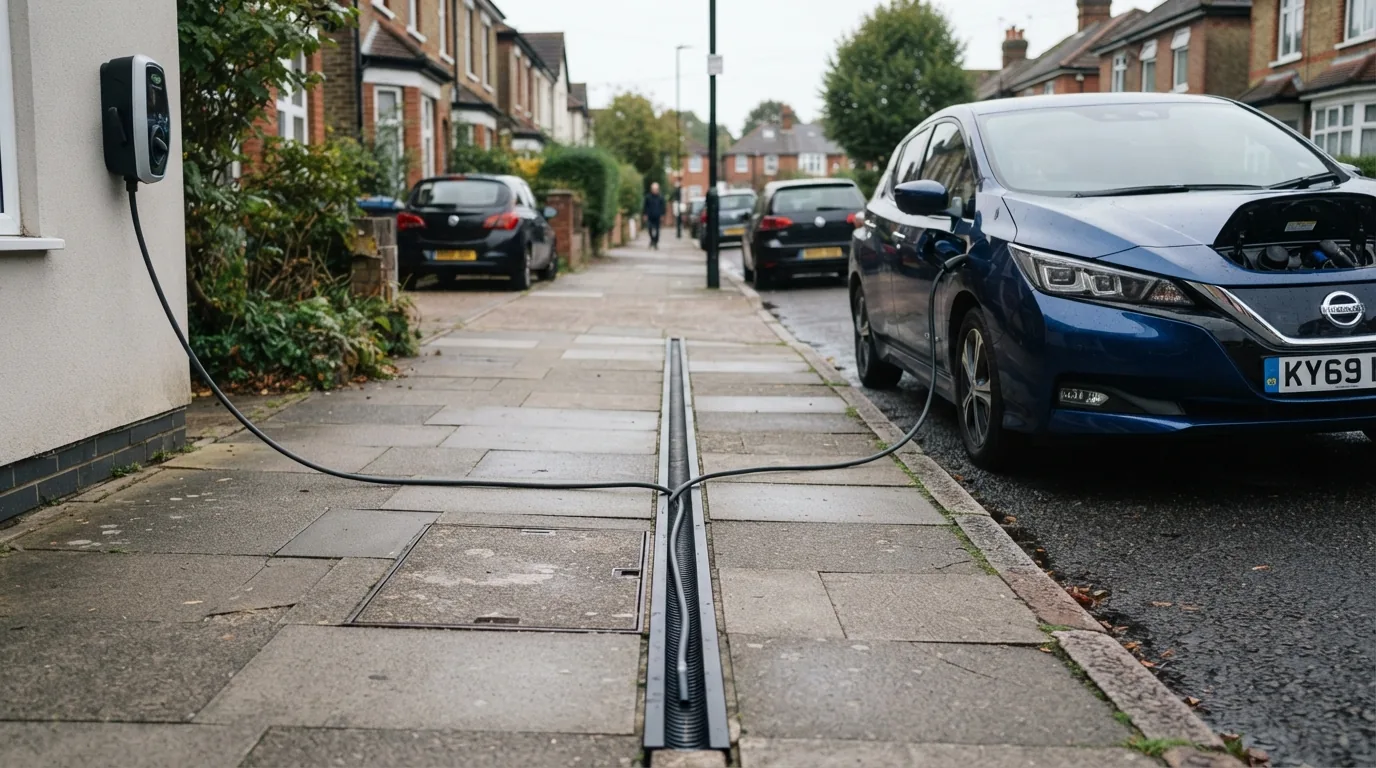
- Look at the alternatives. A cross-pavement cable channel lets you charge from your own home supply; read our guide to installing an EV charger without a driveway and our latest on cross-pavement charging rules in England.
For a fuller walk through every option, our guide to charging for terraced-house drivers covers kerbside chargers, gullies and grants, and our report on UK public charger numbers tracks the national total.
How we test and where our numbers come from
Range figures are official WLTP combined values taken from manufacturer UK specification pages, with real-world estimates drawn from independent comparative testing. Prices are UK list prices at the time of the latest update. Tax, grant and charging-scheme figures come from GOV.UK and HMRC publications. We re-check every guide when pricing, specification or policy changes. Last checked 6 October 2026.
Frequently asked questions
Does my council offer on-street EV charging?
Half of the 265 councils that answered Vauxhall's 2026 Freedom of Information requests said they had no on-street chargers. Search your council's website for an on-street or residential charging strategy, although only 32% of councils that replied have published one.
What is the LEVI fund?
The Local Electric Vehicle Infrastructure (LEVI) fund is Department for Transport money that councils use to pay for public charge points, much of it on residential streets. Many councils pair it with private investment through a long contract, such as Peterborough's 15-year deal with Believ.
How can I get an EV charger installed on my street?
Ask your council whether it has an on-street charging plan and respond to any local consultation, such as West Sussex's on 62 proposed sites, which closes on 19 October 2026. You can also register your street with Vauxhall's Electric Streets of Britain campaign, which has logged more than 13,000 streets.
Which council has the biggest LEVI charging contract?
Hampshire County Council's deal with Believ for 17,180 public charge points was described in June 2026 as the largest LEVI-backed contract to date. It combines £6.6m of public funding with up to £90m of private investment, and most units will be 22kW AC chargers for overnight use.
Sources and further reading
- whatcar.comWhat Car?Primary source referenced in this article.
- media.stellantis.comVauxhall: 90% of UK councils have public EV charging available, but half still do not offer on-street accessVauxhall's own release: 39% with an on-street charger, 32% with a strategy, 46% with an EV officer and 78 councils installing in 2025
- fleetnews.co.ukFleet News: Half of UK councils still lack on-street EV chargingFOI scope of 414 councils between May and July 2026, and the Coventry network figures
- peterboroughtoday.co.ukPeterborough Today: Peterborough to get more than 1,000 electric car chargers thanks to £1 million fundsPeterborough's 15-year Believ contract, LEVI funding and charge point numbers
- cambridgeshirepeterborough-ca.gov.ukCambridgeshire and Peterborough Combined Authority: £5.4 Million LEVI Funding to Transform Local Electric Vehicle Chargingthe regional £5.4m LEVI programme behind more than 5,500 chargers
- westsussex.gov.ukWest Sussex County Council: West Sussex residents asked for views on new electric vehicle chargepoints62 proposed sites, dual-socket chargers, parking rules and consultation dates
- electrive.comelectrive: Hampshire awards Believ major LEVI charging contractHampshire's 17,180 charge points, funding split and charger mix
- electrive.comelectrive: Essex secures £8.3m in LEVI funding for EV charger rolloutEssex's £8.3m LEVI allocation and 5,000 charge point target by 2031

EV Compared
The EV Compared editorial team tracks the UK electric vehicle market full time: new model launches, list prices, WLTP and real-world range, public charging tariffs and the tax rules that decide what an EV actually costs to run. Every guide is checked against manufacturer specifications and official GOV.UK figures, and updated whenever the numbers move.
Related reading
View all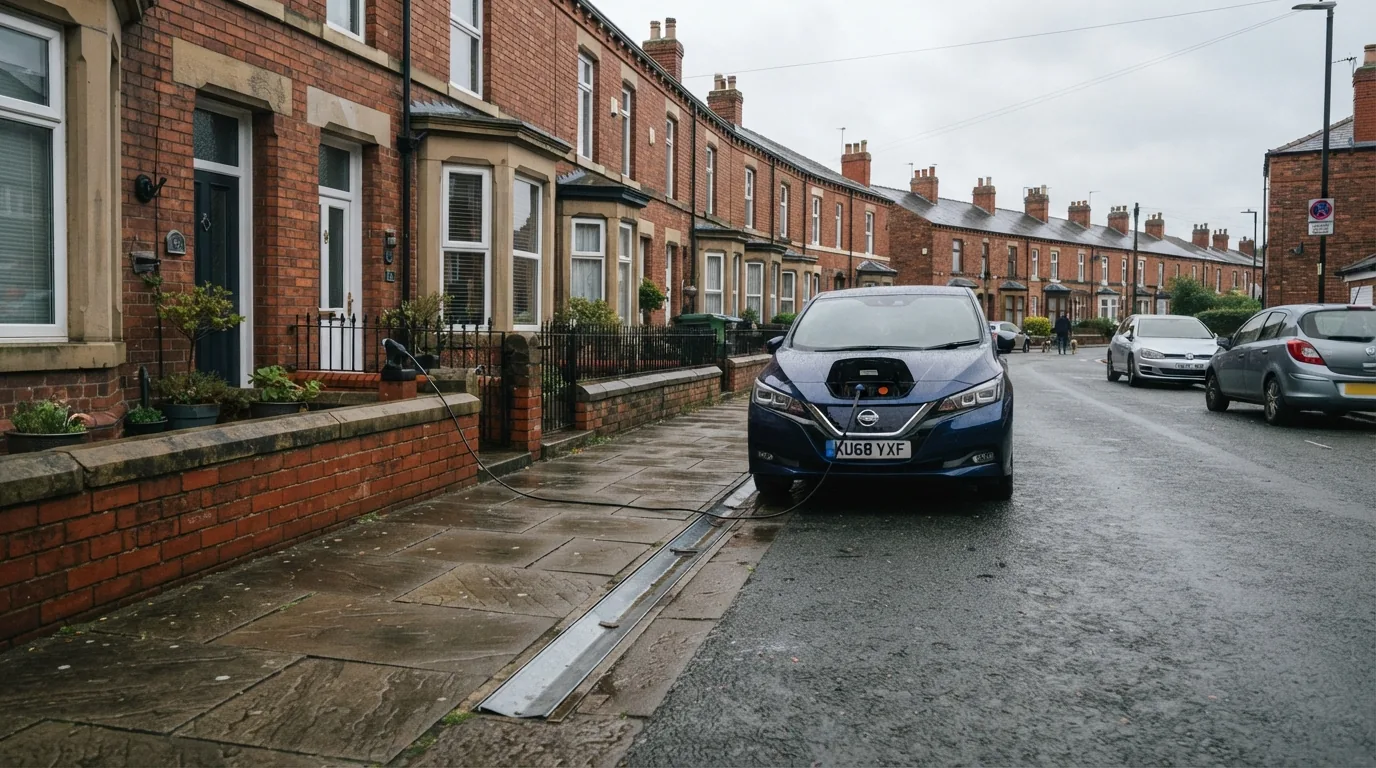
Cross-pavement EV charging in England: planning rules ease 21 October
Drivers without a driveway will soon skip a separate planning application for a pavement cable channel. But the council still controls the footway, and nobody gets a reserved bay.
UK public chargers reach 122,724 as yearly growth eases to 9.5%
Zapmap counted 122,724 public chargers at 47,441 locations at the end of July 2026. Year-on-year growth was 9.5%. On-street and en-route grew fastest to the end of June, while the average rapid charge still costs 77p per kWh.
Can You Install an EV Charger Without a Driveway in the UK?
Cross-pavement channels, the updated £500 grant, and on-street options for UK drivers with no off-street parking in 2026
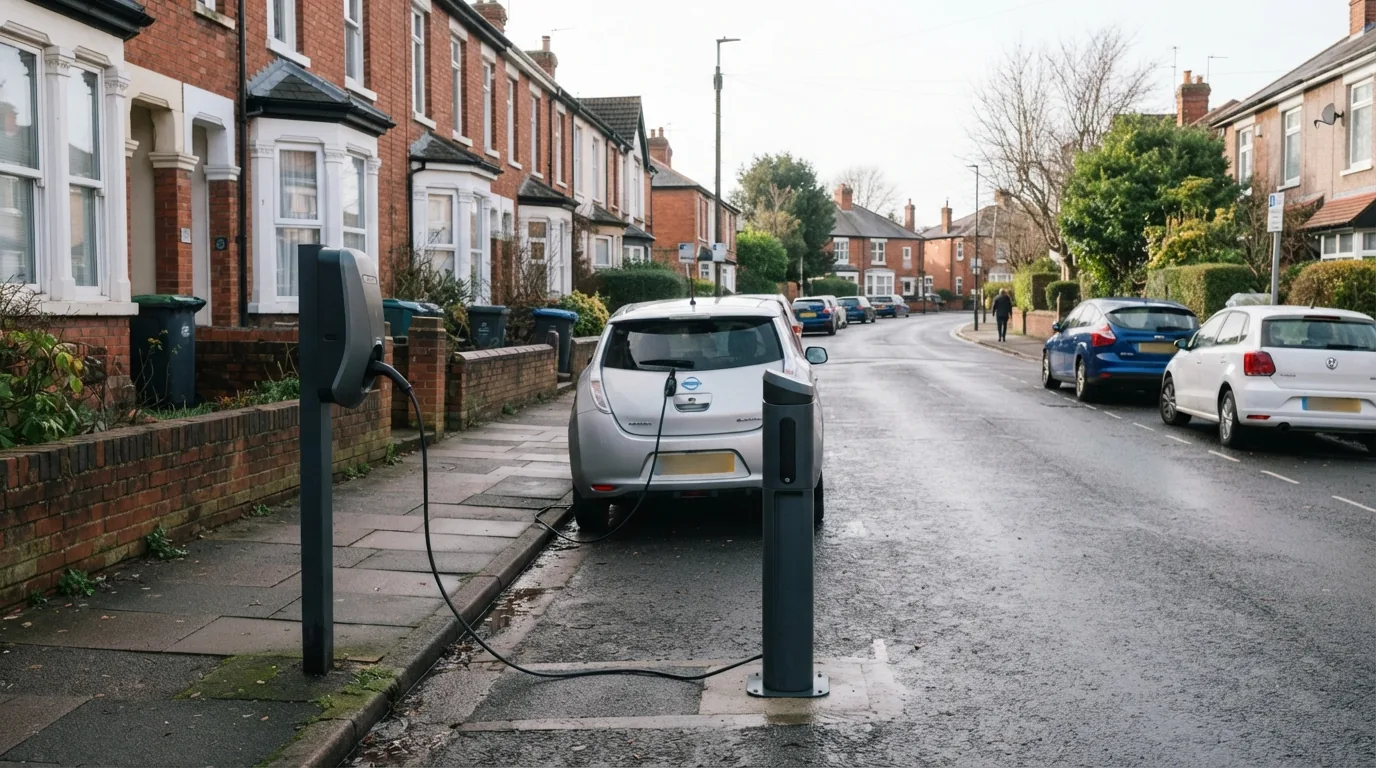
Pod Point vs Connected Kerb: Which Is Best for On-Street EV Charging?
Connected Kerb is built for residential streets; Pod Point covers supermarkets and retail car parks. Here is how to pick the right network for your situation.
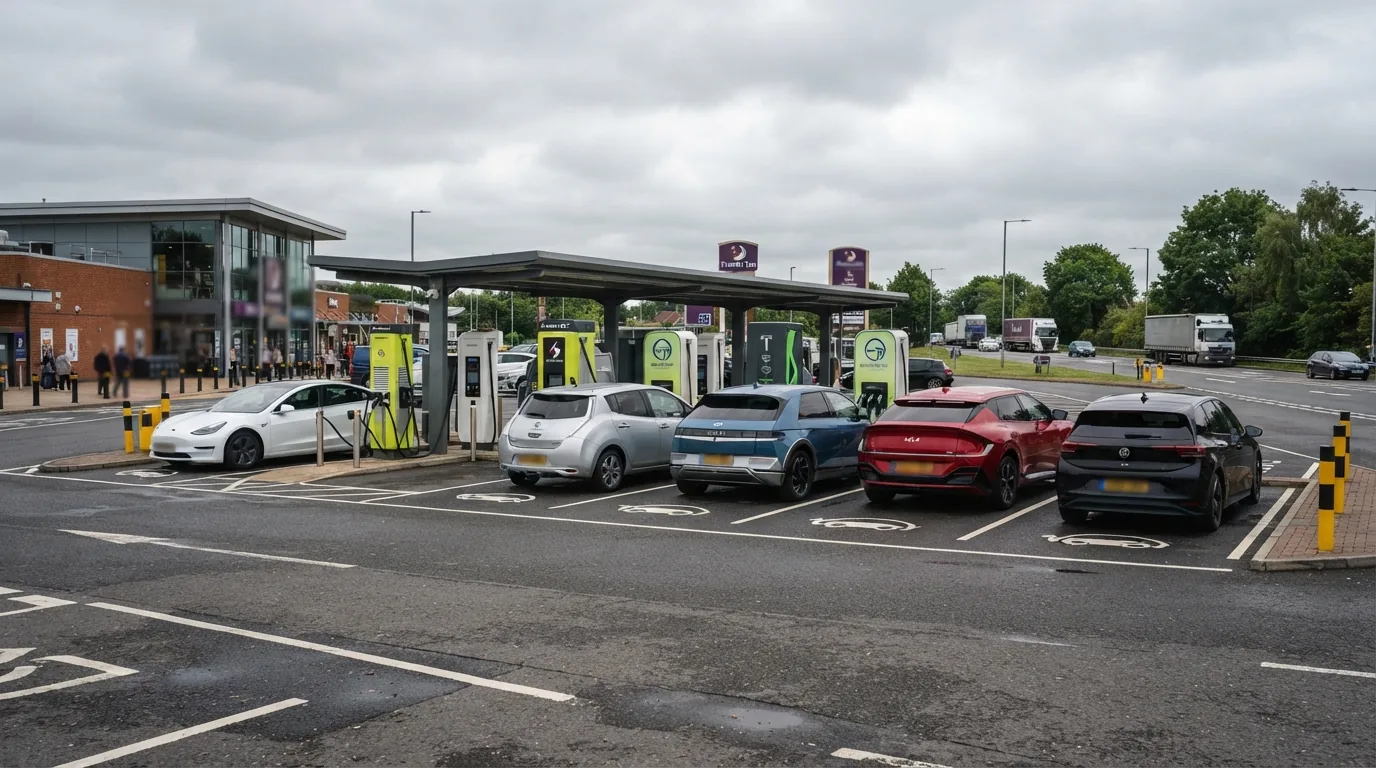
What Government Support Exists for EV Charging Infrastructure?
From individual socket grants to £381 million for public chargepoints: the full picture of UK government EV charging investment in 2026
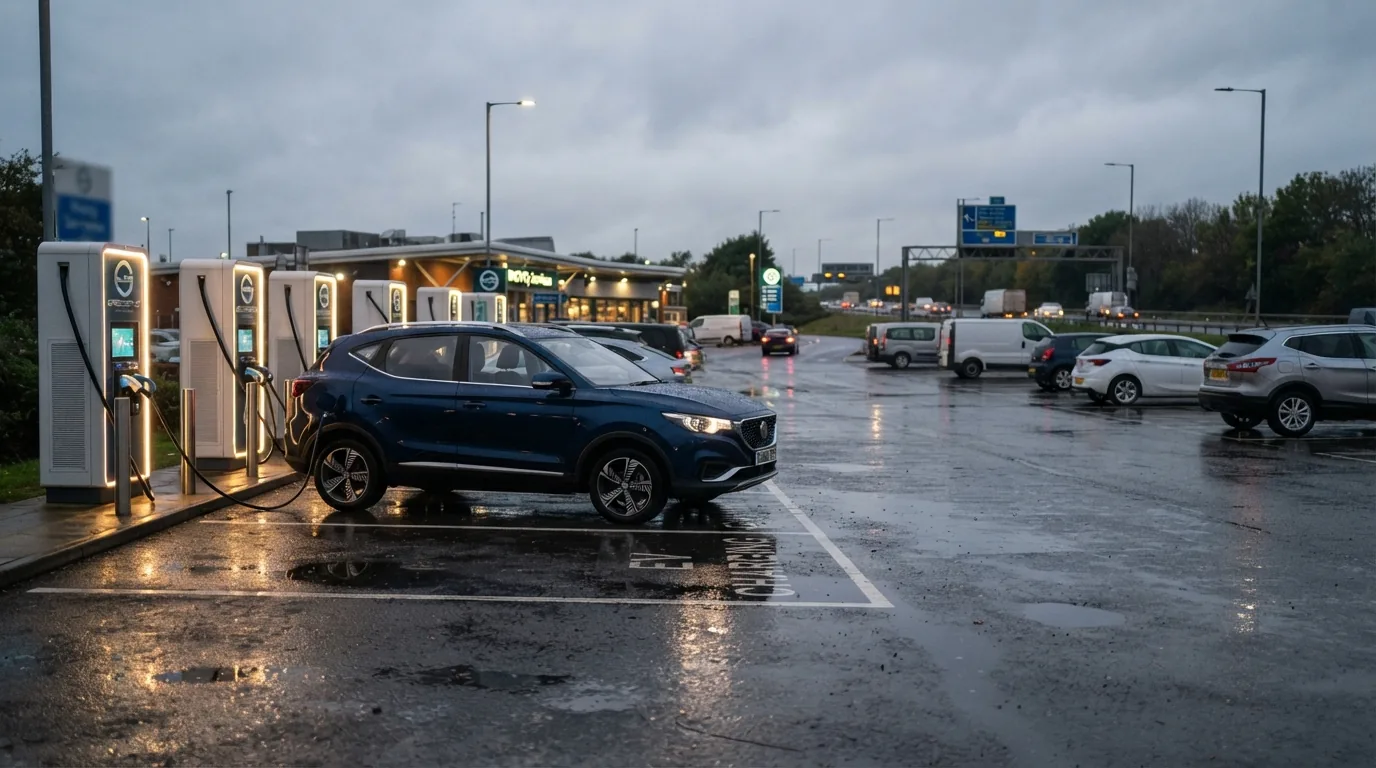
Be.EV Charging Pass: £49 a month for 120kWh, or £89 for 250kWh
Be.EV has launched two monthly charging passes with a kWh allowance included. We work out the real cost per kWh, compare them with its 39p Flexi Pass and show who comes out ahead.