Best Electric Cars for ULEZ Compliance in London
Every battery EV is ULEZ-exempt, but these are the ones that make the most sense for London's roads, parking and charging realities
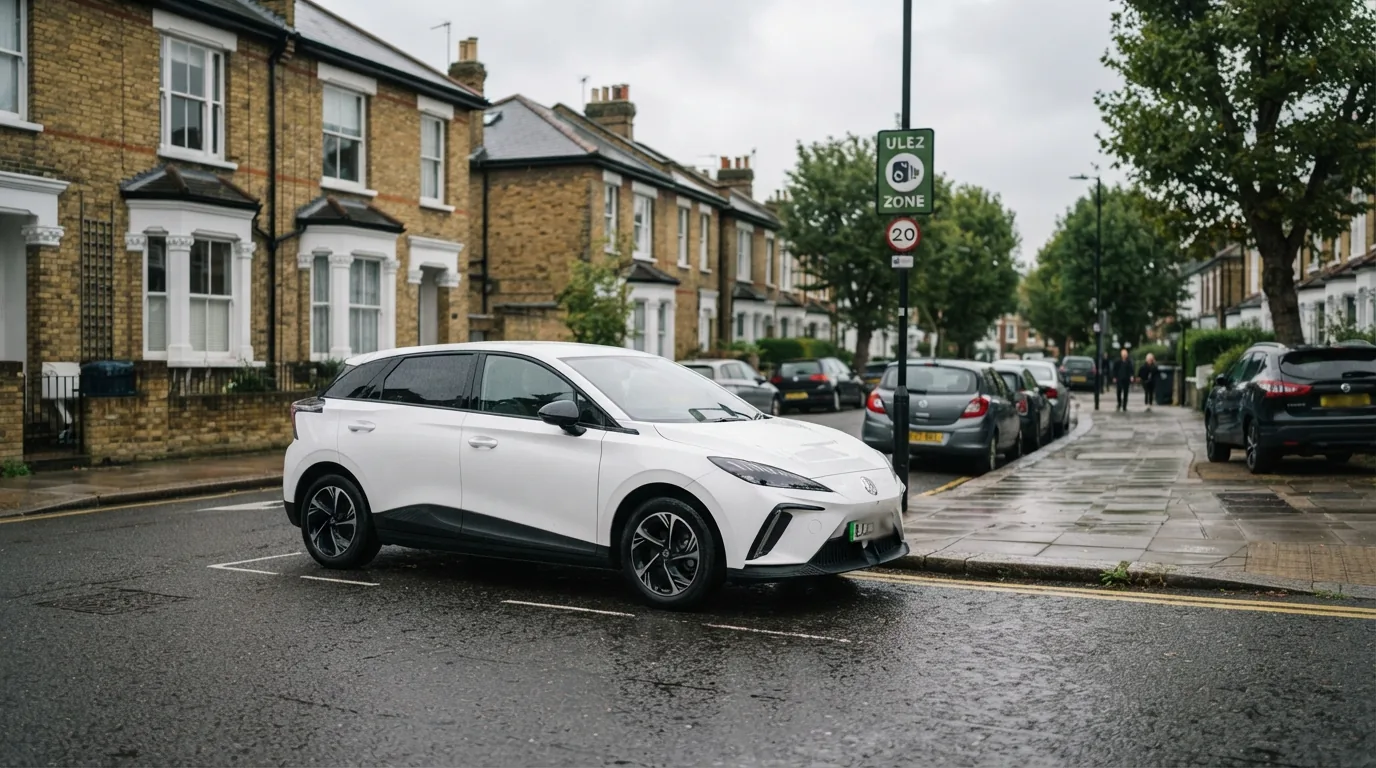
Quick answers
- Every battery electric car is exempt from London's £12.50 daily ULEZ charge, automatically and permanently; there is nothing to register or apply for.
- Electric cars are not exempt from the central London Congestion Charge: they pay £13.50 a day on Auto Pay since January 2026, against £18 for a standard car.
- The Renault 5 (52kWh) is the best all-round London electric car, from about £23,945 after the £3,750 Band 1 Electric Car Grant, with up to 259 miles of WLTP range.
- The Nissan Micra (52kWh) offers up to 257 miles of WLTP range from about £23,245 after the £3,750 grant, about £700 less than the Renault 5 52kWh it shares a platform with.
- Hybrids are not exempt from ULEZ by type: TfL requires a petrol car to meet Euro 4 and a diesel Euro 6, or the £12.50 daily charge applies.
- Driving into the central zone five days a week for 48 weeks costs £3,240 a year in Congestion Charge on Auto Pay, even in an electric car.
- Around 40% of London households have no off-street parking, so on-street chargepoints, public rapid chargers from Pod Point, bp pulse and Osprey, and a battery of 52kWh or more matter.
Every battery electric car is automatically and permanently exempt from London’s Ultra Low Emission Zone (ULEZ) charge of £12.50 per day. There is no registration requirement and no exemption application; it is built into the ULEZ system. Hybrids are different: they are not exempt by type, so electric vs hybrid running costs are worth comparing before you buy. While any BEV achieves ULEZ compliance, the more useful question for London buyers is: which EV suits the specific demands of driving in London?
The best electric car for London is a compact one with enough range for short trips and a realistic charging plan. The answer factors in physical size for crowded streets and parking, range for a city where most journeys are under 20 miles, charging access (since around 40% of London households have no off-street parking), and whether the car qualifies for the Electric Car Grant to reduce purchase cost. For a wider look at the zone, see how ULEZ affects electric car owners in London.
Important: ULEZ and the Congestion Charge are different
Electric cars are exempt from the ULEZ charge but not from the Congestion Charge, because the two are separate schemes:
- ULEZ: covers all London boroughs, every day except Christmas Day. EVs are completely exempt (£0). No end date.
- Congestion Charge: covers only central London. EVs have paid the £13.50/day Auto Pay charge since January 2026. No longer exempt.
If you drive into the central zone during charging hours (7am to 6pm weekdays; 12pm to 6pm weekends), budget for the Congestion Charge regardless of your car’s emissions. For most London EV buyers, the ULEZ exemption is what matters and the Congestion Charge is a separate cost to model separately.
What the London buyer needs from an EV
A London buyer needs a compact car with city-efficient range and a workable way to charge; the table shows why each priority matters.
| Priority | Why it matters for London |
|---|---|
| Compact size | Narrow streets, tight parking, dense traffic |
| City-efficient range | Most London journeys are 5 to 30 miles; 150+ miles is plenty |
| Charging options | Many London homes have no driveway; public charging access is crucial |
| Grant eligibility | Reducing upfront cost matters given London’s higher property and living costs |
| Reliability | High-cycle urban driving; regenerative braking performance is a plus |
How ULEZ treats petrol, diesel and hybrid cars
For non-electric cars, ULEZ compliance depends on the emissions standard rather than the badge: TfL requires petrol cars to meet Euro 4 and diesel cars Euro 6. Hybrids get no automatic pass, so a petrol hybrid is judged against the petrol standard like any other car. You can confirm any vehicle’s status with the TfL vehicle checker rather than relying on registration year alone. If you are weighing a switch, our guide to hybrid vs full electric covers the trade-offs.
Ranked: best electric cars for London ULEZ buyers
The Renault 5 is the best all-round electric car for London, followed by the Nissan Micra and the Citroën e-C3 Aircross.
1. Renault 5 (52kWh), best all-round London EV
Compact, well-designed and eligible for the full £3,750 Band 1 Electric Car Grant, the Renault 5 52kWh starts from around £23,945 after the grant is applied. Its WLTP range of up to 259 miles is generous for a car of this size and London’s drive patterns. At 3.92m long it is shorter than a Renault Clio (4.05m), making it well-suited to London parking. The 52kWh version is the one to specify; the 40kWh variant sits outside Band 1.
- After-grant price: from ~£23,945
- WLTP range: up to 259 miles
- Grant: £3,750 (Band 1)
- Why it works in London: ideal size, strong range, maximum grant
2. Nissan Micra (52kWh), best alternative supermini
The revived Nissan Micra shares its platform with the Renault 5 and offers a slightly different interior package and character. The 52kWh version earns Band 1 status and the £3,750 grant, starting from around £23,245 after grant, about £700 less than the Renault 5 52kWh. WLTP range of up to 257 miles is within a couple of miles of the Renault 5. It suits London buyers who want the same core proposition with a different brand and design approach.
- After-grant price: from ~£23,245
- WLTP range: up to 257 miles
- Grant: £3,750 (Band 1)
3. Citroën e-C3 Aircross, best budget urban crossover
The e-C3 Aircross attracts the Band 2 £1,500 grant, bringing its price to around £21,600. Its 188-mile WLTP range is among the shortest on this list but covers most London use cases comfortably. It offers a particularly large boot for its size and a comfortable ride over London’s variable road surfaces. A strong choice for buyers who need boot space and want to minimise upfront cost.
- After-grant price: from ~£21,600
- WLTP range: 188 miles
- Grant: £1,500 (Band 2)
4. MINI Countryman Electric, best for premium London buyers
The MINI Countryman Electric earns the Band 1 £3,750 grant and brings a more premium feel and larger interior than the superminis above. Starting from around £29,250 after grant, it is a natural choice for London buyers who want the MINI brand character with proper five-seat space. Range of up to 307 miles is strong.
- After-grant price: from ~£29,250
- WLTP range: up to 307 miles
- Grant: £3,750 (Band 1)
5. Volkswagen ID.3, best mainstream mid-range option
The ID.3 is a well-proven urban EV with up to 390 miles of WLTP range (258 miles in the entry 50kWh car) and a spacious interior relative to its footprint. It sits in Band 2 (£1,500 grant), starting from around £31,600 after grant. The ID.3 has one of the better charging networks behind it (Volkswagen’s IONITY partnership) and genuine real-world range that handles London plus longer runs confidently.
- After-grant price: from ~£31,600
- WLTP range: up to 390 miles
- Grant: £1,500 (Band 2)
6. Cupra Raval, best for urban character seekers
The Cupra Raval sits in Band 2 (£1,500 grant) and offers a distinct personality in a compact crossover format. The 52kWh V1 starts from around £25,495 once the grant is applied, with up to 275 miles of WLTP range, so it is more affordable than the ID.3. The grant applies to the 52kWh cars, and Cupra UK lists the cheaper 37kWh Origin as not arriving until 2027. A strong choice for buyers who want character alongside practicality.
- After-grant price: from ~£25,495
- WLTP range: up to 275 miles
- Grant: £1,500 (Band 2)
Comparison table
| Model | After-grant price | WLTP range | Grant | Best for |
|---|---|---|---|---|
| Renault 5 (52kWh) | ~£23,945 | up to 259 miles | £3,750 | Best all-round London EV |
| Nissan Micra (52kWh) | ~£23,245 | up to 257 miles | £3,750 | Alternative to Renault 5 |
| Citroën e-C3 Aircross | ~£21,600 | 188 miles | £1,500 | Budget urban crossover |
| MINI Countryman Electric | ~£29,250 | up to 307 miles | £3,750 | Premium buyers |
| Cupra Raval | ~£25,495 | up to 275 miles | £1,500 | Urban character |
| Volkswagen ID.3 | ~£31,600 | up to 390 miles | £1,500 | Mid-range all-rounder |
Charging in London without a driveway
Around 40% of London households have no off-street parking, which makes home charging harder but not impossible. Options include:
- On-street chargepoints via Ubitricity: London has one of the UK’s largest on-street charging networks, operated via converted lamp posts. TfL’s EV charging map shows locations. Provision still varies, as the council on-street charging figures show.
- EV chargepoint grant for renters: renters and flat-owners can claim up to £500 towards a home chargepoint installation (from 1 April 2026) provided they have private off-street or allocated parking.
- Public rapid chargers: Pod Point, bp pulse, Osprey and others operate rapid charging at supermarkets, car parks and retail sites throughout London.
- Workplace charging: the Workplace Charging Scheme funds installation at business premises; employees who charge at work pay no Benefit in Kind on that perk.
For London buyers without a driveway (see our guide to electric cars for drivers without a driveway), the practical question is whether your typical parking situation gives you access to reliable overnight or regular charging. Without that, battery size matters more: a larger battery (52kWh+) bought on a single weekly charge at a rapid charger is more practical than a smaller battery requiring two or three charges.
Do non-grant EVs still work for ULEZ?
Yes, non-grant EVs work for ULEZ. The BYD Dolphin, MG4, Ora 03 and other non-grant-eligible EVs all provide the same unconditional ULEZ exemption as a Renault 5 or ID.3, so a buyer leaving a non-compliant car stops paying the daily charge whichever EV they choose. The absence of a government grant does not affect ULEZ compliance. For buyers whose primary concern is avoiding clean air zone charges and who are less constrained by purchase price, these models may offer competitive total cost of ownership even without the grant. ULEZ and clean air zones work differently, so check the rules for each city you drive into.
What about the Congestion Charge?
Electric cars pay the Congestion Charge in central London even though they pay nothing under ULEZ. Register for Auto Pay to pay £13.50 per day rather than the standard £18; TfL applies the electric vehicle rate automatically to EVs registered for Auto Pay. If you drive into central London five days a week for 48 working weeks, that is £3,240 per year at the Auto Pay rate. A car that fails the ULEZ standard also pays the £12.50 ULEZ charge on top. This cost should factor into any financial comparison between living with a non-compliant car (ULEZ: £12.50/day, Congestion Charge: £18/day) and switching to an EV (ULEZ: £0, Congestion Charge: £13.50/day). Our explainer on whether electric cars pay the London Congestion Charge has more detail.
What to do next
Check the current OZEV eligible vehicle list to confirm your shortlisted model and grant band. If you are also weighing up petrol or diesel options, use the TfL vehicle checker to see whether those vehicles would be compliant. For London buyers without a driveway, map your nearest on-street or public rapid chargers before buying.
For the broader grants and policy landscape, return to the grants, policy and legislation hub.
For the best value EVs under the grant across all buyer types, see our guide to best value EVs that qualify for UK grants.
How we test and where our numbers come from
Range figures are official WLTP combined values taken from manufacturer UK specification pages, with real-world estimates drawn from independent comparative testing. Prices are UK list prices at the time of the latest update. Tax, grant and charging-scheme figures come from GOV.UK and HMRC publications. We re-check every guide when pricing, specification or policy changes. Last checked 23 October 2026. How we work out our own figures.
Frequently asked questions
Are electric cars exempt from ULEZ?
Yes. Every battery electric car is exempt from the £12.50 daily ULEZ charge, and the exemption is automatic, with no registration or application. The ULEZ operates across all London boroughs, so a pure EV pays nothing to drive anywhere inside it, unlike petrol and diesel cars that fail the emissions standard.
Do electric cars pay the Congestion Charge?
Yes. Electric cars lost their Congestion Charge exemption in January 2026 and now pay £13.50 a day if registered for Auto Pay, against the standard £18 daily charge. It applies 7am to 6pm on weekdays and 12pm to 6pm at weekends and bank holidays in the central zone.
Are hybrids exempt from ULEZ?
No. Hybrids are not exempt as a type; they are judged on their emissions standard like other cars. TfL requires petrol cars to meet Euro 4 and diesels Euro 6, so many newer petrol hybrids comply, but a car that misses the standard pays £12.50 a day.
Which ULEZ compliant electric car is best for London?
The Renault 5 (52kWh) is the best all-round pick, from about £23,945 after the £3,750 Band 1 grant. It has up to 259 miles of WLTP range and is shorter than a Clio for tight London parking. The Nissan Micra and Citroën e-C3 Aircross are close alternatives.
Do EVs without the grant, like the MG4, still avoid the ULEZ charge?
Yes. The BYD Dolphin, MG4, Ora 03 and other EVs that do not qualify for the Electric Car Grant get exactly the same ULEZ exemption as a Renault 5 or ID.3. The grant only affects the purchase price, not the ULEZ charge.
Can I charge an electric car in London without a driveway?
Yes, though it takes planning. Around 40% of London households have no off-street parking. Options include on-street chargepoints, public rapid chargers from Pod Point, bp pulse and Osprey, workplace charging, and a chargepoint grant of up to £500 for renters and flat owners with allocated parking.
Sources and further reading
- tfl.gov.ukTransport for LondonPrimary source referenced in this article.
- tfl.gov.ukULEZ: CarsSets the minimum standards: Euro 4 for petrol cars and Euro 6 for diesel cars.
- tfl.gov.ukCongestion ChargeGives the £18 daily Congestion Charge and the charging hours.
- tfl.gov.ukDiscounts and exemptions for Congestion ChargeConfirms the 100% Cleaner Vehicle Discount has ended and electric vehicles registered for Auto Pay get a reduced rate.
- gov.ukZero emission vehicles eligible for a grant: CarsGives the Band 1 (£3,750) and Band 2 (£1,500) Electric Car Grant discounts.
- renault.co.ukRenault 5 E-Tech electricGives up to 259 miles of WLTP range, the 3.92m length and the 52kWh techno+ from £23,945 with the grant included.
- press.bmwgroup.comMINI Countryman Electric now delivering over 300 milesGives the Countryman E's range of up to 307 miles and its eligibility for the full £3,750 grant.
- volkswagen.co.ukThe new ID.3 NeoGives the ID.3 Neo's range of 258 to 390 miles and its Band 2 grant eligibility.
- cupra.comNew CUPRA RavalGives the Raval V1 from £25,495 with the Electric Car Grant applied and the Band 2 eligibility of the 52kWh cars.

EV Compared
The EV Compared editorial team tracks the UK electric vehicle market full time: new model launches, list prices, WLTP and real-world range, public charging tariffs and the tax rules that decide what an EV actually costs to run. Every guide is checked against manufacturer specifications and official GOV.UK figures, and updated whenever the numbers move.
Related reading
View all
TfL proposes electric-only licences for new London private hire cars from July 2028
These are proposals, not final rules. TfL's consultation would end new licences for plug-in hybrid private hire cars from July 2028, bring in a firmer 10-year age limit from March 2027 and halve the re-licensing window. Here is what it means for drivers and what running an electric car for private hire costs.
UK EV Grants, Policy and Legislation in 2026: The Complete Guide
Everything you need to know about government support, clean air rules and the road to 2030
Do Electric Cars Pay the London Congestion Charge?
The free ride ended in January 2026 -- here is what EVs now pay, how to register, and what ULEZ still exempts you from
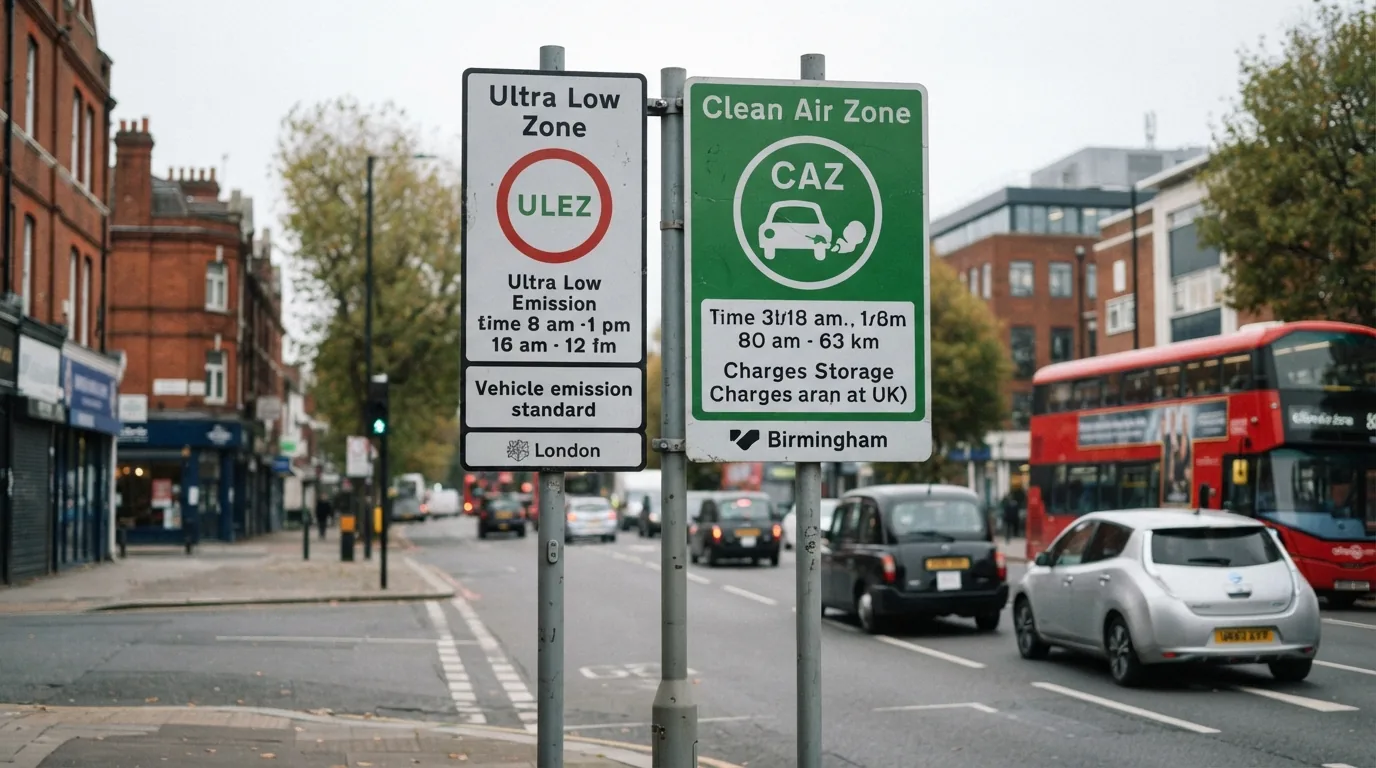
ULEZ vs Clean Air Zones: How UK Charges Compare for Drivers
ULEZ covers all of London and charges daily; most Clean Air Zones target commercial vehicles only. Here is what each scheme actually costs and who pays what.
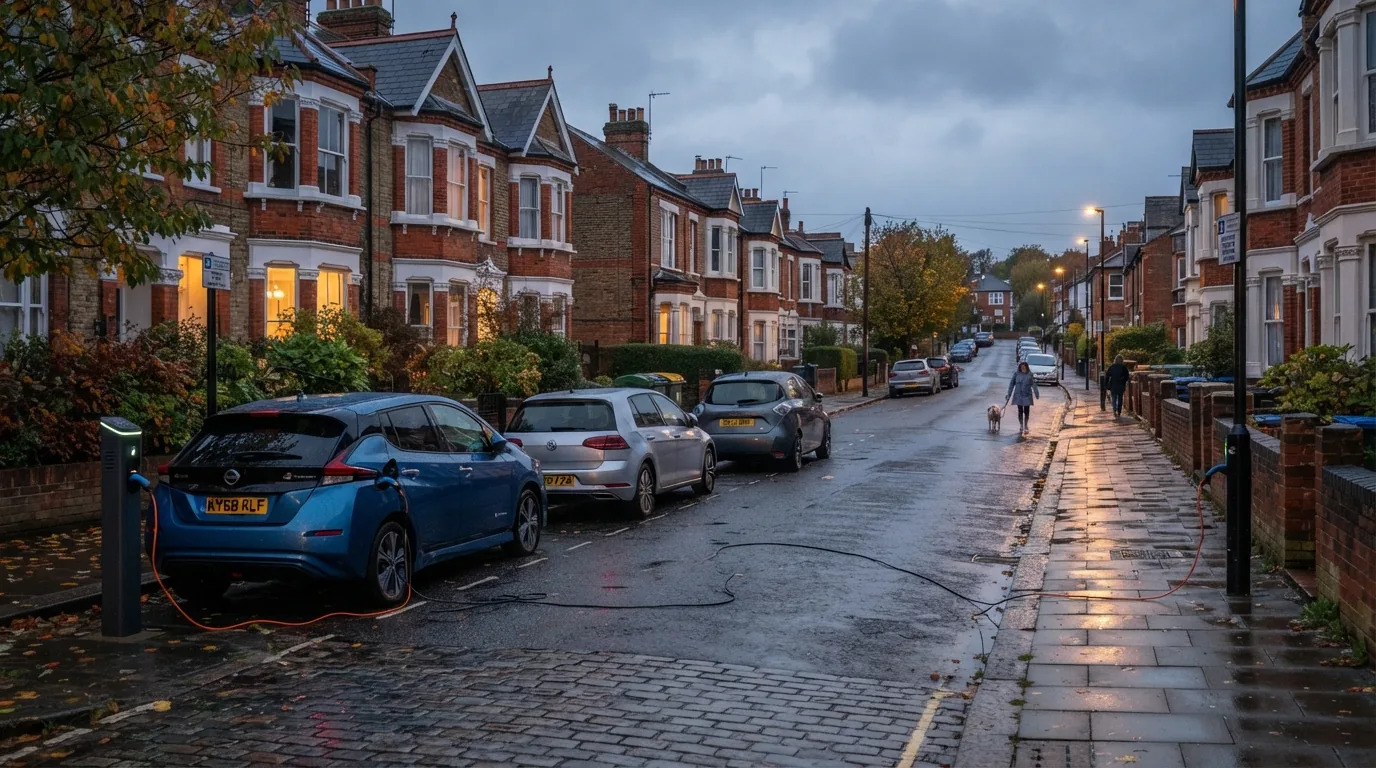
Half of UK councils still offer no on-street EV charging, FOI finds
More than 90% of councils now have public chargers, yet half offer nothing on-street. New LEVI deals in Hampshire, Peterborough and West Sussex show where help is arriving first.
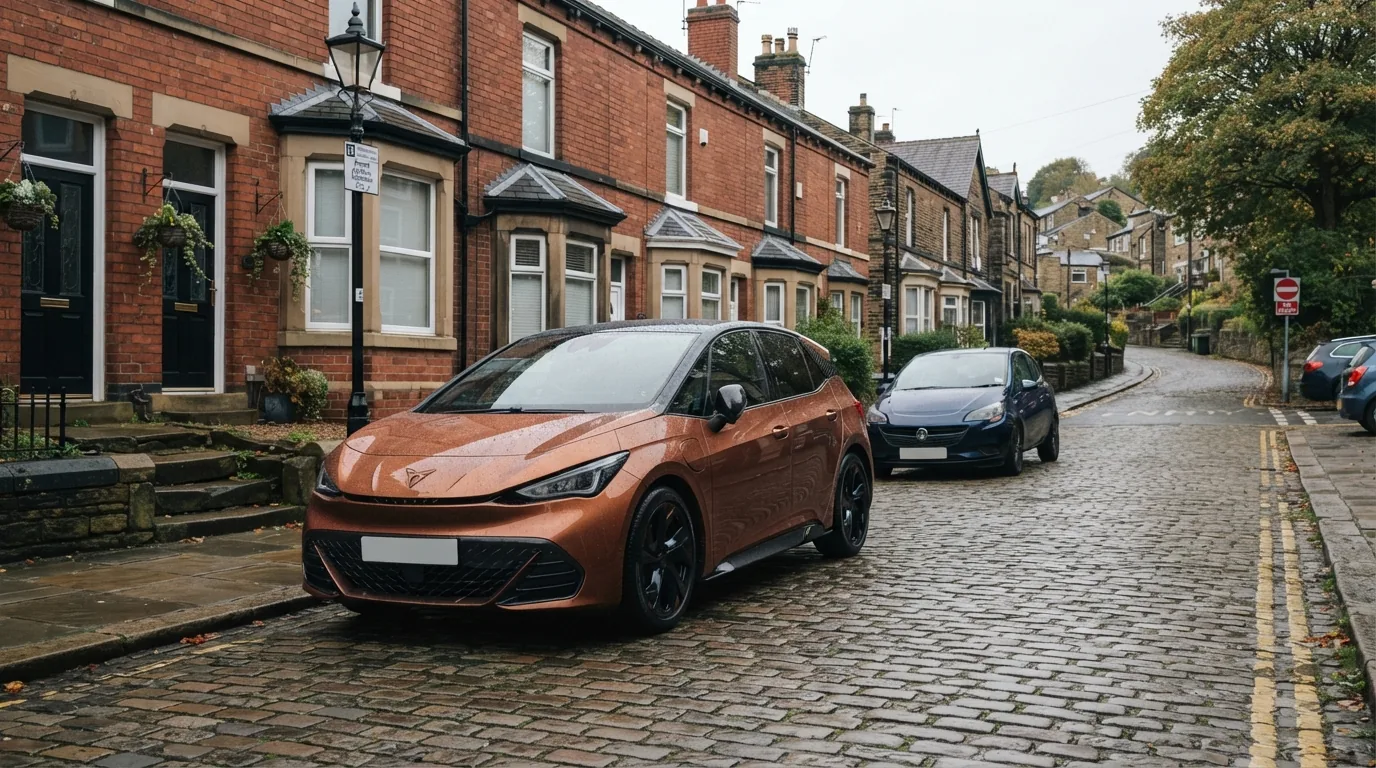
Cupra Raval UK prices from £23,785, four stars or five with pack
The Raval has eight UK versions and only the 52kWh cars get the £1,500 grant. Euro NCAP gave it four stars as standard and five with an optional Safety Pack.