TfL proposes electric-only licences for new London private hire cars from July 2028
These are proposals, not final rules. TfL's consultation would end new licences for plug-in hybrid private hire cars from July 2028, bring in a firmer 10-year age limit from March 2027 and halve the re-licensing window. Here is what it means for drivers and what running an electric car for private hire costs.
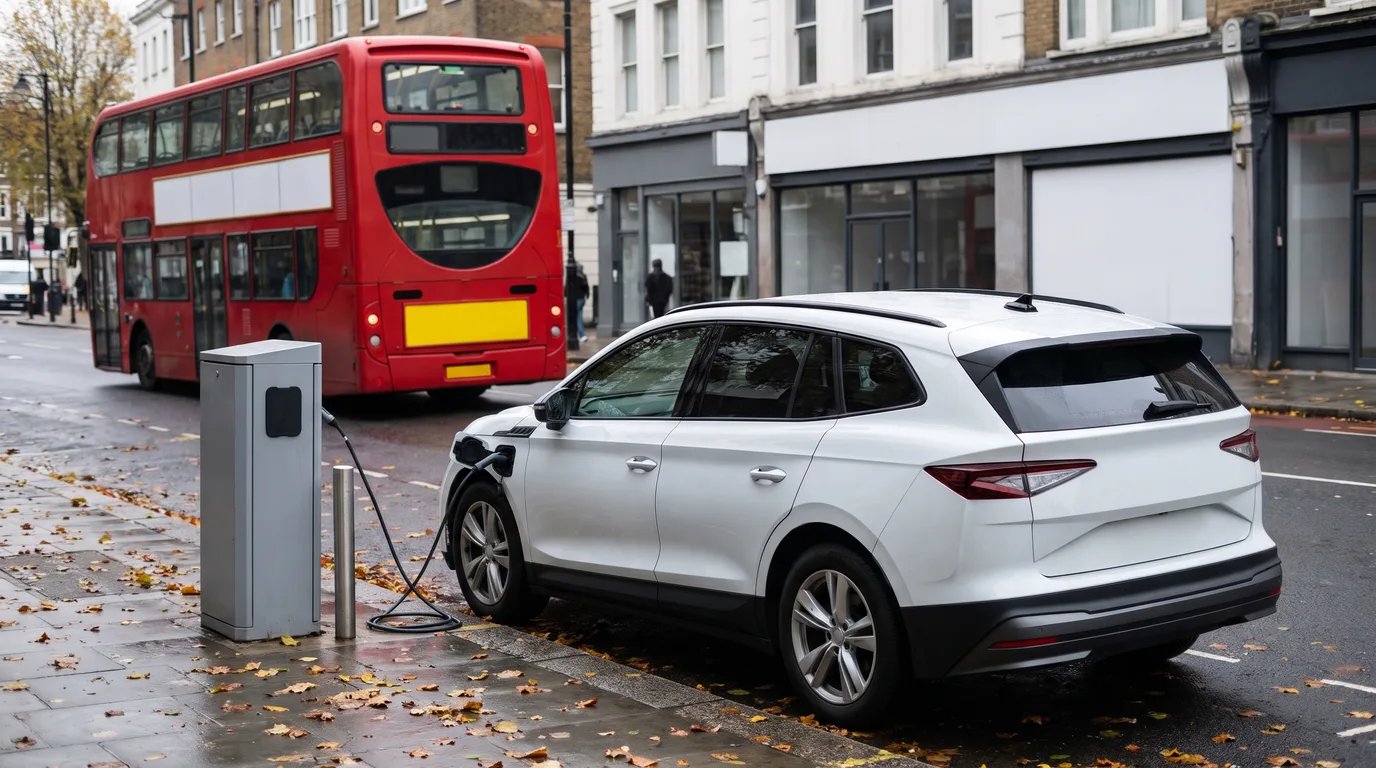
Quick answers
- On 22 October 2026 TfL opened a consultation proposing that private hire vehicles licensed in London for the first time must be fully electric from 3 July 2028, or from 1 July 2030 for wheelchair accessible vehicles.
- Plug-in hybrids would not meet the proposed requirement, because they still have combustion engines; cars already licensed would not be forced off the road by this rule.
- From 1 March 2027 TfL also proposes that private hire cars stop being licensable once they reach 10 years old, and that the re-licensing window for an expired licence falls from 24 months to 12.
- TfL licensed 94,661 private hire vehicles in September 2026, of which 35.5% were fully electric and 35.2% plug-in hybrids; on our own arithmetic that is about 33,300 plug-in hybrids that would need an electric replacement if they leave the fleet after July 2028.
- On our calculations, an electric private hire car covering TfL's average 30,500km (about 18,950 miles) a year costs about £433 a year to charge at an 8p off-peak home rate, against about £4,277 using only rapid chargers at Zapmap's 79p average.
- The consultation closes at 23:59 on Wednesday 2 December 2026, and TfL's proposals mention no grants for drivers making the switch.
Transport for London wants every private hire car licensed in the capital for the first time to be fully electric from 3 July 2028. In a consultation opened on 22 October, TfL proposes that plug-in hybrids would no longer qualify for new licences, with wheelchair accessible vehicles given until 1 July 2030. These are proposals, not final rules, and they would not force existing licensed cars off the road.
For Uber, Bolt and minicab drivers, the practical message is that your next car will almost certainly need to be fully electric. Two changes due sooner, from 1 March 2027, matter too: a firmer 10-year age limit and a shorter window to re-license a car whose licence has lapsed. The consultation closes at 23:59 on Wednesday 2 December 2026.
What has TfL proposed?
TfL’s consultation sets out a package of changes to private hire vehicle (PHV) licensing. The main dates are:
| Date | Proposed change |
|---|---|
| 1 March 2027 | PHVs no longer licensable once they reach 10 years old (currently allowed until the day before they turn 11) |
| 1 March 2027 | Maximum gap to re-license an expired taxi or PHV cut from 24 months to 12 months; after that it counts as new to licensing |
| 1 March 2027 | No new approvals for LPG or CNG conversions or new exhaust abatement systems |
| 3 July 2028 | PHVs new to licensing must be fully electric, except wheelchair accessible vehicles |
| 1 July 2030 | Wheelchair accessible PHVs new to licensing must be fully electric |
Source: TfL consultation, 22 October 2026.
On its consultation page, TfL says plug-in hybrids would not meet the requirement because they “still have combustion engines”, and that their real-world emissions are higher than their official figures. Wheelchair accessible vehicles get the later 2030 date because electric models are scarcer and conversions take a long time.
“Private hire vehicles are a vital component in London’s transition to becoming a more sustainable and healthier city,” said Christina Calderato, TfL’s Director of Strategy. Seb Dance, Deputy Mayor for Transport, said PHV drivers had “led the way” in adopting cleaner vehicles, but that “there is more to do”.
Who would the new rules affect?
The proposals cover every private hire vehicle TfL licenses. That includes cars used on apps such as Uber, Bolt and Lyft as well as traditional minicab firms, as electrive notes. Black cabs are licensed separately and are not covered, although TfL says it is still considering a future zero emission requirement for taxis. Our report on LEVC’s new black cab for 2027 covers that side of the trade.
The key word is “new”. The electric rule applies to a vehicle presented for licensing in London for the first time from 3 July 2028. A plug-in hybrid already licensed before then could carry on until it reaches the age limit. But a car whose licence lapses for more than 12 months would, from March 2027, be treated as new to licensing and have to meet the rules in force at that point.
How many London private hire cars are plug-in hybrids?
TfL licensed 94,661 PHVs in September 2026, according to figures reported by electrive. TfL says 35.5% were fully electric and 35.2% were plug-in hybrids, so more than 70% are already what TfL calls zero emission capable.
On our own arithmetic, 35.2% of 94,661 is about 33,300 plug-in hybrid PHVs. None of them would lose their licence because of the 2028 rule, but each one that reaches the age limit or leaves the fleet after July 2028 would need a fully electric replacement if its driver wants to stay in the trade. That is a sizeable pool of drivers who will be shopping for an electric car over the next few years.
What does the 2027 age limit change mean?
This is the change that comes first. TfL already has a 10-year age limit for PHVs, but at present a car can stay licensed until the day before its 11th birthday. From 1 March 2027 TfL proposes that cars stop being licensable once they reach 10, matching how the limit works for taxis. Existing exemptions would remain.
If your car is approaching its ninth or tenth year, check its first registration date now. The difference could mean replacing it up to a year earlier than you had planned. And if your car is off the road, the shorter 12-month re-licensing window means you have less time to bring it back before it is treated as new.
What does an electric private hire car cost to run?
Private hire cars cover a lot of ground. TfL says the average PHV drives about 30,500km a year, which is about 18,950 miles, more than three times the figure for an average London car. At that mileage, where you charge makes a far bigger difference than for a private motorist.
Our assumptions: an electric car averaging 3.5 miles per kWh, before charging losses; a plug-in hybrid averaging 50mpg when its battery is empty, and 3 miles per kWh in electric mode. Prices: Octopus Energy’s Intelligent Octopus Go off-peak rate of 8p per kWh, checked today; the Ofgem price cap GB average of 26.32p per kWh for October to December (London’s regional rate differs slightly); Zapmap’s September averages of 79p per kWh on rapid chargers and 54p on slower public chargers; and the RAC’s unleaded average of 174.71p a litre on 2 October, the latest RAC figure we could find.
| How you fuel | Pence per mile | Per year at 18,950 miles |
|---|---|---|
| Electric, home off-peak at 8p | 2.3p | £433 |
| Electric, home at price cap 26.32p | 7.5p | £1,425 |
| Electric, half home off-peak, half rapid | 12.4p | £2,355 |
| Electric, slower public chargers at 54p | 15.4p | £2,924 |
| Electric, rapid only at 79p | 22.6p | £4,277 |
| Plug-in hybrid, 30% electric at 8p, 70% petrol | 11.9p | £2,259 |
| Plug-in hybrid, all petrol at 50mpg | 15.9p | £3,010 |
These are EV Compared estimates from the stated inputs, not quoted figures. Real costs depend on the car, traffic, heating, tariff and the networks you use.
The pattern is clear. A driver who can charge off-peak at home cuts their energy bill to a fraction of a plug-in hybrid’s. A driver who relies only on rapid chargers pays more than a plug-in hybrid on petrol, on today’s averages. Most drivers will land somewhere in between, and the mix is what decides whether the switch saves money. Our guide to the cost per mile of an electric car explains the method, and our EV tariff comparison lists off-peak home rates.
From 1 April 2028 there is also the government’s pay-per-mile Electric Vehicle Excise Duty: 3p a mile for electric cars and 1.5p for plug-in hybrids. At 18,950 miles that is about £569 a year for an electric car and £284 for a plug-in hybrid, on our arithmetic. It narrows the gap, but a home-charging electric car stays well ahead.
Which grant-eligible electric cars suit private hire work?
The Electric Car Grant takes up to £3,750 off eligible Band 1 models and up to £1,500 off Band 2 models, for cars priced at or below £37,000. The seller applies the discount, and the scheme runs until 31 March 2030. GOV.UK’s scheme details say nothing specific about private hire use, so ask the dealer to confirm before you order.
For private hire, most drivers want a five-seat car with room in the back for passengers and a usable boot for luggage. From the current GOV.UK eligible list, the larger family cars include:
| Grant band | Larger models on the GOV.UK list |
|---|---|
| Band 1, up to £3,750 | Citroën ë-C5 Aircross Long Range, Renault Scenic, Renault Megane, Nissan LEAF, Hyundai KONA Electric, MINI Countryman Electric |
| Band 2, up to £1,500 | Skoda Enyaq, Skoda Elroq, Volkswagen ID.4, Nissan Ariya, Peugeot E-3008, Vauxhall Grandland Electric, Ford Explorer, Toyota C-HR+, Kia EV3 |
Eligibility can depend on trim and battery size, so check the exact version. Ride-hailing apps also set their own vehicle requirements for each service level, so check the app’s list before you buy. Our guide to Electric Car Grant eligible models explains the bands in more detail.
Range matters more than usual at private hire mileage. A car that covers a full shift on one charge, then charges at home overnight, is the cheapest way to run, as the table above shows.
Will London have enough chargers?
TfL says London has more than 29,500 public charging devices, about a third of the UK total, including more than 2,000 rapid or ultra-rapid devices, citing Zapmap. It is working with charge point operators to add rapid and ultra-rapid bays across its estate, and its property company, Places for London, has partnered with Fastned on several ultra-rapid hubs. TfL says it expects enough public charging to be in place by the time the rules take effect.
For drivers without a driveway, that public network is the main option, and the table above shows why price matters as much as availability. If you can get access to an off-street space or an overnight charger near home, it will make the biggest difference to your running costs.
Electric cars also have other benefits in London, covered in our guides to the congestion charge and electric cars and ULEZ compliance.
What does TfL expect the rules to achieve?
TfL forecasts that, compared with current requirements, the proposals would cut NOx from PHVs by 9% and CO2 by 35% over the first ten years, rising to a 97% reduction over eighteen years. Its baseline is the 2022 London Atmospheric Emissions Inventory, which does not reflect the August 2023 London-wide ULEZ expansion. Because private hire cars cover so many miles, cleaning up the fleet has an outsized effect on street-level air quality.
The private hire market is also changing in other ways, with robotaxi trials on the way, which we cover in our guide to Wayve and Uber robotaxis in London.
How can drivers respond to the consultation?
The consultation is open until 23:59 on Wednesday 2 December 2026 on TfL’s Have Your Say site. TfL says the full survey takes about 10 minutes, and there is a shorter quick response option. You can also email, write to FREEPOST TFL HAVE YOUR SAY, or use the call-back service on 020 3054 6037. Easy Read, audio and British Sign Language options are available.
If the proposals affect you, the points worth raising are the ones TfL cannot see from its own data: how far you could charge at home, the cost of public charging on a working day, and how long your current car has left. TfL’s proposals mention no grants or financial support for drivers, which is something respondents may want to comment on.
Our view
Most London private hire drivers will not be surprised: more than a third of the fleet is already fully electric. The bigger short-term issue is the March 2027 age limit change, which could bring forward replacement for some of the oldest cars. For the roughly 33,300 plug-in hybrid drivers, the next car will almost certainly need to be electric. If you can charge at home, the running cost saving is large. If you cannot, rapid charging at today’s average prices can cost more than petrol, so work out where you would charge before you choose a car. And respond to the consultation by 2 December while the details can still change.
How we test and where our numbers come from
Range figures are official WLTP combined values taken from manufacturer UK specification pages, with real-world estimates drawn from independent comparative testing. Prices are UK list prices at the time of the latest update. Tax, grant and charging-scheme figures come from GOV.UK and HMRC publications. We re-check every guide when pricing, specification or policy changes. Last checked 1 November 2026. How we work out our own figures.
Frequently asked questions
Will my plug-in hybrid private hire car lose its licence in 2028?
Not under these proposals. The fully electric rule applies to vehicles presented for licensing in London for the first time from 3 July 2028. A plug-in hybrid already licensed can carry on until it reaches the age limit, which TfL proposes to apply as 10 years from 1 March 2027.
Do the new TfL rules apply to Uber drivers?
Yes. The proposals cover all private hire vehicles licensed by TfL, which includes cars used on apps such as Uber, Bolt and Lyft as well as traditional minicabs. Black cabs are licensed separately and are not part of this rule, although TfL says it is still considering a future zero emission requirement for taxis.
When does the TfL private hire consultation close?
At 23:59 on Wednesday 2 December 2026. You can respond online through TfL's Have Your Say site, by email, by post to FREEPOST TFL HAVE YOUR SAY, or through TfL's call-back service on 020 3054 6037.
Can private hire drivers get the Electric Car Grant?
The Electric Car Grant is applied by the seller to eligible new electric cars priced at or below £37,000, worth up to £3,750 for Band 1 models and up to £1,500 for Band 2. GOV.UK's scheme details do not say anything specific about private hire use, so ask the dealer to confirm before you order. TfL's proposals do not include any grant of their own.
Is the 10-year age limit for private hire cars new?
No. TfL already has a 10-year age limit, but at the moment a private hire car can stay licensed until the day before it turns 11. From 1 March 2027 TfL proposes that cars stop being licensable once they reach 10, matching the approach used for taxis. Existing exemptions would remain.
Sources and further reading
- tfl.gov.ukTransport for LondonPrimary source referenced in this article.
- haveyoursay.tfl.gov.ukZero emission licensing for private hire vehicles: consultationPlug-in hybrids not meeting the requirement, the current age limit rule, wheelchair accessible timing, closing date and how to respond.
- electrive.comLondon considers mandating BEVs for new ride-hailing licencesThe total of 94,661 licensed private hire vehicles in September and the services covered, including Uber, Bolt and Lyft.
- zapmap.comZapmap EV Charging Price IndexSeptember 2026 average pay-as-you-go prices: 79p per kWh on rapid and ultra-rapid chargers and 54p on slower chargers.
- octopus.energyIntelligent Octopus GoOff-peak rate of 8p per kWh, checked 25 October 2026.
- ofgem.gov.ukEnergy price cap unit rates and standing chargesGB average electricity unit rate of 26.32p per kWh for October to December 2026.
- media.rac.co.ukRAC: Diesel tops £2 a litre for first time everAverage unleaded price of 174.71p a litre on 2 October 2026, the latest RAC figure we could find.
- gov.ukElectric and hybrid vehicles eligible for a plug-in grant: CarsBand 1 and Band 2 lists of cars eligible for the Electric Car Grant.
- find-government-grants.service.gov.ukElectric Car Grant£37,000 price limit, discount applied by the seller and closing date of 31 March 2030.
- gov.ukElectric Vehicle Excise Duty (eVED)Pay-per-mile rates of 3p for electric cars and 1.5p for plug-in hybrids from 1 April 2028.

EV Compared
The EV Compared editorial team tracks the UK electric vehicle market full time: new model launches, list prices, WLTP and real-world range, public charging tariffs and the tax rules that decide what an EV actually costs to run. Every guide is checked against manufacturer specifications and official GOV.UK figures, and updated whenever the numbers move.
Related reading
View all
LEVC new black cab confirmed for 2027 as TX production ends
LEVC will launch an all-new London black cab in the second half of 2027, but has not said what powers it or what it will cost. Here is what taxi drivers deciding now should weigh.
Wayve and Uber robotaxis in London: how to get a ride
Uber and Wayve began supervised autonomous rides in London on 3 September 2026, using 15 electric Ford Mustang Mach-Es. Here is how to be matched with one, what it costs and where Waymo and Tesla stand.
What Is the Cost Per Mile of an Electric Car in the UK?
From 2p per mile at home to 23p on a rapid charger, where you charge changes everything

Electric Car Grant 2026: Latest Eligible Models and Discounts
Up to £3,750 off qualifying new EVs -- 45 models are now confirmed eligible, but Tesla, MG, BYD and Fiat are all excluded
Best Electric Cars for ULEZ Compliance in London
Every battery EV is ULEZ-exempt, but these are the ones that make the most sense for London's roads, parking and charging realities

Best EV Tariffs UK 2026: Off-Peak Rates Compared (p/kWh)
Every major UK EV electricity tariff compared by rate, window, compatibility, and annual saving