E.ON Next Drive Smart cuts overnight EV charging to 6.5p per kWh
E.ON Next has cut its smart EV tariff from 8p to 6.5p per kWh overnight and says it is the lowest off-peak rate on the market. The day rate is 34.04p, the window is six hours and you need a supported car or charger. Here is what a year of charging costs on it and its rivals.
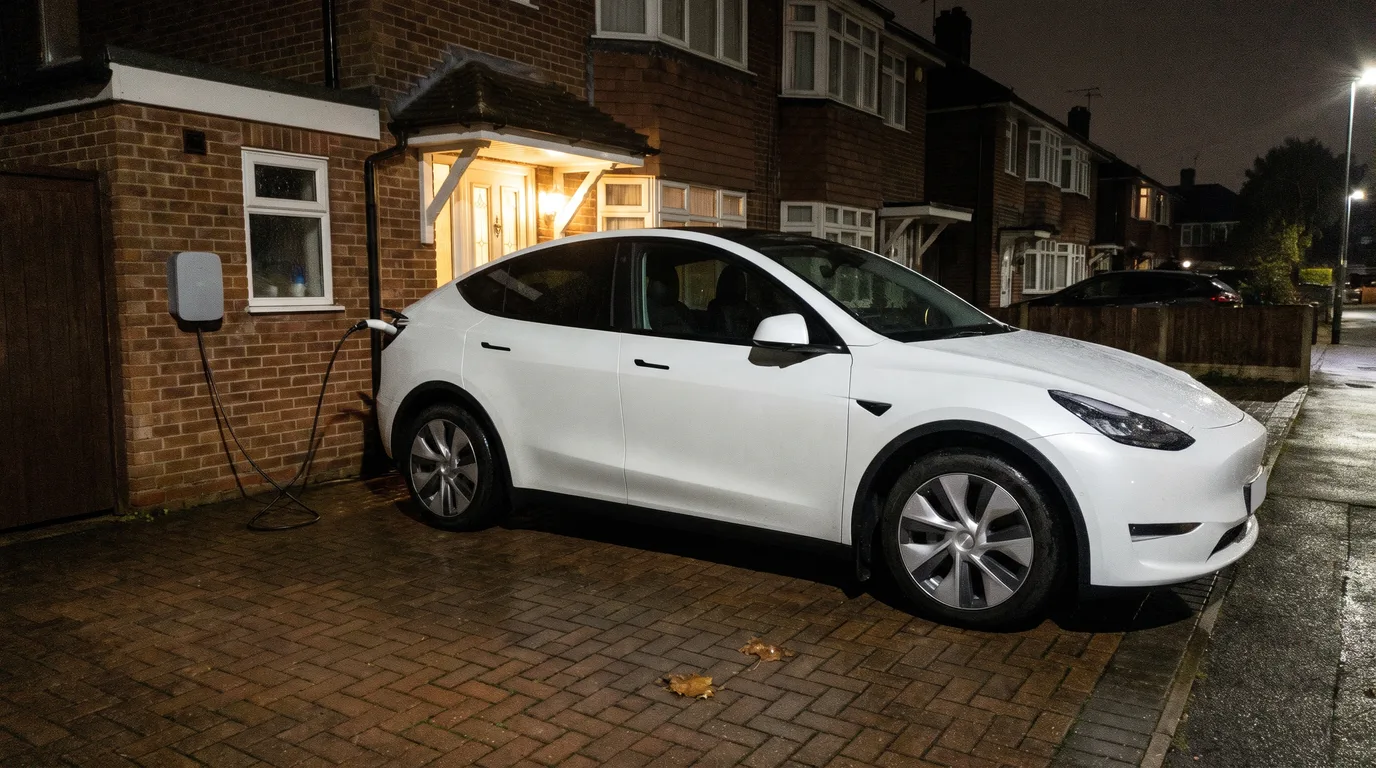
Quick answers
- E.ON Next said on 27 October 2026 that it has cut the Next Drive Smart off-peak rate to 6.5p per kWh, from midnight to 6am every day, for the whole home.
- Next Drive Smart V7.8 has a day rate of 34.04p per kWh, which applies to boost charging and to everything else you use outside the off-peak window.
- The Next Drive Fixed off-peak rate falls to 8.5p per kWh, and E.ON says neither tariff has an exit fee.
- E.ON claims a saving of up to £476 a year against the 26.32p price cap, based on 8,000 miles a year at 3.33 miles per kWh; our check of those inputs gives the same figure.
- On our example of 2,000 kWh of overnight charging a year, Next Drive Smart costs £130, EDF GoElectric £133.20, Intelligent Octopus Go about £158 and the price cap rate £526.40.
- At 3.33 miles per kWh, 6.5p works out at about 1.95p a mile, against about 7.9p a mile at the price cap rate.
- Drive Smart needs a smart meter with half-hourly consent and a supported car or charger, while EDF GoElectric's seven-hour window works with any charger.
E.ON Next has cut the overnight rate on its Next Drive Smart tariff from 8p to 6.5p per kWh, from midnight to 6am every day, and the cheap rate covers the whole home, not just the car. In its announcement on 27 October 2026, E.ON says this is the lowest off-peak rate on the market. For a UK driver who charges at home, that makes it one of the cheapest ways to run an EV, at just under 2p a mile on our figures.
There is a catch. The day rate is 34.04p per kWh, well above the price cap. The cheap window is six hours. And you need a car or charger that E.ON supports. Below we set out the new rates, what a year of charging costs against EDF, Octopus and the price cap, and who the tariff suits.
What has E.ON Next announced?
E.ON Next says the off-peak rate on Next Drive Smart, version V7.8, is now 6.5p per kWh. Auto Express reports that the rate was 8p before the cut. The other changes, according to E.ON:
- Next Drive Fixed, its other EV tariff, has an off-peak rate of 8.5p per kWh. E.ON’s release does not say what the Fixed tariff’s off-peak hours are.
- No exit fees on either tariff.
- A 12-month fix on the 6.5p rate, according to the Next Drive Smart tariff page.
- A free year of Zoom EV, E.ON’s subscription for discounts on public charging, parking and car hire.
E.ON says the rates were correct on 21 October 2026. The release also notes that E.ON has completed its takeover of OVO Energy, with no immediate change for either company’s customers.
The 6.5p figure is not new for E.ON. Its 3 February 2026 release quoted the same 6.5p off-peak rate, with a day rate of 29.84p. The rate has since gone up and come back down; what has changed most since February is the day rate.
How much does it cost to charge an EV on Next Drive Smart?
To compare tariffs fairly, we have used a simple example: 2,000 kWh of overnight charging a year. That is roughly 6,700 miles at 3.33 miles per kWh, or 8,000 miles at 4 miles per kWh. We have taken each rate from the supplier’s own page today and ignored standing charges, which vary by region.
| Tariff | Off-peak rate | Off-peak window | Yearly cost, 2,000 kWh |
|---|---|---|---|
| E.ON Next Drive Smart (V7.8) | 6.5p | Midnight to 6am | £130.00 |
| EDF GoElectric | 6.66p | 11pm to 6am | £133.20 |
| Intelligent Octopus Go | 7.9p | 11:30pm to 5:30am | £158.00 |
| E.ON Next Drive Fixed | 8.5p | Not stated | £170.00 |
| Ofgem price cap average | 26.32p | Any time | £526.40 |
Octopus’s Intelligent Octopus Go page currently advertises smart charging “from 7.9p/kWh”, although a footnote on the same page refers to an 8.0p off-peak rate. At 8p, the same 2,000 kWh would cost £160. Either way, the gap between E.ON and Octopus on this example is about £28 to £30 a year, and between E.ON and EDF just £3.20.
The bigger gap is with the price cap. Charging the same amount at the 26.32p average unit rate costs £396.40 more than on Next Drive Smart.
Does the £476 saving add up?
E.ON says Next Drive Smart saves up to £476 a year against the price cap. Its inputs are 8,000 miles a year at 3.33 miles per kWh, with all charging done in smart mode, compared with the 26.32p national average price cap rate for October to December 2026.
We checked the arithmetic. 8,000 miles divided by 3.33 miles per kWh is about 2,402 kWh. At 26.32p that costs £632.31; at 6.5p it costs £156.16. The difference is £476.15, so the claim matches its stated inputs. The same sum at 8.5p gives £428.11, which matches E.ON’s £428 figure for Next Drive Fixed.
Two cautions. The saving is on the car’s charging alone, and it compares a cheap overnight rate with a flat rate that you would pay all day. It does not take account of the higher day rate on the rest of your household’s electricity, which we look at below. E.ON itself says savings are not guaranteed and depend on how you use energy.
What is the cost per mile on Next Drive Smart?
Cost per mile depends on how efficient your car is. We have used two efficiency figures: 3.33 miles per kWh, which is E.ON’s assumption, and 4 miles per kWh, for a more efficient car or milder weather.
| Rate | Cost per mile at 3.33 miles per kWh | Cost per mile at 4 miles per kWh |
|---|---|---|
| E.ON Next Drive Smart, 6.5p | 1.95p | 1.63p |
| EDF GoElectric, 6.66p | 2.00p | 1.67p |
| Intelligent Octopus Go, 7.9p | 2.37p | 1.98p |
| E.ON Next Drive Smart day rate, 34.04p | 10.22p | 8.51p |
| Public rapid charging average, 79p | 23.72p | 19.75p |
The public rapid figure is Zapmap’s average, as reported by Auto Express. Auto Express also worked out that a full 60kWh charge of a Tesla Model Y RWD at 6.5p costs £3.90, against £4.80 at the old 8p rate. For more on how these numbers build up, our guide to how much it costs to charge an EV at home explains the method.
What is the catch with the 34.04p day rate?
On Next Drive Smart, the 6.5p rate applies to everything in your home from midnight to 6am. Outside that window, everything is charged at 34.04p per kWh, according to E.ON. That is about 7.7p more than the 26.32p price cap rate, as Auto Express also points out.
So the tariff only pays off if enough of your electricity is used overnight. Here is a simple way to think about it, using unit rates only:
- Every kWh you move from the price cap rate to 6.5p overnight saves 19.82p.
- Every kWh you use in the daytime at 34.04p costs 7.72p more than at the price cap rate.
- So each kWh of overnight charging covers the extra cost of roughly 2.6 kWh of daytime use.
On our 2,000 kWh example, the overnight saving is £396.40. That would be wiped out if your home used more than about 5,100 kWh in the daytime over a year. A household using 2,000 kWh in the daytime would pay about £154 more for that electricity than at the price cap rate, leaving a net saving of about £242. Low-mileage drivers, or homes that run heat pumps, ovens and tumble dryers in the day, should do this sum with their own meter readings before switching.
E.ON’s tariff page also says smart charging it schedules outside the midnight to 6am window is billed at 6.5p. Boost charging, when you override the schedule to charge now, is billed at the day rate.
Which cars and chargers work with Next Drive Smart?
You need three things, according to E.ON:
- A smart meter that sends half-hourly readings. E.ON can fit one if you do not have one.
- A supported car or a supported smart charger. E.ON connects either to your car directly or to your charger to schedule charging.
- One EV only. E.ON says it can currently support only one car per home on the tariff.
E.ON’s supported charger list is short, and some carmakers charge a subscription for the car connection that smart tariffs rely on. Rather than repeat a list that changes, Best Chargers keeps track of which chargers qualify in its E.ON Next Drive review, and its EV tariff comparison hub shows which tariffs need a compatible car or charger.
E.ON also says it may move you off the tariff if you do not use smart charging consistently. Switching takes up to five days for existing customers and up to two weeks for new ones.
How does it compare with EDF GoElectric and Intelligent Octopus Go?
On price alone, E.ON now has the lowest overnight rate of the three. But the differences are small, and the rules around each tariff may matter more.
EDF GoElectric charges 6.66p per kWh from 11pm to 6am, a seven-hour window, and EDF says it works with “any electric car and charger, whatever the make or model”. If your car or charger is not on E.ON’s list, GoElectric gives almost the same price with fewer conditions, according to EDF. Best Chargers covers it in its GoElectric review.
Intelligent Octopus Go advertises smart charging from 7.9p, with six cheap hours for the home from 11:30pm to 5:30am. Octopus supports a long list of cars and chargers, but it has a £50 exit fee. Our comparison of Octopus Go and Intelligent Octopus Go explains how its smart charging works.
All three suppliers’ day rates and standing charges vary by region, so compare the full quote for your postcode. Our October 2026 EV tariffs round-up and our guide to the best EV tariffs list the other options.
Is 6.5p really the lowest rate on the market?
That is E.ON’s claim, and it comes with conditions. E.ON says it compared dedicated EV tariffs from GB suppliers paid by Direct Debit, as of 22 October 2026, and excluded bundles, broker exclusives and bolt-ons. EDF’s own site, for example, lists a Pod Point Plug & Power deal at 6.18p per kWh, but that is bundled with a charger on a two-year contract, which is the kind of product E.ON leaves out.
On straightforward EV tariffs, 6.5p is the lowest we have seen today, with EDF GoElectric close behind at 6.66p.
What should you do if you are thinking of switching?
- Check your car and charger against E.ON’s supported list before you apply.
- Look at your daytime use. Your smart meter app or bills will show how much you use outside midnight to 6am. If it is high, the 34.04p day rate may cancel out much of the saving.
- Get a full quote for your postcode, including the standing charge, and compare it with EDF and Octopus.
- Think about your charging window. Six hours at 7kW is about 42 kWh, enough for a large top-up most nights. Our guide to the best time to charge an EV at home explains how windows work.
- Remember the price cap changes every three months. Our report on the October price cap and EV charging has the current figures.
Our view
A 6.5p overnight rate with no exit fee is a good deal for a driver with a supported car or charger who charges most nights and uses little electricity in the day. For them, it is the cheapest straightforward EV tariff we can find today, by a small margin.
For everyone else, the margin is small enough that the conditions matter more than the headline. EDF GoElectric costs only a few pounds more a year on our example, has a longer window and works with any charger. Check your daytime use, your hardware and your full regional quote before switching.
How we test and where our numbers come from
Range figures are official WLTP combined values taken from manufacturer UK specification pages, with real-world estimates drawn from independent comparative testing. Prices are UK list prices at the time of the latest update. Tax, grant and charging-scheme figures come from GOV.UK and HMRC publications. We re-check every guide when pricing, specification or policy changes. Last checked 1 November 2026. How we work out our own figures.
Frequently asked questions
What is the E.ON Next Drive Smart off-peak rate?
E.ON Next says the Next Drive Smart off-peak rate is 6.5p per kWh from midnight to 6am every day, for your whole home, on version V7.8 of the tariff. Smart charging that E.ON schedules outside that window is also billed at 6.5p. The rates were correct on 21 October 2026, according to E.ON.
What is the day rate on Next Drive Smart?
E.ON gives the day rate as 34.04p per kWh. It applies to boost charging, to charging outside E.ON's smart scheduling and to the rest of your home's electricity outside the off-peak window. That is about 7.7p more than the 26.32p price cap rate.
Do I need a smart charger for E.ON Next Drive Smart?
You need either a supported car that E.ON can control directly or a supported smart charger, plus a smart meter that can send half-hourly readings. E.ON's list of supported chargers is short, so check your model before switching. Only one EV per home can be on the tariff.
Is 6.5p the cheapest EV tariff in the UK?
E.ON says it is the lowest off-peak rate on the market as of 22 October 2026, comparing dedicated EV tariffs paid by Direct Debit and excluding bundles, broker exclusives and bolt-ons. EDF GoElectric is close at 6.66p per kWh, with a longer seven-hour window and no smart charger needed.
Does E.ON Next Drive Smart have an exit fee?
No. E.ON says there are no exit fees on Next Drive Smart or Next Drive Fixed. It also says the 6.5p off-peak rate is fixed for 12 months, and that it may move you off the tariff if you do not use smart charging consistently.
Sources and further reading
- news.eonenergy.comE.ON UKPrimary source referenced in this article.
- eonnext.comNext Drive Smart: our cheapest EV tariffThe midnight to 6am window, smart scheduled charging at 6.5p, the 34.042p peak rate, one EV per home, half-hourly smart meter, 12-month fixed off-peak rate and the condition on consistent smart charging.
- autoexpress.co.ukE.ON delivers UK's cheapest EV charging: fill a Tesla Model Y for £4The previous 8p rate, the Tesla Model Y full-charge example and Zapmap's public charging averages.
- edfenergy.comEDF EV tariffsGoElectric's 6.66p rate from 11pm to 6am with any car and charger, correct as of 1 October 2026.
- octopus.energyIntelligent Octopus GoSmart charging from 7.9p per kWh, the 11:30pm to 5:30am home window, the 8.0p footnote rate and the £50 exit fee.
- news.eonenergy.comPRICE ALERT: E.ON Next cuts EV tariff day rates while off-peak charging saves customers around £500 vs the price capE.ON's 3 February 2026 release quoting 6.5p off-peak with a 29.84p day rate on Next Drive Smart v5.5.

EV Compared
The EV Compared editorial team tracks the UK electric vehicle market full time: new model launches, list prices, WLTP and real-world range, public charging tariffs and the tax rules that decide what an EV actually costs to run. Every guide is checked against manufacturer specifications and official GOV.UK figures, and updated whenever the numbers move.
Related reading
View all
Ofgem price cap: home EV charging now costs 26.32p per kWh
October's price cap barely moves the cost of charging at home, but a forecast points to 15% more in January. Here is what a charge and a mile now cost, and what an EV tariff saves.
Best EV Tariffs UK 2026: Off-Peak Rates Compared (p/kWh)
Every major UK EV electricity tariff compared by rate, window, compatibility, and annual saving
Intelligent Octopus Go drops to 6.5p, level with E.ON Next Drive Smart
Octopus put a variable Intelligent Octopus Go on sale on 29 October at 6.5p per kWh overnight, a day after E.ON Next's Drive Smart went to the same rate. Here is what each costs per mile and per year, and where they differ.
How Much Does It Cost to Charge an EV at Home in the UK?
A full 60kWh charge costs around £14.80 on the standard rate or about £4.80 on an overnight EV tariff. Here is the maths, plus how to get the cheapest possible home charging cost.
Octopus Go vs Intelligent Octopus Go: Which EV Tariff Should You Choose?
A clear, honest comparison of both Octopus EV tariffs, including rates, eligibility, a real-world cost example, and a plain verdict on which one suits your setup.
What Is the Best Time to Charge Your EV at Home in the UK?
For most UK drivers, overnight off-peak charging cuts costs to around 7-8p/kWh, and a smart charger handles the scheduling automatically