VW ID.3, ID.4 and ID.7 battery recall: UK cars capped at 80% charge
Volkswagen UK has opened safety recall campaigns 93MV and 93MF for cars with high-voltage batteries from one supplier. Charging is being limited to 80% while dealers check the batteries. Here is what the cap means in miles, how to check it is active and what to do next.
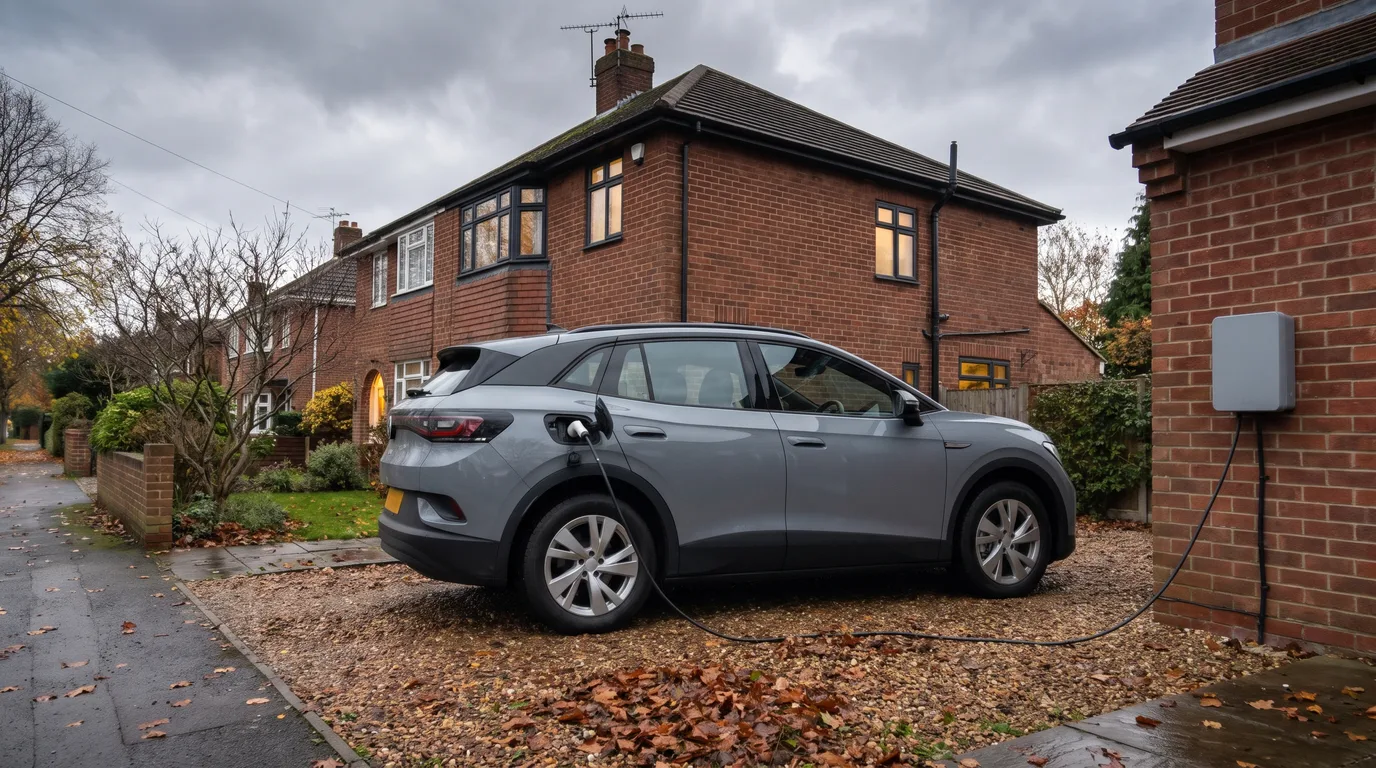
Quick answers
- Volkswagen UK has opened safety recall campaigns 93MV and 93MF for ID.3, ID.4 and ID.7 cars with high-voltage batteries made by one supplier between 2022 and 2025.
- Volkswagen says that when the battery is charged above 80%, overheating may occur, posing a fire risk, so it is temporarily limiting affected cars to 80%, in most cases remotely.
- Volkswagen Commercial Vehicles runs the same 93MF campaign for the ID. Buzz and ID. Buzz Cargo, with the same 80% limit.
- At current Volkswagen UK WLTP figures, an 80% cap means about 304 miles for an ID.7 Pro Match Plus and about 347 miles for an ID.7 Pro S Match Plus, before real-world losses.
- DC rapid charging still works: Volkswagen says the restriction affects only the maximum charge level, not the charging method.
- Owners will get a letter; the dealer check takes about an hour, and any battery modules or software that need replacing or updating are done free.
- Across the three German KBA recalls, electrive reports about 72,700 cars worldwide, including about 10,000 in Germany; the UK number has not been published.
Volkswagen UK has opened safety recall campaigns 93MV and 93MF for ID.3, ID.4 and ID.7 cars whose high-voltage batteries were made by one supplier between 2022 and 2025. “When the battery is charged above 80%, overheating may occur, posing a fire risk,” Volkswagen says on its recall page. As a precaution it is temporarily capping affected cars at 80% charge, in most cases remotely, and owners will be written to about a free dealer check.
For a UK driver, that means about a fifth less range on a full charge until the work is done. The car can still be driven and rapid charged as normal, and Volkswagen says the original range will be restored afterwards. Here is what is affected, what the cap means in miles and what to do now.
What has Volkswagen announced?
Volkswagen UK’s page, titled “93MV and 93MF High voltage battery safety recall”, says the factory is “temporarily limiting affected vehicles’ maximum available charging capacity to 80%”. It warns that overheating “could result in serious or life-threatening injuries to people inside and outside the vehicle”.
The key points from Volkswagen UK:
- Which cars: ID.3, ID.4 and ID.7 with high-voltage batteries from a specific supplier, produced between 2022 and 2025. Volkswagen says it cannot give details of individual suppliers.
- The cap: applied over the air in most cases. For it to arrive, the car must be online, privacy settings must be set to off, and the ignition must be on for at least five minutes.
- Letters: affected owners will receive a letter “in due course”, which may ask them to book an inspection at a Volkswagen retailer.
- The fix: depending on what the inspection finds, battery modules may be replaced or a software update applied. All work is free.
- Warning lamp: if a yellow warning lamp appears, contact a Volkswagen retailer promptly.
On incidents, the sources differ. Volkswagen UK says there are no confirmed cases of personal injury, but that “there have been individual cases with property damage”. The German regulator, the KBA, reports no property damage or personal injuries for its recalls, according to electrive, which describes the action as a precautionary measure and says the affected cells could overheat in rare cases.
Which cars are affected, and is the ID. Buzz included?
Volkswagen UK’s car recall page names the ID.3, ID.4 and ID.7. It does not mention the ID. Buzz. However, Volkswagen Commercial Vehicles has its own 93MF recall page covering the ID. Buzz and ID. Buzz Cargo with batteries from the same supplier made between 2022 and 2025, with the same 80% limit and the same advice. Buzz owners should follow that page and contact a Volkswagen Van Centre.
Not every car of these models is affected. The recall depends on which supplier made the battery and when, not simply on the model or the year of registration. Volkswagen has not published a registration or VIN checker for this campaign, so the letter is the confirmation. You can also check any car for unfixed safety recalls by registration number using the GOV.UK recall checker, which links to the MOT history service.
The Cupra Born, which shares the same underlying platform, is part of one of the three German recalls, covering cars built between 2022 and 2024, according to electrive. We could not confirm whether UK Borns are included. Born owners should ask Cupra UK or a Cupra retailer.
There is also a separate recall in the United States covering 22,524 ID.4s with cells from SK Battery America, reported by electrive. That is a different campaign and does not apply to UK cars.
How many cars are affected?
Volkswagen UK has not said how many UK cars are in the recall. The figures published so far are from Germany. The KBA lists three recalls, reference numbers 17137R, 17101R and 17103R, covering nearly 72,700 cars worldwide, about 10,000 of them in Germany, electrive reported on 21 October. Two of the recalls cover Volkswagen models built between 2022 and 2025, and one covers the Cupra Born.
For scale, about 660,000 ID.3, ID.4, ID.7 and ID. Buzz models were newly registered in Europe between 2023 and 2025, according to an earlier electrive report, which said the number actually affected was likely to be much smaller.
What does an 80% cap mean for range?
We have worked this out from the WLTP combined range figures on Volkswagen UK’s model pages at the time of writing. Two columns matter: 80% of the official range, which is what a car charged to the cap could cover in WLTP conditions, and 70%, which is a more realistic trip window if you charge to 80% and arrive with 10% to spare.
| Model (Volkswagen UK WLTP figure) | Full range | At 80% cap | 80% down to 10% | Miles lost to the cap |
|---|---|---|---|---|
| ID.3, lowest in range (240 miles) | 240 | 192 | 168 | 48 |
| ID.3, highest in range (371 miles) | 371 | 297 | 260 | 74 |
| ID.4, lowest in range (222 miles) | 222 | 178 | 155 | 44 |
| ID.4, highest in range (351 miles) | 351 | 281 | 246 | 70 |
| ID.7 Pro Match Plus, 77 kWh (380 miles) | 380 | 304 | 266 | 76 |
| ID.7 Pro S Match Plus, 86 kWh (434 miles) | 434 | 347 | 304 | 87 |
| ID.7 Tourer Pro Match Plus, 77 kWh (371 miles) | 371 | 297 | 260 | 74 |
| ID.7 Tourer Pro S Match Plus, 86 kWh (422 miles) | 422 | 338 | 295 | 84 |
| ID.7 Tourer GTX Plus, 86 kWh (357 miles) | 357 | 286 | 250 | 71 |
Inputs: Volkswagen UK WLTP combined range, multiplied by 0.8 and 0.7, rounded to the nearest mile. Volkswagen UK quotes ID.3 and ID.4 ranges as bands (240 to 371 miles and 222 to 351 miles) without tying each figure to a battery, so we show both ends.
Three caveats. First, these are figures for cars on sale now; some recalled cars, built from 2022, were sold with earlier batteries and specs and may have different official ranges. Second, real-world range is usually lower than WLTP, especially at motorway speeds and in winter. Third, the cap only matters on days when you need more than 80% of your battery. For most local driving it changes nothing.
For context on how the ID.7 compares with its rivals on range, see our ID.7 vs Tesla Model 3 range comparison.
How do I check the 80% cap is active?
Volkswagen UK gives a simple test. Try to set the charge limit above 80%, either in the Volkswagen app or on the car’s infotainment screen. If the cap is active, the slider will not stay above 80% and drops back below it.
If the slider does stay above 80%, the remote update may not have reached your car yet. Check that:
- The car is online and its privacy settings are set to off.
- The ignition has been on for at least five minutes.
In the meantime, set the limit yourself by switching on Battery Care Mode, below.
How do I turn on Battery Care Mode?
Volkswagen recommends Battery Care Mode, which limits charging to 80%, and says it is “good practice in all cases” to switch it on, even if the cap has already been applied. The steps on Volkswagen’s page are:
In the Volkswagen app:
- Log in and select “Battery and Charge”.
- Select “Battery management”.
- Tap the settings (gear) icon at the top right.
- Activate “Battery Care Mode”.
On the car’s infotainment screen:
- Select “Charging”.
- Select “Settings”.
- Activate “Battery Care Mode”.
Battery Care Mode is an everyday setting you can switch off. The recall cap is a separate safety measure applied by the factory, electrive notes. If your car is affected, keep to 80% even if you switch Battery Care Mode off, until the dealer work is done.
If you charge at home, many smart chargers and tariffs also let you schedule charging overnight. Our sister site’s guide to home chargers for the Volkswagen ID.3 covers charger choices, charging times and tariffs.
Can I still use rapid chargers?
Yes. Volkswagen UK answers this directly: “The restriction only affects the maximum charge level of the battery of 80%, not the charging method.” Its page confirms that DC charging is still possible, so rapid chargers can be used within the 80% limit.
In practice, the cap costs little on long journeys. Charging speeds on rapid chargers usually slow as the battery fills, which is why many drivers already stop a rapid session at around 80%. What changes is the first leg of a trip: you leave home with less range, so you may need one extra stop on a long run. Our guide to rapid and ultra-rapid charging explains how charging speeds work.
The cap does not change your cost per mile, because you are still paying for each kilowatt hour you use. Taking the ID.7 Pro S Match Plus as an example, charging its 86 kWh battery from 10% to 80% adds 60.2 kWh, ignoring charging losses:
| Where you charge | Price per kWh | Cost, 10% to 80% | Cost per mile (304 WLTP miles) |
|---|---|---|---|
| Intelligent Octopus Go, off peak | 8p | £4.82 | 1.6p |
| Standard rate at the October 2026 price cap | 26.32p | £15.84 | 5.2p |
| Average rapid charger, September 2026 (Zapmap) | 79p | £47.56 | 15.6p |
Inputs: Octopus Energy gives an off-peak rate of 8p per kWh for smart charging an eligible car on Intelligent Octopus Go, excluding standing charges, with six off-peak hours from 23:30 to 05:30. Ofgem puts the average electricity unit rate at 26.32p per kWh for Direct Debit customers from 1 October to 31 December 2026. Zapmap gives a September 2026 average pay-as-you-go price of 79p per kWh for rapid and ultra-rapid chargers. Cost per mile divides the cost of 60.2 kWh by 304 miles, 70% of the 434-mile WLTP figure. Rates were checked on 25 October 2026 and change often.
Real-world costs per mile will be higher than these WLTP-based figures, but the cap affects how far you go between charges, not what each mile costs.
What happens at the dealer?
Volkswagen UK says the inspection takes about an hour, although scheduling may cause delays, and it must be done at an authorised Volkswagen retailer by appointment. The retailer inspects the battery and explains what the results mean for using the car. Depending on what is found, battery modules may be replaced or a software update applied. There is no charge.
Once all the necessary work is complete, Volkswagen says the vehicle’s “original parameters regarding charging capacity” and so its range will be restored. Volkswagen also notes that “a technical fault is not necessarily recognisable”, which is why the letter and inspection matter even if the car seems fine.
If a vehicle fire does occur, Volkswagen’s advice is to stop the vehicle, park outdoors if possible, switch off the ignition, leave the vehicle and call the emergency services.
What does it mean for buying or selling a used ID.3, ID.4 or ID.7?
These models are widely available on the used market, so the recall will come up in sales. Before buying:
- Check for open recalls using the registration on the GOV.UK recall checker, and ask the seller whether they have had a Volkswagen recall letter.
- Ask whether the recall work has been done. Once it has, Volkswagen says the full charging capacity is restored. If not, the work is free, but you will live with the 80% cap until it is.
- Test the slider. If the charge limit will not go above 80%, the cap is active.
- Get a battery health report. It will not show the recall, but it tells you about the battery’s condition. Our guides on battery health certificates for used EVs and checking an electric car battery before buying explain how.
If you are looking at a new Volkswagen instead, the ID.4 is due to be replaced by the ID.Tiguan in 2027.
What should owners do now?
- Test the charge slider. If it will not stay above 80%, the cap is active.
- If it does go above 80%, switch on Battery Care Mode and keep to 80%.
- Keep using the car and rapid chargers as normal within the limit.
- Watch for the yellow warning lamp, and contact a Volkswagen retailer (or Van Centre for the ID. Buzz) promptly if it appears.
- Wait for Volkswagen’s letter, then book the free inspection.
Our view
This is a precautionary recall handled sensibly: an immediate remote cap, a free check and a promise that full range returns afterwards. For most owners the day-to-day effect is small, because few local trips use more than 80% of the battery. The real cost is on long journeys, where an ID.7 Pro S loses up to about 87 miles of official range. Owners should test the slider today and switch on Battery Care Mode if the cap has not arrived. Used buyers should ask whether the work has been done.
How we test and where our numbers come from
Range figures are official WLTP combined values taken from manufacturer UK specification pages, with real-world estimates drawn from independent comparative testing. Prices are UK list prices at the time of the latest update. Tax, grant and charging-scheme figures come from GOV.UK and HMRC publications. We re-check every guide when pricing, specification or policy changes. Last checked 1 November 2026. How we work out our own figures.
Frequently asked questions
Which Volkswagen models are in the UK battery recall?
Volkswagen UK's recall page covers ID.3, ID.4 and ID.7 cars with high-voltage batteries made by one supplier between 2022 and 2025. A separate Volkswagen Commercial Vehicles page covers the ID. Buzz and ID. Buzz Cargo under campaign 93MF. Not every car of those models is affected, and Volkswagen will write to owners whose cars are.
Can I still drive my ID.3, ID.4 or ID.7?
Yes. Volkswagen says the car can still be used, but charging must be limited to 80% until the work is done. If a yellow warning lamp appears, contact a Volkswagen retailer promptly.
Can I still use rapid chargers?
Yes. Volkswagen UK says the restriction only affects the maximum charge level of 80%, not the charging method, so DC rapid charging is still possible.
How do I know if the 80% cap is active on my car?
Try to set the charge limit above 80% in the Volkswagen app or on the car's infotainment screen. If the cap is active, the slider will not stay above 80% and drops back below it. If it does stay above 80%, switch on Battery Care Mode yourself.
Will I get my full range back?
Volkswagen UK says that once the necessary work is complete, the car's original charging capacity, and so its range, will be restored. The permanent repair may be a battery inspection, a software update or replacement of battery modules, all free of charge.
Sources and further reading
- volkswagen.co.ukVolkswagen UKPrimary source referenced in this article.
- volkswagen-vans.co.ukBattery Safety Recall 93MFThe same recall for the ID. Buzz and ID. Buzz Cargo, with the same 80% limit, Battery Care Mode steps and warning lamp advice.
- electrive.comVW's battery recall affects 72,700 EVs, including 10,000 in GermanyThe KBA recall numbers, about 72,700 cars worldwide and 10,000 in Germany, three recalls including the Cupra Born, the KBA's report of no damage or injury, and the separate US recall.
- electrive.comVW prepares battery recall for multiple ID. models in EuropeAbout 660,000 ID. models registered in Europe in 2023 to 2025, the affected number being much smaller, and the difference between Battery Care Mode and the safety cap.
- volkswagen.co.ukVolkswagen ID.7WLTP range and net battery capacity for the ID.7 Pro Match Plus (77 kWh, 380 miles) and Pro S Match Plus (86 kWh, up to 434 miles).
- volkswagen.co.ukVolkswagen ID.7 TourerWLTP range for the ID.7 Tourer Pro Match Plus (371 miles), Pro S Match Plus (422 miles) and GTX Plus (357 miles).
- volkswagen.co.ukVolkswagen ID.3The ID.3's WLTP range band of 240 to 371 miles.
- volkswagen.co.ukVolkswagen ID.4The ID.4's WLTP range band of 222 to 351 miles.
- gov.ukCheck if a vehicle, part or accessory has been recalledHow to check a car for unfixed safety recalls by registration number.
- octopus.energyIntelligent Octopus GoThe 8p per kWh off-peak rate for smart charging an eligible car and the 23:30 to 05:30 off-peak window, checked 25 October 2026.
- ofgem.gov.ukEnergy price cap unit rates and standing chargesThe 26.32p per kWh average electricity unit rate for Direct Debit customers, 1 October to 31 December 2026.
- zapmap.comZapmap EV charging price indexThe September 2026 average pay-as-you-go price of 79p per kWh for rapid and ultra-rapid chargers.

EV Compared
The EV Compared editorial team tracks the UK electric vehicle market full time: new model launches, list prices, WLTP and real-world range, public charging tariffs and the tax rules that decide what an EV actually costs to run. Every guide is checked against manufacturer specifications and official GOV.UK figures, and updated whenever the numbers move.
Related reading
View all
How to Get a Battery Health Certificate for a Used EV
Battery health certificates are becoming standard in the UK used EV market. Here is what they cover, who issues them, what they cost, and whether you really need one
VW ID.Tiguan to replace ID.4 in 2027 with up to 373 miles of range
Volkswagen's electric Tiguan promises more range than the ID.4 it replaces, but UK prices are unconfirmed. Here is whether to buy a grant-eligible ID.4 now or wait until 2027.
Rapid vs Ultra Rapid Charging: What Is the Difference?
A plain-English guide to the kW bands, real charging times, costs and what each tier means for your EV
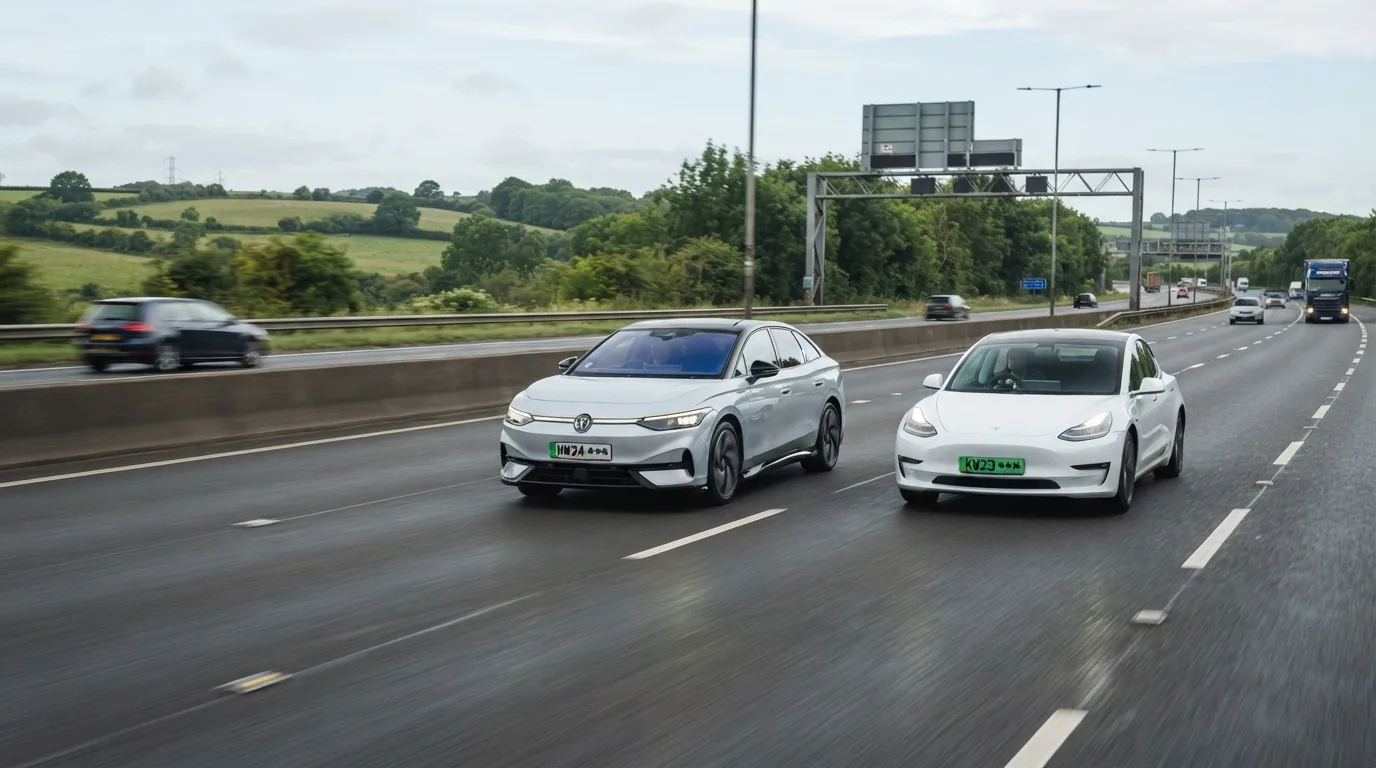
Volkswagen ID.7 vs Tesla Model 3: UK Range Showdown
The ID.7 goes further on paper, costs more and offers more space. The Model 3 charges better and comes with a superior network. Which wins?
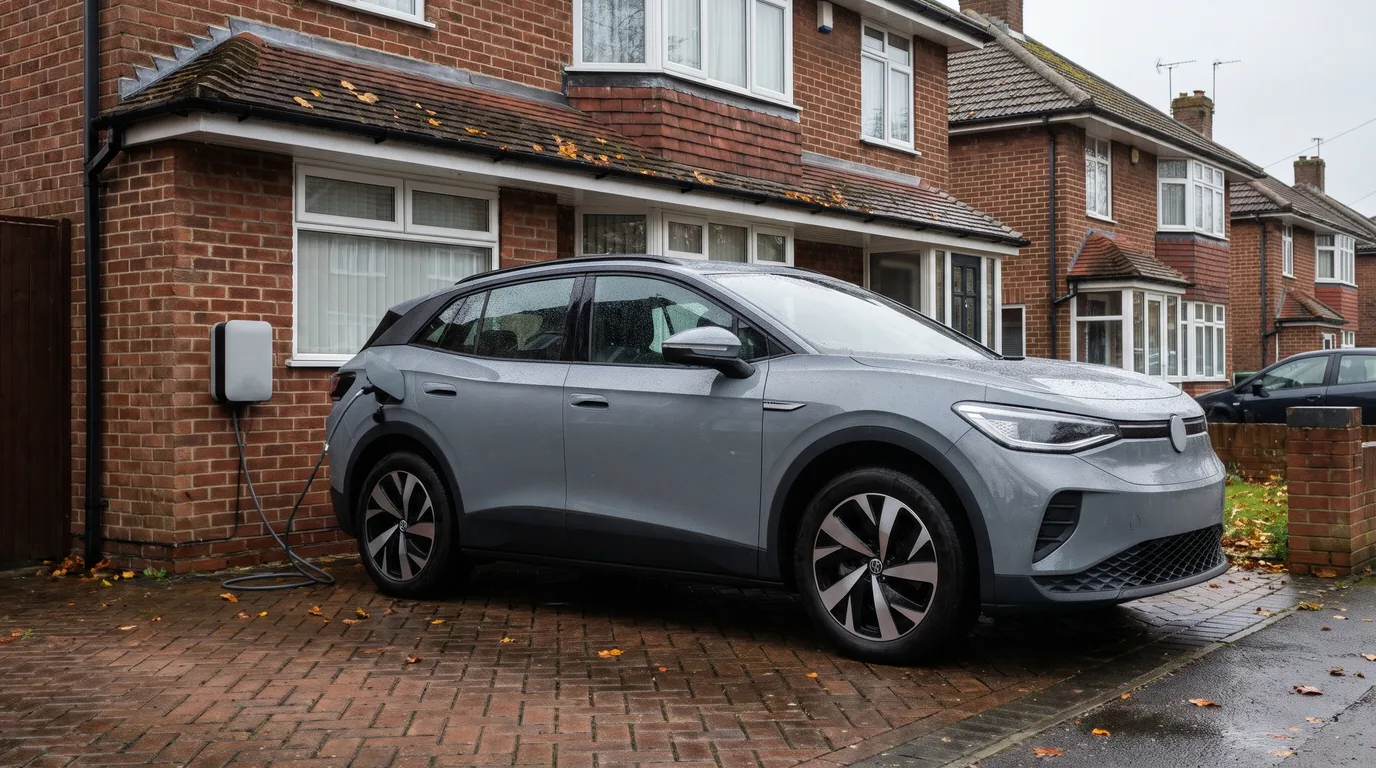
VW battery recall reaches 85,000 EVs as Audi Q4 e-tron is added: what UK owners should do
Volkswagen Group's recall over battery cells that can overheat above 80% charge has grown to more than 85,000 cars worldwide, with Audi's Q4 e-tron now included. The US opt-out headlines do not describe the UK campaign. Here is what has changed and what UK owners should do.
Euro 7 confirmed for Great Britain: EV battery durability rules from 29 November 2027
The Department for Transport has confirmed Euro 7 for new cars and vans registered in Great Britain from November 2027. For electric cars, it brings minimum battery durability standards and battery health monitors, which should make used EVs easier to judge in the 2030s. It does not change anything for cars already on the road.