Electric cars saved oil importers $20bn during the Hormuz crisis, Ember finds
Energy think tank Ember says electric cars in 56 countries cut oil demand by 200 million barrels in the six months after the war with Iran began. Here is what the numbers show, and what they mean for drivers in Britain.
Quick answers
- Ember estimates electric cars in oil-importing countries displaced 200 million barrels of crude oil between March and August 2026, worth about $20bn (£15.1bn).
- China accounted for about $14bn of the savings and EU countries $3.1bn, with Germany and France saving the most.
- Ember's new tracker covers 56 countries that account for more than 90% of global electric car sales and more than 80% of all car sales.
- Globally, battery EV sales rose 11% in the first eight months of 2026 while plug-in hybrid sales fell 12% and combustion car sales fell 6%; EVs took 18% of new car sales.
- Outside China and the US, battery EV sales grew by an estimated 45%.
- In the UK, diesel reached around 195p a litre in October, and the RAC warned some forecourts had passed £2.
Electric cars saved oil-importing countries about $20bn of crude oil in the six months after the start of the war with Iran, according to new analysis by the energy think tank Ember. Between March and August 2026, EVs in those countries displaced an estimated 200 million barrels of oil, oil that would otherwise have been needed while supplies through the Strait of Hormuz were disrupted, as Electrek reported.
For UK drivers, the numbers are a reminder of why the cost of running a car has changed so sharply this year. Diesel reached around 195p a litre in October, and some forecourts passed £2. Drivers who switched to electric before the crisis, and who charge at home, have been largely shielded. Our EV cost per mile analysis shows how big the gap has become.
What did Ember find?
Ember tracked 56 countries that together account for more than 90% of global electric car sales and more than 80% of all car sales, and estimated how much oil each country’s EV fleet displaces. Its headline findings were:
- 200 million barrels of crude oil displaced by electric cars in oil-importing countries between March and August 2026.
- About $20bn (£15.1bn) of crude oil costs avoided, according to Energy Live News.
- China accounted for the largest share, about $14bn.
- EU countries saved a further $3.1bn, with Germany and France saving the most.
- Denmark’s EVs displace the equivalent of 13% of the country’s oil use each year.
“The countries that invested in electric vehicles before this crisis are now better protected, and a growing number are following,” said Euan Graham, senior energy analyst at Ember. “Every electric car on the road reduces exposure to volatile oil markets, and as fleets grow, so does the protection against future supply shocks.”
Why does it matter for energy security?
Because oil is the one energy source most countries, including the UK, must import in large quantities. When supply is disrupted, prices spike everywhere. Every electric car on the road reduces how much oil a country needs, which reduces how exposed it is.
Graham argued that the benefits of EVs “extend beyond cutting emissions, with implications for energy security, economic resilience and how countries position themselves in a world where dependence on imported oil carries immense risks”.
The electricity that powers EVs can be generated at home, from wind, solar, nuclear and gas. It is not immune to price shocks, as gas prices showed in 2022, but it does not depend on a single shipping lane. That is part of the reason the government cut VAT on household electricity this autumn, as our report on the electricity VAT cut explains.
How are global EV sales changing?
They are growing, but unevenly. Ember says that in the first eight months of 2026:
| Global new car sales, January to August 2026 | Change year on year |
|---|---|
| Battery electric cars | Up 11% |
| Plug-in hybrids | Down 12% |
| Petrol and diesel cars | Down 6% |
| Battery EV share of all new cars | 18%, up from 16% |
The global figure hides a big split. Excluding China and the US, battery EV sales grew by an estimated 45%. In the US, battery EVs made up just 6% of light-duty sales after federal EV tax credits were rolled back in September 2025. Of the 56 countries Ember tracks, 49 now have a higher share of fully electric sales than the US, and 15 passed it for the first time this year, including India, Brazil, Italy, Malaysia and New Zealand.
Ember says oil supply disruptions are accelerating EV sales in India, Chile, Australia and New Zealand. Policy matters too: France’s social leasing scheme pushed its battery EV share above 30% for the first time, Germany’s new subsidies lifted sales from the start of 2026, and Japan’s battery EV sales doubled after it introduced help with upfront costs.
Where does the UK stand?
The UK is one of Europe’s stronger EV markets. Battery electric cars took a record 28.3% of new car registrations in September 2026, with 99,201 sold, according to the SMMT, as we covered in our September sales analysis. That is well above the global average of 18%.
The UK’s EV fleet is also large. Zapmap estimated earlier this year that there are more than 1.8 million fully electric cars on UK roads, out of about 34 million cars. Each one is a car that does not need imported oil to move.
Ember’s published headline figures did not include a separate UK saving, so we cannot put a pound figure on Britain’s share. But the logic applies here: the more of the fleet that runs on electricity, the less the country is exposed to oil shocks like this one.
What has the crisis done to UK fuel prices?
It has pushed them to record levels. In October, diesel reached around 195p a litre, about 23p more than petrol, according to AM. Filling an average-sized diesel tank costs around £105, and the RAC warned prices had already passed £2 a litre at some forecourts.
The effects are showing up in the used market. Used diesel values at three years and 30,000 miles have fallen 6.9% in a year, and demand for used diesels fell 19.2% in September. Demand for used EVs rose 40% over the same period. We cover that in our used EV values report.
There is a fuel duty question too. The temporary cut in fuel duty is due to unwind from January, adding 3p and then 2p a litre, unless the Chancellor extends the freeze in the Budget on 28 October. Our Autumn Budget preview covers what is at stake.
How much does an EV save a UK driver right now?
It depends on where you charge. ChargeUK and YouGov estimated that charging at home on an off-peak tariff costs just over 2p a mile, while public charging averages around 22p a mile. A diesel car at around 195p a litre typically costs well over 20p a mile in fuel, depending on its economy.
| How you fuel | Rough cost per mile |
|---|---|
| EV, home off-peak tariff | Just over 2p |
| EV, average public charging | About 22p |
| Diesel at about 195p a litre | Typically 20p or more, depending on economy |
So a home-charging EV driver is paying a fraction of what a diesel driver pays per mile, while a driver who relies entirely on rapid public chargers may pay about the same. That is why the VAT on public charging, and access to home charging for people without driveways, matter so much. Our report on council rules for cross-pavement charging covers that.
How does Ember calculate oil savings?
Ember’s method is straightforward in principle. It estimates how many electric cars are on the road in each country, how far they are driven and how much petrol or diesel an equivalent combustion car would have used. That gives a volume of oil displaced, which Ember values at market prices. Between March and August 2026, it put the total for oil-importing countries at 200 million barrels.
Like any estimate, it depends on assumptions about mileage and fuel economy, and it measures oil that did not need to be bought rather than a direct saving to any individual. But it is a useful way to show the scale of the effect as EV fleets grow.
Why does the US lag behind?
Battery EVs made up just 6% of US light-duty vehicle sales in the first eight months of 2026, after federal EV tax credits were rolled back in September 2025. Ember says 49 of the 56 countries it tracks now have a higher share of fully electric sales than the US, and 15 passed it for the first time this year.
The comparison is about share of sales, not total numbers: the US still sells many more EVs than most of those countries. But it shows how quickly policy can change the direction of a market. In the UK, the ZEV mandate, the Electric Car Grant and low company car tax have pushed EV share far above the US, which is one reason the review of the mandate matters so much, as we cover in our ZEV mandate review explainer.
What are other countries doing?
Ember highlights several policies that have boosted EV sales this year:
- France’s social leasing scheme, which offers cheap EV leases to lower-income households, helped its battery EV share pass 30% for the first time.
- Germany’s new consumer subsidies, introduced at the start of 2026, lifted sales.
- Japan’s help with upfront costs saw its battery EV sales double.
- Oil supply disruption accelerated EV sales in India, Chile, Australia and New Zealand.
Countries are also building EV industries at home. Tata and Mahindra accounted for more than 60% of India’s EV sales in the first half of the year, and Brazil is expanding as a regional manufacturing hub.
Our view
Ember’s figures make a point that is easy to forget in debates about grants and targets: electric cars are an energy security policy as well as a climate one. Countries that built up their EV fleets before 2026 have been better protected from the oil shock. For UK drivers, the lesson is practical. If you can charge at home, an EV has rarely been better value than it is now. If you cannot, public charging costs and VAT are the issues to watch.
How we test and where our numbers come from
Range figures are official WLTP combined values taken from manufacturer UK specification pages, with real-world estimates drawn from independent comparative testing. Prices are UK list prices at the time of the latest update. Tax, grant and charging-scheme figures come from GOV.UK and HMRC publications. We re-check every guide when pricing, specification or policy changes. Last checked 24 October 2026. How we work out our own figures.
Frequently asked questions
How much oil have electric cars saved during the Hormuz crisis?
Ember estimates electric cars in oil-importing countries displaced 200 million barrels of crude oil between March and August 2026, worth about $20bn or £15.1bn. China accounted for about $14bn of that and EU countries $3.1bn.
Does the Ember report include the UK?
Ember's tracker covers 56 countries, which account for more than 90% of global EV sales, so it includes the major European markets. The published headline figures name China, the EU, Germany and France, but no separate UK figure was reported in the coverage we reviewed.
Are electric cars cheaper to run than petrol with high oil prices?
At home, yes, by a wide margin. Charging on an off-peak tariff costs a few pence a mile, while diesel at around 195p a litre makes petrol and diesel cars far more expensive to fuel. Rapid public charging is closer in cost to petrol, so where you charge matters.
What share of new cars sold worldwide are electric?
According to Ember, battery electric cars made up 18% of new car sales worldwide in the first eight months of 2026, up from 16% a year earlier. In the UK, battery EVs took a record 28.3% of the market in September 2026.
Which countries are buying the most electric cars?
China remains by far the largest market. Ember says 49 of the 56 countries it tracks now have a higher share of fully electric new car sales than the US, including India, Brazil, Italy, Malaysia and New Zealand, which overtook it in 2026.
Sources and further reading
- electrek.coElectrekPrimary source referenced in this article.
- energylivenews.comEVs saved oil-importing countries £15 billion since Hormuz energy crisisThe £15.1bn conversion, EU savings and Denmark's 13% oil displacement.
- am-online.comDiesel cars lingering on forecourts as demand plunges 19%UK diesel at around 195p a litre, £105 to fill a tank and the RAC's warning on £2 a litre.

EV Compared
The EV Compared editorial team tracks the UK electric vehicle market full time: new model launches, list prices, WLTP and real-world range, public charging tariffs and the tax rules that decide what an EV actually costs to run. Every guide is checked against manufacturer specifications and official GOV.UK figures, and updated whenever the numbers move.
Related reading
View all
Autumn Budget 2026: what EV drivers want from John Healey on 28 October
The new Chancellor's first Budget lands as fuel prices bite, the ZEV mandate is under review and public charging still carries 20% VAT. Here is what the motor industry, charging firms and drivers are asking for, and what is already fixed.
Pavement charging gullies: planning rule scrapped, but 20 councils still say no
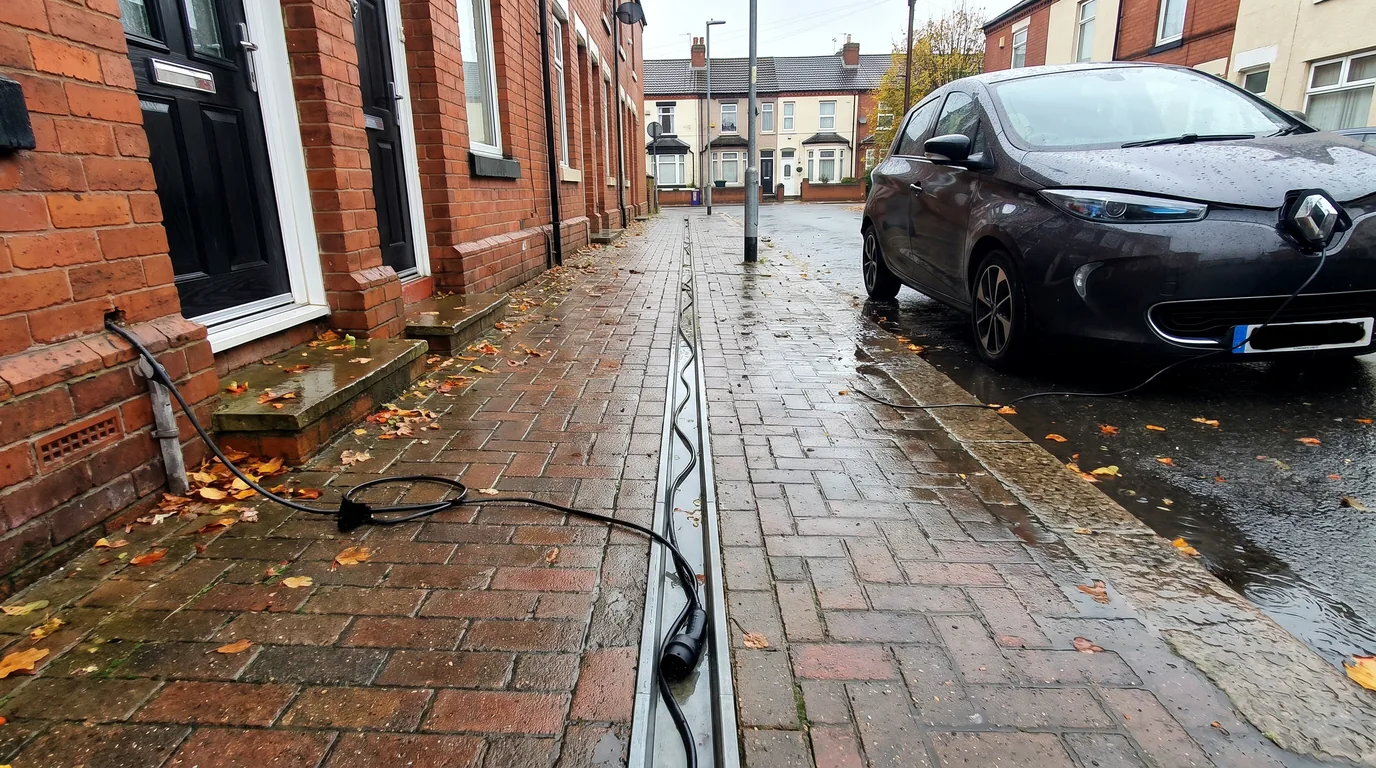
Drivers in England without a driveway no longer need planning permission for a pavement cable channel, saving £300 to £500. But costs range from free to £1,200 depending on your council, and some councils still refuse them outright.
Chinese brands take 23.3% of UK car sales as Jaecoo 7 tops September
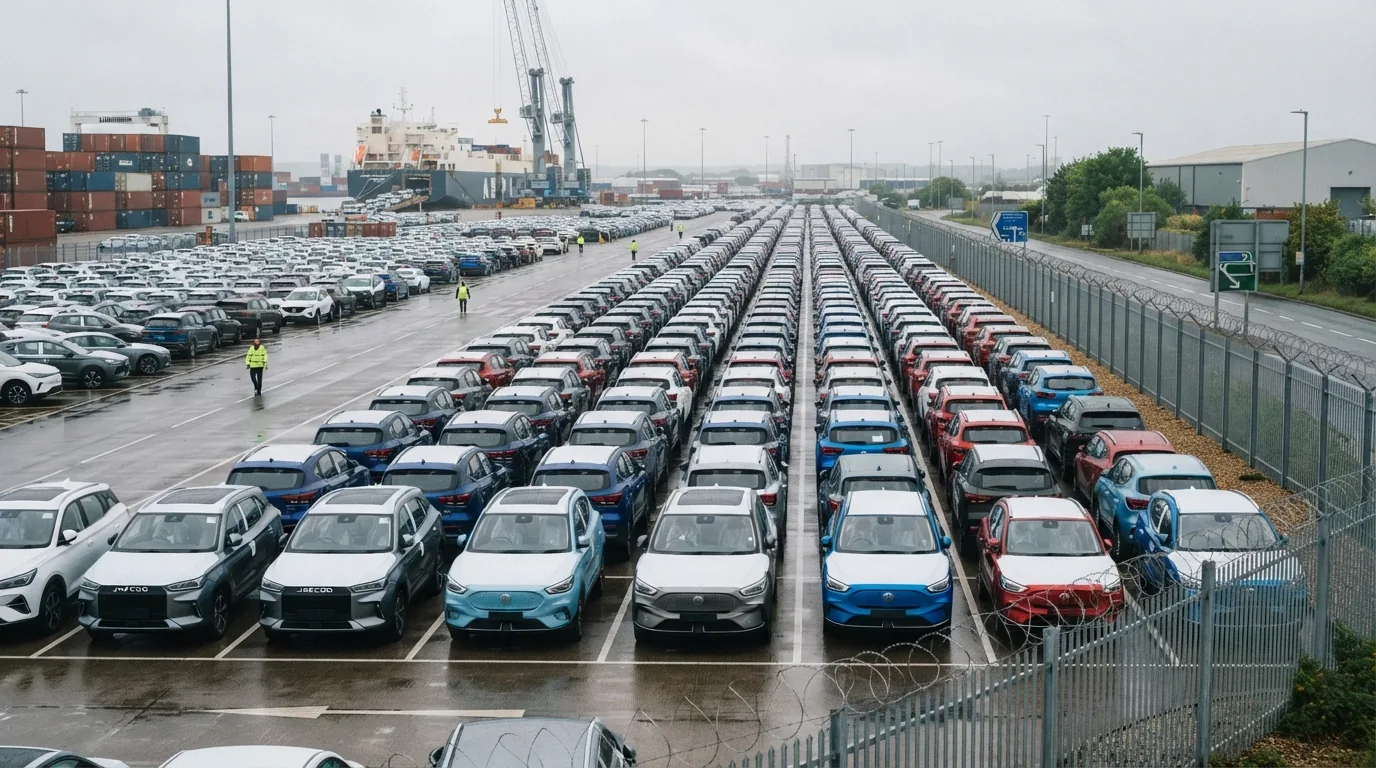
Nearly one in four new cars sold in September came from a Chinese brand, even though cars built in China get no Electric Car Grant. Here is what it means for prices, discounts and resale.
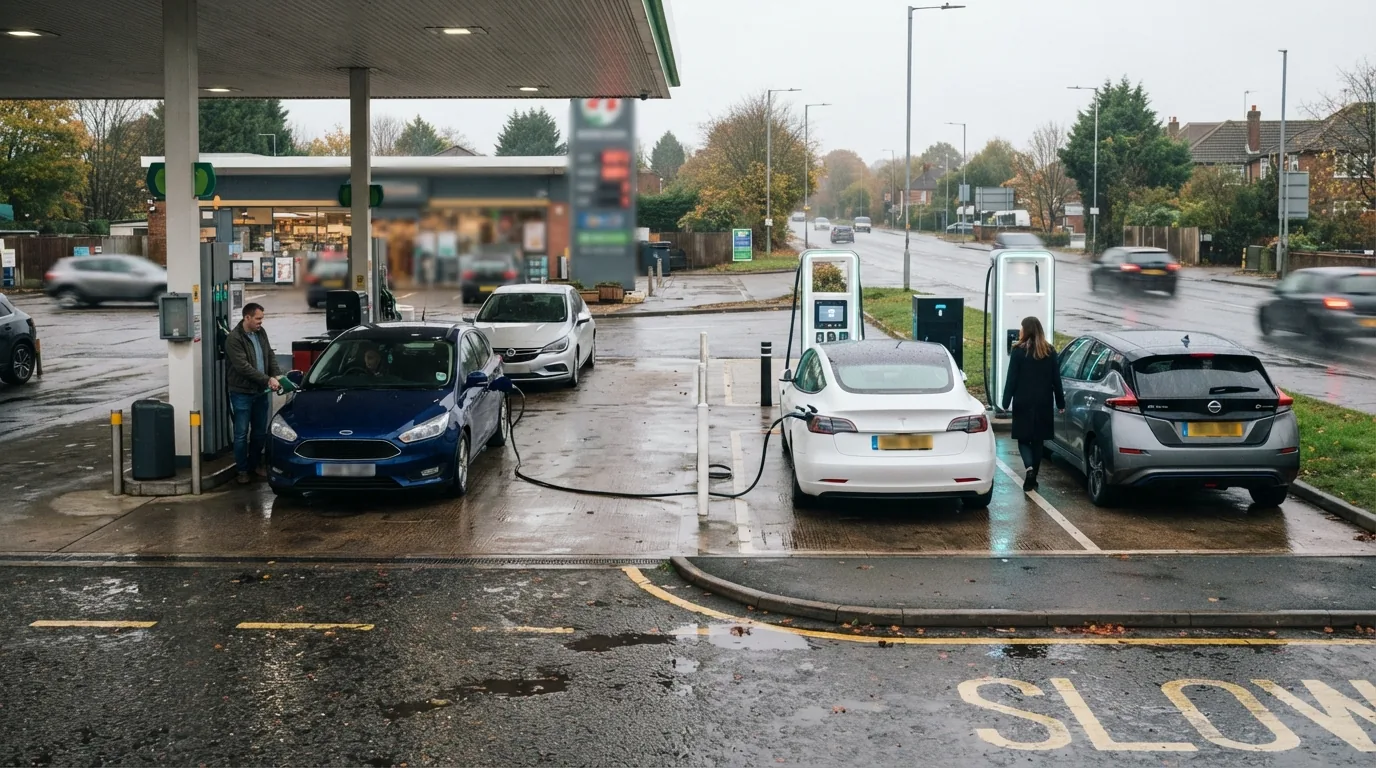
Diesel tops 200p a litre: how much cheaper an EV is per mile
Diesel passed £2 a litre for the first time on 2 October, putting a 50mpg diesel at about 18p a mile. Home charging costs 2.3p to 7.5p a mile, but rapid chargers now cost more.
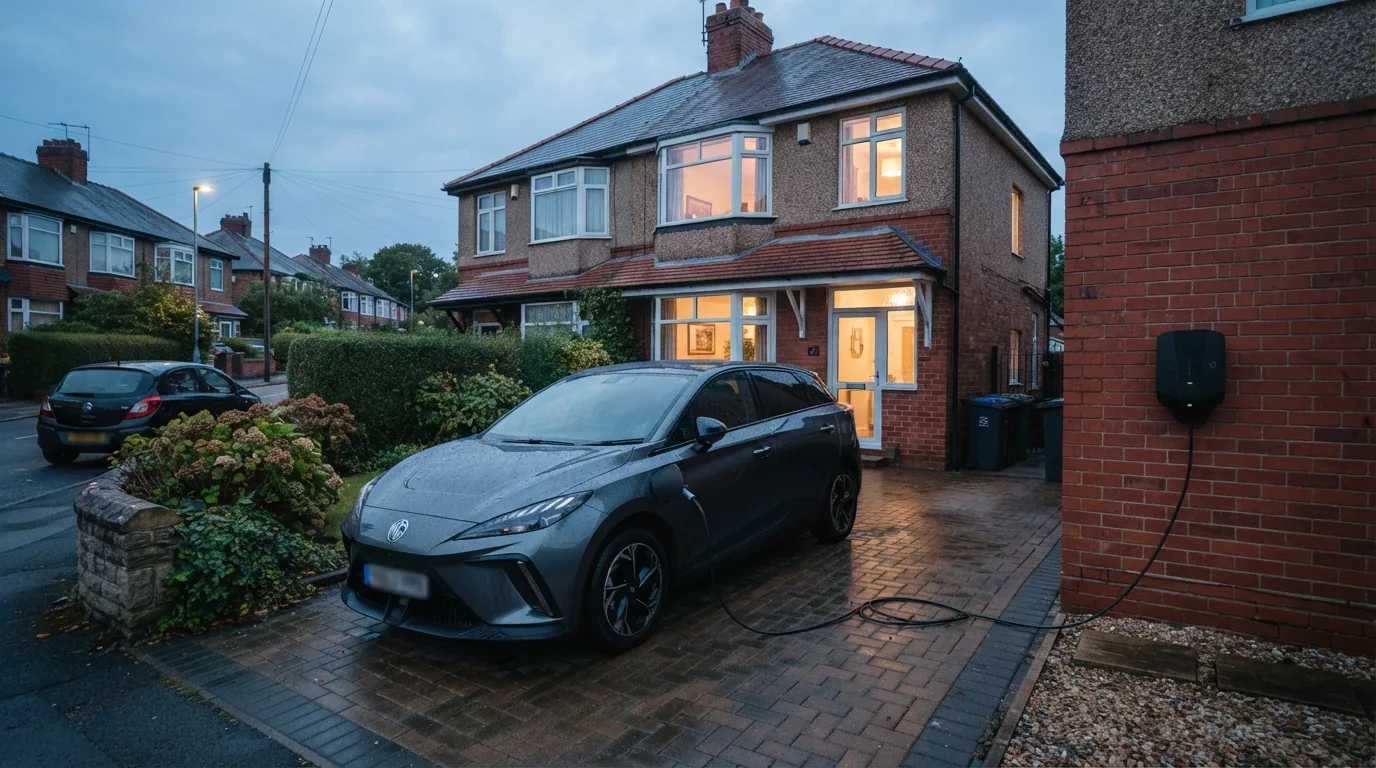
Electricity VAT cut to 0%: what EV drivers save until March
VAT on home electricity fell to zero on 1 October, yet drivers on cheap EV tariffs gain least and public charging stays at 20%. Here is what the six-month cut is really worth to you.
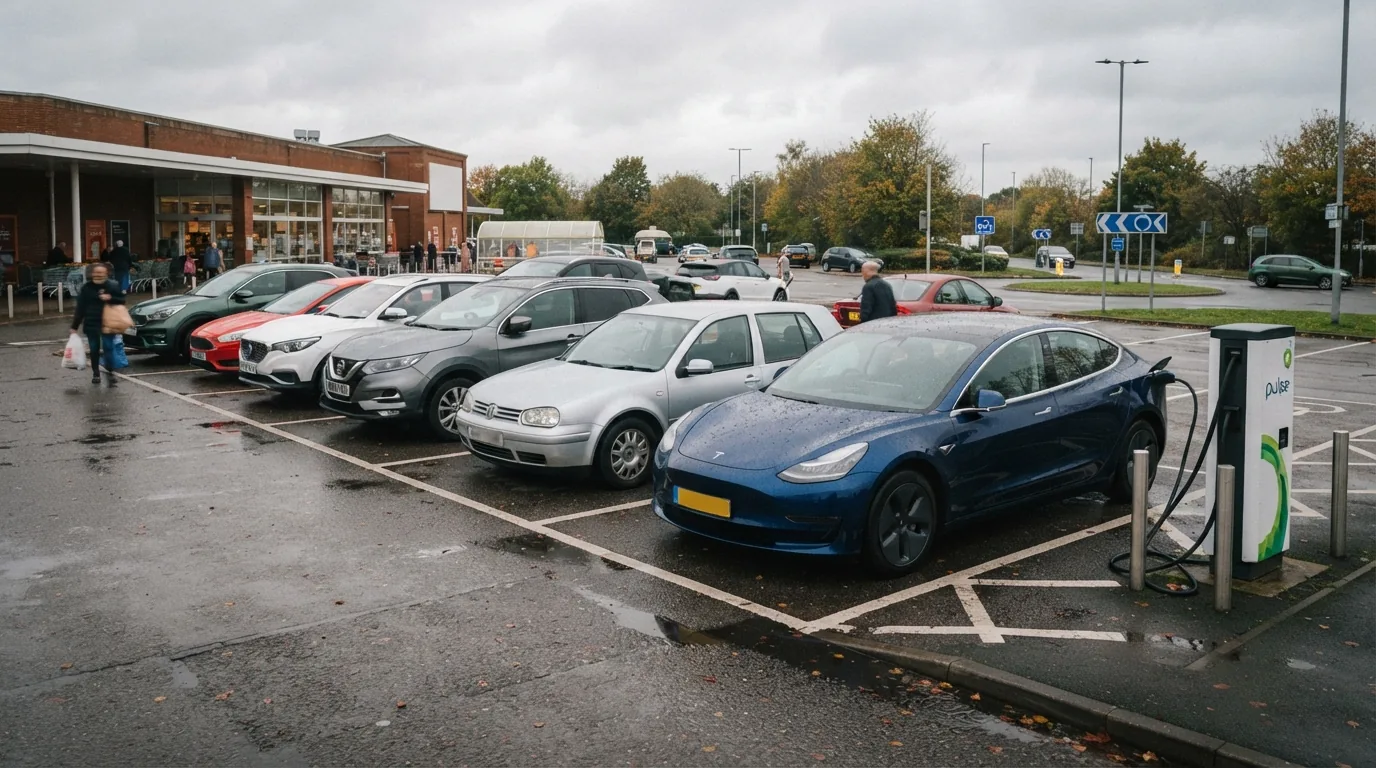
ZEV mandate review: 2030 EV target could fall from 80% to 50%
Ministers are weighing a 2030 electric car target of 70%, 60% or 50% instead of 80%, with responses due on 23 October. Here is who wants what, and what a softer target means for buyers.