Best Cheap Home EV Chargers Under £600 in the UK
The most affordable smart wallboxes that still do the job properly, with UK prices and honest verdicts
Quick answers
- The cheapest EV charger we would recommend for UK homes is the Pod Point Solo 3, at about £350 for the unit with a three-year warranty.
- A cheap home EV charger is still a smart charger: since June 2022 every new UK home charger must support scheduling, so price does not decide whether you get off-peak charging.
- The Easee One costs about £405 and includes a built-in 4G eSIM, so it does not depend on your home Wi-Fi, and it can be scheduled into the Octopus Go overnight window.
- The EO Mini Pro 3 (about £550) includes a CT clamp for solar diversion as standard, which is rare in an affordable EV charger.
- The Wallbox Pulsar Max (about £500 to £550) weighs 1.3kg and suits Octopus customers who want a compact unit; the Pod Point Solo 3 is the cheapest of the four.
- Installation adds about £300 to £500 to any unit price, so compare installed quotes: a cheaper unit with a dearer install can cost the same overall.
- Eligible renters and flat owners can get 75% off the cost of a socket and its installation, up to £500, from the OZEV EV chargepoint grant.
The cheapest EV charger worth buying in the UK is the Pod Point Solo 3, at about £350 for the unit. You do not need to spend over £600 on a home EV charger to get a smart, reliable wallbox that works with off-peak tariffs and handles daily charging without issues. Several capable smart chargers have unit prices below £600, and after the OZEV grant (up to £500 for eligible buyers), the effective cost can fall significantly lower. The best under-£600 options in 2026 are the Pod Point Solo 3, Wallbox Pulsar Max, Easee One, and EO Mini Pro 3.
What you need to know before buying a budget home EV charger
“Cheap” in the EV charger world does not mean compromised on safety or core functionality. From June 2022, UK regulations require all new home EV chargers to be smart chargers capable of scheduling. Every current model from a reputable brand complies with this, regardless of price.
Home chargers generally fall into two categories: portable three-pin chargers and fixed wallbox chargers. Our guide to charging an EV from a three-pin plug explains why a wallbox is the better choice for daily use. Whether you have off-street parking decides which route is open to you in the first place.
The differences between budget and premium chargers lie in:
- Build quality and weatherproofing: A budget IP54 charger vs a premium IP66 unit.
- Tariff integration depth: Does it connect directly to your energy supplier’s API?
- App quality: Simple scheduling vs real-time tariff display and cost tracking.
- Solar mode: Most budget units lack solar diversion capability.
- Connectivity redundancy: Budget units typically rely on Wi-Fi only; premium units may add 4G.
If you just need overnight scheduled charging on an EV tariff with no solar and a decent app, a budget charger does everything required. It is also a cheaper way to charge than most public chargers.
Budget EV charger comparison table
| Charger | Unit price | Output | Tethered? | Smart tariff | IP rating | Warranty |
|---|---|---|---|---|---|---|
| Pod Point Solo 3 | ~£350 | 7.4kW | Yes | BG, EDF, E.ON + schedule | IP65 | 3 years (5 with Pod Drive) |
| Wallbox Pulsar Max | ~£500-£550 | 7.4kW | Both | Octopus-compatible | IP55 | 3 years |
| Easee One | ~£405 | 7.4kW | Untethered | Octopus Go (scheduled) | IP54 | 3 years |
| EO Mini Pro 3 | ~£550 | 7.2kW | Both | Octopus Go, EDF | IP55 | 3 years |
All prices are unit-only (hardware). Add £300-£500 for professional installation. OZEV grant (up to £500) applies for eligible buyers and reduces effective cost. 7kW is the normal choice for UK homes in this price range.
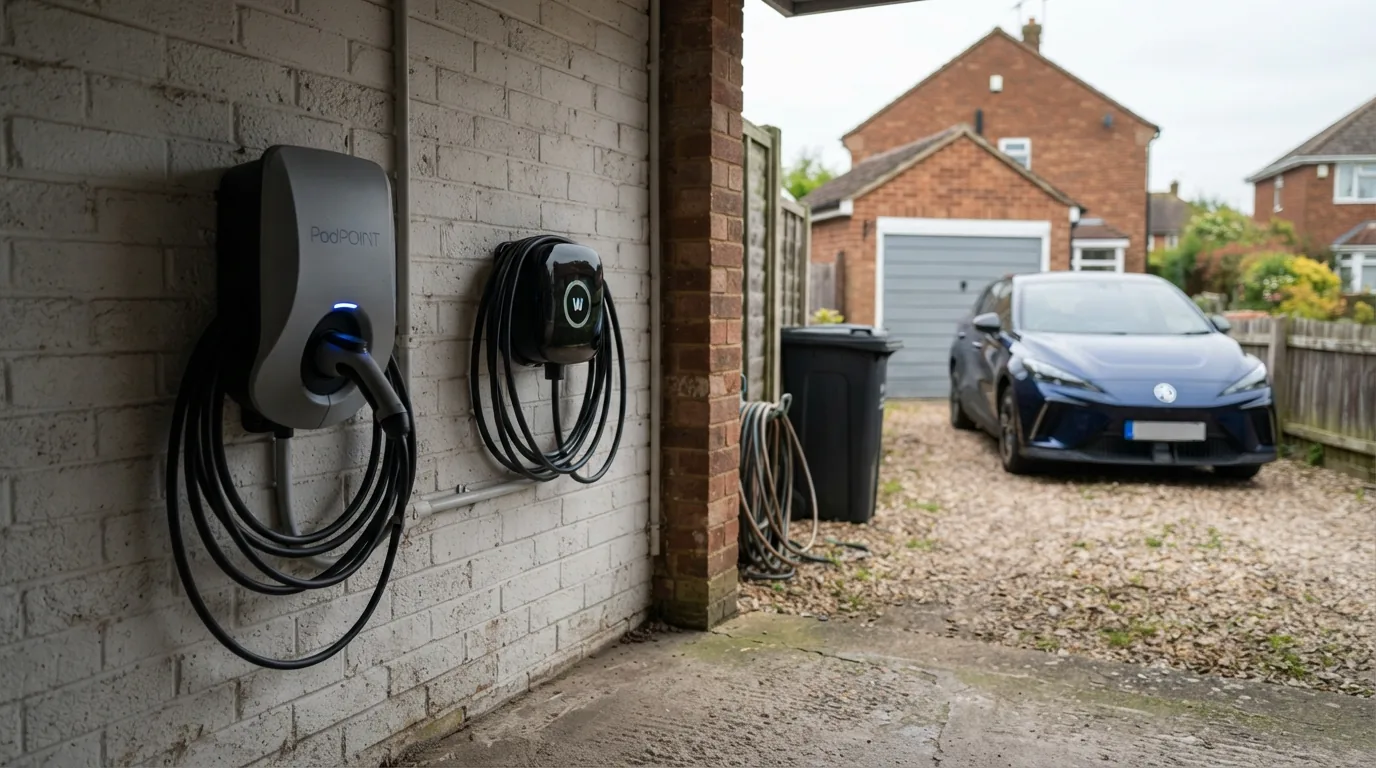
Pod Point Solo 3 (~£350)
The Pod Point Solo 3 is the most affordable reliable smart home charger in the UK market. Its warranty is three years as standard, rising to five with Pod Point’s Pod Drive subscription. At 7.4kW, it charges any EV at close to maximum home charging speed. The app supports scheduling and cost tracking, and native integration with British Gas Electric Driver, EDF GoElectric, and E.ON Next Drive tariffs means tariff-switching on those providers is seamless.
The Solo 3 does not have deep Octopus Intelligent Go API integration, though it can be scheduled manually to charge during the Octopus Go window. A newer variant, the Solo 3S, has been added to the Intelligent Octopus Go compatible list. Pod Point itself now sells the Solo 3S, installed from £999.
IP65 weatherproofing handles UK conditions well. The design is functional rather than premium, which is where the cost saving comes from.
Best for: Budget buyers on British Gas, EDF, or E.ON, or anyone who wants the lowest installed cost.
Installed cost (approx.): £750-£900 before OZEV grant.
Wallbox Pulsar Max (~£500-£550)
The Wallbox Pulsar Max is one of the smallest smart chargers available (1.3kg, pocket-sized form factor) and one of the most popular mid-range options in 2026. It supports Octopus Intelligent Go via API and comes in both tethered (5m or 7m cable) and untethered socket versions. The untethered version is more flexible if you change vehicles.
The app is well-designed with clear scheduling, cost tracking, and Alexa/Google Home integration. IP55 weatherproofing is adequate for most UK installations, though not class-leading. If app quality matters most to you, see our pick of the best EV chargers with an app.
The Pulsar Max sits above the Pulsar Plus in Wallbox’s range, with upgraded robustness and easier installation. Some users report the app setup requires more technical steps than simpler alternatives, but the end result works reliably.
Best for: Octopus users wanting a compact unit at a reasonable price.
Installed cost (approx.): £850-£1,050 before OZEV grant.
Easee One (~£405)
The Easee One’s unit price is low, but it adds 4G eSIM connectivity as standard (no Wi-Fi dependency) and can be scheduled into the Octopus Go window. Its standout feature is the lockable Type 2 socket that acts as both tethered and untethered depending on your preference. Dynamic load balancing allows up to three Easee chargers to share one fuse intelligently, useful for multi-car households or managed properties.
The IP54 rating is the weakest in this group, adequate for a sheltered installation, but less ideal for a fully exposed outdoor position. No solar mode is a notable omission. We compare it head to head in EO Mini Pro vs Easee One.
Best for: Flexibility seekers, Octopus Go users, and multi-charger setups.
Installed cost (approx.): £850-£1,000 before OZEV grant.
EO Mini Pro 3 (~£550)
The EO Mini Pro 3 is one of the smallest home chargers on the UK market (230mm x 151mm x 125mm) and is notable for including solar diversion with a CT clamp as standard, rare at this price point. Available in tethered or untethered versions, with Wi-Fi, Bluetooth, and Ethernet connectivity (4G cellular is an optional extra).
It integrates with Octopus Go and EDF GoElectric and supports preset tariff schedules. The app is functional. The solar mode is not as sophisticated as the Zappi’s dedicated Eco/Eco+ system but works adequately for basic surplus diversion. Households with panels should also read our list of EV chargers for solar panel owners.
Best for: Buyers who want solar functionality at a budget price, or who need the smallest footprint.
Installed cost (approx.): £900-£1,100 before OZEV grant.
What about after the OZEV grant?
For eligible renters, landlords, and flat owners, the OZEV EV Chargepoint Grant covers up to £500 per socket or 75% of total cost (unit plus installation), whichever is lower. Check the rules in our explainer on the EV chargepoint grant before you order.
| Charger | Installed cost (before grant) | After £500 OZEV grant |
|---|---|---|
| Pod Point Solo 3 | ~£750-£900 | ~£250-£400 |
| Easee One | ~£850-£1,000 | ~£350-£500 |
| Wallbox Pulsar Max | ~£850-£1,050 | ~£350-£550 |
| EO Mini Pro 3 | ~£900-£1,100 | ~£400-£600 |
At these post-grant prices, even a previously expensive installation becomes accessible.
The common mistake: buying on unit price alone
Installation adds £300-£500 to any charger cost. A £350 charger installed for £550 costs £900 total, similar to a £500 charger installed for £400. Get full installed quotes from OZEV-approved installers, not just unit prices; our guide on how to choose an EV charger installer shows what to ask.
Also check the tariff integration: a budget charger without Octopus compatibility loses the automatic scheduling benefit. If you are on Intelligent Octopus Go, ensure the charger you choose is on the compatible list, and see which EV tariffs are cheapest to match the charger to your supplier.
Our best home EV chargers guide covers the full range including premium options. The complete guide to charging at home has everything else you need to get set up.
How we test and where our numbers come from
Range figures are official WLTP combined values taken from manufacturer UK specification pages, with real-world estimates drawn from independent comparative testing. Prices are UK list prices at the time of the latest update. Tax, grant and charging-scheme figures come from GOV.UK and HMRC publications. We re-check every guide when pricing, specification or policy changes. Last checked 23 October 2026. How we work out our own figures.
Frequently asked questions
What is the cheapest EV charger in the UK?
The Pod Point Solo 3 is the cheapest EV charger we would recommend, at about £350 for the unit. It is a tethered 7.4kW smart charger rated IP65 with a three-year warranty. Installation typically adds £300 to £500, so expect to pay roughly £750 to £900 installed before any grant.
Are cheap EV chargers safe and smart?
Yes. Since June 2022, UK regulations require all new home EV chargers to be smart chargers capable of scheduling, whatever their price. Every current model from a reputable brand complies. What you save on is build quality, tariff integration depth, app features and extras such as solar mode.
What is the cheapest EV charger that works with Octopus?
The Wallbox Pulsar Max, at about £500 to £550, is the charger in this list that supports Octopus Intelligent Go via API. The cheaper Easee One (about £405) has a built-in 4G eSIM, so it does not rely on Wi-Fi, and can be scheduled into the Octopus Go overnight window, as can the Pod Point Solo 3.
Can I get a grant for a cheap home EV charger?
Only if you rent or live in a flat. The OZEV EV chargepoint grant gives eligible renters and flat owners 75% off the cost of a socket and its installation, up to a maximum of £500. Homeowners in houses with a driveway do not normally qualify.
Is a cheap EV charger better than a three-pin plug?
Yes, for everyday use. A portable three-pin charger needs no installation but is a slower fallback, while a fixed 7kW wallbox is the normal choice for daily home charging and supports scheduling and off-peak tariffs. A budget wallbox starts at about £350 for the unit.
Sources and further reading
- gov.ukGOV.UK OZEVPrimary source referenced in this article.
- gov.ukElectric vehicle chargepoint grant for renters or flat owners: What you can getConfirms the grant is 75% off the cost of buying and installing a socket, up to a maximum of £500.
- legislation.gov.ukThe Electric Vehicles (Smart Charge Points) Regulations 2021The regulations behind the smart charger requirements, including off-peak charging and randomised delay.
- easee.comEasee One: EV charger for the UK domestic marketManufacturer specification: 7.4kW single phase, built-in eSIM, lockable cable and load balancing of up to three units per fuse.
- podenergy.comSmart Home Charger | Pod PointPod Point's current home charger is the Solo 3S, sold from £999 with standard installation included.
- wallbox.comPulsar family EV chargersWallbox sells the Pulsar Plus, Max and Pro side by side; the Max adds upgraded robustness and easier installation.

EV Compared
The EV Compared editorial team tracks the UK electric vehicle market full time: new model launches, list prices, WLTP and real-world range, public charging tariffs and the tax rules that decide what an EV actually costs to run. Every guide is checked against manufacturer specifications and official GOV.UK figures, and updated whenever the numbers move.
Related reading
View all
Best EV Chargers for Solar Panel Owners in the UK
Solar diversion chargers ranked, with UK prices and a clear explanation of what each one actually does with your surplus
Pod Point vs Wallbox: Which Home Charger Wins in Britain?
A direct comparison of price, speed, warranty and smart features for the two most popular home EV chargers in the UK
How to Choose an EV Charger Installer in the UK: Checks, Quotes and Costs
The accreditations to check, the questions to ask, and what a fair quote should always include
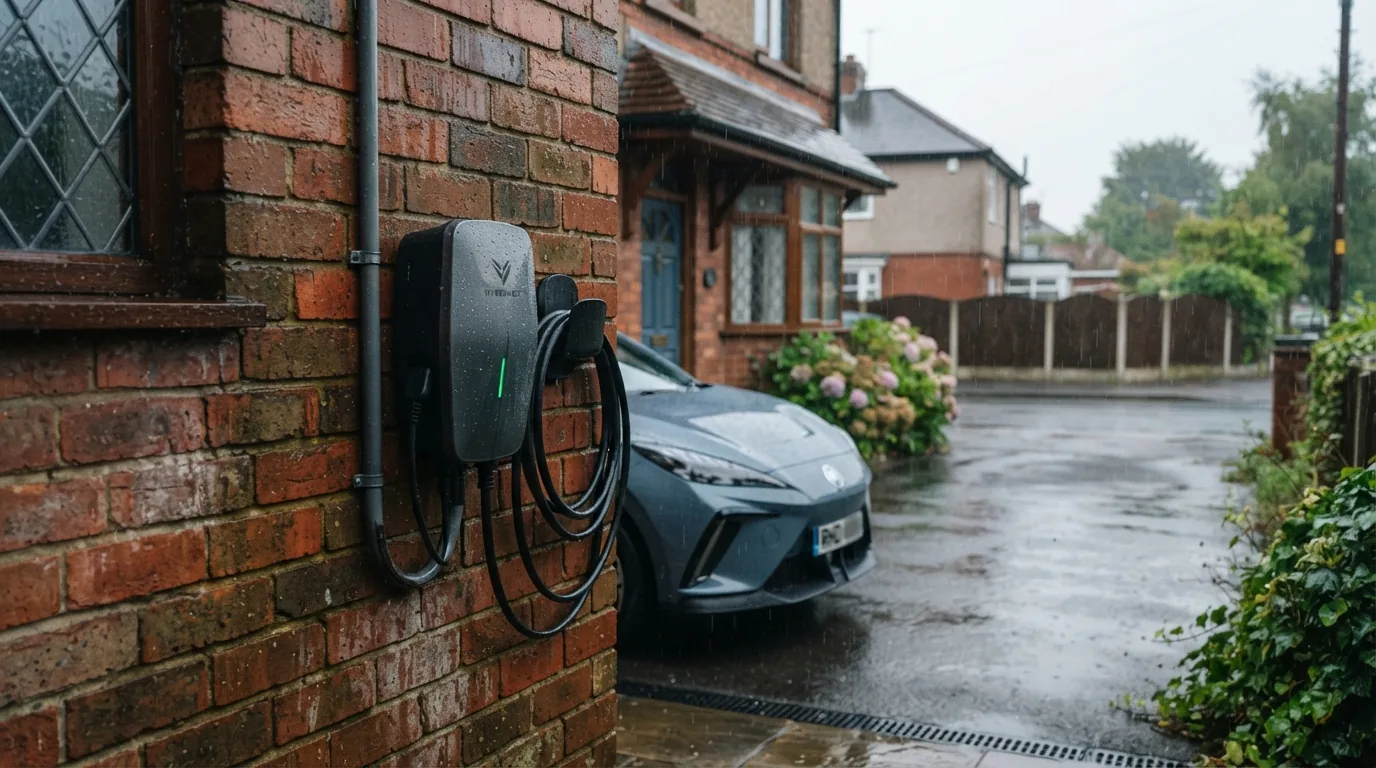
Best Weatherproof Outdoor EV Chargers for UK Homes
Which home EV chargers stand up to British weather, and why IP rating matters more than most buyers realise
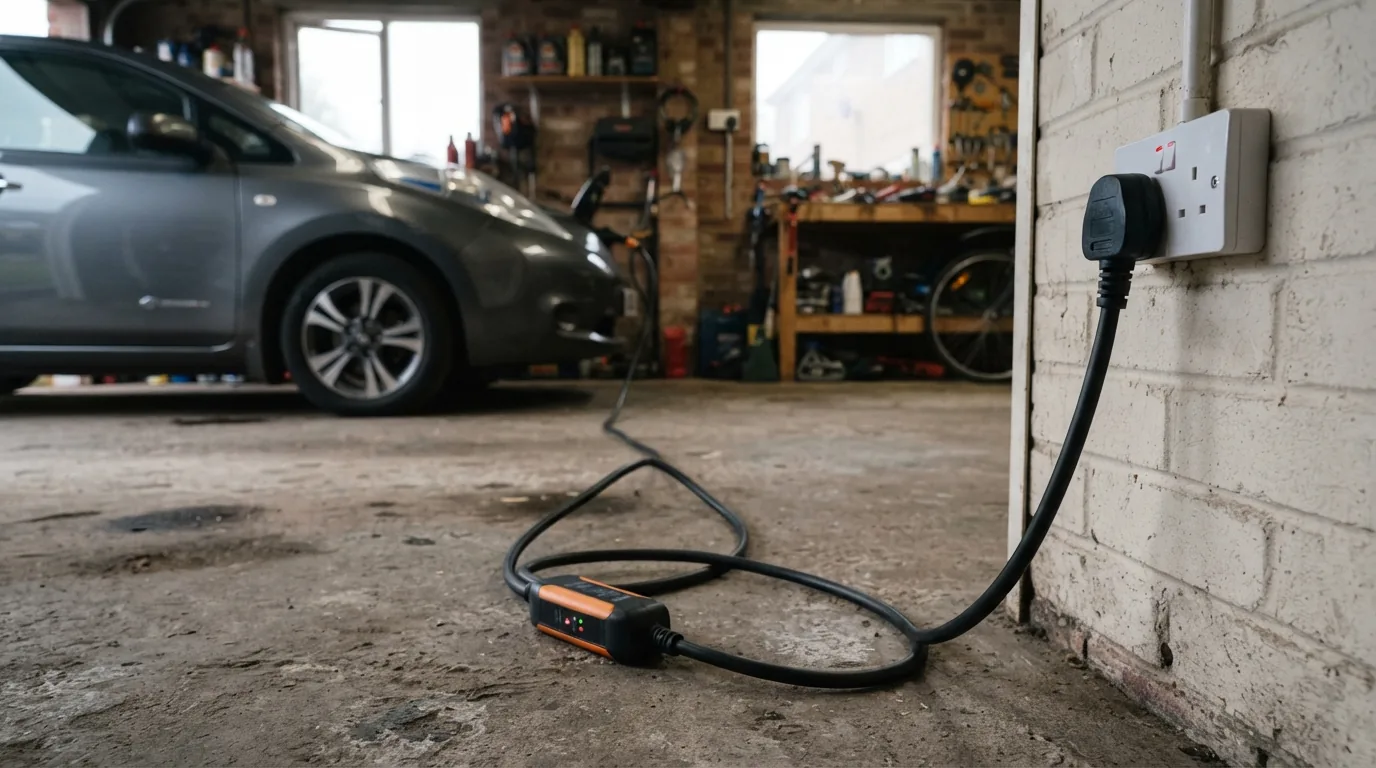
Can You Charge an EV From a Three-Pin Plug in the UK?
Yes, most cars ship with the cable, but speed and safety limits mean it works best for occasional or emergency use
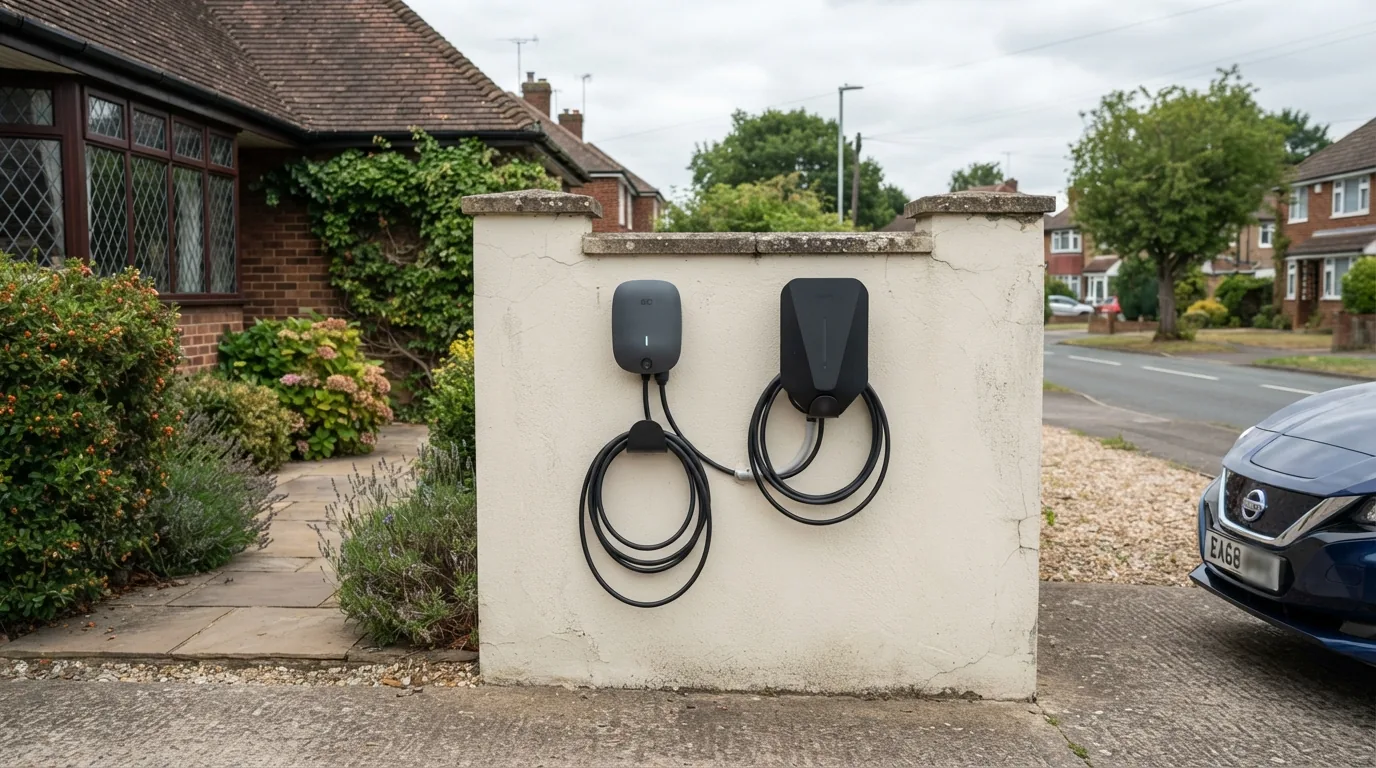
EO Mini Pro vs Easee One: UK Home Charger Comparison
Two compact, smart chargers at similar price points, which one suits your home and charging setup?