CableGuard V4 sleeve, fitted in 20 minutes, targets EV cable theft
Formula Space has launched a tougher cut-resistant sleeve for public charger cables as copper thieves turn to angle grinders. Here is what it does, why thefts are rising and what to do if your charger is cut.
Quick answers
- Formula Space launched CableGuard V4 on 1 October 2026, a cut-resistant sleeve that the manufacturer says is built to withstand power tools as well as handheld cutters.
- Formula Space says the sleeve can be fitted to an existing public charger cable in 20 minutes, so operators can retrofit it rather than replace cables.
- If a protected cable is attacked, it releases a fluid carrying a DNA code unique to that charging location, which shows under UV light and links to a police database.
- Hampshire and Isle of Wight Constabulary recorded a 114% rise in metal theft from December 2025 to February 2026 against the year before, while Cleveland Police logged about 30 home charger cable thefts in a few days.
- A cut cable takes a charger out of action until the operator repairs it, so a protected cable means fewer dead bays on your route.
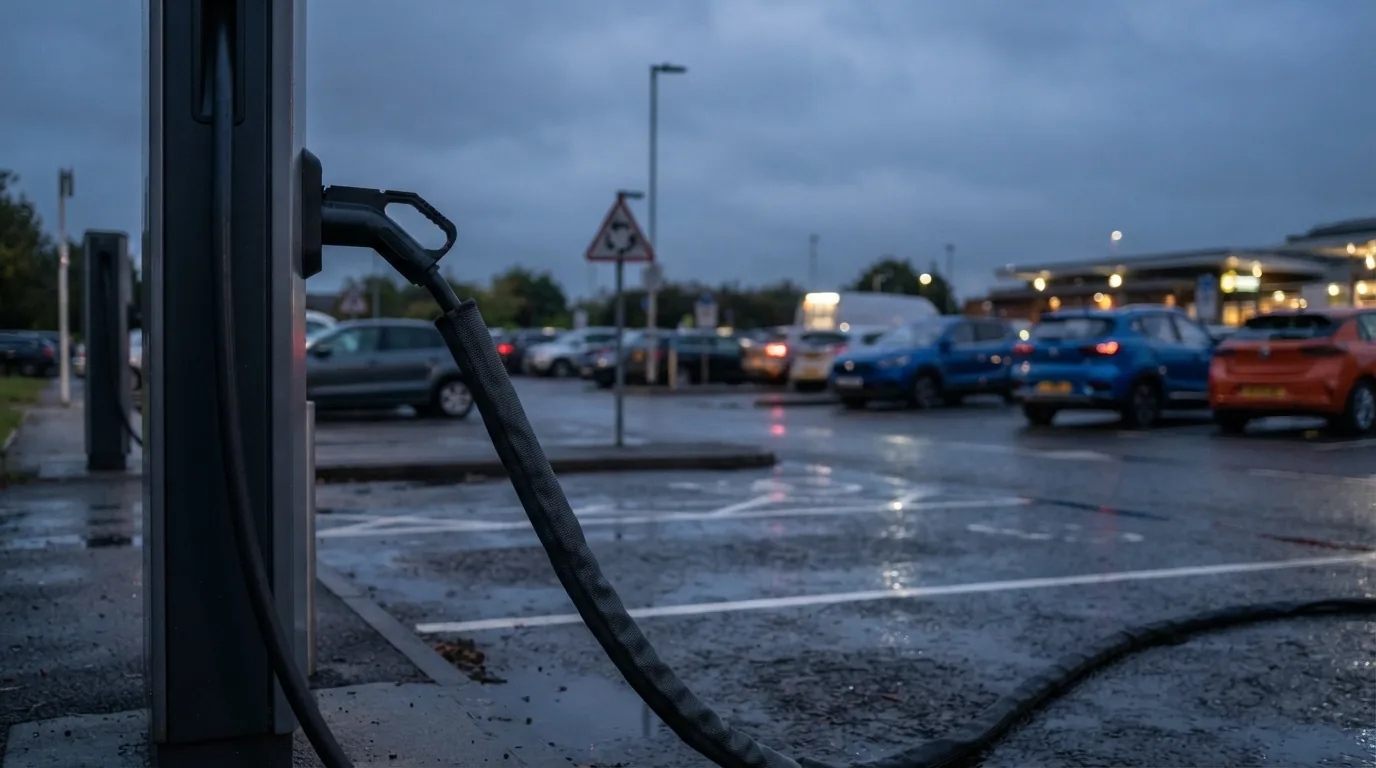
Formula Space launched CableGuard V4 on 1 October 2026, a cut-resistant sleeve for public EV charger cables that, the company says, can be fitted in 20 minutes and is built to withstand angle grinders. A slashed cable is one of the quickest ways to put a rapid charger out of action, so protection that operators can retrofit matters to any driver relying on a working bay.
What is CableGuard V4?
CableGuard is a sleeve that wraps a charger’s cable. The V4 version is engineered to defeat thieves using angle grinders and other power tools by blunting them, turning a job that once took seconds into a slow, noisy and conspicuous one, according to EV Fleet World and EV Powered.
The 20-minute fit is the practical point. Operators can add it to chargers already in the ground rather than waiting for new cables or new hardware. Formula Space’s launch claims are the manufacturer’s own; we have not seen independent cut-test results for the V4.
How does the forensic fluid work?
The sleeve is also a tracing system. If a protected cable is attacked, it releases a fluid at high pressure that lands on the person and their belongings. The fluid is invisible to the naked eye, but carries a DNA code unique to that charging location, visible under UV light and linked to a database available to police, as Kempower describes it.
Kempower, a charger manufacturer, approved the earlier CableGuard system for its chargers after eight weeks of in-house testing. The approval covers CCS2 cables up to 300A and five metres long, and applies in the UK, Ireland and continental Europe.
| Layer | What it does |
|---|---|
| Cut-resistant sleeve | Blunts angle grinders and handheld cutters, slowing the attack |
| Forensic fluid | Marks the attacker with a code unique to the site |
| Police database | Lets officers link a marked suspect to the location |
Why is cable theft rising?
The target is copper. Hampshire and Isle of Wight Constabulary recorded a 114% rise in metal theft from December 2025 to February 2026 against the same period a year earlier, and linked it to rising metal prices (Isle of Wight Radio). Charger cables are an easy source of copper: they are long, thick and often in quiet car parks.
Home chargers are being hit too. Cleveland Police said it received about 30 reports of home charger cable thefts in a few days in February 2026 in Yarm and Ingleby Barwick, during the day and at night, with the thefts carried out in minutes (Cleveland Police).
What does it mean for charging reliability?
A cut cable means a dead bay until the operator can send an engineer and fit a replacement. That adds to the faults and blocked bays covered in our guide to what to do when a public charger is broken or blocked, and it undermines the picture of how reliable the UK public charging network is. Cable theft is one cause of downtime that operators can design out, unlike a software fault.
Operators have started to respond. InstaVolt introduced anti cable-cutting technology in 2025 (City & Transport), and the V4 sleeve adds a retrofit option for sites that already have chargers. For drivers choosing where to stop, our reliability ranking of charging networks is still the better guide.
What this means for you
If you find a vandalised public charger, do not plug in. Report it to the operator using the number or app on the unit so it is logged, then move to another bay or site. Our guide to finding working chargers on a road trip covers how to check live status before you commit. If you see a theft happening, call 999; otherwise report it to the police on 101.
At home, a tethered charger leaves a valuable cable outside, which is what thieves in Cleveland targeted. Taking a portable or detachable cable indoors overnight removes the incentive, and a socketed unit makes that easy, as our tethered versus untethered charger comparison explains. Check that your home contents insurance covers the cable and charger, and ask your insurer whether it expects any particular security measures.
How we test and where our numbers come from
Range figures are official WLTP combined values taken from manufacturer UK specification pages, with real-world estimates drawn from independent comparative testing. Prices are UK list prices at the time of the latest update. Tax, grant and charging-scheme figures come from GOV.UK and HMRC publications. We re-check every guide when pricing, specification or policy changes. Last checked 6 October 2026. How we work out our own figures.
Frequently asked questions
What is CableGuard V4?
It is a cut-resistant sleeve for EV charging cables from Formula Space, launched on 1 October 2026. Formula Space says it is designed to defeat angle grinders and other power tools by blunting them, and can be fitted in 20 minutes.
How does CableGuard trace thieves?
If a protected cable is tampered with, it releases a fluid at high pressure that lands on the attacker and nearby belongings. The fluid is invisible in normal light but carries a DNA code unique to the charging location, which shows under UV light and is linked to a database police can use.
Why do thieves steal EV charging cables?
They want the copper inside. Hampshire and Isle of Wight Constabulary linked a 114% rise in metal theft between December 2025 and February 2026 to rising metal prices.
What should I do if a public charger has been cut?
Do not use it. Report it to the operator through the number or app on the charger, then move to another bay or site. If you see a theft in progress, call 999; otherwise report it to the police on 101.
Are home charger cables being stolen too?
Yes. Cleveland Police received about 30 reports of home charger cable thefts in a few days in February 2026 in Yarm and Ingleby Barwick, and said the thefts took only minutes.
Sources and further reading
- evfleetworld.co.ukEV Fleet WorldPrimary source referenced in this article.
- envirotecmagazine.comCut-resistant sleeve targets rising EV charging cable theftCoverage of the V4 launch and the theft trend.
- evpowered.co.ukNew Cableguard charger protection aims to thwart cable thievesAngle grinder and power tool resistance of the V4 sleeve.
- kempower.comKempower leads OEMs by approving Formula Space's forensic anti-theft solutionCharger maker approval after eight weeks of testing, and how the forensic fluid works.
- cleveland.police.ukElectric vehicle drivers warned about recent theft of domestic EV charging cablesAbout 30 home charger cable thefts reported in Yarm and Ingleby Barwick.
- iwradio.co.ukIslanders urged to stay vigilant as metal theft reports rise across HampshireHampshire and Isle of Wight metal theft up 114% from December 2025 to February 2026.

EV Compared
The EV Compared editorial team tracks the UK electric vehicle market full time: new model launches, list prices, WLTP and real-world range, public charging tariffs and the tax rules that decide what an EV actually costs to run. Every guide is checked against manufacturer specifications and official GOV.UK figures, and updated whenever the numbers move.
Related reading
View all
Charging an Electric Car at Home in the UK: The Complete Guide
Everything you need to know about home EV charging, from wallboxes to tariffs, installation to solar
What Is the Cost Per Mile of an Electric Car in the UK?
From 2p per mile at home to 23p on a rapid charger, where you charge changes everything
Most Reliable EV Charging Networks UK 2026, Ranked
Which networks actually hit the 99% uptime target, and which ones to trust on a long journey
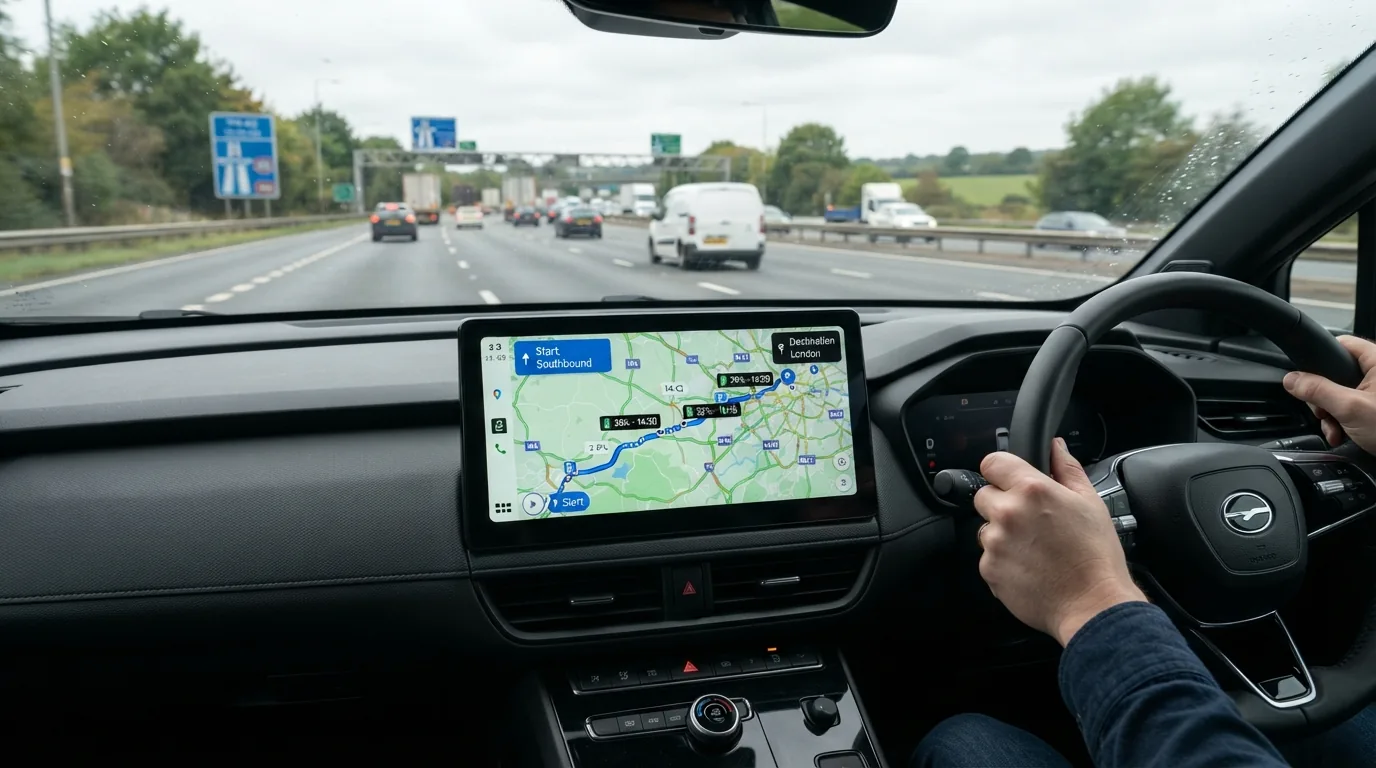
How to Find Working EV Chargers on a UK Road Trip
Apps, planning strategies and backup options to avoid being stranded between charges
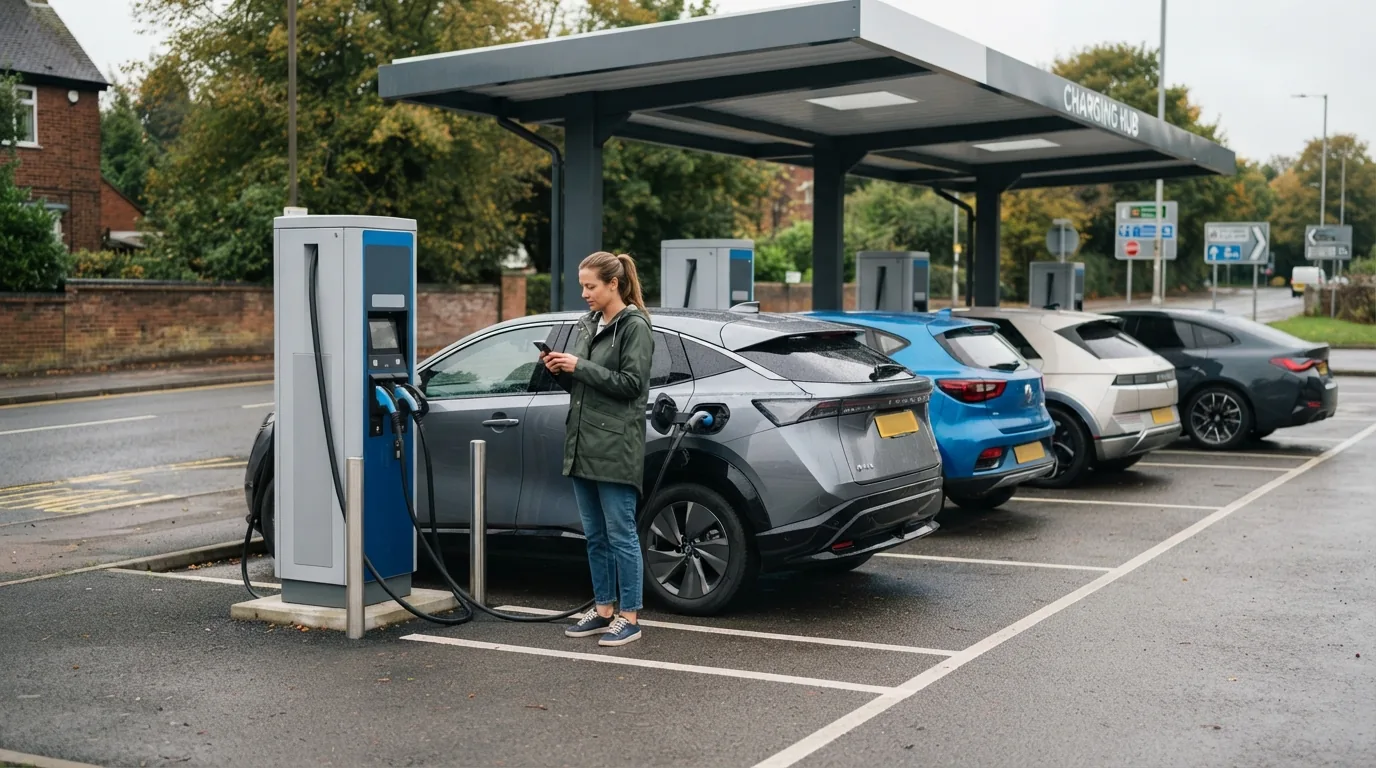
How Reliable Is the UK Public Charging Network in 2026?
The data on uptime, fault rates and which operators actually meet the 99% target
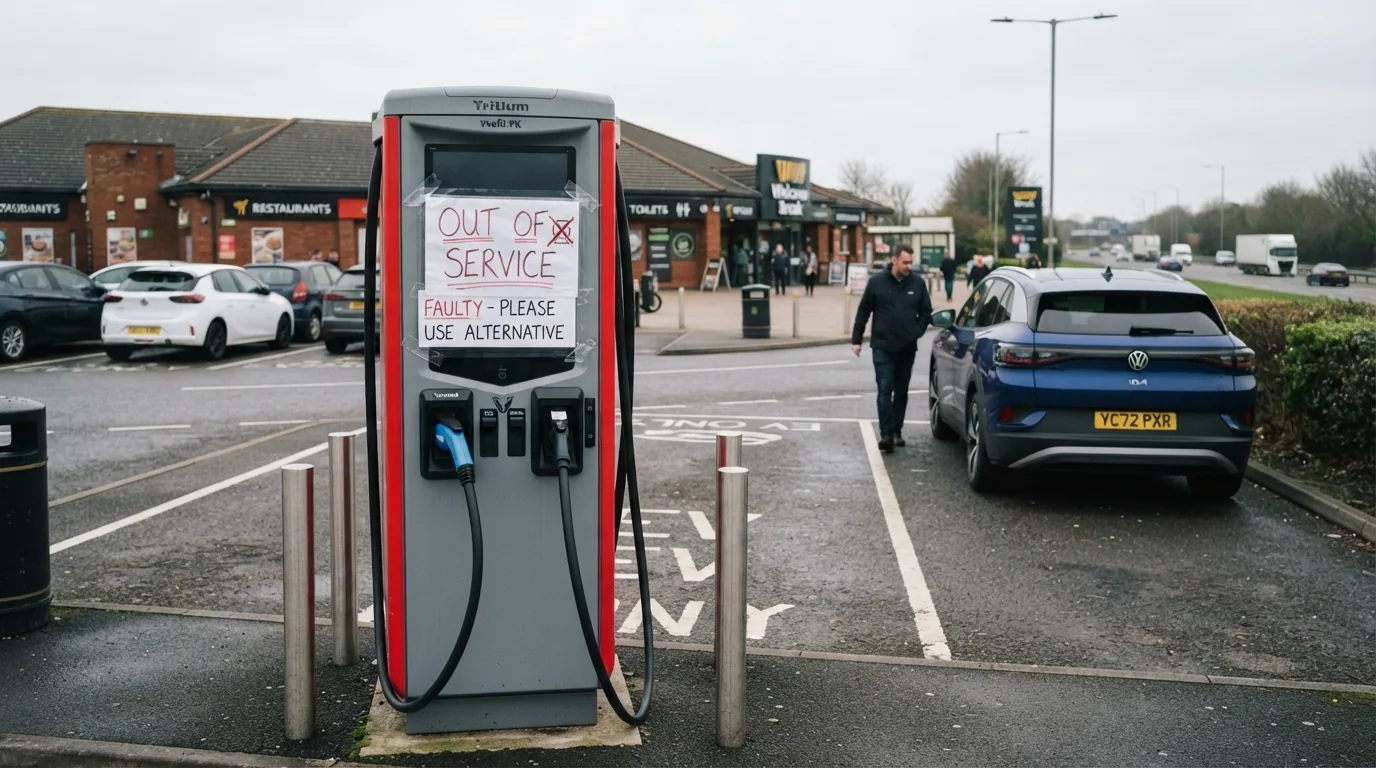
What to Do When a Public EV Charger Is Broken or Blocked
A step-by-step guide for the scenarios every EV driver will eventually face