Reeves pay-per-mile tax: what the 3p a mile EV charge from April 2028 means for you
From 1 April 2028 electric cars pay 3p a mile and plug-in hybrids 1.5p a mile in Electric Vehicle Excise Duty, on top of normal road tax, so a typical EV driver pays about £240 to £270 a year.

Quick answers
- The pay-per-mile tax Rachel Reeves announced at the Budget on 26 November 2025 is called Electric Vehicle Excise Duty (eVED) and starts on 1 April 2028.
- Battery electric and hydrogen cars will pay 3p a mile and plug-in hybrids 1.5p a mile, rising with CPI inflation from 2029 to 2030, according to GOV.UK.
- An electric car driven 8,000 miles a year pays £240 in eVED, which the government says is about half the £480 a petrol or diesel driver pays in fuel duty over the same distance.
- eVED is paid on top of normal road tax, and the standard rate for an electric car registered since April 2017 is £200 for 12 months.
- Chancellor John Healey's Budget on 28 October 2026 kept eVED on course and added a mileage estimation tool and an opt-in eVED Connect service, with automatic refunds promised only by 2030.
- On EV Compared's figures, a BYD Atto 3 driven 8,900 miles a year and charged on a 6.5p overnight tariff costs about £137 in electricity and £267 in eVED, so the tax costs nearly twice as much as the energy.
- Petrol, diesel and conventional hybrid cars do not pay eVED, and vans are outside the scheme when it starts.
The pay-per-mile tax Rachel Reeves announced in her November 2025 Budget charges electric cars 3p a mile and plug-in hybrids 1.5p a mile from 1 April 2028, paid to the DVLA on top of normal road tax. A typical EV driver covering 8,000 miles a year will pay £240.
The tax is officially called Electric Vehicle Excise Duty, or eVED. Reeves confirmed it at the Budget on 26 November 2025, Business Car reported, and the current Chancellor, John Healey, kept it on course in his first Budget on 28 October 2026, according to What Car? and the RAC. Below is how it works, what it costs at different mileages, a worked example with real running costs, and what it means if you are choosing a car now.
How will pay-per-mile tax work?
eVED works through the road tax system you already use: when you renew, you give an odometer reading, estimate your miles for the year ahead and pay for them. The government’s July 2026 consultation response sets out the process:
- Estimate. At each renewal from 1 April 2028 you give the DVLA an up-to-date odometer reading and an estimate of the coming year’s mileage. The DVLA works out the charge.
- Pay. You can pay monthly, every six months or annually, through the same online service or Post Office counters as road tax. Direct Debit carries a 5% surcharge.
- Check. The verified odometer reading taken at each MOT is used to check your figures. Cars too new for an MOT need no separate check, though the DVLA can require one if it suspects fraud.
- Settle. If you drove more than you paid for, you make a balancing payment. If you drove less, the unused miles are ordinarily carried forward as credit, not refunded.
The Budget in October 2026 added a mileage estimation tool at launch and an opt-in service called eVED Connect, which uses the car’s built-in connectivity so you do not have to type in readings. The RAC reports eVED Connect has no confirmed launch date, and that an automatic refunds model will only be developed by 2030. Our report on why eVED refunds will not be automatic until 2030 puts pounds on what that means if you overestimate or sell mid-year.
How much will pay-per-mile cost drivers?
The cost is your annual mileage multiplied by 3p for an electric car or 1.5p for a plug-in hybrid, so an electric car covering 5,000 to 15,000 miles a year pays £150 to £450. The GOV.UK policy paper, updated on 28 October 2026, says the rates rise with CPI inflation from 2029 to 2030 onwards.
The government’s original consultation says 3p is about half the roughly 6p a mile the average petrol or diesel driver pays in fuel duty. The fuel duty column below applies that 6p average; it is a guide, not a bill, because duty per mile depends on a car’s economy.
| Annual mileage | Electric car at 3p | Plug-in hybrid at 1.5p | Petrol or diesel fuel duty at about 6p |
|---|---|---|---|
| 5,000 miles | £150 | £75 | about £300 |
| 8,000 miles | £240 | £120 | about £480 |
| 8,900 miles (average EV) | £267 | £133.50 | about £534 |
| 10,000 miles | £300 | £150 | about £600 |
| 15,000 miles | £450 | £225 | about £900 |
| 20,000 miles | £600 | £300 | about £1,200 |
The 8,000 mile row matches the government’s own example: £240 a year, or £20 a month, against £480 in fuel duty. The consultation puts average EV mileage at about 8,900 miles a year. One of the government’s worked examples assumes the 3p rate becomes 3.06p after the first year’s uprating, on 2% inflation, so treat the table as 2028 to 2029 prices.
Paying monthly costs a little more. The government’s example is £12.50 a month for 5,000 miles, or £13.12 by Direct Debit. On the same basis, the average EV driver’s £267 works out at £22.25 a month, or about £23.36 by Direct Debit.
Why is the government introducing pay-per-mile?
Because fuel duty is shrinking as drivers switch to electric. The consultation says fuel duty raised £24.4bn in 2024 to 2025 and is forecast to fall to around £12bn a year by the 2030s, and that by 2030 “around one in five car drivers are expected to pay no fuel duty at all”.
The Office for Budget Responsibility expects eVED to raise £1,115m in 2028 to 2029, rising to £1,885m in 2030 to 2031, according to the policy paper. It also estimates eVED and related Budget measures will cut electric car sales by about 120,000 between 2025 to 2026 and 2030 to 2031, around 2% of expected EV sales. About 5.6 million vehicles will be affected in the first year.
The industry is not persuaded. “Making a bad tax easier to administer doesn’t make it a good tax,” Toby Poston, chief executive of the BVRLA, told EV Fleet World after the 2026 Budget, calling eVED “the wrong tax at the wrong time”. Sue Robinson of the National Franchised Dealers Association said the mileage tax “risks making electric vehicle ownership less attractive”.
Our longer analysis of who pays most under eVED covers the rural gap and the tension with the ZEV mandate.
Worked UK example: a BYD Atto 3 at average mileage
For a driver who charges at home overnight, eVED will cost more than the electricity. We took a BYD Atto 3, with a 74.8 kWh usable battery and a 316-mile WLTP range, driven the government’s average of 8,900 miles a year.
Method: efficiency is WLTP miles divided by usable kWh (4.22 miles per kWh here), priced at Intelligent Octopus Go’s 6.5p a kWh, Ofgem’s October to December 2026 price cap of 26.32p and Zapmap’s October 2026 rapid average of 82p, ignoring charging losses. The full method is on our methodology page.
| How the Atto 3 is charged | Energy per mile | Energy for 8,900 miles | eVED at 3p | Energy plus eVED | Per mile with eVED |
|---|---|---|---|---|---|
| Home, smart tariff at 6.5p | 1.54p | about £137 | £267 | about £404 | 4.54p |
| Home, price cap at 26.32p | 6.23p | about £554 | £267 | about £821 | 9.23p |
| Public rapid at 82p | 19.41p | about £1,728 | £267 | about £1,995 | 22.41p |
Three things stand out. On a cheap smart tariff, eVED is about two thirds of this driver’s combined energy and mileage tax bill, because 3p a mile is nearly double the 1.54p a mile the electricity costs. On the standard price cap, eVED adds about half again to the electricity bill. And for a driver who relies on rapid chargers, the tax is a small part of a much bigger cost, which is where the real gap lies.
Then add road tax. From its second year the Atto 3 pays the £200 standard rate shown in the GOV.UK rate tables, so the home smart tariff driver’s total comes to about £604 a year before insurance and servicing. See how our 6.5p figure compares with other tariffs in our guide to what charging costs on Octopus.
Common mistakes about pay-per-mile
Most of the confusion comes from five myths:
- “It replaces road tax.” It does not. eVED is paid alongside Vehicle Excise Duty, and electric cars already pay the £200 standard rate, plus £440 a year if they were registered from 1 April 2025 with a list price over £50,000. Our guide to road tax on an electric car explains the current rates.
- “Petrol, diesel and ordinary hybrids pay it too.” They do not. The consultation excludes hybrids that use only petrol or diesel as their external power source. Only cars that plug in are covered.
- “The government will track where I drive.” It will not. The consultation says there is “no requirement to report where and when miles are driven or install trackers in cars”, and eVED Connect is opt-in. Odometer fraud is another matter, as our report on eVED inspection powers explains.
- “Vans pay it.” Vans, buses, coaches and HGVs are out of scope at introduction, according to the consultation response.
- “It is the 45p mileage rate.” That is HMRC’s approved mileage allowance for business journeys, which GOV.UK shows rose to 55p for the first 10,000 miles in the 2026 to 2027 tax year. What Car? reports the rate above 10,000 miles rises from 25p to 35p from 6 April 2027. Neither has anything to do with eVED.
What does pay-per-mile mean for choosing a car?
eVED makes mileage and home charging matter more, but it does not reverse the case for an electric car if you can charge at home. In the government’s own comparison, an EV driver at 8,000 miles pays £240 a year against £480 in fuel duty for a petrol or diesel driver.
It matters most in four cases:
- High mileage. At 20,000 miles a year the bill is £600. Drivers covering long distances should cost eVED into any lease or PCP that runs past April 2028.
- No home charging. At 82p a kWh rapid, energy already dwarfs the tax. If you can fit a wallbox, Best Chargers compares home chargers and installation costs.
- Efficiency. eVED is a flat 3p whatever the car, so it does not penalise a thirsty EV more than an efficient one. Efficiency still sets the energy part of the bill.
- Buying used after 2028. Prepaid credit transfers with the car, the seller settles any unpaid miles before the sale, and the DVLA’s vehicle enquiry screen will show the paid mileage. Add that to our used EV buying checklist.
To see how far ahead an electric car stays across different mileages, use our EV savings against petrol by mileage guide, which works out what you save a year.
Should you choose a plug-in hybrid or go fully electric instead?
A plug-in hybrid pays half the eVED rate, but that does not make it the cheaper car to run. A BYD Seal U DM-i plug-in hybrid, with a 50-mile WLTP electric-only range from an 18.3 kWh battery, would pay £120 a year in eVED at 8,000 miles. Every mile beyond its battery is driven on petrol, which carries fuel duty at about 6p a mile on the government’s average.
If most of your trips fit within that electric range and you charge every night, the plug-in hybrid’s tax bill is the smaller one. If you regularly drive further, a fully electric car like the Atto 3 pays 3p a mile in eVED but avoids fuel duty and petrol altogether. Our comparison of hybrid and full electric cars goes through which suits which driver.
What to do next
Nothing changes until your first road tax renewal after 1 April 2028, but you can prepare now:
- Know your mileage. Your MOT history on GOV.UK records past odometer readings, which is the best basis for an honest estimate.
- Check finance deals. If a lease or PCP runs past April 2028, ask who pays eVED and who reports the mileage.
- Get on a smart tariff. At 6.5p a kWh, home charging keeps energy plus eVED under 5p a mile for an efficient EV.
Our view: eVED is a real new cost, and the BVRLA’s objection that it lands while the switch to electric is still fragile has weight. But at 3p a mile it is about half what petrol and diesel drivers pay in fuel duty, and for a driver who can charge at home overnight an electric car stays the cheaper car to run. The drivers who should think hardest are those covering high mileage without a driveway.
How we test and where our numbers come from
Range figures are official WLTP combined values taken from manufacturer UK specification pages, with real-world estimates drawn from independent comparative testing. Prices are UK list prices at the time of the latest update. Tax, grant and charging-scheme figures come from GOV.UK and HMRC publications. We re-check every guide when pricing, specification or policy changes. Last checked 10 November 2026. How we work out our own figures.
Frequently asked questions
How will pay-per-mile tax work?
When you renew your road tax from 1 April 2028, you give the DVLA an odometer reading and an estimate of the miles you will drive in the next year, then pay 3p a mile for an electric car or 1.5p for a plug-in hybrid. Your MOT mileage is used to check it, and the difference is settled at the next renewal.
Is pay-per-mile on top of road tax?
Yes. eVED is an extension of Vehicle Excise Duty and is paid alongside it, not instead of it. An electric car registered since April 2017 already pays the £200 standard rate, plus £440 a year if it was registered from 1 April 2025 with a list price over £50,000, so eVED adds to that bill.
How much will pay-per-mile cost drivers?
At 3p a mile, an electric car costs £150 a year at 5,000 miles, £240 at 8,000 miles, £300 at 10,000 miles and £600 at 20,000 miles. Plug-in hybrids pay half. The rates rise with CPI inflation each year from 2029 to 2030.
Do hybrids pay pay-per-mile tax?
Only plug-in hybrids, which pay 1.5p a mile, along with range extender cars. Conventional and mild hybrids that cannot be charged from the grid are outside eVED, according to the government's consultation, because all their energy comes from petrol or diesel that already carries fuel duty.
Do diesel and petrol cars pay pay-per-mile tax?
No. Petrol and diesel cars pay fuel duty at the pump instead, which the government puts at around 6p a mile for the average driver. eVED applies only to battery electric, hydrogen fuel cell and plug-in hybrid cars.
Is the mileage rate still 45p per mile?
No. That is a different thing: HMRC's approved mileage allowance for business journeys in your own car. GOV.UK shows it rose to 55p a mile for the first 10,000 business miles in the 2026 to 2027 tax year, with 25p a mile after that. It has nothing to do with eVED.
Will I need a tracker in my car for eVED?
No. The government says there will be no requirement to report where and when miles are driven or to fit trackers. Reporting through the car's own connectivity, called eVED Connect, will be opt-in, and the government says it will collect only the data needed to run eVED.
Sources and further reading
- gov.ukElectric Vehicle Excise Duty (eVED)Policy paper updated 28 October 2026: 3p rate for battery electric and hydrogen cars and 1.5p for plug-in hybrids, 1 April 2028 start, CPI uprating from 2029 to 2030, about 5.6 million vehicles affected, OBR revenue of £1,115m in 2028 to 2029 rising to £1,885m in 2030 to 2031, and a fall of about 120,000 EV sales.
- gov.ukThe introduction of Electric Vehicle Excise Duty (eVED): consultation responseJuly 2026 rules: odometer reading and estimate at renewal, MOT checks, credits carried forward, £100 hardship refunds, monthly payment with a 5% Direct Debit surcharge, the £12.50 and 3.06p worked examples, range extenders at the plug-in hybrid rate, vans out of scope, credit transferring on sale, liability settled before a sale and optional connectivity reporting.
- gov.ukConsultation on the introduction of Electric Vehicle Excise Duty (eVED)3p is about half the 6p a mile average fuel duty; £240 at 8,000 miles against £480 in fuel duty; average EV mileage of about 8,900; fuel duty of £24.4bn in 2024 to 2025 falling to about £12bn; no trackers; conventional hybrids excluded.
- gov.ukVehicle tax rate tables£200 standard rate for zero emission cars registered since 1 April 2017, £10 first year rate, and the £440 expensive car supplement for electric cars above £50,000 registered from 1 April 2025.
- gov.ukTravel: mileage and fuel rates and allowancesApproved mileage allowance of 55p for the first 10,000 business miles and 25p after that in the 2026 to 2027 tax year, replacing 45p.
- businesscar.co.ukBudget confirms new pay-per-mile EV taxRachel Reeves' Budget on 26 November 2025 confirmed 3p a mile for electric cars and 1.5p for plug-in hybrids from April 2028, payable alongside VED.
- whatcar.comAutumn Budget 2026: what does it mean for motorists?Chancellor John Healey's Budget on 28 October 2026, eVED going ahead, the estimation tool, eVED Connect and refunds by 2030; business mileage rate above 10,000 miles rising to 35p from 6 April 2027.
- rac.co.ukAutumn Budget 2026: what it means for motoristsJohn Healey's first Budget; eVED applies to new and existing plug-in cars; eVED Connect has no confirmed launch date; automatic refunds model by 2030.
- evfleetworld.co.ukAutumn Budget 2026: government refines eVED rules amid industry pushbackQuotes from Toby Poston of the BVRLA and Sue Robinson of the NFDA on eVED after the 2026 Budget.
- autoexpress.co.ukAutumn Budget 2026 decoded for motoristsOnline mileage estimates, eVED Connect, and the open question over how overpayments are handled before 2030.
- ofgem.gov.ukEnergy price cap unit rates and standing chargesAverage electricity unit rate of 26.32p a kWh for Direct Debit customers, 1 October to 31 December 2026.
- octopus.energyIntelligent Octopus GoSmart charging rate of 6.5p a kWh for up to six hours a day (checked 10 November 2026).
- zapmap.comUK EV Charging Price IndexOctober 2026 pay-as-you-go average of 82p a kWh for rapid and ultra-rapid charging (updated 5 November 2026).

EV Compared
The EV Compared editorial team tracks the UK electric vehicle market full time: new model launches, list prices, WLTP and real-world range, public charging tariffs and the tax rules that decide what an EV actually costs to run. Every guide is checked against manufacturer specifications and official GOV.UK figures, and updated whenever the numbers move.
Related reading
View all
Pay-per-mile EV tax: draft law lets officials inspect cars over mileage fraud
Draft laws for the Electric Vehicle Excise Duty, due in April 2028, set out for the first time how mileage will be policed. Here is what the powers say, how your bill will be worked out and what it means if you drive an EV.
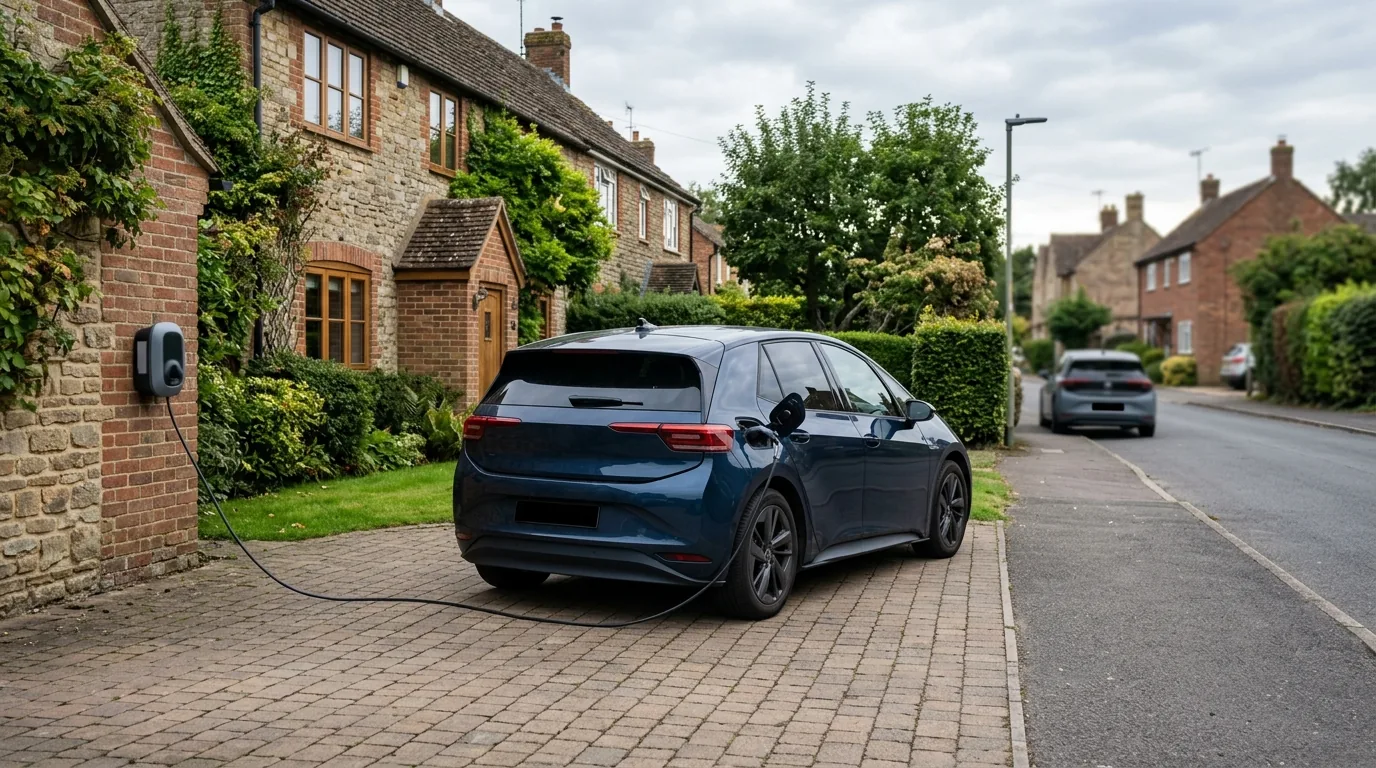
BiK Rates for Electric Cars 2026/27 to 2030/31: The Full Table
An electric company car is taxed at 4% of its list price in 2026/27, and the rate rises each April to 10% in 2030/31, still far below plug-in hybrids from 2028 and petrol cars.
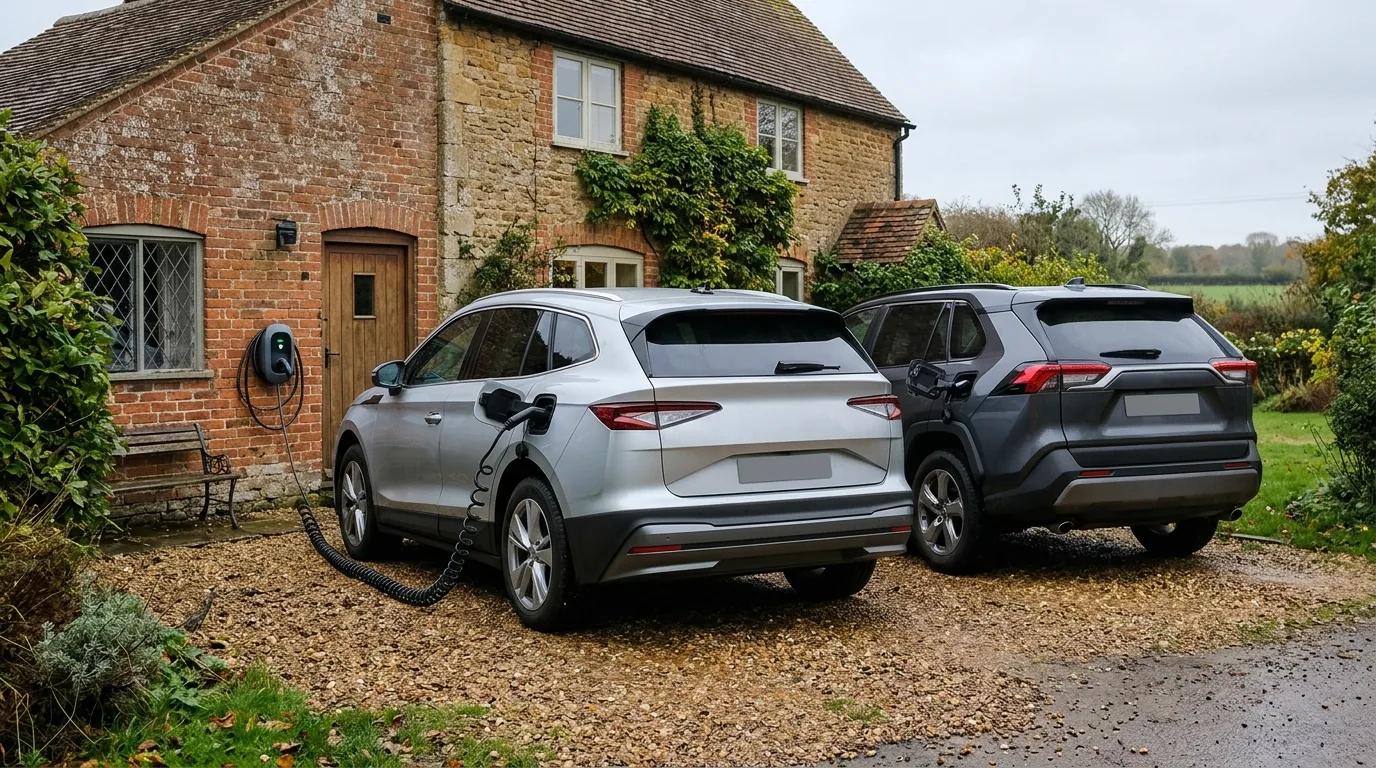
MHEV meaning: mild hybrid vs plug-in hybrid vs electric car explained
MHEV stands for mild hybrid electric vehicle: a petrol or diesel car with a small 48-volt motor that helps the engine but can never drive the car on electricity alone.
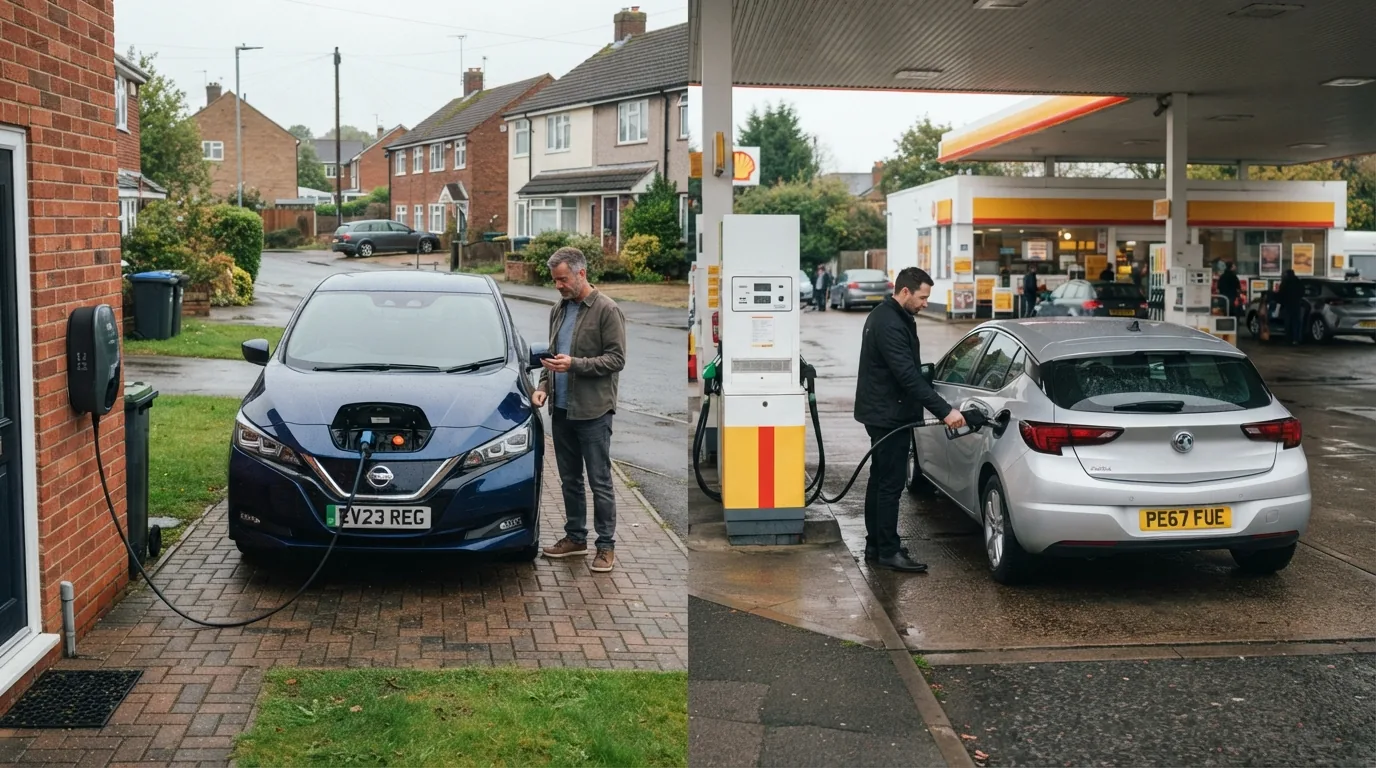
EV Savings vs Petrol: What You Save a Year at 6,000 to 20,000 Miles
Enter your mileage and charging tariff to see exactly how much you save switching to electric
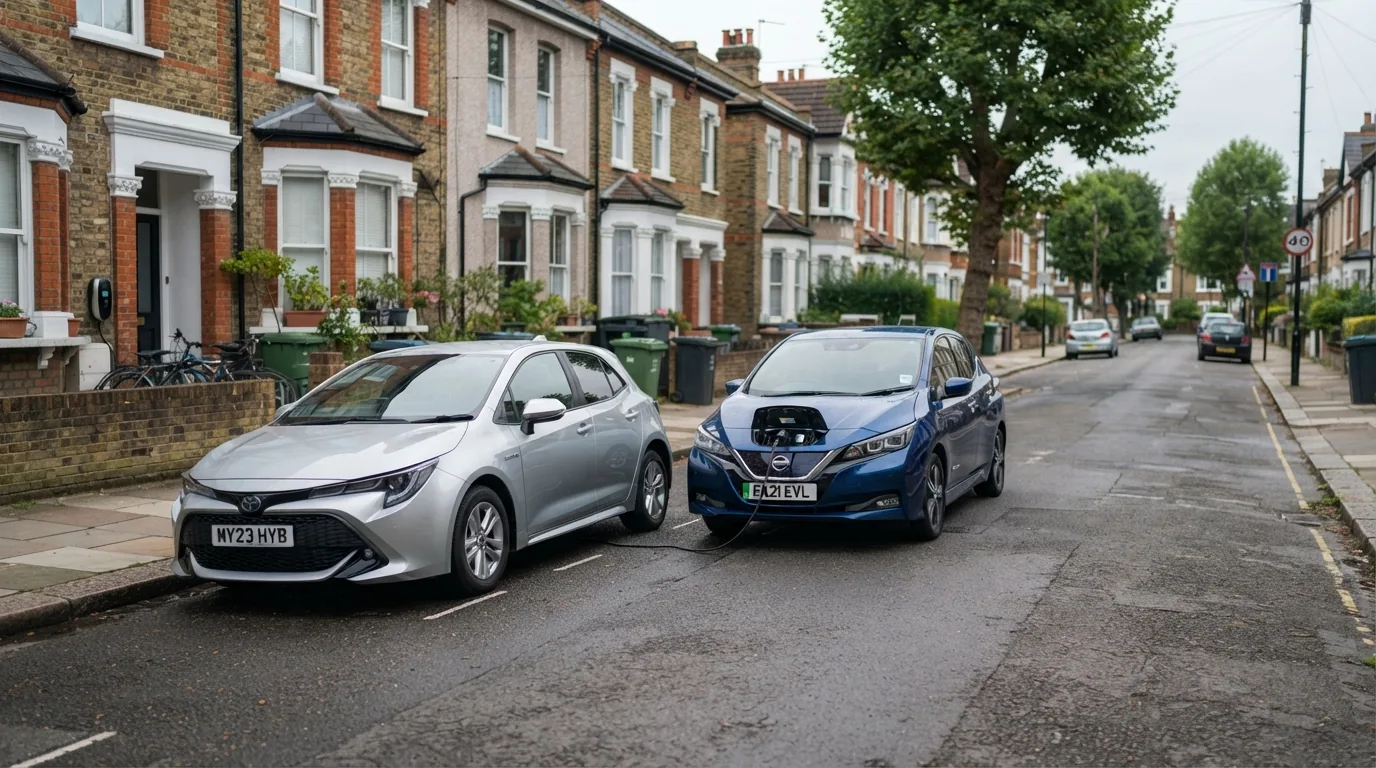
Hybrid vs Full Electric: Which Should You Switch To?
Thinking of leaving petrol behind? We compare hybrids and full electric cars for UK drivers switching from ICE, including running costs, range and what the 2035 ban means for your choice.
Do You Pay Road Tax on an Electric Car in the UK in 2026?
VED for EVs changed in April 2025 -- here are the exact rates, what changed, and what you owe