Electric van MOT rules: the 2026 changes for 4.25-tonne EVs explained
Since 1 June 2026, zero-emission vans of 3,501kg to 4,250kg take an ordinary Class 7 MOT at a Class 7 garage, first due three years after registration, instead of an HGV test at one year.
Quick answers
- From 1 June 2026, zero-emission goods vehicles with a design gross weight of 3,501kg to 4,250kg take a Class 7 MOT in Great Britain instead of the HGV annual test.
- The first MOT on these vans is now due three years after registration and then every year, where the HGV regime required a first test at 12 months.
- The maximum Class 7 MOT fee is £58.60, against a £91 two-axle HGV test fee plus an authorised testing facility service charge of up to £70.
- On EV Compared's figures, a 4.25-tonne electric van's first five years of tests cost up to £175.80 under the new rules, against up to £805 under the old HGV regime, a saving of up to £629.20.
- Electric vans up to 3,000kg design gross weight stay in Class 4, with a maximum MOT fee of £54.85, and their first MOT is also due at three years.
- The minimum tyre tread depth for these heavier vans rises from 1mm under HGV testing to 1.6mm under Class 7, and the speed limiter is now checked at the MOT.
- Range-extender and hybrid vans do not qualify: the Class 7 route covers only vans with no combustion engine or one that emits zero grams of CO2 per kilometre.
Since 1 June 2026, zero-emission vans with a design gross weight of 3,501kg to 4,250kg take an ordinary Class 7 MOT, first due three years after registration and then every year. Before that date they needed an HGV annual test at 12 months, at one of a few hundred specialist sites, so the change removes two early tests and cuts the fee to a maximum of £58.60.
The rule applies in Great Britain; the BVRLA notes that it does not currently extend to Northern Ireland. If you run a lighter electric van, nothing has changed for you: vans up to 3,500kg were already tested like their diesel equivalents. This page covers which class your van falls into, what the tester checks, what the change is worth in pounds, and the mistakes fleets have made since June.
What are the UK EV van MOT rules in 2026?
The MOT class of an electric van is set by its design gross weight, the maximum laden weight on its plate, exactly as for a diesel van. The one difference is a band only zero-emission vans can use, from 3,501kg to 4,250kg, which exists because batteries add weight that would otherwise push an electric van into HGV territory.
| Design gross weight | Who it covers | Test | First test due | Maximum fee |
|---|---|---|---|---|
| Up to 3,000kg | All goods vehicles | Class 4 MOT | 3 years after registration | £54.85 |
| 3,001kg to 3,500kg | Petrol, diesel, hybrid and electric goods vehicles | Class 7 MOT | 3 years after registration | £58.60 |
| 3,501kg to 4,250kg | Zero-emission goods vehicles only | Class 7 MOT (since 1 June 2026) | 3 years after registration | £58.60 |
| 3,501kg to 4,250kg, before 1 June 2026 | Zero-emission goods vehicles | HGV annual test | 12 months after registration | £91 test fee (two axles) plus up to £70 ATF charge |
| Over 3,500kg, outside the zero-emission band | Other goods vehicles | HGV annual test | 12 months after registration | £91 test fee (two axles) plus up to £70 ATF charge |
The fees come from gov.uk’s MOT fee table and its lorry test fee table for a two-axle vehicle, updated 15 July 2026. The MOT figures are maximums, and VAT is not charged on the MOT fee. After the first test, every class is tested each year.
Two older groups are exempt. Gov.uk lists goods vehicles powered by electricity and registered before 1 March 2015 among the vehicles that do not need an MOT, and some historic vehicles are exempt too. Driving a van that does need an MOT without one can bring a fine of up to £1,000.
What changed on 1 June 2026, and why?
The Department for Transport decided to move 3.5 to 4.25 tonne zero-emission vans into Class 7 MOT testing in its consultation response of 24 November 2025, and DVSA’s MOT special notice 01-26 confirmed the change for MOT stations from 1 June 2026. Of 179 respondents to the consultation, 146 (82%) agreed with Class 7 testing, and the department said HGV test features would not be bolted on to the Class 7 MOT.
The old rule was a real cost. A heavier electric van was treated as a goods vehicle over 3.5 tonnes, so it needed its first test at one year old, at an authorised testing facility (ATF) or a DVSA station. SMMT said operators had about 500 HGV test sites to choose from, often booked weeks or months ahead. A Freedom of Information request by Venson Automotive Solutions, reported by Fleet World, found 565 ATFs and five DVSA stations able to test these vans, and that of 1,223 vans of 3.5 to 4.25 tonnes tested between 1 January 2022 and 31 January 2025, only 5.5% failed.
The MOT change arrived alongside a drivers’ hours change on the same date, which means tachographs are no longer needed to record driving time in these vans. Our guide to driving a 4.25-tonne electric van on a car licence covers the licence, tachograph and towing side. One rule did not change: the department kept the 56mph speed limiter requirement and said any change would need a further consultation.
Is an electric van MOT different from a diesel one?
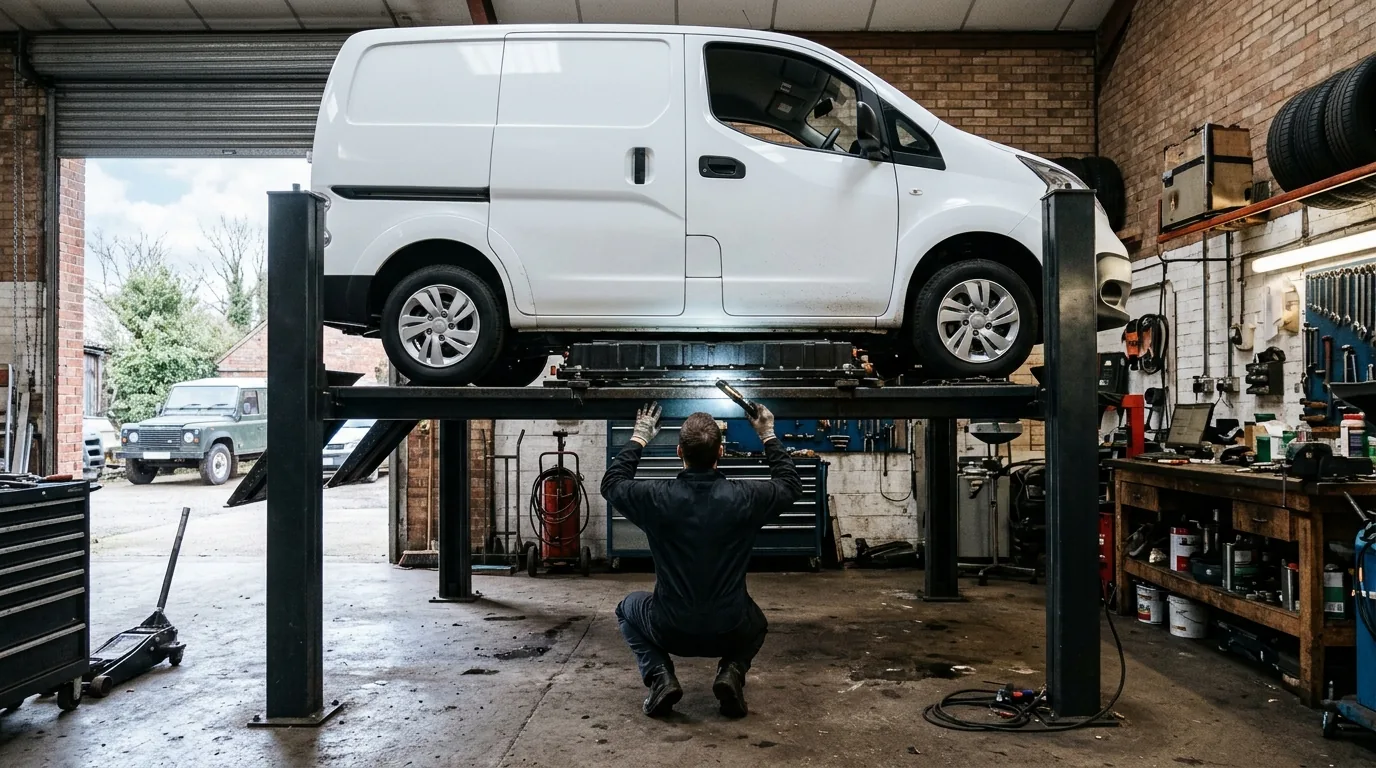
An electric van’s MOT follows the same test standards as a diesel van’s, with no exhaust to test and a visual check of the high-voltage system added. The tester still covers brakes, steering, suspension, tyres, lights, seatbelts and the rest of the standard list.
DVSA’s guidance for MOT testers says electric systems usually run at 350 to 600 volts, high-voltage cables are usually orange, and testers do not need to isolate the system to carry out the test. A tester must abandon the test if any orange cables or components are damaged or the wires are exposed.
The MOT does not measure battery health or remaining range, so a pass says nothing about how much capacity a used van has lost. Our explainer on how EV batteries age covers that side, which matters before buying a van three or more years old.
For vans moving from HGV testing, DVSA’s special notice adds three practical points:
- Speed limiter. All current Class 7 standards apply, with the speed limiter added to the check.
- Tyres. The minimum tread depth rises from 1mm under HGV testing to 1.6mm, the Class 7 standard.
- Load. If a van arrives laden and its weight is uncertain, the tester can ask for evidence of weight or measure it, and can decline the test if it cannot be done safely.
How much does the change save? A worked UK example
On EV Compared’s figures, a 4.25-tonne electric van’s first five years of tests now cost up to £175.80, against up to £805 under the old HGV regime, a saving of up to £629.20. Method: maximum gov.uk fees in November 2026, multiplied by the number of tests each regime requires by the fifth anniversary of registration, with no retests; see our methodology.
| Old HGV regime | Class 7 since 1 June 2026 | |
|---|---|---|
| Tests in years 1 to 5 | 5 (years 1, 2, 3, 4, 5) | 3 (years 3, 4, 5) |
| Cost per test (maximum) | £161 (£91 fee + £70 ATF charge) | £58.60 |
| Total by year 3 | £483 | £58.60 |
| Total by year 5 | £805 | £175.80 |
| Minimum tyre tread | 1mm | 1.6mm |
The first three years show the biggest gap: £483 of HGV tests against a single £58.60 MOT, a difference of £424.40 per van. For a fleet of ten heavier vans, that is up to £4,244 before anyone counts the driver’s time. Under the old rules each test meant a trip to one of a few hundred ATFs; under Class 7 any Class 7 garage can do it, including one that already services the van, which is where the downtime saving comes from. Our guide to electric car servicing costs covers what that annual visit typically involves.
What happens to vans that already had an HGV test?
A van that has already passed its first-year heavy vehicle test does not need another HGV test in year two. The BVRLA says it moves to the Class 7 regime with its next test due three years from registration.
Two examples show how the dates fall:
- Registered in March 2025, HGV test passed in March 2026. No test in March 2027. First Class 7 MOT due by March 2028, then annually.
- Registered in September 2025, no test before 1 June 2026. First Class 7 MOT due by September 2028.
You can take an MOT up to a month (minus a day) before the current one runs out and keep the same renewal date, as gov.uk explains.
Common mistakes with heavier electric van MOTs
One common mistake is trusting DVSA’s online MOT status for these vans. In July 2026 the BVRLA reported that the MOT History and reminder services were wrongly flagging some 4.25-tonne vans as expired or overdue, because of the old HGV annual test that no longer applies. DVSA was updating its systems without a set timescale, and the BVRLA advised using the date of first registration to work out when the first Class 7 MOT is due.
Other mistakes to avoid:
- Assuming a hybrid qualifies. The Class 7 band covers only vans with no combustion engine, or one that emits zero grams of CO2 per kilometre. DVSA excludes hybrids, including range extenders that use a petrol, diesel or LPG engine to drive the van or charge the battery.
- Booking a Class 4 garage. Only Class 7 stations can test these vans, and DVSA’s notice says Class 7 stations must accept zero-emission goods vehicles up to 4,250kg. In a 2023 survey it cites, 80% of responding stations had a hoist and 79% of those hoists had a safe working load above 4,250kg, so give the design gross weight when you book.
- Turning up loaded. A tester can decline a laden van whose weight is uncertain. Empty it first.
- Running worn tyres. A tyre at 1.2mm would have passed under HGV rules; under Class 7 it fails, because the limit is 1.6mm. Budget for earlier tyre changes rather than discover them at the test.
What it means if you are choosing an electric van
The MOT change removes one of the last running-cost penalties of choosing a heavier electric van over a 3.5-tonne diesel. With the car-licence allowance and the tachograph change, a 4.25-tonne zero-emission van is now tested, driven and serviced on much the same terms as the diesel it replaces.
It suits operators who need payload that a 3.5-tonne electric van gives up to its battery, and sole traders who were put off by hunting for an ATF slot every year. It matters little if your work fits a van under 3,500kg, which was already tested like a diesel. It does not help if you were considering a range-extender model, which stays outside the band.
The wider sums sit elsewhere. Our guide to the tax benefits of an electric van for a business sets out what a company can claim on a zero-emission van.
Grants can cut the purchase price too, and the list of vans eligible for the Plug-in Van Grant shows which models qualify at the point of sale.
The rules on what makers must sell are moving as well: the government has consulted on cutting the 2030 target in the van ZEV mandate, which shapes the choice and discounts on new electric vans.
What to do next
Check the design gross weight on each van’s plate and its date of first registration, then diary the first Class 7 MOT for three years after that date. Book it at a Class 7 station, tell the garage the van’s weight, present it unladen with tyres above 1.6mm, and make sure no high-voltage cable is damaged or exposed. If the DVSA checker shows an expired MOT on a van under three years old, the registration date, not the banner, sets when the test is due.
Our verdict, based on published gov.uk and DVSA figures rather than any test of our own: for anyone running a zero-emission van between 3,501kg and 4,250kg, this is a clear win, worth up to £424.40 per van in the first three years in fees alone, with far less time spent finding a test slot.
How we test and where our numbers come from
Range figures are official WLTP combined values taken from manufacturer UK specification pages, with real-world estimates drawn from independent comparative testing. Prices are UK list prices at the time of the latest update. Tax, grant and charging-scheme figures come from GOV.UK and HMRC publications. We re-check every guide when pricing, specification or policy changes. Last checked 10 November 2026. How we work out our own figures.
Frequently asked questions
When does a 4.25-tonne electric van need its first MOT?
Three years after it was first registered, then every 12 months. That has applied since 1 June 2026, when zero-emission goods vehicles of 3,501kg to 4,250kg design gross weight moved into Class 7. Before then they needed an HGV annual test at 12 months, at an authorised testing facility.
How much does an electric van MOT cost?
Up to £54.85 for a van of up to 3,000kg design gross weight (Class 4) and up to £58.60 for a Class 7 van, including zero-emission vans of 3,501kg to 4,250kg. These are the maximum fees on gov.uk; garages can charge less, and VAT is not charged on the MOT fee.
Is an electric van MOT different from a diesel van MOT?
Only slightly. The same test standards apply, there is no exhaust to test, and testers look for damaged high-voltage cables, which DVSA says are usually orange. A tester must abandon the test if any high-voltage cable or component is damaged or its wires are exposed. Heavier zero-emission vans also have their speed limiter checked.
Can any garage MOT a 4.25-tonne electric van?
Any Class 7 test station, and DVSA's special notice says Class 7 stations must accept zero-emission goods vehicles up to 4,250kg. A Class 4-only garage cannot test them. Tell the garage the design gross weight when you book, and present the van unladen, because a tester can decline a laden van if it cannot be tested safely.
My electric van had an HGV test last year. What happens now?
It moves to the Class 7 regime. The BVRLA says a 4.25-tonne van that passed a heavy vehicle test in its first year does not need another in year two; its next test is a Class 7 MOT due three years from registration. Use the date of first registration to work out when that falls.
Do electric vans over 4,250kg still need an HGV test?
Yes. The Class 7 route covers zero-emission goods vehicles only up to 4,250kg design gross weight. Goods vehicles above 3,500kg that fall outside it stay in the HGV annual test, with the first test due 12 months after first registration, at an authorised testing facility or DVSA station.
Sources and further reading
- gov.ukGetting an MOT: MOT test feesClass 4 goods vehicles up to 3,000kg at a maximum £54.85; Class 7 for petrol, diesel and hybrid goods vehicles of 3,001kg to 3,500kg and zero-emission goods vehicles of 3,501kg to 4,250kg at a maximum £58.60; no VAT on the MOT fee.
- gov.ukGetting an MOTFirst MOT due by the third anniversary of registration, an MOT can be taken up to a month (minus a day) early, and a fine of up to £1,000 for driving without a valid MOT.
- gov.ukGet an MOT for a heavy goods vehicle (HGV), bus or trailerHGV first test 12 months after first registration; zero-emission goods vehicles of 3,501kg to 4,250kg design gross weight need a Class 7 MOT.
- gov.ukVehicle test and certificate costs: lorries and trailers at authorised testing facilitiesTwo-axle lorry annual test fee of £91 and a maximum ATF service charge of £70 (updated 15 July 2026).
- gov.ukMOT special notice 01-26: zero emission goods vehicles between 3,501kg and 4,250kg becoming class 7 vehiclesStart date of 1 June 2026, first test at three years, Class 7 stations must accept these vans, speed limiter check added, tread depth from 1mm to 1.6mm, laden vans may be declined, hybrids and range extenders excluded, 2023 survey of station hoists.
- gov.ukZero emission goods vehicles: regulatory flexibility consultation responseDepartment for Transport decision of 24 November 2025 to move 3.5 to 4.25 tonne zero-emission vans into Class 7 with a first test at three years, 146 of 179 respondents (82%) in favour, no HGV features added to Class 7, and the 56mph speed limiter kept pending further consultation.
- gov.ukVehicles exempt from MOTGoods vehicles powered by electricity and registered before 1 March 2015 are exempt from the MOT, as are some historic vehicles.
- gov.ukHybrid, electric and hydrogen fuel cell systems: guidance for MOT testersHigh-voltage systems usually 350 to 600 volts, cables usually orange, no need to isolate the system, and the test is abandoned if orange cables or components are damaged or wires exposed.
- bvrla.co.ukKey changes now in force for 4.25t electric vansVans that passed a heavy vehicle test in year one need no year-two HGV test and take their next test at three years from registration; tachographs no longer needed for affected vans from 1 June; changes apply in Great Britain, not Northern Ireland.
- bvrla.co.uk4.25t van MOT updateDVSA MOT History and reminder services wrongly showing some vans as overdue because of the old HGV test, and advice to use the date of first registration (28 July 2026).
- smmt.co.ukElectric vans to get MOT boost from JuneAbout 500 HGV test sites under the old rules, often booked weeks or months ahead (14 May 2026).
- fleetworld.co.ukMOT framework not keeping pace with electric commercial vehicle adoptionVenson Automotive Solutions FOI: 1,223 vans of 3.5 to 4.25 tonnes tested from 1 January 2022 to 31 January 2025 and 5.5% failed; 565 ATFs and five DVSA stations able to test them.

EV Compared
The EV Compared editorial team tracks the UK electric vehicle market full time: new model launches, list prices, WLTP and real-world range, public charging tariffs and the tax rules that decide what an EV actually costs to run. Every guide is checked against manufacturer specifications and official GOV.UK figures, and updated whenever the numbers move.
Related reading
View all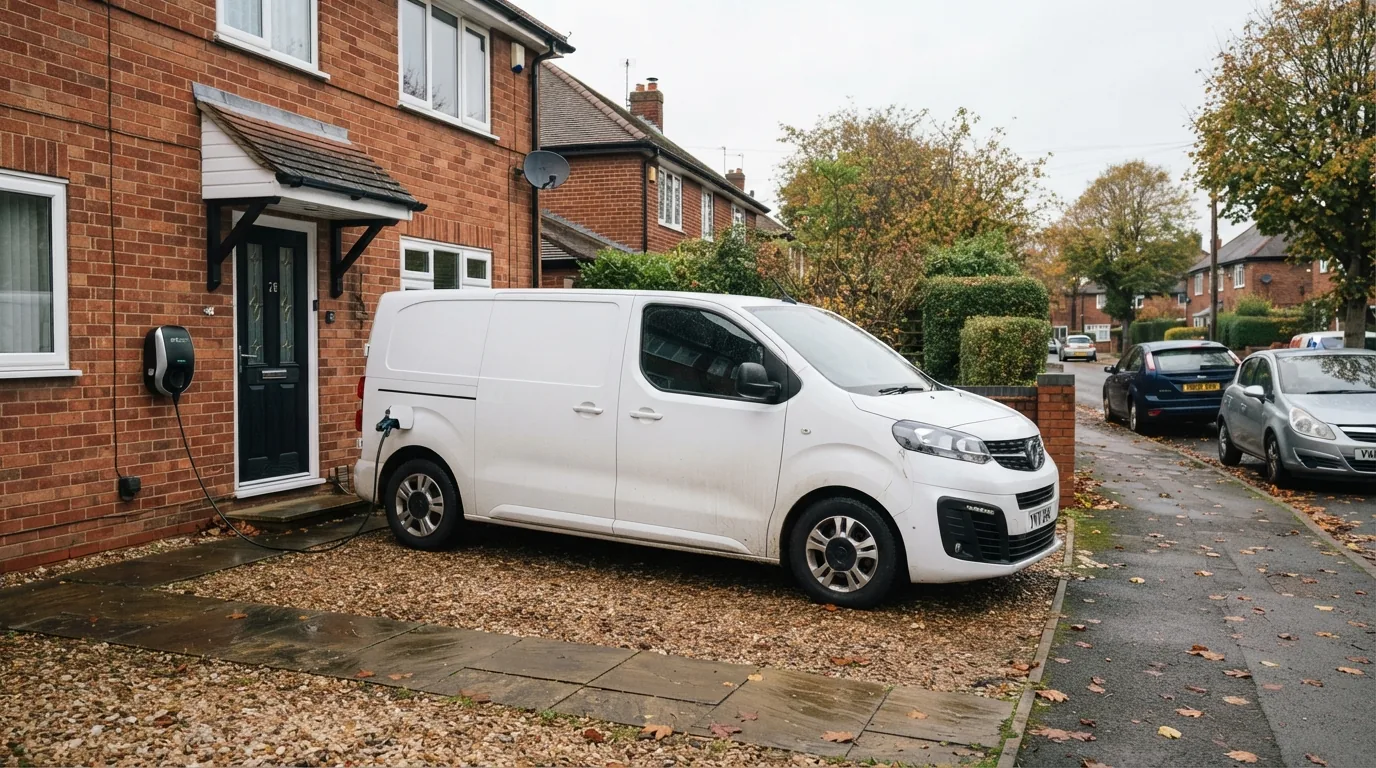
Electric van target could fall from 70% to 40% by 2030
The Government is consulting on four 2030 options for vans, from keeping 70% to cutting it to 60%, 50% or 40%. Responses close on 23 October. Here is what each option means for van buyers.
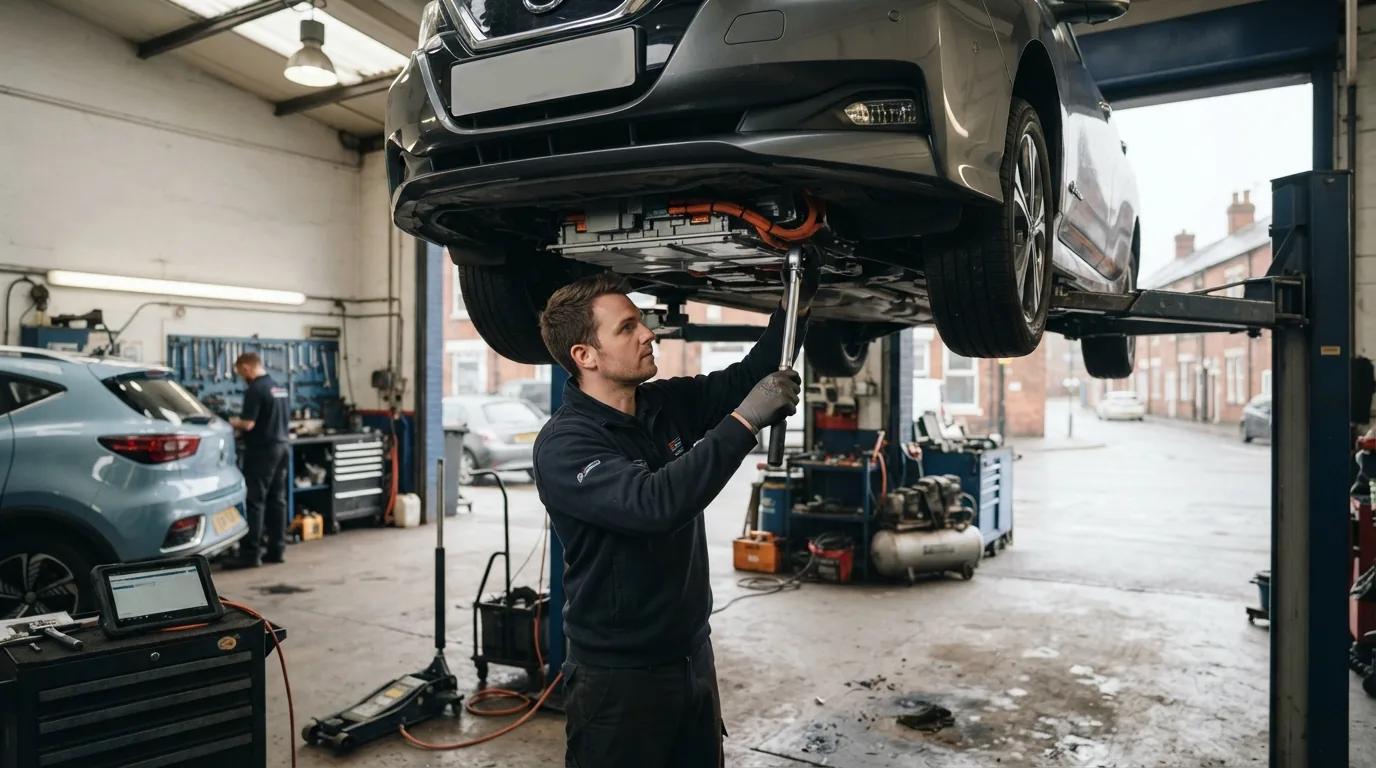
How Much Does It Cost to Service an Electric Car in the UK?
A full EV service typically costs around £100 to £250, less than petrol or diesel, and here is what affects the price
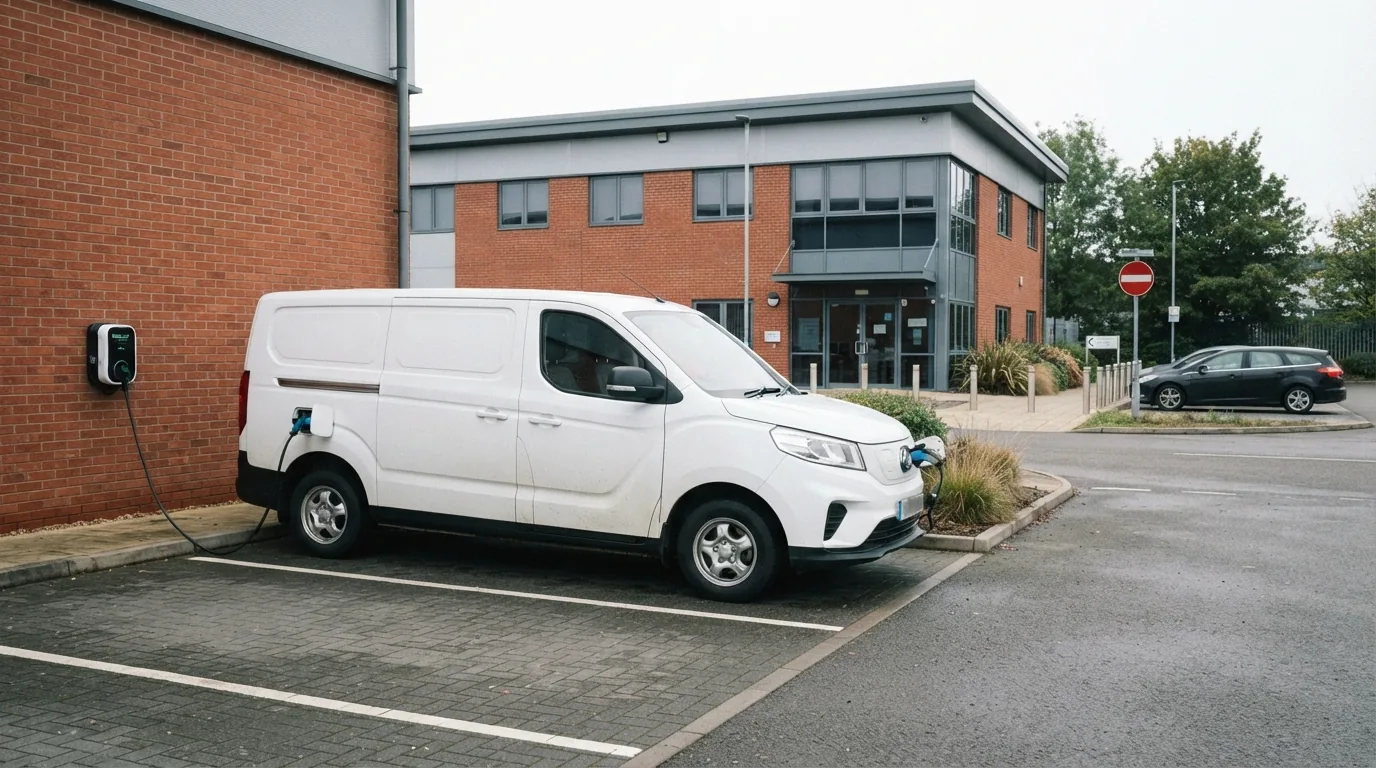
Best Electric Vans Eligible for the UK Plug in Van Grant
The Plug-in Van Grant offers up to £5,000 off a new electric van. These are the models that earn it and deserve it.
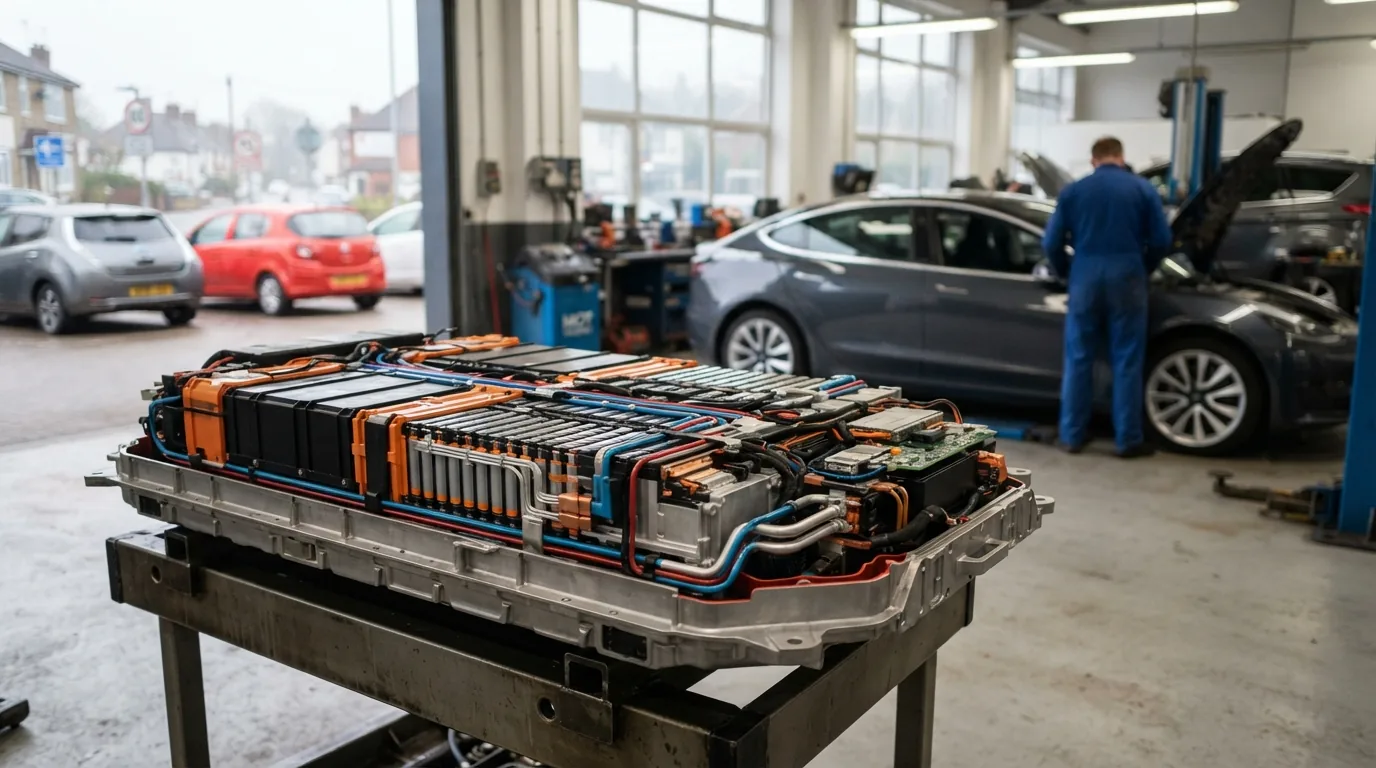
How Do EV Batteries Work? Chemistry, LFP vs NMC, Degradation and Solid State Explained
From cells and modules to the battery management system, LFP versus NMC chemistry, what degradation really looks like and where solid state stands: everything a UK driver needs to know
What Are the Tax Benefits of an Electric Van for UK Businesses?
Capital allowances, zero BIK, VED exemptions and running cost savings in 2026
Electric van sales rise 58% in October, but share is still less than half the 24% target
Battery electric vans took 12.9% of the UK market in October, a record for the month. SMMT now forecasts a 10.4% share for 2026 against a 24% target, with the gap doubling by 2028. Here is how far short vans are, and what new buyers can get.