How Do EV Batteries Work? Chemistry, LFP vs NMC, Degradation and Solid State Explained
From cells and modules to the battery management system, LFP versus NMC chemistry, what degradation really looks like and where solid state stands: everything a UK driver needs to know
Quick answers
- An EV battery pack stores energy as a chemical charge in thousands of lithium-ion cells, then releases it as electrical current to drive the motor.
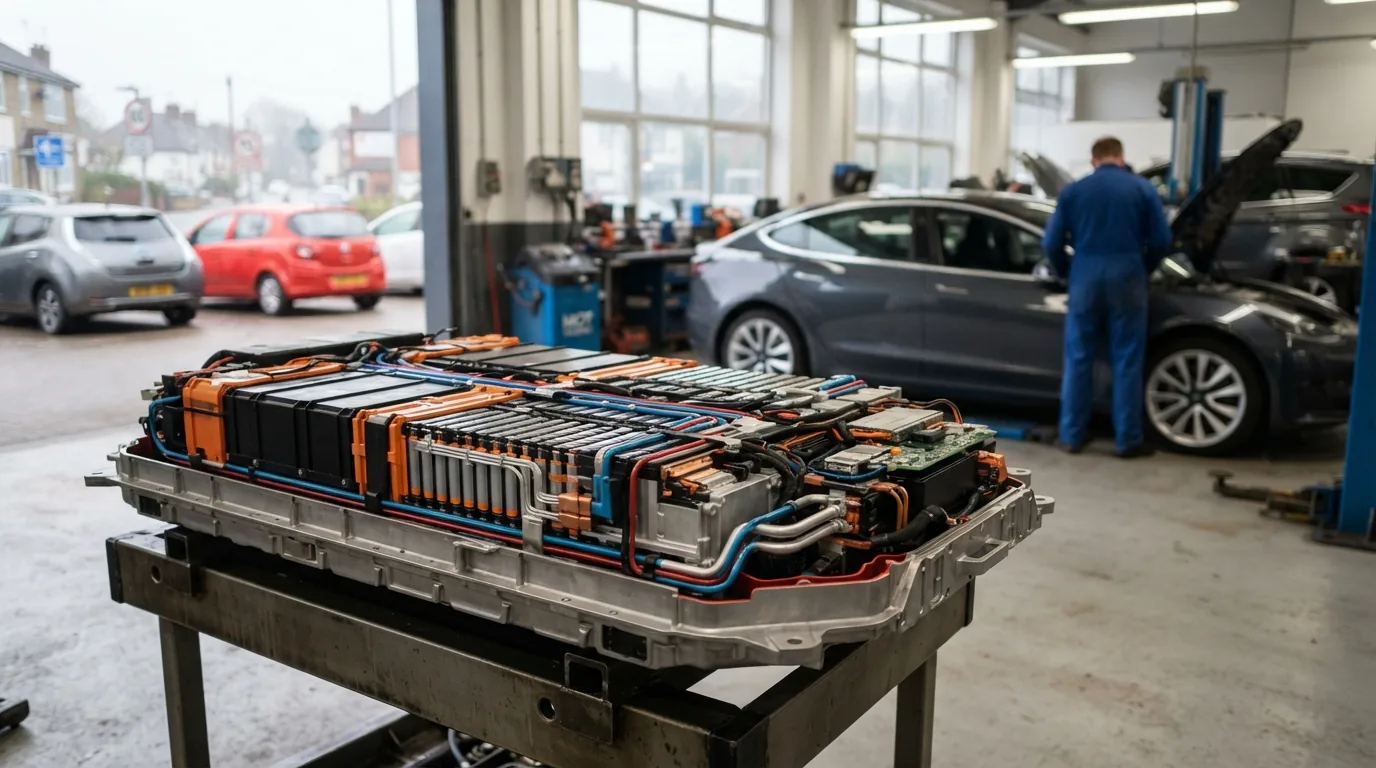
- What is inside an EV battery pack: An EV battery is not one large battery in the way a torch battery is.
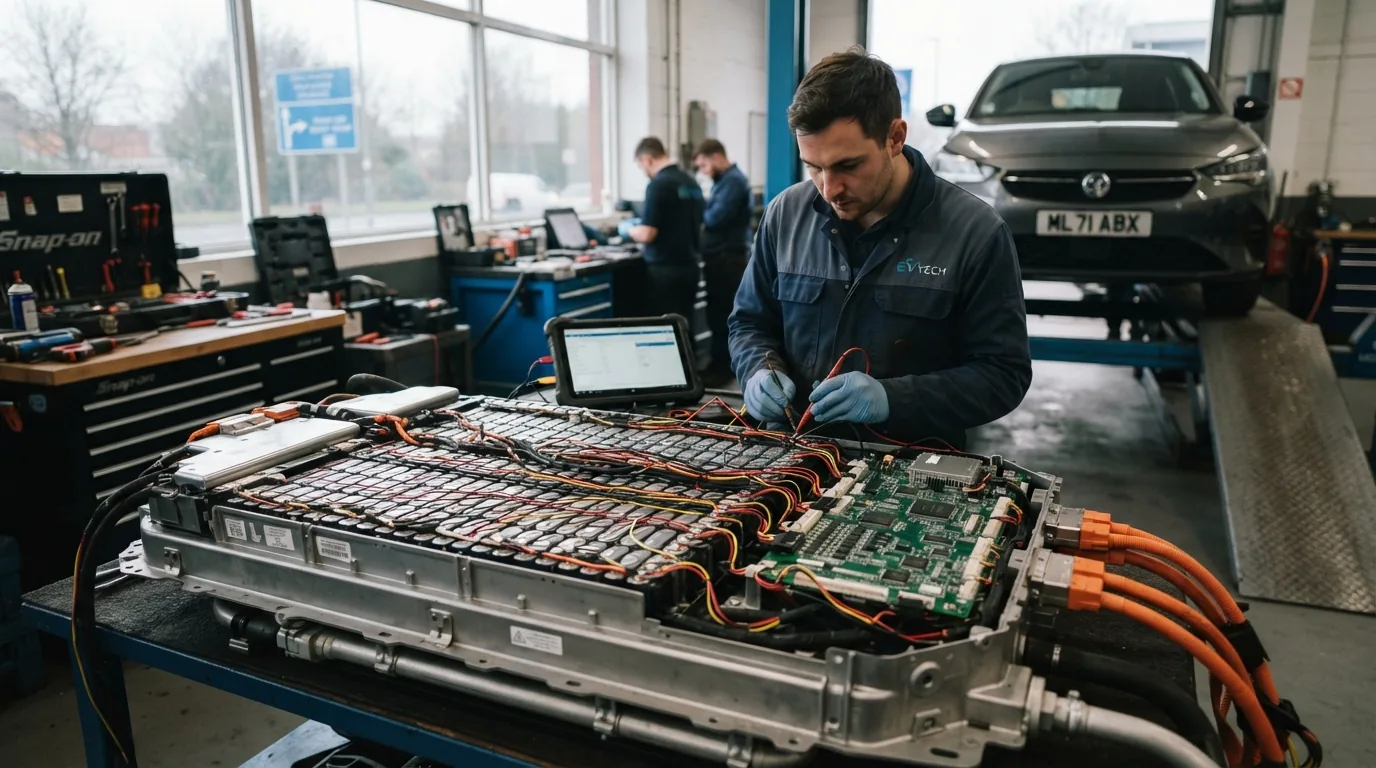
- The battery management system (BMS) is the electronics brain of the pack.
- Battery degradation is normal and inevitable, but the rate varies significantly depending on how the car is used and charged.
- What is LFP chemistry and is it different: LFP (lithium iron phosphate) batteries, used in the Tesla Model 3 Standard Range, BYD Dolphin, BYD Atto 3 and Citroën ë-C3, have a fundamentally different cathode chemistry.
- Because the BMS is software-controlled, manufacturers can push improvements over the air without any physical work on the car.
An EV battery pack stores energy as a chemical charge in thousands of lithium-ion cells, then releases it as electrical current to drive the motor. The pack is managed by a battery management system (BMS) that monitors every cell in real time, keeping temperatures safe, balancing charge levels and protecting against damage. Pack sizes in current UK models run from around 40 kWh in compact city cars to over 100 kWh in large SUVs, delivering roughly 150 to 400 miles of real-world range.
What is inside an EV battery pack?
An EV battery is not one large battery in the way a torch battery is. It is a carefully engineered stack of individual cells, grouped into modules, which are assembled into the complete pack.
Cells
Each cell is a small, sealed unit containing two electrodes (an anode and a cathode), a porous separator and a liquid electrolyte. During discharge, lithium ions move from the anode through the electrolyte to the cathode, and electrons travel around the external circuit to power the motor. During charging, the direction reverses. The chemistry of the electrodes determines the energy density, thermal stability and longevity of the cell.
Cells come in three physical formats:
- Cylindrical (the classic AA-style shape, used by Tesla and others)
- Prismatic (rectangular, used by BMW, Samsung SDI)
- Pouch (flat and flexible, used by Hyundai, Kia, LG Energy Solution)
Each format has trade-offs in energy density, manufacturing cost and thermal management.
Modules
Cells are grouped into modules, which include the local electrical connections, temperature sensors and sometimes basic balancing circuitry. A typical module might contain 20 to 100 cells depending on design. Modules make the pack easier to manufacture and, in theory, easier to service.
The pack
Modules slot into the complete battery pack, a flat, rigid structure usually mounted in the floor of the car (giving a low centre of gravity). The pack includes cooling channels, structural reinforcement and the main electrical connections. Some newer designs, notably Tesla’s 4680 cell approach and BYD’s Blade Battery, are moving toward a “cell-to-pack” architecture where cells slot directly into the pack without a separate module layer, saving weight and improving volumetric efficiency.
What the kWh figure means
The total capacity of the pack is measured in kilowatt-hours (kWh). One kWh is enough energy to drive a typical EV about 3 to 4 miles under mixed conditions, though this varies significantly by car, speed and weather. The “usable” capacity is always slightly less than the total: manufacturers reserve a buffer at the top and bottom of the charge range to protect the cells from the extremes that accelerate degradation.
| Model | Total capacity | Usable capacity | Approximate real-world range (WLTP) |
|---|---|---|---|
| Renault Zoe (older model) | 52 kWh | 46 kWh | ~245 miles |
| Volkswagen ID.3 Pro | 58 kWh | 52 kWh | ~266 miles |
| Hyundai IONIQ 6 Long Range | 77.4 kWh | 74 kWh | ~340 miles |
| Tesla Model 3 Long Range | 82 kWh | 75 kWh | ~358 miles |
| BMW iX xDrive50 | 111.5 kWh | 105.2 kWh | ~380 miles |
How does the battery management system work?
The battery management system (BMS) is the electronics brain of the pack. It monitors and controls every cell continuously, performing several critical functions.
Monitoring voltage and temperature
Each cell has a safe operating voltage range, typically 2.5 to 4.2 volts per cell for most lithium-ion chemistries. The BMS measures cell voltages thousands of times per second and shuts down the pack if any cell goes outside safe limits. Temperature sensors are distributed throughout the pack, and if temperatures rise too high, the BMS triggers active cooling.
State of Charge (SoC)
SoC is the equivalent of a fuel gauge, expressed as a percentage. The BMS calculates SoC by tracking current in and out of the pack (coulomb counting) combined with voltage measurements. Accurate SoC estimation is harder than it sounds because a battery’s voltage-to-charge relationship is not perfectly linear and changes as the battery ages.
State of Health (SoH)
SoH represents how much of the original capacity the battery retains. A new battery starts at 100% SoH. As it ages through charge cycles and temperature exposure, capacity gradually fades. At 80% SoH, a pack that started at 60 kWh now effectively holds 48 kWh. Most EV warranties cover the battery to at least 70% SoH for 8 years or around 100,000 miles, whichever comes first (terms vary by manufacturer).
UK models from Hyundai and Kia typically offer 8 years / 100,000 miles battery warranty. Renault, MG and others have similar commitments. Tesla guarantees 70% SoH retention for 8 years or 120,000 miles on the Model 3 Long Range.
Cell balancing
Cells within a pack never age at exactly the same rate. Some cells lose capacity faster due to microscopic manufacturing variations or local temperature differences in the pack. If one cell falls behind, the BMS can either discharge the stronger cells slightly to match (passive balancing, which wastes energy as heat) or actively move charge between cells (active balancing, which is more efficient but more complex). The goal is to ensure the weakest cell determines the usable capacity of the pack as little as possible.
Thermal management
Lithium-ion cells work best between roughly 15°C and 35°C. Below that range, internal resistance rises and effective capacity drops, which is why range is reduced in winter. Above 40°C, degradation accelerates, and beyond 60°C there is risk of thermal runaway, a self-sustaining exothermic reaction that can damage or destroy the pack.
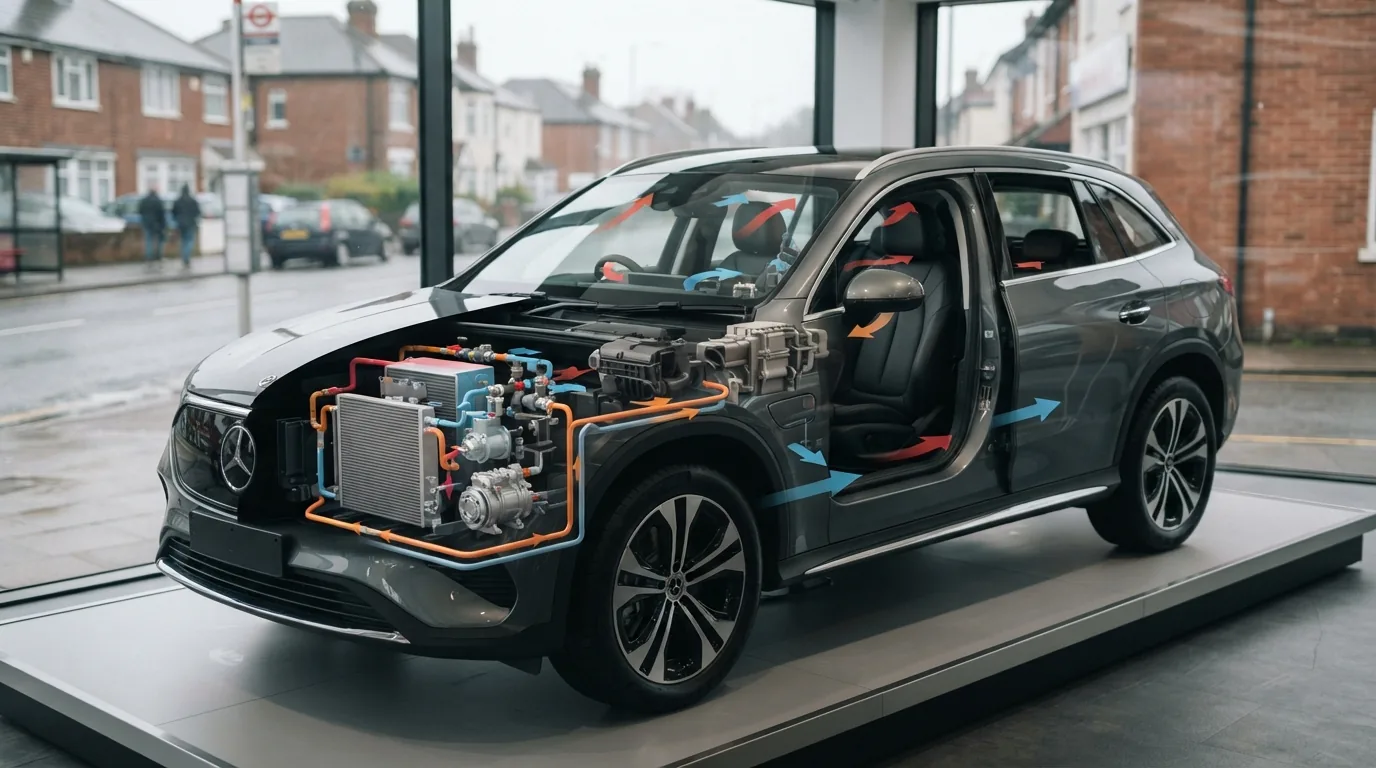
Most modern EVs use liquid cooling: coolant flows through channels pressed against the cell surfaces or modules, carrying heat away to a radiator. In cold weather, the same loop can be used to warm the battery using a heat exchanger connected to the heating system. Preconditioning, which warms the battery before a fast-charge session or a cold drive, uses this thermal management system.
What causes battery degradation and how fast does it happen?
Battery degradation is normal and inevitable, but the rate varies significantly depending on how the car is used and charged.
The main causes of degradation are:
- High temperatures: heat is the primary accelerator of capacity fade
- High state of charge held for long periods: keeping the battery at 100% for days accelerates degradation, particularly in NMC chemistry
- Frequent fast charging: DC rapid charging generates heat and stresses cells more than AC slow charging
- Deep discharge: regularly running the battery to near zero is harder on cells than stopping at 10–15%
Real-world UK data from services such as Recurrent Auto suggests that most EVs retain around 90% of original capacity after five years of typical use. Tesla vehicles, with a larger buffer and sophisticated BMS, often show better figures.
The practical implication: if you charge at home using a 7 kW wallbox to 80% most nights and use rapid charging only for long trips, your battery should remain in good health for the life of the car. If you fast-charge daily to 100% and park in full sun, expect faster degradation.
What is LFP chemistry?
LFP stands for lithium iron phosphate, referring to the cathode material: lithium iron phosphate (LiFePO4). It is a relatively mature chemistry, developed in the 1990s and now produced at huge scale, primarily in China. The key advantages are thermal stability (the cathode decomposes at around 270°C, versus 210°C for NMC), very long cycle life and the absence of cobalt in the supply chain.
LFP cells cost approximately £65 to £80 per kWh at the cell level in 2026, versus £80 to £120 per kWh for NMC. This cost gap is a significant reason why many budget and mid-range EVs have moved to LFP.
The key drawback is lower energy density. You need more mass and volume to store the same number of kWh as an NMC pack, which means an LFP car must either accept a shorter range or carry a heavier pack. This trade-off is becoming less important as cell engineering improves: BYD’s Blade Battery and CATL’s latest LFP cells have significantly narrowed the density gap.
What is NMC chemistry?
NMC (lithium nickel manganese cobalt oxide) uses a mixed-metal cathode. The specific ratio of nickel, manganese and cobalt varies: NMC 811 (80% nickel, 10% manganese, 10% cobalt) is common in premium long-range applications, while NMC 622 and NMC 532 are used in others. Higher nickel content increases energy density but reduces thermal stability, which is why premium NMC packs invest heavily in thermal management.
NMC is the chemistry in most premium and long-range EVs: the BMW iX, Mercedes EQS, Hyundai IONIQ 6 Long Range, Kia EV6 and many others. The Tesla Model 3 Long Range and Performance use NMC (a variant called NCA, nickel cobalt aluminium, but with similar characteristics).
LFP vs NMC: side-by-side comparison
| Characteristic | LFP | NMC |
|---|---|---|
| Energy density (typical) | 150–200 Wh/kg | 200–280 Wh/kg |
| Recommended daily charge limit | 100% (no degradation concern) | 80% (100% occasionally) |
| Cycle life (to ~80% capacity) | 3,000–5,000 cycles | 1,500–2,500 cycles |
| Cold weather performance | Lower; range drops 25–35% at 0°C | Better; range drops 15–25% at 0°C |
| Thermal runaway risk | Lower (safer) | Higher (well-managed in modern packs) |
| Contains cobalt? | No | Yes (reducing in newer high-nickel versions) |
| Typical cell cost (2026) | ~£65–£80/kWh | ~£80–£120/kWh |
| SoC gauge accuracy | Less precise; BMS calibration needed | More precise |
Which UK models use LFP?
LFP has moved from being a budget-only chemistry to appearing in mainstream family cars. UK models using LFP batteries in 2026 include:
- Tesla Model 3 Standard Range (RWD): Tesla recommends daily charging to 100% for LFP variants
- BYD Dolphin: 44.9 kWh or 60.4 kWh LFP pack
- BYD Atto 3: 58.56 kWh LFP
- BYD Seal: 82.56 kWh LFP in Standard Range variant
- Citroën ë-C3: 44 kWh LFP
- Leapmotor T03 and C10: LFP throughout the range
- MG4 Standard Range: 51 kWh LFP
Which UK models use NMC?
NMC dominates the longer-range and premium end of the market:
- Tesla Model 3 Long Range and Performance: NCA chemistry (NMC variant)
- Hyundai IONIQ 5 and IONIQ 6 (long range versions): NMC
- Kia EV6 and EV9: NMC
- BMW iX and i4: NMC
- Volkswagen ID.4 and ID.7 (77 kWh versions): NMC
- Mercedes EQS and EQE: NMC
- Audi Q4 e-tron (77 kWh): NMC
Does the chemistry change how you should charge?
Yes, meaningfully.
LFP charging advice: Charge to 100% whenever you need to. The chemistry is engineered for this. Tesla’s own manual for LFP-equipped cars says to set the charge limit to 100% for daily charging and recommends a full charge at least once a week if you are not charging every day. Running the battery down to 0% regularly is still not recommended, but LFP is far more tolerant of a full charge than NMC.
NMC charging advice: For daily home charging, keep the limit at 80%. Full charges are fine for long trips but should not be the daily habit. Avoid leaving an NMC car parked at 100% for more than a day or two when you can help it. Deep discharges (below 10–15%) are also harder on NMC than LFP.
The myth to correct: many new EV owners set their NMC car’s charge limit to 80% and think they are missing out on range. You are not missing out; you are extending battery life. The 20% buffer is built into the car’s real-world range figures in most cases, and driving 80% of the time at 80% state of charge keeps cells in a low-stress condition.
What are the common myths about EV batteries?
“You should never charge above 80%”: This applies mainly to NMC chemistry for regular home charging. LFP cars are designed for 100% daily charging. For NMC, occasional full charges are fine; it is the habit of keeping an NMC pack at maximum state of charge for extended periods that accelerates wear.
“Cold weather permanently damages the battery”: Cold temporarily reduces available capacity but does not cause permanent damage unless you attempt to fast-charge a deeply cold (below about 5°C) battery without preconditioning. The BMS will normally limit charge rate to protect the cells in cold conditions.
“EV batteries are full of toxic metals that can’t be recycled”: Lithium-ion batteries are recyclable. The UK and EU regulatory framework requires manufacturers to ensure battery recycling routes exist. Processes for recovering lithium, cobalt, nickel and manganese are improving rapidly.
What is OTA battery software and why does it matter?
Because the BMS is software-controlled, manufacturers can push improvements over the air without any physical work on the car. Tesla routinely updates charging curves, thermal management algorithms and SoC estimation via OTA updates. Volkswagen, Hyundai and others do the same to a lesser degree.
Research published in May 2026 found that an AI-powered “health-aware” charging algorithm could extend battery life by approximately 23% by adapting the charge rate to the real-time state of the cells. This kind of capability can be delivered as a software update, meaning cars already on the road could benefit.
What is a solid state battery?
In a conventional lithium-ion cell, the electrolyte, the medium through which lithium ions travel between the anode and cathode during charging and discharging, is a liquid. This liquid electrolyte is functional but has drawbacks: it is flammable, it can leak or degrade, it limits the cell’s operating temperature range and it places constraints on energy density.
A solid state battery uses a solid electrolyte instead. This could be a ceramic (such as lithium garnet or NASICON-type materials), a glass, a sulphide or a polymer, depending on the developer. The solid electrolyte is non-flammable, more stable across a wider temperature range and allows the use of a lithium metal anode instead of the graphite anode in current cells.
The lithium metal anode is the key to higher energy density: lithium metal can store roughly ten times as much charge per gram as graphite. This is why solid state batteries can theoretically offer significantly higher energy density at the cell level.
What is the current state of development?
| Company | Technology | Status (2026) | Commercial timeline |
|---|---|---|---|
| Toyota | Sulphide solid electrolyte | Limited production samples; vehicle prototypes running | 2027 for limited production; mass market 2028–2030 |
| Samsung SDI | Sulphide solid electrolyte | Pilot line; targeting premium automotive customers | 2027 limited production; mass market later |
| QuantumScape | Lithium-metal / ceramic separator | Qualification samples for VW Group (QSE-5 cells) from late 2026 | Vehicle integration 2028 |
| CATL | Multiple solid state programmes | Semi-solid state cell in limited production (Freevoy); all-solid targeted later | Semi-solid available 2026; all-solid 2027–2028 |
| ProLogium | Oxide solid electrolyte | Partnership with Mercedes-Benz; pilot line | 2028 target |
| Solid Power | Sulphide solid electrolyte | BMW and Ford partnership | 2026 pilot; vehicle integration 2027+ |
“Limited production” in this context means tens of thousands of cells for select premium vehicles, not the tens of millions needed to supply the mainstream EV market.
Should you wait for solid state batteries before buying an EV?
No, unless you have a specific reason to wait until 2030 or beyond for your next car. The expected first commercial solid state EV (Toyota, 2027) will likely be a premium model at premium pricing, not a direct replacement for the mainstream EVs most UK buyers consider. Mass-market solid state availability at competitive prices is a 2030 to 2035 timeframe at best.
The practical advice: a well-chosen EV bought now, with a good LFP or NMC battery and a solid manufacturer OTA update commitment, is a very capable vehicle. Its battery will retain good capacity for ten years or more under normal UK use. By the time solid state batteries are in mass-market cars at competitive prices, that EV will have long since paid for itself in running cost savings versus petrol.
What should you look at when comparing EV batteries?
When shortlisting EVs, the battery questions worth asking are:
- What is the usable capacity in kWh, and what real-world range does that deliver?
- What chemistry is it (LFP or NMC) and what does that mean for daily charging habits?
- What is the maximum AC and DC charge rate (kW)?
- What is the warranty commitment (years, miles, minimum SoH)?
- Does it support preconditioning for rapid charging?
- Does it support bidirectional charging (V2H or V2G)?
For more on EV technology, see our EV tech and apps hub and our best EV charging apps guide.
How we test and where our numbers come from
Range figures are official WLTP combined values taken from manufacturer UK specification pages, with real-world estimates drawn from independent comparative testing. Prices are UK list prices at the time of the latest update. Tax, grant and charging-scheme figures come from GOV.UK and HMRC publications. We re-check every guide when pricing, specification or policy changes. Last checked 27 September 2026.
Frequently asked questions
What is inside an EV battery pack?
An EV battery is not one large battery in the way a torch battery is. It is a carefully engineered stack of individual cells, grouped into modules, which are assembled into the complete pack.
How does the battery management system work?
The battery management system (BMS) is the electronics brain of the pack. It monitors and controls every cell continuously, performing several critical functions.
What causes battery degradation and how fast does it happen?
Battery degradation is normal and inevitable, but the rate varies significantly depending on how the car is used and charged.
What is OTA battery software and why does it matter?
Because the BMS is software-controlled, manufacturers can push improvements over the air without any physical work on the car. Tesla routinely updates charging curves, thermal management algorithms and SoC estimation via OTA updates.
What should you look at when comparing EV batteries?
For more on EV technology, see our EV tech and apps hub and our best EV charging apps guide.
What is LFP chemistry?
LFP stands for lithium iron phosphate, referring to the cathode material: lithium iron phosphate (LiFePO4). It is a relatively mature chemistry, developed in the 1990s and now produced at huge scale, primarily in China.
What is NMC chemistry?
NMC (lithium nickel manganese cobalt oxide) uses a mixed-metal cathode. The specific ratio of nickel, manganese and cobalt varies: NMC 811 (80% nickel, 10% manganese, 10% cobalt) is common in premium long-range applications, while NMC 622 and NMC 532 are used in others.
Does the chemistry change how you should charge?
The myth to correct: many new EV owners set their NMC car's charge limit to 80% and think they are missing out on range. You are not missing out; you are extending battery life.
Does chemistry affect cold weather performance?
The difference narrows if the battery is preconditioned: warming the pack before driving or before a fast charge session restores most of the cold-weather performance loss in both chemistries.
Does chemistry affect battery longevity?
LFP wins clearly on cycle life. Rated for 3,000 to 5,000 full equivalent cycles versus 1,500 to 2,500 for NMC means an LFP car used for 10,000 miles per year (roughly 50 to 100 full cycles annually for a 40–60 kWh pack) could sustain its cycle life for 30 to 100 years in theory, well beyond the life of the car.
What is a solid state battery?
In a conventional lithium-ion cell, the electrolyte, the medium through which lithium ions travel between the anode and cathode during charging and discharging, is a liquid.
Will solid state batteries make current EVs obsolete?
No, and this is an important perspective for any UK driver thinking about buying an EV now versus waiting.
Should you wait for solid state batteries before buying an EV?
No, unless you have a specific reason to wait until 2030 or beyond for your next car. The expected first commercial solid state EV (Toyota, 2027) will likely be a premium model at premium pricing, not a direct replacement for the mainstream EVs most UK buyers consider.
What is the UK regulatory context?
The UK's 2030 ban on new petrol and diesel car sales and the ZEV mandate requiring manufacturers to sell an increasing proportion of zero-emission vehicles apply regardless of battery chemistry. Solid state batteries do not change the regulatory direction; they are a potential improvement within it, not a prerequisite for the transition.

EV Compared
The EV Compared editorial team tracks the UK electric vehicle market full time: new model launches, list prices, WLTP and real-world range, public charging tariffs and the tax rules that decide what an EV actually costs to run. Every guide is checked against manufacturer specifications and official GOV.UK figures, and updated whenever the numbers move.
Related reading
View all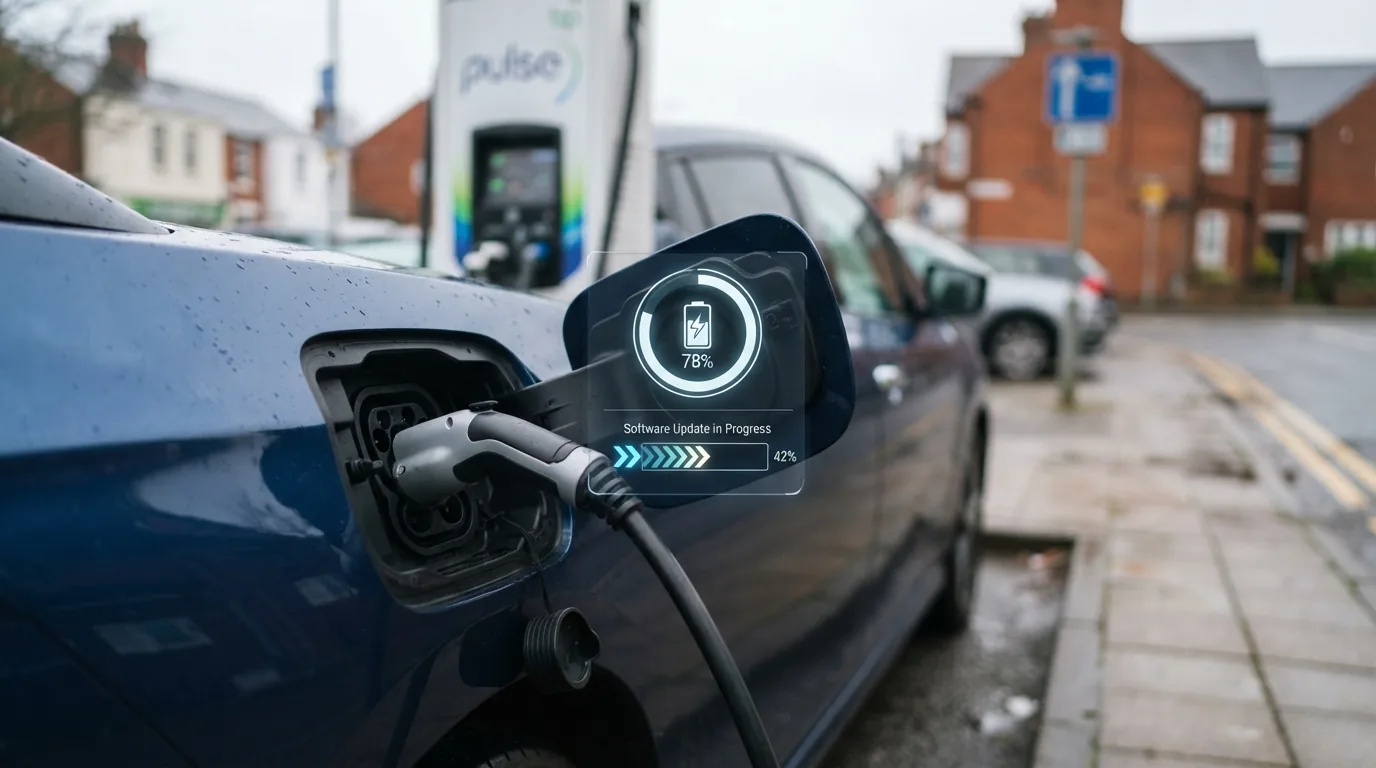
EV Technology and Apps in the UK: Batteries, Software and Charging Tech
Everything you need to know about how electric cars work, from battery chemistry to charging apps and over-the-air updates
How Does an EV Battery Management System Work?
The battery management system is the brain of every electric car battery pack. Here is what it monitors, what it controls and why it matters for range and longevity
How Does the Heater Work in an Electric Car? Heat Pumps Explained
A heat pump can add 10 to 30 per cent to your winter range. Here is how it works, which EVs have one and whether it is worth specifying