MHEV meaning: mild hybrid vs plug-in hybrid vs electric car explained
MHEV stands for mild hybrid electric vehicle: a petrol or diesel car with a small 48-volt motor that helps the engine but can never drive the car on electricity alone.
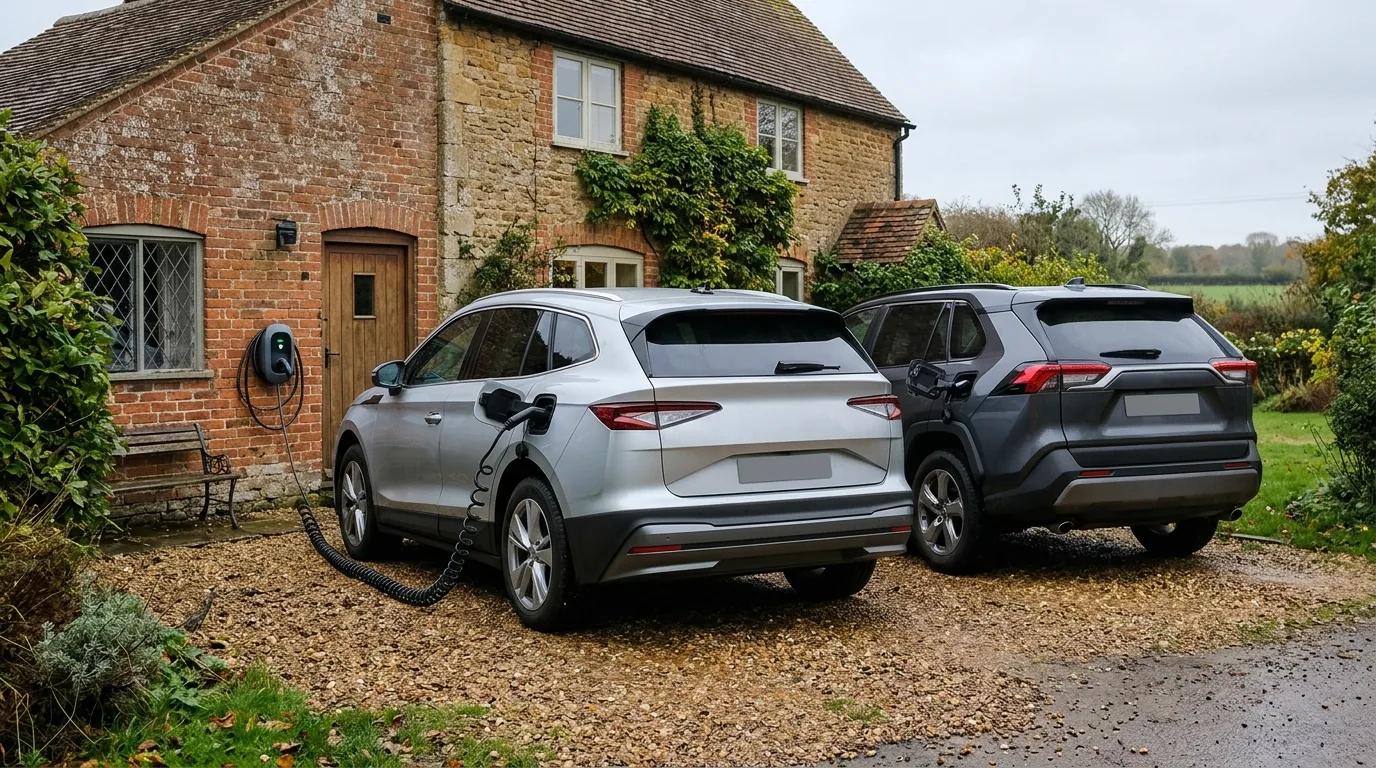
Quick answers
- MHEV means mild hybrid electric vehicle: a petrol or diesel car with a small electric motor and battery, usually on a 48-volt system, that assists the engine but cannot drive the car on electric power alone.
- A mild hybrid has no charging socket and cannot use cheap home electricity, so every mile it covers is paid for at the pump; Auto Express describes the fuel saving as minimal.
- A plug-in hybrid such as the BYD Seal U DM-i, with 50 miles of WLTP electric range, costs EV Compared's figure of 2.4p a mile in electric mode on a 6.5p/kWh off-peak tariff, against 1.5p a mile for the fully electric BYD Atto 3.
- For 2026 to 2027, HMRC's company car tax rate is 4% for a zero-emission car, 4% to 16% for a plug-in hybrid emitting 1 to 50 g/km depending on its electric range, and 30% for a petrol car emitting 120 to 124 g/km.
- Only zero-emission cars priced at or below £37,000 qualify for the Electric Car Grant of up to £3,750; mild hybrids and plug-in hybrids do not, because the car must emit 0 g/km at the tailpipe.
- The government's April 2025 response permits full hybrids and plug-in hybrids to be sold alongside zero-emission cars from 2030 to 2035, and mild hybrids are not on that list.
- In October 2026, battery electric cars took 32% of UK new car registrations and plug-in hybrids 15%, according to SMMT.
MHEV means mild hybrid electric vehicle: a petrol or diesel car with a small electric motor and battery that help the engine but can never drive the car on electricity alone. It has no plug, so unlike a plug-in hybrid (PHEV) or a battery electric car (BEV), it cannot use cheap home electricity for a single mile.
That last point is what separates the three types on cost. A mild hybrid is a more efficient petrol or diesel car. A plug-in hybrid is a petrol car with a real electric range: 50 to 90 miles WLTP for the plug-in hybrids in our spec data. An electric car runs on its battery alone. The rest of this guide explains how each works, what each costs to run and tax in the UK, and which suits which driver.
What does MHEV mean on a car?
MHEV is the badge or brochure shorthand for a mild hybrid, and it means the same thing whichever brand uses it. Auto Express describes a mild hybrid as a car powered mainly by a conventional petrol or diesel engine, helped by a small lithium-ion battery, usually on a 48-volt electrical system that works alongside the normal 12-volt battery.
The electric motor is normally an integrated starter generator, which works as both the starter motor and a source of extra power. It does four jobs:
- it gives a small push when the car pulls away, which takes load off the engine and saves some fuel;
- it adds a small boost under acceleration;
- on some models it lets the engine switch off when coasting and restarts it automatically;
- on some models it recovers energy through regenerative braking to recharge the small battery.
What it cannot do is turn the wheels by itself. Auto Express states plainly that mild hybrids cannot be driven on electric power alone, unlike full or plug-in hybrids. That applies to petrol and diesel mild hybrids alike. If you see a car advertised as a “hybrid” with no electric range listed, check whether it is a mild hybrid before you assume it saves the fuel a full hybrid does.
MHEV vs HEV vs PHEV vs BEV: what is the difference?
The difference is how much the electric side can do, and that comes down to battery size and whether you can plug in. The RAC puts it simply: in a hybrid you cannot plug in, in a plug-in hybrid you should plug in, and in an electric car you must.
| Mild hybrid (MHEV) | Full hybrid (HEV) | Plug-in hybrid (PHEV) | Electric (BEV) | |
|---|---|---|---|---|
| Drives on electricity alone | No | Short distances; the RAC says about a mile in town | Yes; 50 to 90 miles WLTP for the plug-in hybrids in our spec data | Always |
| Charging socket | No | No | Yes | Yes |
| Can use a 6.5p/kWh home tariff | No | No | Yes, for its electric miles | Yes, for every mile |
| First-year vehicle tax (2026) | By CO2, same as petrol; £455 at 111 to 130 g/km | By CO2, same as petrol | £115 at 1 to 50 g/km | £10 |
| Company car tax, 2026 to 2027 | Petrol bands, e.g. 30% at 120 to 124 g/km | Petrol bands | 4% to 16% at 1 to 50 g/km, by electric range | 4% |
| Electric Car Grant | No | No | No | Yes, if 0 g/km and £37,000 or less |
| New sales allowed | Not among the hybrids permitted from 2030 | Until 2035 | Until 2035 | No end date |
Tax figures are from gov.uk’s vehicle tax rate tables and HMRC’s appropriate percentages for 2026 to 2027. From the second year, every type pays the same £200 standard rate. For the wider trade-off between a self-charging hybrid and a battery car, our guide to hybrid vs full electric covers it in more depth.
If brochures throw other abbreviations at you, the EV jargon buster defines 50 of them.
How much do a plug-in hybrid and an electric car cost to run? A worked UK example
A plug-in hybrid running on electricity costs more per mile than an electric car, though both are cheap when charged at home. EV Compared’s method: efficiency is WLTP miles divided by usable battery kWh, priced at a 6.5p/kWh off-peak home rate, the 26.32p/kWh price cap (Ofgem, 1 October to 31 December 2026) and Zapmap’s 82p/kWh rapid average for October 2026, with charging losses ignored. The full method is on our methodology page.
Take two BYD SUVs from our spec data. The BYD Seal U DM-i is a plug-in hybrid with an 18.3 kWh usable battery, 50 miles of WLTP electric range and a list price of £33,205 in November 2026. The fully electric BYD Atto 3 has a 74.8 kWh battery, 316 miles of WLTP range and a list price of £38,990.
| BYD Seal U DM-i (plug-in hybrid, electric mode) | BYD Atto 3 (electric) | |
|---|---|---|
| List price, November 2026 | £33,205 | £38,990 |
| Usable battery | 18.3 kWh | 74.8 kWh |
| WLTP electric range | 50 miles | 316 miles |
| Full charge at 6.5p/kWh | £1.19 | £4.86 |
| Pence per mile at 6.5p/kWh | 2.4p | 1.5p |
| Pence per mile at the 26.32p price cap | 9.6p | 6.2p |
| 1,000 electric miles at 6.5p/kWh | £23.79 | £15.39 |
| 1,000 electric miles at the price cap | £96.33 | £62.30 |
| Pence per mile at 82p/kWh rapid | 30.0p | 19.4p |
The plug-in hybrid’s electric miles cost about half as much again as the electric car’s, because it covers fewer miles per kWh. The bigger gap is range: once the Seal U DM-i has used its 50 electric miles it runs on petrol, while the Atto 3 keeps going on electricity. The Atto 3 costs £5,785 more to buy, and it earns no Electric Car Grant because its £38,990 price is above the £37,000 cap.
A mild hybrid has no column in this table because it cannot draw on the grid at all. Every mile it drives is bought at the pump. That is why the off-peak tariff matters so much to this choice: our guide to Intelligent Octopus Go explains how the 6.5p overnight rate works, and only plug-in cars can use it.
Is it worth buying a mild hybrid?
A mild hybrid is worth buying only if you cannot charge a car at home or work. Compared with a non-hybrid petrol or diesel car, you get a little extra pull and some help in stop-start traffic, and Auto Express says it usually costs less than a full hybrid, plug-in hybrid or electric car. Some mild hybrids are still sold with a manual gearbox.
The disadvantages are just as clear. Auto Express calls the fuel saving minimal, and says mild hybrids get neither the reduced vehicle tax rate nor the lowest company car tax rates. Gov.uk classes hybrids as alternative fuel cars, which pay the same first-year vehicle tax as a petrol car with the same CO2. In company car tax, a petrol mild hybrid emitting 120 to 124 g/km sits at 30% for 2026 to 2027, against 4% for an electric car.
Owners also ask how long a mild hybrid battery lasts. Auto Express lists the limited lifespan of the 48-volt battery as a drawback but gives no figure, and we have found no maker’s published lifespan we can cite. Check what the manufacturer’s warranty covers for the hybrid system before you buy, and read our explainer on how EV batteries work for why lithium-ion cells age.
Are mild hybrids being phased out?
Mild hybrids are not among the hybrids the government will allow to be sold new from 2030 to 2035. Its April 2025 response to its consultation on the 2030 phase-out ends the sale of new purely petrol and diesel cars by 2030 and says it will permit the sale of full hybrids and plug-in hybrids alongside zero-emission cars from 2030 to 2035. Mild hybrids are not on that list, and the response records that most industry and other respondents agreed they should be excluded after 2030. Auto Express reported when the change was announced that mild hybrids will not be allowed, as they rely almost entirely on the engine.
That does not stop you buying or driving one. It does mean a new mild hybrid bought today is a type the government has not listed among those it will permit from 2030, which is worth weighing if you keep cars for a long time.
Which is better, MHEV or PHEV?
A plug-in hybrid is the better choice if you can charge at home and most of your journeys fit within its electric range; a mild hybrid is better only if you cannot plug in at all. The RAC warns that plug-in hybrid drivers who do not charge end up carrying a heavy battery they never use.
Buyers are choosing plug-in hybrids in growing numbers. In October 2026 they took 15% of UK new car registrations, with 22,898 sold, up 30.1%, according to SMMT; battery electric cars took 32% with 48,858. Our report on record plug-in hybrid sales covers the trend.
Electric range varies widely between plug-in hybrids. The Jaecoo 7 plug-in hybrid costs £35,170 with 56 miles of WLTP electric range, and the Omoda 9 plug-in hybrid costs £44,995 with 90 miles of WLTP electric range.
Company car drivers should look at that electric range closely. For 2026 to 2027, a plug-in hybrid emitting 1 to 50 g/km pays 7% with 70 to 129 miles of electric range, 10% with 40 to 69 miles and 16% under 30 miles. The bands change from 2028: our report on plug-in hybrid company car tax from 2028 explains what happens next.
One tax trap catches plug-in hybrid buyers. The £440 a year expensive car supplement applies above a £40,000 list price for petrol, diesel and hybrid cars, but only above £50,000 for electric cars. The Omoda 9 plug-in hybrid at £44,995 is over the lower threshold; an electric car at the same price is not.
Should you go fully electric instead?
If you can charge at home, a fully electric car is the cheaper choice to run in our example. The BYD Atto 3 covers 1,000 miles for £15.39 at 6.5p/kWh, against £23.79 for the electric part of the Seal U DM-i plug-in hybrid’s driving, and the Atto 3 never switches to petrol. An electric car also pays 4% company car tax and £10 first-year vehicle tax, and qualifies for the Electric Car Grant if it is priced at £37,000 or less and on the eligible list; see which EV grants are available for the current bands.
A plug-in hybrid still makes sense if you regularly drive well beyond an electric car’s range without time to stop and charge. A mild hybrid makes sense only if you have no way to charge. For a fuller cost comparison, our guide to electric vs hybrid running costs works through the figures.
Common mistakes when choosing between MHEV, PHEV and BEV
- Treating “hybrid” as one thing. A mild hybrid, a full hybrid and a plug-in hybrid are three different cars. Only the last two can move on electricity, and only the plug-in hybrid can use your home tariff.
- Buying a plug-in hybrid you will not charge. Without regular charging, its electric range goes unused and you carry a battery you paid for.
- Expecting a grant on a hybrid. The Electric Car Grant requires zero tailpipe CO2 and at least 100 miles of zero-emission range, so no mild hybrid or plug-in hybrid qualifies.
- Judging running costs on public charging prices. At Zapmap’s 82p/kWh rapid average, the Atto 3 costs 19.4p a mile, against 1.5p at home. Plug-in cars pay off when most charging happens at home; for wallbox questions, Best Chargers covers home charger options.
Verdict: which should you choose?
Our verdict rests on published data, not a drive. Choose a battery electric car if you can charge at home: in our worked example it has the lowest running cost per mile, it pays 4% company car tax, and it is the only type that can earn a grant. Choose a plug-in hybrid if you can charge at home but need petrol as a backup for long trips, and pick one with as much electric range as you can afford. Choose a mild hybrid only if you have nowhere to plug in and want a petrol or diesel car with a little electrical help; it is a better engine, not an electric car, and it is not among the hybrids the government will permit from 2030.
How we test and where our numbers come from
Range figures are official WLTP combined values taken from manufacturer UK specification pages, with real-world estimates drawn from independent comparative testing. Prices are UK list prices at the time of the latest update. Tax, grant and charging-scheme figures come from GOV.UK and HMRC publications. We re-check every guide when pricing, specification or policy changes. Last checked 10 November 2026. How we work out our own figures.
Frequently asked questions
What does MHEV mean on a car?
MHEV means mild hybrid electric vehicle. The car has a normal petrol or diesel engine plus a small electric motor, usually a starter generator on a 48-volt system, that helps it pull away, restarts the engine and, on some models, recovers energy when braking. It has no plug and cannot drive on electricity alone.
Which is better, MHEV or PHEV?
A plug-in hybrid is better if you can charge at home and most of your trips fit inside its electric range, because those miles run on electricity at a few pence a mile. A mild hybrid suits drivers who cannot charge at all, since it refuels like any petrol or diesel car and costs less to buy.
What are the disadvantages of a mild hybrid car?
The main disadvantage is that the fuel saving is small, because the motor only assists the engine. A mild hybrid cannot use cheap electricity, pays the same first-year vehicle tax as a petrol car with the same CO2, and sits in the same company car tax bands. Auto Express also notes that the 48-volt battery has a limited lifespan.
Is it worth buying a MHEV?
A mild hybrid is worth buying only if you have ruled out charging. Against a non-hybrid petrol car it adds a little extra pulling power and easier stop-start, but it earns no grant and no tax break. If you can plug in at home, a plug-in hybrid or an electric car costs far less per mile.
Are mild hybrids being phased out?
Mild hybrids are not among the hybrids the government will allow to be sold new from 2030 to 2035. Its April 2025 response to its consultation permits full hybrids and plug-in hybrids alongside zero-emission cars in that period, most respondents agreed mild hybrids should be excluded, and Auto Express reported that mild hybrids will not be allowed.
What is the difference between MHEV and HEV?
A full hybrid (HEV) can drive the wheels on electric power alone for short distances, while a mild hybrid (MHEV) cannot. The RAC says a full hybrid should manage about a mile of electric running in town. Neither has a plug, so neither can use cheap home electricity.
Sources and further reading
- autoexpress.co.ukMild-hybrid cars: what is a mild-hybrid and how does it work?Defines a mild hybrid: 48-volt system alongside the 12-volt battery, integrated starter generator, no electric-only driving, minimal fuel saving, limited 48-volt battery lifespan, no reduced VED or lowest BiK rates, cheaper than full hybrids, plug-in hybrids and EVs, some offered with manual gearboxes.
- autoexpress.co.ukGovernment softens 2030 petrol and diesel ban with hybrids now allowedReports (6 April 2025) that mild-hybrid (MHEV) models will not be allowed after 2030 under the revised rules.
- rac.co.ukShould I get a hybrid, plug-in hybrid or electric car?Full hybrids manage about a mile of electric running in town; in a plug-in hybrid you should plug in, and drivers who do not charge carry a heavy battery they do not use.
- gov.ukPhasing out sales of new petrol and diesel cars from 2030: summary of responses and joint government responseEnds the sale of new purely petrol and diesel cars by 2030; government will permit the sale of HEVs and PHEVs alongside ZEVs from 2030 to 2035; most respondents agreed MHEVs should be excluded (updated 7 April 2025).
- gov.ukAppendix 2: company car benefit, the appropriate percentage2026 to 2027 appropriate percentages: 4% at 0 g/km; 4%, 7%, 10%, 14% and 16% at 1 to 50 g/km by electric range; 30% at 120 to 124 g/km; 37% maximum (updated 6 April 2026).
- gov.ukVehicle tax rate tablesFirst-year rates of £10 at 0 g/km, £115 at 1 to 50 g/km and £455 at 111 to 130 g/km; £200 standard rate for all fuel types; hybrids taxed as alternative fuel like petrol; £440 expensive car supplement above £40,000, or above £50,000 for electric cars.
- gov.ukHow to apply for vehicle eligibility for the Electric Car GrantGrant cars must have zero tailpipe CO2, a zero-emission range of at least 100 miles and an RRP at or below £37,000; grants of £3,750 and £1,500.
- smmt.co.ukYear-end push lifts EV sales but Mandate gap set to widenSMMT October 2026 figures: 152,730 registrations; 48,858 battery electric (32.0%); 22,898 plug-in hybrid (15.0%), up 30.1%.
- electrive.comUK BEV registrations reach annual high with 32 per cent market shareSMMT October 2026 figures: 152,730 registrations; 48,858 battery electric (32%); 22,898 plug-in hybrid (15%), up 30.1%.
- ofgem.gov.ukChanges to energy price cap between 1 October and 31 December 2026Electricity unit rate under the cap of 26.32p per kWh for Direct Debit customers, 1 October to 31 December 2026.
- zapmap.comZapmap charging price indexWeighted average pay as you go price of 82p/kWh on rapid and ultra-rapid chargers in October 2026.

EV Compared
The EV Compared editorial team tracks the UK electric vehicle market full time: new model launches, list prices, WLTP and real-world range, public charging tariffs and the tax rules that decide what an EV actually costs to run. Every guide is checked against manufacturer specifications and official GOV.UK figures, and updated whenever the numbers move.
Related reading
View all
BiK Rates for Electric Cars 2026/27 to 2030/31: The Full Table
An electric company car is taxed at 4% of its list price in 2026/27, and the rate rises each April to 10% in 2030/31, still far below plug-in hybrids from 2028 and petrol cars.
Electric Car Leasing Explained: PCH, PCP, Salary Sacrifice and What a Good Deal Looks Like
Leasing an electric car means paying an initial rental and a fixed monthly fee to use a new car for a set term, then handing it back, and the only fair way to compare deals is the total cost over that term.

Reeves pay-per-mile tax: what the 3p a mile EV charge from April 2028 means for you
From 1 April 2028 electric cars pay 3p a mile and plug-in hybrids 1.5p a mile in Electric Vehicle Excise Duty, on top of normal road tax, so a typical EV driver pays about £240 to £270 a year.
Who Makes Omoda Cars? Owner, Factory and Reliability
Omoda is a brand of Chery, a Chinese carmaker based in Wuhu, where the electric Omoda E5 is built; there is no independent owner reliability score for Omoda yet.
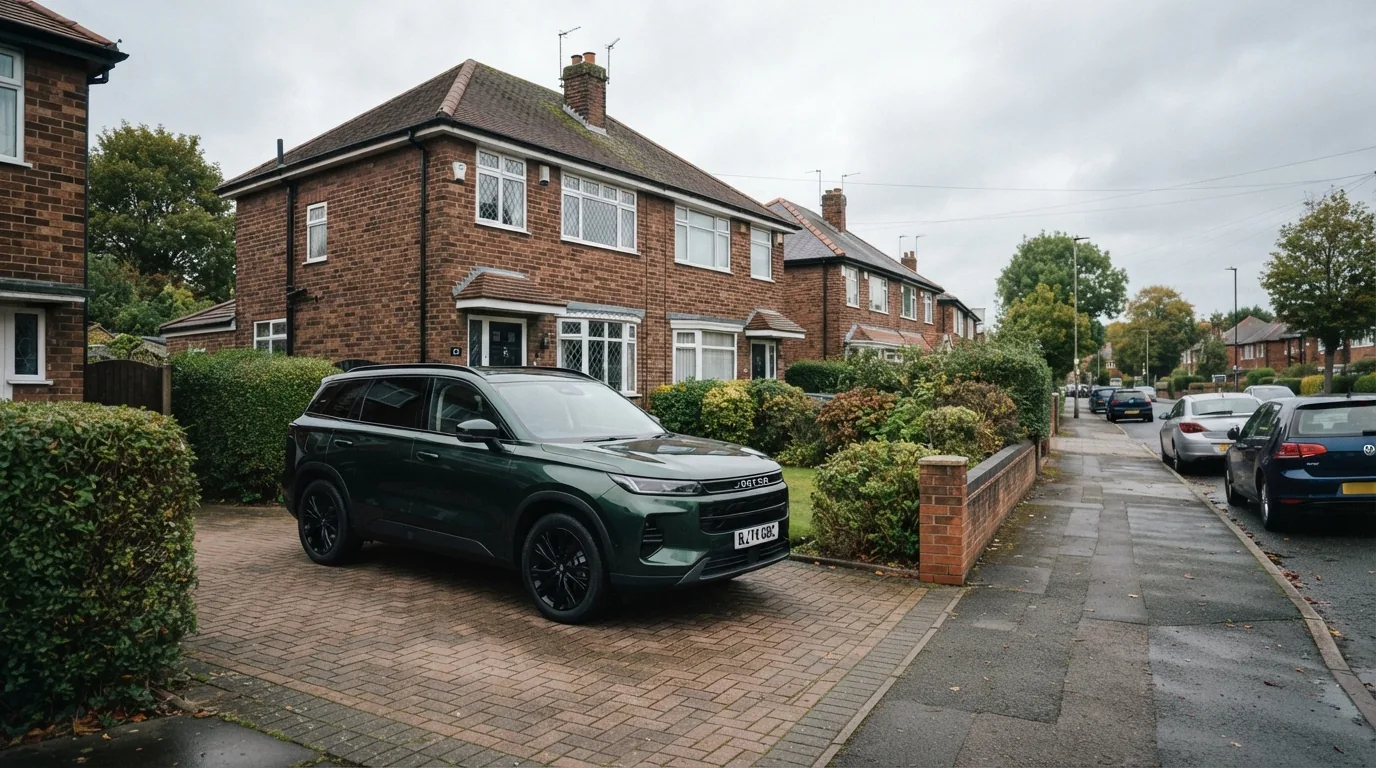
Chery's four UK brands outsold Volkswagen with 32,830 September sales
Jaecoo, Chery, Omoda and Lepas beat Britain's biggest single brand by 6,858 cars, but two-thirds of Omoda and Jaecoo sales were hybrids or plug-in hybrids rather than fully electric cars.

Chery to open UK R&D base as Sunderland deal eyes 2027 production
The group behind September's best-selling car still imports every model, and its Nissan deal is non-binding. Here is what Millbrook and Sunderland's Line 1 could change for UK buyers.