Best EV Charging Apps UK 2026: Find Chargers, Plan Routes and Pay
The UK public charging network has over 120,000 charge points. These are the apps that make it manageable, ranked by category and use case
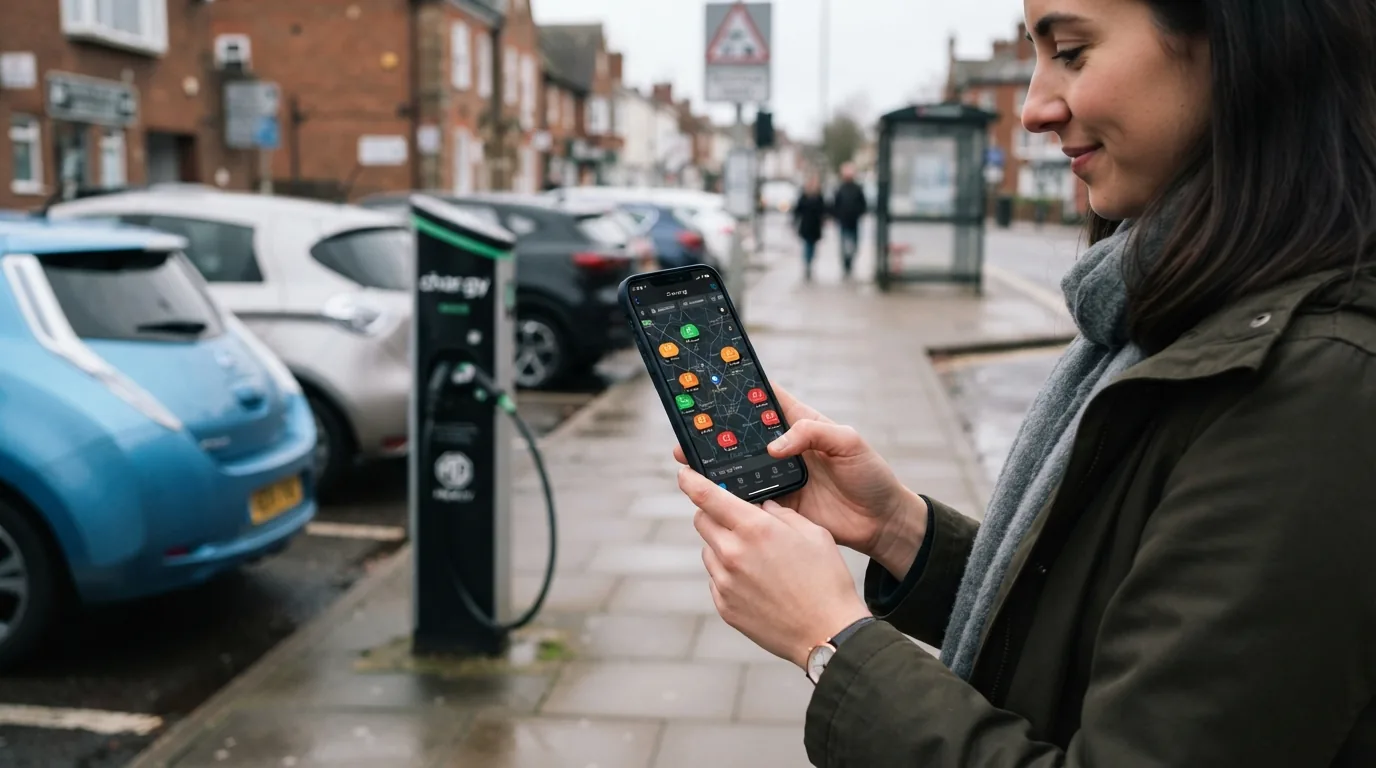
Quick answers
- The best EV charging app for most UK drivers is Zap-Map for finding chargers, paired with ABRP for route planning and Octopus Electroverse for paying across networks.
- The UK has over 120,000 public charge points across more than 46,000 locations (Zap-Map, April 2026), run by dozens of networks that each have their own app and payment system.
- Zap-Map is the most complete UK charger database and is free; Zap-Map Premium costs £2.99 to £3.49 a month or £29.99 a year and adds Apple CarPlay and Android Auto.
- ABRP is the standard app for planning multi-stop EV journeys because it models your specific car's consumption, temperature and elevation; ABRP Premium costs £4.99 a month or £39.99 a year.
- Octopus Electroverse gives access to over 1 million chargers in 40+ countries through one account and never marks up network rates, so you pay what the network charges.
- Bonnet is now OVO Charge; its Light Boost subscription costs £2 a month for 10% off public charging, so it pays off once you spend about £20 a month on public charging.
- For home charging on a smart tariff, use the Octopus app for Intelligent Octopus, the Ohme app for an Ohme charger, or your car maker's app to set departure times and charge limits.
The best EV charging app for most UK drivers is Zap-Map for finding chargers, backed by ABRP for route planning and Octopus Electroverse for payment. The UK public charging network now has over 120,000 charge points across more than 46,000 locations (Zap-Map, April 2026), operated by dozens of different networks, each with their own app and payment system. No single app covers everything perfectly, but a stack of two or three covers most situations. This guide ranks the best options by category so you can build a setup that works for the way you drive.
What types of EV app do you actually need?
UK drivers use EV apps for five jobs, and most people need only two or three of them:
- Finding chargers: Locating nearby charge points, checking real-time availability and reading reliability reports
- Route planning with charging: Planning long journeys with optimised charging stops and time predictions
- Paying for public charging: Starting sessions and paying across multiple networks without a separate card or account for each one
- Managing home charging: Scheduling overnight charging, integrating with smart tariffs and monitoring costs
- Monitoring battery health: Checking state of health, cell data and real energy consumption
Most UK drivers need at least apps from categories 1 and 3. Category 2 is essential for motorway journeys. Categories 4 and 5 are useful additions; for battery health, see our guide to OBD2 apps and adapters for electric cars.
Best for finding chargers: Zap-Map
Zap-Map is the best app for finding chargers in the UK, because it is the most comprehensive public charger database. It lists over 120,000 charge points with real-time availability data for a significant proportion of them, community-sourced reliability reports and photos. Crucially, it includes council-operated and smaller network charge points that some other apps miss. You can also pay for sessions in the app, or with the Zapmap charging card, at selected networks.
What it does well: Most complete UK coverage, real-time status updates, community fault reports, filtering by connector type and speed, free basic version with route planning.
What it does less well: Availability data relies partly on network integration (not all networks share live data), so some locations show estimated rather than confirmed status.
Cost: Free. Zap-Map Premium (£2.99 to £3.49/month or £29.99/year) adds Apple CarPlay and Android Auto integration and a 5% discount when you pay for charging in the app.
Best used for: Quick checks before departure, finding chargers in unfamiliar areas, reporting and reading fault reports.
Best for route planning: A Better Routeplanner (ABRP)
ABRP is the standard tool for planning multi-stop EV journeys. It models your specific car’s consumption profile (battery size, efficiency, speed-consumption curve), accounts for current battery state, outside temperature and elevation, and calculates exactly where to stop, for how long and what state of charge you will arrive at each destination.
What it does well: Car-specific routing (supports hundreds of EV models), accurate charge time estimates, integration with live traffic, real-time OBD2 data when paired with a compatible adapter.
What it does less well: The free version has ads and limited features; the full capability requires ABRP Premium (£4.99/month or £39.99/year).
Cost: Free tier available. ABRP Premium at £4.99/month (£39.99/year) unlocks advanced features, live car data integration and offline maps.
Best used for: Any journey over around 100 miles, especially those requiring a charging stop. For other planners, see our EV route planner apps guide.
Best for multi-network payment: Octopus Electroverse
Octopus Electroverse is the best single app for paying across UK networks, giving access to over 1 million charge points across 40+ countries, including all major UK networks, through one account. It never marks up charging rates (you pay the rate the network sets), you do not need to be an Octopus Energy customer, and a physical Electroverse card can be used at most RFID-compatible chargers without opening the app.
What it does well: One account for most UK networks, no mark-up pricing, physical card works widely, strong European coverage, honest pricing display.
What it does less well: Does not cover every small network; some session start times are slightly slower than native apps.
Cost: Free account. Pay-as-you-go at network rates with no monthly fee.
Best used for: Regular public charging without wanting multiple accounts; ideal if you use Octopus Energy at home for a joined-up experience. Our Octopus Electroverse versus Bonnet comparison goes into more detail, and the guide to EV charging payment apps covers the wider field.
Best alternative payment app: Bonnet (now OVO Charge)
Bonnet was acquired by OVO Energy and relaunched as OVO Charge, and it is the main alternative to Electroverse for drivers who want one app for many networks. The app aggregates access to over 400,000 charge points across Europe, including the major UK networks, with pay-as-you-go or subscription pricing.
What it does well: Wide UK network coverage, clean interface, subscription option for regular high-mileage public charging.
What it does less well: The subscription is only worth it if you spend about £20 or more a month on public charging, because it saves 10%.
Cost: Pay-as-you-go, or the Light Boost subscription at £2/month, which gives 10% off all public charging plus rewards.
Best used for: Drivers who do not use Octopus Energy and want a single aggregator app.
Comparison table: top EV charging apps for UK drivers
| App | Category | Cost | UK network coverage | Route planning | CarPlay/AA |
|---|---|---|---|---|---|
| Zap-Map | Charger finding | Free / £2.99 to £3.49/month | Broadest in UK | Basic | Premium only |
| ABRP | Route planning | Free / £4.99/month | Via Zap-Map integration | Best-in-class | Yes (Premium) |
| Octopus Electroverse | Multi-network payment | Free (PAYG) | Most major UK networks | No | No |
| OVO Charge (Bonnet) | Multi-network payment | Free / £2/month | Wide UK coverage | No | No |
| PlugShare | Charger finding + reviews | Free | Good UK coverage | No | No |
| Osprey app | Network-specific | Free | Osprey network only | No | No |
| bp pulse app | Network-specific | Free | bp pulse network | No | No |
| Pod Point app | Network-specific | Free | Pod Point network | No | No |
| Shell Recharge | Network-specific | Free | Shell Recharge network | No | No |
| Gridserve app | Network-specific | Free | Gridserve / Electric Highway | No | No |
| Mer | Network-specific | Free | Mer network | No | No |
Best for community reliability reports: PlugShare
PlugShare is the best app for community reliability reports, because drivers check in at chargers and leave comments, photos and ratings. When a charger is broken or a location has access issues (a gate that closes at 8pm, for example), PlugShare check-ins usually reflect this before any official source does.
Cost: Free.
Best used for: Checking reliability of a charger you have not used before; planning stops at unfamiliar locations; finding home-sharing chargers.
Best for smart home charging: Manufacturer apps and energy provider apps
For scheduling home charging on a smart tariff, the most important app is usually either the car manufacturer’s app (to set departure times and charge limits) or the energy provider’s app (to integrate with Agile or similar time-of-use pricing).
- Octopus app: Integrates with Intelligent Octopus to automatically shift charging to the cheapest overnight slots. Works with a wide range of home chargers (Ohme, Indra, Hypervolt, Pod Point).
- Your car’s OEM app (Tesla, BMW MyBMW, Hyundai BlueLink, Kia Connect, etc.): Sets departure schedules, charge limits and remote preconditioning.
- Ohme app: If you have an Ohme home charger, their app integrates directly with energy tariffs to schedule and manage charging automatically.
For more on this, see our guide to smart home apps for EV charging with Octopus.
Network-specific apps: when do you need them?
Network-specific apps are worth keeping if you charge mostly at one network, because they are typically the fastest way to start a session there. Despite the aggregator options, some networks still work best with their own tools:
- IONITY app or BMW Charging account: IONITY charges significantly more per kWh for pay-as-you-go with its own app, but BMW, Hyundai, Kia and other partner accounts get preferential rates.
- Tesla app: Essential for Tesla owners (charge scheduling, preconditioning, remote monitoring). Non-Tesla owners need to use the Tesla app or RFID card at Superchargers.
- Osprey app: Osprey chargers on UK motorways are generally reliable and well-maintained; the app starts sessions quickly. Newer Osprey sites can also start a session without the app, as covered in our Osprey Go Autocharge report.
Does Google Maps or Apple Maps work for finding chargers?
Partially. Google Maps now shows EV chargers with connector type and live availability for some networks, but coverage is incomplete and community reliability data is absent. For a quick “where is the nearest fast charger?” query in an unfamiliar area, it is useful. For planning a stop or checking whether a specific charger is working reliably, Zap-Map is the better tool.
Apple Maps, since its 2024 updates, shows EV chargers with price information and availability for an increasing number of networks. Coverage is improving but still behind Zap-Map for UK-specific completeness.
What about in-car charger finding?
Built-in charger search is a convenient starting point, but it is rarely as complete as Zap-Map. Many modern EVs include built-in charger databases. Tesla’s navigation shows Supercharger availability. Hyundai BlueLink, Kia Connect, BMW My Charging, and VW We Charge all integrate charger search into the infotainment. Some of these are good; others are limited to partner networks or are infrequently updated.
The in-car integration is convenient for quick checks while driving, but most are not as comprehensive as Zap-Map for the full public network. They work as a starting point rather than a primary tool.
What is the one thing most drivers overlook?
Real-time status data is not uniform across the UK network, so a green icon does not guarantee a working charger. Zap-Map shows a green “available” icon when it has live data from the network saying the charger is free. But some networks do not share live data at all, in which case Zap-Map shows the charger’s last known status or an estimated availability, which can be hours out of date.
The practical mitigation: read the recent community check-ins on any charger you are planning to rely on for a journey. A check-in from three days ago saying “worked fine” is far more useful than a green status icon with no live data. If a charger turns out to be broken or blocked, our guide on what to do when a public EV charger is broken or blocked explains the next steps.
The Public Charge Point Regulations 2023 are improving this: operators must publish availability data free of charge and update a charger’s status within 30 seconds of a change. But full compliance and data quality across the entire 120,000-point estate will take time.
For more on EV technology, see the EV tech and apps hub.
What is the recommended starter stack?
For most UK EV drivers in 2026, four apps cover every job:
- Zap-Map (free): Find chargers, check availability, read community reports
- ABRP (free or Premium): Plan any journey that involves a charging stop
- Octopus Electroverse (free): Pay across most UK networks with one account
- Your manufacturer’s app: Schedule home charging, set departure times, remote precondition
That is four apps covering all the main jobs. As you settle into EV ownership, you will find which combination works for your specific routes and car.
For more on EV technology, visit the EV tech and apps hub. For specific comparisons between route planning apps, see our EV route planner apps guide and our comparison of Zap-Map versus ABRP.
How we test and where our numbers come from
Range figures are official WLTP combined values taken from manufacturer UK specification pages, with real-world estimates drawn from independent comparative testing. Prices are UK list prices at the time of the latest update. Tax, grant and charging-scheme figures come from GOV.UK and HMRC publications. We re-check every guide when pricing, specification or policy changes. Last checked 23 October 2026. How we work out our own figures.
Frequently asked questions
What is the best EV charging app in the UK?
Zap-Map is the best EV charging app for finding chargers in the UK because it has the most complete database, live availability and community fault reports. Most drivers add ABRP for long journeys and Octopus Electroverse to pay across networks, as no single app does every job well.
Which EV charging app lets you pay across the most networks?
Octopus Electroverse is the strongest single payment app for UK drivers, with access to over 1 million chargers through one account and no mark-up on network rates. A free physical Electrocard works at most RFID-compatible chargers. OVO Charge, formerly Bonnet, is the main alternative.
Do I need an app to pay for public EV charging?
Not always. Under the Public Charge Point Regulations 2023, new public chargers of 8kW or above and existing rapid chargers must accept contactless payment without a pre-existing account. An app or RFID card is still often cheaper and faster, and some networks reserve their best rates for app users.
How accurate is live charger availability in EV apps?
It is accurate only where the network shares live data. The Public Charge Point Regulations 2023 require operators to update status within 30 seconds of a change, but where data is missing apps show a last known or estimated status. Check recent community check-ins before relying on a charger.
What is the best app for planning a long EV journey?
A Better Routeplanner (ABRP) is the best app for long EV journeys. It uses your car's battery size, efficiency and speed-consumption curve, plus temperature and elevation, to work out where to stop, for how long and what charge you will arrive with. The free tier covers most trips.
Which app is best for scheduling home EV charging?
The Octopus app is best if you are on Intelligent Octopus, as it shifts charging into the cheapest overnight slots. Ohme owners should use the Ohme app, which links to tariffs automatically. Otherwise use your car manufacturer's app to set departure times and charge limits.
Sources and further reading
- legislation.gov.ukThe Public Charge Point Regulations 2023, regulation 10: DataOperators must publish free, machine-readable availability data and update charge point status within 30 seconds of a change.
- legislation.gov.ukThe Public Charge Point Regulations 2023, regulation 5: Contactless paymentNew public chargers of 8kW or above and existing rapid chargers must accept contactless payment.
- apps.apple.comOctopus Electroverse on the App StoreOver 1,000,000 chargers, free Electrocard (RFID), open to non-Octopus customers, no mark-up on network rates.
- apps.apple.comZapmap: EV charging points map on the App StoreZapmap filters by power, price, connector and availability, includes a route planner, and lets drivers pay in the app or with the Zapmap charging card. UK listing shows Premium at £29.99 a year and £2.99 or £3.49 a month depending on the plan.
- apps.apple.comA Better Routeplanner (ABRP) on the App StoreUK App Store in-app purchases list ABRP Premium at £4.99 monthly or £39.99 annually.
- play.google.comOVO Charge on Google PlayOVO Charge (Bonnet) lists 400,000+ chargers across Europe and its Light Boost subscription at £2 a month for 10% off public charging.
- zapmap.comWhat's coming for EV charging in 2024? (Zapmap)Zapmap received live status data covering circa 70% of UK charge points, so live availability is not universal.

EV Compared
The EV Compared editorial team tracks the UK electric vehicle market full time: new model launches, list prices, WLTP and real-world range, public charging tariffs and the tax rules that decide what an EV actually costs to run. Every guide is checked against manufacturer specifications and official GOV.UK figures, and updated whenever the numbers move.
Related reading
View all
Best EV Route Planner UK 2026: Apps for Long Journeys Compared
Planning a long EV journey in the UK requires more than Google Maps. These are the route planner apps that actually understand battery range, charging stops and arrival state of charge
Zapmap vs A Better Routeplanner: Best EV Trip App in the UK?
Should you use Zapmap or ABRP for EV trips? They do different things. We explain which app does what, and which UK drivers need both.
EV Technology and Apps in the UK: Batteries, Software and Charging Tech
Everything you need to know about how electric cars work, from battery chemistry to charging apps and over-the-air updates
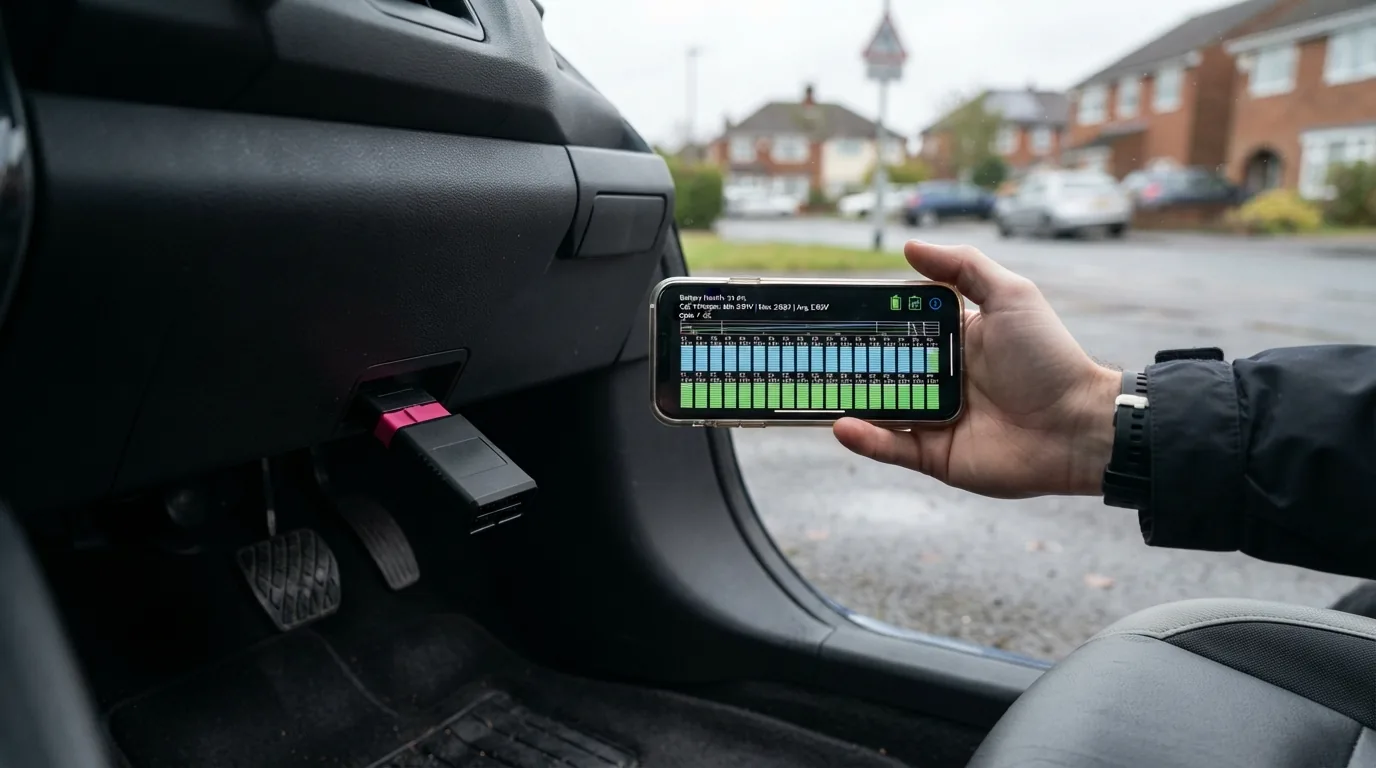
Best OBD2 Apps and Adapters for Electric Cars
OBD2 adapters unlock the battery data your car's dashboard hides. Here are the best apps and adapters for UK EV owners in 2026, ranked by car model and use case
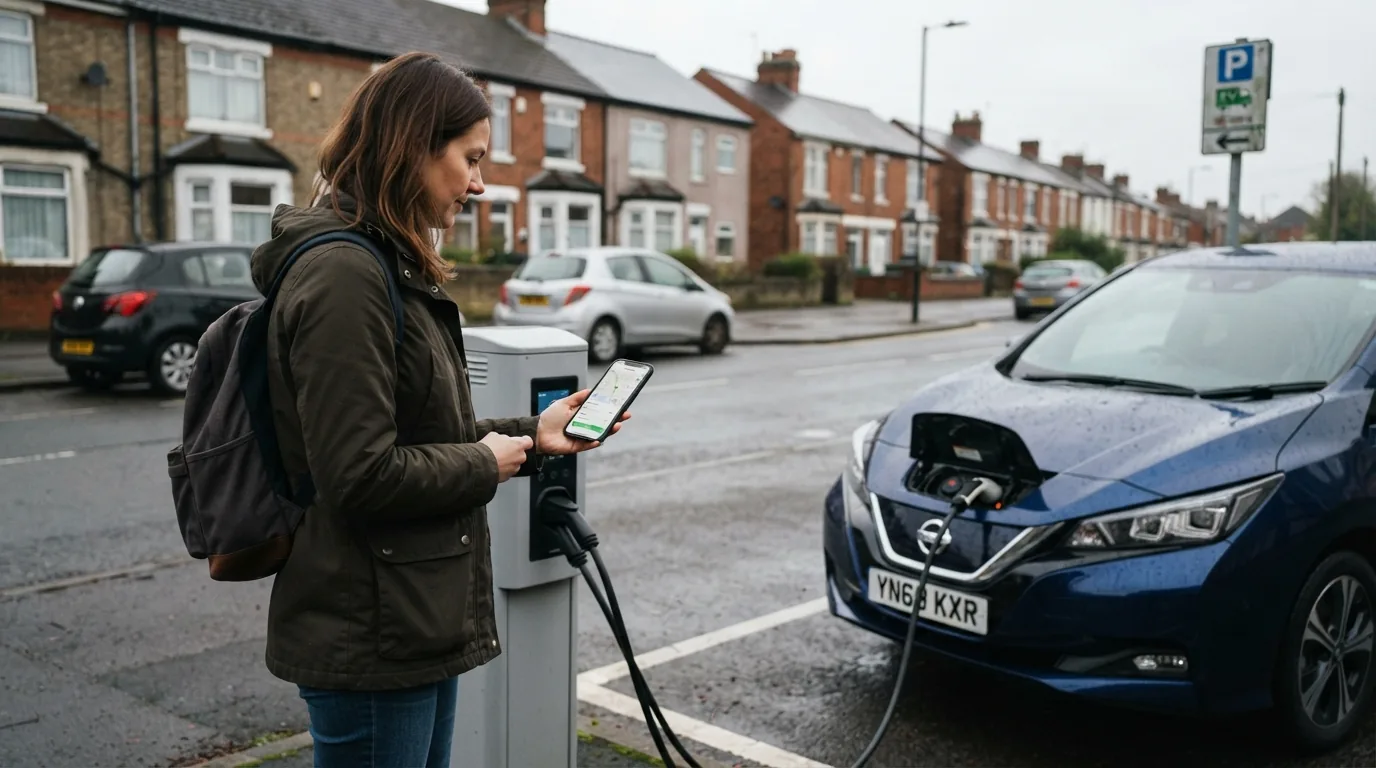
Octopus Electroverse vs Bonnet: Best Charging App Compared
Octopus Electroverse and Bonnet (now OVO Charge) are the two leading multi-network EV charging apps in the UK. We compare coverage, price and who each one suits.
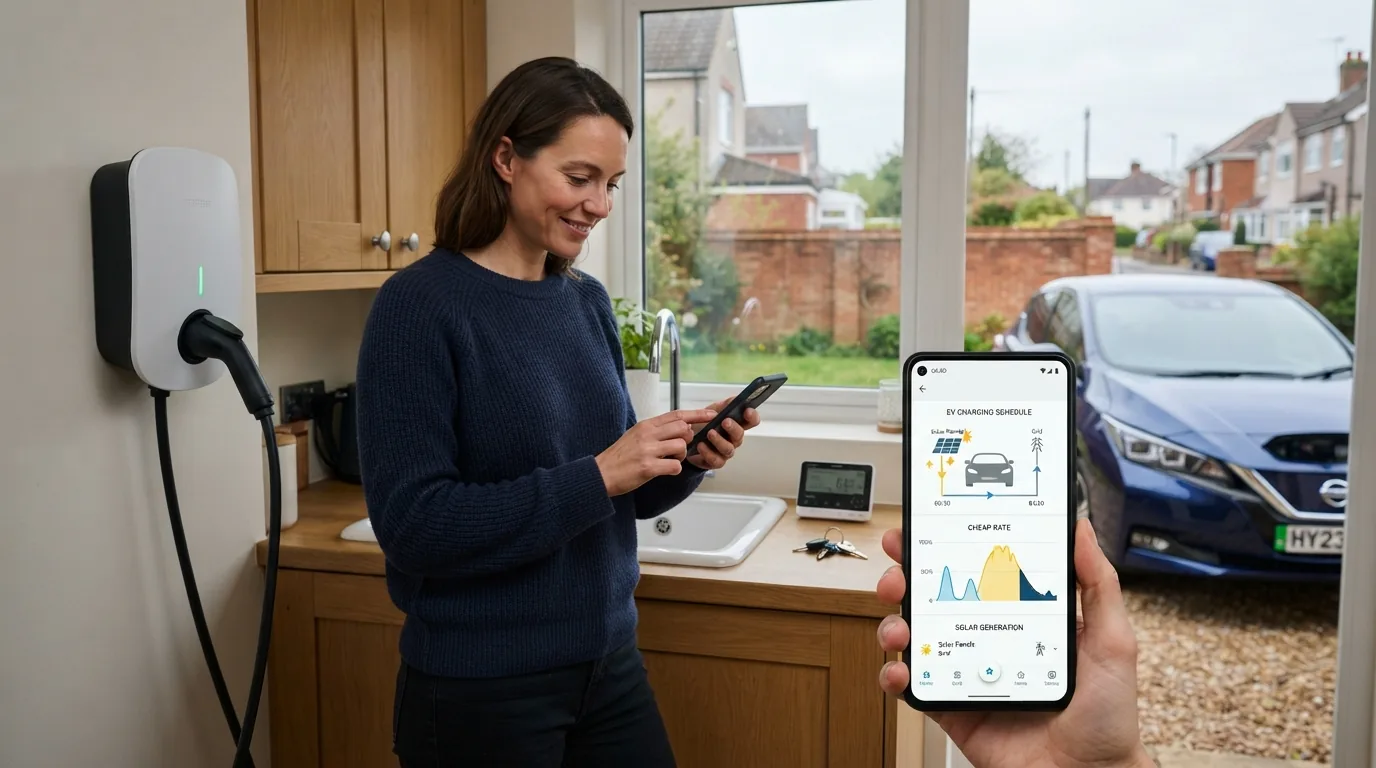
Best Smart EV Charging Apps for Intelligent Octopus Go, Agile and Solar
Smart home charging apps let you charge your EV at the cheapest rates automatically. Here are the best options for UK drivers in 2026, from Octopus Intelligent Go to solar integration