Tesla Model 3 vs Model Y: which suits you?
Tesla sells the Model 3 saloon and the Model Y SUV at the same £44,990 starting point for very different cars. We worked out what each costs per mile of range and how much boot you get per pound.
Quick answers
- The Model 3 Premium Long Range RWD and the entry Model Y RWD both cost £44,990 in November 2026, but EV Database estimates 360 miles of real-world range for the Model 3 against 235 miles for the Model Y.
- On our sums the Model 3 Premium Long Range RWD costs £125 of list price per mile of real-world range, against £191 for the Model Y RWD and £175 for the Model Y Premium Long Range RWD.
- The Model Y RWD has an 835 litre boot against 594 litres in the Model 3, which works out at 18.6 litres per £1,000 of list price against 13.2 litres for the Model 3 Premium Long Range RWD.
- Charged at home on an 8p/kWh off-peak rate, the Model 3 Premium Long Range RWD costs about £175 a year to run over 10,000 miles and the Model Y RWD about £204.
- On public rapid chargers at Zapmap's September 2026 average of 79p/kWh, the gap between the two £44,990 cars grows to about £285 a year over 10,000 miles.
- The Model Y can tow up to 1,600 kg braked, against 1,000 kg for the Model 3, according to EV Database.
- Both pay 4% benefit-in-kind in 2026/27, so a 40% taxpayer pays about £60 a month for either £44,990 car.
Buy the Model 3 if you want the most range and the lowest running costs for your money; buy the Model Y if you need a big boot, more rear headroom or a towbar. At the shared £44,990 price point the Model 3 goes about 125 miles further, and the Model Y carries 241 litres more luggage.
The Model 3 saloon and the Model Y SUV share a platform, a cabin layout and much of their software, and Carwow says they are very hard to tell apart from behind the wheel. They are also close in the sales charts: the Model 3 was the UK’s best-selling electric car in September 2026 with 9,929 registrations, and the Model Y was second (electrive). The choice comes down to range against space, and below we put a number on both.
How much do the Model 3 and Model Y cost?
The Model 3 costs from £37,990 and the Model Y from £44,990 in November 2026. These are the UK cash prices from 1 October 2026 reported by EV Industry News and matched by EV Database, before options.
| Trim | Model 3 | Model Y |
|---|---|---|
| Rear-Wheel Drive | £37,990 | £44,990 |
| Premium Long Range RWD | £44,990 | £49,990 |
| Premium Long Range AWD | £49,990 | £52,990 |
| Performance | £59,990 | £61,990 |
The overlap that matters is at £44,990, where you can have either the entry Model Y RWD or the Model 3 Premium Long Range RWD. Each Model Y trim costs £2,000 to £7,000 more than the Model 3 trim with the same name. Our Tesla UK prices page has the price history, including the £3,000 rise on the entry Model Y in October.
How do the specs compare?
The Model 3 is lower, lighter and more aerodynamic, so it goes further on a similar battery. The Model Y is 180 mm taller, with a hatchback tailgate and a bigger load area. These figures are for the four rear-wheel-drive cars, from EV Database’s pages for the Model 3 RWD, Model 3 Premium RWD, Model Y RWD and Model Y Premium RWD.
| Model 3 RWD | Model 3 Premium LR RWD | Model Y RWD | Model Y Premium LR RWD | |
|---|---|---|---|---|
| List price (Nov 2026) | £37,990 | £44,990 | £44,990 | £49,990 |
| Usable battery | 60 kWh | 79 kWh | 60 kWh | 74 kWh |
| WLTP range | 332 miles | 429 to 466 miles | 309 to 326 miles | 375 miles |
| Real-world range (EV Database) | 275 miles | 360 miles | 235 miles | 285 miles |
| Efficiency | 218 Wh/mile | 219 Wh/mile | 255 Wh/mile | 260 Wh/mile |
| Peak DC charging | 175 kW | 250 kW | 175 kW | 250 kW |
| Boot (seats up) | 594 litres | 594 litres | 835 litres | 854 litres |
| Boot (seats folded) | 977 litres | 977 litres | 2,118 litres | 2,138 litres |
| Front boot | 88 litres | 88 litres | 117 litres | 117 litres |
| Braked towing | 1,000 kg | 1,000 kg | 1,600 kg | 1,600 kg |
| 0 to 62 mph | 6.2 sec | 5.2 sec | 7.2 sec | 5.6 sec |
Where WLTP is shown as a span, the lower figure is for the heaviest specification.
Which gives more range for the money?
The Model 3 does, at every price. To compare fairly we divided each list price by its real-world range.
Method: list price ÷ EV Database real-world range = £ of list price per mile of range.
| Trim | List price | Real-world range | £ per mile of range |
|---|---|---|---|
| Model 3 RWD | £37,990 | 275 miles | £138 |
| Model 3 Premium LR RWD | £44,990 | 360 miles | £125 |
| Model 3 Premium LR AWD | £49,990 | 340 miles | £147 |
| Model 3 Performance | £59,990 | 325 miles | £185 |
| Model Y RWD | £44,990 | 235 miles | £191 |
| Model Y Premium LR RWD | £49,990 | 285 miles | £175 |
| Model Y Premium LR AWD | £52,990 | 295 miles | £180 |
| Model Y Performance | £61,990 | 285 miles | £218 |
The two £44,990 cars sit at opposite ends of the table. The Model 3 Premium Long Range RWD is the best value Tesla on this measure at £125 a mile, while the Model Y RWD, with its 60 kWh battery in a heavier, taller body, is the second worst at £191. Even the dearest Model 3, the Performance, beats the entry Model Y. See our guide to which Tesla to buy for every trim side by side.
Which gives more boot space for the money?
The Model Y does, even though it costs more. Here we turned the comparison round and measured luggage space against price.
Method: boot volume with the seats up ÷ list price in thousands of pounds = litres per £1,000.
| Trim | Boot (seats up) | List price | Litres per £1,000 |
|---|---|---|---|
| Model 3 RWD | 594 litres | £37,990 | 15.6 |
| Model 3 Premium LR RWD | 594 litres | £44,990 | 13.2 |
| Model Y RWD | 835 litres | £44,990 | 18.6 |
| Model Y Premium LR RWD | 854 litres | £49,990 | 17.1 |
The Model Y RWD gives the most boot space per pound of these four cars, and with the seats folded it takes 2,118 litres, more than twice the Model 3’s 977 litres. The numbers understate the practical gap: the Model 3 is a saloon with a smaller boot opening, while the Model Y has a full hatchback tailgate that Carbuyer says makes loading a pushchair far easier. Carbuyer also notes the Model Y’s 40:20:40 rear seats fold electrically.
Put the two £44,990 cars together and the trade is simple: choosing the Model Y gives up 125 miles of real-world range to gain 241 litres of boot space.
Which is cheaper to run?
The Model 3 is, but the difference is small if you charge at home. Using EV Database’s real-world efficiency figures and our standard energy prices, here is the cost per mile for the two £44,990 cars.
Method: Wh per mile ÷ 1,000 × price per kWh = pence per mile; × 10,000 for a year.
| Charging | Model 3 Premium LR RWD | Model Y RWD | Gap over 10,000 miles |
|---|---|---|---|
| Home off-peak, 8p/kWh | 1.8p a mile (£175) | 2.0p a mile (£204) | £29 |
| Price cap, 26.32p/kWh | 5.8p a mile (£576) | 6.7p a mile (£671) | £95 |
| Public rapid, 79p/kWh | 17.3p a mile (£1,730) | 20.1p a mile (£2,015) | £285 |
The 79p/kWh figure is Zapmap’s September 2026 average for rapid and ultra-rapid chargers. Our guide to the cost of charging a Tesla has the current Supercharger rates.
Charging speed favours the Long Range cars. The Model 3 Premium Long Range RWD peaks at 250 kW and EV Database puts its 10 to 80 per cent time at 28 minutes. The Model Y RWD peaks at 175 kW; its smaller 60 kWh battery takes 24 minutes for the same charge, but each stop adds fewer miles.
Which is better for families?
The Model Y. As well as the bigger boot, its taller roof gives rear passengers more headroom than the Model 3, according to Carbuyer, and Carwow calls its rear seats palatial. Carwow says the Model 3 also has plenty of rear legroom and headroom, so it is not cramped; the Model Y simply has more.
If you tow, the Model Y is the clear choice. EV Database rates it at 1,600 kg braked against 1,000 kg for the Model 3, which rules the saloon out for most caravans.
Which is quicker?
The Model 3 is quicker at each price. The £44,990 Model 3 Premium Long Range RWD does 0 to 62 mph in 5.2 seconds against 7.2 seconds for the £44,990 Model Y RWD, according to EV Database. The Model 3 also sits 180 mm lower (1,441 mm against 1,621 mm), and its lower weight helps its efficiency as well as its pace.
What do they cost as company cars?
The same at the same list price. Both pay 4% benefit-in-kind in 2026/27, rising to 5% in 2027/28 (Carwow).
Method: list price × 4% × your tax rate ÷ 12. For a 40% taxpayer that is about £51 a month for the Model 3 RWD, £60 a month for either £44,990 car, and £67 a month for the Model Y Premium Long Range RWD.
On road tax, electric cars listed above £50,000 pay an extra £440 a year for five years from the second year of tax. The Model 3 Performance, Model Y Premium Long Range AWD and Model Y Performance pay it; the Model Y Premium Long Range RWD sits £10 under the threshold before options. Our Tesla company car tax guide has the figures for every tax band.
Which should you buy?
Buy the Model 3 if:
- You do long motorway trips and want the most range per pound (£125 a mile for the Premium Long Range RWD)
- You want the cheapest Tesla, from £37,990
- You rely on public charging, where its efficiency saves about £285 a year over 10,000 miles
- A 594 litre boot is enough for your household
Buy the Model Y if:
- You carry pushchairs, dogs or bulky kit and want 835 litres or more with a wide tailgate
- You have tall rear passengers
- You need to tow up to 1,600 kg
- You charge mostly at home, where the running cost gap is about £29 a year
If you are choosing a Model Y, the Premium Long Range RWD at £49,990 adds 50 miles of real-world range and 250 kW charging over the RWD for £5,000; our Model Y Standard vs Premium guide weighs that up. If the Model 3 suits you, read our Model 3 Standard vs Long Range comparison to pick between the £37,990 and £44,990 cars.
How we test and where our numbers come from
Range figures are official WLTP combined values taken from manufacturer UK specification pages, with real-world estimates drawn from independent comparative testing. Prices are UK list prices at the time of the latest update. Tax, grant and charging-scheme figures come from GOV.UK and HMRC publications. We re-check every guide when pricing, specification or policy changes. Last checked 1 November 2026. How we work out our own figures.
Frequently asked questions
Should I buy a Tesla Model 3 or Model Y?
Buy the Model 3 if range and running costs matter most, and the Model Y if you need boot space, rear headroom or towing. At £44,990 each, the Model 3 Premium Long Range RWD goes about 125 miles further in real-world driving, while the Model Y RWD has 241 litres more boot space.
Is the Model 3 or Model Y cheaper?
The Model 3 is cheaper, starting at £37,990 for the RWD against £44,990 for the Model Y RWD in November 2026. The top Model 3 Performance is £59,990 and the Model Y Performance £61,990. These are list prices from 1 October 2026 before options.
Which has more range, the Model 3 or the Model Y?
The Model 3 has more range at every price. EV Database estimates 360 miles of real-world range for the £44,990 Model 3 Premium Long Range RWD, against 235 miles for the £44,990 Model Y RWD and 285 miles for the £49,990 Model Y Premium Long Range RWD.
How much bigger is the Model Y boot than the Model 3?
The Model Y boot is 835 to 854 litres with the seats up, against 594 litres in the Model 3, according to EV Database. With the rear seats folded the Model Y takes 2,118 to 2,138 litres and the Model 3 977 litres, and the Model Y front boot is 117 litres against 88 litres.
Is the Model Y more expensive to run than the Model 3?
Yes, slightly. On an 8p/kWh home tariff the Model Y RWD costs about 2.0p a mile against 1.8p for the Model 3 Premium Long Range RWD, using EV Database efficiency figures. On 79p/kWh public rapid chargers it is 20.1p against 17.3p a mile.
Can the Tesla Model 3 tow?
Yes, the Model 3 can tow up to 1,000 kg braked and 750 kg unbraked, according to EV Database. The Model Y is rated for 1,600 kg braked, so it is the better choice for a small caravan or a heavier trailer.
Sources and further reading
- evinfo.infoTesla UK Prices October 1st 2026UK cash prices for all eight Model 3 and Model Y trims from 1 October 2026, from £37,990 to £61,990.
- ev-database.orgElectric vehicles available in the UK (Tesla)Current Tesla UK trims with on-the-road prices, real-world range and efficiency, including the AWD and Performance versions.
- ev-database.orgTesla Model 3 RWD (Highland)Model 3 RWD at £37,990: 332 miles WLTP, 275 miles real range, 218 Wh/mile, 175 kW charging, 594 litre boot, 1,000 kg braked towing, 0 to 62 mph in 6.2 seconds.
- ev-database.orgTesla Model 3 Premium RWD (Highland)Model 3 Premium Long Range RWD at £44,990: 79 kWh usable, 429 to 466 miles WLTP, 360 miles real range, 219 Wh/mile, 250 kW, 28 minutes 10 to 80 per cent, 594 litre boot, 977 litres maximum, 88 litre front boot, 1,441 mm tall, 0 to 62 mph in 5.2 seconds.
- ev-database.orgTesla Model Y RWD (Juniper)Model Y RWD at £44,990: 60 kWh usable, 309 to 326 miles WLTP, 235 miles real range, 255 Wh/mile, 175 kW, 24 minutes 10 to 80 per cent, 835 litre boot, 2,118 litres maximum, 117 litre front boot, 1,621 mm tall, 1,600 kg braked towing, 0 to 62 mph in 7.2 seconds.
- ev-database.orgTesla Model Y Premium RWD (Juniper, Tesla 4680)Model Y Premium Long Range RWD at £49,990: 74 kWh usable, 375 miles WLTP, 285 miles real range, 260 Wh/mile, 250 kW, 36 minutes 10 to 80 per cent, 854 litre boot, 2,138 litres maximum, 0 to 62 mph in 5.6 seconds.
- carwow.co.ukTesla Model 3 vs Tesla Model Y: Which electric car is right for you?Says the two cars are very hard to tell apart from behind the wheel, that the Model 3 has plenty of rear legroom and headroom, and that the Model Y's rear seats are palatial.
- carbuyer.co.ukTesla Model Y review: practicality and boot spaceModel Y has more rear headroom than the Model 3, a hatchback tailgate with a larger opening, and 40:20:40 rear seats that fold electrically.
- zapmap.comCharging Price IndexAverage pay-as-you-go price on 50 kW and above chargers of 79p/kWh in September 2026.
- gov.ukVehicle tax for electric and low emissions vehiclesElectric cars with a list price over £50,000 pay the additional rate for five years from the second year of tax; £10 first year then £200 standard rate.
- gov.ukVehicle tax rate tablesThe expensive car supplement is £440 a year for electric cars listed above £50,000.
- carwow.co.ukHow much will the BIK increase on electric company cars cost me?Electric company car benefit-in-kind of 4% from 6 April 2026, rising to 5% in 2027/28.
- electrive.comUK posts strongest-ever month for BEV registrations in SeptemberThe Model 3 was the UK's best-selling electric car in September 2026 with 9,929 registrations, with the Model Y second.

EV Compared
The EV Compared editorial team tracks the UK electric vehicle market full time: new model launches, list prices, WLTP and real-world range, public charging tariffs and the tax rules that decide what an EV actually costs to run. Every guide is checked against manufacturer specifications and official GOV.UK figures, and updated whenever the numbers move.
Related reading
View all
Tesla Model Y Standard vs Premium: is the upgrade worth it?
The Premium Long Range RWD costs £5,000 more than the £44,990 Model Y Standard. Here is what that buys in range, charging speed, comfort and tax, and who should pay it.
Which Tesla should I buy? Every UK model and trim compared
Tesla sells eight versions of the Model 3 and Model Y in the UK, from £37,990 to £61,990. We worked out the running cost per mile and the price per mile of range for each one.
Tesla company car tax: Model 3 and Model Y BIK in 2026/27
Every Model 3 and Model Y pays 4% benefit-in-kind tax this year, so the list price decides your bill. Here is what each trim costs at 20%, 40% and 45%, and how the rate rises to 10% by 2030/31.
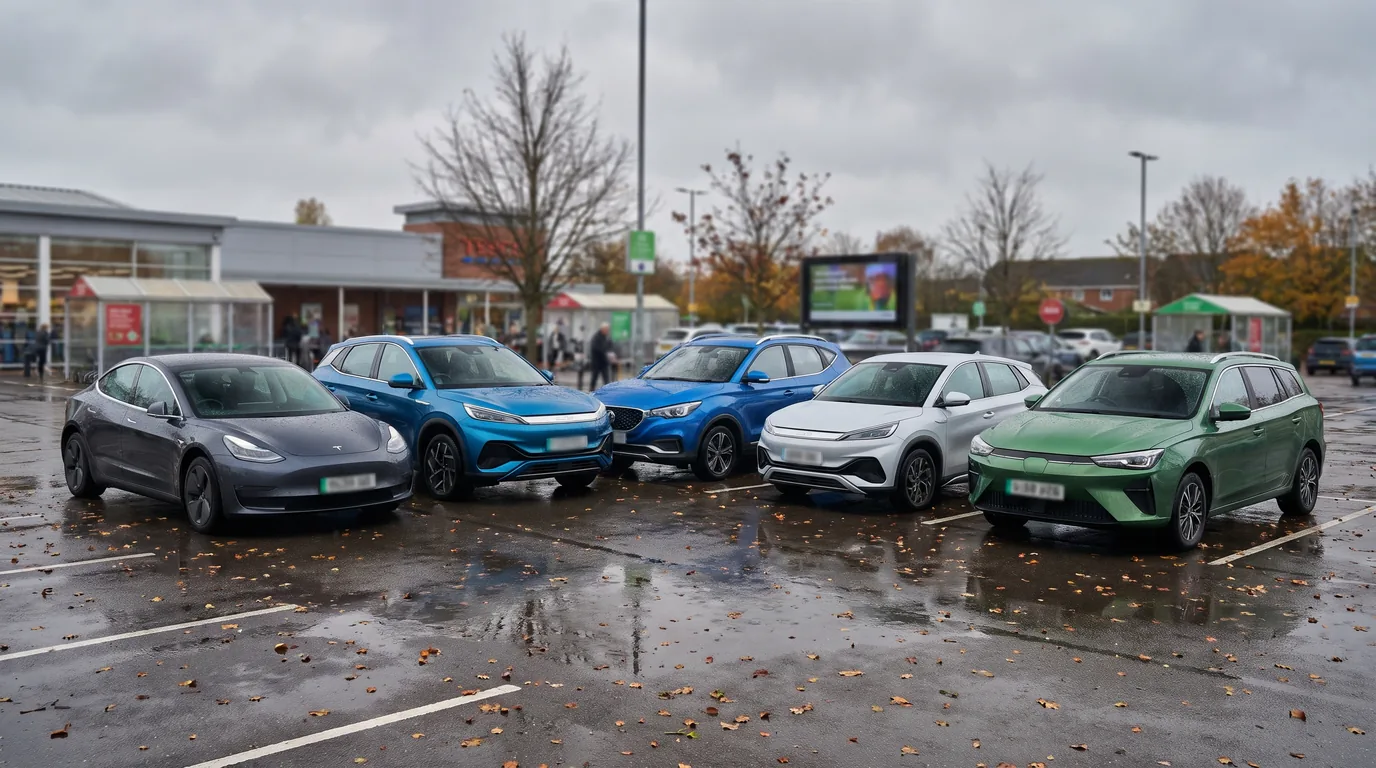
Best Tesla alternatives in the UK: nine rivals ranked by price per mile of range
We divided the November 2026 list price of nine Tesla rivals by their official range. Four cars beat the best-value Tesla, and the Model Y comes last.
Leasing a Tesla in the UK: Model 3 and Model Y lease costs
Current personal lease prices for every Model 3 and Model Y, what the upfront payment really adds, and our three-year comparison of leasing against PCP.
Tesla salary sacrifice: what a Model 3 or Y really costs
Salary sacrifice turns a Tesla lease into pre-tax pay, and 4% benefit-in-kind keeps the tax bill small. We worked out what a Model 3 and a Model Y cost each month in every tax band.