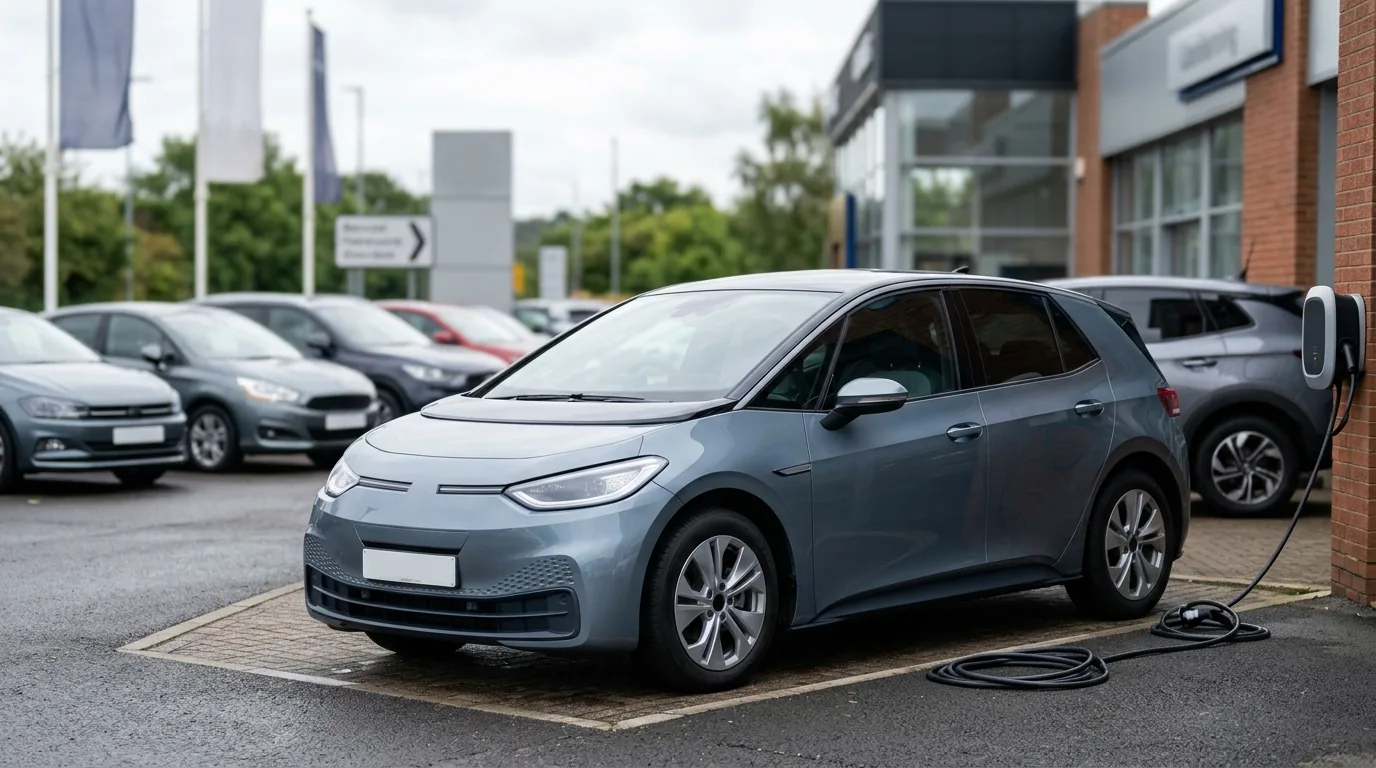
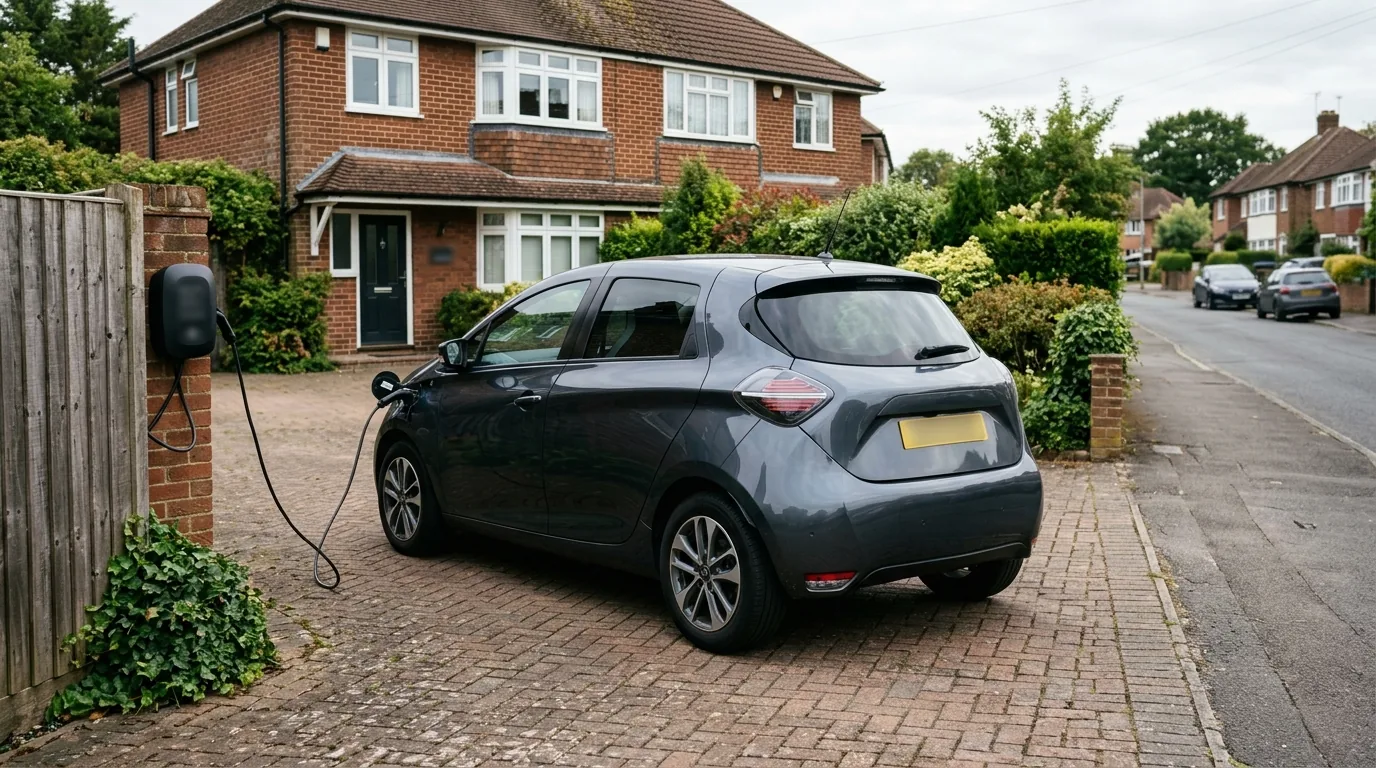
Volkswagen sells seven fully electric cars in the UK, priced from £23,945 for the ID. Polo to £69,263 for the largest electric MPV in November 2026. For most buyers the Volkswagen ID.3 Neo Life 79kWh is the one to buy: 390 miles of WLTP range for £36,995, or £35,495 after the Electric Car Grant.
This hub covers who owns Volkswagen, where its electric cars are built, every model on sale with price and range, running costs, warranty, safety, reliability and what is coming next. For other makes, start from our electric car guides by brand.
Who makes Volkswagen electric cars?
Volkswagen cars are made by Volkswagen AG, which is based in Wolfsburg, Germany. Porsche Automobil Holding SE told Volkswagen in January 2009 that it held more than half the voting rights in Volkswagen AG, and the State of Lower Saxony is also a shareholder, according to Volkswagen’s 2025 annual report.
Volkswagen has sold cars in Britain for more than 70 years. Volkswagen UK says the first two Beetles were sold here in 1952 and Volkswagen Motors Ltd became the official importer in 1953. Its UK headquarters has been at Blakelands, Milton Keynes since 1978.
It was also the UK’s biggest-selling car brand in 2025. Volkswagen registered 178,607 new cars that year, its fifth year in a row at the top, and its electric ID. models passed 30,000 UK sales, up 45% on 2024, Motoring Research reported. In October 2026 Volkswagen took 9.0% of the market with 13,687 registrations, but no Volkswagen made SMMT’s top 10 electric models that month.
Where are Volkswagen electric cars built?
Volkswagen’s electric cars are built in Germany and Spain, not in the UK. According to electrive in September 2026, the ID.3 Neo comes from Zwickau and the ID.7 from Emden, while the Volkswagen ID.4 family SUV is built at Zwickau, with production moving to Emden.
The ID. Polo is built at the SEAT and CUPRA plant in Martorell, Spain, alongside the CUPRA Raval, according to Volkswagen’s newsroom.
Every Volkswagen ID. Buzz electric MPV is built at Volkswagen Commercial Vehicles’ main plant in Hanover, Germany.
Every Volkswagen electric car on sale: prices and range
Volkswagen sells the ID. Polo supermini, the ID.3 Neo hatchback, the ID.4 and ID.5 SUVs, the ID.7 saloon and ID.7 Tourer estate, and the ID. Buzz MPV. Prices are list prices in November 2026, before the grant. The table shows the main versions of each.
| Version | Price (Nov 2026) | WLTP range | Battery | Max DC charging | Max AC charging | Boot |
|---|
| ID. Polo Life 37kWh 116PS | £23,945 | 200 miles | 37 kWh | n/a | 11 kW | 441 litres |
| ID. Polo Life 37kWh 135PS | £25,055 | 206 miles | 37 kWh | 90 kW | 11 kW | 441 litres |
| ID. Polo Life 52kWh 211PS | £28,330 | 281 miles | 52 kWh | 105 kW | 11 kW | 441 litres |
| ID. Polo Style 52kWh 211PS | £31,745 | 278 miles | 52 kWh | 105 kW | 11 kW | 441 litres |
| ID.3 Neo Life 50kWh | £33,080 | 258 miles | 50 kWh | 105 kW | 11 kW | 383 litres |
| ID.3 Neo Life 58kWh | £35,495 | 306 miles | 58 kWh | 105 kW | 11 kW | 383 litres |
| ID.3 Neo Life 79kWh | £36,995 | 390 miles | 79 kWh | 183 kW | 11 kW | 383 litres |
| ID.4 Pure Essential 58kWh | £36,995 | 265 miles | 58 kWh | 105 kW | 11 kW | n/a |
| ID.4 Pro Essential 79kWh | £36,995 | 351 miles | 79 kWh | n/a | 11 kW | n/a |
| ID.5 Pro Essential 79kWh | £36,995 | 352 miles | 79 kWh | n/a | 11 kW | n/a |
| ID.3 Neo Style 79kWh | £40,000 | 387 miles | 79 kWh | 183 kW | 11 kW | 383 litres |
| ID.5 Match Pure 58kWh | £41,090 | 272 miles | 58 kWh | n/a | 11 kW | n/a |
| ID.7 Pro Match Plus 77kWh | £51,445 | 368 miles | 77 kWh | 185 kW | 11 kW | 532 litres |
| ID.7 Tourer Pro Match Plus 77kWh | £52,225 | 371 miles | 77 kWh | 175 kW | 11 kW | 605 litres |
| ID.4 GTX Edition 4MOTION 77kWh | £52,900 | 326 miles | 77 kWh | n/a | 11 kW | n/a |
| ID.7 Pro S Match Plus 86kWh | £54,930 | 433 miles | 86 kWh | 199 kW | 11 kW | 532 litres |
| ID.7 Tourer Pro S Match Plus 86kWh | £55,710 | 422 miles | 86 kWh | 200 kW | 11 kW | 605 litres |
| ID. Buzz Life Pro 79kWh | £59,405 | 283 miles | 79 kWh | n/a | 11 kW | n/a |
| ID. Buzz Life Pro LWB 86kWh | £59,777 | 293 miles | 86 kWh | n/a | 11 kW | n/a |
| ID. Buzz GTX Pro 4MOTION LWB 86kWh | £69,263 | 282 miles | 86 kWh | n/a | 11 kW | n/a |
Which Volkswagens get the Electric Car Grant?
The £1,500 grant comes off the ID. Polo, the ID.3 Neo and the cheaper ID.4 and ID.5 trims, according to Volkswagen UK’s list, which it says was correct on 13 August 2026. The price the buyer pays must be below £42,000. The ID.4 and ID.5 Pro Match, Black Edition and GTX versions, every ID.7 and every ID. Buzz miss out.
Volkswagen ID. Polo
The ID. Polo is Volkswagen’s small electric hatchback, from £23,945 with 200 miles of range from a 37 kWh battery. The Life 52kWh at £28,330 adds 105 kW rapid charging and 281 miles. Every version has a 441-litre boot.
Auto Express’s testers rated it 4.5 out of 5 in September 2026. They praised its handling, motorway refinement, physical climate buttons and a boot bigger than a Golf’s, and called the larger battery a no-brainer. They criticised a firm ride in town, cramped rear seats next to the Renault 5, a £935 heat pump option and 3.5 miles per kWh on the motorway. Our ID. Polo price and release guide has more.
Volkswagen ID.3 Neo
The ID.3 Neo is the updated ID.3, on UK order books since 13 August 2026 from £33,080. It moves to the MEB+ platform with a new motor, rear-wheel drive, one-pedal driving and optional vehicle-to-load, electrive reported. The Life 79kWh gives 390 miles at £36,995, charges at up to 183 kW and goes from 10 to 80% in 29 minutes. All versions have a 383-litre boot. Our ID.3 range and charging guide covers each battery.
Volkswagen ID.4 and ID.5
The ID.4 costs from £36,995, and at that price the Pro Essential 79kWh gives 351 miles. Its April 2026 update added physical steering-wheel buttons, vehicle-to-load, a bigger 58 kWh battery for the Pure versions and 1,800 kg towing for the Pro 4MOTION cars, EV Fleet World reported.
The ID.4 is near the end of its life: electrive reports the ID.Tiguan will replace it at Emden, and our report on the ID.Tiguan that replaces the ID.4 covers what changes. The ID.5 is the coupe-roofed version of the ID.4, also from £36,995, with 352 miles in Pro Essential 79kWh form. Electrive reports that it is being phased out.
Volkswagen ID.7 and ID.7 Tourer
The ID.7 is Volkswagen’s large electric saloon, from £51,445 for 368 miles and a 532-litre boot. The Pro S Match Plus 86kWh goes 433 miles, the longest WLTP range of any Volkswagen on sale, for £54,930. The ID.7 Tourer estate has a 605-litre boot and costs from £52,225.
Drive called the ID.7 one of Volkswagen’s most convincing electric cars, refined and spacious with much-improved infotainment, but criticised its price and touchscreen controls. Our ID.7 vs Tesla Model 3 comparison sets it against its main rival.
Volkswagen ID. Buzz
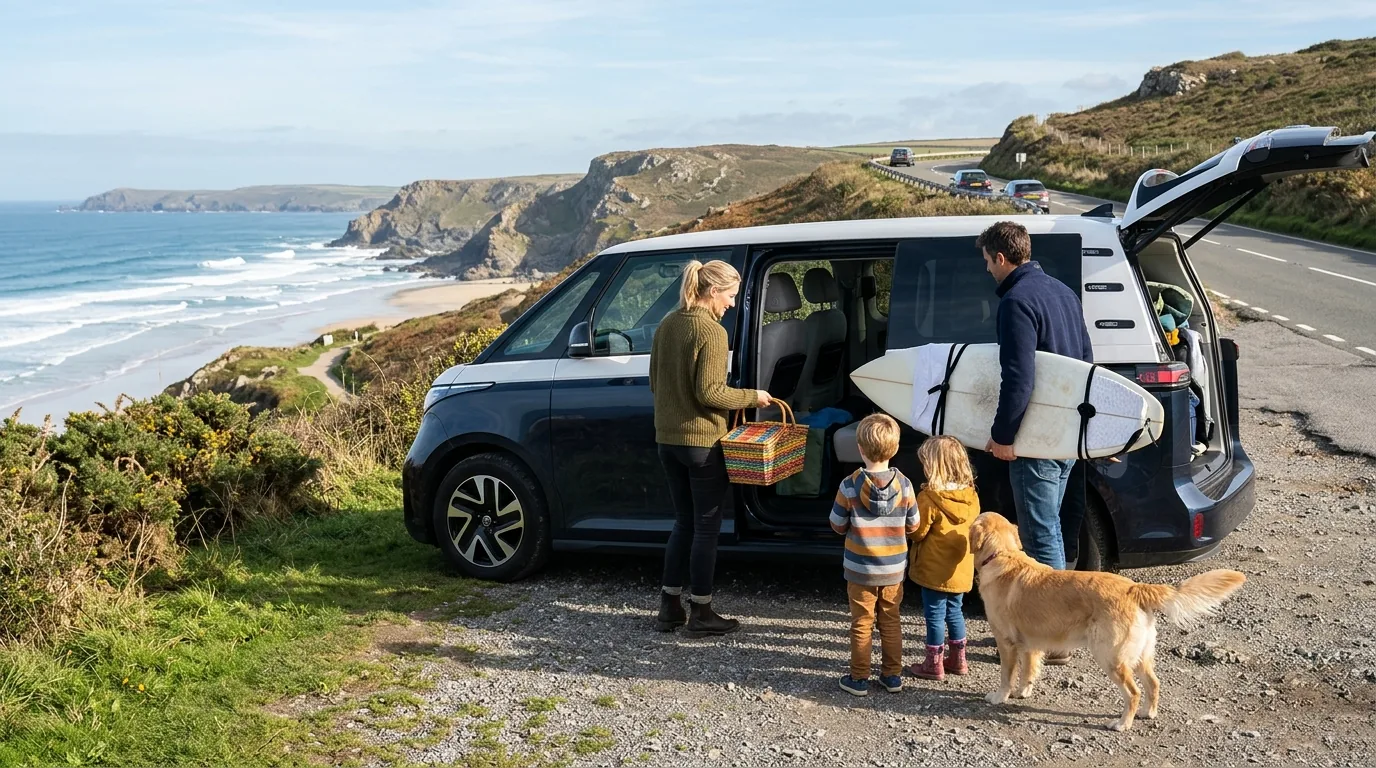
The ID. Buzz costs from £59,405 for the Life Pro 79kWh with 283 miles of range. The long-wheelbase Life Pro 86kWh is £59,777 for 293 miles, and the GTX 4MOTION versions add all-wheel drive, 250 kW and 1,800 kg towing from £68,891. It costs the most per mile of range of any Volkswagen.
What does a Volkswagen electric car cost to run?
An ID. Polo Life 52kWh costs 1.2p a mile to charge at home on EV Compared’s sums, against 1.8p for an ID. Buzz. We divide WLTP range by usable battery for miles per kWh, then apply Intelligent Octopus Go’s 6.5p/kWh, the 26.32p/kWh price cap and Zapmap’s October 2026 public rapid average of 82p/kWh, as set out in our methodology.
| Running cost | ID. Polo Life 52kWh | ID.3 Neo Life 79kWh | ID.4 Pro Essential 79kWh | ID.7 Tourer Pro S 86kWh | ID. Buzz Life 79kWh |
|---|
| Miles per kWh (WLTP) | 5.40 | 4.94 | 4.44 | 4.91 | 3.58 |
| Full charge at home, 6.5p/kWh | £3.38 | £5.13 | £5.13 | £5.59 | £5.13 |
| Full charge at price cap, 26.32p/kWh | £13.69 | £20.79 | £20.79 | £22.64 | £20.79 |
| Full charge on a public rapid, 82p/kWh | £42.64 | £64.78 | £64.78 | £70.52 | £64.78 |
| Pence per mile at home | 1.2p | 1.3p | 1.5p | 1.3p | 1.8p |
| Pence per mile on a public rapid | 15.2p | 16.6p | 18.5p | 16.7p | 22.9p |
| 8,000 miles a year at home | £96 | £105 | £117 | £106 | £145 |
| 8,000 miles a year on public rapids | £1,214 | £1,329 | £1,476 | £1,337 | £1,831 |
| Hours to full on a 7 kW wallbox | 7.4 | 11.3 | 11.3 | 12.3 | 11.3 |
| List price per mile of WLTP range | £101 | £95 | £105 | £132 | £210 |
On a rapid charger the ID.7 Tourer Pro S adds about 114 miles in 10 minutes and the ID.3 Neo Life 79kWh about 94, on our sums from the 10 to 80% charging times. If you need a wallbox fitted at home, Best Chargers compares home chargers and installers.
How many Volkswagen dealers are there in the UK?
Volkswagen UK does not publish a current count of its retailers on its UK site, and we could not confirm a number from the maker, so we do not give one. Its site has a retailer finder for your nearest site. Our report on the VW Group’s plan to halve its model range covers what else is changing for UK buyers.
What warranty do Volkswagen electric cars have?
Every new Volkswagen car has a three-year warranty: two years with unlimited mileage, then a third year that ends at 60,000 miles, according to Volkswagen UK in November 2026. The high-voltage battery in the ID.3, ID.4, ID.5 and ID.7 is covered for eight years or 100,000 miles against defects, and Volkswagen treats capacity dropping below 70% of its original level in that period as a defect. Electric models also get a three-year paint warranty and a 12-year body protection warranty.
Are Volkswagen electric cars safe?
Five of Volkswagen’s electric cars hold five-star Euro NCAP ratings. Euro NCAP’s ID.7 result covers the estate body too, and its ID.5 result was carried over from the ID.4 it is based on.
| Model | Rating published | Stars | Adult | Child | Vulnerable road users | Safety assist |
|---|
| ID.3 | 19 November 2025 | 5 | 86% | 87% | 78% | 76% |
| ID.4 | 15 October 2025 | 5 | 89% | 87% | 84% | 76% |
| ID.5 | 2 March 2022 | 5 | 93% | 89% | 76% | 85% |
| ID.7 | 6 December 2023 | 5 | 95% | 88% | 83% | 80% |
| ID. Buzz | 8 September 2025 | 5 | 84% | 85% | 70% | 73% |
We found no Euro NCAP result for the ID. Polo on 10 November 2026. The CUPRA Raval, built alongside it in Martorell, was rated four stars with standard equipment on 2 September 2026.
Are Volkswagen electric cars reliable?
The owner data is weak for the SUVs. In What Car?’s latest reliability survey, drawn from 29,967 responses and updated on 18 October 2026, the ID.4 scored 69.9%, the lowest of any electric SUV in its table, with 43% of cars reporting a fault and two-thirds of those off the road for more than a week. The ID.5 scored 79.8%.
In October 2026 Volkswagen began a recall of some ID.3, ID.4, ID.7 and ID. Buzz cars built between 2023 and 2026 because some battery cells did not meet its quality standards, Electrek reported. A UK recall has been issued; in the US, owners were told to charge only to 80% until a fix is ready. If you are buying a used electric Volkswagen, ask the seller whether recall work has been done and check how much battery warranty remains.
The ID. Polo and ID.3 Neo are too new for any owner survey, so their reliability and resale values are not yet known.
What Volkswagen electric cars are coming next?
The ID. Cross small SUV is the next arrival. It is available to order in the UK from £26,985 with a 37 kWh battery, or £30,260 with a 52 kWh battery and up to 271 miles, Auto Express reported on 6 November 2026. The ID.Tiguan replaces the ID.4 next.
There is no electric Golf yet. Volkswagen chief executive Thomas Schäfer said in May 2026 that Volkswagen does not need an electric Golf in 2028, and EVwire reported that it will not arrive until 2030. It is expected to be built in Wolfsburg on the group’s new SSP platform.
Which Volkswagen electric car should you buy?
Buy the ID.3 Neo Life 79kWh if you want the most range for your money: 390 miles for £36,995, £95 per mile of range, 183 kW charging and the grant on top. Buy the ID. Polo Life 52kWh if you mostly drive locally and want a well-reviewed small car for £28,330. Choose the ID.7 Tourer if you cover long distances with a family and a big boot matters more than price. The ID. Buzz suits buyers who want its space and character and accept 1.8p a mile at home and £210 per mile of range.
Think twice about the ID.4 if reliability matters most, given its What Car? score and its replacement due soon, although the Pro Essential 79kWh is strong value at £36,995. Our verdict rests on published data and other testers’ reviews: EV Compared has not driven these cars. On that evidence Volkswagen’s newest electric cars are its best, and the ID.3 Neo is the one we would choose.