VW ID. Buzz review (UK): price, range, charging, verdict
The VW ID. Buzz is a roomy, characterful electric MPV from £59,405 that suits families who need space and charge at home, but it is expensive to buy and tax, and UK testers find its real-world range modest.
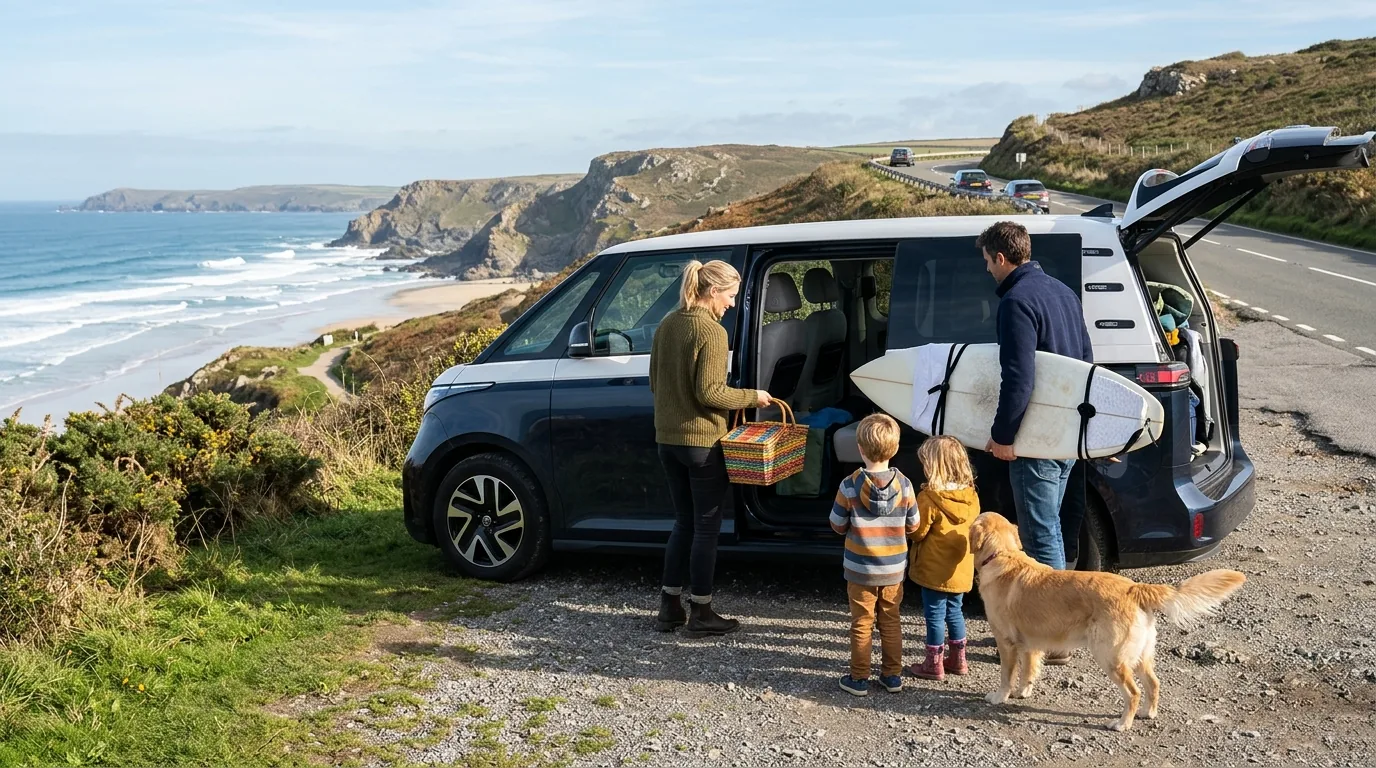
Our verdict
The VW ID. Buzz suits a family that needs five to seven proper seats or a huge boot, charges at home and wants an electric MPV with character, ideally as a Life Pro LWB, which has the most range per pound in the line-up. It does not suit buyers on a budget, drivers who rely on public rapid chargers for long trips, or anyone who wants a sporty drive, because the GTX costs nearly £10,000 more and Auto Express says the GTX version makes no sense.
For
- Huge cabin: 1,121 litres of boot space in the five-seat car, and a third row adults can use in the seven-seater, according to Auto Express
- Up to 293 miles of WLTP range in the Life Pro LWB
- Five-star Euro NCAP rating, published in September 2025
- Drives like a car rather than a van, says Auto Express
Against
- Expensive: £59,405 to £69,263, and every version pays the £440 expensive car supplement in road tax
- Real-world range is modest; Electrifying.com saw 130 to 160 miles on a winter motorway
- Insurance groups of 37 to 42, according to Auto Express
- Auto Express finds the ride a little crashy around town, and noticeably worse on the GTX's 21-inch wheels
This is a data verdict: it rests on manufacturer specifications, UK pricing, independent range testing, reliability surveys and owner reports, not on a road test by EV Compared.
Volkswagen ID. Buzz at a glance
| Price from | £59,405 |
|---|---|
| Battery | 79 kWh |
| WLTP range | 283 miles |
| Peak rapid charging | 185 kW |
| 10 to 80% charge | 26 to 30 minutes at up to 185 kW |
| Boot | 1121 litres |
| Insurance group | 37 |
| Price from | £59,405 Life Pro to £69,263 GTX Pro LWB (November 2026) |
| Body | Electric MPV, standard (SWB) or long wheelbase (LWB), five, six or seven seats |
| Motor | Rear motor, 210 kW (Life Pro, Style Pro); front and rear motors, 250 kW (GTX Pro 4MOTION) |
| 0 to 62mph | 7.6 seconds (SWB), 7.9 seconds (LWB), 6.1 seconds (GTX SWB), 6.4 seconds (GTX LWB) |
| Top speed | 99mph |
| Battery (usable) | 79 kWh (SWB); 86 kWh (LWB) |
| Range (WLTP) | 255 to 293 miles |
| Charging | 11 kW AC; up to 185 kW DC (79 kWh) or 200 kW DC (86 kWh) |
| Boot | 1,121 litres (five-seat SWB); 306 litres behind the third row (seven-seat) |
| Length, width, height (SWB) | 4,712 mm, 1,985 mm, 1,927 mm |
| Wheelbase | 2,989 mm (SWB); 250 mm longer (LWB) |
| Kerb weight | 2,454 kg (SWB); the LWB adds 189 kg |
| Towing (braked) | Up to 1,800 kg (GTX Pro 4MOTION) |
| Insurance group | 37 (Life Pro, Style Pro), 42 (GTX) |
| Euro NCAP | Five stars (September 2025) |
Quick answers
- The VW ID. Buzz costs from £59,405 for the Life Pro in November 2026, rising to £69,263 for the GTX Pro 4MOTION LWB.
- Official WLTP range runs from 255 miles for the GTX Pro 4MOTION to 293 miles for the Life Pro LWB, which has an 86 kWh usable battery.
- A full charge of the 79 kWh Life Pro costs about £5.13 on a 6.5p/kWh off-peak home tariff, or about 1.8p a mile, on EV Compared's sums.
- The same full charge costs about £64.78 on a public rapid charger at Zapmap's October 2026 average of 82p/kWh, or about 22.9p a mile.
- Every ID. Buzz has a list price over £50,000, so it pays £10 of road tax in the first year and then £640 a year for five years, including the £440 expensive car supplement.
- Euro NCAP gave the ID. Buzz five stars in September 2025, with 84% for adult occupants and 85% for child occupants.
- Auto Express rates it 4.5 out of 5 and calls it expensive but highly practical, and Carwow lists loads of space for people and luggage alongside a very high price.
The VW ID. Buzz is a five, six or seven-seat electric MPV that costs from £59,405 in November 2026, with 255 to 293 miles of WLTP range and a five-star Euro NCAP rating. It suits a family that needs space and charges at home, but it is expensive to buy, tax and insure, and UK testers find its real-world range modest; EV Compared has not driven it, so this review rests on published data and those reviews.
Verdict: who should buy the VW ID. Buzz and who should not
Buy a VW ID. Buzz if you need room for up to seven people or a load area long enough to sleep in, you can charge at home, and you want an electric family car with more character than an SUV. The one to have is the Life Pro LWB at £59,777: it costs only £372 more than the standard-wheelbase Life Pro, has the larger 86 kWh battery and the longest range in the line-up at 293 miles. Auto Express names the Life seven-seater the best buy.
Do not buy one if your budget stops near £50,000, because the ID. Buzz starts £9,405 above that and every version pays the expensive car supplement in road tax. It is also the wrong car if you cover long motorway trips on public rapid chargers, where UK testers saw well under 200 miles in winter, or if you want a sporty drive: the GTX adds power and four-wheel drive, but Auto Express says the GTX version makes no sense.
Our guide to every Volkswagen electric car, with prices and range shows where the ID. Buzz sits in the brand’s line-up.
How much is the VW ID. Buzz in the UK, and which trim should you buy?
The VW ID. Buzz costs from £59,405 for the Life Pro to £69,263 for the GTX Pro 4MOTION LWB in November 2026, according to Volkswagen Vans UK and Carwow’s price list. There are three trims, Life, Style and GTX, each with a standard-wheelbase car with a 79 kWh battery and a long-wheelbase (LWB) car with an 86 kWh battery.
| Version | List price (November 2026) | Usable battery | Range (WLTP) | Power and drive | List price per mile of range (EV Compared) |
|---|---|---|---|---|---|
| Life Pro | £59,405 | 79 kWh | 283 miles | 210 kW, rear-wheel drive | £210 |
| Life Pro LWB | £59,777 | 86 kWh | 293 miles | 210 kW, rear-wheel drive | £204 |
| Style Pro | £64,637 | 79 kWh | 277 miles | 210 kW, rear-wheel drive | £233 |
| Style Pro LWB | £65,009 | 86 kWh | 286 miles | 210 kW, rear-wheel drive | £227 |
| GTX Pro 4MOTION | £68,891 | 79 kWh | 255 miles | 250 kW, four-wheel drive | £270 |
| GTX Pro 4MOTION LWB | £69,263 | 86 kWh | 282 miles | 250 kW, four-wheel drive | £246 |
The list price per mile of range figure is the list price divided by the WLTP range; our methodology explains how we calculate it. On that measure the Life Pro LWB is the best value of the range and the short-wheelbase GTX the worst.
Six and seven-seat LWB versions with extra packs cost more than the prices above. Electrifying.com lists a £695 Comfort Package, a £1,055 Open and Close package for powered doors and tailgate, and £2,790 for two-tone paint, which Auto Express recommends along with the heat pump. Our ID. Buzz prices, specs and trims page sets out each trim’s equipment.
The ID. Buzz is not on the government’s Electric Car Grant list, according to GOV.UK, so no version gets a grant discount.
What equipment and technology does the ID. Buzz have?
Every ID. Buzz has a 12.9-inch touchscreen with wireless Apple CarPlay and Android Auto, Auto Express says. Volkswagen lists Travel Assist, adaptive cruise control, Park Assist Plus with memory, the Area View camera system, over-the-air software updates and the removable ID. Buzz Box storage unit, with a smart-glass panoramic roof available.
The cabin is sturdy rather than plush. Auto Express found some of the plastics on the hard side and Carwow says the ID. Buzz “doesn’t feel premium inside”, though Electrifying.com praises the light, airy feel. Auto Express disliked the touch-sensitive steering wheel buttons and intrusive voice control, and Carwow still finds the infotainment annoying.
Volkswagen is fixing some of this. Auto Express reports that physical steering wheel buttons replace the touch-sensitive ones from summer 2026, and the update announced in April 2026, as reported by IAA Transportation, also adds one-pedal driving and vehicle-to-load at up to 2.0 kW through a charging-port adapter. Electrifying.com’s December 2025 review listed the lack of vehicle-to-load as a weakness, so check which version a dealer is offering.
How does the VW ID. Buzz drive?
The VW ID. Buzz drives like a car rather than a van, Auto Express says. The Life and Style versions use a single 210 kW rear motor; Auto Express quotes 0 to 62mph in 7.6 seconds for the standard car and 7.9 seconds for the LWB, with a 99mph top speed for every version.
Auto Express found great visibility, a fairly tight 11.2-metre turning circle for the standard car and a comfortable motorway ride, but a ride that is “a little crashy around town”, with plenty of body lean in quick corners and soft suspension, plus noticeable wind and road noise at motorway speeds. Electrifying.com rated the ride comfortable, but noted only two regenerative braking settings.
The GTX Pro 4MOTION adds a front motor for 250 kW in total and four-wheel drive, cutting the 0 to 62mph time to 6.1 seconds, or 6.4 seconds for the LWB. Auto Express found it does not feel very sporty and that its 21-inch wheels give a noticeably worse ride around town. Its real advantage is towing: up to 1,800 kg braked, Volkswagen says, against 750 kg for the rear-drive car with its optional £980 tow bar, according to Auto Express.
How far does the VW ID. Buzz go on a charge?
The VW ID. Buzz has an official WLTP range of 255 to 293 miles: 283 miles for the Life Pro, 293 for the Life Pro LWB, 277 for the Style Pro, 286 for the Style Pro LWB, 255 for the GTX Pro 4MOTION and 282 for the GTX LWB. That is 3.23 to 3.58 miles per kWh on the WLTP figures, on EV Compared’s sums, with the Life Pro the most efficient and the short-wheelbase GTX the least.
Real-world range is lower, because a tall, boxy MPV weighing about 2.5 tonnes uses a lot of energy at speed. Electrifying.com saw 130 to 160 miles on a winter motorway, rising to more than 200 miles in warmer, slower driving. Auto Express averaged about 3.1 miles per kWh in warm weather, with a best of about 3.4. Carwow’s GTX test returned 2.2 miles per kWh, about 189 miles, and it suggests planning on about 200 miles from the standard car and 240 from the LWB.
If most of your trips are under 150 miles, that will rarely matter; if you regularly drive 250 miles in a day in winter, expect at least one rapid charging stop. Our guide to the ID. Buzz’s real-world range and charging times breaks the figures down by version and season.
How long does the VW ID. Buzz take to charge, and what does it cost?
A 10 to 80% rapid charge takes 26 to 30 minutes, according to Carwow, which lists peak DC charging of 185 kW for the 79 kWh battery and 200 kW for the 86 kWh battery; Volkswagen quoted 26 minutes for the 86 kWh car at the seven-seater’s UK launch, Motor1 reported. At home, every ID. Buzz takes up to 11 kW on AC, and filling the 79 kWh battery from empty on a 7 kW wallbox takes about 11.3 hours, or 12.3 hours for the 86 kWh battery, on EV Compared’s sums.
| Charging | 79 kWh (Life Pro, Style Pro, GTX) | 86 kWh LWB (Life Pro, Style Pro, GTX) |
|---|---|---|
| Maximum AC charging | 11 kW | 11 kW |
| 7 kW wallbox, empty to full (EV Compared) | about 11.3 hours | about 12.3 hours |
| 11 kW AC, full charge | about 9 hours (Auto Express, battery not stated) | about 9 hours (Auto Express, battery not stated) |
| Maximum DC charging | 185 kW (Carwow) | 200 kW (Carwow) |
| 10 to 80% rapid charge | 26 to 30 minutes (Carwow) | 26 minutes (Volkswagen, via Motor1) |
| 5 to 80% on a 170 kW charger | about 30 minutes (Auto Express) | about 30 minutes (Auto Express) |
| Full charge at home, 6.5p/kWh (EV Compared) | £5.13 | £5.59 |
| Full charge on the price cap, 26.32p/kWh (EV Compared) | £20.79 | £22.64 |
| Full charge on a public rapid, 82p/kWh (EV Compared) | £64.78 | £70.52 |
Our method: usable battery capacity multiplied by the price per kWh, ignoring charging losses, with wallbox time based on 7 kW. The home rate is Intelligent Octopus Go’s 6.5p/kWh off-peak price, listed by Best Chargers; the standard rate is Ofgem’s 26.32p/kWh price cap average for October to December 2026; and the rapid rate is Zapmap’s October 2026 average of 82p/kWh.
Electrifying.com puts a full charge on a 7 kW wallbox at about 11 to 14 hours, in line with our figure. If you still need a home charger, Best Chargers covers which wallbox to fit and what installation involves.
What does the VW ID. Buzz cost to run?
The VW ID. Buzz is cheap to fuel at home, about 1.8p a mile for the Life Pro on a 6.5p/kWh off-peak tariff, on EV Compared’s sums, or about £145 of electricity for 8,000 miles. Road tax and insurance are the bigger costs.
| Version | Pence per mile, home (6.5p/kWh) | Pence per mile, price cap (26.32p/kWh) | Pence per mile, public rapid (82p/kWh) | 8,000 miles at home | 8,000 miles on rapid chargers |
|---|---|---|---|---|---|
| Life Pro | 1.8p | 7.3p | 22.9p | £145 | £1,831 |
| Life Pro LWB | 1.9p | 7.7p | 24.1p | £153 | £1,925 |
| Style Pro | 1.9p | 7.5p | 23.4p | £148 | £1,871 |
| Style Pro LWB | 2.0p | 7.9p | 24.7p | £156 | £1,973 |
| GTX Pro 4MOTION | 2.0p | 8.2p | 25.4p | £161 | £2,032 |
| GTX Pro 4MOTION LWB | 2.0p | 8.0p | 25.0p | £159 | £2,001 |
Per-mile figures divide the cost of a full charge by the WLTP range, so real-world costs will be higher, especially in winter.
Road tax. Electric cars pay £10 in the first year and £200 a year from the second, according to GOV.UK. Those with a list price over £50,000 also pay the £440 expensive car supplement for five years from the second time they are taxed, so every new ID. Buzz pays £640 a year in years two to six.
Insurance. The Life and Style versions sit in group 37 and the GTX in group 42, according to Auto Express, against 25 to 30 for the Kia PV5.
Company car tax. As a zero-emission car, the ID. Buzz sits in the 4% benefit-in-kind band for 2026 to 2027, according to GOV.UK.
How practical is the VW ID. Buzz, and how many seats does it have?
The VW ID. Buzz comes with five, six or seven seats, according to Volkswagen, and its boot holds 1,121 litres in the five-seat standard-wheelbase car, Auto Express says. With all seven seats in place there are 306 litres behind the third row; fold the third row and the seven-seater has 1,340 litres.
The standard car is 4,712 mm long, 1,985 mm wide and 1,927 mm tall, with a 2,989 mm wheelbase and a kerb weight of 2,454 kg, according to Auto Express. The LWB stretches the wheelbase by 250 mm and adds 189 kg, and Carwow lists it at 4,982 mm long with an 11.8-metre turning circle. Check the height against your garage or car park before you buy.
Auto Express found the third row good enough for adults. Electrifying.com found the middle seat of the five-seater’s rear bench uncomfortable and the sliding side doors heavy without the optional powered package, and Auto Express’s long-term test car had a sliding door latch fail. With the rear seats folded, the five-seat standard car offers about 2,205 litres, Electrifying.com says, and Volkswagen quotes up to 2,496 litres for the range.
Can you sleep in an ID. Buzz, and is there an ID. Buzz camper?
You can sleep in a standard ID. Buzz: Electrifying.com found that with the rear seats folded the floor is flat and about 2.2 metres long, enough for a makeshift bed. There is no factory ID. Buzz camper in the UK. Volkswagen’s ID. California Cruise, a basic camper conversion of the ID. Buzz with a 2.03 by 1.30 metre double bed, goes on sale in Germany from early 2027, but Electrifying.com reported in September 2026 that Volkswagen UK says it will not be sold in Britain, while hinting at another model to come.
Is the VW ID. Buzz safe, and has it been recalled?
Euro NCAP gave the VW ID. Buzz five stars on 8 September 2025, with 84% for adult occupants, 85% for child occupants, 70% for vulnerable road users and 73% for safety assist. The car tested was an ID. Buzz Pro with the 210 kW motor.
The report is not spotless. Chest protection for the rear passenger in the full-width test was rated weak, and the curtain airbag did not deploy as intended in the side pole test. Pelvis protection for a pedestrian or cyclist struck by the front was almost entirely poor, the stiff windscreen pillars scored poorly for head impacts, and the driver monitoring system detects fatigue but not distraction.
DVSA’s vehicle recall checker showed no recalls for the 2023, 2024 or 2025 Volkswagen ID. Buzz on 10 November 2026. Auto Express describes its own experience of the ID. Buzz’s reliability as “iffy”, and Volkswagen ranked 27th of 31 brands in the 2025 Driver Power survey.
What the testers say
UK reviewers rate the VW ID. Buzz as a highly practical electric family car, and Auto Express and Carwow both find it expensive. These are the findings of three published reviews, none of them EV Compared’s own.
Auto Express, 4.5 out of 5 (April 2026). Dean Gibson and Shane Wilkinson called it “an expensive but highly practical and enjoyable modern take on a classic”, and one of the very best electric models in Volkswagen’s range. They praised the car-like driving, the space and the strong residual values, and criticised the efficiency, the price, the ride around town and a GTX version they say makes no sense.
Carwow (May 2026). Mario Christou called the ID. Buzz “a stylish, desirable and practical choice of family car”, with loads of space for people and luggage, stand-out styling and a nice drive. Against it he listed a range that isn’t the best, infotainment that is still annoying, a very high price and an interior that does not feel premium.
Electrifying.com (December 2025). Ginny Buckley called it one of the most practical electric family cars on sale, with a comfortable ride and a light, airy cabin. She found the real-world range and efficiency modest and criticised the lack of vehicle-to-load, an uncomfortable middle rear seat in the five-seater and heavy manual sliding doors.
How does the VW ID. Buzz compare with its rivals?
The VW ID. Buzz costs more than most electric MPV rivals, and every version except the short-wheelbase GTX goes further on the WLTP test than the rivals below. The Kia PV5 is £26,210 cheaper; the Maxus MIFA 9 is closest on price.
| Model and version | List price (Nov 2026) | Range (WLTP) | AC charging |
|---|---|---|---|
| Kia PV5 Passenger Essential Standard Range 51.5kWh 5-seat | £33,195 | 183 miles | not listed |
| Maxus MIFA 7 Elite 77kWh | £50,885 | 254 miles | 11 kW |
| VW ID. Buzz Life Pro 79kWh | £59,405 | 283 miles | 11 kW |
| VW ID. Buzz Life Pro LWB 86kWh | £59,777 | 293 miles | 11 kW |
| Maxus MIFA 9 Elite 90kWh | £68,265 | 270 miles | 11 kW |
| VW ID. Buzz GTX Pro 4MOTION LWB 86kWh | £69,263 | 282 miles | 11 kW |
Source: EV Compared spec dataset, checked 10 November 2026.
| Car | Boot (seats up) | Pence per mile, home (6.5p/kWh) | Pence per mile, rapid (82p/kWh) | List price per mile of range |
|---|---|---|---|---|
| VW ID. Buzz Life Pro | 1,121 litres (five-seat) | 1.8p | 22.9p | £210 |
| Kia PV5 Passenger | 1,330 litres (five-seat) | 1.8p | 23.1p | £181 |
| Maxus MIFA 7 | 280 litres | 2.0p | 24.9p | £200 |
| Maxus MIFA 9 | 466 litres | 2.0p | 25.5p | £253 |
EV Compared calculation on WLTP range and battery capacity; the MIFA 7 and PV5 figures use gross battery capacity, because our dataset has no usable figure for them.
Kia PV5 Passenger. The PV5 costs £33,195 for the five-seat Essential with the standard-range battery and has a bigger boot behind five seats, at 1,330 litres, Kia says. The trade-offs are range, at 183 miles on the WLTP test for that version, 100 miles less than the Life Pro, and towing, at 750 kg.
Maxus MIFA 9. The MIFA 9 costs £68,265, close to the ID. Buzz GTX, with a 90 kWh battery, 270 miles of WLTP range and 120 kW DC charging, slower than the ID. Buzz’s 185 to 200 kW. Its boot holds 466 litres and it tows 1,000 kg. At £253 per mile of range, it is dearer on that measure than every ID. Buzz except the short-wheelbase GTX.
Maxus MIFA 7. The MIFA 7 costs £50,885, £8,520 less than the ID. Buzz, with 254 miles of WLTP range and 1,500 kg of towing, but a 280-litre boot.
Auto Express also names van-based MPVs such as the Citroën e-SpaceTourer and Toyota Proace Verso as rivals. If you need nine seats, our report on the Hyundai Staria Electric, a nine-seat MPV expected from about £50,000, covers the newest arrival. If five seats and a big boot are enough, the VW ID.4 electric SUV uses much of the ID. Buzz’s technology for less money.
Should you buy a VW ID. Buzz?
Yes, if you need space for a big family or a lot of gear, can charge at home and want an electric MPV with plenty of character. The Life Pro LWB is the version to buy at £59,777, with 293 miles of WLTP range, an 86 kWh battery and the lowest list price per mile of range in the line-up at £204; at home its electricity costs about 1.9p a mile on an off-peak tariff.
No, if your budget is tight, because the ID. Buzz costs £26,210 more than a Kia PV5 and pays £640 a year in road tax for five years after the first. It is also the wrong car if you rely on public rapid chargers, where a mile costs 22.9p to 25.4p and winter motorway range can drop to 130 to 160 miles, or if you want a sporty drive, which the GTX does not deliver. Buyers who want a factory camper will have to wait. EV Compared has not driven the VW ID. Buzz; this verdict rests on Volkswagen’s figures, Euro NCAP’s results and the three UK reviews above.
How we test and where our numbers come from
Range figures are official WLTP combined values taken from manufacturer UK specification pages, with real-world estimates drawn from independent comparative testing. Prices are UK list prices at the time of the latest update. Tax, grant and charging-scheme figures come from GOV.UK and HMRC publications. We re-check every guide when pricing, specification or policy changes. Last checked 10 November 2026. How we work out our own figures.
Frequently asked questions
How much is a VW ID. Buzz in the UK?
The VW ID. Buzz costs from £59,405 for the Life Pro in November 2026, according to Volkswagen Vans UK. The Life Pro LWB costs £59,777, the Style Pro £64,637, the Style Pro LWB £65,009, the GTX Pro 4MOTION £68,891 and the GTX Pro 4MOTION LWB £69,263, according to Carwow's price list.
Is there a seven-seat VW ID. Buzz?
Yes. Volkswagen sells the ID. Buzz with five, six or seven seats. Auto Express found the third row roomy enough for adults, but the boot shrinks to 306 litres with all seven seats in place, against 1,121 litres in the five-seat standard-wheelbase car.
Can you sleep in the VW ID. Buzz?
Yes, as a makeshift bed. Electrifying.com found that with the rear seats folded the load area is flat and about 2.2 metres long. Volkswagen's ID. California Cruise camper, built on the ID. Buzz, will not be sold in the UK, Electrifying.com reported in September 2026.
How far does a VW ID. Buzz go on a charge?
The VW ID. Buzz has an official WLTP range of 255 to 293 miles, depending on version. In real use, Electrifying.com saw 130 to 160 miles on a winter motorway and more than 200 miles in warmer, slower driving, and Carwow says to expect about 200 miles from the standard car and 240 from the LWB.
How long does a VW ID. Buzz take to charge?
A 10 to 80% rapid charge takes 26 to 30 minutes, according to Carwow, with the 79 kWh car charging at up to 185 kW and the 86 kWh car at up to 200 kW. On a 7 kW home wallbox, filling the 79 kWh battery from empty takes about 11.3 hours on EV Compared's sums.
Is the VW ID. Buzz GTX worth it?
UK testers doubt it. The GTX adds a front motor for 250 kW, four-wheel drive and up to 1,800 kg of towing, but Auto Express says the GTX version makes no sense, finds it does not feel very sporty and says its 21-inch wheels give a noticeably worse ride around town. It costs £9,486 more than the Life Pro.
What is the ID. Buzz Cargo?
The ID. Buzz Cargo is the panel van version of the ID. Buzz, sold as a commercial vehicle. Auto Express reported in September 2026 that a long-wheelbase Cargo with an 86 kWh battery, about 4.4 cubic metres of load space and up to 280 miles of range will be available in the UK soon, with UK pricing not yet confirmed.
Sources and further reading
- volkswagen-vans.co.ukVolkswagen Vans UK: ID. BuzzStarting price of £59,405 including VAT; up to 200 kW DC charging depending on trim; five, six or seven seats; up to 2,496 litres of luggage space; GTX with 340 PS, 0 to 62mph in 6.1 seconds, four-wheel drive and up to 1.8 tonnes towing, 21-inch wheels, dimmable panoramic roof; Travel Assist, Park Assist Plus, Area View, over-the-air updates, removable ID. Buzz Box.
- carwow.co.ukCarwow: Volkswagen ID. Buzz specificationsList prices of £59,405, £59,777, £64,637, £65,009, £68,891 and £69,263; 79 kWh and 86 kWh batteries; WLTP range per version; 99mph top speed; maximum length of 4,982 mm.
- carwow.co.ukCarwow: Volkswagen ID. Buzz reviewMario Christou, updated 19 May 2026: stylish, practical, nice to drive, not premium inside, very expensive; 185 kW (79 kWh) and 200 kW (86 kWh) DC; 10 to 80% in 26 to 30 minutes; GTX tested at 2.2 miles per kWh, about 189 miles; about 200 miles (SWB) and 240 miles (LWB) real-world; 11.8 metre LWB turning circle.
- autoexpress.co.ukAuto Express: Volkswagen ID. Buzz reviewDean Gibson and Shane Wilkinson, 27 April 2026, 4.5 out of 5: drives like a car, practical, strong residuals; ride a little crashy, GTX version makes no sense; 0 to 62mph times; 12.9-inch touchscreen; touch-sensitive wheel buttons replaced in summer 2026; boot 1,121, 306 and 1,340 litres; SWB dimensions, 2,989 mm wheelbase, 2,454 kg, LWB adds 189 kg; 750 kg towing with a £980 tow bar; 5 to 80% in about 30 minutes on a 170 kW charger; about nine hours on 11 kW AC; 3.1 miles per kWh average in warm weather; insurance groups 37 and 42, PV5 25 to 30; Driver Power 27th of 31; Life seven-seat the best buy.
- electrifying.comElectrifying.com: Volkswagen ID.Buzz reviewGinny Buckley, 22 December 2025: one of the most practical electric family cars on sale; comfortable ride; no vehicle-to-load; heavy sliding doors without the powered option; two regeneration settings; 130 to 160 miles on a winter motorway, over 200 in warmer, slower driving; 7 kW wallbox fills the battery in about 11 to 14 hours; 2,205 litres seats folded; option prices; flat load floor about 2.2 metres long, a makeshift bed.
- motor1.comMotor1: VW ID. Buzz GTX and seven-seater debut in the UK6 September 2024 UK launch of the seven-seat and GTX models; 86 kWh battery charges from 10 to 80% in 26 minutes.
- euroncap.comEuro NCAP: Volkswagen ID.Buzz 2025 resultsFive stars published 8 September 2025 on an ID.Buzz Pro 210 kW: 84% adult, 85% child, 70% vulnerable road users, 73% safety assist; weak rear chest protection; curtain airbag did not deploy as intended in the pole test; poor pedestrian pelvis protection; driver monitoring does not detect distraction.
- gov.ukGOV.UK: Check if a vehicle has been recalled (Volkswagen ID. Buzz 2025)DVSA recall checker showed no recalls for the 2025 Volkswagen ID. Buzz on 10 November 2026; the 2023 and 2024 model year pages also showed none.
- gov.ukGOV.UK: Vehicle tax rate tables£10 first-year rate for zero-emission cars, £200 standard rate, £440 expensive car supplement for electric cars over £50,000, paid for five years from the second time the car is taxed.
- gov.ukGOV.UK: Company car benefit, the appropriate percentage4% benefit-in-kind rate for 0 g/km cars in 2026 to 2027.
- gov.ukGOV.UK: Electric Car Grant, eligible carsThe ID. Buzz is not listed in either grant band.
- electrifying.comElectrifying.com: Volkswagen reveals new ID.California Cruise, but it's not coming to the UKSam Burnett, 1 September 2026: camper based on the ID. Buzz Pro; Volkswagen UK says it will not be sold in Britain and has teased another model; double bed 2.03 by 1.30 metres; on sale in Germany from early 2027.
- autoexpress.co.ukAuto Express: New Volkswagen ID. Buzz Cargo LWBJordan Katsianis, 23 September 2026: long-wheelbase Cargo van with an 86 kWh battery, about 4.4 cubic metres of load space, up to 280 miles; available soon in the UK, pricing unconfirmed.
- iaa-transportation.comIAA Transportation: Volkswagen Commercial Vehicles upgrades the ID. Buzz28 April 2026: summer 2026 update adds physical steering wheel buttons, one-pedal driving and vehicle-to-load at up to 2.0 kW through a charging-port adapter.
- kia.comKia UK: PV5 PassengerPV5 Passenger from £33,195; 1,330 litres behind five seats.
- saicmaxus.co.ukMaxus UK: MIFA 9MIFA 9 with a 90 kWh battery and 270 miles of WLTP range.
- bestchargers.co.ukBest Chargers: Octopus EV tariffsIntelligent Octopus Go off-peak rate of 6.5p/kWh from 23:30 to 05:30, used in our home charging figures.
- ofgem.gov.ukOfgem: Changes to energy price cap between 1 October and 31 December 2026Average electricity unit rate of 26.32p/kWh under the cap, used in our standard-tariff figures.
- zapmap.comZapmap: charging price indexOctober 2026 average rapid and ultra-rapid pay-as-you-go price of 82p/kWh, used in our public charging figures.

EV Compared
The EV Compared editorial team tracks the UK electric vehicle market full time: new model launches, list prices, WLTP and real-world range, public charging tariffs and the tax rules that decide what an EV actually costs to run. Every guide is checked against manufacturer specifications and official GOV.UK figures, and updated whenever the numbers move.
Rivals and related reading
View all
VW battery recall reaches 85,000 EVs as Audi Q4 e-tron is added: what UK owners should do
Volkswagen Group's recall over battery cells that can overheat above 80% charge has grown to more than 85,000 cars worldwide, with Audi's Q4 e-tron now included. The US opt-out headlines do not describe the UK campaign. Here is what has changed and what UK owners should do.
VW ID.3, ID.4 and ID.7 battery recall: UK cars capped at 80% charge
Volkswagen UK has opened safety recall campaigns 93MV and 93MF for cars with high-voltage batteries from one supplier. Charging is being limited to 80% while dealers check the batteries. Here is what the cap means in miles, how to check it is active and what to do next.
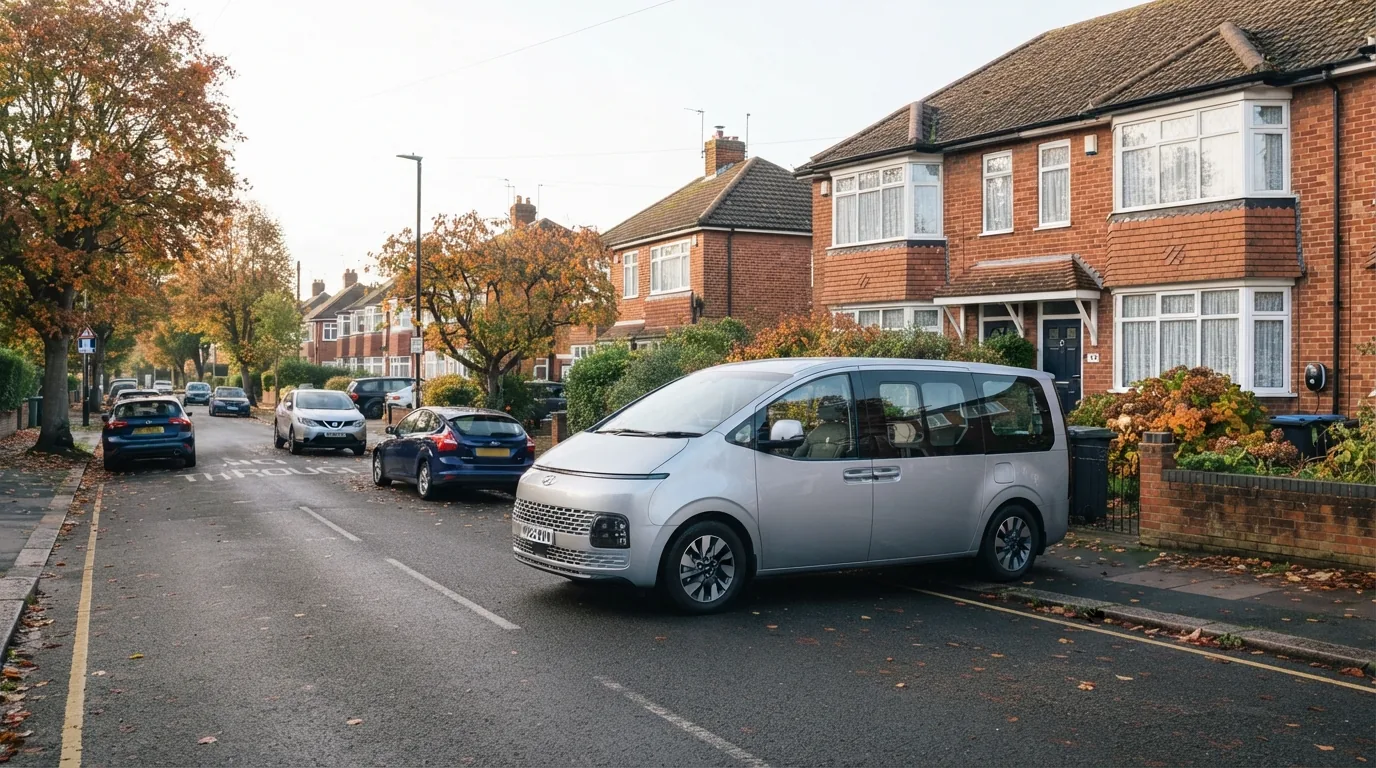
Hyundai Staria Electric: nine-seat EV MPV, UK price from £50,000 expected
Hyundai has opened European orders for its electric Staria, with up to 430km (about 267 miles) of range and nine seats. UK prices are not confirmed, so here is what Germany's prices and the Buzz tell us.