Are electric cars reliable? The latest reliability data by brand and model
Yes: electric cars break down less often than petrol and diesel cars, but reliability varies widely from one electric model to the next.
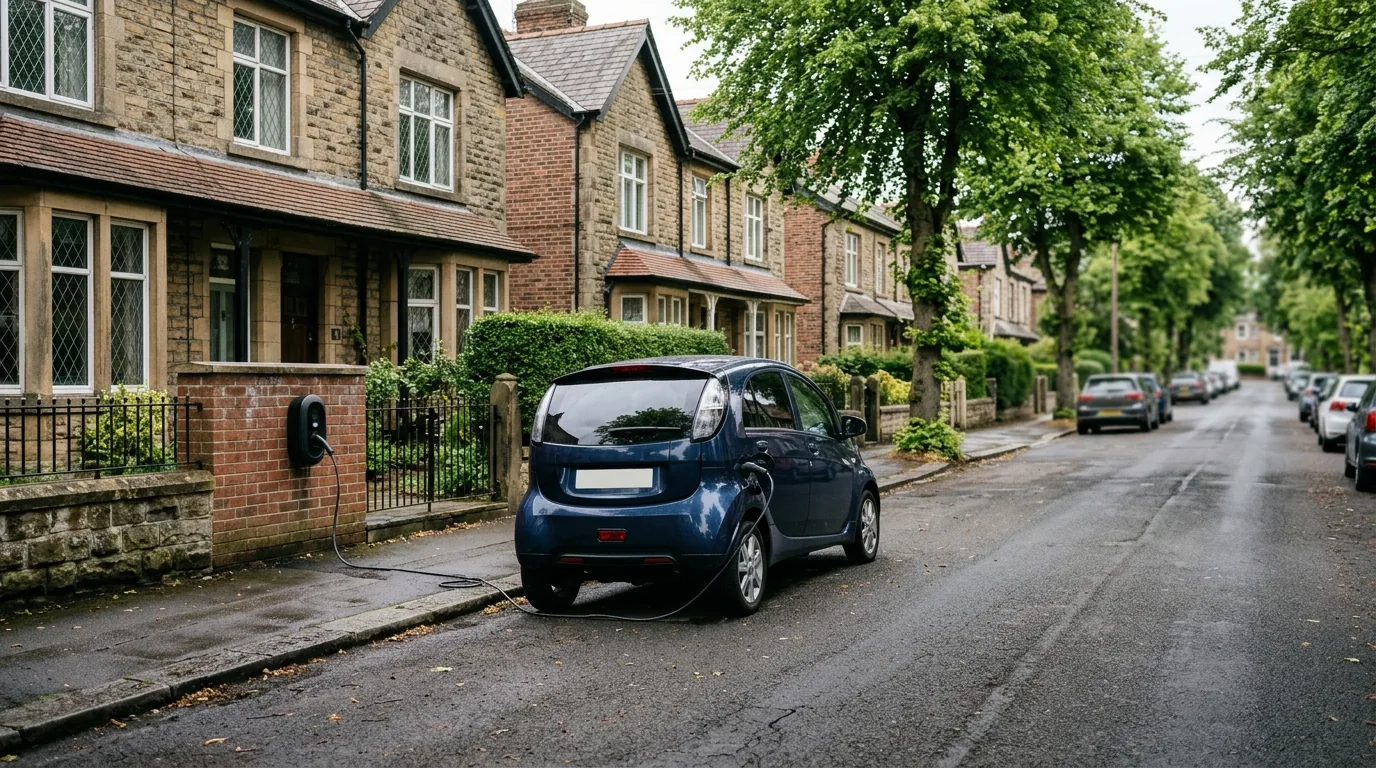
Quick answers
- Electric cars are reliable: Germany's ADAC breakdown statistics for 2025 recorded 6.5 breakdowns per 1,000 four-year-old electric cars against 12.5 for petrol and diesel cars of the same age.
- In the 2026 What Car? Reliability Survey, pure electric cars averaged 90.4%, up from 87.7% a year earlier, while electric SUVs averaged 89.6%, third lowest of 11 classes.
- The MG S5 topped What Car?'s electric SUV chart at 98.3% with only 6% of cars reported faulty, while the Volkswagen ID 4 came last at 69.9% with 43% faulty.
- Tesla ranked fifth of 30 brands in What Car?'s survey at 93.8%, yet the Model Y had the worst result of 110 cars aged two to three years in Germany's TÜV Report 2026, with significant or dangerous defects at 17.3% of inspections.
- The 12-volt battery, not the main battery, is the most common breakdown cause: ADAC says about 45% of all its 2025 call-outs came down to it.
- Geotab's study of more than 22,700 electric vehicles found batteries lose 2.3% of capacity a year on average, leaving about 81.6% after eight years.
- On EV Compared's figures, a BYD Atto 3 averaging that rate would still have about 258 miles of its 316-mile WLTP range after eight years, inside BYD's 8-year, 125,000-mile battery warranty.
Yes, electric cars are reliable: Germany’s ADAC recorded 6.5 breakdowns per 1,000 four-year-old electric cars in 2025, against 12.5 for petrol and diesel cars of the same age. The bigger risk is picking the wrong model: in What Car?’s 2026 owner survey, electric SUV scores ran from 98.3% for the MG S5 down to 69.9% for the Volkswagen ID 4.
Reliability data for electric cars now comes from three kinds of source, and each measures something different. Breakdown services count call-outs. Owner surveys such as What Car?’s count faults, repair bills and time off the road. Roadworthiness inspections such as Germany’s TÜV count defects found at a test. A car can do well on one and badly on another, so this guide reads them together.
Do electric cars break down more often than petrol cars?
No: on ADAC’s breakdown data, electric cars break down less often than petrol and diesel cars at every age reported. ADAC, Germany’s motoring club, attended nearly 3.7 million breakdowns in 2025. Its 2026 statistics, published on 23 April 2026, put two-year-old electric cars at 2.1 breakdowns per 1,000 against 5.8 for combustion cars, and five-year-old cars at 10.3 against 17.4, as Auto Motor und Sport reported.
The UK picture points the same way. The AA’s EV Readiness Index for the third quarter of 2026 shows its patrols fixed 88.1% of electric car call-outs at the roadside, against 83.5% for petrol cars. Running out of charge made up 1.3% of AA EV call-outs, down from 8.3% in 2015, which our report on AA data on flat-battery call-outs covers in more detail.
Fewer moving parts is the usual explanation. An electric car has no oil, clutch, timing belt, exhaust or starter motor to fail, and regenerative braking takes much of the load off the brakes. The weak point is the electrics around the motor, not the motor itself.
What are the most reliable electric cars?
The most reliable electric cars in the 2026 What Car? Reliability Survey are the MG S5, which led the electric SUV chart at 98.3%, and the BMW i3, which led the electric car chart at 97.4%. What Car? ran the survey with MotorEasy and collected 29,967 responses on 199 models up to five years old, asking owners about faults in the previous 24 months. Each score is built from how often cars went wrong, what repairs cost and how long the car was off the road.
| Model (years covered) | What Car? score | Owners reporting a fault | Most common fault |
|---|---|---|---|
| MG S5 (2025 to now) | 98.3% | 6% | EV battery pack |
| Renault Scenic E-Tech (2023 to now) | 97.5% | 11% | Electric motor, non-motor electrics |
| BMW i4 (2021 to now) | 96.8% | 16% | Bodywork |
| Hyundai Ioniq 6 (2022 to now) | 95.7% | 11% | Bodywork, charging, trim, infotainment |
| Tesla Model Y (2021 to now) | 95.5% | 17% | Bodywork |
| Kia EV3 (2024 to now) | 95.3% | 6% | EV battery, gearbox, electrics |
| Tesla Model 3 (2019 to now) | 92.8% | 23% | Bodywork, suspension |
| Polestar 2 (2020 to now) | 86.0% | 41% | Non-motor electrics |
| Hyundai Ioniq 5 (2021 to now) | 80.7% | 42% | 12-volt battery |
| Kia EV6 (2021 to now) | 77.9% | 52% | 12-volt battery |
| Volkswagen ID 4 (2021 to 2026) | 69.9% | 43% | Electric motor |
Source: What Car? Reliability Survey electric car and electric SUV charts, updated April and October 2026.
The class averages show steady progress. Pure electric cars averaged 90.4%, up from 87.7% the year before. Electric SUVs averaged 89.6%, the third lowest of the survey’s 11 classes. The newest cars in the table, the MG S5 and Kia EV3, have had less time to go wrong, so their scores cover a shorter ownership window than the Model 3’s.
Which are the most reliable electric car brands?
Tesla is the highest-placed brand that sells only electric cars in What Car?’s 2026 brand table, fifth of 30 at 93.8%, with Kia seventh at 93.5% and MG ninth at 92.0%. Suzuki topped the table at 97.8%. What Car? says 81% of Tesla’s reported issues were fixed free, and that MG climbed from last place in 2025 on better parts supply and faster repairs.
Brand scores mix electric, hybrid and petrol models, so they can hide a weak EV. Kia’s score is held up by hybrid and plug-in hybrid Niro models above 99%, while its EV6 was the brand’s one poor result, so the Kia electric range has both a strong EV3 and a weaker EV6.
Volkswagen sat 27th at 85.9%, with the ID 4 the lowest-scoring electric SUV in the survey. Buyers of a used ID 4 should look for a car with time left on its warranty.
Why does Tesla do well in owner surveys but badly at German inspections?
The two tests measure different things, which is why the Tesla Model Y scored 95.5% from UK owners and still finished 110th of 110 cars aged two to three years in Germany’s TÜV Report 2026. TÜV’s inspectors found significant or dangerous defects on 17.3% of Model Ys and 13.1% of Model 3s, from 9.5 million inspections carried out between July 2024 and June 2025.
The TÜV Association named suspension, brake discs and lighting as the Model Y’s problem areas. It said heavy batteries load the axle suspension, and that regenerative braking leaves the brakes so little used that brake disc defects can appear, and it advised EV drivers to brake deliberately and regularly. It added that service and maintenance appear to play a part. An owner survey records what the driver noticed and paid for; an inspection finds wear the driver may never have noticed. For UK buyers, that means checking the brakes and suspension on any used Tesla, a point our guide to what to look for when buying a used Tesla covers.
What goes wrong with electric cars?
The faults electric car owners report most are electrical and software problems, and the most common cause of an actual breakdown is the small 12-volt battery that runs the car’s lights, locks and computers. ADAC says about 45% of all its 2025 call-outs, across every type of car, came down to the 12-volt battery.
What Car?’s survey shows how this plays out by model. The 12-volt battery was the most common fault on the Kia EV6, reported by 22% of owners, and on the Hyundai Ioniq 5 at 20%. ADAC recorded up to 28.2 breakdowns per 1,000 Ioniq 5s from the 2022 and 2023 model years, which Hyundai put down to the car’s integrated charging control unit, a power supply part, as Auto Motor und Sport reported. Infotainment and sat-nav faults were among the top problems on the Polestar 2, Cupra Born and MG 4.
The motor and main battery fail far less often. Where What Car? owners did report a battery pack fault, the share was mostly in single figures, and nearly all the work cost owners nothing.
How long does an electric car battery last?
An electric car battery normally outlasts its warranty: Geotab’s analysis of more than 22,700 vehicles across 21 models found an average loss of 2.3% of capacity a year, leaving about 81.6% after eight years. Geotab estimates an average lifespan of around 13 years or more.
How you charge matters. Cars that rarely used rapid chargers lost 1.5% a year and were projected to keep about 88% after eight years. Cars that rapid charged often at more than 100 kW lost 3.0% a year and were projected to keep about 76%. Our report on rapid charging and battery degradation breaks down the study.
Worked UK example: a BYD Atto 3 after eight years
A BYD Atto 3 at Geotab’s average rate would keep about 258 miles of its 316-mile WLTP range after eight years, still inside its battery warranty. EV Compared’s method: efficiency is WLTP miles divided by usable kWh, and running cost is the electricity price divided by that efficiency, as set out on our methodology page.
The Atto 3 lists at £38,990 in November 2026 with a 74.8 kWh usable battery and 316 miles WLTP, which works out at 4.22 miles per kWh. BYD’s UK warranty covers the traction battery for 8 years or 125,000 miles, the drive unit for 8 years or 93,750 miles, and the rest of the car for 6 years or 93,750 miles.
| Atto 3 after eight years | Battery health (Geotab) | Range left (WLTP basis) |
|---|---|---|
| Little rapid charging | 88% | 278 miles |
| Average use | 81.6% | 258 miles |
| Frequent high-power rapid charging | 76% | 240 miles |
Running costs show why home charging is the gentler and cheaper habit. A full charge at home costs £4.86 on a 6.5p/kWh off-peak tariff, or 1.54p a mile. At 10,000 miles a year that is £154 of electricity, against £623 at the 26.32p/kWh price cap and £1,941 at the 82p/kWh average rapid charging price. At 10,000 miles a year, the car reaches 80,000 miles at eight years, so the time limit on the battery warranty runs out before the mileage limit. For a home charger, see Best Chargers’ guide to home EV chargers.
Common mistakes when judging EV reliability
The biggest mistake is reading a brand’s score as a verdict on its electric cars. Kia and Volkswagen both have electric models well apart in What Car?’s charts, so check the model, and the model years, not the badge.
The second is assuming a newer brand is unreliable because it is missing from the tables. BYD, Omoda, Jaecoo and Leapmotor do not appear in What Car?’s 2026 brand ranking, which needs at least 70 owner responses to list a brand. That is a gap in the data, not a poor score. Our guide to BYD’s UK range and prices covers the models.
The third is treating range anxiety as a reliability problem. Running out of charge is 1.3% of AA EV call-outs. Public charger faults are a separate question, covered in our report on how reliable the UK public charging network is.
Is it worth buying a second-hand electric car?
A second-hand electric car is worth buying when the model scores well and the battery warranty has years left. What Car? found that 100% of repairs on the BMW i4, Hyundai Ioniq 6 and Kia EV3 cost owners nothing. Once a car is outside its warranty, the same fault becomes your bill. Our list of the most reliable used electric cars narrows the field.
What this means for choosing a car
Electric cars suit buyers who want fewer breakdowns: the data from ADAC, the AA and What Car? all points that way. They suit less well a buyer who rapid charges most days and plans to keep the car beyond its battery warranty, as that use wears batteries fastest.
Our verdict, based on published data rather than our own testing, is that reliability should no longer stop anyone choosing an electric car, but it should shape which one. Pick a model with a strong owner-survey record across several years, check how many years and miles are left on the battery warranty, charge at home where you can, and ask for proof that the 12-volt battery and brakes have been looked after.
How we test and where our numbers come from
Range figures are official WLTP combined values taken from manufacturer UK specification pages, with real-world estimates drawn from independent comparative testing. Prices are UK list prices at the time of the latest update. Tax, grant and charging-scheme figures come from GOV.UK and HMRC publications. We re-check every guide when pricing, specification or policy changes. Last checked 10 November 2026. How we work out our own figures.
Frequently asked questions
Are electric cars reliable long-term?
Yes, on the evidence so far. ADAC found five-year-old electric cars broke down 10.3 times per 1,000 cars in 2025 against 17.4 for petrol and diesel cars, and Geotab projects the average battery keeps about 81.6% of its capacity after eight years.
Do EVs break down more often than petrol cars?
No. ADAC's 2025 data shows two-year-old electric cars broke down 2.1 times per 1,000 against 5.8 for combustion cars. In the UK, the AA fixed 88.1% of EV call-outs at the roadside in the third quarter of 2026, against 83.5% for petrol cars.
What is the most reliable electric car?
In the 2026 What Car? Reliability Survey, the MG S5 scored highest of any electric SUV at 98.3%, and the BMW i3 led the electric car chart at 97.4%. Among cars on sale new, the BMW i4 scored 96.8% and the Hyundai Ioniq 6 scored 95.7%.
What are the least reliable electric cars?
The Volkswagen ID 4 scored 69.9% in What Car?'s 2026 electric SUV chart, with 43% of owners reporting a fault. The Kia EV6 scored 77.9% with 52% faulty, and the Hyundai Ioniq 5 scored 80.7% among electric cars, with 12-volt battery faults the most common problem.
What is the biggest problem with electric cars?
For reliability, the most common problems are electrical and software faults, not motors or main batteries. What Car? owners most often reported infotainment, non-motor electrics and 12-volt battery faults, and ADAC traces about 45% of all its breakdowns to the 12-volt battery.
What is the lifespan of an electric car battery?
Most electric car batteries last longer than the warranty. Geotab's data on more than 22,700 vehicles shows average losses of 2.3% a year, about 81.6% capacity after eight years, and it estimates an average battery lifespan of around 13 years or more.
Is it worth buying a second-hand electric car?
It can be, if the model has a good reliability record and time left on its battery warranty. What Car? found most electric car repairs cost owners nothing, so a car still inside its warranty carries much less risk than one outside it.
Sources and further reading
- whatcar.comWhat Car? Reliability Survey: most and least reliable electric carsElectric car scores (BMW i3 97.4%, BMW i4 96.8%, Hyundai Ioniq 6 95.7%, Tesla Model 3 92.8%, Polestar 2 86.0%, Hyundai Ioniq 5 80.7%), class average 90.4% against 87.7%, 29,967 responses on 199 models; updated 26 April 2026.
- whatcar.comWhat Car? Reliability Survey: most and least reliable electric SUVsElectric SUV scores (MG S5 98.3%, Renault Scenic 97.5%, Tesla Model Y 95.5%, Kia EV3 95.3%, Kia EV6 77.9%, Volkswagen ID 4 69.9%), fault rates and class average of 89.6%; updated 18 October 2026.
- whatcar.comWhat Car? Reliability Survey: most reliable car brandsBrand ranking of 30 makes: Tesla fifth at 93.8% with 81% of issues fixed free, Kia seventh at 93.5%, MG ninth at 92.0% from last in 2025, Volkswagen 27th at 85.9%; 70-response minimum for a brand.
- adac.deADAC Pannenstatistik 2026Published 23 April 2026: 6.5 breakdowns per 1,000 four-year-old electric cars against 12.5 for combustion cars; nearly 3.7 million call-outs; BMW i3 and Tesla Model 3 best EVs; Hyundai Ioniq 5 flagged for comparatively high breakdown numbers.
- auto-motor-und-sport.deElektroautos zuverlässiger als Verbrenner: ADAC Pannenstatistik 2026Reports ADAC's two-year (2.1 against 5.8) and five-year (10.3 against 17.4) breakdown rates, about 45% of call-outs caused by the 12-volt battery, and Ioniq 5 rates up to 28.2 linked by Hyundai to the ICCU.
- tuev-verband.deTÜV-Report 2026Published 20 November 2025: Tesla Model Y 17.3% significant or dangerous defects, 110th of 110 at two to three years; Model 3 13.1%; 9.5 million inspections; battery weight, little-used brakes, and service and maintenance as factors.
- theaa.comAA UK EV Readiness Index, September 2026Q3 2026: running out of charge 1.3% of AA EV call-outs against 8.3% in 2015; 88.1% of EV call-outs fixed at the roadside against 83.5% for petrol.
- autotrader.co.ukEV roadside repairs more achievable than petrol or diesel, according to AA and Autotrader12 January 2026: 44% of 2,000-plus consumers worried about breakdowns when considering an EV; SMMT finding that 81.2% of UK workshops can work on EVs.
- geotab.comHow long do electric car batteries last? Real-world EV battery health2.3% average annual degradation across more than 22,700 vehicles; 81.6% after eight years; 88% for low rapid-charging use and 76% for heavy high-power use; lifespan around 13 years or more.
- byd.comBYD UK warranty policy6-year, 93,750-mile vehicle warranty; 8-year, 125,000-mile traction battery warranty; 8-year, 93,750-mile drive unit warranty; roadside assistance included.

EV Compared
The EV Compared editorial team tracks the UK electric vehicle market full time: new model launches, list prices, WLTP and real-world range, public charging tariffs and the tax rules that decide what an EV actually costs to run. Every guide is checked against manufacturer specifications and official GOV.UK figures, and updated whenever the numbers move.
Related reading
View all
Tesla Model 3 price UK tracker: Model 3 and Model Y prices this month
A new Tesla Model 3 costs from £37,990 and a Model Y from £44,990 in November 2026, with no change to any of the eight UK trims since October.
Do Electric Cars Need Oil? What EVs Use Instead and What Still Needs Servicing
Electric cars need no engine oil or oil changes, but most still carry reduction gear oil, coolant and brake fluid that the maker's schedule checks or replaces.
EV road tax 2025 and 2026: VED rates, the £50,000 supplement and Tesla examples
A new electric car pays £10 of vehicle tax in its first year and £200 a year after that, with an extra £440 a year from year two to year six if its list price is over £50,000.
Best home energy tariffs for Tesla owners
We worked out what 8,000 miles a year in a Tesla Model Y costs on each of the main UK EV tariffs, which ones connect to a Tesla directly, and where Tesla's own electricity licence stands.
Best Tesla alternatives in the UK: nine rivals ranked by price per mile of range
We divided the November 2026 list price of nine Tesla rivals by their official range. Four cars beat the best-value Tesla, and the Model Y comes last.
How much does it cost to charge a Tesla in the UK?
We worked out the cost of a full charge for every new Tesla Model 3 and Model Y on a smart home tariff, the standard price cap, Tesla's Superchargers and other public rapid chargers.