Tesla battery degradation: how much range do they lose?
Independent tests and Tesla's own fleet data show most Model 3 and Model Y batteries lose 5 to 6 per cent early, then fade slowly. We turned the data into a range-by-mileage table.
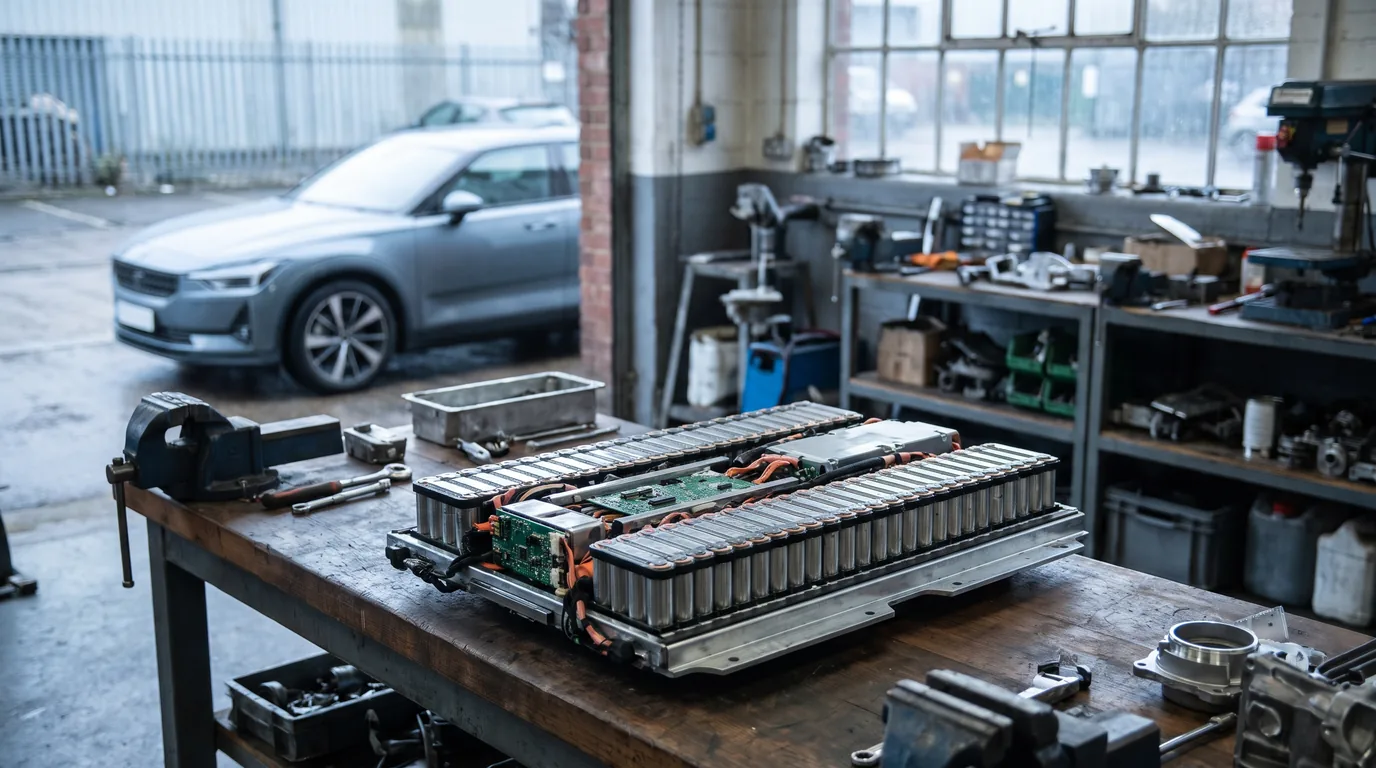
Quick answers
- Aviloo's test data puts the median Tesla Model Y at 90.3% battery health and the Model 3 at 88.9% after 150,000km, which is about 93,000 miles.
- Tesla's 2023 Impact Report says Model 3 and Model Y Long Range batteries lose an average of 15% of their capacity after 200,000 miles.
- On EV Compared's estimate, a Model Y Long Range rated at 383 miles WLTP would still have the equivalent of about 343 miles after 93,000 miles and 326 miles after 200,000 miles.
- Swedish retailer Carla found the LFP battery in rear-wheel-drive Model 3 cars kept 93.3% health past 62,000 miles, the best of the four Model 3 packs it tested.
- Geotab's 2026 fleet study found EVs that mostly use DC charging above 100 kW lose up to 3.0% a year, against about 1.5% for cars that mainly charge slowly.
- Tesla's UK battery warranty covers 8 years and 100,000 miles on standard-range cars, or 120,000 miles on Long Range and Performance cars, if capacity falls below 70%.
A Tesla Model 3 or Model Y typically loses 5 to 6 per cent of its battery capacity in the first 31,000 miles, then fades slowly: independent tests put a Model Y at 90.3% after about 93,000 miles, and Tesla’s own data puts the average Model 3 and Model Y Long Range at 85% after 200,000 miles. For a Model Y Long Range that works out at losing 40 to 60 miles of its 383-mile WLTP range over the life of the car, not half of it.
Battery degradation is the biggest worry for anyone buying a used Tesla, and it is also the area where the data is now strongest. Below we bring together Tesla’s fleet figures, two large independent test databases and a fleet telematics study, and turn them into a simple table of how much range you can expect to keep at each mileage.
How much range does a Tesla lose?
The pattern is the same in every dataset: a quick early drop, then a long, shallow decline.
Austrian diagnostics firm Aviloo published the largest independent study so far in September 2026, based on more than 500,000 battery tests across 20 models (Electrek). The median Tesla Model Y had 94.4% of its original capacity at 50,000km (about 31,000 miles) and 90.3% at 150,000km (about 93,000 miles). The Model 3 was slightly behind, at 93.8% and 88.9%. So a Model Y loses about six points in its first 31,000 miles, then only about four more over the next 62,000. We cover the full study in our Aviloo battery health results.
Tesla’s own figures go further. Its 2023 Impact Report says Model 3 and Model Y Long Range batteries lose an average of 15% of their capacity after 200,000 miles (InsideEVs). The older Model S and Model X do slightly better, at about 12% after 200,000 miles in the 2022 report (Electrek).
How much range will a Tesla have left at my mileage?
We combined the Aviloo and Tesla figures into a single curve and applied it to a Model Y Long Range RWD, which has a 383-mile WLTP range and a list price of £44,990, according to electrive in February 2026.
Method: average of Aviloo’s Model 3 and Model Y medians at 31,000 and 93,000 miles, plus Tesla’s 85% at 200,000 miles, with a straight line between those points, multiplied by 383 miles.
| Mileage | Battery health left (EV Compared estimate) | Equivalent WLTP range, Model Y Long Range RWD |
|---|---|---|
| New | 100% | 383 miles |
| 31,000 miles | 94.1% | 360 miles |
| 62,000 miles | 91.9% | 352 miles |
| 93,000 miles | 89.6% | 343 miles |
| 120,000 miles | 88.4% | 339 miles |
| 150,000 miles | 87.1% | 334 miles |
| 200,000 miles | 85.0% | 326 miles |
The 62,000-mile figure sits inside the 88.2% to 93.3% spread that Swedish used-EV retailer Carla measured on Model 3 cars past that mileage (Electrek), which gives us some confidence in the curve.
Two caveats. First, these are medians and averages; Aviloo found individual cars of the same model can differ by up to 13.5 points. Second, the range figures are WLTP equivalents. Real-world range is lower, especially in winter, but the share lost to degradation is the same.
Which Tesla battery degrades the least?
The battery chemistry matters more than the badge. Carla ran 9,954 Aviloo battery tests in Sweden between 2022 and 2026 on cars driven more than 100,000km, and broke the Model 3 results down by pack (Electrek):
| Tesla Model 3 battery | Chemistry | Average health past 62,000 miles |
|---|---|---|
| CATL, about 60.5 kWh | LFP | 93.3% |
| LG Chem | NMC | 91.5% |
| Panasonic, 77.8 kWh | NCA | 89.8% |
| Panasonic, 52.4 kWh | NCA | 88.2% |
The CATL LFP pack is the one used in rear-wheel-drive Model 3 cars built in China. The Model Y with the 78.8 kWh LG Chem pack averaged 92.18% in the same study. If you are choosing between two otherwise similar used cars, the rear-wheel-drive LFP car is the better bet for battery life, though it starts with less range. See our guides to the used Tesla Model 3 and used Tesla Model Y for what else to check on each.
Does Supercharging wear out a Tesla battery?
It does a little, if it is how you charge most of the time. Geotab’s January 2026 study of more than 22,700 EVs found average degradation of 2.3% a year, up from 1.8% in its 2024 analysis (Geotab). Cars that relied mainly on DC charging above 100 kW lost up to 3.0% a year, roughly double the 1.5% a year of cars that mainly charged at lower power.
That gap matters for a car that lives on Superchargers, such as a private hire Model 3 with no home charger. For an owner who charges at home overnight and Supercharges on long trips, the effect is small. There are more figures in our piece on rapid charging and battery degradation.
Does age matter as well as mileage?
Yes. Batteries age with time as well as use, which is why Tesla’s figures differ by region. Notebookcheck’s reading of Tesla’s 2024 Impact Report data is that European cars reach 80% capacity at around 150,000 miles on average, fewer miles than in the US, because they cover fewer miles a year and so age more per mile (Notebookcheck).
In practice, a low-mileage older Tesla will not be as healthy as the mileage alone suggests. A 2019 Model 3 with 31,000 miles has had seven years of calendar ageing, so it may sit below the 94% median for that mileage, which includes many younger, harder-driven cars.
What does the Tesla battery warranty cover?
Tesla’s UK battery and drive unit warranty pays out if capacity drops below 70% within the cover period (Motorpoint):
| Model | Battery and drive unit warranty |
|---|---|
| Model 3 and Model Y, standard-range battery | 8 years or 100,000 miles |
| Model 3 and Model Y, Long Range and Performance | 8 years or 120,000 miles |
| Model S and Model X | 8 years or 150,000 miles |
On a Model Y Long Range, 70% of 383 miles is 268 miles. On the data above, very few cars will get near that within 120,000 miles, so treat the warranty as protection against a faulty pack rather than against normal fade. The basic car warranty is shorter, at 4 years or 60,000 miles. If a pack does fail outside warranty, our guide to the cost of replacing an EV battery sets out what to expect.
How should I check a used Tesla’s battery?
Ask for an independent battery health test rather than relying on the range shown on the screen, which is an estimate that shifts with recent driving and charging. A test such as Aviloo’s measures the pack’s state of health directly. Compare the result with the table above: a car at 93,000 miles showing 85% is below the median and worth a lower offer, while one at 92% is better than average. We explain how to arrange one in how to get a battery health certificate for a used EV.
The bottom line
Tesla batteries degrade less than many buyers fear. On our estimate a Model Y Long Range keeps about 90% of its capacity at 93,000 miles and 85% at 200,000 miles, which is still the equivalent of more than 320 miles of WLTP range. Mileage, age, battery type and charging habits all play a part, so test the individual car, favour the LFP pack if battery life is your priority, and do not pay extra for a car whose health is below the median for its mileage.
How we test and where our numbers come from
Range figures are official WLTP combined values taken from manufacturer UK specification pages, with real-world estimates drawn from independent comparative testing. Prices are UK list prices at the time of the latest update. Tax, grant and charging-scheme figures come from GOV.UK and HMRC publications. We re-check every guide when pricing, specification or policy changes. Last checked 1 November 2026. How we work out our own figures.
Frequently asked questions
How much range does a Tesla lose per year?
A typical Tesla loses about 5 to 6 per cent of its battery capacity in the first 31,000 miles, then roughly 1 per cent for every 13,000 to 20,000 miles after that. Aviloo's tests put the median Model Y at 94.4% after 50,000km and 90.3% after 150,000km. Geotab's fleet data puts the average EV at 2.3% a year, with heavy rapid charging pushing that up to 3.0%.
How much battery health should a used Tesla have?
A used Model 3 or Model Y with about 31,000 miles should show around 94% battery health, and one with about 93,000 miles around 89% to 90%. Those are the medians in Aviloo's test data. Individual cars of the same model can differ by up to 13.5 points, so a test on the actual car matters more than the average.
Which Tesla battery degrades the least?
The LFP battery fitted to rear-wheel-drive Model 3 cars degraded least in Carla's study, keeping 93.3% average health past 62,000 miles. The worst Model 3 pack in the same study, a 52.4 kWh Panasonic NCA battery, averaged 88.2%.
Does Supercharging degrade a Tesla battery?
Frequent rapid charging does speed up degradation, but not dramatically. Geotab found EVs that mainly use DC charging above 100 kW lose up to 3.0% a year against about 1.5% for cars that mostly charge slowly. Occasional Supercharging on long trips makes little difference.
Does the Tesla warranty cover battery degradation?
Yes, if capacity falls below 70% within the warranty period. In the UK that is 8 years or 100,000 miles for standard-range Model 3 and Model Y cars, and 8 years or 120,000 miles for Long Range and Performance versions. Normal fade to 85% or 90% is not a warranty claim.
How long does a Tesla battery last?
A Tesla battery is likely to outlast the rest of the car for most UK drivers. Tesla's 2023 Impact Report puts average capacity at 85% after 200,000 miles for Model 3 and Model Y Long Range cars, a mileage most UK cars never reach.
Sources and further reading
- insideevs.comAverage Tesla Model 3, Model Y battery degradation after 200,000 miles impressesReports Tesla's 2023 Impact Report figure of 15% average capacity loss after 200,000 miles for Model 3 and Model Y Long Range, and 12% for Model S and Model X.
- electrek.coTesla update on battery degradationTesla's 2022 Impact Report: about 12% degradation after 200,000 miles for Model S and Model X.
- electrek.coEVs that retain their battery best: Aviloo's largest studyMedian state of health from more than 500,000 tests: Model Y 94.4% at 50,000km and 90.3% at 150,000km; Model 3 93.8% and 88.9%; cars of one model can differ by up to 13.5%.
- electrek.coTesla's LFP battery outlasts nickel packs in the Model 3Carla's 9,954 Swedish battery tests past 100,000km: Model 3 CATL LFP 93.3%, LG Chem NMC 91.5%, Panasonic 77.8 kWh 89.8%, Panasonic 52.4 kWh 88.2%; Model Y 78.8 kWh 92.18%.
- geotab.comGeotab EV battery health study: fast charging and degradationAverage EV degradation of 2.3% a year across 22,700 vehicles; up to 3.0% a year for cars mainly using DC charging above 100 kW, against about 1.5% for lower-power charging (13 January 2026).
- notebookcheck.netTesla posts the lifespan of its electric vehicle batteries as both time and mileage matterTesla's 2024 Impact Report data: an average of about 150,000 miles in Europe before capacity reaches 80%, because age as well as mileage wears the battery.
- motorpoint.co.ukTesla 4 year warranty explainedUK battery and drive unit cover: 8 years or 100,000 miles for standard-range Model 3 and Model Y, 8 years or 120,000 miles for long-range packs, 8 years or 150,000 miles for Model S and X, with a 70% capacity threshold; basic warranty 4 years or 60,000 miles.
- electrive.comTesla brings Model Y Long Range RWD to the UKModel Y Long Range RWD from £44,990 with a 383-mile WLTP range, used as the base for our range-by-mileage table.

EV Compared
The EV Compared editorial team tracks the UK electric vehicle market full time: new model launches, list prices, WLTP and real-world range, public charging tariffs and the tax rules that decide what an EV actually costs to run. Every guide is checked against manufacturer specifications and official GOV.UK figures, and updated whenever the numbers move.
Related reading
View all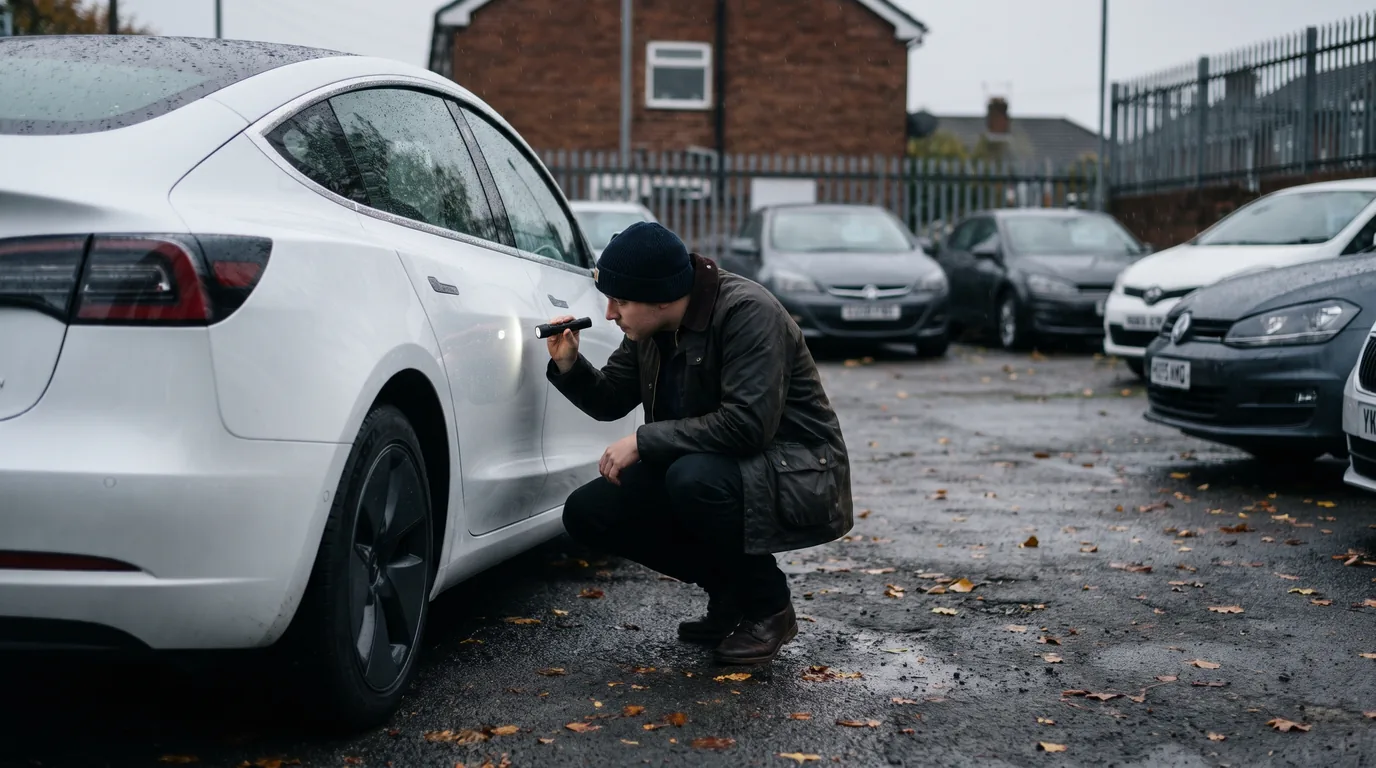
Used Tesla Model 3 buying guide: years, faults and prices
Which Model 3 years to look for, which recalls and faults to check, and what dealers are asking for each year, from a snapshot of 70 used cars on 1 November 2026.
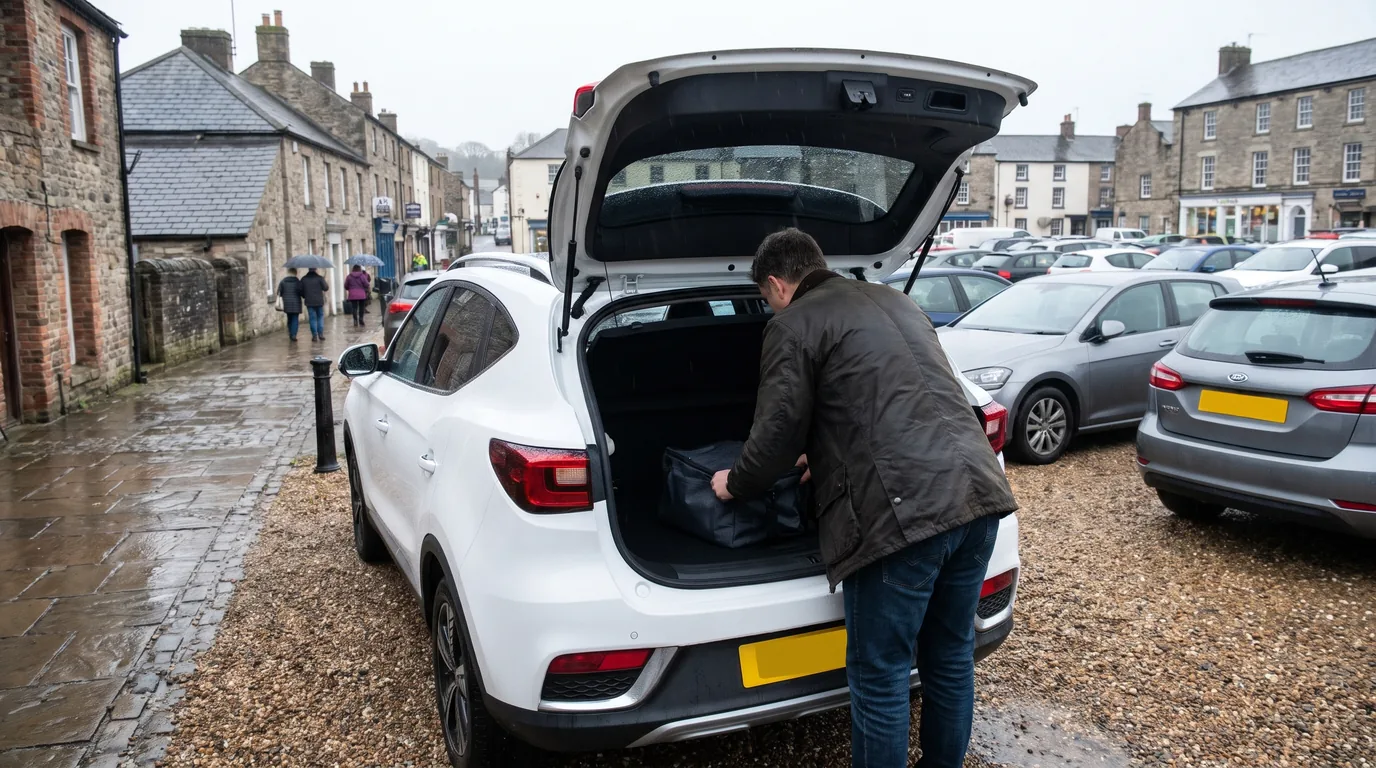
Used Tesla Model Y buying guide: years, faults and prices
Every UK Model Y year from the 2022 launch to the 2025 refresh, the faults and recalls to check, and asking prices by year from our listings snapshot.
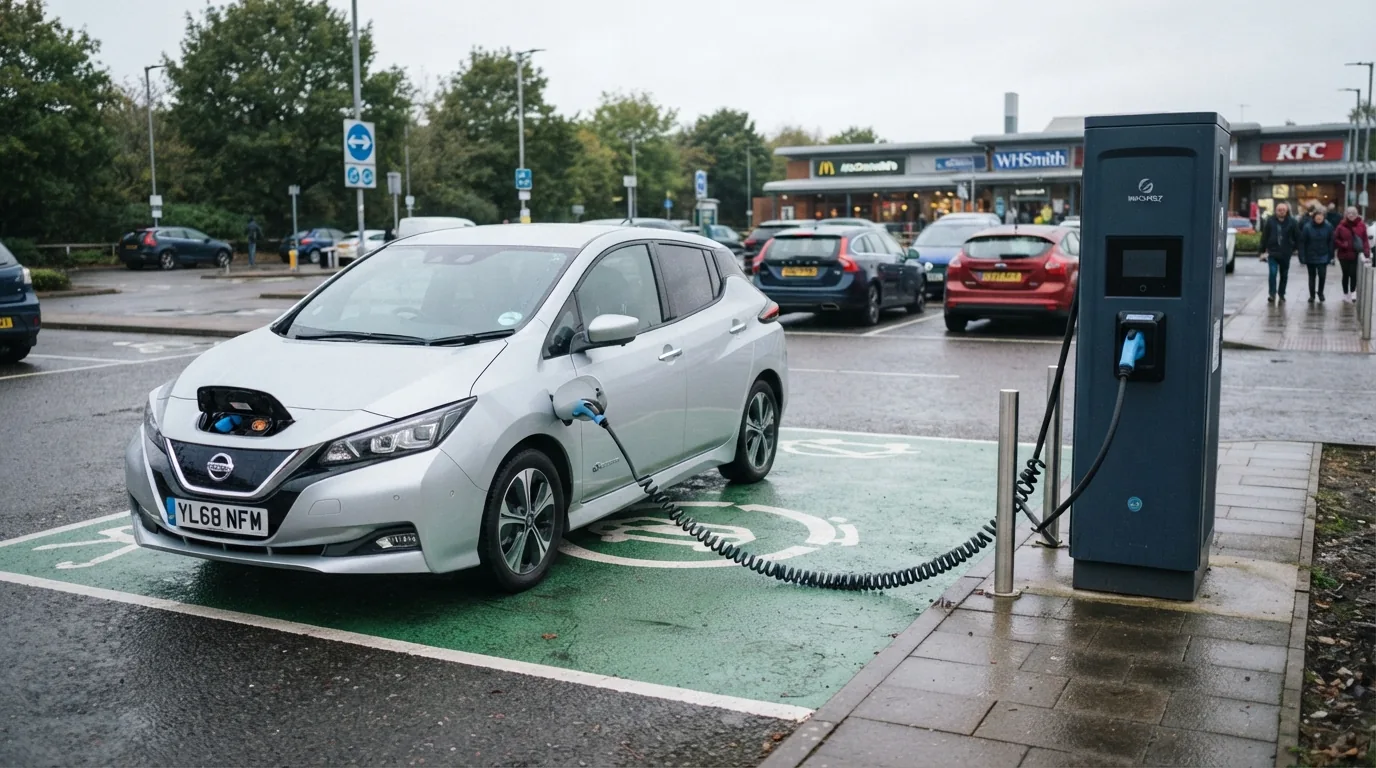
Geotab: Rapid-Charging EVs Lose Battery Capacity Twice as Fast
Geotab's fleet data puts degradation at up to 3.0% a year for cars that rely on 100kW-plus DC chargers, against 1.5% for AC and lower-power use. The UK's largest used-EV study still finds 95% average health.
Aviloo battery study: EQA 94.0%, Zoe 87.3% at 93,000 miles
A 500,000-test study of 20 popular used EVs puts numbers on battery degradation. 16 of the 20 keep at least 90% at 150,000km, small-pack cars such as the Renault Zoe trail, and Aviloo now offers a UK used battery warranty.
Best home energy tariffs for Tesla owners
We worked out what 8,000 miles a year in a Tesla Model Y costs on each of the main UK EV tariffs, which ones connect to a Tesla directly, and where Tesla's own electricity licence stands.
Best Tesla alternatives in the UK: nine rivals ranked by price per mile of range
We divided the November 2026 list price of nine Tesla rivals by their official range. Four cars beat the best-value Tesla, and the Model Y comes last.