Electric Car Grant eligible cars: every model on the gov.uk list
On 10 November 2026 the gov.uk list has 21 entries in Band 1 at £3,750 off and 48 in Band 2 at £1,500 off, from 22 makes; no BYD, Leapmotor, Jaecoo or Omoda model is on it.
Quick answers
- On 10 November 2026 the gov.uk Electric Car Grant list has 69 entries: 21 in Band 1 with up to £3,750 off and 48 in Band 2 with up to £1,500 off.
- The grant is only for new fully electric cars priced at or below £37,000 RRP per variant, with higher trims in the same family allowed up to £42,000.
- The dealer takes the grant off the purchase price, so buyers never apply for it themselves.
- Every version of the Hyundai Ioniq 3 is in Band 1, priced from £18,495 after the £3,750 grant when orders opened on 5 October 2026.
- The Toyota bZ4X, which Carwow listed at £1,500 on 13 October 2026, does not appear on the gov.uk list on 10 November 2026.
- No model from BYD, Geely, Jaecoo, Omoda, Leapmotor, Deepal or Xpeng is on the list, although nine of their electric cars in EV Compared's data are priced under £37,000.
- Plug-in hybrids never qualify, because the rules require zero tailpipe CO2 and at least 100 miles of WLTP electric range.
On 10 November 2026, 69 entries are on the gov.uk Electric Car Grant list: 21 cars in Band 1 get up to £3,750 off and 48 in Band 2 get up to £1,500 off. The dealer takes the grant off the price of a new car; you never apply for it, and used cars and plug-in hybrids never qualify.
Last updated: 10 November 2026. We check the gov.uk list and update this page on the 10th of every month, and on the day a maker confirms a new approval.
| Band 1 | Band 2 | |
|---|---|---|
| Grant | Up to £3,750 | Up to £1,500 |
| Entries on gov.uk, 10 November 2026 | 21 | 48 |
| Makes with an entry | 11 | 18 |
| Newest dated addition | Hyundai Ioniq 6 facelift (29 October 2026) | Volkswagen ID. Polo (reported 13 October 2026) |
| Price rule | £37,000 RRP per variant, family up to £42,000 | Same |
What changed this month?
The Toyota bZ4X has dropped off the list: Carwow listed it at £1,500 on 13 October 2026, and it does not appear on the gov.uk cars page on 10 November 2026. The other two Toyotas, the C-HR+ and Proace City Verso, remain in Band 2. Gov.uk does not say why a model leaves, and the page carries no date, which is why this tracker logs each change against the day we checked.
The newest dated Band 1 car is the Hyundai Ioniq 6 facelift. Hyundai priced it on 29 October 2026 from £33,240 with the £3,750 grant, for the Premium RWD and N Line RWD versions only; our Ioniq 6 facelift prices and range page has the full trim list. Hyundai now has three cars on the list, all in Band 1: the Ioniq 3, Ioniq 6 facelift and Kona Electric.
Earlier in October, the Hyundai Ioniq 3 arrived in Band 1 with every version qualifying, the KGM Torres EVX joined Band 2, and Carwow reported the Volkswagen ID. Polo joining Band 2.
Which cars are eligible for the Electric Car Grant? The full table
These are all 69 gov.uk entries on 10 November 2026, grouped by make. Where gov.uk names a battery or a version, only that version qualifies.
| Make | Band 1: up to £3,750 | Band 2: up to £1,500 |
|---|---|---|
| Abarth | 500e | 600e |
| Alfa Romeo | None | Junior Elettrica |
| Alpine | A290 | None |
| Audi | None | A2 e-tron |
| BMW | iX1, iX2 | None |
| Citroën | ë-C5 Aircross Long Range | ë-C3, ë-C3 Aircross and ë-C3 Urban Range; ë-C4 and ë-C4 X; ë-C5 Aircross; ë-Berlingo; ë-SpaceTourer |
| Cupra | None | Born, Raval |
| DS | None | DS3, N°4 |
| Fiat | 500e, 500e Urban Range | 600e |
| Ford | Puma Gen-E, E-Tourneo Courier | Capri, Explorer |
| Hyundai | Ioniq 3, Ioniq 6 Facelift, Kona Electric | None |
| Jeep | None | Avenger, Compass |
| KGM | None | Torres EVX |
| Kia | EV2 Long Range, EV4 | EV2, EV3, PV5 Passenger |
| MINI | Countryman Electric | None |
| Nissan | Leaf, Micra (52kWh) | Ariya, Micra (40kWh) |
| Peugeot | None | E-208, E-2008, E-308, E-3008, E-408, E-Rifter, E-Traveller |
| Renault | 4, 5 (52 kWh), Megane, Scenic | 5 (40 kWh) |
| Skoda | None | Elroq, Enyaq, Epiq |
| Toyota | None | C-HR+, Proace City Verso |
| Vauxhall | None | Astra, Combo Life, Corsa, Frontera, Grandland, Mokka and Vivaro Life Electric |
| Volkswagen | None | ID.3 and ID.3 Neo, ID.4, ID.5, ID. Cross, ID. Polo |
Four models sit in both bands depending on the version. The Renault 5 and Nissan Micra get £3,750 with the 52 kWh battery and £1,500 with the 40 kWh one, the Kia EV2 Long Range is in Band 1 while the standard EV2 is in Band 2, and the Citroën ë-C5 Aircross Long Range is in Band 1 while the standard car is in Band 2. Check the battery and version on the order, not just the badge.
Nine entries are people carriers with van-based bodies: the ë-Berlingo, ë-SpaceTourer, E-Rifter, E-Traveller, Combo Life, Vivaro Life, Proace City Verso, PV5 Passenger and E-Tourneo Courier. They qualify because the grant covers M1 passenger vehicles. The cargo versions fall under a different scheme, covered in our list of electric vans eligible for the Plug-in Van Grant.
How does a car get on the list?
A car qualifies only if it is new, fully electric, priced at or below £37,000 and made by a company that passes a sustainability test. The gov.uk eligibility guidance, last updated on 1 April 2026, sets these rules:
- the £37,000 limit is the RRP of each variant, including VAT, delivery and any battery lease, and higher versions in the same family qualify up to £42,000;
- zero tailpipe CO2 and at least 100 miles of WLTP range, which rules out every plug-in hybrid;
- a warranty of at least 3 years or 60,000 miles on the car and 8 years or 100,000 miles on the battery;
- a maker with a verified Science Based Target, or a Transition Pathway Initiative rating of level 4 or higher.
The band is a carbon score weighted 70% on where the battery cells are made and 30% on where the car is assembled, using the carbon intensity of each country’s grid. That is why one car can sit in Band 1 with one battery and Band 2 with another. Our explainer on what the Electric Car Grant is and who qualifies goes through the rules for buyers.
What it means for buyers
The grant now reaches some of the lowest prices in the market, but plenty of cheap electric cars sit outside it. The Hyundai Ioniq 3 Advance 42kWh costs £22,245 before the grant and £18,495 after it, the price Hyundai gave when Ioniq 3 orders opened on 5 October 2026.
None of these electric cars from EV Compared’s spec data is on the gov.uk list, though all are priced under £37,000:
| Car | List price | WLTP range | Grant |
|---|---|---|---|
| BYD Dolphin Surf | £18,650 | 137 miles | None |
| Geely EX2 | £20,990 | 156 miles | None |
| BYD Dolphin | £26,195 | 211 miles | None |
| Jaecoo 5 E5 | £27,505 | 248 miles | None |
| BYD Atto 2 | £30,850 | 214 miles | None |
| Geely EX5 | £31,990 | 267 miles | None |
| Leapmotor B10 | £32,495 | 270 miles | None |
| Omoda E5 | £33,065 | 267 miles | None |
| Leapmotor C10 | £36,500 | 263 miles | None |
The worked comparison shows how close the two routes have come. The BYD Dolphin Surf at £18,650 is £155 dearer than a granted Ioniq 3 Advance 42kWh. On EV Compared’s figures, the Dolphin Surf costs £136 of list price per mile of WLTP range, about 1.4p a mile to charge at home on a 6.5p/kWh off-peak tariff and 18.0p a mile on public rapid chargers at 82p/kWh. Method: efficiency is WLTP miles divided by usable kWh, and charging losses are ignored; the full method is on our methodology page.
Three mistakes catch buyers out. First, a maker’s own discount is not the government grant, even when it is called one: Leapmotor’s own B03X discount is paid by the brand, not by the Electric Car Grant. Second, the grant does not apply to used cars. Third, the price that counts is each variant’s RRP, so a car advertised “from” under £37,000 may have trims that qualify and trims that do not, as the Ioniq 6 facelift shows.
Who the grant suits: private buyers and businesses buying a new car outright or on finance from a listed brand, where £3,750 off moves the price into a lower bracket. Who it does not: used car buyers, plug-in hybrid buyers, and anyone whose shortlist is mainly BYD, Leapmotor, Jaecoo, Omoda or Geely, where the comparison is on list price alone. Company car drivers should compare the grant with the tax saving in our Electric Car Grant vs salary sacrifice guide.
For a shortlist rather than a full list, see our pick of the cheapest EVs with the grant.
Whether the money lasts to the end of the scheme is covered in our report on how long the Electric Car Grant funding will last.
Method and sources
We read the gov.uk cars page in full on 10 November 2026 and counted entries as gov.uk lists them, so a line such as “ë-C3, ë-C3 Aircross and ë-C3 Urban Range” counts once. Gov.uk does not date the page, so additions and removals are dated from the maker’s press release or from dated reporting by Carwow and electrive, and every source is listed below this article. List prices are the maker’s own on the date given; prices for cars without the grant come from EV Compared’s spec data.
Previous updates
10 November 2026. Gov.uk list checked: 21 Band 1 entries, 48 Band 2 entries. Toyota bZ4X not listed.
29 October 2026. Hyundai prices the Ioniq 6 facelift from £33,240 with the £3,750 grant on Premium RWD and N Line RWD.
13 October 2026. Carwow reports the Volkswagen ID. Polo qualifying for £1,500, with Toyota and Skoda the latest brands to join.
6 October 2026. The KGM Torres EVX qualifies for £1,500, cutting its price from £36,995 to £35,495; details in our Torres EVX grant price report.
5 October 2026. Every Hyundai Ioniq 3 version qualifies for £3,750; orders open from £18,495 after the grant.
1 April 2026. Gov.uk updates the vehicle eligibility guidance.
3 December 2025. The MINI Countryman, Renault 4, Renault 5 and Alpine A290 move up to £3,750, doubling Band 1 from four to eight models. The government puts £1.3 billion more into the grant.
28 August 2025. Ford and DS join; the Ford Puma Gen-E and E-Tourneo Courier are the first cars to get the full £3,750.
15 August 2025. Cupra, Peugeot and Volkswagen models approved at £1,500, including the Cupra Born, Peugeot E-2008 and Volkswagen ID.3.
9 August 2025. Thirteen Nissan, Renault and Vauxhall models approved at £1,500, including the Micra, Renault 5 and Corsa Electric.
5 August 2025. Citroën becomes the first approved brand, with six models at £1,500.
16 July 2025. Grants become available, a day after the government launched the scheme with £650 million for new cars priced at or under £37,000.
How we test and where our numbers come from
Range figures are official WLTP combined values taken from manufacturer UK specification pages, with real-world estimates drawn from independent comparative testing. Prices are UK list prices at the time of the latest update. Tax, grant and charging-scheme figures come from GOV.UK and HMRC publications. We re-check every guide when pricing, specification or policy changes. Last checked 10 November 2026. How we work out our own figures.
Frequently asked questions
Can you still get a grant for an electric car in the UK?
Yes. On 10 November 2026 the Electric Car Grant takes up to £3,750 or £1,500 off 69 entries on the gov.uk list. The government added £1.3 billion to the grant in December 2025; the scheme launched in July 2025 with £650 million.
Which cars get the full £3,750 Electric Car Grant?
Twenty-one entries are in Band 1 on 10 November 2026, including the Hyundai Ioniq 3, Kona Electric and Ioniq 6 facelift, Renault 4, 5 (52 kWh), Megane and Scenic, Nissan Leaf, Ford Puma Gen-E, Kia EV4 and EV2 Long Range, MINI Countryman, BMW iX1 and iX2, Fiat 500e and Alpine A290.
How do I apply for the Electric Car Grant?
You do not apply. Gov.uk says the seller includes the grant as a discount in the purchase price, and dealership or manufacturer staff claim it through an online portal. Ask the dealer to show the price before and after the grant on your order.
Can you get the Electric Car Grant on a used car?
No. The grant is for new zero emission cars only, applied at the point of sale by the dealer. A used electric car does not qualify, even if the same model was on the gov.uk list when it was new.
Why are BYD, Leapmotor and Jaecoo not on the grant list?
The maker must pass a sustainability test, either a verified Science Based Target or a Transition Pathway Initiative rating, and the band depends on the carbon intensity of the grids where the battery cells and the car are made. Cars that are not approved get no grant, whatever their price.
Is there a government grant for a home EV charger?
Not through the Electric Car Grant, which covers only the car. Home charger support is a separate scheme with its own rules and its own eligibility, so check it separately before you budget for a wallbox alongside a new electric car.
Sources and further reading
- gov.ukZero emission vehicles eligible for a grant: carsThe full list of eligible cars by band, checked on 10 November 2026: 21 Band 1 entries at up to £3,750 and 48 Band 2 entries at up to £1,500; no Toyota bZ4X; the seller applies the discount.
- gov.ukHow to apply for vehicle eligibility for the Electric Car GrantEligibility rules, last updated 1 April 2026: £37,000 RRP per variant, £42,000 family limit, M1 category, zero tailpipe CO2, 100 miles WLTP range, warranties, SBTi or TPI test, band score weighted 70% battery cells and 30% assembly.
- gov.ukElectric Car Grant launched (written statement to Parliament)Launch on 15 July 2025 with £650 million for new zero emission cars priced at or under £37,000; grants available from 16 July 2025; two bands of £3,750 and £1,500.
- gov.ukFour more EV models qualify for £3,750 discount under Electric Car Grant3 December 2025: MINI Countryman, Renault 4, Renault 5 and Alpine A290 move to £3,750, doubling Band 1 from four to eight models; £1.3 billion of an extra £1.5 billion goes to the grant.
- carwow.co.ukElectric Car Grant latest: Volkswagen ID Polo qualifies for the scheme13 October 2026: ID. Polo joins at £1,500; Toyota bZ4X listed at £1,500; dated 2025 approvals for Citroen (5 August), Nissan, Renault and Vauxhall (9 August), Cupra, Peugeot and Volkswagen (15 August), Ford and DS (28 August).
- hyundai.newsIoniq 3 opens for UK orders5 October 2026: every Ioniq 3 version gets the £3,750 Band 1 grant; Advance 42kWh £22,245 before and £18,495 after the grant.
- hyundai.newsIoniq 6 UK pricing, October 202629 October 2026: Ioniq 6 facelift from £33,240 with the £3,750 grant; Premium RWD and N Line RWD qualify.
- electrive.comKGM Torres EVX now eligible for UK Electric Car Grant6 October 2026: Torres EVX gets the £1,500 Band 2 grant, cutting its price from £36,995 to £35,495.

EV Compared
The EV Compared editorial team tracks the UK electric vehicle market full time: new model launches, list prices, WLTP and real-world range, public charging tariffs and the tax rules that decide what an EV actually costs to run. Every guide is checked against manufacturer specifications and official GOV.UK figures, and updated whenever the numbers move.
Related reading
View all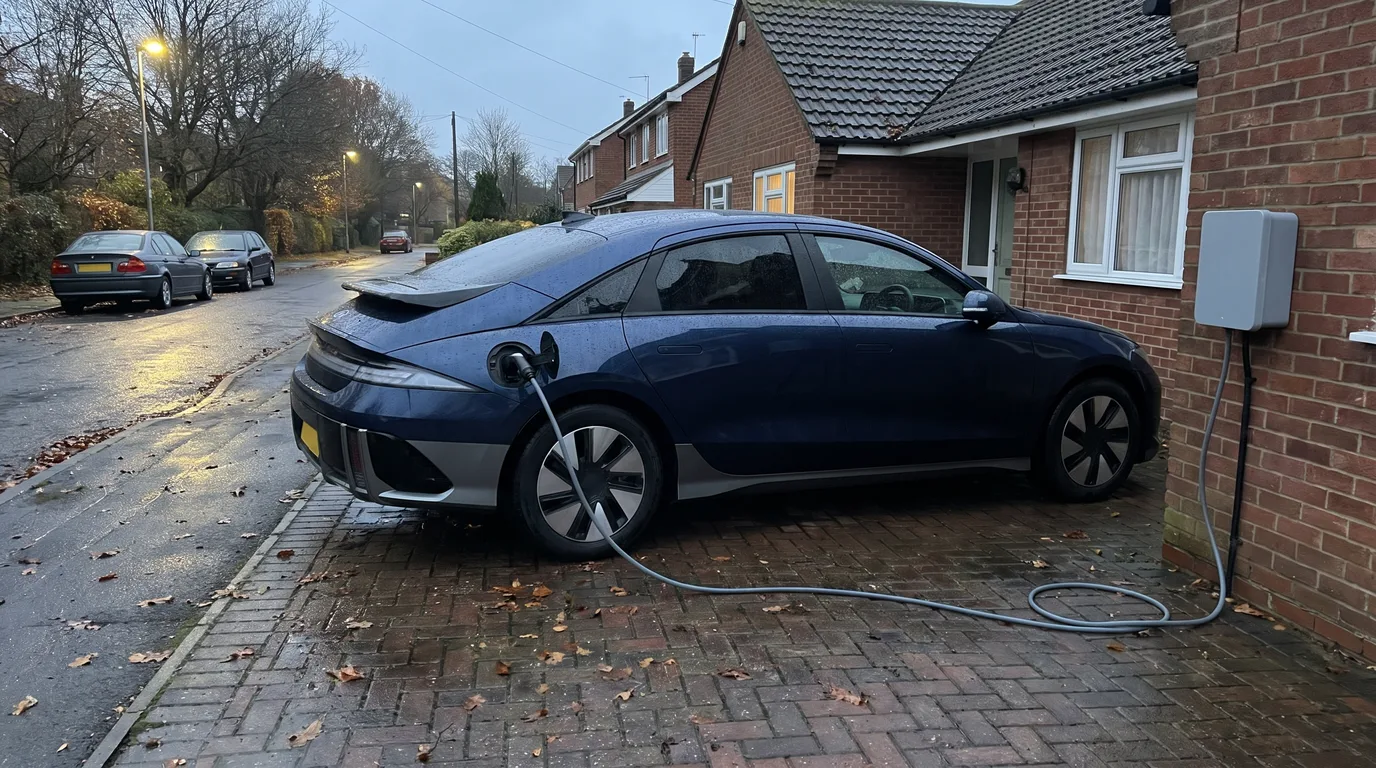
New Hyundai Ioniq 6 UK prices: from £33,240 with the grant and up to 422 miles
Hyundai has priced the facelifted Ioniq 6 saloon for the UK, with two grant-eligible versions under £37,000 and deliveries in early 2027. We work out what each mile of range costs against the Tesla Model 3 and Mercedes CLA, and what a full charge costs at home and on the road.
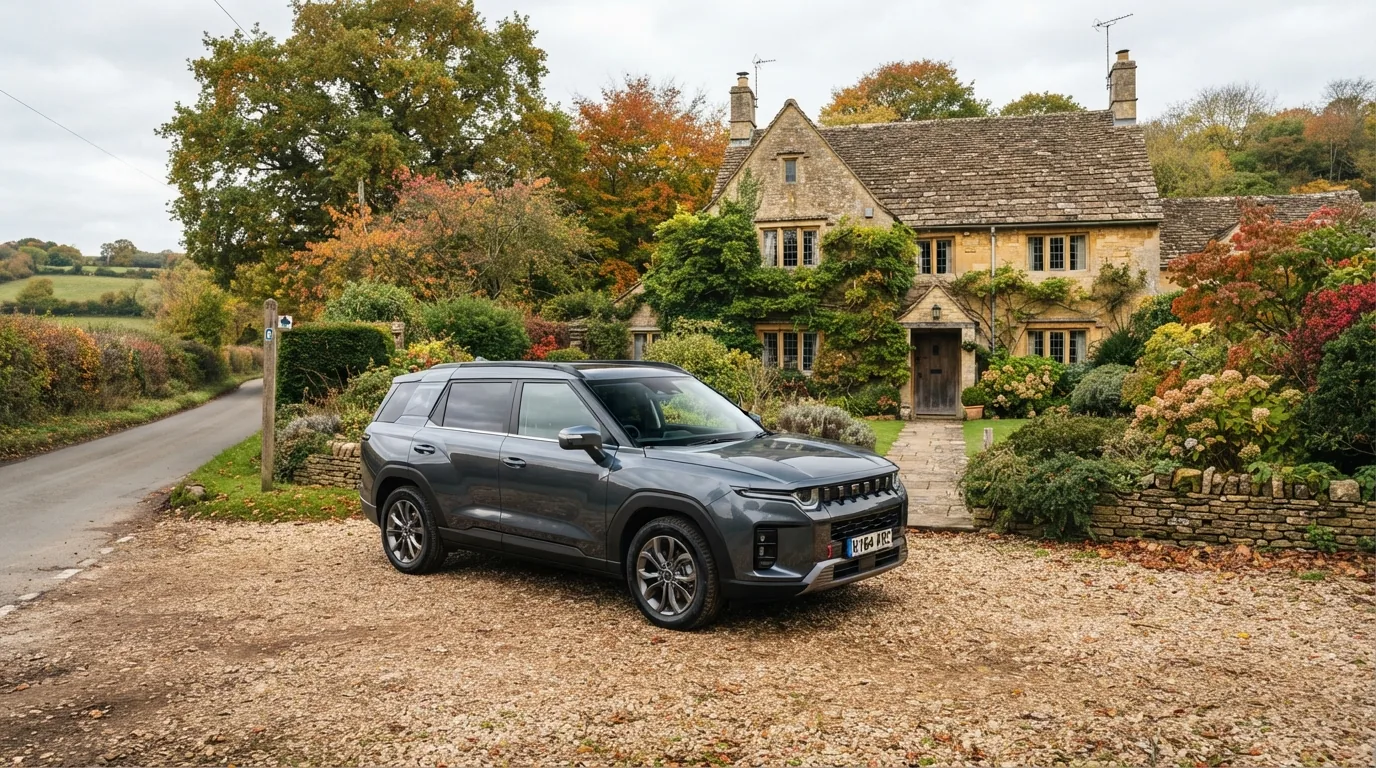
KGM Torres EVX now £35,495 after £1,500 Electric Car Grant
KGM's large electric SUV now qualifies for the Band 2 Electric Car Grant, with a BYD-supplied battery and up to 287 miles of range. Here is what it costs and how it compares.
Electric Car Grant after record EV sales: will £1.95bn last to 2030?
The grant helped power September's record 99,199 EV registrations. Our sums show whether its £1.95bn reaches March 2030 depends on how many buyers get the full £3,750.
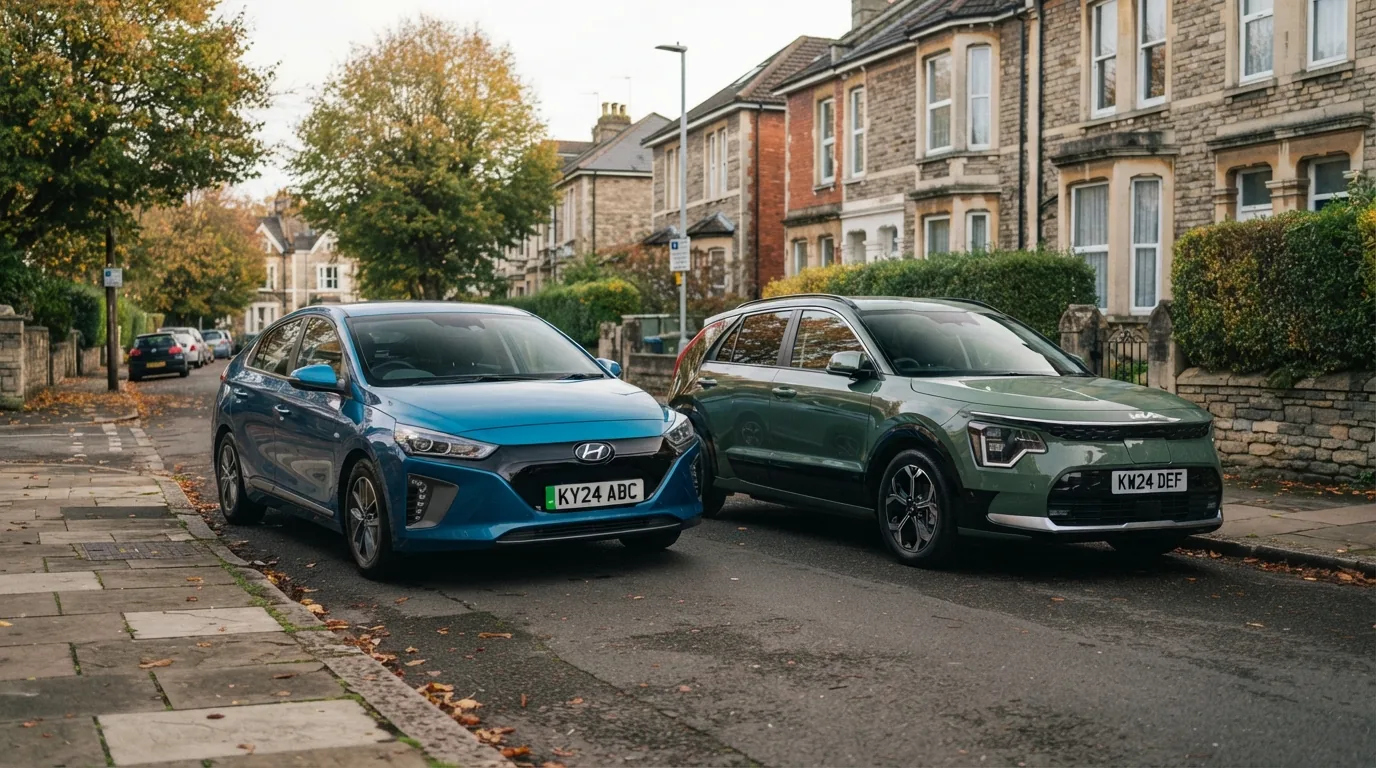
Hyundai Ioniq 3 vs Kia EV2: £2,250 cheaper, 33 more miles
The Ioniq 3 and Kia EV2 share batteries and charging speeds, but the full £3,750 grant on every Ioniq 3 makes the Hyundai cheaper at both battery sizes. Here is how they compare on price, range and space.
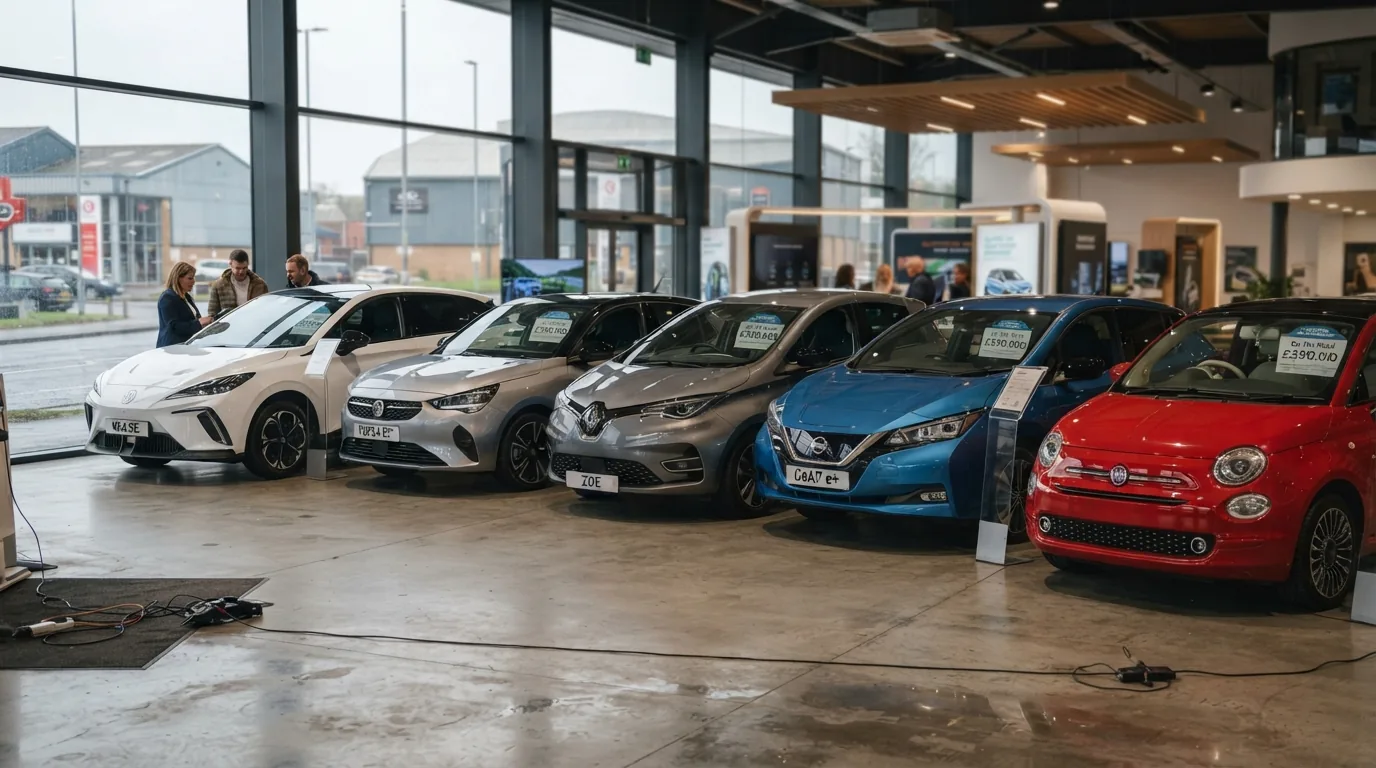
Affordable Electric Cars UK 2026: Cheapest EVs With the Grant
The electric cars that combine a government grant with the lowest purchase prices in the UK market right now
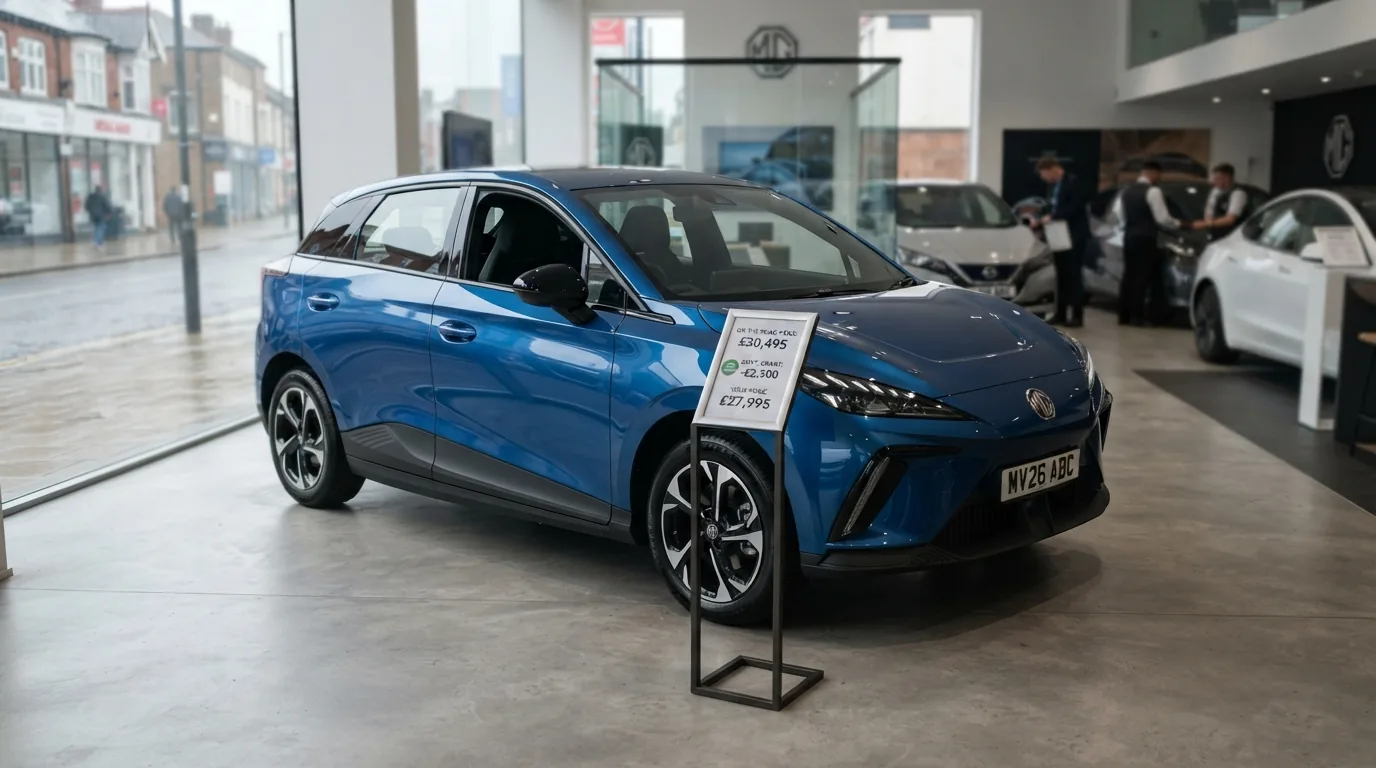
What Is the Electric Car Grant and Who Qualifies in 2026?
A plain-English guide to the UK's two-band EV purchase grant, which cars make the list and how the discount works