New Hyundai Ioniq 6 UK prices: from £33,240 with the grant and up to 422 miles
Hyundai has priced the facelifted Ioniq 6 saloon for the UK, with two grant-eligible versions under £37,000 and deliveries in early 2027. We work out what each mile of range costs against the Tesla Model 3 and Mercedes CLA, and what a full charge costs at home and on the road.
Quick answers
- Hyundai Motor UK announced prices for the updated Ioniq 6 on 29 October 2026; it is on sale now, with deliveries in early 2027.
- The Premium 84kWh rear-wheel-drive car costs £33,240 including the £3,750 Electric Car Grant, and Hyundai claims up to 422 miles of range.
- The N Line rear-wheel-drive car costs £36,240 including the grant, with up to 364 miles; the N Line AWD, N Line Evo RWD and N Line Evo AWD cost £43,490, £43,270 and £46,770 and do not get the grant.
- Every version has an 84kWh battery and charges from 10 to 80% in 18 minutes on a 350kW charger, according to Hyundai.
- By our sums, the Premium costs about £79 for each mile of claimed range, against about £114 for the £37,990 Tesla Model 3 Standard and about £97 for the £44,990 Model 3 Premium Long Range.
- Charging 84kWh costs about £5.46 at Intelligent Octopus Go's 6.5p off-peak rate, against about £66 at September's 79p average rapid charging price from Zapmap.
- Range figures are Hyundai's own claims, which it calls Max Potential EV Driving Range, so they are not directly comparable with the WLTP figures quoted for rivals.
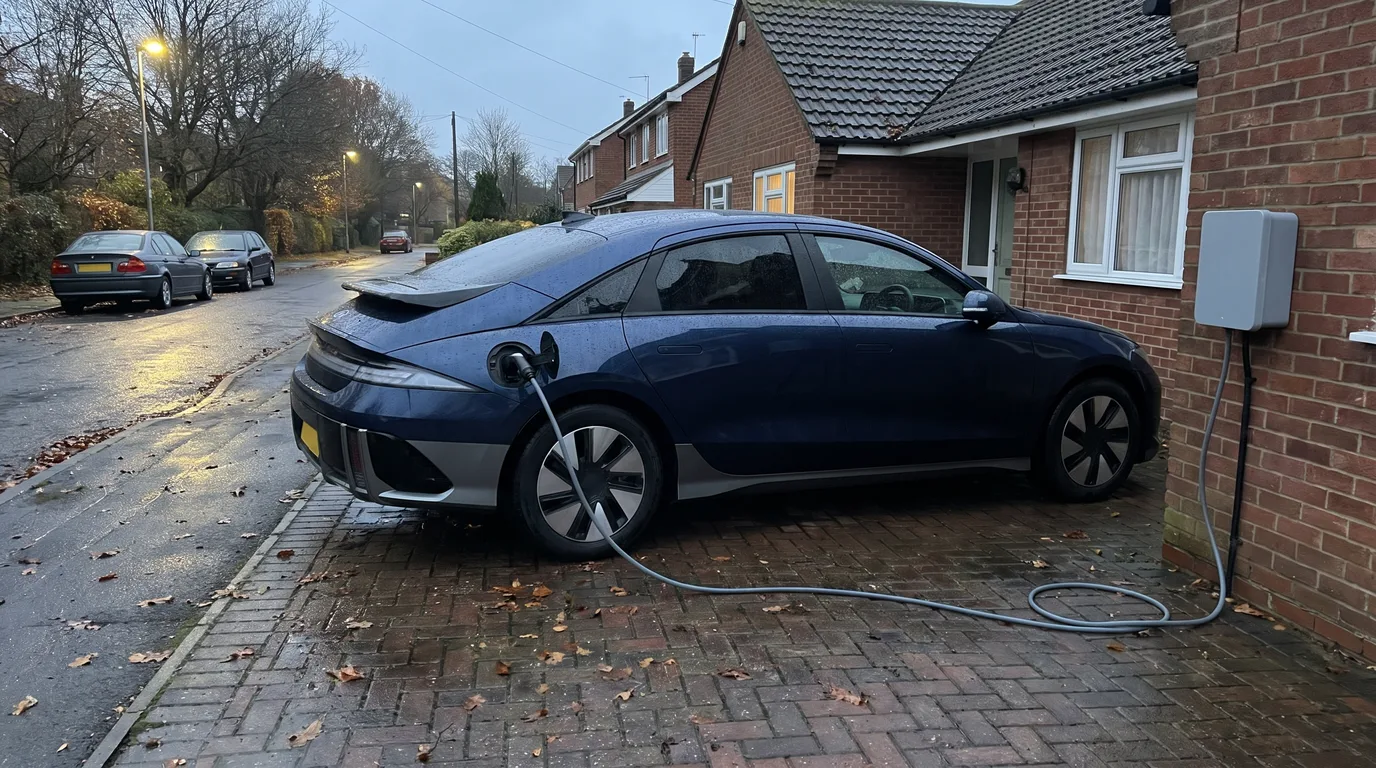
Hyundai has priced the updated Ioniq 6 for the UK, and the headline is the entry car: the Premium 84kWh rear-wheel-drive version costs £33,240 after the £3,750 Electric Car Grant, with up to 422 miles of claimed range, according to Hyundai Motor UK. Orders opened on 29 October 2026 and deliveries start in early 2027.
For a UK buyer, that puts a long-range electric saloon below the cheapest Tesla Model 3 and the cheapest electric Mercedes CLA, with more claimed range than either. The usual caveat applies: Hyundai’s figure is its own claim, not a WLTP number, and real-world range will be lower. Below we set out the prices, what each mile of range costs against rivals, and what it costs to charge.
How much does the new Hyundai Ioniq 6 cost?
There are five versions across three trims, all with an 84kWh battery. Two qualify for the grant, and Hyundai quotes only their after-grant prices.
| Version | Drive and power | UK price | Claimed range | Grant |
|---|---|---|---|---|
| Premium 84kWh | RWD, 229PS | £33,240 incl. grant | Up to 422 miles | Yes, £3,750 |
| N Line 84kWh | RWD, 229PS | £36,240 incl. grant | Up to 364 miles | Yes, £3,750 |
| N Line 84kWh | AWD, 325PS | £43,490 | Up to 354 miles | No |
| N Line Evo 84kWh | RWD, 229PS | £43,270 | Up to 364 miles | No |
| N Line Evo 84kWh | AWD, 325PS | £46,770 | Up to 354 miles | No |
Prices are on the road, from Hyundai Motor UK. Paint is extra unless you choose the one free colour, a red metallic: pearl and metallic colours cost £750 and matte finishes £1,250. Some colours, including two blues, a matte grey and a pearl brown, are only offered on the Premium.
The grant is limited to cars priced at or below £37,000, according to GOV.UK, and £3,750 is the higher of its two levels. When we checked the government’s list of eligible cars on 29 October, the Ioniq 6 had not yet been added, although other Hyundais such as the Kona Electric and Ioniq 3 are there. Hyundai’s prices already include the grant, but ask the dealer to confirm it on your order. Our guide to the Electric Car Grant and who qualifies explains how the discount is applied.
What range does the Ioniq 6 have?
Hyundai claims up to 422 miles for the Premium RWD, 364 miles for the N Line and N Line Evo RWD and 354 miles for the two AWD cars. The difference between the Premium and the N Line RWD, which share a motor and battery, is likely to be largely down to wheels, though Hyundai does not say so: the Premium has 18-inch wheels with 225/55 tyres, while the N Line cars have 20-inch wheels with 245/40 tyres.
Hyundai calls its figure “Max Potential EV Driving Range” and does not describe it as WLTP. Autocar reported 423 miles for the Premium; we use Hyundai’s 422.
Claimed figures are achieved in test conditions. Our long-range EVs under £40,000 guide uses a rule of thumb of about 75% of the official figure for mixed UK driving, and 65 to 70% in cold weather. Applied to 422 miles, that suggests roughly 315 miles in mixed driving and 275 to 295 miles in winter. That is our estimate, not a Hyundai figure, and motorway speeds will cut it further.
How fast does it charge?
Hyundai gives these charging times for the 84kWh battery:
- 350kW ultra-rapid charger: 10 to 80% in 18 minutes.
- 50kW rapid charger: 10 to 80% in 1 hour 20 minutes.
- 11kW AC charger: 0 to 100% in 7 hours 35 minutes, using the 10.5kW three-phase on-board charger. A Type 2 cable is included.
Most UK homes have single-phase electricity, so a typical 7kW home wallbox will take longer than the 11kW figure. Vehicle to Load, which lets you power appliances from the car’s battery, is standard inside the car; the N Line Evo also gets an exterior Vehicle to Load adaptor. Hyundai does not mention vehicle-to-home or vehicle-to-grid charging.
What equipment do you get?
The Premium is well equipped for the money. Hyundai lists 18-inch alloys, a heat pump, heated front seats and steering wheel, dual-zone climate control, a 12.3-inch navigation screen, wireless phone charging, over-the-air updates and driver assistance systems including highway drive assist and blind spot collision avoidance.
The N Line adds 20-inch alloys, sportier styling inside and out and heated outer rear seats. The N Line Evo adds leather and suede seats, ventilated front seats, a memory driver’s seat, a sunroof, head-up display, surround-view cameras, remote parking assist, a digital key and Bose audio. Digital side mirrors are an Evo option.
| Spec | Ioniq 6 (Hyundai figures) |
|---|---|
| Battery | 84kWh |
| 0 to 62mph | 7.4 sec (RWD), 5.1 sec (AWD) |
| Top speed | 115mph |
| Efficiency | 4.6 miles/kWh (Premium RWD), 4.2 (N Line RWD), 4.0 (AWD) |
| Boot | 401 litres, plus a 45-litre front boot |
| Towing (braked) | 1,500kg |
| Battery warranty | 8 years or 100,000 miles |
How does the Ioniq 6 compare with the Tesla Model 3 and Mercedes CLA on price?
To compare value, we divided each car’s price by its quoted range to get a cost per mile of range. The inputs: Ioniq 6 prices and ranges from Hyundai; the Model 3 Standard at £37,990 with 332 miles from Carwow; the Model 3 Premium Long Range RWD at £44,990 with 466 miles from Top Gear, as in our Tesla UK prices report; and the Mercedes CLA 200 Sport Executive at £41,290 with 330 miles WLTP from Auto Express.
| Car | UK price | Quoted range | Price per mile of range |
|---|---|---|---|
| Hyundai Ioniq 6 Premium RWD | £33,240 (incl. grant) | 422 miles (Hyundai claim) | £79 |
| Hyundai Ioniq 6 N Line RWD | £36,240 (incl. grant) | 364 miles (Hyundai claim) | £100 |
| Tesla Model 3 Premium Long Range RWD | £44,990 | 466 miles (WLTP) | £97 |
| Tesla Model 3 Standard | £37,990 | 332 miles | £114 |
| Mercedes CLA 200 Sport Executive | £41,290 | 330 miles (WLTP) | £125 |
On this measure, the Ioniq 6 Premium is the clear leader, at about £79 per mile against £97 for the longest-range Model 3. It is also £4,750 cheaper than the Model 3 Standard while claiming 90 more miles. The electric CLA starts lower than the Sport Executive, at £39,150 according to PA Motoring, which is still £5,910 more than the Ioniq 6 Premium.
Two caveats. First, Hyundai’s range claim is not labelled WLTP, so it may not be measured on exactly the same basis as the Tesla and Mercedes figures. Second, neither the Tesla nor the CLA gets the grant, so the Ioniq 6’s lead depends partly on that £3,750. Once the Ioniq 6 moves to the dearer N Line trims, its advantage shrinks: the N Line Evo AWD at £46,770 works out at about £132 per mile, more than the Model 3 Long Range. Our earlier Ioniq 6 vs Tesla Model 3 comparison covers how the two drive and charge, though its prices predate this update.
What does it cost to charge an Ioniq 6?
We worked out what it costs to put 84kWh into the battery, roughly a full charge from empty, ignoring charging losses of typically a few per cent. Every rate was checked at its source on 29 October 2026. For cost per mile we used Hyundai’s own efficiency figure of 4.6 miles per kWh for the Premium RWD.
| Where you charge | Rate | Cost of 84kWh | Cost per mile | Cost per 10,000 miles |
|---|---|---|---|---|
| Intelligent Octopus Go, off-peak | 6.5p/kWh | £5.46 | 1.4p | £141 |
| EDF GoElectric, off-peak | 6.66p/kWh | £5.59 | 1.4p | £145 |
| Standard home rate, price cap | 26.32p/kWh | £22.11 | 5.7p | £572 |
| Public rapid or ultra-rapid, average | 79p/kWh | £66.36 | 17.2p | £1,717 |
Sources: Octopus Energy (11:30pm to 5:30am, compatible car or charger needed), EDF (11pm to 6am, correct as of 1 October), Ofgem (Direct Debit average, 1 October to 31 December 2026) and Zapmap (September 2026 pay-as-you-go average for 50kW and above).
The gap is stark: charging at a rapid charger costs about 12 times as much as an off-peak EV tariff. Drivers without a driveway who rely on rapid chargers will pay far more per mile, partly because public charging still carries 20% VAT, as we explain in our report on the public charging VAT gap. Note that 4.6 miles per kWh across 84kWh comes to about 386 miles, less than the 422-mile claim, so Hyundai’s efficiency and range figures are not measured on quite the same basis.
When can you get one, and what warranty does it have?
Orders are open now, and Hyundai Motor UK says deliveries begin in early 2027. It has not given a firmer date, so if you are ordering to replace a car or a lease that ends early next year, ask the dealer for an expected build slot.
Hyundai’s standard cover is a five-year, unlimited-mileage warranty with annual health checks, plus 8 years or 100,000 miles on the high-voltage battery and a 12-year anti-perforation warranty. Roadside assistance is included.
Where does it sit among long-range EVs under £40,000?
On Hyundai’s claim, the Ioniq 6 Premium would top our list of long-range EVs under £40,000, just ahead of the Citroën ë-C5 Aircross 97kWh at 421 miles WLTP. It is not cheaper, though: the Citroën’s £36,695 list price also gets the £3,750 grant, bringing it to £32,945, about £295 less than the Ioniq 6 Premium. Because one figure is a maker’s claim and the other is WLTP, we would call the two level on range until independent tests are published. The Ioniq 6 is a low, sleek saloon rather than an SUV, so families wanting a tall boot opening may still prefer the Citroën, Renault Scenic or Kia EV3. If you want something smaller and cheaper from Hyundai, see our report on the Ioniq 3’s UK prices.
Our view
At £33,240 with the grant, the Ioniq 6 Premium gives UK buyers a long-range saloon for the price of a mid-size hatchback, and the entry car is the one to look at: it has the longest claimed range, the heat pump and the fast charging of the dearer versions. The N Line Evo models lose the grant and much of the value case. Before ordering, confirm the grant is applied on your order, check delivery timing, and work out where you will charge, because an off-peak home tariff makes the running costs far lower than relying on rapid chargers.
How we test and where our numbers come from
Range figures are official WLTP combined values taken from manufacturer UK specification pages, with real-world estimates drawn from independent comparative testing. Prices are UK list prices at the time of the latest update. Tax, grant and charging-scheme figures come from GOV.UK and HMRC publications. We re-check every guide when pricing, specification or policy changes. Last checked 1 November 2026. How we work out our own figures.
Frequently asked questions
How much is the new Hyundai Ioniq 6 in the UK?
The updated Ioniq 6 costs from £33,240 for the Premium 84kWh RWD, including the £3,750 Electric Car Grant. The N Line RWD is £36,240 with the grant. The N Line AWD is £43,490, the N Line Evo RWD £43,270 and the N Line Evo AWD £46,770, and those three do not get the grant.
What is the range of the new Hyundai Ioniq 6?
Hyundai claims up to 422 miles for the Premium RWD, up to 364 miles for the N Line and N Line Evo RWD, and up to 354 miles for the AWD versions. Hyundai calls this Max Potential EV Driving Range and does not label it WLTP, so treat it as the maker's claimed figure.
Does the Hyundai Ioniq 6 qualify for the Electric Car Grant?
Hyundai says the Premium RWD and N Line RWD include the £3,750 grant in their prices. The grant is limited to cars priced at or below £37,000, and the other three versions are above that. When we checked GOV.UK's list of eligible cars on 29 October, the Ioniq 6 was not yet listed, so confirm with the dealer before you order.
When can I get the new Ioniq 6?
Orders are open now and Hyundai Motor UK says deliveries will start in early 2027. It has not given a more exact date.
How fast does the new Ioniq 6 charge?
Hyundai says it charges from 10 to 80% in 18 minutes on a 350kW charger, or in 1 hour 20 minutes on a 50kW charger. On an 11kW home or destination charger, a 0 to 100% charge takes 7 hours 35 minutes.
Sources and further reading
- hyundai.newsHyundai Motor UKPrimary source referenced in this article.
- gov.ukHow to apply for vehicle eligibility for the Electric Car GrantThe £37,000 RRP cap and the £3,750 and £1,500 grant levels.
- gov.ukElectric Car Grant: eligible carsThe list of grant-eligible cars, which did not yet include the Ioniq 6 when checked on 29 October 2026.
- carwow.co.ukTesla Model 3 review and pricesModel 3 Standard RRP of £37,990 with 332 miles of official range, and up to 466 miles for the Premium.
- topgear.comModel 3 Standard: your cheapest way into Tesla ownership in the UKModel 3 Premium Long Range RWD at £44,990 with 466 miles of WLTP range, as cited in our Tesla prices report.
- autoexpress.co.ukMercedes CLA 200 165kW Sport Executive 58kWh prices and specsCLA 200 Sport Executive price of £41,290 and 330 miles WLTP from a 58kWh battery.
- irishnews.comUK Drive: Can the Mercedes CLA Hybrid live up to the electric version?PA Motoring's £39,150 starting price for the electric CLA, published 20 August 2026.
- octopus.energyIntelligent Octopus GoOff-peak EV rate of 6.5p per kWh between 11:30pm and 5:30am, checked 29 October 2026.
- edfenergy.comEDF GoElectric tariffsGoElectric off-peak rate of 6.66p per kWh from 11pm to 6am, correct as of 1 October 2026.
- ofgem.gov.ukEnergy price cap unit rates and standing chargesAverage electricity unit rate of 26.32p per kWh for Direct Debit customers from 1 October to 31 December 2026.
- zapmap.comZapmap charging price indexSeptember 2026 average pay-as-you-go prices: 79p per kWh for rapid and ultra-rapid, 54p for slower public chargers.

EV Compared
The EV Compared editorial team tracks the UK electric vehicle market full time: new model launches, list prices, WLTP and real-world range, public charging tariffs and the tax rules that decide what an EV actually costs to run. Every guide is checked against manufacturer specifications and official GOV.UK figures, and updated whenever the numbers move.
Related reading
View all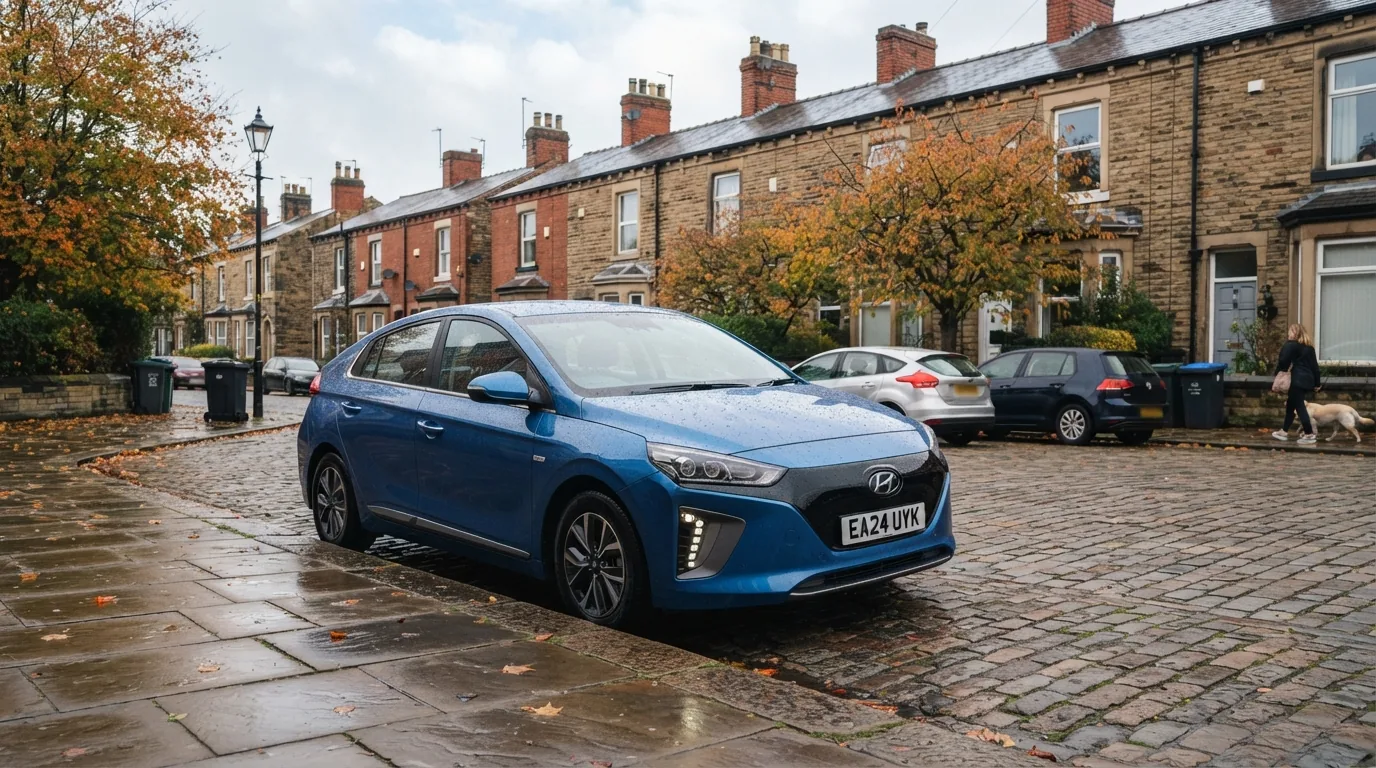
Hyundai Ioniq 3 opens UK orders at £18,495 with full £3,750 grant
Hyundai's small electric hatch gets the full £3,750 grant on every trim. That buys up to 308 miles of claimed range for £21,995, less than a longer-range Renault 5 or Kia EV2.
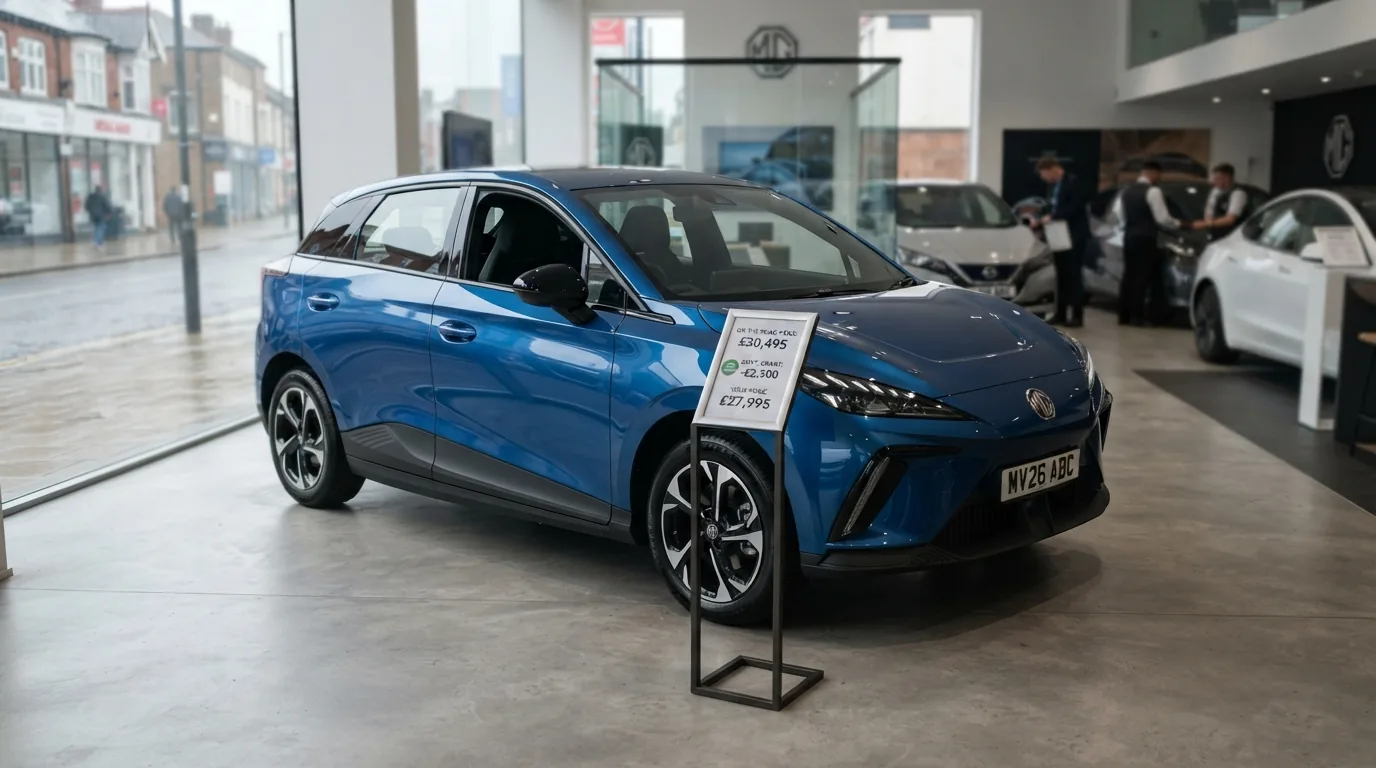
What Is the Electric Car Grant and Who Qualifies in 2026?
A plain-English guide to the UK's two-band EV purchase grant, which cars make the list and how the discount works
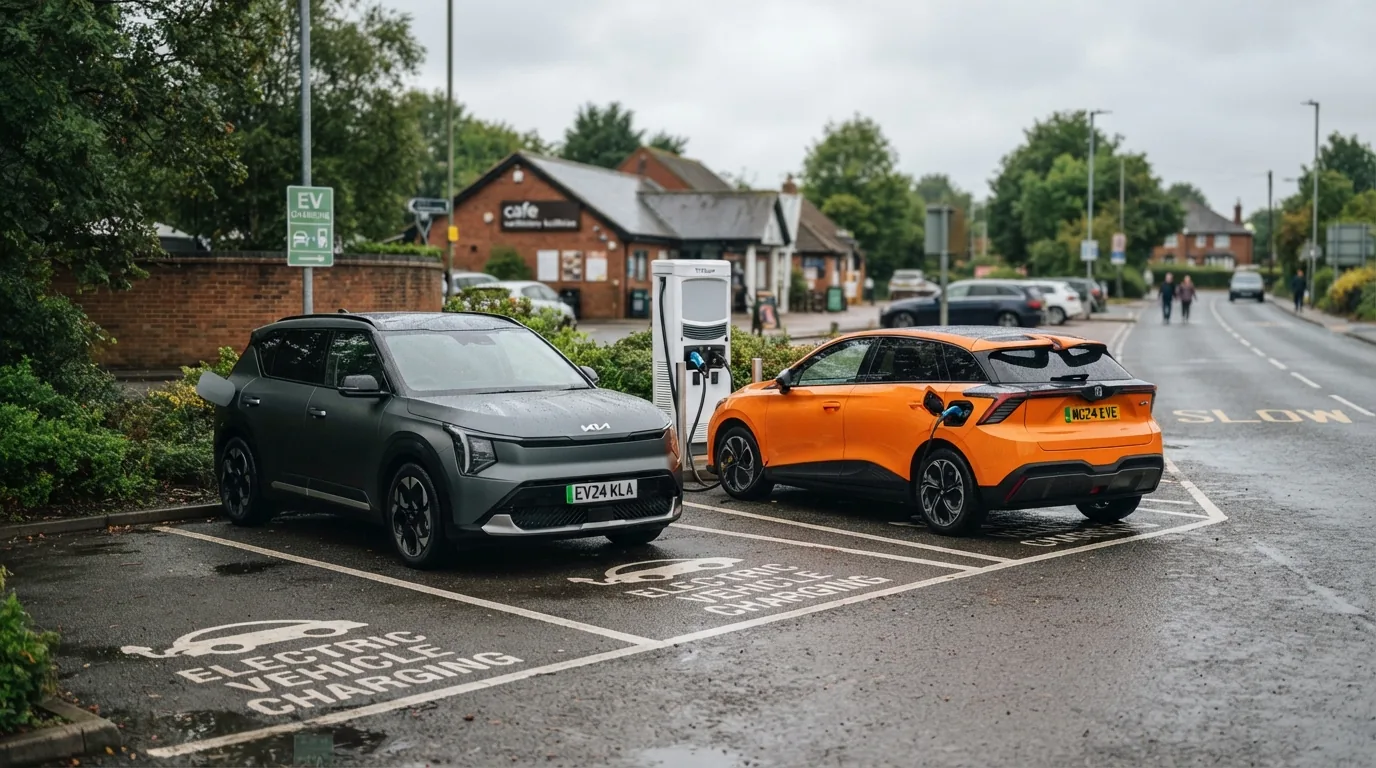
Best Long Range EVs Under £40,000 in the UK
The electric cars that deliver serious range without the luxury price tag, ranked and compared
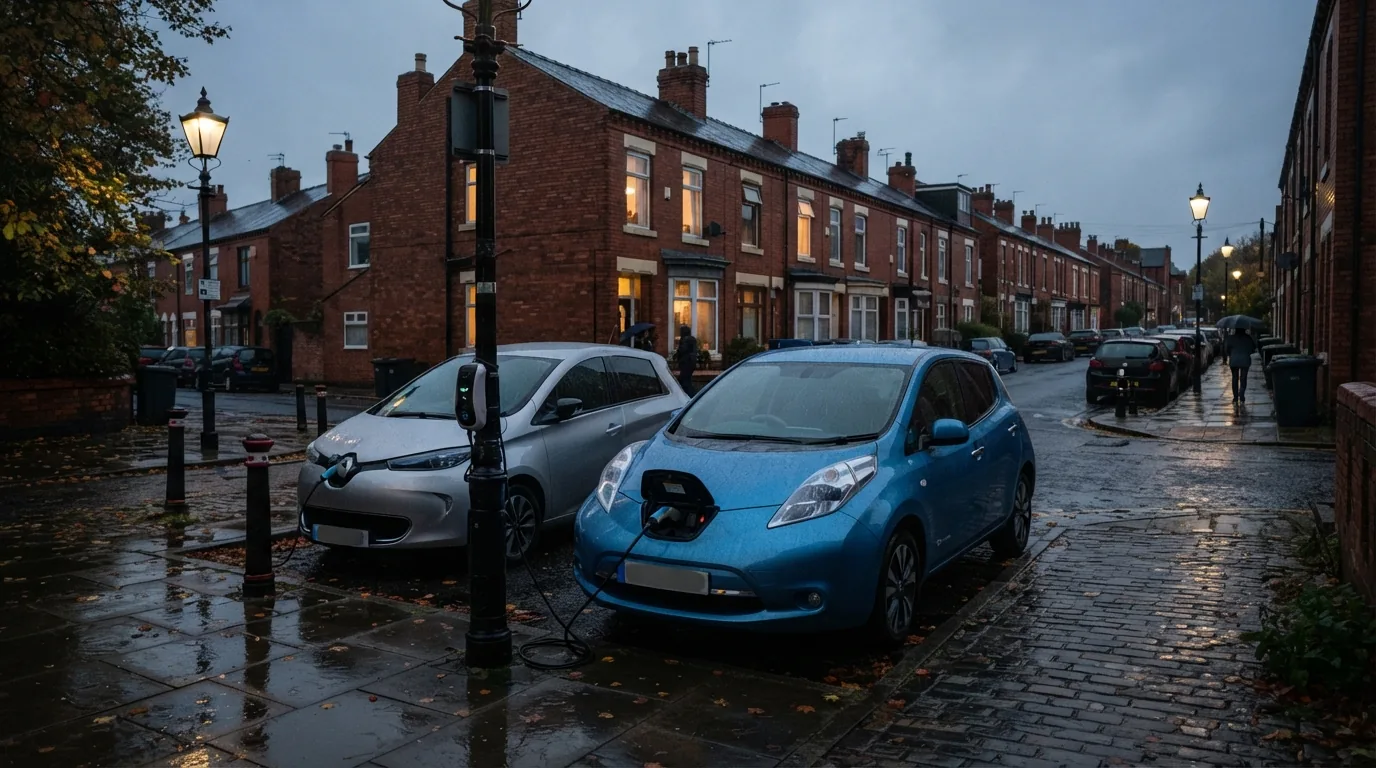
Public EV charging keeps 20% VAT as home electricity goes to 0%
Drivers without a driveway now pay 20% VAT at the plug while home charging pays none. Here is what a Budget cut to 5% or 10% would save, and why the Treasury has so far said no.
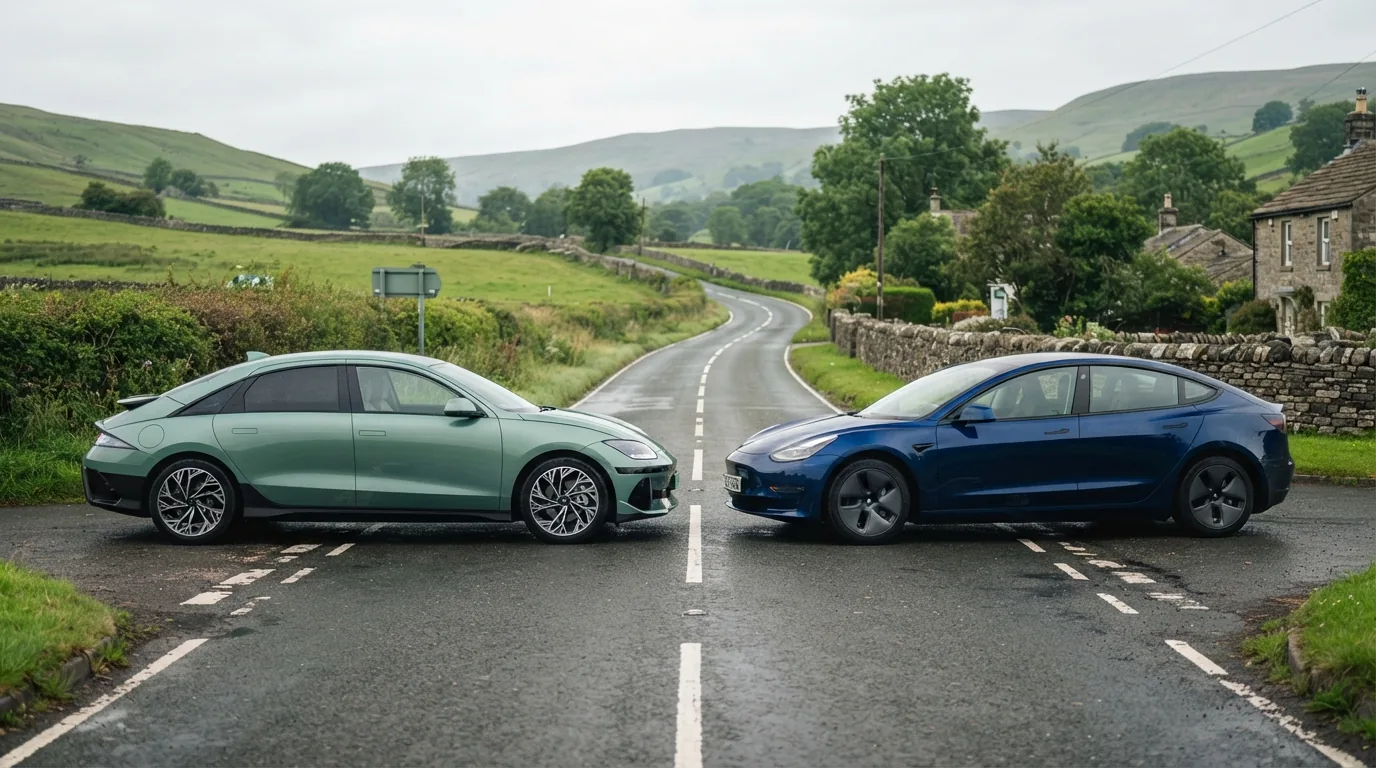
Hyundai Ioniq 6 vs Tesla Model 3: Which Goes Further?
The aerodynamic showdown between two of the most range-efficient electric saloons available in the UK
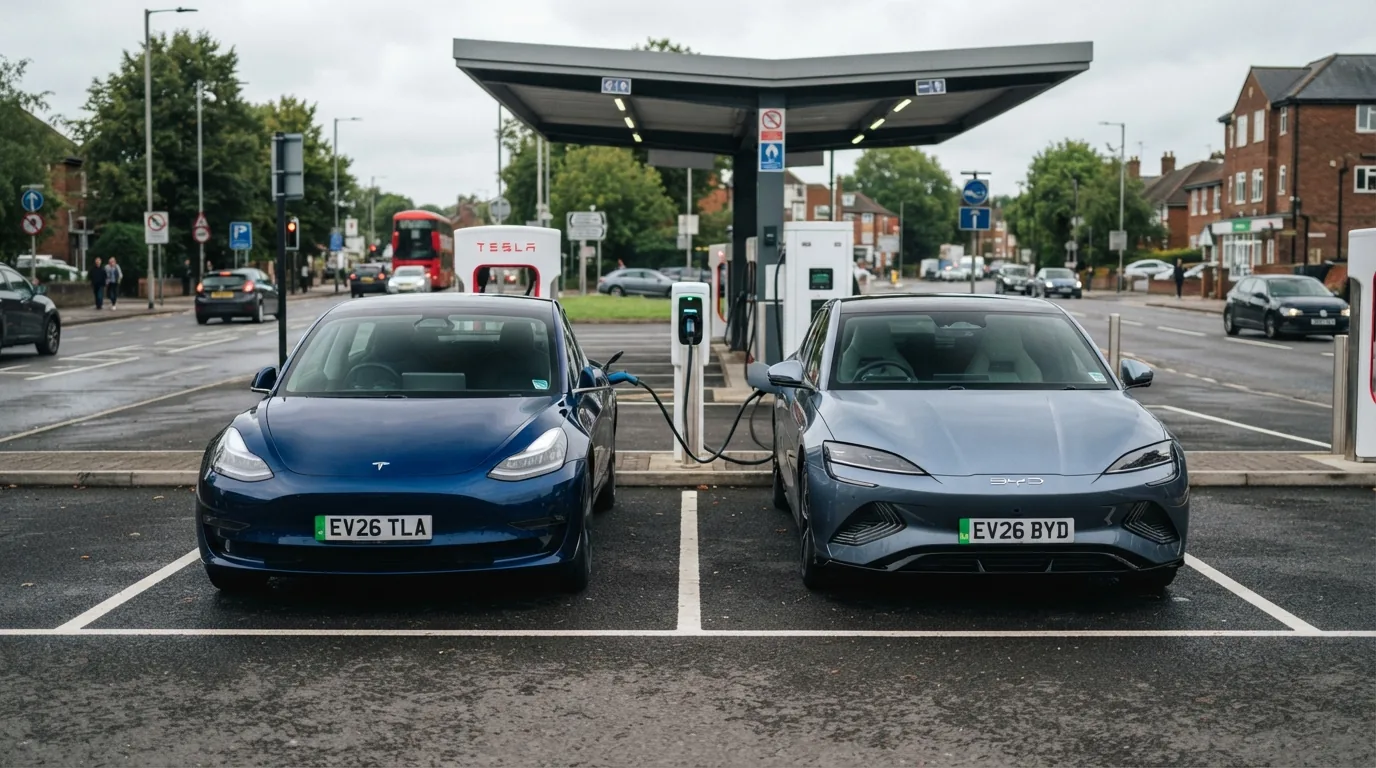
Tesla Model 3 vs BYD Seal: Which Is the Better UK Buy in 2026?
Two saloon-shaped electric contenders compared on price, range, charging and real-world ownership