VW ID.3 range: real-world miles and charging times
The VW ID.3 Neo is rated at 258 to 390 miles, published tests of the 58 kWh car found about 4 miles per kWh, and a full charge on a 7 kW wallbox takes 7.1 to 11.3 hours.
Volkswagen ID.3 at a glance
| Price from | £33,080 |
|---|---|
| Battery | 50 kWh |
| WLTP range | 258 miles |
| Peak rapid charging | 105 kW |
| 10 to 80% charge | 26 minutes at 105 kW (58 kWh battery) |
| Boot | 383 litres |
| Range (WLTP) | 258 miles (50 kWh), 280 to 306 miles (58 kWh), 387 to 390 miles (79 kWh) |
| Usable battery | 50 kWh, 58 kWh or 79 kWh |
| Efficiency (WLTP) | 4.83 to 5.28 miles per kWh (EV Compared calculation) |
| Real-world efficiency, 58 kWh | Almost exactly 4 miles per kWh (Auto Express) |
| AC charging | 11 kW three-phase, 7.2 kW single-phase |
| Peak DC charging | 105 kW (50 and 58 kWh), 183 kW (79 kWh) |
| 10 to 80% rapid charge | 26 minutes (58 kWh), 29 minutes (79 kWh) |
| Empty to full on 7 kW | 7.1 hours (50 kWh), 8.3 hours (58 kWh), 11.3 hours (79 kWh) |
| Full charge at 6.5p/kWh | £3.25 (50 kWh), £3.77 (58 kWh), £5.13 (79 kWh) |
| Cost per mile, home off-peak | 1.2p to 1.3p |
| Cost per mile, 82p/kWh rapid | 15.5p to 17.0p |
| Heat pump | Standard from Style trim |
| Battery warranty | 8 years or 100,000 miles, 70% capacity |
Quick answers
- The VW ID.3 Neo is rated at 258 miles with the 50 kWh battery, 280 to 306 miles with the 58 kWh battery and 387 to 390 miles with the 79 kWh battery.
- Auto Express recorded almost exactly 4 miles per kWh in a 58 kWh ID.3 Neo, which it put at almost 254 miles of real range.
- Electrive's late-summer test of a 58 kWh ID.3 Neo Style averaged 15 kWh per 100 km, about 4.1 miles per kWh, with two-thirds of the distance on motorways.
- The 58 kWh battery charges from 10 to 80% in 26 minutes at up to 105 kW and the 79 kWh battery in 29 minutes at up to 183 kW.
- On a 7 kW wallbox a full charge takes 7.1 hours for the 50 kWh car and 11.3 hours for the 79 kWh car, and costs £3.25 to £5.13 at 6.5p/kWh on EV Compared's sums.
- A 200-mile trip in a Life 58kWh costs about £2.40 in electricity charged at home off-peak, against about £31 at an 82p/kWh rapid charger.
- ADAC's long-term 77 kWh ID.3 kept 91% of its battery capacity after more than 160,000 km, well above Volkswagen's 70% warranty threshold.
The VW ID.3 has an official range of 258 to 390 miles, and published tests of the 58 kWh ID.3 Neo found about 4 miles per kWh, or almost 254 miles a charge in Auto Express’s test. The 58 kWh battery charges from 10 to 80% in 26 minutes and the 79 kWh in 29 minutes. Our VW ID.3 review gives the verdict on the whole car; this page goes deeper on range, efficiency, battery health and charging costs.
EV Compared has not driven the ID.3. The figures below come from Volkswagen, our spec dataset, the named road tests and our own sums, set out in our methodology.
What is the official WLTP range of each VW ID.3 version?
The Life 79kWh has the highest rating of any ID.3, 390 miles, and the Life 50kWh the lowest of the current cars at 258 miles. Within each battery size, Life trim on 18-inch wheels is rated further than Style on 19-inch wheels.
| Version (November 2026) | List price | Usable battery | WLTP range | WLTP miles per kWh |
|---|---|---|---|---|
| Life 50kWh | £33,080 | 50 kWh | 258 miles | 5.16 |
| Life 58kWh | £35,495 | 58 kWh | 306 miles | 5.28 |
| Style 58kWh | £38,500 | 58 kWh | 285 miles | 4.91 |
| Style Launch Edition 58kWh | £39,750 | 58 kWh | 280 miles | 4.83 |
| Life 79kWh | £36,995 | 79 kWh | 390 miles | 4.94 |
| Style 79kWh | £40,000 | 79 kWh | 387 miles | 4.90 |
Miles per kWh is the WLTP range divided by usable capacity, ignoring charging losses (EV Compared calculation). Electrive reports that the 50 kWh car uses the same 58 kWh battery, limited by software.
The pre-Neo cars were less efficient on paper: the Essential Pure 52kWh was rated at 241 miles (4.63 miles per kWh), the Pro 58kWh at 266 miles (4.59), the Pro S 77kWh at 347 miles (4.51) and the GTX Performance 79kWh at 370 miles (4.68), using Auto Express’s last list data. Volkswagen credits the Neo’s gain to its more efficient APP350 motor. Trim-by-trim equipment is on our ID.3 price and specs page.
How far does a VW ID.3 really go?
Published tests put the 58 kWh Neo at about 4 miles per kWh, and the older 77 kWh Pro S at 3.6 to 4.1 miles per kWh over UK seasons. EV Compared has not repeated any of these tests.
| Publisher and date | Car | Result | Conditions given |
|---|---|---|---|
| Auto Express, Jonas Uhlig, 4 August 2026 | ID.3 Neo 58 kWh | Almost exactly 4 miles per kWh; almost 254 miles | None stated |
| Electrive, Christoph Schwarzer, 10 September 2026 | ID.3 Neo Style 58 kWh | 15 kWh/100 km average (about 4.1 miles per kWh); 10% left after about 350 km (217 miles) | Late summer, two-thirds motorway |
| Auto Express, Andy Pringle, 16 May 2024 | ID.3 Pro S 77 kWh | 3.6 miles per kWh over 5,012 miles; “always” 300 miles a charge | Winter into spring, heat pump fitted |
| Carbuyer, Andy Pringle, November 2023 | ID.3 Pro S 77 kWh | 3.8 miles per kWh, which Carbuyer put at 316 miles | British winter, 160-mile round trip |
| What Car?, Allan Muir, April 2022 | ID.3 Pro Performance | About 205 miles shown on a full charge | Warmer weather, motorway at 70mph |
Electrive’s figures are converted from kilometres by us. Its split shows how much speed matters: 10.5 kWh/100 km in flowing city traffic, 12.4 on rural roads and 20 on the motorway, or about 5.9, 5.0 and 3.1 miles per kWh. The motorway figure is the one to plan long trips on, and our explainer on how much range EVs lose in winter covers the cold-weather side.
No UK publisher has yet released a winter test of the Neo, and Electrive notes that its LFP cells still need one. The best cold-weather evidence for the ID.3 comes from ADAC’s long-term 77 kWh car, which managed about 400 km (249 miles) normally and 300 to 320 km (186 to 199 miles) below freezing, The Driven reports: a fall of a fifth to a quarter.
Does the VW ID.3 lose battery range as it ages?
Slowly, on the published evidence. ADAC’s long-term ID.3, with a 77 kWh usable battery, measured 93% state of health after about 100,000 km and 91% after more than 160,000 km, about 99,000 miles; it read 96% at 21,749 km.
That is well clear of Volkswagen UK’s warranty, which covers the battery for 8 years or 100,000 miles and repairs or replaces it if capacity falls below 70%. Gradual loss above that line is not a defect.
A bigger cause of lost range on some older cars is the battery recall. Volkswagen UK asks owners of ID.3, ID.4 and ID.7s with batteries from one supplier, made between 2022 and 2025, to charge to no more than 80% until the work is done; our report on the ID.3 battery recall and 80% cap explains how to check. If you are shopping second-hand, our used ID.3 buying guide covers battery health checks.
How fast does the VW ID.3 charge on 50, 150 and 350 kW chargers?
The 50 and 58 kWh batteries peak at 105 kW, so a 150 kW or 350 kW charger is no quicker for them than a 105 kW one, and the 58 kWh takes 26 minutes from 10 to 80%; the 79 kWh peaks at 183 kW, so it needs more than a 150 kW unit to reach its 29-minute time. Volkswagen publishes no 50 kW time, and no ID.3 can draw more than 50 kW from one.
Electrive measured more than the official peak: 126 kW, with a plateau near 125 kW before the curve steps down to about 80 kW from roughly 60% charge. It added 44 kWh in 25 minutes. Auto Express notes the old 58 kWh car peaked at 120 kW, and the pre-Neo Essential Pure 52kWh was rated at 145 kW and 25 minutes.
| Version | Peak DC | 10 to 80% | Miles added in 10 minutes | Empty to full on 7 kW | Full charge, 6.5p | Full charge, 26.32p | Full charge, 82p rapid |
|---|---|---|---|---|---|---|---|
| Life 50kWh | 105 kW | Not listed | Not calculated | 7.1 hours | £3.25 | £13.16 | £41.00 |
| Life 58kWh | 105 kW | 26 minutes | 82 | 8.3 hours | £3.77 | £15.27 | £47.56 |
| Style 58kWh | 105 kW | 26 minutes | 77 | 8.3 hours | £3.77 | £15.27 | £47.56 |
| Style Launch Edition 58kWh | 105 kW | 26 minutes | 75 | 8.3 hours | £3.77 | £15.27 | £47.56 |
| Life 79kWh | 183 kW | 29 minutes | 94 | 11.3 hours | £5.13 | £20.79 | £64.78 |
| Style 79kWh | 183 kW | 29 minutes | 93 | 11.3 hours | £5.13 | £20.79 | £64.78 |
EV Compared calculation: miles in 10 minutes assumes 70% of the WLTP range is added in the 10 to 80% time; wallbox time uses 7 kW, as the car’s single-phase onboard charger takes 7.2 kW. Prices are Intelligent Octopus Go’s 6.5p/kWh, Ofgem’s 26.32p/kWh cap rate for October to December 2026 and Zapmap’s October 2026 rapid average.
What does it cost to drive 100 miles in a VW ID.3?
About £1.20 to £1.30 charged at home off-peak, against £15.50 to £17.00 at a public rapid charger, on our sums.
| Version | Home, 6.5p | Price cap, 26.32p | Rapid, 82p | 8,000 miles at home off-peak |
|---|---|---|---|---|
| Life 50kWh | 1.3p a mile | 5.1p | 15.9p | £101 |
| Life 58kWh | 1.2p | 5.0p | 15.5p | £99 |
| Style 58kWh | 1.3p | 5.4p | 16.7p | £106 |
| Life 79kWh | 1.3p | 5.3p | 16.6p | £105 |
| Style 79kWh | 1.3p | 5.4p | 16.7p | £106 |
The common mistake is to judge the ID.3 by its rapid charging bill. Charged at home overnight, the Life 58kWh costs less than a twelfth as much per mile as on an 82p/kWh rapid charger, so a wallbox and a smart tariff matter more than the peak kW figure. Best Chargers covers home charger options.
A 200-mile trip worked through
A 200-mile day fits within the WLTP range of every ID.3 Neo, and within the real ranges Auto Express and Electrive recorded for the 58 kWh car. In the Life 58kWh it costs about £2.40 charged at home off-peak, £10.00 at the price cap rate and £31.00 if every mile came from a rapid charger, on our per-mile figures.
The margin is thinner on a fast motorway run, where Electrive’s 20 kWh/100 km is the guide, and in winter, when ADAC’s long-term car lost a fifth to a quarter of its range. What Car?’s long-term Pro Performance needed two top-ups on a 250-mile round trip in 2022. If you stop, 10 minutes on a rapid charger adds about 82 miles of WLTP range to the Life 58kWh or 94 to the Life 79kWh. Auto Express’s Pro S driver made regular 200-mile round trips on one charge, and for frequent long trips the 79 kWh battery’s extra range and faster charging are worth its £1,500 premium over the Life 58kWh.
Heat pump, battery care and charging tips
The heat pump is standard from Style, Motoring Research reports, and the Life equipment list does not include one.
- Charge to 80% day to day if your car is in the recall. Battery Care Mode, under Charging then Settings on the touchscreen, caps the charge, and Volkswagen asks affected owners to use it until the work is done.
- Plug in overnight. Intelligent Octopus Go’s 6.5p/kWh rate runs from 23:30 to 05:30, and every version’s full charge costs £5.13 or less at that rate.
- Keep software current. ADAC found updates significantly cut short-trip consumption at 0 to 5 degrees C on its ID.3.
How do the ID.3’s range and charging compare with rivals?
The Life 79kWh has the highest WLTP range in this group, and the Life 58kWh the lowest rapid cost per mile, but the MG4 and Mazda 6e charge faster from 10 to 80%.
| Model and version | List price | Range (WLTP) | Peak DC | 10 to 80% |
|---|---|---|---|---|
| Vauxhall Corsa Electric YES 50kWh | £27,505 | 221 miles | 100 kW | 30 minutes |
| Renault Megane E-Tech Techno 220hp Comfort Range | £28,445 | 306 miles | 165 kW | not listed |
| MG4 Premium Long Range 64kWh | £29,995 | 280 miles | 154 kW | 25 minutes |
| Alpine A290 GT+ | £33,995 | 235 miles | 100 kW | not listed |
| Kia EV4 Hatchback Air SR 58.3kWh | £34,745 | 273 miles | not listed | 29 minutes |
| Volkswagen ID.3 Neo Life 58kWh | £35,495 | 306 miles | 105 kW | 26 minutes |
| Volkswagen ID.3 Neo Life 79kWh | £36,995 | 390 miles | 183 kW | 29 minutes |
| Mazda 6e Takumi | £38,995 | 348 miles | 200 kW | 24 minutes |
| Car | Home, 6.5p | Rapid, 82p | Hours to full on 7 kW | Miles in 10 minutes |
|---|---|---|---|---|
| VW ID.3 Life 58kWh | 1.2p | 15.5p | 8.3 | 82 |
| VW ID.3 Life 79kWh | 1.3p | 16.6p | 11.3 | 94 |
| MG4 Premium Long Range | 1.4p | 18.1p | 8.8 | 78 |
| Kia EV4 Air SR | 1.4p | 17.5p | 8.3 | 66 |
| Renault Megane E-Tech | 1.4p | 18.0p | 9.6 | Not calculated |
| Mazda 6e Takumi | 1.5p | 18.4p | 11.1 | 102 |
EV Compared calculation; the Kia, Renault and Mazda figures use gross battery capacity because their makers publish no usable figure. Our MG4 range and charging page covers one of the ID.3’s rapid-charging rivals in depth.
Who is the ID.3’s range right for?
The ID.3 Neo suits drivers who charge at home and cover up to about 200 miles in a day: the 58 kWh car’s tested efficiency covers that in mild weather for about 1.2p a mile. Pick the 79 kWh if you use rapid chargers often or drive long motorway stretches in winter, where its 183 kW peak and 390-mile rating give the margin the smaller batteries lack. Drivers without home charging pay 15.5p a mile or more on rapid chargers, so they should weigh the rivals above. EV Compared’s verdict rests on published tests and our own sums, not a drive; the rest of Volkswagen’s electric range is on our brand page.
How we test and where our numbers come from
Range figures are official WLTP combined values taken from manufacturer UK specification pages, with real-world estimates drawn from independent comparative testing. Prices are UK list prices at the time of the latest update. Tax, grant and charging-scheme figures come from GOV.UK and HMRC publications. We re-check every guide when pricing, specification or policy changes. Last checked 27 November 2026. How we work out our own figures.
Frequently asked questions
How many miles will a VW ID.3 do on a full charge?
The ID.3 Neo is officially rated at 258 to 390 miles depending on battery. In published tests, Auto Express got almost 254 miles from the 58 kWh car, and Electrive reached 10% charge after about 350 km, or about 217 miles, on a motorway-heavy late-summer drive.
What is the range of the ID.3 Pro Performance?
What Car?'s long-term ID.3 Pro Performance showed about 205 miles on a full charge in warmer weather in April 2022, which its editor said was well short of the car's potential. The Pro Performance is a pre-Neo version; today's ID.3 Neo Life 58kWh is rated at 306 miles WLTP.
How long does a VW ID.3 take to charge?
About 8.3 hours from empty to full on a 7 kW home wallbox for the 58 kWh battery, on EV Compared's sums, and 11.3 hours for the 79 kWh. On a rapid charger, 10 to 80% takes 26 minutes for the 58 kWh car and 29 minutes for the 79 kWh car.
Does the VW ID.3 lose battery range over time?
Slowly, on the evidence published so far. Germany's ADAC measured 93% battery health on its 77 kWh ID.3 after about 100,000 km and 91% after more than 160,000 km. Volkswagen's warranty covers the battery for 8 years or 100,000 miles if it falls below 70% of its original capacity.
Does the VW ID.3 Neo have a heat pump?
Yes, from Style trim upwards, where Motoring Research lists the heat pump as standard. The equipment list for the cheaper Life trim does not include one. Auto Express's long-term ID.3 Pro S had a heat pump, and its driver never had to turn down the climate control to save range.
How much does it cost to charge a VW ID.3?
A full charge of the 58 kWh battery costs about £3.77 at Intelligent Octopus Go's 6.5p/kWh, £15.27 at the 26.32p/kWh price cap rate and £47.56 at an 82p/kWh public rapid charger, on EV Compared's sums. That is 1.2p, 5.0p and 15.5p a mile in the Life 58kWh.
Sources and further reading
- carwow.co.ukCarwow: Volkswagen ID.3 Neo specificationsList prices and range for all six ID.3 Neo versions; 7.2 kW single-phase and 11 kW three-phase AC charging.
- volkswagen-newsroom.comVolkswagen Newsroom: the new ID.3 Neo, the drive systemNet battery capacities of 50, 58 and 79 kWh; DC charging up to 105 kW for the 50 and 58 kWh batteries and 183 kW for the 79 kWh; about 26 to 29 minutes for 10 to 80%; more efficient APP350 motor.
- volkswagen.co.ukVolkswagen UK: ID.3 Neo258 to 390 miles combined range for the ID.3 Neo.
- autoexpress.co.ukAuto Express: New Volkswagen ID.3 Neo 2026 reviewJonas Uhlig, 4 August 2026: 58 kWh car recorded almost exactly 4 miles per kWh and almost 254 miles on test; LFP battery; peak DC rate 105 kW, down from 120 kW; 10 to 80% in 26 minutes.
- electrive.comElectrive: Volkswagen ID.3 Neo test, the underrated electric carChristoph Schwarzer, 10 September 2026, ID.3 Neo Style 58 kWh: 15 kWh/100 km average with two-thirds motorway, 10.5 city, 12.4 rural, 20 motorway; 10% left after around 350 km; measured peak 126 kW, about 80 kW from roughly 60%; 44 kWh in 25 minutes; 50 kWh version is a software-limited 58 kWh battery; winter test of the LFP cells still needed.
- carbuyer.co.ukCarbuyer: Volkswagen ID.3 reviewAndy Pringle's ID.3 Pro S 77 kWh in a British winter, November 2023: 3.8 miles per kWh on a 160-mile round trip, which Carbuyer put at 316 miles of range.
- autoexpress.co.ukAuto Express: Volkswagen ID.3 long-term test, final reportAndy Pringle, 16 May 2024, ID.3 Pro S 77 kWh with heat pump: 3.6 miles per kWh over 5,012 miles, 4.1 at the first report; could always rely on 300 miles a charge; regular 200-mile round trips; never had to reduce the air-conditioning.
- whatcar.comWhat Car?: Volkswagen ID 3 long-term test, report 8Allan Muir, April 2022, ID.3 Pro Performance: about 205 miles of range in warmer weather, higher than over winter; 250-mile Cotswolds round trip needed two top-ups.
- adac.deADAC: Dauertest VW ID.3, Akku zeigt keine Auffälligkeiten27 October 2023: ID.3 with 77 kWh net battery at 93% state of health after about 100,000 km; software updates significantly improved short-trip consumption at 0 to 5 degrees C.
- thedriven.ioThe Driven: Volkswagen ID.3 maintains 91 pct battery capacity after 160,000 km test16 July 2025, reporting ADAC: 91% state of health after more than 160,000 km, 96% at 21,749 km; about 400 km real range, 300 to 320 km below freezing.
- motoringresearch.comMotoring Research: New 2026 Volkswagen ID.3 Neo to cost from £31,580Life on 18-inch alloys, Style on 19-inch alloys with a heat pump as standard; no heat pump in the Life equipment list.
- autoexpress.co.ukAuto Express: Volkswagen ID.3 prices and specsWLTP ranges of the pre-Neo ID.3 Essential Pure, Pro, Pro S and GTX Performance.
- volkswagen.co.ukVolkswagen UK: high voltage battery safety recallID.3, ID.4 and ID.7 with batteries from one supplier made 2022 to 2025; owners asked to charge to no more than 80% using Battery Care Mode; menu path.
- volkswagen.co.ukVolkswagen UK: warranties8-year or 100,000-mile high voltage battery warranty for the ID.3; capacity loss covered below 70%.
- bestchargers.co.ukBest Chargers: Octopus EV tariffsIntelligent Octopus Go off-peak rate of 6.5p/kWh from 23:30 to 05:30, used in our home charging figures.
- ofgem.gov.ukOfgem: Energy price cap unit rates and standing chargesAverage Direct Debit electricity unit rate of 26.32p/kWh for 1 October to 31 December 2026.
- zapmap.comZapmap: charging price indexOctober 2026 pay-as-you-go average of 82p/kWh for rapid and ultra-rapid chargers.

EV Compared
The EV Compared editorial team tracks the UK electric vehicle market full time: new model launches, list prices, WLTP and real-world range, public charging tariffs and the tax rules that decide what an EV actually costs to run. Every guide is checked against manufacturer specifications and official GOV.UK figures, and updated whenever the numbers move.
Related reading
View all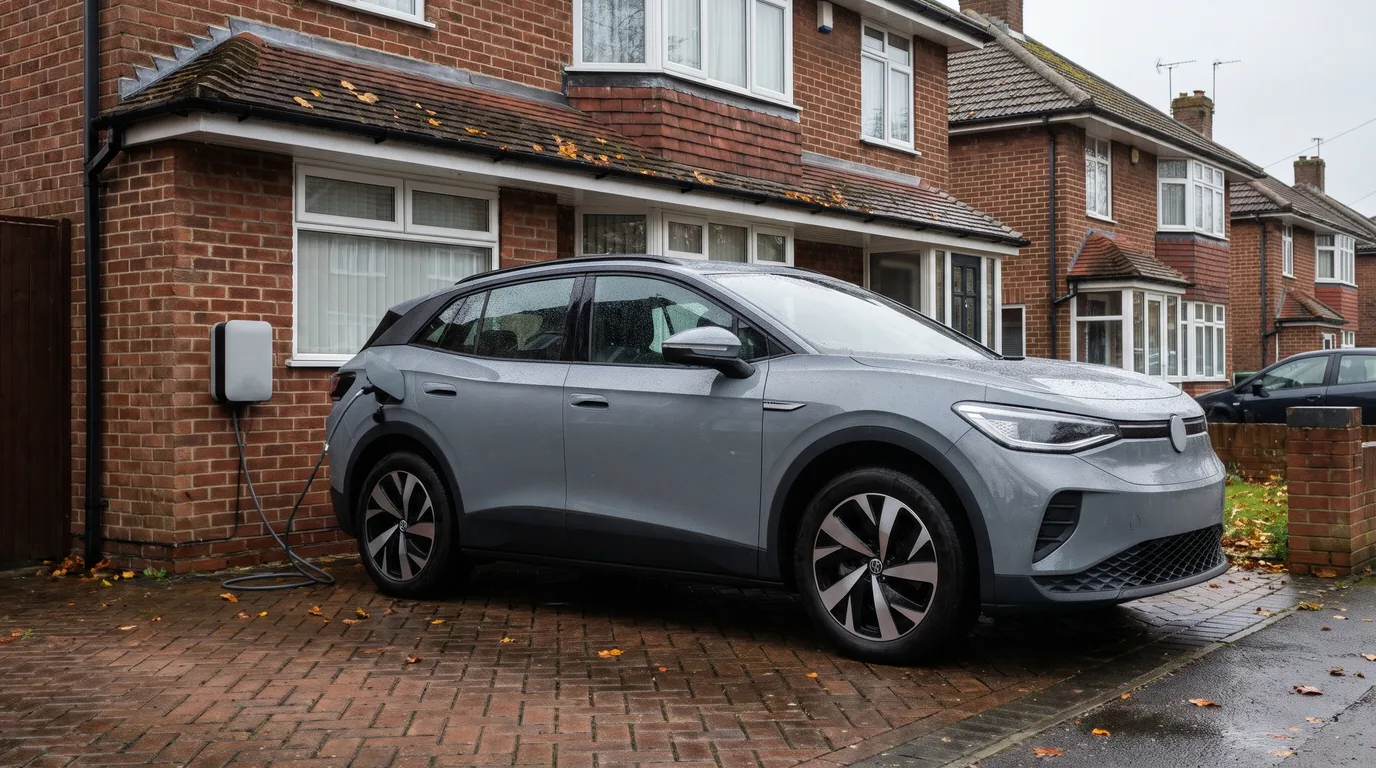
VW battery recall reaches 85,000 EVs as Audi Q4 e-tron is added: what UK owners should do
Volkswagen Group's recall over battery cells that can overheat above 80% charge has grown to more than 85,000 cars worldwide, with Audi's Q4 e-tron now included. The US opt-out headlines do not describe the UK campaign. Here is what has changed and what UK owners should do.
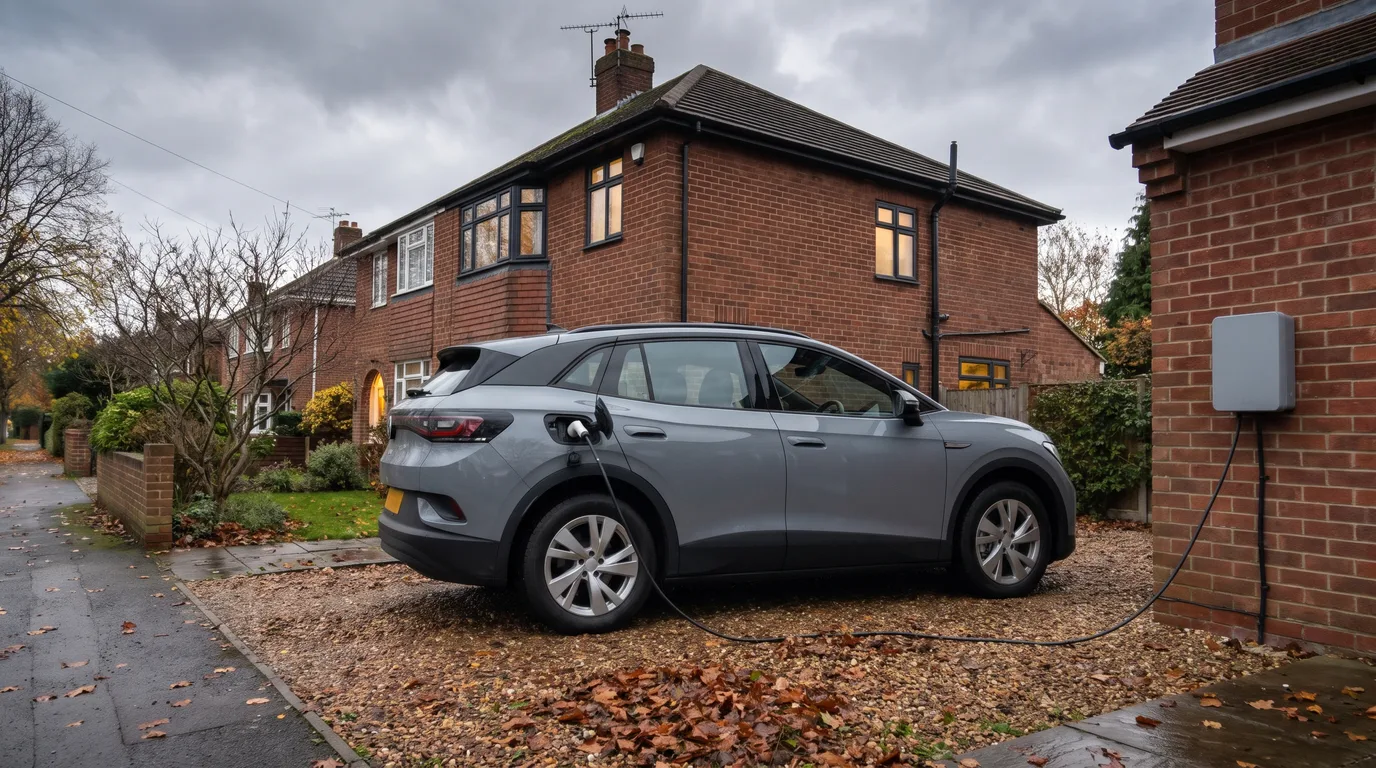
VW ID.3, ID.4 and ID.7 battery recall: UK cars capped at 80% charge
Volkswagen UK has opened safety recall campaigns 93MV and 93MF for cars with high-voltage batteries from one supplier. Charging is being limited to 80% while dealers check the batteries. Here is what the cap means in miles, how to check it is active and what to do next.
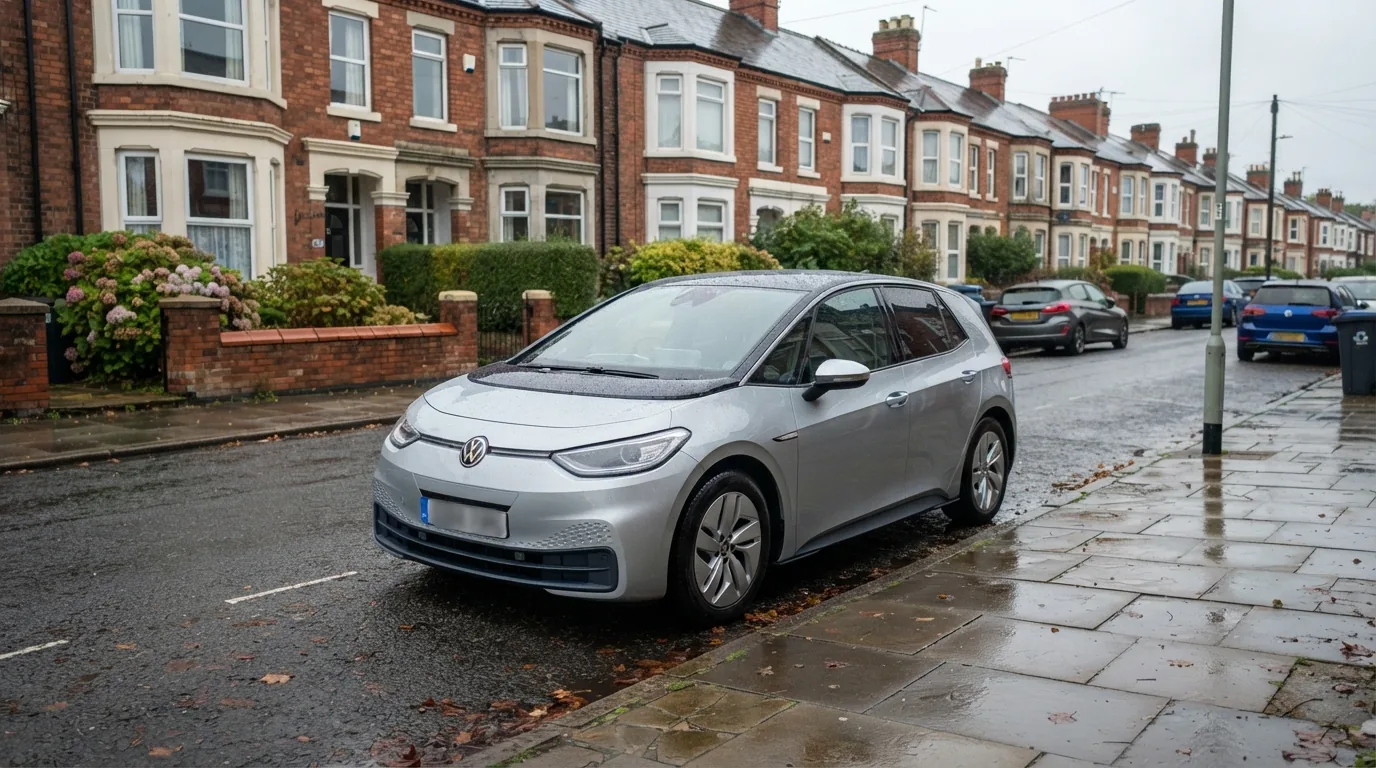
VW ID.3 Neo UK price: from £33,080 with up to 390 miles
Volkswagen's updated ID.3 hatchback is now the ID.3 Neo, with three new batteries, a 183kW peak charge rate and a UK starting price of £33,080 before the £1,500 Electric Car Grant.