Used VW ID.4 buying guide: prices, battery health, what to check
A used VW ID.4 costs from about £14,000 for a 2022 Pure in November 2026, and a 2024 or 2025 Pro with a 210 kW motor and main warranty still running is the one to buy, provided the battery recall work and a battery report check out.
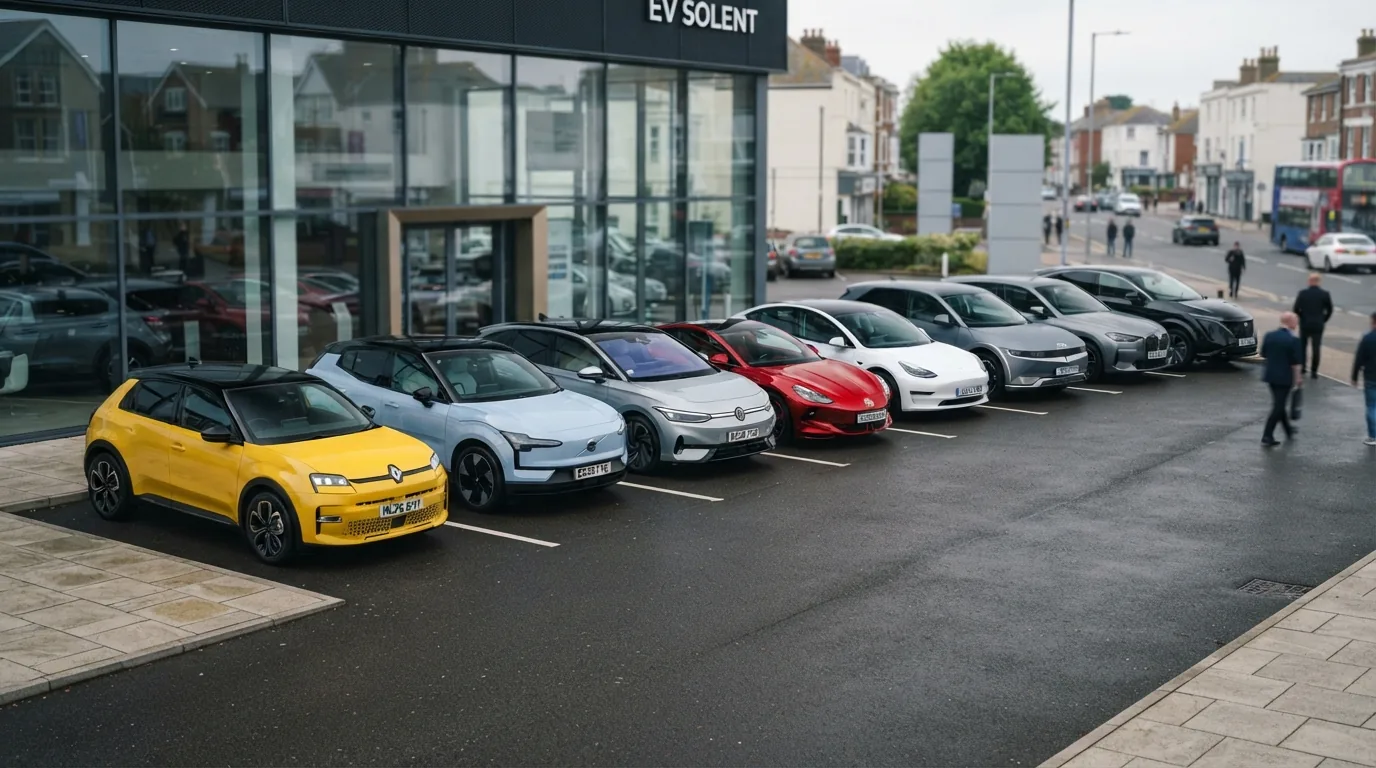
Volkswagen ID.4 at a glance
| Price from | £36,995 |
|---|---|
| Battery | 52 kWh |
| WLTP range | 222 miles |
| Peak rapid charging | 110 kW |
| Years on sale | 2021 to 2026 (spring 2026 update) |
| Used asking prices | £13,999 to £29,498 at Cinch, Arnold Clark and Motorpoint, 10 November 2026 |
| New price, 52 kWh Pure Essential | £36,995 |
| New price, 52 kWh Pure Match | £39,590 |
| Batteries (usable) | 52 kWh, 77 kWh or 79 kWh (2021 to 2025); 58 kWh, 77 kWh or 79 kWh (2026 update) |
| Range (WLTP) | 222 miles (52 kWh, 125 kW), 326 miles (77 kWh 4MOTION and GTX Edition), 265 to 351 miles (2026 update) |
| Peak DC charging | 110 kW (52 kWh Pure Match), 105 kW (58 kWh) |
| AC charging | 11 kW |
| Battery warranty | 8 years or 100,000 miles from first registration, 70% capacity |
| Main warranty | 3 years or 60,000 miles |
| Battery recall | Volkswagen campaigns 93MV and 93MF, batteries made 2022 to 2025 |
| Seats | 5 |
Quick answers
- Across 60 used VW ID.4 listings at Cinch, Arnold Clark and Motorpoint on 10 November 2026, asking prices ran from £13,999 to £29,498.
- 2021 and 2022 cars, mostly 52 kWh Life Pure models, were listed at £13,999 to £20,149, and 2023 cars at £16,498 to £29,498.
- 2024 and 2025 Pro cars with the 210 kW motor ranged from £22,998 to £29,199, and they keep the 3-year or 60,000-mile main warranty into 2027 or 2028.
- Volkswagen's high-voltage battery warranty lasts 8 years or 100,000 miles from first registration and covers capacity falling below 70%, so a 2021 car is covered until 2029.
- What Car?'s latest reliability survey puts the ID.4 bottom of its electric SUVs at 69.9%, with 43% of cars reporting a fault and 66% of those off the road for more than a week.
- Volkswagen's 93MV and 93MF recall caps some ID.4s with batteries made from 2022 to 2025 at 80% charge until a free, one-hour dealer check.
- A 52 kWh ID.4 costs about £3.38 to charge fully at home on a 6.5p/kWh tariff, or 1.5p a mile, against 19.2p a mile on public rapid chargers.
A used VW ID.4 cost £13,999 to £29,498 across three big UK dealer groups on 10 November 2026, and the one to buy is a 2024 or 2025 Pro at £22,998 to £29,199: it has the newer 210 kW motor and still carries Volkswagen’s main warranty. Whatever the year, check the battery recall status and get a battery report, because owner surveys rate the ID.4’s reliability poorly.
This page goes deeper on buying second-hand than our VW ID.4 review, and covers the 2021 to 2025 cars that make up almost every used example, plus the first nearly new cars. EV Compared has not driven or inspected these cars: the advice rests on dealer listings, our spec data, Volkswagen’s warranty and recall pages, DVSA records and named owner surveys.
How much is a used VW ID.4 in the UK?
On 10 November 2026, 60 ID.4s listed at Cinch, Arnold Clark and Motorpoint ranged from £13,999 to £29,498, and battery size moved the price as much as age. We searched each site for Volkswagen ID.4 and sorted the results by registration year. Cinch’s prices include its £99 admin fee, Arnold Clark’s are cash prices from the 22 cars its page showed out of 42 in stock, and Motorpoint’s exclude road tax and include cars marked coming soon.
| Registration year | Listings found | Asking prices | What the money buys |
|---|---|---|---|
| 2021 to 2022 | 18 (11 Cinch, 2 Arnold Clark, 5 Motorpoint) | £13,999 to £20,149 | Life Pure 52kWh £13,999 to £18,399; 2021 Pro Performance 77kWh £14,899 at 71,176 miles, £20,149 for a Max at 34,540 miles |
| 2023 | 26 (11 Cinch, 10 Arnold Clark, 5 Motorpoint) | £16,498 to £29,498 | Pure 52kWh £16,498 to £20,998; rear-drive Pro 77kWh £19,999 to £25,499; GTX 4MOTION 77kWh £21,999 to £29,498 |
| 2024 to 2025 | 14 (3 Cinch, 8 Arnold Clark, 3 Motorpoint) | £22,998 to £29,199 | Life, Style and Match Pro 77kWh with the 210 kW motor £22,998 to £29,199; one 2025 Match Pure 52kWh at £24,498 |
Mileage counts for as much as the plate. Two 2023 Life Edition Pure Performance cars at Arnold Clark with 55,124 and 70,603 miles were £16,498 each, while a 2023 Life Pure Performance with 10,953 miles was £19,998. The two cheapest cars in the survey, 2022 Life Pures at £13,999 on Cinch, had covered 60,691 and 65,921 miles.
Nearly new cars undercut list prices by a wide margin. Arnold Clark had a 2026 Pure Essential 52kWh with 3,342 miles at £24,998 and a Pure Match 52kWh with 3,720 miles at £25,298, against list prices of £36,995 and £39,590. These are the last 52 kWh cars before the spring 2026 update, which EV Fleet World reported moved the Pure models to a 58 kWh battery and 265 miles of WLTP range; our VW ID.4 price, specs and trims page lists every current version.
Which used VW ID.4 should you buy?
Buy a 2024 or 2025 Pro if the budget reaches about £23,000. Dealers list those cars with a 210 kW motor, against 128 kW or 150 kW for 2021 to 2023 Pro models, and they have the new infotainment system that Auto Express says arrived with the November 2023 update. They also keep Volkswagen’s main warranty into 2027 or 2028, which matters given the reliability record below.
On a tighter budget, a 2023 rear-drive Pro is the value choice. A 2023 Life Edition Pro 77kWh was £19,999 on Cinch, less than four of the 2023 Pure 52kWh cars in our survey, so the bigger battery need not cost extra. Pick a 52 kWh Pure only if your driving is mostly local and you charge at home.
Here is what the spec rows for the main batteries give, with EV Compared’s running cost figures. Our cost per mile is the usable battery multiplied by the price per kWh, divided by the WLTP range: 6.5p/kWh on Intelligent Octopus Go at home and 82p/kWh, Zapmap’s October 2026 rapid average, in public, ignoring charging losses. Our methodology sets out every input.
| Version in our spec data | Usable battery | Range (WLTP) | Full charge at home | Home cost per mile | Rapid cost per mile | 7 kW wallbox, empty to full |
|---|---|---|---|---|---|---|
| Pure 52kWh, 125 kW | 52 kWh | 222 miles | £3.38 | 1.5p | 19.2p | 7.4 hours |
| Pro Match 4MOTION 77kWh 286PS | 77 kWh | 326 miles | £5.00 | 1.5p | 19.4p | 11.0 hours |
| GTX Edition 4MOTION 77kWh | 77 kWh | 326 miles | £5.00 | 1.5p | 19.4p | 11.0 hours |
| Pure 58kWh (spring 2026 on) | 58 kWh | 265 miles | £3.77 | 1.4p | 17.9p | 8.3 hours |
| Pro Match 79kWh (spring 2026 on) | 79 kWh | 347 miles | £5.13 | 1.5p | 18.7p | 11.3 hours |
Our data holds no row for the 2021 to 2025 rear-drive Pro and Pro Performance, so we give no range figure for them. The 52 kWh Pure Match takes up to 110 kW on a rapid charger and every version in our spec data takes 11 kW on AC. For independent range tests and charging times by version, see our VW ID.4 real-world range and charging times.
Auto Express notes that the GTX was the only four-wheel-drive ID.4 in the early years, and the 2023 examples here cost £21,999 to £29,498. Choose one for traction or pace, not economy.
How much battery warranty does a used ID.4 have left?
Every used ID.4 still has battery cover, but the main warranty has run out on older cars. Volkswagen’s high-voltage battery warranty lasts 8 years or 100,000 miles from first registration, whichever comes first, and treats a fall in capacity below 70% of the level at first registration as a defect. The main warranty lasts 3 years or 60,000 miles. Volkswagen’s warranty page limits only its plug-in hybrid battery cover to the first owner.
| First registered | Main warranty ends | Battery warranty ends | Battery cover left from November 2026 |
|---|---|---|---|
| 2021 | 2024 | 2029 | about 2 to 3 years |
| 2022 | 2025 | 2030 | about 3 to 4 years |
| 2023 | 2026 | 2031 | about 4 to 5 years |
| 2024 | 2027 | 2032 | about 5 to 6 years |
| 2025 | 2028 | 2033 | about 6 to 7 years |
Mileage can end the cover sooner. The 2021 1st Edition Pro Performance on Cinch at 71,176 miles has under 29,000 miles of battery warranty left. Electrifying warns that many ID.4s have worked as company cars and even taxis, so high mileage on a young car is common.
How do you check a used ID.4’s battery?
Get a written state-of-health report before you pay, because the 70% warranty threshold only helps if the battery fails badly. Our explainer on getting a battery health certificate for a used EV covers who offers them and what they cost.
The car’s own range readout is a weak guide; our guide to checking an electric car battery before buying used explains why and what to test instead. Try both a home wallbox and a rapid charger on the test drive. Electrifying advises buying a car serviced within Volkswagen’s dealer network so it has had its software updates, and Auto Express notes that over-the-air updates can fail and need a dealer visit.
Charging at home keeps the running cost near 1.5p a mile. Best Chargers covers choosing a home charger if the house does not have one.
Has the VW ID.4 been recalled?
Yes, and the battery campaign is the one to check first. Volkswagen UK’s 93MV and 93MF campaign covers ID.4s with high-voltage batteries from one supplier made between 2022 and 2025. Volkswagen says that above 80% charge overheating may occur and pose a fire risk, so it caps affected cars at 80%, usually remotely. The dealer check takes about an hour, any work is free, and Volkswagen says full range returns afterwards. Rapid charging still works under the cap.
To see whether the cap is active, try to set the charge limit above 80% in the app or on the screen: if the slider drops back, the work is still due. Our report on the VW battery recall and its 80% charge cap explains what the cap costs in miles.
Auto Express’s buyer’s guide lists two earlier ID.4 recalls: faulty steering racks on cars built in March and April 2021, announced in November 2021, and rear seat latches that might not lock on cars built from August 2022 to April 2024, announced in May 2024. DVSA’s search by make, model and year showed no ID.4 recalls for 2021, 2023, 2024 or 2025 on 10 November 2026, so do not rely on it alone. Enter the car’s registration in the GOV.UK recall checker, and ask the seller for the dealer’s record of completed recall work.
Is a used VW ID.4 reliable?
Named owner surveys say the ID.4 is less reliable than most electric SUVs. What Car?’s latest reliability survey, updated on 18 October 2026, ranks it the least reliable electric SUV with a score of 69.9%, against a class average of 89.6%. Of the owners surveyed, 43% reported a fault, most often the electric motor (20%), non-motor electrics (14%) and the infotainment (14%).
Volkswagen paid for 87% of repairs, but 66% of affected cars were off the road for more than a week. Auto Express’s Driver Power 2026 survey ranked Volkswagen 26th of 30 makers. Together, those figures make a running main warranty and a full dealer history worth paying for.
Auto Express adds a few smaller checks: the original Bridgestone tyres start with 6mm of tread rather than the usual 8mm and can wear quickly, and there is no spare wheel or sealant kit. Servicing is every two years regardless of mileage, so a two-year-old car with no service record has missed one.
Used VW ID.4 or a rival?
The ID.4’s used case is space and range for the money, against a weak reliability record. Its coupe-roofed sibling, the ID.5, took the same spring 2026 battery changes. Auto Express suggests the Audi Q4 e-tron and Skoda Enyaq among its alternatives, and our used Audi Q4 e-tron buying guide covers its prices and checks. Our Volkswagen electric car range page sets out where the ID.4 sits among the brand’s other models.
Should you buy a used VW ID.4?
Buy one if you want a roomy electric family SUV for £20,000 to £29,000, charge at home for about 1.5p a mile, and will pay for a battery report. A 2024 or 2025 Pro is the strongest buy; a 2023 rear-drive Pro at about £20,000 is the value pick.
Avoid one if a week off the road would be a serious problem, if the car has gaps in its Volkswagen service history, or if the seller cannot show the 93MV or 93MF work has been done on an affected car. Our verdict rests on listings, our spec data, Volkswagen’s published terms and named surveys, not on a drive of our own.
How we test and where our numbers come from
Range figures are official WLTP combined values taken from manufacturer UK specification pages, with real-world estimates drawn from independent comparative testing. Prices are UK list prices at the time of the latest update. Tax, grant and charging-scheme figures come from GOV.UK and HMRC publications. We re-check every guide when pricing, specification or policy changes. Last checked 27 November 2026. How we work out our own figures.
Frequently asked questions
How much is a used VW ID.4?
A used VW ID.4 cost £13,999 to £29,498 across Cinch, Arnold Clark and Motorpoint on 10 November 2026. 2021 and 2022 cars ran from £13,999 to £20,149, 2023 cars from £16,498, and 2024 to 2025 Pro models from £22,998. Nearly new 2026 Pure Essential 52kWh cars were £24,998 at Arnold Clark.
Which year of VW ID.4 is best to buy used?
A 2024 or 2025 Pro is the best buy. Dealers list those cars with a 210 kW motor, against 128 kW or 150 kW for 2021 to 2023 Pro cars, they have the infotainment from the November 2023 update, and Volkswagen's main warranty still runs into 2027 or 2028.
Is a used VW ID.4 reliable?
Owner surveys say no. What Car?'s latest reliability survey, updated in October 2026, ranks the ID.4 the least reliable electric SUV at 69.9%, with 43% of cars reporting a fault, most often the electric motor. Volkswagen paid for 87% of repairs, but 66% of affected cars spent more than a week off the road.
How long is the battery warranty on a used VW ID.4?
Volkswagen covers the high-voltage battery for 8 years or 100,000 miles from first registration, whichever comes first, including capacity falling below 70%. A 2021 car is covered until 2029 and a 2025 car until 2033, unless it passes 100,000 miles first.
Is my used VW ID.4 part of the battery recall?
It may be. Volkswagen's 93MV and 93MF campaign covers ID.4s with batteries from one supplier made between 2022 and 2025, capped at 80% charge until a free dealer check. Try setting the charge limit above 80%: if the slider drops back, the cap is active and the work is still due.
Should I buy a 52 kWh or 77 kWh used ID.4?
Buy the 77 kWh car unless you mostly drive locally. On Cinch, a 2023 Life Edition Pro 77kWh cost £19,999, less than four of the 2023 Pure 52kWh cars in our survey. Our spec data rates the 52 kWh battery at 222 miles WLTP and the 77 kWh four-wheel-drive versions at 326 miles.
Sources and further reading
- cinch.co.ukCinch: used Volkswagen ID.4Search for Volkswagen ID.4, 10 November 2026: 25 results from £13,999 to £29,199 by year, variant and mileage; prices include a £99 admin fee.
- arnoldclark.comArnold Clark: used Volkswagen ID.4Search for Volkswagen ID.4, 10 November 2026: 42 in stock, 22 shown, cash prices from £15,998 to £29,498, including nearly new 2026 Pure Essential 52kWh at £24,998 and Pure Match 52kWh at £25,298.
- motorpoint.co.ukMotorpoint: used Volkswagen ID.4Search for Volkswagen ID.4, 10 November 2026: 13 results from £15,849 to £26,349, including cars marked coming soon; prices exclude road tax.
- autoexpress.co.ukAuto Express: Used Volkswagen ID.4 (Mk1, 2021 to date) buyer's guideRichard Dredge, 5 November 2024: model history from the January 2021 launch, GTX the only four-wheel-drive version, the November 2023 update, steering rack and rear seat latch recalls, failed over-the-air updates, 6mm tyre tread, no spare wheel, two-yearly servicing, alternatives including the Audi Q4 e-tron and Skoda Enyaq.
- autoexpress.co.ukAuto Express: Volkswagen ID.4 reliability and safetySteve Walker and Shane Wilkinson, 14 August 2026: Volkswagen 26th of 30 makers in Driver Power 2026; 8-year or 100,000-mile battery cover.
- whatcar.comWhat Car?: The most reliable electric SUVs, and the leastClaire Evans, updated 18 October 2026: ID.4 least reliable electric SUV, 69.9%, 43% with faults, fault areas, 87% fixed free, 66% off the road more than a week, class average 89.6%.
- volkswagen.co.ukVolkswagen UK: Warranties8-year or 100,000-mile high-voltage battery warranty covering capacity below 70% of the level at first registration; 3-year or 60,000-mile new car warranty; plug-in hybrid battery cover limited to the first owner.
- volkswagen.co.ukVolkswagen UK: 93MV and 93MF high voltage battery safety recallID.3, ID.4 and ID.7 with batteries from one supplier made 2022 to 2025, 80% charge cap, slider check, one-hour dealer inspection, free repairs, range restored, DC charging still allowed.
- gov.ukGOV.UK: Check vehicle recalls, Volkswagen ID.4 2023DVSA's search by make, model and year showed no recalls for the ID.4 on 10 November 2026; the 2021, 2024 and 2025 pages also show none.
- gov.ukGOV.UK: Check if a vehicle, part or accessory has been recalledCheck a car for recalls by registration number through the MOT service.
- electrifying.comElectrifying: Used Volkswagen ID.4 reviewWarning that many ID.4s are used as company cars and taxis; advice to buy a car serviced in the dealer network for its software updates.
- evfleetworld.co.ukEV Fleet World: Enhanced Volkswagen ID.4 and ID.5 still eligible for Electric Car Grant23 April 2026 update: Pure battery from 52 kWh to 58 kWh, 222 to 265 miles WLTP, ID.5 changes, other versions moving between 77 kWh and 79 kWh.
- bestchargers.co.ukBest Chargers: Octopus EV tariffsIntelligent Octopus Go off-peak rate of 6.5p/kWh, used in our home charging figures.
- zapmap.comZapmap: Charging price indexOctober 2026 average rapid and ultra-rapid pay-as-you-go price of 82p/kWh, used in our rapid charging figures.

EV Compared
The EV Compared editorial team tracks the UK electric vehicle market full time: new model launches, list prices, WLTP and real-world range, public charging tariffs and the tax rules that decide what an EV actually costs to run. Every guide is checked against manufacturer specifications and official GOV.UK figures, and updated whenever the numbers move.
Related reading
View all
VW battery recall reaches 85,000 EVs as Audi Q4 e-tron is added: what UK owners should do
Volkswagen Group's recall over battery cells that can overheat above 80% charge has grown to more than 85,000 cars worldwide, with Audi's Q4 e-tron now included. The US opt-out headlines do not describe the UK campaign. Here is what has changed and what UK owners should do.
VW ID.3, ID.4 and ID.7 battery recall: UK cars capped at 80% charge
Volkswagen UK has opened safety recall campaigns 93MV and 93MF for cars with high-voltage batteries from one supplier. Charging is being limited to 80% while dealers check the batteries. Here is what the cap means in miles, how to check it is active and what to do next.
VW ID.Tiguan to replace ID.4 in 2027 with up to 373 miles of range
Volkswagen's electric Tiguan promises more range than the ID.4 it replaces, but UK prices are unconfirmed. Here is whether to buy a grant-eligible ID.4 now or wait until 2027.