VW ID.4 range: real-world range and charging times
The VW ID.4 is rated at 222 to 351 miles on the WLTP test, and UK testers have recorded 2.7 to 3.4 miles per kWh, which is 230 to 262 miles from the 77 kWh battery where they quoted a range.
Volkswagen ID.4 at a glance
| Price from | £36,995 |
|---|---|
| Battery | 58 kWh |
| WLTP range | 265 miles |
| Peak rapid charging | 105 kW |
| 10 to 80% charge | 26 minutes at 105 kW |
| WLTP range | 222 to 351 miles |
| Usable battery | 52 kWh, 58 kWh, 77 kWh or 79 kWh |
| Efficiency (WLTP, EV Compared) | 4.23 to 4.57 miles per kWh |
| Peak DC charging (58 kWh) | 105 kW |
| 10 to 80% (58 kWh) | 26 minutes |
| AC charging | 11 kW |
| 7 kW wallbox, full charge | 7.4 hours (52 kWh) to 11.3 hours (79 kWh) |
| Full charge at 6.5p/kWh | £3.38 (52 kWh) to £5.13 (79 kWh) |
| Cost per mile, home off-peak | 1.4p to 1.5p |
| Cost per mile, public rapid at 82p/kWh | 17.9p to 19.4p |
Quick answers
- The VW ID.4 has a WLTP range of 265 miles with the 58 kWh battery and 351 miles with the 79 kWh battery in the £36,995 Pro Essential.
- Electrifying recorded 3.2 miles per kWh and 246 miles from a full battery in an ID.4 GTX over mixed driving, against 326 miles official.
- Auto Express saw about 3.4 miles per kWh, or 262 miles, from a 77 kWh ID.4 in average UK temperatures, and 2.7 to 2.8 miles per kWh in cold weather.
- The 58 kWh ID.4 charges at up to 105 kW and goes from 10 to 80% in 26 minutes, adding about 71 miles of WLTP range in 10 minutes on EV Compared's sums.
- A full charge on a 7 kW wallbox takes 8.3 hours for the 58 kWh battery and 11.3 hours for the 79 kWh battery.
- A 200-mile trip costs about £2.80 in electricity at 6.5p/kWh in the 58 kWh car, against £35.80 on 82p/kWh public rapid chargers, at WLTP efficiency.
The VW ID.4 has an official WLTP range of 222 to 351 miles, and UK testers have recorded 246 to 262 miles from the 77 kWh battery in mild weather, falling to 2.7 to 2.8 miles per kWh in the cold. This page goes deeper on range and charging than our full VW ID.4 review: every version’s official figure, each published real-world test, what charging costs and how long it takes, and how a 200-mile trip works out. EV Compared has not driven the ID.4; the real-world figures below are other publications’ tests, credited to each.
What is the official ID.4 range for each version?
Official ID.4 range runs from 222 miles for the 52 kWh Pure cars to 351 miles for the 79 kWh Pro Essential, which shares the lowest list price in the range at £36,995 in November 2026.
| Version | List price (November 2026) | Usable battery | WLTP range | Drive | Miles per kWh (WLTP) |
|---|---|---|---|---|---|
| Pure Essential 52kWh | £36,995 | 52 kWh | 222 miles | Rear-wheel drive | 4.27 |
| Pure Match 52kWh | £39,590 | 52 kWh | 222 miles | Rear-wheel drive | 4.27 |
| Pure Essential 58kWh | £36,995 | 58 kWh | 265 miles | Rear-wheel drive | 4.57 |
| Pure Match 58kWh | £39,590 | 58 kWh | 265 miles | Rear-wheel drive | 4.57 |
| Pro Essential 79kWh | £36,995 | 79 kWh | 351 miles | Rear-wheel drive | 4.44 |
| Pro Match 79kWh | £44,970 | 79 kWh | 347 miles | Rear-wheel drive | 4.39 |
| Pro Match 4MOTION 77kWh 299PS | £46,690 | 77 kWh | 341 miles | Four-wheel drive | 4.43 |
| GTX Edition 4MOTION 77kWh | £52,900 | 77 kWh | 326 miles | Four-wheel drive | 4.23 |
Efficiency here is EV Compared’s figure: WLTP range divided by usable battery, ignoring charging losses, as our methodology explains. The spring 2026 update, reported by EV Fleet World on 23 April 2026, raised the entry battery from 52 kWh to 58 kWh and its range from 222 to 265 miles, though Volkswagen UK’s ID.4 page still lists the 52 kWh battery and a 222-mile lower range figure.
What range do testers get from the VW ID.4 in the real world?
Published UK tests put the 77 kWh ID.4 at 246 to 262 miles in mild conditions; none of the tests below is of the updated 58 kWh car or the 79 kWh Pro Essential. Every result below where the publication states the battery comes from a 77 kWh car, most of them four-wheel drive.
| Publication and date | Version tested | Conditions | Efficiency | Range reported |
|---|---|---|---|---|
| Electrifying, May 2026 | GTX, 77 kWh | A couple of hundred miles of mixed driving | 3.2 miles per kWh | 246 miles from full |
| Auto Express, August 2026 | 77 kWh test car | Average UK temperatures | About 3.4 miles per kWh | 262 miles |
| Auto Express, January 2026 | Pro Black Edition 4MOTION, 77 kWh | Freezing | About 2.8 miles per kWh | Not stated |
| Auto Express, August 2026 | GTX (first drive) | Cold | 2.7 miles per kWh | Not stated |
| Carbuyer, November 2024 | GTX, 77 kWh (before the 2026 update) | Warmer weather | Not stated | 262 miles |
| Carbuyer, November 2024 | GTX, 77 kWh (before the 2026 update) | Colder temperatures | Not stated | Around 230 miles |
Read against the official figures, Electrifying’s 246 miles is about three quarters of the GTX’s 326-mile WLTP rating. Our explainer on how accurate WLTP range figures are covers why that gap opens up on every electric car.
Two findings stand out. Auto Express found that “higher-speed motorway driving didn’t seem to have a severe impact on efficiency” in the Pro Black Edition, whose predicted range “held steady and even added a couple of miles” on the motorway. And in summer, Auto Express found that switching on the air conditioning cut the range by 27 miles.
How does cold weather affect ID.4 range?
Cold weather cuts ID.4 efficiency by around a fifth in the tests published so far: Auto Express recorded 2.7 to 2.8 miles per kWh in cold and freezing weather against about 3.4 in average UK temperatures. Carbuyer’s two GTX figures, 262 miles in warmer weather and around 230 in the cold, show a smaller drop of about an eighth.
The heat pump matters here. EV Fleet World reports that the 2026 update made a more efficient heat pump available as an option, and Carbuyer’s review noted that no ID.4 had one as standard and warned that without it, range “is likely to be negatively affected” in the cold. If you do long winter drives, check whether a car has one before you buy; our VW ID.4 price and specs guide lists what each trim includes.
Car and Driving’s advice for stretching range is to drive in Eco mode alongside the B setting, which “slows the car significantly when you come off the accelerator” and recovers energy as it does so.
How fast does the VW ID.4 charge?
The 58 kWh ID.4 charges at up to 105 kW and goes from 10 to 80% in 26 minutes; the bigger batteries peak higher but take a few minutes longer because there is more to fill. On our sums, the 58 kWh car adds about 71 miles of WLTP range in 10 minutes on a rapid charger, assuming 70% of the battery goes in during the 10 to 80% time.
For the 77 kWh and 79 kWh cars, Electrifying quotes up to 165 kW and 29 minutes for 10 to 80%, and 185 kW and 27 minutes for the GTX, while Auto Express quotes 175 kW and 28 minutes for the Pro Black Edition 4MOTION. In use, Carbuyer found a 20-minute stop at a motorway services added around 90 miles to an earlier GTX.
Any rapid charger below the car’s peak will cap the rate: on a 50 kW unit the ID.4 cannot charge faster than 50 kW, so plan stops at chargers rated at or above your car’s peak if you want the quoted times.
Owners of some cars with batteries made by a specific supplier between 2022 and 2025 should check the recall first. Volkswagen UK is temporarily limiting affected ID.3, ID.4 and ID.7 cars to 80% charge under campaigns 93MV and 93MF, though DC charging is still allowed and the original range returns after the workshop fix. Our report on the battery recall and 80% charge cap explains how to tell if your car is affected.
How long does an ID.4 take to charge at home, and what does it cost?
A full charge on a 7 kW wallbox takes 7.4 hours for the 52 kWh ID.4, 8.3 hours for the 58 kWh car, 11.0 hours for the 77 kWh cars and 11.3 hours for the 79 kWh cars, so every version needs longer than Intelligent Octopus Go’s six-hour 23:30 to 05:30 window to go from empty to full. Every ID.4 can take 11 kW on AC, which shortens that on a three-phase supply.
| Version | 7 kW full charge | Full charge at 6.5p | Full charge at 26.32p | Full charge at 82p | Per mile at 6.5p | Per mile at 82p | 8,000 miles at 6.5p |
|---|---|---|---|---|---|---|---|
| Pure Essential and Pure Match 52kWh | 7.4 hours | £3.38 | £13.69 | £42.64 | 1.5p | 19.2p | £122 |
| Pure Essential and Pure Match 58kWh | 8.3 hours | £3.77 | £15.27 | £47.56 | 1.4p | 17.9p | £114 |
| Pro Essential 79kWh | 11.3 hours | £5.13 | £20.79 | £64.78 | 1.5p | 18.5p | £117 |
| Pro Match 79kWh | 11.3 hours | £5.13 | £20.79 | £64.78 | 1.5p | 18.7p | £118 |
| Pro Match 4MOTION 77kWh 299PS | 11.0 hours | £5.00 | £20.27 | £63.14 | 1.5p | 18.5p | £117 |
| GTX Edition 77kWh | 11.0 hours | £5.00 | £20.27 | £63.14 | 1.5p | 19.4p | £123 |
These are EV Compared’s figures at WLTP efficiency: 6.5p/kWh is Intelligent Octopus Go’s off-peak rate, 26.32p/kWh is Ofgem’s average price cap rate for 1 October to 31 December 2026, and 82p/kWh is Zapmap’s October 2026 average for rapid and ultra-rapid pay-as-you-go charging. At the testers’ lower real-world efficiency, each mile costs proportionally more. For choosing a wallbox and an installer, Best Chargers has a guide to home charger installation.
How does a 200-mile trip work out in an ID.4?
On paper every ID.4 covers 200 miles without stopping, but at the efficiencies UK testers recorded, the 58 kWh car would need a rapid charge and the 79 kWh car, starting full, would not. Here is the trip worked through.
Energy needed. At Auto Express’s 3.4 miles per kWh in average temperatures, 200 miles takes about 59 kWh; at Electrifying’s 3.2 miles per kWh, about 63 kWh; at Auto Express’s 2.8 miles per kWh in freezing weather, about 71 kWh. All three are more than the 58 kWh battery holds and less than the 79 kWh battery holds. These tests used 77 kWh cars, so treat them as a guide to the energy the trip takes rather than a range for any other version.
The stop. In the 58 kWh car, one rapid stop covers the shortfall: 10 to 80% takes 26 minutes, and 10 minutes adds about 71 miles of WLTP range on our sums.
The cost. At WLTP efficiency, 200 miles costs £2.80 at 6.5p/kWh in the 58 kWh car, £11.60 at the price cap and £35.80 on public rapid chargers. In the Pro Essential the same trip is £3.00, £11.80 and £37.00. Charging at home before you leave and topping up only what you need on the road keeps most of the bill at the home rate.
If your car is under the recall’s 80% cap, plan on 80% of the battery: 46.4 kWh in the 58 kWh car and 63.2 kWh in the 79 kWh car, which puts a freezing-weather 200-mile run beyond both without a stop.
How does ID.4 range compare with its rivals?
The ID.4 Pro Essential has the longest WLTP range of the rivals in the table below, while the BMW iX1 and Ford Capri are more efficient per kWh. Our Volkswagen electric cars guide sets the ID.4 against the rest of the brand’s line-up.
| Model and version | List price (Nov 2026) | Battery | Range (WLTP) | Peak DC charging | 10 to 80% |
|---|---|---|---|---|---|
| Leapmotor C10 69.9 kWh | £36,500 | 69.9 kWh (gross) | 263 miles | 84 kW | not listed |
| Ford Capri Style 58kWh RWD | £36,985 | 58 kWh | 286 miles | 105 kW | 26 minutes |
| Volkswagen ID.4 Pure Essential 58kWh | £36,995 | 58 kWh | 265 miles | 105 kW | 26 minutes |
| Volkswagen ID.4 Pro Essential 79kWh | £36,995 | 79 kWh | 351 miles | not listed | not listed |
| Volkswagen ID.5 Pro Essential 77kWh | £36,995 | 77 kWh | 345 miles | not listed | not listed |
| Jeep Compass Electric Altitude 74kWh FWD | £36,999 | 74 kWh | 285 miles | not listed | not listed |
| BMW iX1 eDrive20 Sport | £37,065 | 65 kWh | 321 miles | 130 kW | 29 minutes |
| BMW iX2 eDrive20 Sport | £37,065 | 65.2 kWh | 319 miles | 130 kW | 29 minutes |
On our sums, the Ford Capri and BMW iX1 manage 4.93 and 4.94 miles per kWh, which is 1.3p a mile at home and 16.6p a mile on a rapid charger, against 4.57 miles per kWh, 1.4p and 17.9p for the 58 kWh ID.4. The Jeep Compass Electric at 3.85 miles per kWh and the Leapmotor C10 at 3.76 (worked on its gross 69.9 kWh battery, as Leapmotor does not publish a usable figure) cost 21.3p and 21.8p a mile on rapid chargers.
For the smaller hatchback on the same platform, see our VW ID.3 range and charging guide.
Is the ID.4’s range enough for you?
Yes, in Pro Essential form, for almost any UK family: 351 miles official from a 79 kWh battery covers a week of commuting and most long trips with one stop at most, and at 1.5p a mile at home it is cheap to run. The 58 kWh car suits drivers who charge at home and mainly drive locally, but on a winter motorway trip its battery runs short sooner, and its quicker 26-minute rapid charge only partly makes up for that. If you are buying second-hand, our used VW ID.4 buying guide covers battery health and which batteries older cars carry. This verdict rests on Volkswagen’s figures, EV Compared’s sums and the published tests credited above.
How we test and where our numbers come from
Range figures are official WLTP combined values taken from manufacturer UK specification pages, with real-world estimates drawn from independent comparative testing. Prices are UK list prices at the time of the latest update. Tax, grant and charging-scheme figures come from GOV.UK and HMRC publications. We re-check every guide when pricing, specification or policy changes. Last checked 27 November 2026. How we work out our own figures.
Frequently asked questions
What is the real-world range of a VW ID.4?
UK testers have recorded 230 to 262 miles from the 77 kWh battery. Electrifying got 246 miles in a GTX over mixed driving and Auto Express about 262 miles in average UK temperatures. Carbuyer saw around 230 miles from an earlier GTX in colder weather.
How far can a VW ID.4 go on a full charge?
Between 222 and 351 miles on the official WLTP test. The 52 kWh Pure cars are rated at 222 miles, the 58 kWh Pure Essential and Pure Match at 265 miles, the 79 kWh Pro Essential at 351 miles, the Pro Match at 347 miles, the Pro Match 4MOTION 299PS at 341 miles and the GTX Edition at 326 miles.
How long does a VW ID.4 take to charge?
On a 7 kW home wallbox a full charge takes 8.3 hours for the 58 kWh battery and 11.3 hours for the 79 kWh battery. On a rapid charger the 58 kWh car goes from 10 to 80% in 26 minutes; Electrifying quotes 29 minutes for the 77 kWh and 79 kWh cars at up to 165 kW.
Does the VW ID.4 lose range in winter?
Yes. Auto Express recorded 2.7 to 2.8 miles per kWh from 77 kWh cars in cold and freezing weather, against about 3.4 miles per kWh in average UK temperatures. Carbuyer saw around 230 miles from a GTX in the cold and 262 miles in warmer weather.
Does the VW ID.4 have a heat pump?
It is an option, not standard. EV Fleet World reports that the spring 2026 update added a more efficient heat pump as an optional extra. Carbuyer warned that without one, range is likely to suffer when it gets cold.
How much does it cost to charge a VW ID.4?
A full charge costs £3.77 for the 58 kWh battery and £5.13 for the 79 kWh battery at 6.5p/kWh, on EV Compared's sums. At the 26.32p/kWh price cap it is £15.27 and £20.79, and at an 82p/kWh rapid charger £47.56 and £64.78.
Sources and further reading
- electrifying.comElectrifying: Volkswagen ID.4 reviewVicky Parrott, 18 May 2026: GTX at 3.2 miles per kWh and 246 miles over mixed driving; DC charging of 105 kW and 26 minutes (58 kWh), 165 kW and 29 minutes (77 and 79 kWh), 185 kW and 27 minutes (GTX); 11 kW AC taking eight to 12 hours.
- autoexpress.co.ukAuto Express: Volkswagen ID.4 review14 August 2026: 77 kWh car at about 3.4 miles per kWh and 262 miles in average UK temperatures; GTX at 2.7 miles per kWh in the cold; air conditioning cost 27 miles of range; charging rates and times by battery.
- autoexpress.co.ukAuto Express: Volkswagen ID.4 Pro Black Edition review11 January 2026, Pro Black Edition 4MOTION 77 kWh: about 2.8 miles per kWh in freezing conditions; motorway driving had little effect on predicted range; 175 kW and 28 minutes for 10 to 80%.
- carbuyer.co.ukCarbuyer: Volkswagen ID.4 range, charging and running costsCharlie Harvey, 28 November 2024: GTX around 230 miles in colder temperatures and 262 miles in warmer weather; a 20-minute motorway rapid charge added around 90 miles; no heat pump as standard.
- evfleetworld.co.ukEV Fleet World: Enhanced Volkswagen ID.4 and ID.5 still eligible for Electric Car Grant23 April 2026 update: battery and range changes by version, including the entry battery rising from 52 kWh to 58 kWh and 222 to 265 miles; optional more efficient heat pump; bidirectional charging and vehicle-to-load.
- caranddriving.comCar and Driving: Volkswagen ID.4 reviewAdvice to use Eco mode with the B regenerative braking setting to maximise range.
- volkswagen.co.ukVolkswagen UK: ID.4WLTP combined range of 222 to 351 miles across the ID.4 line-up, 52 kWh, 77 kWh and 79 kWh batteries listed, and the six trims on sale.
- volkswagen.co.ukVolkswagen UK: 93MV and 93MF high voltage battery safety recallAffected ID.3, ID.4 and ID.7 cars with batteries from a specific supplier made between 2022 and 2025 temporarily limited to 80% charge; DC charging still allowed; Battery Care Mode; original range restored after repair.
- bestchargers.co.ukBest Chargers: Octopus EV tariffsIntelligent Octopus Go off-peak rate of 6.5p/kWh and its 23:30 to 05:30 window, used in our home charging figures.
- ofgem.gov.ukOfgem: Changes to energy price cap between 1 October and 31 December 2026Average electricity unit rate of 26.32p/kWh under the cap, used in our standard-tariff figures.
- zapmap.comZapmap: charging price indexOctober 2026 average rapid and ultra-rapid pay-as-you-go price of 82p/kWh, used in our public charging figures.

EV Compared
The EV Compared editorial team tracks the UK electric vehicle market full time: new model launches, list prices, WLTP and real-world range, public charging tariffs and the tax rules that decide what an EV actually costs to run. Every guide is checked against manufacturer specifications and official GOV.UK figures, and updated whenever the numbers move.
Related reading
View all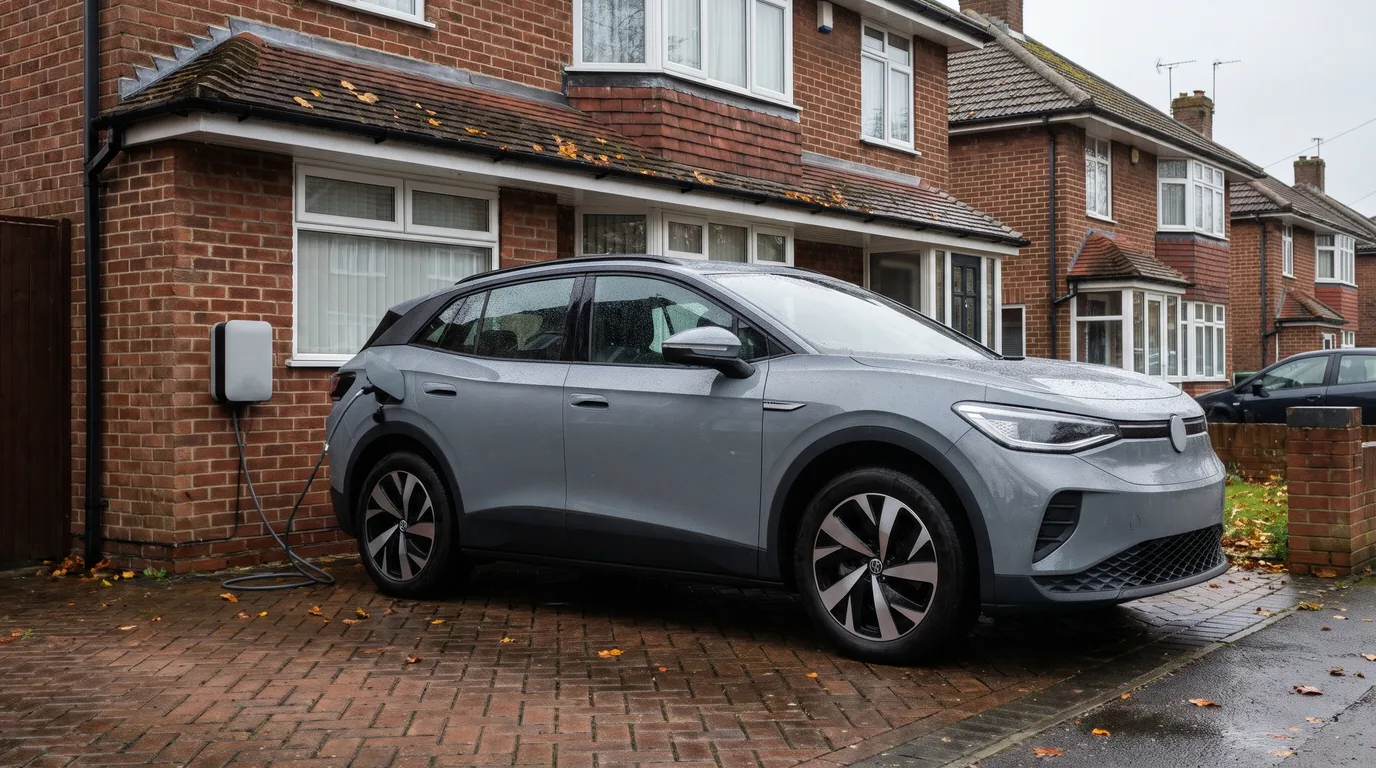
VW battery recall reaches 85,000 EVs as Audi Q4 e-tron is added: what UK owners should do
Volkswagen Group's recall over battery cells that can overheat above 80% charge has grown to more than 85,000 cars worldwide, with Audi's Q4 e-tron now included. The US opt-out headlines do not describe the UK campaign. Here is what has changed and what UK owners should do.
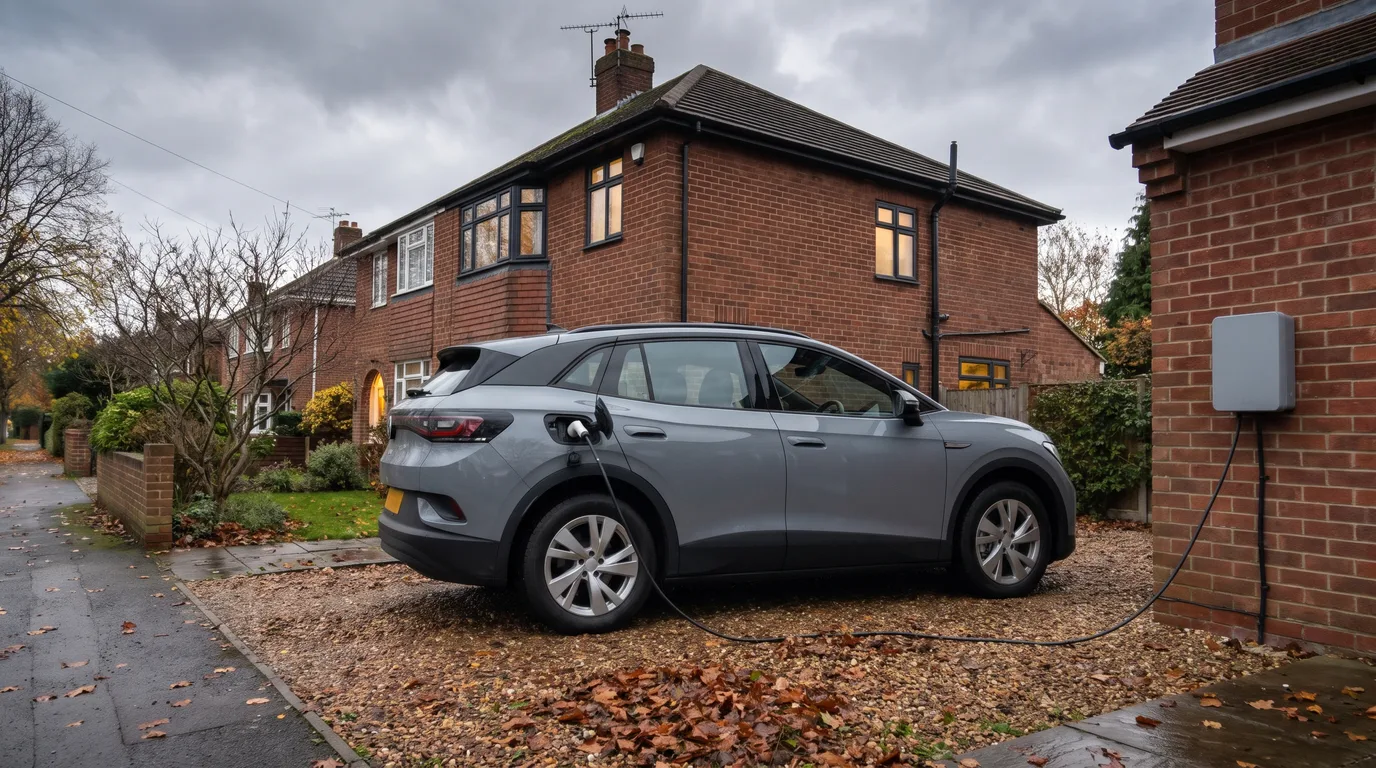
VW ID.3, ID.4 and ID.7 battery recall: UK cars capped at 80% charge
Volkswagen UK has opened safety recall campaigns 93MV and 93MF for cars with high-voltage batteries from one supplier. Charging is being limited to 80% while dealers check the batteries. Here is what the cap means in miles, how to check it is active and what to do next.
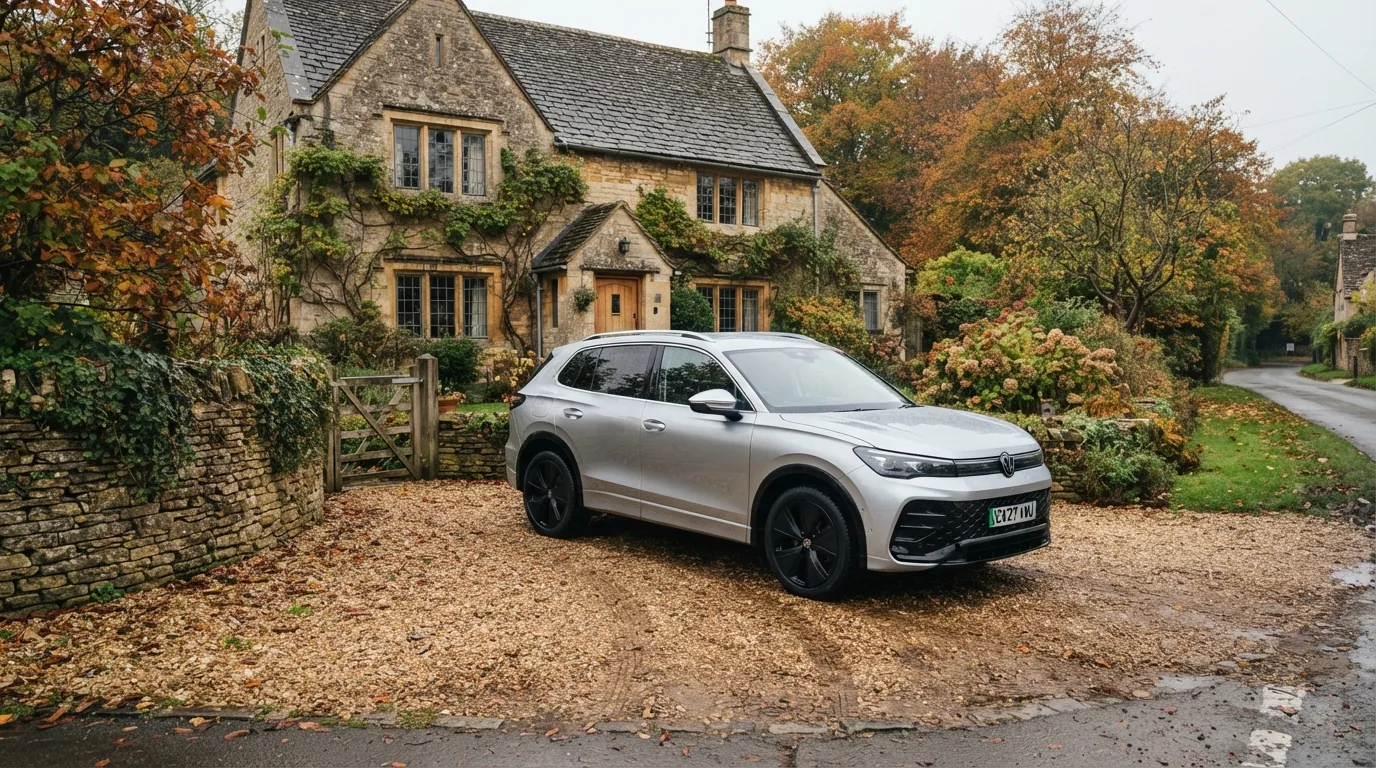
VW ID.Tiguan to replace ID.4 in 2027 with up to 373 miles of range
Volkswagen's electric Tiguan promises more range than the ID.4 it replaces, but UK prices are unconfirmed. Here is whether to buy a grant-eligible ID.4 now or wait until 2027.