Do Electric Cars Need an MOT? What the Test Covers for EVs
Yes: an electric car in Great Britain needs an MOT by its third registration anniversary and every year after, with the same checks as any car apart from the exhaust.
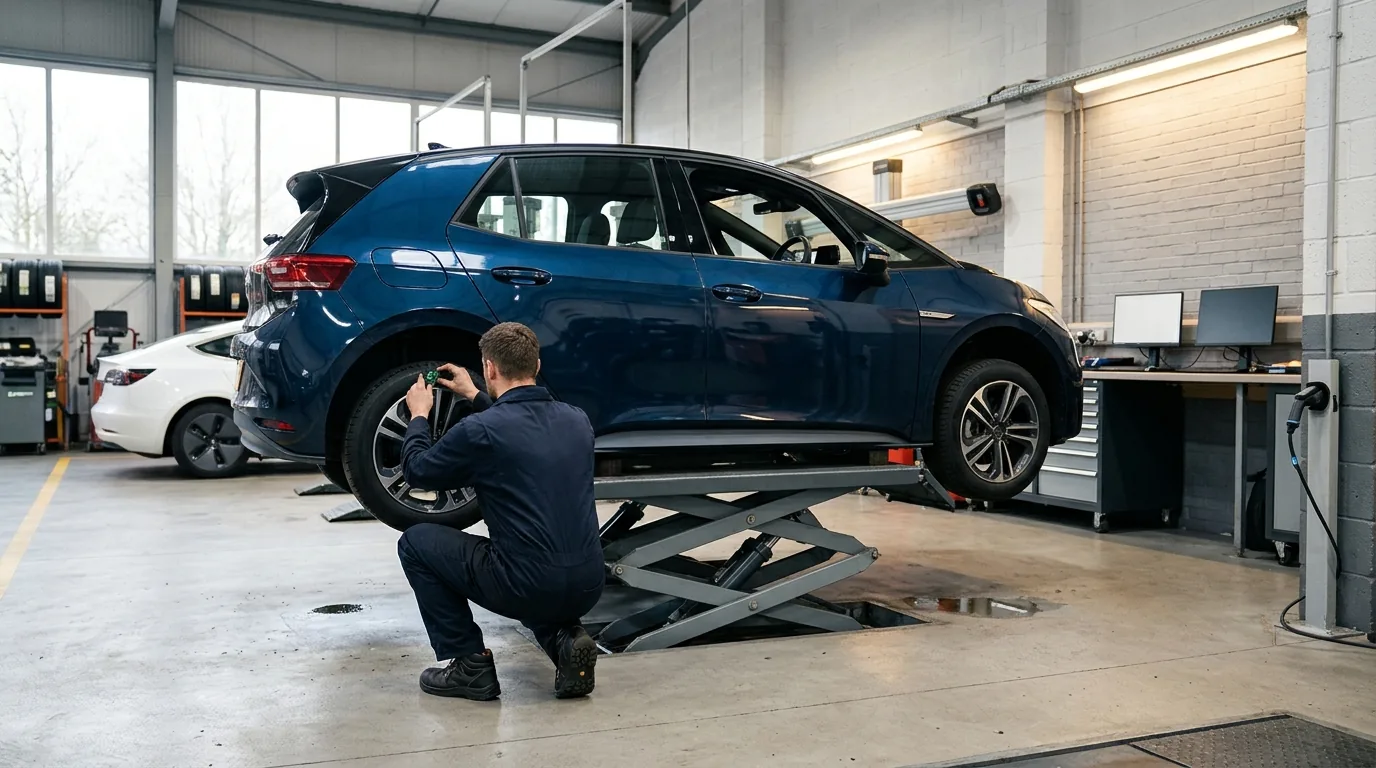
Quick answers
- Electric cars in England, Scotland and Wales need their first MOT by the third anniversary of registration and then every year, the same as petrol and diesel cars.
- The maximum MOT fee for a car with up to 8 passenger seats is £54.85 on gov.uk in November 2026, and an electric car pays the same cap as any other class 4 car.
- An electric car's MOT has no exhaust emissions test, but the brakes, steering, tyres, lights, wiring, batteries, seat belts and bodywork are checked against the same DVSA manual.
- The high-voltage drive battery is assessed visually only if it can be seen, and DVSA tells testers to refuse to test a car whose propulsion battery is leaking.
- Driving without a valid MOT can bring a fine of up to £1,000, and gov.uk allows only trips to a pre-arranged test or to or from a repair.
- At the current £54.85 cap, the eight MOTs an electric car needs between its third and tenth birthdays cost up to £438.80 in total, an EV Compared figure.
- In Northern Ireland a car's first MOT is due at four years old, and tests are carried out at Driver and Vehicle Agency centres.
Yes. In England, Scotland and Wales an electric car needs its first MOT by the third anniversary of its registration and then every year, exactly like a petrol or diesel car, and the maximum fee for a car is £54.85. What changes is the list of checks: there is no exhaust emissions test, while the brakes, tyres, lights, steering, wiring and batteries are all inspected.
Do electric cars need an MOT in the UK?
Electric cars need an MOT on the same timetable as every other car in Great Britain. gov.uk says a vehicle must be tested by the third anniversary of its registration and that an MOT then lasts for a year. There is no separate test type for an electric vehicle: a battery electric car with up to 8 passenger seats is a class 4 vehicle, the same class as a petrol hatchback, with the same £54.85 fee cap.
The government looked at moving the first test to four years and decided against it. On 25 January 2024, after its consultation on modernising the MOT, the Department for Transport confirmed the first test would stay at three years from registration and annually after that. In the same announcement it said it would explore whether further improvements could be made to the MOT for electric vehicles. The DVSA inspection manual still has no separate electric car test.
Northern Ireland works differently. Testing there is run by the Driver and Vehicle Agency, and nidirect says cars need a test once they are four years old.
Driving without a valid MOT is an offence. gov.uk says you can be fined up to £1,000, and the only journeys allowed on an expired MOT are to a pre-arranged test or to or from somewhere the car is being repaired. Tax is a separate question with its own rules, which our guide to road tax on an electric car sets out.
What does an MOT check on an electric car?
An electric car’s MOT covers the same safety items as any car, inspected against the DVSA’s MOT inspection manual, minus the checks that only make sense for an engine and exhaust. The table compares the main items.
| MOT item | Petrol or diesel car | Electric car |
|---|---|---|
| Exhaust emissions (petrol) or smoke opacity (diesel) | Tested | Not applicable: no exhaust |
| Exhaust noise and silencer security | Checked | Not applicable |
| Engine malfunction indicator lamp | Checked on petrol cars first used from 1 July 2003 and diesels from 1 July 2008 | Not applicable: no engine |
| Brake performance | 58% service brake efficiency for cars first used from 1 September 2010, 16% for the parking brake | Same standard |
| Electrical wiring | Visual inspection of all visible wiring | Same, with care around high-voltage cabling |
| Batteries | 12 volt battery security and leaks | 12 volt battery, plus the drive battery visually only if it can be seen |
| Tyres | At least 1.6mm across the central three-quarters of the tread | Same standard |
| Tyre pressure monitoring system | Checked on cars first used from 1 January 2012 | Same |
| Maximum fee | £54.85 | £54.85 |
Everything else on the list is identical: steering and electronic power steering, lights and their warning lamps, wipers and washers, mirrors, seat belts, airbags, the horn, the speedometer, electronic stability control, body corrosion and fluid leaks. An electric car is still a vehicle with four tyres and a set of brakes.
How do testers handle the high-voltage system?
Testers look at the high-voltage system but do not take any of it apart. DVSA’s guidance for MOT testers says the risk of electric shock with electric and hybrid vehicles is extremely low, and that the high-voltage system usually runs at between 350 and 600 volts. High-voltage cables are usually orange; on 48 volt mild hybrids they may be blue.
The guidance tells testers to avoid touching high-voltage components and wiring, says they do not need to dismantle anything, and says that unless stated otherwise they do not need to isolate the high-voltage system. If any orange cables or components are damaged, or wires are exposed, the tester should abandon the test.
Section 4.13 of the manual says testers must inspect the batteries on all vehicles, electric and hybrid included. The drive battery is unlikely to be accessible, and if it is, it is assessed visually only; if it is leaking, the tester refuses to test the car. The 12 volt battery gets the usual checks: one that is insecure and likely to fall from its carrier or cause a short circuit is a major defect, and so is a leaking battery.
Because there is no engine to run, the tester uses the car’s “ready” mode for checks that would normally need the engine on. DVSA says that in ready mode all equipment works as if the engine were running, and that an assistant, if used, should not touch the accelerator. On the brakes, the manual notes that a constant pedal resistance on full application is normal on electric systems and is not a fault, and that an electronic parking brake showing a malfunction warning is a major defect.
Can any garage MOT an electric car?
Any MOT test centre that tests class 4 cars can test an electric car. DVSA’s guidance says testers can carry out MOT tests on electric and hybrid vehicles without any further recognised training, and that a tester cannot refuse a test simply because they are unfamiliar with the vehicle.
Repairs are a different matter. DVSA says repairs on high-voltage systems must not be done unless the person has recognised training for that type of vehicle. If your car fails on something that involves the high-voltage system, such as damaged orange cabling, the repair needs a workshop with trained technicians, which may not be the test centre that found the fault.
Is an MOT the same as a service for an electric car?
No: the MOT is the legal minimum safety check on the day of the test, while a service follows the carmaker’s maintenance schedule. A car can pass its MOT with a service overdue, and a full service does not replace the MOT. Our guide to what servicing an electric car costs covers what a service involves and what to budget.
The MOT also tells you nothing about the drive battery’s capacity. A visual check cannot measure how much range a battery has lost, so a pass certificate is not a battery health report. Our explainer on how long electric car batteries last covers what does wear a battery and how much.
If you want readings of your own between tests, our guide to using an OBD2 adapter on an electric car explains when one is worth buying.
Worked UK example: what MOTs cost an electric car over ten years
Take an electric car first registered on 10 November 2023. Its first MOT is due by 10 November 2026. gov.uk lets you test up to a month minus a day early and keep the same renewal date, so it could have been tested from 11 October 2026 and still be due again by 10 November 2027.
From then on it needs a test every year. Between its third and tenth birthdays that is eight MOTs. At today’s £54.85 maximum fee, those eight tests cost up to £438.80 in total. Method: the number of tests due in the period multiplied by the gov.uk maximum fee for a class 4 car on 10 November 2026, with no allowance for future fee changes or repairs (how EV Compared works out its figures).
Two points follow. First, the MOT costs an electric car exactly what it costs a petrol car of the same age, so it is not a running cost difference between the two. Second, a car on a lease or company scheme that is handed back before its third registration anniversary never needs an MOT during that contract. The bill only starts for whoever owns it next.
What are the common mistakes with an EV MOT?
The most common mistake is assuming an electric car is exempt because it has no exhaust. It is not, and the £1,000 maximum fine applies to an electric car with an expired MOT just as it does to a diesel.
The second is reading a pass as proof the battery is healthy. As above, the drive battery is only looked at, and usually it cannot even be seen.
The third is ignoring warning lamps. A tyre pressure monitoring system that is malfunctioning or obviously not working is a major defect on cars first used from 1 January 2012, and an electronic parking brake fault warning is a major defect too. Clearing a dashboard warning before the test saves a fail.
The fourth is forgetting the tyres. Tread below 1.6mm across the central three-quarters of the tyre is a dangerous defect, and it is the same limit for an electric car as for any other.
The last is mixing up the rules for the two parts of the UK. A car registered in Northern Ireland follows the four-year rule; the same car registered in Great Britain needs its first test at three years.
What does the MOT mean when choosing an electric car?
The MOT should not change which car you choose, because the test, the timetable and the fee are the same for petrol, diesel and electric. Where it does help is in buying used. gov.uk’s MOT history service shows every result since 2005 for cars, including the recorded mileage, the parts that failed and any minor problems noted, and for some manufacturers it shows safety recalls as well. That is worth checking on any model that has been through a large recall, such as the VW Group battery recall that now covers the Audi Q4 e-tron.
If you buy a used electric car at around three years old, the first MOT may be the one you pay for. A recent pass with no advisories on tyres or brakes is a better sign than a fresh certificate with a long list of minor problems. Our guide to how well electric cars hold their value covers what those cars cost at that age.
If you are switching from a petrol car, our list of what petrol drivers need to know before going electric covers the other ownership differences, most of which matter more than the MOT.
Vans follow their own rules. Our guide to electric van MOT rules for 4.25-tonne vans covers the larger zero-emission vans the government said it would consider moving to car-style testing.
Our verdict, based on DVSA’s published manual and guidance rather than our own testing: an electric car’s MOT is the same legal obligation as any car’s, slightly shorter because there is no exhaust to check, and no more expensive. It suits owners who keep on top of tyres and warning lamps; it gives no comfort to anyone hoping it will vouch for a used battery.
What should you do next?
Sign up for gov.uk’s free MOT reminder, which sends a text or email a month before the test is due. Check your car’s current due date and history on the gov.uk MOT history service with its registration number. Then book any class 4 MOT test centre, and before the day check the tread on all four tyres and clear any warning lamps on the dashboard. New owners will find more of the first jobs to do in our first week with an electric car guide.
How we test and where our numbers come from
Range figures are official WLTP combined values taken from manufacturer UK specification pages, with real-world estimates drawn from independent comparative testing. Prices are UK list prices at the time of the latest update. Tax, grant and charging-scheme figures come from GOV.UK and HMRC publications. We re-check every guide when pricing, specification or policy changes. Last checked 10 November 2026. How we work out our own figures.
Frequently asked questions
Do electric cars need an MOT?
Yes. In England, Scotland and Wales an electric car must have its first MOT by the third anniversary of its registration and then once a year. There is no exemption for electric vehicles, and driving without a valid MOT can bring a fine of up to £1,000. In Northern Ireland the first test is due at four years old.
Can all garages MOT electric cars?
Any MOT test centre that tests class 4 cars can test an electric car. DVSA guidance says testers can carry out MOT tests on electric and hybrid vehicles without further recognised training. Repairs to the high-voltage system are different: DVSA says those must only be done by someone with recognised training for that type of vehicle.
How much does an electric car MOT cost?
An electric car MOT costs no more than £54.85, the maximum fee gov.uk sets for a car with up to 8 passenger seats in November 2026. That is the same cap as a petrol or diesel car. Test centres may charge less than the maximum, but they cannot charge more for the MOT itself.
Do hybrid cars need an emissions test for the MOT?
The MOT inspection manual lists hybrid vehicles, including mild hybrids, with electric and combustion engines among the vehicles testers do not need to check in its petrol emissions test and its diesel smoke opacity test. Hybrids are still checked for an engine malfunction warning lamp if they were first used after the dates the manual sets.
Do electric cars need an MOT and a service?
Yes, they are two separate things. The MOT is the legal annual safety check from the third anniversary of registration. A service follows the carmaker's maintenance schedule and covers items the MOT does not look at. A car can pass its MOT with a service overdue, and a service does not replace the MOT.
What is on an electric car MOT checklist?
An electric car MOT covers brakes and the parking brake, steering, lights and warning lamps, visible wiring, batteries, tyres with at least 1.6mm of tread, the tyre pressure monitoring system on cars first used from 1 January 2012, wipers, mirrors, seat belts, airbags, the horn and the body. It does not include an exhaust emissions or exhaust noise check.
Sources and further reading
- gov.ukGetting an MOTFirst MOT by the third anniversary of registration, an MOT lasts a year, testing up to a month minus a day early keeps the renewal date, and a fine of up to £1,000 for driving without a valid MOT.
- gov.ukGetting an MOT: MOT test feesMaximum MOT fee of £54.85 for a class 4 car with up to 8 passenger seats.
- gov.ukHybrid electric and hydrogen fuel cell systems: guidance for MOT testersShock risk extremely low, systems usually 350 to 600 volts, orange cables, no dismantling or isolation, ready mode, abandon the test if orange cables are damaged, no further training needed to test, recognised training needed for high-voltage repairs.
- gov.ukMOT inspection manual: section 4, lamps, reflectors and electrical equipmentVisual wiring inspection (4.11) and battery inspection on all vehicles including electric and hybrid (4.13); propulsion batteries assessed visually only, refuse to test if leaking; a leaking battery is a major defect.
- gov.ukMOT inspection manual: section 8, nuisanceEmissions checks apply to petrol and diesel engines; hybrids including mild hybrids are listed as not needing the emissions and opacity checks; engine malfunction lamp checks apply to petrol and diesel vehicles including hybrids.
- gov.ukMOT inspection manual: section 1, brakes58% service brake efficiency for cars first used from 1 September 2010, 16% parking brake efficiency, constant pedal resistance normal on electric systems, an electronic parking brake fault indicator is a major defect.
- gov.ukMOT inspection manual: section 5, axles, wheels, tyres and suspension1.6mm minimum tread across the central three-quarters of the tyre, and the tyre pressure monitoring system check for cars first used from 1 January 2012.
- gov.ukGovernment committed to MOT modernisation as consultation concludes25 January 2024: the first MOT stays at three years from registration and annually thereafter; the government will explore improvements to the MOT for electric vehicles and consider car-style testing for some larger zero-emission vans.
- nidirect.gov.ukHow the MOT scheme worksCars in Northern Ireland need an MOT once they are four years old.
- gov.ukCheck the MOT history of a vehicleShows past results, recorded mileage, failures and minor problems back to 2005 for cars, the next due date, and safety recalls for some manufacturers.
- gov.ukGet an MOT reminderFree text or email reminders a month before a car's MOT is due; not available in Northern Ireland.

EV Compared
The EV Compared editorial team tracks the UK electric vehicle market full time: new model launches, list prices, WLTP and real-world range, public charging tariffs and the tax rules that decide what an EV actually costs to run. Every guide is checked against manufacturer specifications and official GOV.UK figures, and updated whenever the numbers move.
Related reading
View all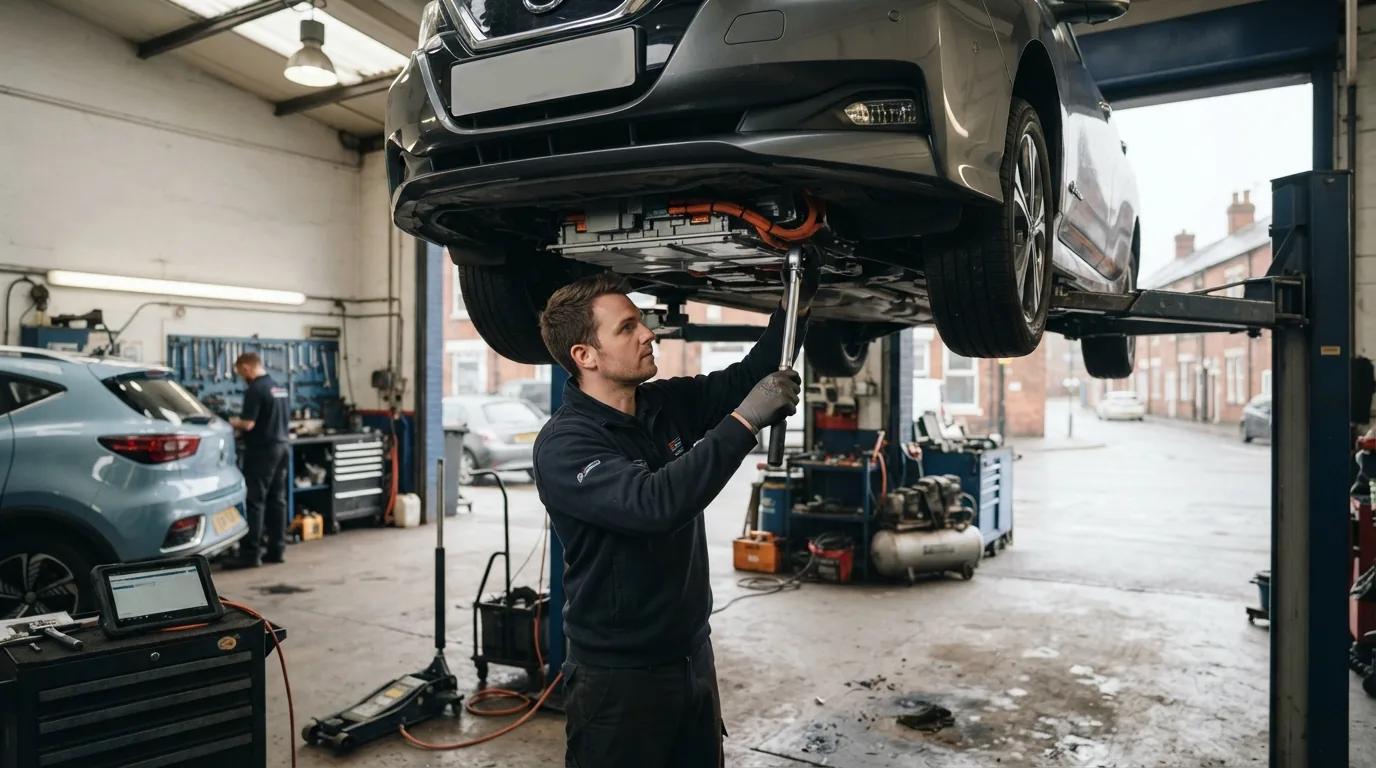
How Much Does It Cost to Service an Electric Car in the UK?
A full EV service typically costs around £100 to £250, less than petrol or diesel, and here is what affects the price
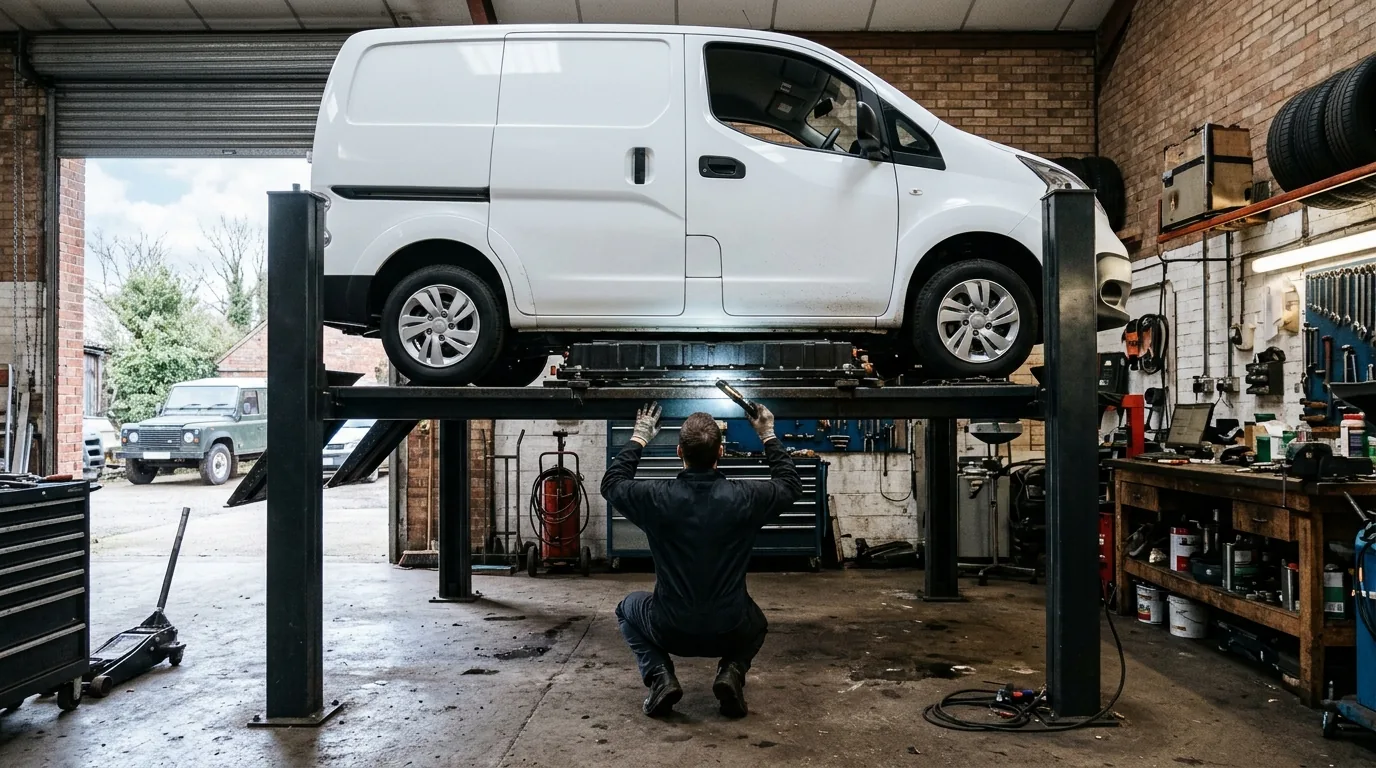
Electric van MOT rules: the 2026 changes for 4.25-tonne EVs explained
Since 1 June 2026, zero-emission vans of 3,501kg to 4,250kg take an ordinary Class 7 MOT at a Class 7 garage, first due three years after registration, instead of an HGV test at one year.
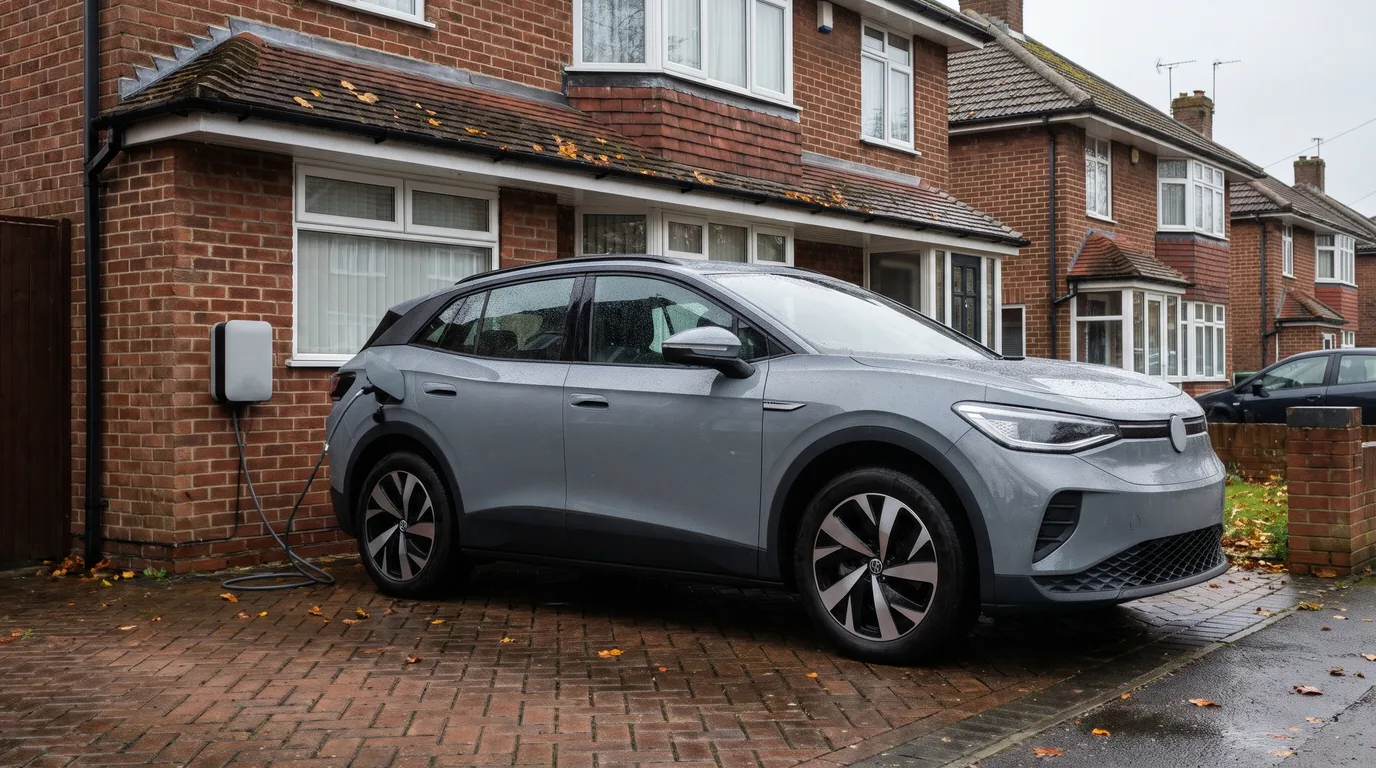
VW battery recall reaches 85,000 EVs as Audi Q4 e-tron is added: what UK owners should do
Volkswagen Group's recall over battery cells that can overheat above 80% charge has grown to more than 85,000 cars worldwide, with Audi's Q4 e-tron now included. The US opt-out headlines do not describe the UK campaign. Here is what has changed and what UK owners should do.
Electric Car Tips for Beginners: What to Do in Your First Week
What to do on days one to seven to get your EV ownership off to the right start
Do Electric Cars Hold Their Value? UK Depreciation Explained
Three-year residual values, the models that hold up best and worst, and what battery health means for used EV prices in 2026
How Long Do Electric Car Batteries Last? A UK Owner's Guide
Real-world degradation data, warranty terms and what to expect over 10-plus years of ownership