HMRC open to cutting company car tax on used EVs, leasing firms say
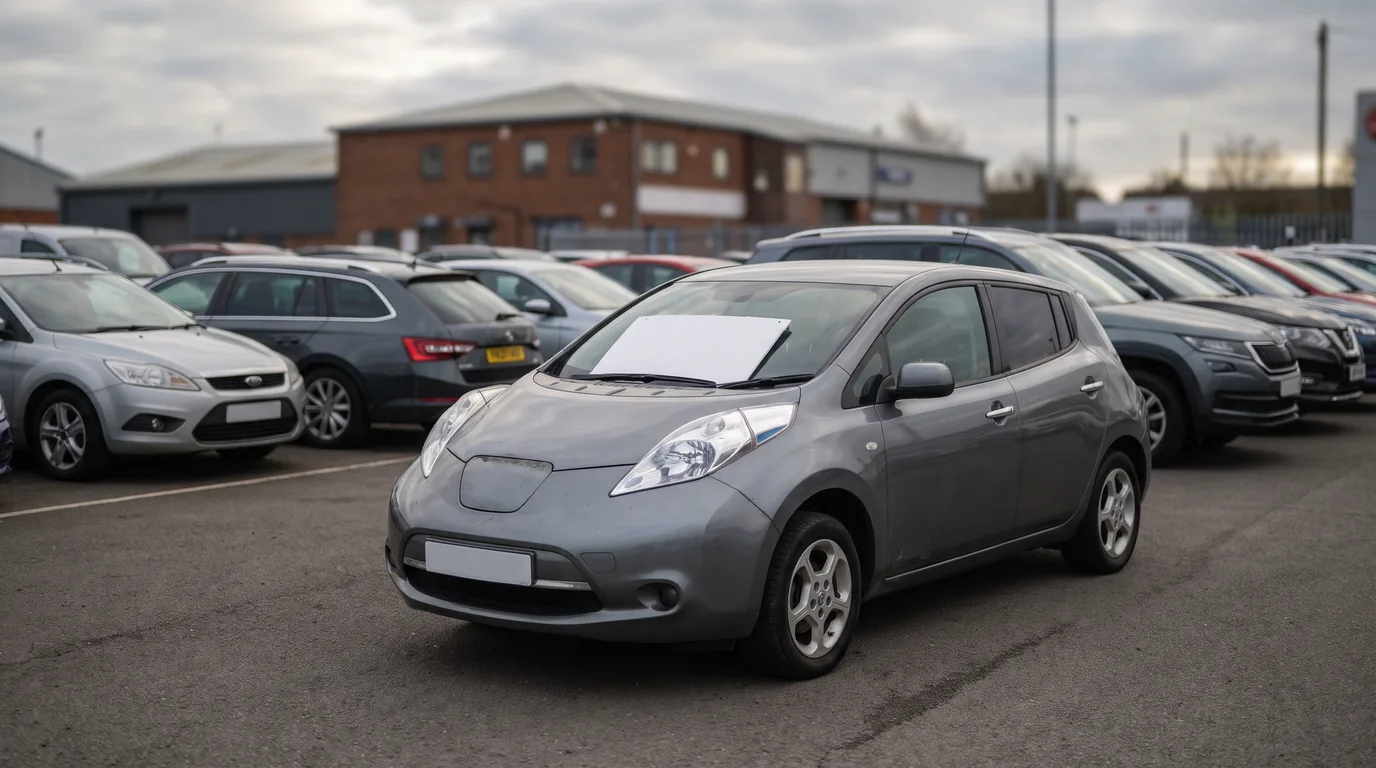
Used electric cars on salary sacrifice are taxed as if they were brand new. Leasing firm Ayvens says HMRC is 'up for' a change, and the BVRLA wants used EVs taxed on 35% of their original price.
Quick answers
- Company car tax on a used car is currently calculated on its original list price (P11D value), the same as a new car, regardless of its age or condition.
- Ayvens' Matthew Walters told Fleet News on 20 October 2026 that HMRC 'for the first time seem up for a conversation on discounted benefit in kind for used vehicles'.
- Walters said he did not expect a change this year but that one could come in future years, most likely through a reduction in the taxable value.
- The BVRLA wants benefit-in-kind on EVs aged three years or more to be calculated on 35% of their original P11D value.
- HMRC said list price gives a 'consistent and straightforward basis' for company car tax and that 'the Government keeps all taxes under review'.
- Tusker has more than 5,000 used EVs on salary sacrifice, eight times a year earlier, with over 3,500 orders in the first seven months of 2026, up 350%.
HMRC may be willing to cut company car tax on used electric cars, which are currently taxed as if they were brand new. Matthew Walters, head of consultancy services at leasing firm Ayvens, told Fleet News on 20 October 2026 that “Revenue for the first time seem up for a conversation on discounted benefit in kind for used vehicles.” He said he did not expect a change this year, but that one could come in future years.
For employees getting a used EV through salary sacrifice, that could mean a noticeably lower tax bill. For the wider market, it could help a used EV sector that has been hit by fast depreciation. HMRC has not confirmed anything. Here is how the current rules work, what the industry wants and what a change could save.
How is company car tax worked out now?
Company car tax, or benefit-in-kind (BIK), is charged on the car’s list price when new, known as its P11D value, multiplied by a percentage rate and your income tax rate. For electric cars, the BIK rate is 4% in 2026-27, rising to 9% by 2029-30.
The key point is that the same P11D value is used whatever the car’s age. A three-year-old EV that cost £40,000 new is taxed on £40,000, even if it is now worth £18,000. According to Fleet News, that means employees choosing a used car through salary sacrifice “are not being taxed on the true value of the benefit”.
HMRC defends the approach. It told Fleet News that list price provides a “consistent and straightforward basis” for calculating company car benefits “regardless of their age or condition”.
What has HMRC said?
Officially, very little. “The Government keeps all taxes under review,” an HMRC spokesperson told Fleet News. Tax officials would not say whether a change was planned.
Unofficially, the industry is more optimistic. Walters said he met HMRC officials to discuss the new pay-per-mile eVED tax and raised the issue. “They’re up for it,” he said. “I don’t think we’ll see it this year, but we may well see it in future years where the benefit-in-kind regime has an allowance for a reduction, either in the P11D or the prevailing rate. We suspect it’s in the taxable value.”
He described the prospect of a discounted rate for used cars up to 2035, when only zero-emission new cars will be sold, as “really exciting”.
What does the leasing industry want?
The BVRLA, which represents leasing and rental firms, has a specific proposal. “The current regime taxes drivers choosing a three-year-old electric company car against its original list price,” a spokesperson said. “We want BIK calculated on 35% of the original P11D value for EVs aged three years or more, better reflecting their actual worth and stimulating used market demand.”
Here is what that would mean in practice, using a 4% BIK rate and a basic-rate (20%) taxpayer. These are illustrative calculations, not quotes:
| Used EV, original list price | Taxable value now | Annual tax now (4%, 20% taxpayer) | Taxable value at 35% | Annual tax at 35% |
|---|---|---|---|---|
| £30,000 | £30,000 | £240 | £10,500 | £84 |
| £40,000 | £40,000 | £320 | £14,000 | £112 |
| £50,000 | £50,000 | £400 | £17,500 | £140 |
At 4%, the savings are modest in pounds, because EV company car tax is already low. As the rate climbs to 9% by 2029-30, the savings more than double. A higher-rate taxpayer would save twice as much again.
Why does the industry want this now?
Because used EV leasing is growing fast and leasing companies need it to. Many have been hit by lower-than-expected resale values on used electric cars, and offering them again through salary sacrifice is one way to recover value.
Tusker, a salary sacrifice specialist, launched a used EV product two years ago. It now has more than 5,000 “Pre-loved” EVs on the road, more than eight times as many as a year earlier. It received more than 3,500 orders for used EVs in the first seven months of 2026, up 350% year on year, and deliveries rose by more than 500%. More than three-quarters (77%) of Tusker’s customers now offer its used car scheme to employees.
Ayvens plans to grow its used-car leasing fleet as part of its strategy to 2029, and Driveway Vehicle Solutions has also added used cars to its employee car scheme.
The BVRLA has warned of “rampant EV depreciation” hurting the leasing sector, as Fleet News reported in January. Taxing used EVs on their real value would make them more attractive to employees, support demand and, in turn, support used prices. Our report on rising used EV values shows the market has started to recover.
Are there any downsides?
Some. A reader comment on the Fleet News story raised two practical concerns. First, after three years most EVs leave fleets and go into the private market, where buyers do not pay BIK and are more put off by insurance costs and the lack of a driveway. A BIK cut would only help the minority of used EVs that stay on employer schemes. Second, a mixed fleet of first-lease and second-lease cars of the same age could be harder to manage if the rules differ.
There is also the Treasury’s view. Any discount means less tax, at a time when the Chancellor is looking for money. That is one reason Walters does not expect a change in this Budget.
What should you do if you are considering a used EV through salary sacrifice?
The tax rules today are the same for new and used, so compare carefully:
- Check the P11D value. On a used car, tax is still based on the original list price, so a used car with a high original price can carry a surprisingly high tax bill.
- Compare against new. A new EV on salary sacrifice may have a similar tax bill but a newer battery and longer warranty. Our salary sacrifice savings calculator helps compare.
- Check battery health. For any used EV, ask for a battery health report. Our guide to getting a battery health certificate explains what to look for.
- Watch for rule changes. If HMRC does change the rules, it will most likely apply from a future tax year, not to cars already on schemes.
How does salary sacrifice work for used EVs?
Salary sacrifice lets an employee give up part of their gross salary in return for a car provided by their employer. Because the payment comes from pay before income tax and National Insurance, it is cheaper than leasing privately from net pay. The employee pays company car tax on the benefit, which for EVs is low.
Used EV salary sacrifice works the same way, but with a cheaper car. The catch, under today’s rules, is that the benefit is still taxed on the car’s original list price. So a used EV’s lower monthly lease cost helps, but the tax saving does not reflect its lower value.
What would a change mean for employers?
Employers offering salary sacrifice benefit from lower National Insurance contributions on the sacrificed salary. Used EV schemes let them offer a cheaper option to staff who cannot afford a new car’s monthly payment, widening access to the benefit. Tusker says more than three-quarters of its customers now offer its used car scheme to employees.
If HMRC taxed used EVs on their real value, the employee’s tax bill would fall, making used EV schemes even more attractive. That could help employers with recruitment and retention, and help more staff switch to electric.
Are there other company car tax changes coming?
Several. Electric company car tax rises from 4% in 2026-27 to 5%, 7% and then 9% by 2029-30. Plug-in hybrids face steep rises, reaching a flat 19% by the end of the decade. Employee car ownership schemes, widely used in the motor trade, become subject to company car tax for cars made available from 6 October 2026. And the pay-per-mile eVED tax adds 3p a mile for EVs from April 2028.
The leasing industry also wants the electric rate held at 9% after 2030, which we cover in our BVRLA report.
Is there a minimum wage risk?
Yes, for lower-paid staff. Salary sacrifice cannot reduce an employee’s pay below the National Minimum Wage, and fleet experts have warned employers to check this carefully before offering car schemes to lower earners. A cheaper used EV makes it easier to stay within the rules.
Our view
Taxing a three-year-old car as if it were new has never made much sense, and it makes even less sense for EVs, which have lost value faster than expected. A cut based on real value would help employees, support used EV prices and keep more electric cars in use. The BVRLA’s 35% figure is a reasonable starting point. We will watch the Budget on 28 October, though the industry itself expects any change to come later.
How we test and where our numbers come from
Range figures are official WLTP combined values taken from manufacturer UK specification pages, with real-world estimates drawn from independent comparative testing. Prices are UK list prices at the time of the latest update. Tax, grant and charging-scheme figures come from GOV.UK and HMRC publications. We re-check every guide when pricing, specification or policy changes. Last checked 23 October 2026. How we work out our own figures.
Frequently asked questions
How is company car tax worked out on a used electric car?
Exactly as for a new one. Benefit-in-kind tax is a percentage of the car's original list price, its P11D value, whatever the car's age or current value. So a three-year-old EV on salary sacrifice is taxed as if it were new.
Is HMRC going to cut company car tax on used EVs?
Nothing has been announced. Leasing firm Ayvens says HMRC officials are open to discussing a discount for used vehicles, but does not expect a change this year. HMRC itself says only that the government keeps all taxes under review.
What change does the BVRLA want for used EV company car tax?
The BVRLA wants BIK on electric cars aged three years or more to be calculated on 35% of their original P11D value, to reflect what they are actually worth. That would cut the tax on a typical used EV by about two-thirds.
Can you get a used EV through salary sacrifice?
Yes. Several providers, including Tusker, Ayvens and Driveway Vehicle Solutions, now offer used electric cars through salary sacrifice. Tusker says it has more than 5,000 used EVs on the road through its scheme.
Would a used EV tax cut affect people who buy privately?
Not directly, because company car tax only applies to cars provided by an employer. But making used EV leasing more attractive could support used EV prices, which matters to anyone buying or selling a used EV privately.
Sources and further reading
- fleetnews.co.ukFleet NewsPrimary source referenced in this article.
- fleetnews.co.ukNew data shows vital role of benefit-in-kind tax to EV adoptionBVRLA data on salary sacrifice EV share and 'rampant EV depreciation'.
- fleetnews.co.ukCalculate your company car tax into 2030 with our improved calculatorEV BIK rates rising from 4% in 2026 to 9% in 2029.

EV Compared
The EV Compared editorial team tracks the UK electric vehicle market full time: new model launches, list prices, WLTP and real-world range, public charging tariffs and the tax rules that decide what an EV actually costs to run. Every guide is checked against manufacturer specifications and official GOV.UK figures, and updated whenever the numbers move.
Related reading
View all
Used EV prices rise as diesel values slump on £2-a-litre fuel
Record pump prices have split the used car market. Electric and hybrid values are rising, diesels are taking longer to sell, and buyers who move now can still find used EVs priced below equivalent petrol cars.
Autumn Budget 2026: what EV drivers want from John Healey on 28 October
The new Chancellor's first Budget lands as fuel prices bite, the ZEV mandate is under review and public charging still carries 20% VAT. Here is what the motor industry, charging firms and drivers are asking for, and what is already fixed.
Salary sacrifice leasing up almost 165% as used EV demand grows
BVRLA data shows salary sacrifice volumes up almost 165% year on year in the first quarter of 2026, while Tusker says deliveries through its used EV scheme are up more than 500%. Here is what that means if you are thinking of joining a scheme.
How to Calculate EV Salary Sacrifice Savings by Tax Band
Find out exactly how much an electric car through salary sacrifice will actually cost you each month after tax
How to Get a Battery Health Certificate for a Used EV
Battery health certificates are becoming standard in the UK used EV market. Here is what they cover, who issues them, what they cost, and whether you really need one
Used EV Personal Leasing Up 484%: How It Works in the UK
Leasing firms are relending returned two and three-year-old electric cars to private drivers. Here is how used personal contract hire and salary sacrifice work, and what to check first.