Tesla and SpaceX merger talks: what it could mean for UK Tesla drivers
Special committees at both companies are studying a deal that would be the largest merger ever. Experts say drivers will see little change soon, but the bigger question is how much priority cars get.
Quick answers
- Elon Musk said on 20 October 2026 that merging Tesla and SpaceX would be 'a good idea', and both companies have formed special committees to study a deal.
- Musk stressed nothing has been agreed and called himself a 'conflicted party'; at least 50% of all Tesla's outstanding shares must back any deal, which he called 'quite a high hurdle'.
- Tesla is valued at about $1.5 trillion (£1.1 trillion) and SpaceX at about $2 trillion, so a combination would be the largest merger ever.
- SpaceX's 22 October filing says any deal also needs approval from its 'controlling shareholder', Musk, who controls about 85% of SpaceX's voting power.
- Experts told the BBC that Tesla drivers are unlikely to see drastic change in the near term; cars may become 'an afterthought' to AI and robotics.
- Tesla's third-quarter revenue was $28.05 billion against $28.1 billion a year earlier, and BYD overtook Tesla as the world's biggest EV maker in January.
- A Tesla shareholder vote is expected at or near its annual meeting on 3 December 2026, according to Decrypt.
Elon Musk has confirmed that Tesla and SpaceX are considering a merger, a deal that would be the largest in corporate history. “Do I think it would be a good idea? Yes,” he said on SpaceX’s results call on 20 October 2026, according to the BBC. Both companies have formed special committees to study it, but Musk stressed that nothing has been agreed and that any deal would need the backing of at least half of Tesla’s shareholders.
Tesla is valued at roughly $1.5 trillion (£1.1 trillion) and SpaceX at about $2 trillion. For the tens of thousands of people in the UK who drive a Tesla, or are thinking of buying one, the obvious question is whether any of this changes the car on the driveway. The short answer from experts is: not soon. The longer answer is about where cars sit in Musk’s priorities.
What has Musk actually said?
Musk said he sees “a lot of merit” in combining the two businesses and “a lot to be gained”. But he was careful to say a deal is not certain. “The special committees have not reached agreement on terms of any transaction and there’s no guarantee that they will,” he said.
He described himself as a “conflicted party”, because he is chief executive of both companies, and said he is not on either committee. He compared commenting on the deal to “tap dancing through a minefield”. During Tesla’s own results call the next day, he said he had nothing more to add, and that calling the merger a certainty would be “overstating” things.
Not everyone is convinced Musk will stay at arm’s length. A SpaceX filing on 22 October said any combination “would be subject to further approval by our special committee, our board of directors and our controlling shareholder”, according to Decrypt. Musk controls roughly 85% of SpaceX’s voting power, so he is that controlling shareholder.
Why would Tesla and SpaceX merge?
Musk’s case is that the two companies are already working on the same things: chips, artificial intelligence and software. A merger would bring together:
- From Tesla: electric cars, the energy storage business, the Optimus humanoid robot and self-driving technology.
- From SpaceX: rockets, Starlink satellites, data centres and its AI work, including xAI and X, which SpaceX acquired before it went public earlier this year.
The two firms already cooperate. They launched Terafab, a joint effort to make computer chips, and the new Tesla Roadster uses SpaceX cold-gas thrusters, which we cover in our Roadster report. David Nicholson of The Futurum Group told the BBC the Roadster was a “symbolic embodiment” of the two companies coming together.
Analysts also point to control. A merged company would give Musk greater voting control than he has at Tesla today. REX Financial estimates he would hold about 57% of combined voting power, according to Decrypt.
What does it take for the deal to happen?
The biggest hurdle is Tesla’s shareholders. At least 50% of all Tesla’s outstanding shares, not just of the votes cast, would need to approve a merger. Musk called that “quite a high hurdle to achieve”. Decrypt reports that a vote is expected at or near Tesla’s annual meeting on 3 December 2026.
Tesla shareholders have backed Musk before. Last year they approved a pay package for him valued at around $1 trillion. Dan Sheehan of Telos Wealth Advisors told the BBC he expects shareholders to support a deal in the next few years, but warned that they would end up with “a smaller slice of a much larger and more complex business”.
There could also be political scrutiny in the US, where Musk is a polarising figure, particularly if the midterm elections in November change the balance in Congress.
Will a merger change anything for UK Tesla owners?
Probably not in the near term. Experts told the BBC that Tesla drivers are unlikely to see drastic change, even if the companies combine. Here is how the main things owners care about are likely to be affected:
| What you care about | Likely effect of a merger | Why |
|---|---|---|
| Your warranty | No change expected | Contracts normally carry over to a merged company |
| Servicing and parts | No change expected | Run by Tesla’s UK operations |
| Superchargers | Nothing announced | Pricing and access are set by Tesla and can change regardless |
| Software updates | Nothing announced | Could in future draw on combined AI work |
| Resale value | Hard to predict | Driven more by new car prices and competition |
The UK Supercharger network, which is open to many non-Tesla cars at some sites, is the part of Tesla most UK drivers deal with day to day. Its prices have always moved with Tesla’s own decisions, not corporate structure. Our Tesla Supercharger and InstaVolt comparison explains how pricing and membership work.
Is the bigger risk that cars become less important?
That is the real question. Nicholson told the BBC that vehicles seem almost like “an afterthought” next to the potential of combining the two companies’ technology. Sheehan put it more directly: “The question is how much priority cars get inside a company increasingly driven by AI infrastructure.”
There are signs of that shift already. Tesla said earlier this year that it would prioritise its best-selling Model Y and Model 3 and move away from less popular models, and it has started using a Californian plant to build Optimus robots. Its third-quarter revenue was $28.05 billion, slightly down on $28.1 billion a year earlier.
Meanwhile, competition has sharpened. BYD overtook Tesla as the world’s biggest EV maker in January, and in the UK, BYD was the second-biggest brand of any kind in September, as we report in our BYD sales story. If Tesla’s attention moves further towards robots, robotaxis and AI, the pace of new, affordable models could slow.
On the other hand, Sheehan said pairing Tesla’s self-driving and robotics with SpaceX’s AI and satellite network “could result in more capable vehicles”. Tu Le of Sino Auto Insights said SpaceX technology pulled into future Tesla products could attract more customers.
What about self-driving in the UK?
A merger would not change UK law. Tesla’s Full Self-Driving (Supervised) software still needs approval before it can be used in the UK and Europe, which we cover in our report on the delayed European FSD vote. Tesla has said some Model Y owners in the US could join its robotaxi fleet from around the second quarter of 2027, according to TechSpot, but there is no UK timetable.
Should you buy a Tesla now?
The merger talks are not a reason to buy or avoid a Tesla. The Model 3 and Model Y on sale today are the same cars, with the same warranties and the same Supercharger access, whatever happens to Tesla’s share structure. What matters for buyers is the usual list: price, running costs, residual value and how the car compares with rivals.
On those, the market is moving fast, and rivals from BYD to Kia to Volkswagen are competing hard. Our October 2026 Tesla price guide has the current figures.
What does Tesla sell in the UK today?
Tesla’s UK range is focused on two cars, the Model 3 saloon and the Model Y SUV, after the company said earlier this year it would prioritise its best sellers. Both are among the UK’s best-selling EVs: the Model 3 was the second best-selling car of any kind in September 2026, with 9,929 registrations, and the Model Y was fifth with 5,946.
Tesla also runs one of the UK’s largest rapid charging networks, its Superchargers, many of which are open to other brands’ EVs. For owners, the network, the over-the-air software updates and the cars’ efficiency are the main attractions, and none of those depend on Tesla’s corporate structure.
What could change for owners in the longer term?
If a merger happens and Tesla’s priorities shift further towards AI and robotics, possible longer-term effects could include:
- Fewer new models, if investment goes to robots and robotaxis rather than cars.
- More advanced software, if combined AI work feeds into driver assistance.
- Satellite connectivity, if SpaceX’s Starlink is integrated into cars, though nothing has been announced.
These are possibilities, not plans. For now, the practical advice is unchanged: judge a Tesla on its price, running costs and how it compares with rivals.
Our view
For UK drivers, a Tesla-SpaceX merger is a story about direction rather than detail. Nothing in it changes your warranty, your charging or your car this year. But it confirms what Tesla’s recent choices already suggested: Musk sees the company’s future as much in AI, robots and robotaxis as in selling cars to families. If you value a steady stream of new, affordable Tesla models, that is worth keeping an eye on. We will report on the outcome of the shareholder vote.
How we test and where our numbers come from
Range figures are official WLTP combined values taken from manufacturer UK specification pages, with real-world estimates drawn from independent comparative testing. Prices are UK list prices at the time of the latest update. Tax, grant and charging-scheme figures come from GOV.UK and HMRC publications. We re-check every guide when pricing, specification or policy changes. Last checked 23 October 2026. How we work out our own figures.
Frequently asked questions
Are Tesla and SpaceX merging?
Not yet. Both companies formed special committees on 20 October 2026 to examine a possible deal, and Musk says he thinks it is a good idea, but no terms have been agreed and there is no guarantee a merger will happen. It would need approval from at least 50% of all Tesla's outstanding shares.
Would a merger affect my Tesla warranty in the UK?
There is no reason to expect it would. Your warranty is a contract with Tesla's UK business, and in a merger the obligations of the companies involved normally carry over to the combined business. Nothing announced so far suggests any change for owners.
What would happen to Tesla Superchargers if Tesla merged with SpaceX?
Nothing has been announced. The UK Supercharger network is run by Tesla's charging business, and experts say drivers are unlikely to see drastic changes soon. Prices and access are set by Tesla and could change at any time, merger or not.
Why does Elon Musk want to merge Tesla and SpaceX?
Musk says the two companies overlap in chips, artificial intelligence and software. A merger would combine Tesla's cars, robots and self-driving work with SpaceX's rockets, Starlink satellites and data centres, and analysts say it would also give Musk more voting control.
Should I worry about buying a Tesla now?
The merger talks do not change the cars Tesla sells in the UK or the support behind them today. The bigger questions for buyers are price, resale value and how Tesla competes with cheaper rivals, especially Chinese brands, which matter more than corporate structure.
Sources and further reading
- bbc.comBBC NewsPrimary source referenced in this article.
- bbc.comWhy is Elon Musk plotting a mega-merger of SpaceX and Tesla?What experts say a merger would mean for drivers, Tesla's Q3 revenue, BYD overtaking Tesla and Musk's voting control.
- decrypt.coSpaceX Filing Gives Elon Musk the Final Word on Tesla MergerThe 22 October 10-Q wording, Musk's 85% of SpaceX voting power, the estimated $3.5 trillion combined value and the 3 December annual meeting.
- techspot.comElon Musk confirms Tesla and SpaceX merger talks, but says a deal isn't certainThe businesses a merger would combine and Tesla's robotaxi timing for some Model Y owners.

EV Compared
The EV Compared editorial team tracks the UK electric vehicle market full time: new model launches, list prices, WLTP and real-world range, public charging tariffs and the tax rules that decide what an EV actually costs to run. Every guide is checked against manufacturer specifications and official GOV.UK figures, and updated whenever the numbers move.
Related reading
View all
Tesla Model Y and Model 3 UK prices in October 2026
The entry Model Y now costs £44,990, £3,000 more than the £41,990 Standard it launched at in December 2025. Here are the Model Y and Model 3 prices.
Tesla Supercharger vs InstaVolt: Cost, Speed and Coverage Compared (2026)
Tesla Superchargers are cheaper overall, especially for Tesla owners, while InstaVolt offers wider geographic coverage and tap-and-go contactless simplicity. Here is how to choose.
How much does it cost to charge a Tesla in the UK?
We worked out the cost of a full charge for every new Tesla Model 3 and Model Y on a smart home tariff, the standard price cap, Tesla's Superchargers and other public rapid chargers.
Tesla Superchargers join bp's roaming network: what fleets get
bp's Fuel & Charge card now works at eligible Tesla Superchargers, more than 2,000 of them in the UK, with sessions billed straight to the employer. bp has not published the per-kWh rate fleets will pay.
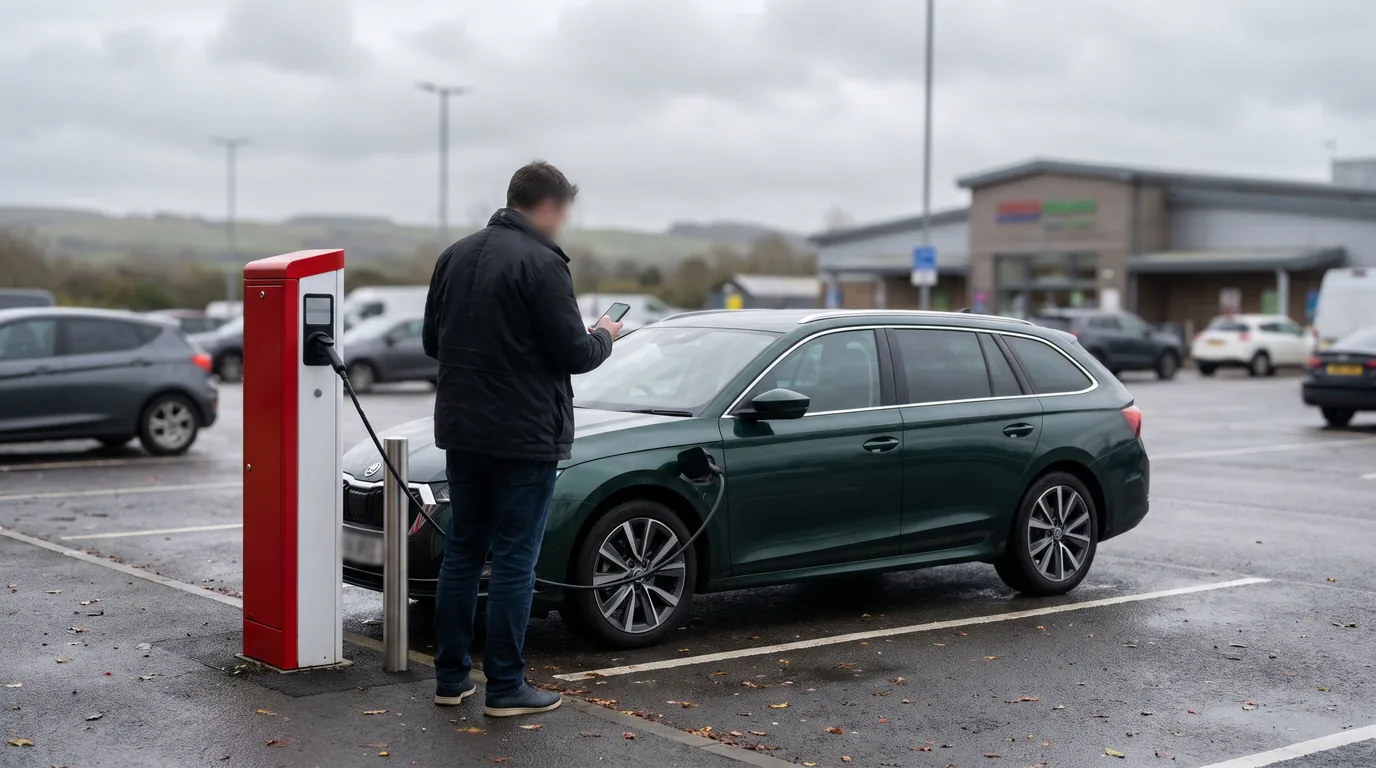
Tesla Supercharger membership: when does it pay for itself?
Non-Tesla drivers can pay a monthly or annual fee to get Tesla owner prices at Superchargers. We worked out how much charging you need to do before the fee is covered.
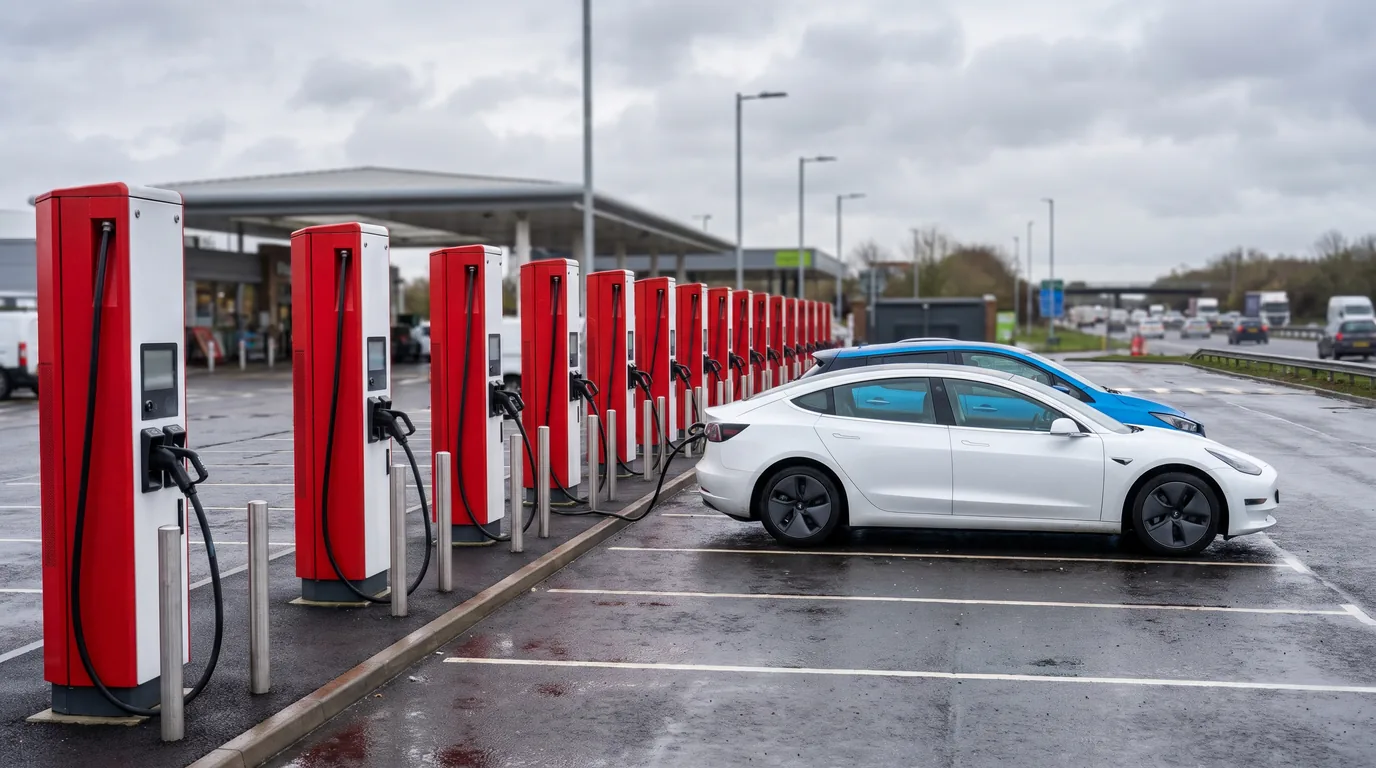
Tesla Supercharger prices UK: what Tesla and non-Tesla drivers pay
Tesla drivers paid an average of 48p/kWh on Superchargers in September 2026, while other EVs paid 69p at open sites. We set out what each group pays, how peak and off-peak pricing works and when a membership is worth it.