Volvo EX30 battery recall: the facts on fire risk, the 70% cap and the I-Pace and Taycan recalls
The recall covers EX30 Single Motor Extended Range and Twin Motor Performance cars with the 69 kWh battery, which must stay at or below 70% charge until Volvo replaces the faulty battery modules free of charge.
Quick answers
- The Volvo EX30 battery recall in the UK is DVSA reference R/2025/559, dated 22 January 2026, and covers 10,577 cars whose high-voltage battery cells can overheat during charging and create a fire risk.
- Only the EX30 Single Motor Extended Range and Twin Motor Performance, the versions with the 69 kWh battery, are affected; the smaller-battery Single Motor is not part of the recall.
- Until the repair, owners must limit the maximum state of charge to 70%, and the permanent fix is an inspection and replacement of the battery modules at no cost to the owner.
- Repairs have been slow: Auto Express reported on 20 April 2026 that fewer than 10 UK cars had received new modules, after Volvo first warned owners in December 2025.
- On EV Compared's figures, the 70% cap cuts an EX30 Extended Range from 296 miles of official range to about 207 miles, and moving the lost 19.2 kWh from home charging at 6.5p to a rapid charger at 82p costs about £14.50 each time.
- The Jaguar I-Pace has its own battery recall, R/2026/052 dated 6 March 2026, covering 16,291 UK cars with packs built up to the end of the 2021 model year and capping charge at 90% while JLR develops a permanent fix.
- The largest Porsche Taycan battery recall on the DVSA list for 2021 cars, R/2024/454 dated 11 November 2024, covered 7,916 cars and replaces the battery modules and installs updated diagnostic software.
The Volvo EX30 battery recall covers 10,577 UK cars, the Single Motor Extended Range and Twin Motor Performance versions with the 69 kWh battery, because a cell fault can make the battery overheat when charged and, in rare cases, start a fire. Owners must cap charging at 70% until a Volvo retailer replaces the battery modules, which is free.
The Jaguar I-Pace and the Porsche Taycan have had battery fire recalls of their own, and the three cases show the same pattern: an interim charge limit, a free hardware fix and, too often, a long wait between the two. This page sets out what each recall says, how to check your car, and what the 70% cap costs an EX30 owner in pounds.
What is the Volvo EX30 battery recall?
The recall is DVSA reference R/2025/559, dated 22 January 2026, and it says charging can overheat a high-voltage battery cell, creating a fire risk. The remedy listed with the regulator has two stages: limit the battery’s maximum state of charge to 70% and follow the charging precautions, then inspect and replace the high-voltage battery modules.
Volvo first warned owners through the car’s screen in December 2025, Auto Express reported, before the formal UK recall followed in January. Reuters reported on 23 February 2026 that Volvo was recalling 40,323 cars, which Auto Express gave as the worldwide total, and that the cells came from Shandong Geely Sunwoda Power Battery, a joint venture backed by Volvo’s majority owner Geely. Volvo told Reuters the supplier had fixed the defect and would provide the new cells.
The affected cars are the EX30 Single Motor Extended Range and Twin Motor Performance built between 2024 and 2026. Auto Express reported that these versions use a 69 kWh battery not fitted to other EX30s, so owners of the smaller-battery Single Motor can keep driving normally. If you are still choosing between small electric SUVs, our Kia EV3 against Volvo EX30 comparison covers both cars beyond this recall.
How do you check if your EX30 is affected?
Put your registration into the GOV.UK vehicle recall checker, or your VIN into Volvo UK’s recall page, and you will see whether R/2025/559 applies to your car. The DVSA listing for the 2025 EX30 shows three recalls, and only one of them concerns the battery:
| Car | DVSA reference | Date | UK cars | What can go wrong | Interim measure | Final remedy |
|---|---|---|---|---|---|---|
| Volvo EX30 | R/2025/559 | 22 Jan 2026 | 10,577 | Cell overheats during charging, fire risk | Charge capped at 70% | Inspect and replace battery modules |
| Volvo EX30 | R/2026/043 | 10 Feb 2026 | 1,493 | Weak weld on manual front seat recliner | None listed | Fit extra brackets where needed |
| Volvo EX30 | R/2026/386 | 21 Oct 2026 | 26,909 | Head cushion fastenings may be insufficient | None listed | Reinforce head restraint attachment |
| Jaguar I-Pace | R/2026/052 | 6 Mar 2026 | 16,291 | Thermal overload, smoke or fire | Charge capped at 90% | Permanent fix still to come |
| Jaguar I-Pace | R/2024/120 | 15 Apr 2024 | 264 | Cells made on or before 31 May 2018 | None listed | New battery pack or car bought back |
| Porsche Taycan | R/2024/454 | 11 Nov 2024 | 7,916 | Short circuit inside modules, fire | None listed | New modules and updated BMCe software |
The October head restraint recall is not about the battery, but it covers far more cars, so a letter about it does not mean your battery work has been booked. Each needs its own visit. The same check applies to other makes: our Tesla recalls list shows how to read a DVSA entry for any car.
How long will the EX30 battery repair take?
There is no published completion date, and progress through the spring was very slow. Auto Express reported on 20 April 2026 that fewer than 10 UK cars had received new modules, after Volvo’s first warning in December 2025, with about 10,300 UK cars recalled on its count against the DVSA’s 10,577.
Volvo told the magazine it had “been working tirelessly to source replacement parts” and expected the repair rate to “ramp up in the coming weeks”. Volvo has not published a UK repair count since then, so the honest position on 10 November 2026 is that an owner waits for their retailer to offer a booking date. Until that happens, the 70% cap stays in place.
Is the EX30 battery fire risk high?
The risk is rare but serious enough for Volvo to cap charging. Volvo described overheating as happening in “rare cases” and said the battery “can overheat when charged to a high level”, which is why limiting the state of charge is the interim measure. Reuters described the issue as an overheating risk and said Volvo had told owners in more than a dozen countries to park away from buildings as well as cap charging.
For context on how often electric cars catch fire compared with petrol cars, e-bikes and home chargers, see our page on what UK data says about EV battery fire risk. A recall exists because a manufacturer has found a defect in a defined batch, not because electric cars as a group burn more often.
What does the 70% cap cost an EX30 owner? A worked UK example
The cap removes about 89 miles of range and, on long trips, pushes charging from cheap home electricity to expensive rapid chargers. EV Compared’s method divides the official range by usable battery capacity and multiplies energy by a set price per kWh, with charging losses ignored; the full method is on our methodology page.
The EX30 Single Motor Extended Range has 64 kWh usable from its 69 kWh battery and an official range of 296 miles, according to Carbuyer, which gives 4.6 miles per kWh.
- A full 64 kWh charge at home on Intelligent Octopus Go at 6.5p/kWh costs £4.16, or 1.4p a mile.
- At the price cap rate of 26.32p/kWh (1 October to 31 December 2026), the same charge costs £16.84, or 5.7p a mile.
- On a public rapid charger at 82p/kWh (Zapmap price index, October 2026), it is 17.7p a mile.
- Capped at 70%, the car holds 44.8 kWh, worth about 207 miles officially, against 296 miles at 100%.
The 19.2 kWh the cap keeps out of the battery costs £1.25 at the off-peak home rate and £15.74 on a rapid charger. An owner who starts a long trip at 70% and has to buy that energy at a rapid charger pays about £14.50 more each time. Someone doing that twice a month pays about £348 a year more while waiting for the repair, before counting the time spent at the charger.
Jaguar I-Pace fire risk: what JLR’s recalls say
The I-Pace has had several battery recalls, and the current one, R/2026/052, caps cars at 90% charge while JLR works on a permanent fix. It covers 16,291 UK cars with traction battery packs built up to the end of the 2021 model year, and the DVSA notice says the thermal overload risk remains even after earlier protective software was installed.
That earlier software came through R/2023/154 in June 2023, which covered 26,137 cars, and R/2023/297, which redid 374 cars where the first update had been fitted wrongly. Smaller actions replaced the battery in nine cars (R/2023/065) and, under R/2024/120, offered 264 owners with cells made on or before 31 May 2018 a new pack or a buyback.
The Independent reported in April 2026 that JLR advised owners to park away from buildings and charge outdoors until the interim software was fitted, and that no date had been given for the permanent repair. If you are weighing an older example, our used Jaguar I-Pace against used Audi e-tron guide covers what to check.
Porsche Taycan battery recalls
The Taycan’s battery recalls replace hardware rather than relying on a long charge limit. The DVSA checker lists five high-voltage battery actions against 2021 Taycans, from R/2024/118 in March 2024, which replaced the whole battery in 193 cars, to R/2024/454 in November 2024, which covered 7,916 cars.
The November recall says a short circuit within the modules during the car’s life “cannot be ruled out”, which could lead to a vehicle fire. The remedy is new battery modules and updated on-board diagnostic software for the battery control unit. Three further 2024 notices (R/2024/186, R/2024/204 and R/2024/407) replaced modules affected by a supplier’s production problems in 286, 124 and 288 cars.
Common mistakes owners make
The biggest mistake is assuming no letter means no recall. Check the DVSA register yourself; it is free and takes a minute.
Other errors come up often:
- Thinking every EX30 is affected. Only the 69 kWh cars are; the Single Motor with the smaller battery is not.
- Searching for a 2022 recall. There is none; the EX30 battery recall dates from January 2026.
- Treating the head restraint letter as the battery repair. They are separate recalls with separate visits.
- Charging above the cap “just once” for a trip. The 70% limit is the regulator-listed safety measure, not advice.
- Paying for a battery. Recall work is free. For what a battery costs outside a recall, see what an EV battery replacement costs in the UK.
What should EX30, I-Pace and Taycan owners do next?
Check the recall register, keep to the interim limit, and get a booking date in writing. Ask the retailer which reference the visit covers, and keep any letters or emails.
If the cap is costing you money, record your extra public charging receipts. No compensation scheme has been announced for the EX30, so put any claim to the retailer or your finance company in writing. Our guide to what EV warranties actually cover explains where a battery warranty ends and a recall begins.
Buying used? A completed recall should appear on the car’s record, and a seller should show proof that the work was done. Our checklist on how to check an electric car battery before buying used covers the rest. Volkswagen’s ID.3, ID.4 and ID.7 recall, with its 80% charge cap, shows the same charge-cap approach on another brand.
Our verdict, based on the published recall notices rather than any test of our own: the EX30’s fault is rare and the fix is free, but the wait has been long and the 70% cap makes the car worse for long trips. The car still suits drivers who charge at home and mostly drive locally. It does not suit someone who regularly needs its full range until the modules are replaced.
How we test and where our numbers come from
Range figures are official WLTP combined values taken from manufacturer UK specification pages, with real-world estimates drawn from independent comparative testing. Prices are UK list prices at the time of the latest update. Tax, grant and charging-scheme figures come from GOV.UK and HMRC publications. We re-check every guide when pricing, specification or policy changes. Last checked 10 November 2026. How we work out our own figures.
Frequently asked questions
How do I check if my Volvo EX30 is part of the battery recall?
Enter your registration on the GOV.UK vehicle recall checker or your VIN on Volvo UK's recall page. The battery recall is reference R/2025/559 and covers 10,577 UK cars. If your EX30 is a Single Motor Extended Range or Twin Motor Performance with the 69 kWh battery, assume it is affected until a retailer confirms otherwise.
Is the Volvo EX30 battery recall repair free?
Yes. The DVSA notice lists the remedy as an inspection and replacement of the high-voltage battery modules, and recall work is carried out at no cost to the owner. Reuters reported in February 2026 that Volvo said the replacements would be free of charge.
Can I charge my EX30 to 100% while I wait for the recall repair?
No, not if your car is in the recall. The DVSA notice tells owners to limit the battery's maximum state of charge to 70% and follow the charging precautions until the modules are inspected and replaced. Volvo told Auto Express the battery can overheat when charged to a high level.
Which Volvo EX30 models are affected by the battery recall?
The Single Motor Extended Range and the Twin Motor Performance, built between 2024 and 2026, are affected. Both use the 69 kWh battery. Auto Express reported that owners of other EX30 versions can keep using their cars normally, because the smaller-battery Single Motor uses a different pack.
Will Volvo pay compensation for the EX30 battery recall?
No compensation scheme has been published. The DVSA notice lists only the 70% charge limit and the free module replacement, and neither Reuters nor Auto Express reported any payment to owners. If the cap has cost you money, keep charging receipts and raise them with your retailer or finance company in writing.
Is the Jaguar I-Pace a fire risk?
Some are. Recall R/2026/052 covers 16,291 UK I-Pace cars with battery packs built up to the end of the 2021 model year, which can suffer thermal overload that may show as smoke or fire. The interim repair caps charge at 90%, and The Independent reported that JLR advised parking away from buildings and charging outdoors until it is done.
How much does an EX30 battery replacement cost?
Nothing for an owner whose car is in the recall: the module replacement is free. Volvo has not published a retail price for an EX30 battery. Reuters estimated replacement modules for the 40,323 recalled cars at $195 million, a figure Volvo called speculative.
Sources and further reading
- gov.ukVOLVO CAR EX30 2025: check if a vehicle has been recalledEX30 HV battery recall R/2025/559 dated 22 January 2026, 10,577 UK vehicles, 70% state of charge limit and module inspection and replacement; seat recliner recall R/2026/043 (1,493) and head cushion recall R/2026/386 (26,909).
- gov.ukJAGUAR I-PACE 2019: check if a vehicle has been recalledI-Pace battery recalls R/2023/154 (26,137), R/2023/297 (374), R/2023/065 (9), R/2024/120 (264, pack replacement or re-acquisition) and R/2026/052 dated 6 March 2026 (16,291, 90% interim limit).
- gov.ukPORSCHE TAYCAN 2021: check if a vehicle has been recalledTaycan high-voltage battery recalls R/2024/118 (193), R/2024/186 (286), R/2024/204 (124), R/2024/407 (288) and R/2024/454 dated 11 November 2024 (7,916, modules and BMCe software).
- gov.ukCheck if a vehicle, part or accessory has been recalledThe GOV.UK recall checker lets car owners check by registration number.
- autoexpress.co.ukVolvo EX30 fire risk recall hampered by slow supply chainFewer than 10 UK cars had new modules on 20 April 2026; affected versions use the 69 kWh battery; 40,323 cars recalled worldwide; Volvo's statements on sourcing parts and repairs ramping up.
- autoexpress.co.ukVolvo EX30 owners warned over battery fire riskVolvo first warned owners in-car in December 2025; Single Motor Extended Range and Twin Motor Performance built 2024 to 2026 affected; about 10,300 UK cars; other versions can be driven normally.
- insurancejournal.comVolvo Cars to recall 40,000 electric SUVs over battery fire risk (Reuters)Reuters report of 23 February 2026: 40,323 cars, cells from Shandong Geely Sunwoda Power Battery, free replacement, $195 million estimate Volvo called speculative.
- carbuyer.co.ukVolvo EX30 range, battery and chargingEX30 Single Motor Extended Range: 69 kWh gross, 64 kWh usable battery and an official range of 296 miles.
- newswav.comJaguar EV owners frightened to drive after fire safety warnings (The Independent, via Newswav)The Independent's April 2026 report: JLR's 90% interim cap, advice to park away from buildings and charge outdoors, no permanent fix date, DVSA monitoring.

EV Compared
The EV Compared editorial team tracks the UK electric vehicle market full time: new model launches, list prices, WLTP and real-world range, public charging tariffs and the tax rules that decide what an EV actually costs to run. Every guide is checked against manufacturer specifications and official GOV.UK figures, and updated whenever the numbers move.
Related reading
View all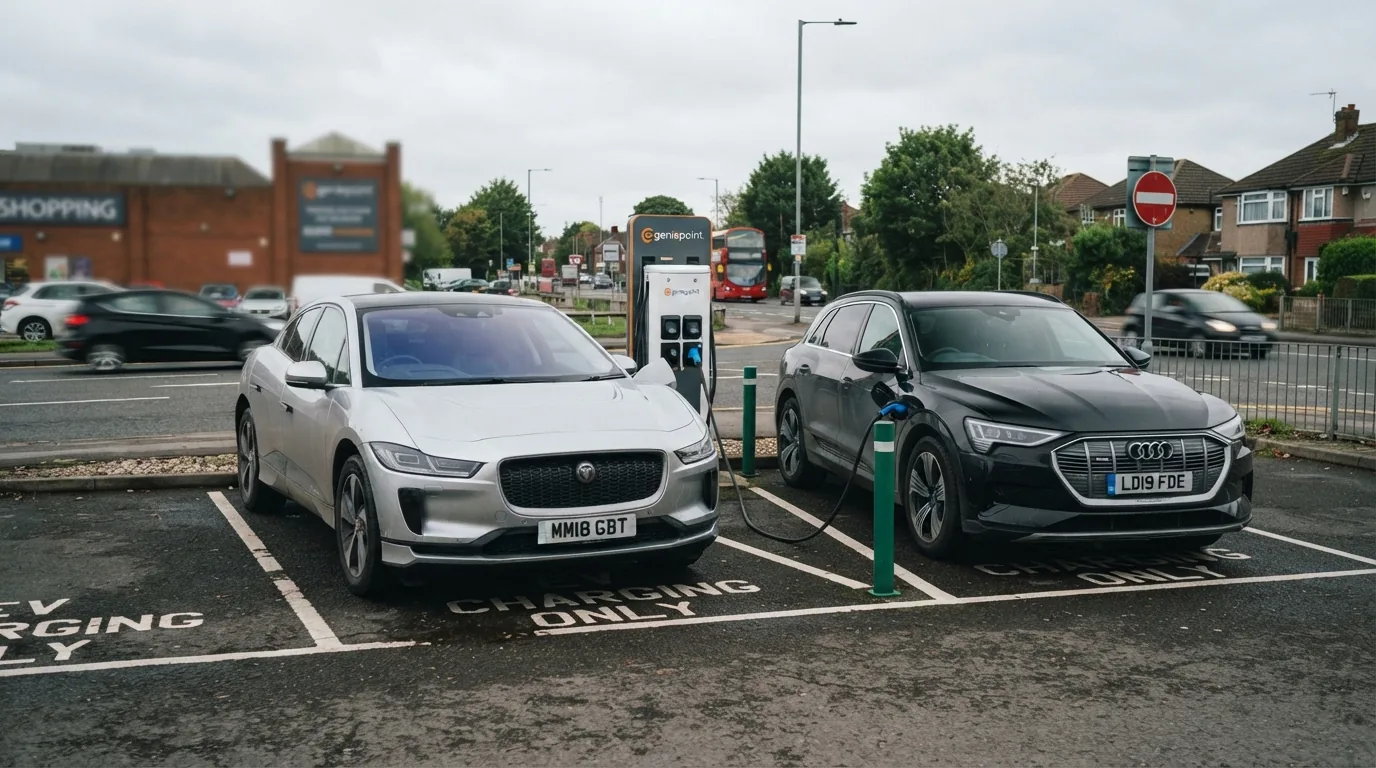
Used Jaguar I-Pace vs Used Audi e-tron: Premium Used EV Compared
Two early premium electric SUVs that have depreciated dramatically. Which one offers the better used buy in 2026 and what are the risks?
Tesla recalls in the UK: 2026 list and how to check your car
The DVSA has not logged a new Tesla recall in 2026, even as Tesla recalled millions of cars in China and the US. Here is every Model 3 and Model Y recall on the UK register, which ones were fixed over the air, and how to check your own car.
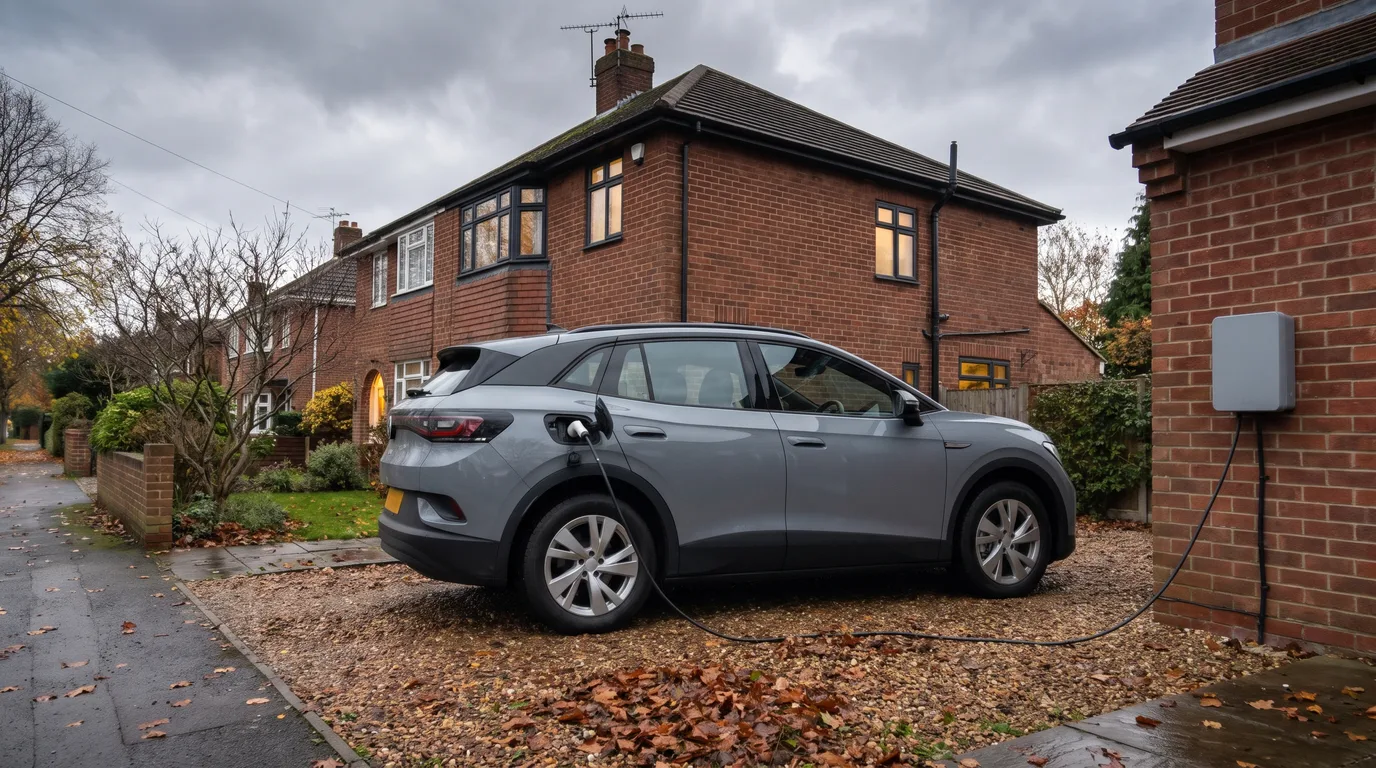
VW ID.3, ID.4 and ID.7 battery recall: UK cars capped at 80% charge
Volkswagen UK has opened safety recall campaigns 93MV and 93MF for cars with high-voltage batteries from one supplier. Charging is being limited to 80% while dealers check the batteries. Here is what the cap means in miles, how to check it is active and what to do next.
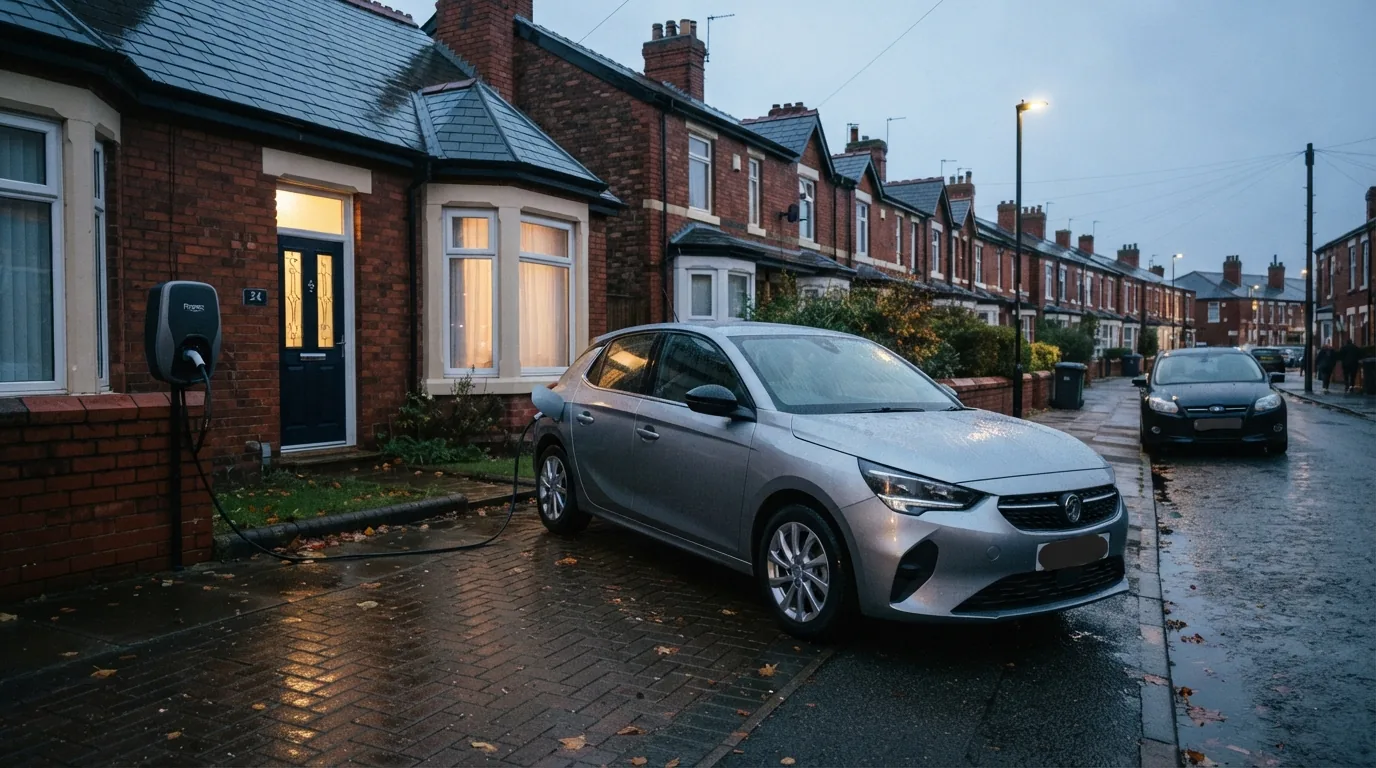
EV battery fire risk: what UK data says about cars, e-bikes and chargers
Most lithium-ion fire headlines involve e-bikes and e-scooters, not electric cars. Here is what UK fire service and insurer data shows, and how to charge safely at home.
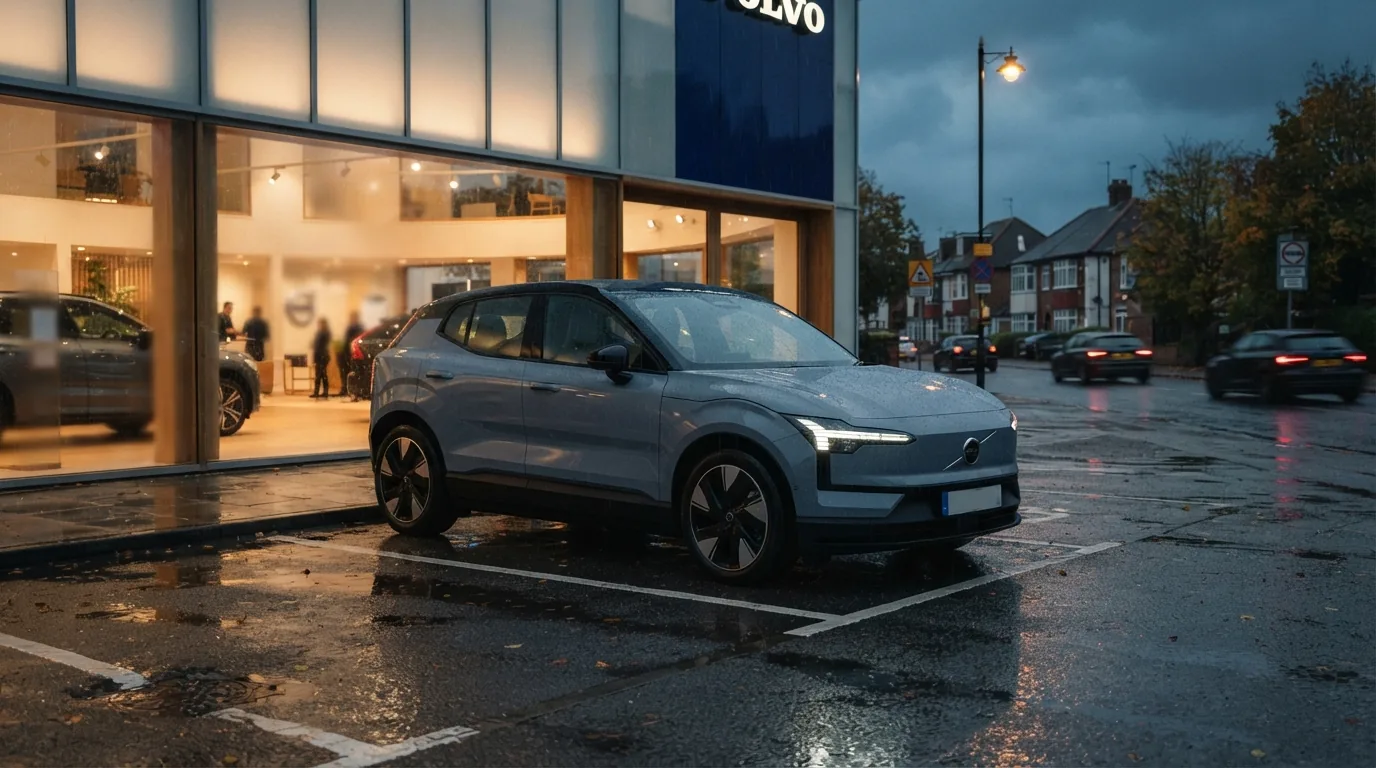
Volvo Cars pulls 2026 outlook as Q3 sales fall 10.7%, Europe holds up
Volvo sold 141,609 cars worldwide in the third quarter and has withdrawn its full-year volume and cash flow guidance. China fell 40.6%, but Europe and the rest of the world held up, with EX60 orders ahead of expectations. What it means for UK buyers.
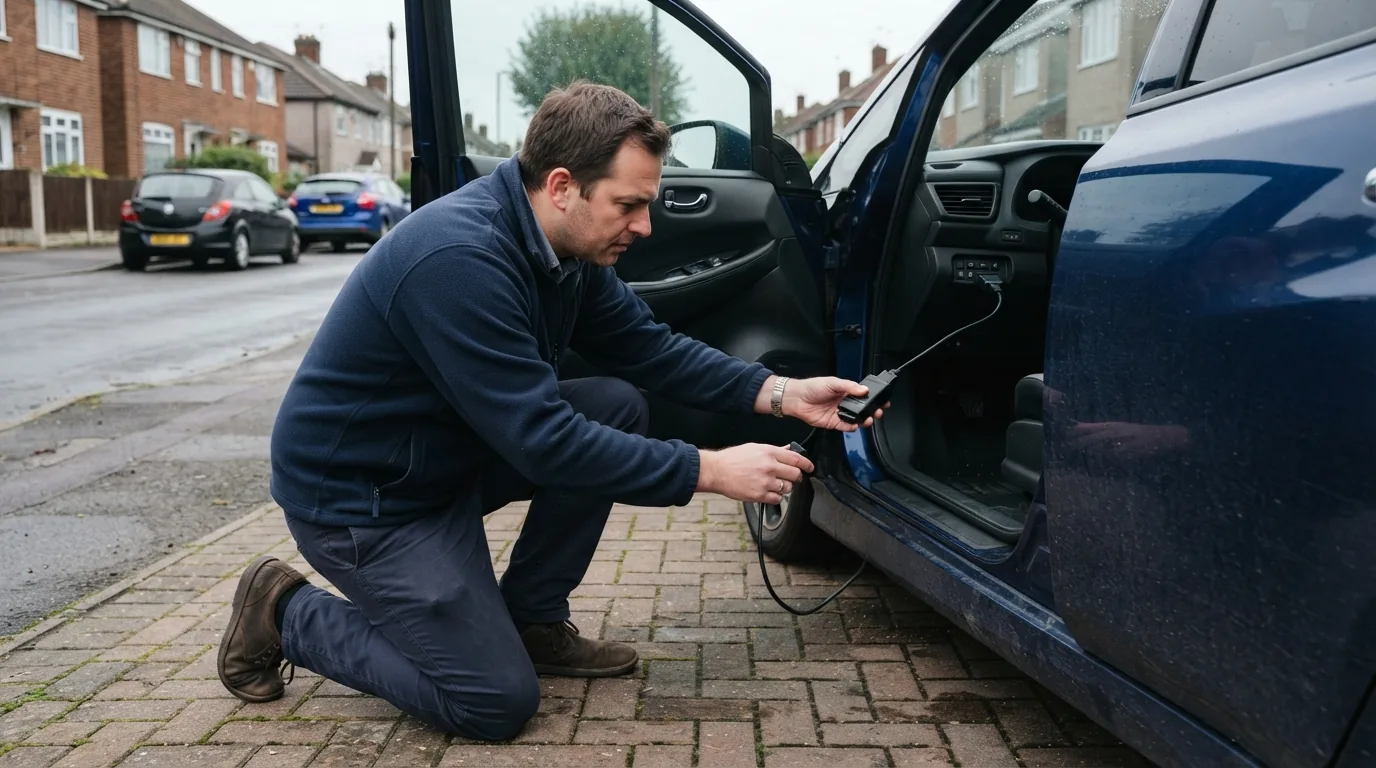
How to Check an Electric Car Battery Before Buying Used
A practical, step-by-step guide for UK buyers on checking battery state of health before you hand over any money