VW ID. Cross gets a cheaper 37kWh battery from €27,995: what it means for UK buyers
The electric equivalent of the T-Cross now comes in an entry-level version aimed at town and commuter driving. It trades range and towing for price, and VW is lining up an even cheaper ID. Up! for 2027.
Quick answers
- Volkswagen has opened orders in Germany for the ID. Cross with a smaller 37kWh lithium iron phosphate (LFP) battery, starting at €27,995 including VAT.
- The entry-level ID. Cross Trend has an 85kW (116PS) motor and a WLTP range of up to 324km (201 miles); the 52kWh version offers up to 427km (265 miles).
- The 37kWh battery charges at up to 90kW, 10% to 80% in about 23 minutes; the 52kWh battery charges at up to 105kW in about 24 minutes.
- Braked towing capacity falls from up to 1,200kg with the larger battery to 750kg with the 37kWh pack.
- German prices: Trend €27,995, Life €31,925, Style €34,510 with the 37kWh battery; 52kWh versions from €36,525.
- The ID. Cross is built in Pamplona, Spain, on the MEB+ platform shared with the ID. Polo, Cupra Raval and Skoda Epiq.
- VW plans an even cheaper ID. Up! from around €20,000 in 2027, with at least 250km of range.
Volkswagen has made its smallest electric SUV cheaper. The ID. Cross, the electric equivalent of the best-selling T-Cross, is now available in Germany with a smaller 37kWh battery, starting at €27,995 including VAT, as Electrek reported. The entry-level ID. Cross Trend has up to 201 miles of WLTP range, against 265 miles for the existing 52kWh version.
VW says the cheaper car “is primarily aimed at customers who mainly drive in urban traffic and on typical commuting routes and at the same time value an attractive entry-level price”. UK prices for the 37kWh version have not been confirmed. Here is what the smaller battery means in practice and how it fits VW’s push into cheap EVs. Our VW Group small electric cars comparison puts it alongside its sister models.
What has changed?
The ID. Cross now comes with two batteries:
| 37kWh (new) | 52kWh | |
|---|---|---|
| Battery chemistry | Lithium iron phosphate (LFP) | Nickel-manganese-cobalt (NMC) |
| Motors | 85kW (116PS) or 99kW (135PS) | 155kW (211PS) |
| WLTP range | Up to 324km (201 miles) | Up to 427km (265 miles) |
| Peak DC charging | 90kW | 105kW |
| 10% to 80% | About 23 minutes | About 24 minutes |
| Braked towing | 750kg | Up to 1,200kg |
| Top speed | 160km/h | Not stated in our sources |
German prices with the 37kWh battery are €27,995 for Trend, €31,925 for Life and €34,510 for Style, while 52kWh versions start at €36,525, according to heise.
How far will it really go?
VW quotes up to 324km on the WLTP test, but heise points out that this does not apply to every version. Austrian price lists show 222km to 324km for the 85kW Trend and 213km to 312km for the 99kW Life and Style, depending on wheels and equipment.
Independent tests are not yet available. heise’s rough calculation, assuming 20 to 25kWh per 100km in everyday use, suggests about 148km to 185km, roughly 90 to 115 miles. That is a conservative estimate for mixed driving, and gentle town driving will do better. Either way, this is a car for local driving and commuting, not long motorway trips.
Why LFP?
The 37kWh battery uses lithium iron phosphate cells, while the 52kWh battery uses NMC. Both are versions of the unified cell used across the Volkswagen Group and its battery company PowerCo, mounted directly in the pack without module housings.
LFP has clear advantages for a cheap car:
- Cost. It uses no nickel or cobalt, so it is cheaper to make.
- Durability. It generally lasts longer and copes well with regular charging to 100%.
- Safety. It is considered more stable.
The trade-off is lower energy density, which is why the smaller pack gives less range for its size.
How practical is the ID. Cross?
Very, for its size. It is 4,153mm long, with a 2,601mm wheelbase that gives much more legroom than the T-Cross, according to Fakti. The boot holds 475 litres, plus a 25-litre front compartment. Inside, it has VW’s new cockpit design, with a 10.25-inch digital instrument display and a 12.9-inch central screen.
The ID. Cross is built in Pamplona, Spain, and VW chief executive Thomas Schäfer described it as “modern, reliable, and above all, affordable” when production started.
What about the UK?
Volkswagen has not announced UK pricing for the 37kWh ID. Cross. Because it is built in Spain, it meets the factory location side of the UK Electric Car Grant rules, and at its price level it should fall under the grant’s price cap, but eligibility depends on the government’s assessment of each model. Our latest Electric Car Grant models list shows which cars qualify.
If it arrives in the UK at a price close to the German one, after conversion and grant, it would be one of the cheapest small electric SUVs from a mainstream European brand. Compare it with the Cupra Raval and Skoda Epiq, which share its platform, and with Chinese rivals such as the Leapmotor B03 and Omoda 4.
What else is VW doing on price?
The ID. Cross is part of VW Group’s “Electric Urban Car Family”, built on the MEB+ platform: the VW ID. Polo, ID. Cross, Cupra Raval and Skoda Epiq. The ID. Polo starts at €24,995 with the 37kWh battery, and its WLTP range is up to 334km (207 miles).
Next comes an even cheaper car. VW plans to launch the production version of the ID. EVERY1 concept in 2027, expected to be called the ID. Up!, from around €20,000, as Electrek reported. It will be 3,880mm long, seat four, have a 305-litre boot, use a 70kW motor with a top speed of 130km/h and offer at least 250km of range. Schäfer called it “the last piece of the puzzle”.
Who should buy the 37kWh version?
It makes sense if:
- You drive mostly locally, with a daily commute well within its range.
- You can charge at home, ideally on an off-peak tariff, which keeps running costs very low.
- You do not tow anything heavier than a light trailer.
If you regularly drive long distances, the 52kWh version’s extra range, and the higher towing limit, are worth paying for. Our small electric cars for city drivers guide covers alternatives.
How does the ID. Cross compare with its sister cars?
The ID. Cross is one of four Volkswagen Group cars built on the MEB+ platform, part of what the group calls its “Electric Urban Car Family”. They share batteries, motors and much of their engineering, but each has its own character:
| Model | Body | Notes |
|---|---|---|
| VW ID. Polo | Small hatchback | From €24,995 with the 37kWh battery; up to 207 miles WLTP |
| VW ID. Cross | Small SUV | From €27,995 with the 37kWh battery; up to 201 miles WLTP |
| Cupra Raval | Sporty small hatchback | Cupra’s take, with a more dynamic focus |
| Skoda Epiq | Small SUV | Skoda’s practical, value-focused version |
Electrek notes that VW Group offers attractive lease deals and substantial discounts on these models, which are being built in large volumes. For UK buyers, comparing all four is worth doing, because prices, equipment and warranties differ even when the hardware is shared. Our report on the Cupra Raval’s UK price and Euro NCAP rating covers one of them.
Why is LFP becoming common in small EVs?
Lithium iron phosphate batteries have become the default choice for affordable EVs across the industry, from BYD to Tesla’s cheaper models and now Volkswagen. The reasons are cost and durability. LFP cells avoid expensive nickel and cobalt, last for many charging cycles and are generally more tolerant of being charged to 100%.
Their weakness is energy density: an LFP pack stores less energy for its weight and size than an NMC pack. In a small car aimed at town driving, that matters less than price. In a car designed for long trips, NMC still has the edge. That is exactly the split VW has chosen, with LFP for the 37kWh entry model and NMC for the 52kWh version.
For owners, LFP’s tolerance of full charges is useful. Many manufacturers recommend regularly charging LFP batteries to 100%, which gives you the full range every day, whereas NMC batteries are usually best kept between about 20% and 80% for daily use. Check the advice in the handbook for your specific car.
What does the smaller battery mean for charging costs?
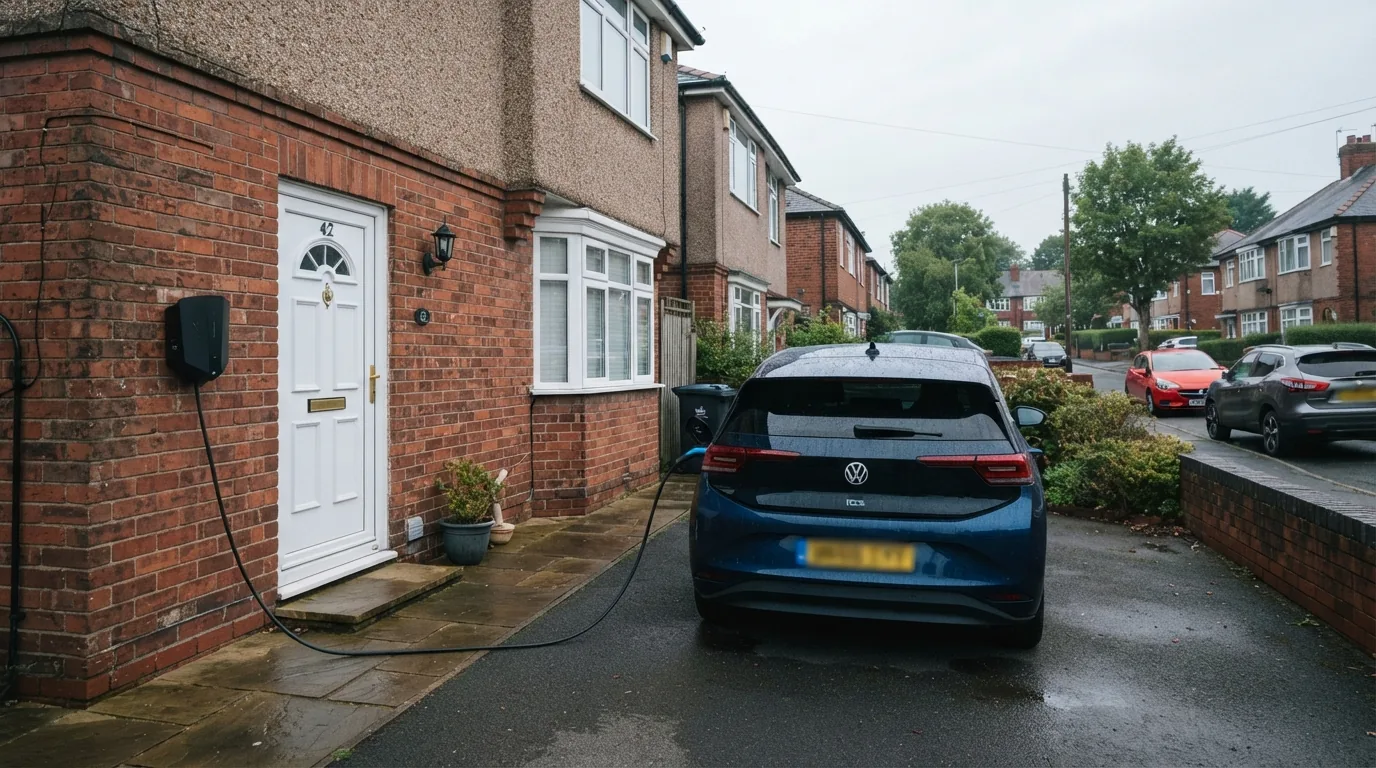
A smaller battery is cheaper to fill. Charging the 37kWh battery from empty at home on an off-peak tariff of about 7p per kWh would cost under £3, against under £4 for the 52kWh version. On a standard 25p per kWh tariff, the figures are about £9.25 and £13 respectively. These are illustrative; check your own tariff.
Because the ID. Cross is light and efficient for an SUV, it should be cheap to run whichever battery you choose. Our home EV charging cost calculator can work out your figures.
What about the even cheaper ID. Up!?
If price matters more than size, the expected ID. Up!, due in 2027 from around €20,000, could be worth waiting for. At 3,880mm long it is much smaller than the ID. Cross, with a 305-litre boot and at least 250km of range, but it should be one of the cheapest EVs from a mainstream European brand. VW says it is “the last piece of the puzzle” in its affordable range.
Our view
A 37kWh ID. Cross is a sensible addition. Most UK drivers cover far less than 100 miles a day, and a cheaper, longer-lasting LFP battery is a good match for town and commuter use. The key questions for UK buyers are price after the Electric Car Grant and real-world winter range. If VW gets the UK price close to the German one, this could be one of the best-value small family EVs from a European brand.
How we test and where our numbers come from
Range figures are official WLTP combined values taken from manufacturer UK specification pages, with real-world estimates drawn from independent comparative testing. Prices are UK list prices at the time of the latest update. Tax, grant and charging-scheme figures come from GOV.UK and HMRC publications. We re-check every guide when pricing, specification or policy changes. Last checked 24 October 2026. How we work out our own figures.
Frequently asked questions
How much is the VW ID. Cross with the 37kWh battery?
In Germany it starts at €27,995 including VAT for the ID. Cross Trend. Life and Style trims with the 37kWh battery cost €31,925 and €34,510. UK prices for this version have not been announced.
What range does the VW ID. Cross 37kWh have?
VW quotes up to 324km, or about 201 miles, on the WLTP test for the 85kW Trend. Austrian price lists show 222km to 324km depending on specification. Real-world range will be lower, especially in winter and at motorway speeds.
Is the VW ID. Cross coming to the UK?
Volkswagen sells the ID. Cross range in Europe and is expected to offer it in the UK. UK pricing and specification for the 37kWh version have not been confirmed, so check Volkswagen UK for the latest.
Can the VW ID. Cross tow?
Yes, but less with the small battery. The 37kWh version has a braked towing capacity of 750kg, down from up to 1,200kg for the 52kWh version.
Should I choose the 37kWh or 52kWh ID. Cross?
The 37kWh LFP version suits town driving and commuting, costs less and has a battery chemistry that copes well with regular charging to 100%. If you drive long distances, tow or rely on rapid charging, the 52kWh version's extra range and speed are worth paying for.
Sources and further reading
- electrek.coElectrekPrimary source referenced in this article.
- heise.deVW adds a base model: ID. Cross now available with smaller batteryTrim prices, towing capacity, Austrian range figures, LFP and NMC chemistry and cell-to-pack design.
- electrek.coVolkswagen is launching its most affordable EV yet in 2027, starting at around €20,000The ID. EVERY1 and expected ID. Up!, its size, range and the €24,995 ID. Polo.
- fakti.bgVolkswagen ID. Cross is now on sale in BulgariaDimensions, wheelbase and boot space.

EV Compared
The EV Compared editorial team tracks the UK electric vehicle market full time: new model launches, list prices, WLTP and real-world range, public charging tariffs and the tax rules that decide what an EV actually costs to run. Every guide is checked against manufacturer specifications and official GOV.UK figures, and updated whenever the numbers move.
Related reading
View all
UK EV choice has doubled: a new electric model every fortnight since 2023
Electric cars are now on sale in every segment, from city cars to seven-seaters and sports cars. With more than 60 brands competing, the bigger challenge for buyers is choosing well.
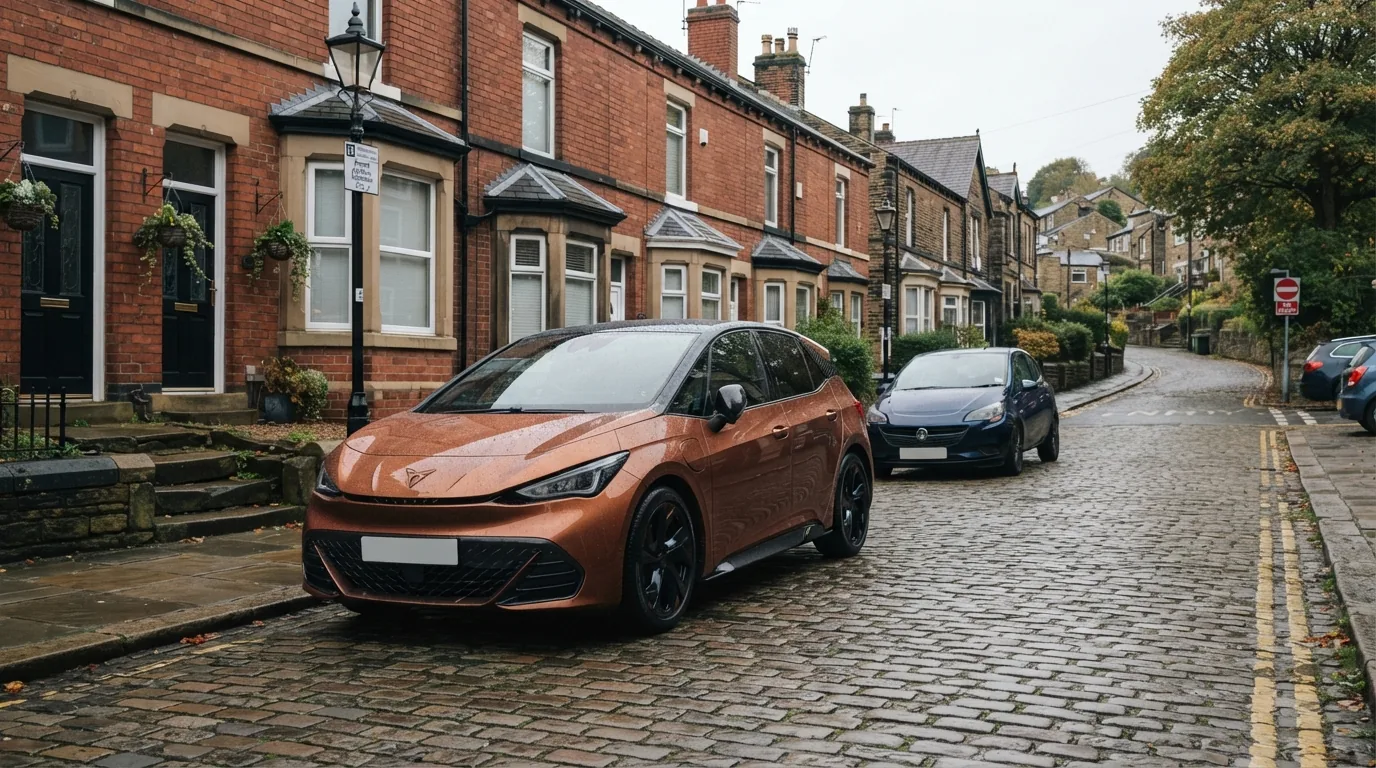
Cupra Raval UK prices from £23,785, four stars or five with pack
The Raval has eight UK versions and only the 52kWh cars get the £1,500 grant. Euro NCAP gave it four stars as standard and five with an optional Safety Pack.
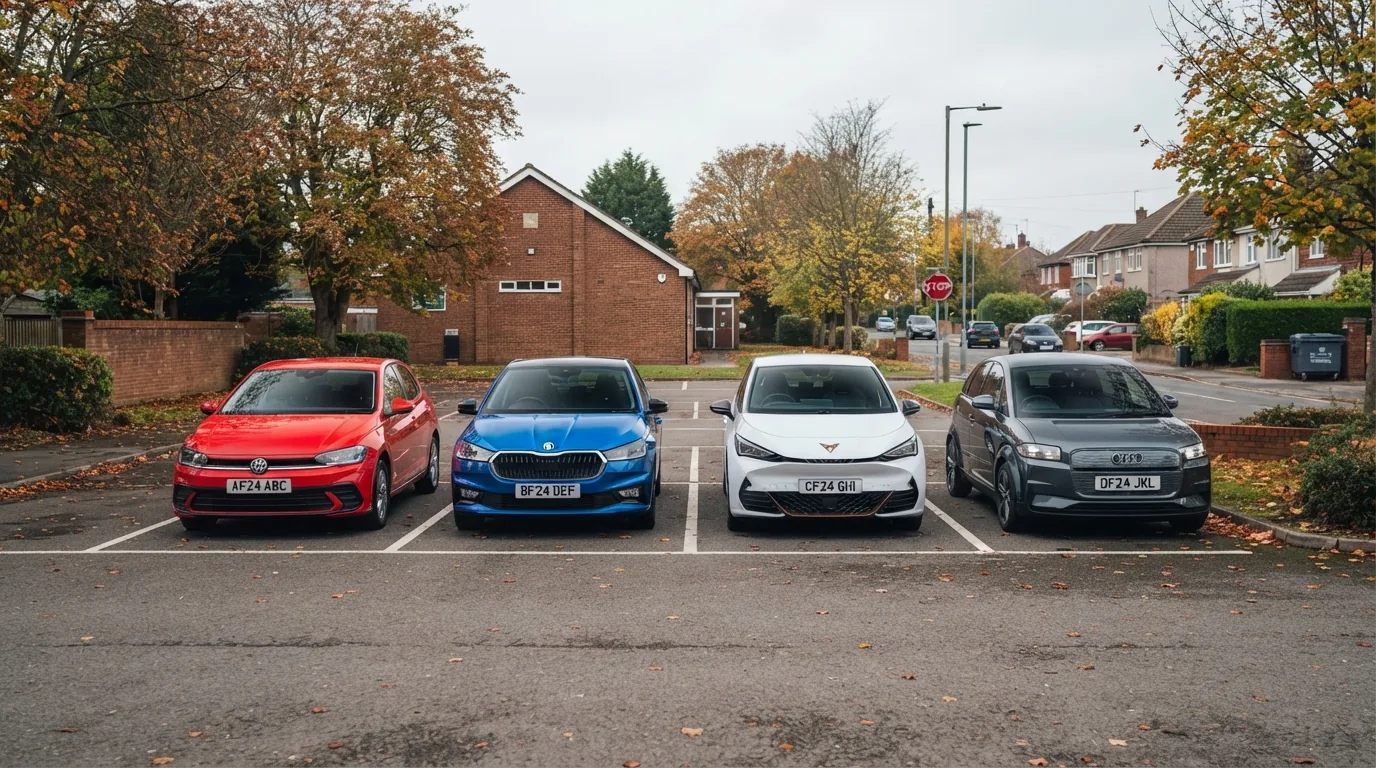
VW Group small EVs compared: ID.Polo, Raval, Epiq and A2 e-tron
Four small electric cars from one group now cost from £23,785 to £32,200 in the UK. We compare prices before and after the Electric Car Grant, ranges and delivery dates, and say which to choose.

Electric Car Grant 2026: Latest Eligible Models and Discounts
Up to £3,750 off qualifying new EVs -- 45 models are now confirmed eligible, but Tesla, MG, BYD and Fiat are all excluded
How to Calculate Home EV Charging Costs on UK Tariffs
See exactly what you will pay to charge at home, and which tariff saves you the most money
Best Small Electric Cars UK 2026: Our Ranked Picks From Under £15,000
Compact, affordable and practical: the small EVs that work hardest in urban Britain