UK EV choice has doubled: a new electric model every fortnight since 2023
Electric cars are now on sale in every segment, from city cars to seven-seaters and sports cars. With more than 60 brands competing, the bigger challenge for buyers is choosing well.
Quick answers
- SMMT research says 85 new battery electric car models reached the UK market from 2023, the equivalent of one every fortnight, doubling the total to 171.
- By October 2026, the SMMT put the number of fully electric models on sale at 178, alongside more than 110 plug-in hybrids and about 50 hybrids.
- UK buyers can choose from 385 models from more than 60 brands, and more than 75% of the models on offer can drive without tailpipe emissions.
- Full EVs can now typically travel more than 300 miles on a charge, against the 127 miles the average UK driver covers each week.
- In May 2025 there were just over 130 electric models on sale, up from 102 a year earlier.
- Battery EVs took a record 28.3% of the market in September 2026, with 99,199 registrations, up 36.3%.
Britain’s car buyers have never had so much electric choice. Car makers have launched the equivalent of one new fully electric model every fortnight since 2023, according to research by the Society of Motor Manufacturers and Traders (SMMT), reported by The Manufacturer. Eighty-five new battery electric models have arrived, doubling the number on sale to 171, and by early October the SMMT’s count had reached 178.
“Britain’s new car market has never offered so much choice, with a new electric model arriving every fortnight and zero emission motoring now available in every shape and size of vehicle,” said SMMT chief executive Mike Hawes. For buyers, that is mostly good news: more competition, sharper prices and an EV for almost every need. It also makes choosing harder. Here is what the numbers show and how to narrow down the options.
How much has EV choice grown?
Very quickly. The SMMT’s counts over the past few years:
| Date | Fully electric models on sale |
|---|---|
| Mid-2024 | 102 |
| May 2025 | More than 130 |
| September 2026 | 171 |
| Early October 2026 | 178 |
Alongside those, there are more than 110 plug-in hybrid models and about 50 conventional hybrids, according to Yahoo News. Across every powertrain, UK buyers can choose from 385 models and more than 60 brands, which the SMMT says makes Britain “one of the world’s most diverse and competitive car markets”. More than 75% of models on offer can drive without tailpipe emissions.
New cars typically take three to five years to develop, so today’s choice reflects investment decisions made earlier in the decade.
Are there electric cars in every size now?
Yes. Electric cars are now available in every segment, the SMMT says, from compact city cars and family hatchbacks to executive saloons, SUVs and sports cars. That is a big change from a few years ago, when EVs were mostly mid-size hatchbacks, SUVs and expensive luxury models.
The SMMT has highlighted growing choice among smaller electric cars in particular. New arrivals such as the Renault Twingo, Kia EV2 and Hyundai Ioniq 3 have pushed prices down at the bottom of the market. Our cheapest new EVs guide covers the most affordable options, and our seven-seat electric cars guide covers the biggest.
How far can today’s EVs go?
The SMMT says full EVs can now typically travel more than 300 miles on a single charge, well above the 127 miles the average UK driver covers in a week. That means many drivers could charge once a week or less. Real-world range is lower than the official figure, especially in winter and at motorway speeds, so it is sensible to allow a margin.
Is more choice turning into more sales?
It is. Battery electric cars took a record 28.3% of the new car market in September 2026, with 99,199 registrations, up 36.3% on a year earlier. Hawes said: “September’s record EV performance is a major achievement. Drivers are increasingly embracing the growing choice of models made available and high fuel prices are also undoubtedly giving more consumers reason to consider going electric.”
The SMMT credits more choice, manufacturer discounts and the government’s Electric Car Grant. Our September sales analysis shows how new brands, especially Chinese ones, have driven much of the growth.
It is worth remembering where demand comes from. Most new EVs are still bought by businesses and fleets, helped by low company car tax, rather than private buyers. That is one reason the industry continues to lobby for incentives for private buyers.
Why are so many new EVs arriving?
Three reasons:
- The ZEV mandate. Car makers must sell a rising share of zero-emission cars each year, 33% in 2026, so they need competitive EVs in every segment. Our explainer on what the ZEV mandate means for buyers covers this.
- New brands. Chinese brands such as BYD, Leapmotor, Xpeng, Geely and Chery’s family of brands have launched many models in quick succession. More are coming, including iCaur and Li Auto in 2027.
- New platforms. Established makers have launched new dedicated electric platforms, which let them spin out several models quickly.
How should you choose with so much on offer?
With 178 models, a shortlist matters. Start with your needs, not the badge:
- Charging. Can you charge at home? If not, focus on cars with efficient energy use and fast charging, and check public charging near you.
- Range. Work out your longest regular trip and add a winter margin of 20% to 30%.
- Size. Electric versions now exist in every class, so you rarely need to compromise on space.
- Budget. Check which models qualify for the Electric Car Grant of up to £3,750. Our latest eligible models list has the current picture.
- Total cost. Compare monthly payments, insurance and residual values, not just list price.
Our guide to small electric cars for city drivers is a good starting point if you mostly drive locally.
Which new EVs have arrived recently?
The past year alone has brought a long list of new electric models to the UK, across every price point. Among those we have covered:
- Small and affordable: the Renault Twingo, Kia EV2, Hyundai Ioniq 3, Leapmotor B03, Geely EX2 and Cupra Raval. Our Hyundai Ioniq 3 and Kia EV2 comparison looks at two of the most important.
- Family SUVs: the Volvo EX60, BMW iX3 and Skoda’s growing range, plus a wave of Chinese SUVs from BYD, Jaecoo, Omoda and Xpeng.
- Seven-seaters: models such as the Skoda Peaq and, from 2027, the BYD Atto 8.
- Premium and performance: the Polestar 5, Mercedes C-Class Electric, Range Rover Electric and Range Rover Sport Electric.
More are coming in 2027, including Chery’s iCaur brand, Li Auto, Volvo’s EX50 and Volkswagen’s ID. Up!, as we cover in our Volvo EX50 story and our VW ID. Cross story.
Why does so much choice matter for prices?
Competition drives prices down. With more than 60 brands fighting for buyers and car makers under pressure to meet the ZEV mandate, discounts on EVs have been large. The SMMT itself credits “strong manufacturer discounts” alongside the Electric Car Grant for helping drivers switch, and says attractive offers are tempting some people into new cars who might otherwise have bought used.
There is a risk for car makers. Fleet managers have reported discounts of 45% to 55% on some new electric cars and vans as brands fight for market share, according to Fleet News. That is great for buyers, but hard for manufacturers to sustain, which is why the industry is pushing for the ZEV mandate review to soften future targets. Our analysis of year-end EV discounts explains the pressures.
What about plug-in hybrids and hybrids?
Choice has grown there too. Alongside 178 electric models, the SMMT counts more than 110 plug-in hybrids and about 50 conventional hybrids. Plug-in hybrids set records in September 2026, with registrations up 55.7% and a 17% market share, while conventional hybrid registrations fell 4.2%.
“For those still facing barriers or uncertainty, the huge range of hybrid and lower emission models means drivers can still make drastic cuts to their carbon footprint,” said Mike Hawes. For many drivers, especially those who cannot charge at home, a plug-in hybrid or hybrid remains a sensible step.
Is choice the same as demand?
Not quite. The SMMT and car makers argue that natural demand from private buyers still lags behind the ZEV mandate’s targets, which is why they want incentives such as cheaper public charging and VAT cuts. More choice removes one barrier, but cost, charging access and confidence about resale values still hold some buyers back.
That is why policies outside the showroom matter as much as new models: the cost of public charging, access to home charging for people without driveways, and stable tax rules. Our Autumn Budget 2026 preview covers the measures the industry wants.
How do you keep track of so many models?
Use filters rather than browsing brand by brand. Start with body type and size, then set a minimum real-world range based on your longest regular journey, then a budget that includes the Electric Car Grant where it applies. That usually narrows 178 models to a shortlist of five or six, which you can then compare on charging speed, boot space, warranty and running costs before booking test drives.
Where can you see them?
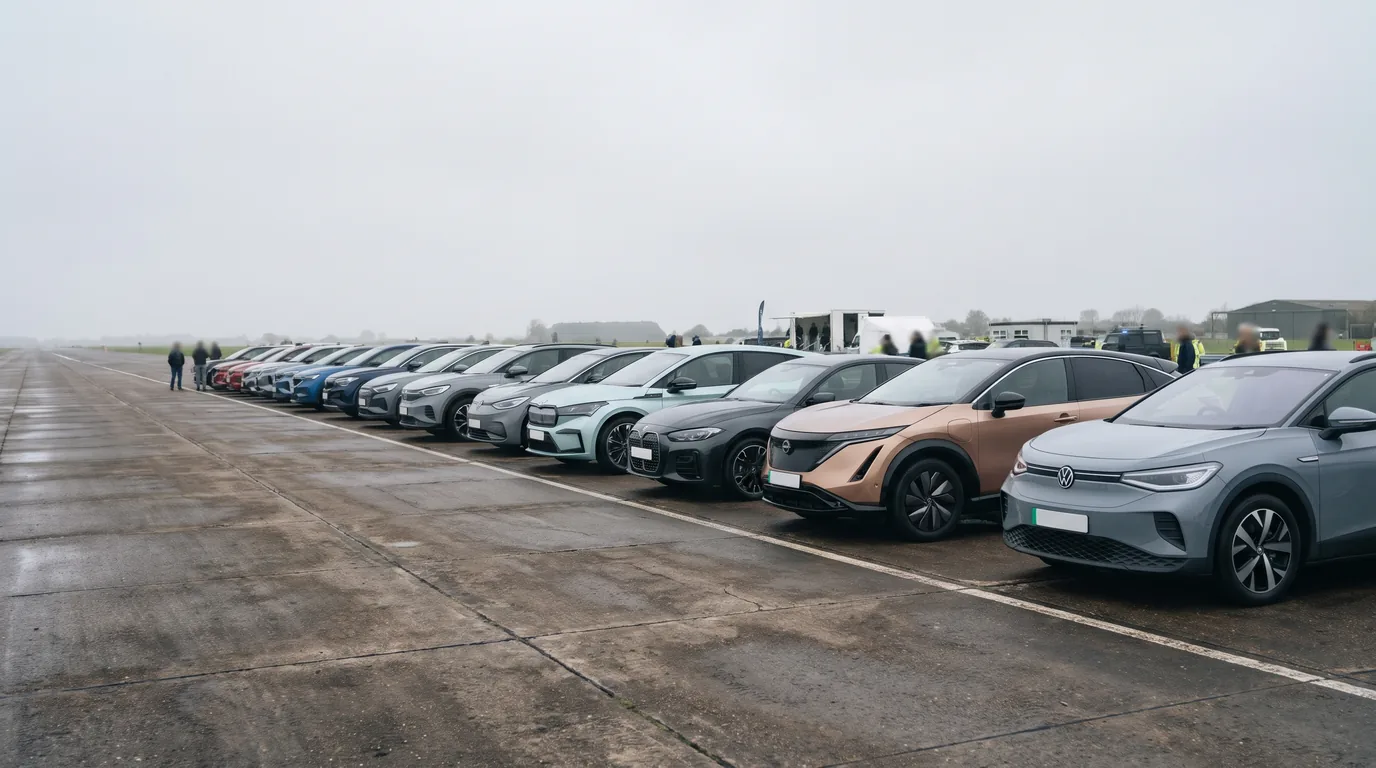
Many new models now appear first at dealer events and test-drive days, and the SMMT’s own Drive Live event showed how far things have moved: 58.2% of the cars available to test were fully electric.
Our view
The UK’s EV market has gone from a handful of choices to one of the broadest in the world in just a few years. That competition has brought prices down and filled almost every gap, from cheap city cars to seven-seaters. The challenge for buyers now is not finding an EV that fits, but picking the right one from a crowded field. Focus on how you charge and how far you drive, and the shortlist gets much shorter.
How we test and where our numbers come from
Range figures are official WLTP combined values taken from manufacturer UK specification pages, with real-world estimates drawn from independent comparative testing. Prices are UK list prices at the time of the latest update. Tax, grant and charging-scheme figures come from GOV.UK and HMRC publications. We re-check every guide when pricing, specification or policy changes. Last checked 24 October 2026. How we work out our own figures.
Frequently asked questions
How many electric car models are on sale in the UK?
The SMMT counted 171 fully electric models in September 2026 and 178 by early October, more than double the number in 2023. There are also more than 110 plug-in hybrid models and about 50 conventional hybrids.
How many car brands are sold in the UK?
More than 60 brands sell new cars in the UK, offering 385 models across all powertrains, according to the SMMT. That makes Britain one of the most diverse and competitive car markets in the world.
How far can a new electric car go on a charge?
The SMMT says full EVs can now typically travel more than 300 miles on a single charge, compared with the 127 miles the average UK driver covers in a week. Real-world range is lower in cold weather and at motorway speeds.
Are there electric cars in every size?
Yes. Electric cars are now available in every segment, from compact city cars and family hatchbacks to executive saloons, SUVs, seven-seaters and sports cars.
What share of new cars sold in the UK are electric?
Battery electric cars took a record 28.3% of new car registrations in September 2026, with 99,199 sold. Over 2025 as a whole, they took about 23.4%.
Sources and further reading
- themanufacturer.comThe ManufacturerPrimary source referenced in this article.
- uk.news.yahoo.comUK's best-selling new electric car named as EV sales hit record highSeptember 2026 registrations, the 28.3% EV share, the best sellers and the 178-model figure.
- fleetnews.co.ukElectric car availability surges to more than 130 modelsMay 2025 figure of more than 130 EV models, up from 102 a year earlier.

EV Compared
The EV Compared editorial team tracks the UK electric vehicle market full time: new model launches, list prices, WLTP and real-world range, public charging tariffs and the tax rules that decide what an EV actually costs to run. Every guide is checked against manufacturer specifications and official GOV.UK figures, and updated whenever the numbers move.
Related reading
View all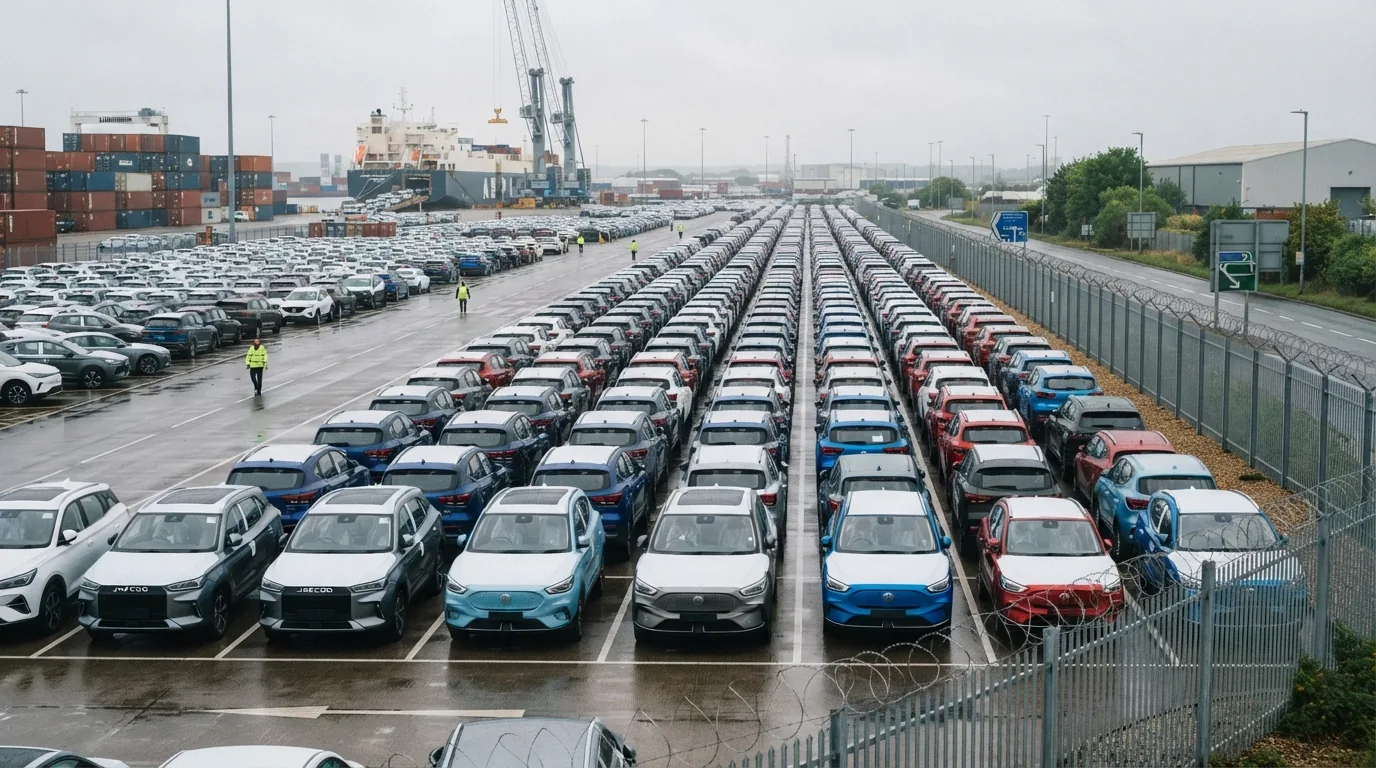
Chinese brands take 23.3% of UK car sales as Jaecoo 7 tops September
Nearly one in four new cars sold in September came from a Chinese brand, even though cars built in China get no Electric Car Grant. Here is what it means for prices, discounts and resale.
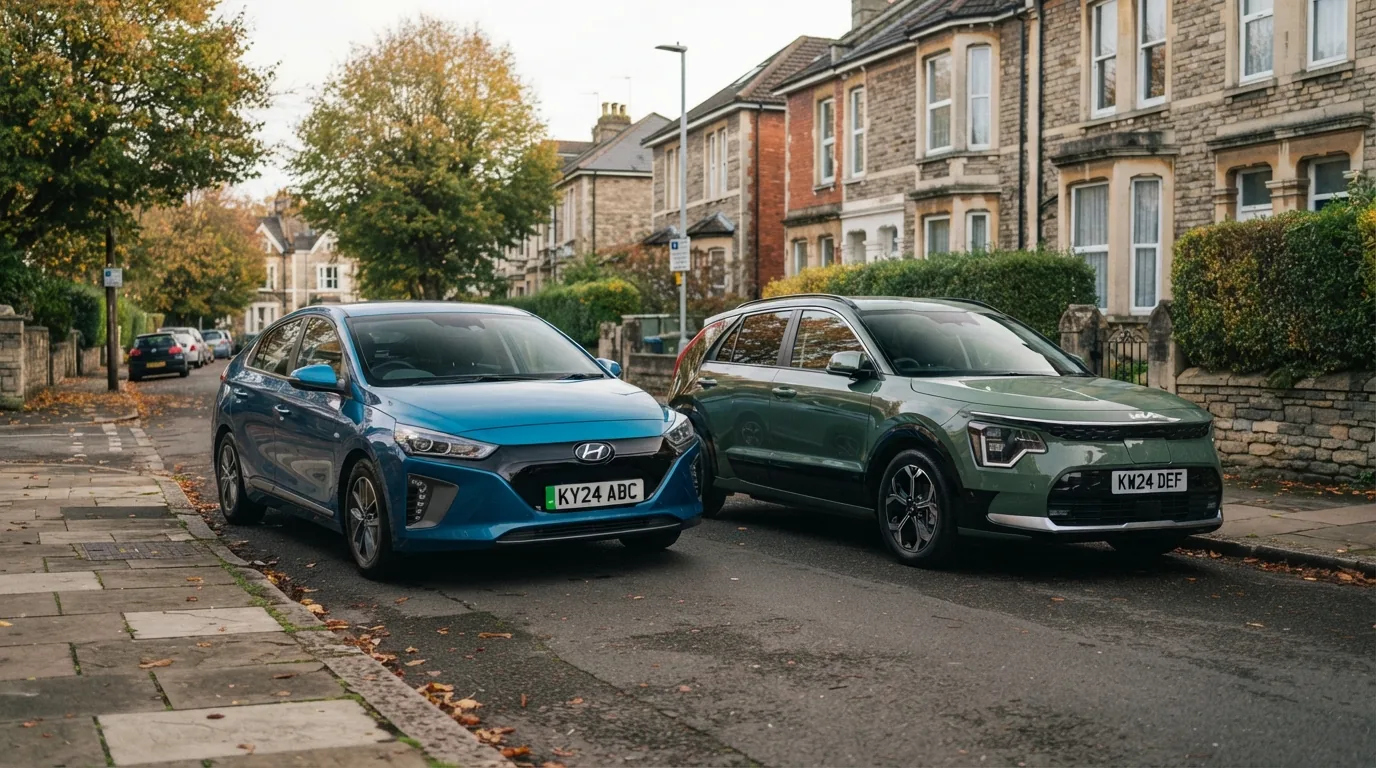
Hyundai Ioniq 3 vs Kia EV2: £2,250 cheaper, 33 more miles
The Ioniq 3 and Kia EV2 share batteries and charging speeds, but the full £3,750 grant on every Ioniq 3 makes the Hyundai cheaper at both battery sizes. Here is how they compare on price, range and space.
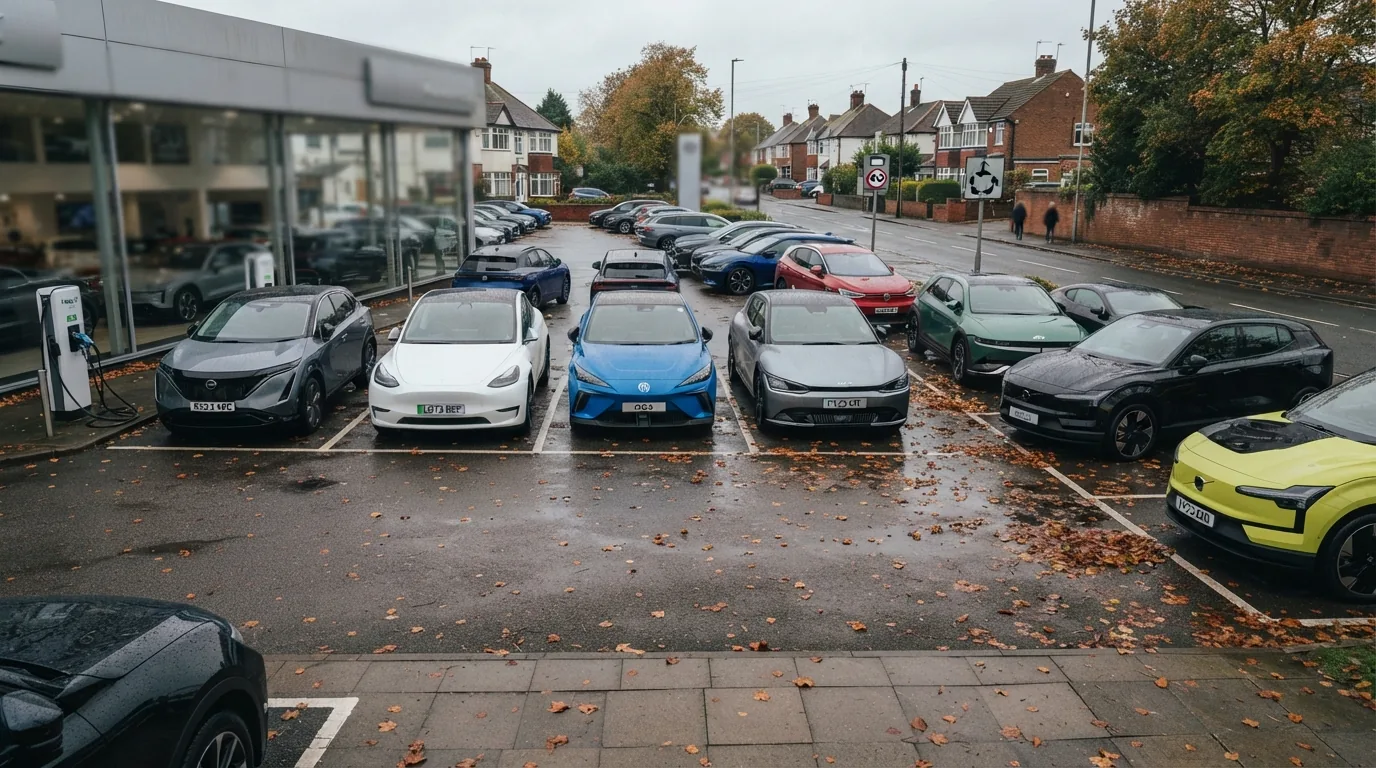
ZEV mandate: carmakers need 265,000 more EV sales by year end
Even after a record September, electric cars make up only 26.2% of 2026 sales so far against a 33% target. Here is what that gap means for EV discounts and when to order.
VW ID. Cross gets a cheaper 37kWh battery from €27,995: what it means for UK buyers
The electric equivalent of the T-Cross now comes in an entry-level version aimed at town and commuter driving. It trades range and towing for price, and VW is lining up an even cheaper ID. Up! for 2027.

Volvo EX50: cheaper electric SUV on EX60 tech confirmed for 2027
Volvo's third-quarter results confirm a 'global BEV car' for a large, lower-priced segment, built on the same platform as the EX60. It is expected to be called EX50 and to replace the EX40.
UK electric car sales hit record 99,199 in September
Battery electric cars took 28.3% of the plate-change month, the best ever for UK EV registrations. The year to date is still 26.2%, well short of this year's 33% ZEV mandate target.